New Literacies: young learners
making sense of online information


Margo Pickworth
EdD Candidate, 4th November, 2011
Topic/Problematic


Background and Context


Conceptual Framework


Methodology


Ethics


Research Plan


Future Plans
Topic and Problematic

‘The proliferation of powerful, multimodal literacies
demands that educators transform literacy programs
to teach new forms of communication, which are
necessary to participate fully in our dynamic and
culturally diverse society’
(Mills, 2009, p. 111)
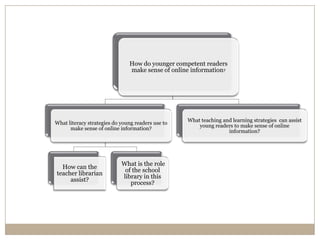
How do younger competent readers
                               make sense of online information?


                                                   What teaching and learning strategies can assist
What literacy strategies do young readers use to
                                                       young readers to make sense of online
      make sense of online information?
                                                                   information?


                            What is the role
  How can the
                             of the school
teacher librarian
                            library in this
     assist?
                               process?
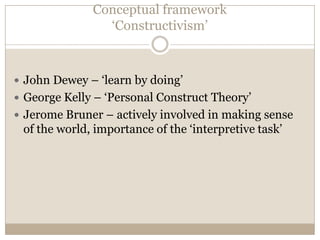
Conceptual framework
                ‘Constructivism’


 John Dewey – ‘learn by doing’
 George Kelly – ‘Personal Construct Theory’
 Jerome Bruner – actively involved in making sense
 of the world, importance of the ‘interpretive task’
Conceptual Framework:
                  ‘Information Literacy’

 Carol Kulthau – information search process


 Ross Todd- four constructs
   People active consumers of information

   Info enables ‘sense-making’ of the world

   Centrality of cognitive activity

   Enabling purposeful utilisation of info
Key References


‘Our students are very skilled in online personal
communication but much less knowledgeable when
searching for and using curriculum-based information’
(Coombes, B, 2009)

‘New Literacy’- Coiro,J Knobel,M Lankshear, C, Leu,
D.
Five main areas of my readings


 Nature of the web itself
 Web searching behaviour
 Using Web as an educational tool
 Focus on learner attributes
 Nature of the learning activity itself
Nature of the Web itself


 Scope and topicality
 Accessibility
 Hypertext
 Visual elements of the web
Web Searching behaviour


 Attitudes
 Browsing/Key word
 Search process
 Search Results
 Gender Differences
 Assessing and evaluating found information
Web as an Educational Tool

 Teachers need to assess purpose of using web


 Students lack research skills


 Offering of pre-selected websites
Attributes of the User


 Prior knowledge
 Metacognition
 Spatial Ability
 Cognitive Style
 Motivation and Effect
Nature of the Learning Activity


 Inquiry approach?
 Teacher Directed?
Where do I go from here?


 Still unsure of my context
 Competent readers
 School environment – maybe boys?
 Inquiry learning
Methodology - Qualitative

 Natural setting
 Researcher will collecting information
 Multiple data sources
 Interpretive inquiry
 Holistic view of social phenomena
(Cresswell, 2007)
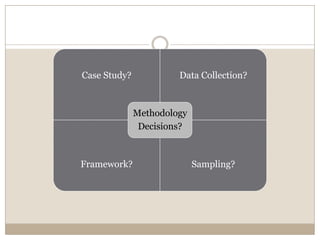
Case Study?            Data Collection?


              Methodology
               Decisions?


Framework?                  Sampling?
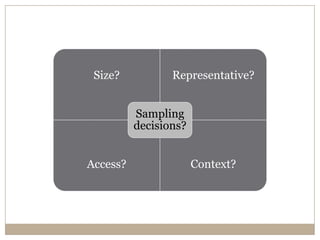
Size?           Representative?


          Sampling
          decisions?


Access?                Context?
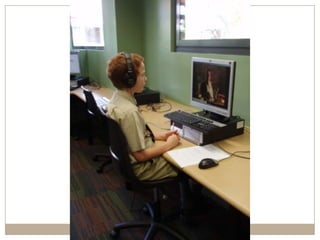
Think Aloud Protocol


 Used by Kirsty Young in her case study of young
    Internet users
   Minimal input from researcher
   Thoughts captured by audio recording
   Sequence of thoughts captured
   Uncover what subject is actually doing
Advantages

 Reduces problem of memory failure


 More reliable because task is authentic


 Increases reliability
Disadvantages

 Reactivity, - some people unable to think and attend
    to task at same time
   Effect of talking during a task that is normally
    undertaken in silence
   Drawing participants attention to cognitive processes
    underlying task being undertaken
   Students vary in verbal ability
   Validity – does data accurately effect thinking?
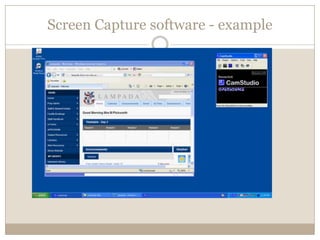
Screen Capture software - example
Ethics – Working with Children

 Permission from Participants and parents


 Transparency at all stages of process


 Allow time to read and absorb


 Cultural considerations
Clear recruitment strategy

 Confidentiality, anonymity
 Protocol of institutes
 Integrity of my institution and name
 Open communication
 Interviews – rapport and trust
Collecting Online Data

 Unique challenges
 Installation of software
 Observe privacy
 Need written permission
 Avoid identification
Ethics in dual role of participant/researcher

 Convenience of sample


 Influence of setting and role


 Value of research will be recognised
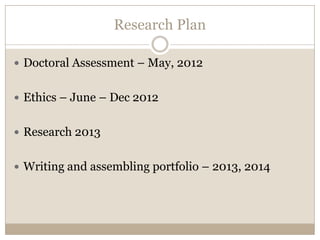
Research Plan

 Doctoral Assessment – May, 2012


 Ethics – June – Dec 2012


 Research 2013


 Writing and assembling portfolio – 2013, 2014
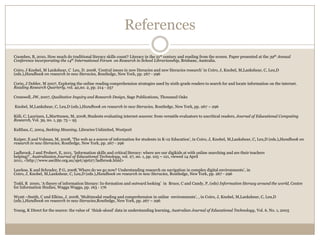
References
Coombes, B, 2010, How much do traditional literacy skills count? Literacy in the 21st century and reading from the screen. Paper presented at the 39th Annual
Conference incorporating the 14th International Forum on Research in School Librarianship, Brisbane, Australia.

Coiro, J Knobel, M Lankshear, C Leu, D. 2008, ‘Central issues in new literacies and new literacies research’ in Coiro, J, Knobel, M,Lankshear, C, Leu,D
(eds.),Handbook on research in new literacies, Routledge, New York, pp. 267 - 296

Corio, J Dobler, M 2007, Exploring the online reading comprehension strategies used by sixth-grade readers to search for and locate information on the internet.
Reading Research Quarterly, vol. 42,no. 2, pp. 214 - 257

Cresswell, JW, 2007, Qualitative Inquiry and Research Design, Sage Publications, Thousand Oaks

Knobel, M,Lankshear, C, Leu,D (eds.),Handbook on research in new literacies, Routledge, New York, pp. 267 – 296

Kiili, C, Laurinen, L,Marttunen, M, 2008, Students evaluating internet sources: from versatile evaluators to uncritical readers, Journal of Educational Computing
Research, Vol. 39, no. 1, pp. 75 – 95

Kulthau, C, 2004, Seeking Meaning, Libraries Unlimited, Westport

Kuiper, E and Volman, M, 2008, ‘The web as a source of information for students in K-12 Education’, in Coiro, J, Knobel, M,Lankshear, C, Leu,D (eds.),Handbook on
research in new literacies, Routledge, New York, pp. 267 - 296

Ladbrook, J and Probert, E, 2011, ‘Information skills and critical literacy: where are our digikids at with online searching and are their teachers
helping?’, Australiasian Journal of Educational Technology, vol. 27, no. 1, pp. 105 – 121, viewed 14 April
2011, <http://www.ascilite.org.au/ajet/ajet27/ladbrook.html>

Lawless, K and Schrader, P.G, 2008,’Where do we go now? Understanding research on navigation in complex digital environments’, in
Coiro, J, Knobel, M,Lankshear, C, Leu,D (eds.),Handbook on research in new literacies, Routledge, New York, pp. 267 - 296

Todd, R 2000, ‘A theory of information literacy: In-formation and outward looking’ in Bruce, C and Candy, P, (eds) Information literacy around the world, Centre
for Information Studies, Wagga Wagga, pp. 163 - 176

Wyatt –Smith, C and Elkins, J. 2008, ‘Multimodal reading and comprehension in online environments’, , in Coiro, J, Knobel, M,Lankshear, C, Leu,D
(eds.),Handbook on research in new literacies,Routledge, New York, pp. 267 – 296

Young, K Direct for the source: the value of ‘think-aloud’ data in understanding learning, Australian Journal of Educational Technology, Vol. 6. No. 1, 2005

Da presentation to email

  • 1.
    New Literacies: younglearners making sense of online information Margo Pickworth EdD Candidate, 4th November, 2011
  • 2.
    Topic/Problematic Background and Context ConceptualFramework Methodology Ethics Research Plan Future Plans
  • 3.
    Topic and Problematic ‘Theproliferation of powerful, multimodal literacies demands that educators transform literacy programs to teach new forms of communication, which are necessary to participate fully in our dynamic and culturally diverse society’ (Mills, 2009, p. 111)
  • 4.
    How do youngercompetent readers make sense of online information? What teaching and learning strategies can assist What literacy strategies do young readers use to young readers to make sense of online make sense of online information? information? What is the role How can the of the school teacher librarian library in this assist? process?
  • 7.
    Conceptual framework ‘Constructivism’  John Dewey – ‘learn by doing’  George Kelly – ‘Personal Construct Theory’  Jerome Bruner – actively involved in making sense of the world, importance of the ‘interpretive task’
  • 8.
    Conceptual Framework: ‘Information Literacy’  Carol Kulthau – information search process  Ross Todd- four constructs  People active consumers of information  Info enables ‘sense-making’ of the world  Centrality of cognitive activity  Enabling purposeful utilisation of info
  • 9.
    Key References ‘Our studentsare very skilled in online personal communication but much less knowledgeable when searching for and using curriculum-based information’ (Coombes, B, 2009) ‘New Literacy’- Coiro,J Knobel,M Lankshear, C, Leu, D.
  • 10.
    Five main areasof my readings  Nature of the web itself  Web searching behaviour  Using Web as an educational tool  Focus on learner attributes  Nature of the learning activity itself
  • 11.
    Nature of theWeb itself  Scope and topicality  Accessibility  Hypertext  Visual elements of the web
  • 12.
    Web Searching behaviour Attitudes  Browsing/Key word  Search process  Search Results  Gender Differences  Assessing and evaluating found information
  • 13.
    Web as anEducational Tool  Teachers need to assess purpose of using web  Students lack research skills  Offering of pre-selected websites
  • 14.
    Attributes of theUser  Prior knowledge  Metacognition  Spatial Ability  Cognitive Style  Motivation and Effect
  • 15.
    Nature of theLearning Activity  Inquiry approach?  Teacher Directed?
  • 16.
    Where do Igo from here?  Still unsure of my context  Competent readers  School environment – maybe boys?  Inquiry learning
  • 17.
    Methodology - Qualitative Natural setting  Researcher will collecting information  Multiple data sources  Interpretive inquiry  Holistic view of social phenomena (Cresswell, 2007)
  • 18.
    Case Study? Data Collection? Methodology Decisions? Framework? Sampling?
  • 19.
    Size? Representative? Sampling decisions? Access? Context?
  • 20.
    Think Aloud Protocol Used by Kirsty Young in her case study of young Internet users  Minimal input from researcher  Thoughts captured by audio recording  Sequence of thoughts captured  Uncover what subject is actually doing
  • 21.
    Advantages  Reduces problemof memory failure  More reliable because task is authentic  Increases reliability
  • 22.
    Disadvantages  Reactivity, -some people unable to think and attend to task at same time  Effect of talking during a task that is normally undertaken in silence  Drawing participants attention to cognitive processes underlying task being undertaken  Students vary in verbal ability  Validity – does data accurately effect thinking?
  • 23.
  • 24.
    Ethics – Workingwith Children  Permission from Participants and parents  Transparency at all stages of process  Allow time to read and absorb  Cultural considerations
  • 25.
    Clear recruitment strategy Confidentiality, anonymity  Protocol of institutes  Integrity of my institution and name  Open communication  Interviews – rapport and trust
  • 26.
    Collecting Online Data Unique challenges  Installation of software  Observe privacy  Need written permission  Avoid identification
  • 27.
    Ethics in dualrole of participant/researcher  Convenience of sample  Influence of setting and role  Value of research will be recognised
  • 28.
    Research Plan  DoctoralAssessment – May, 2012  Ethics – June – Dec 2012  Research 2013  Writing and assembling portfolio – 2013, 2014
  • 29.
    References Coombes, B, 2010,How much do traditional literacy skills count? Literacy in the 21st century and reading from the screen. Paper presented at the 39th Annual Conference incorporating the 14th International Forum on Research in School Librarianship, Brisbane, Australia. Coiro, J Knobel, M Lankshear, C Leu, D. 2008, ‘Central issues in new literacies and new literacies research’ in Coiro, J, Knobel, M,Lankshear, C, Leu,D (eds.),Handbook on research in new literacies, Routledge, New York, pp. 267 - 296 Corio, J Dobler, M 2007, Exploring the online reading comprehension strategies used by sixth-grade readers to search for and locate information on the internet. Reading Research Quarterly, vol. 42,no. 2, pp. 214 - 257 Cresswell, JW, 2007, Qualitative Inquiry and Research Design, Sage Publications, Thousand Oaks Knobel, M,Lankshear, C, Leu,D (eds.),Handbook on research in new literacies, Routledge, New York, pp. 267 – 296 Kiili, C, Laurinen, L,Marttunen, M, 2008, Students evaluating internet sources: from versatile evaluators to uncritical readers, Journal of Educational Computing Research, Vol. 39, no. 1, pp. 75 – 95 Kulthau, C, 2004, Seeking Meaning, Libraries Unlimited, Westport Kuiper, E and Volman, M, 2008, ‘The web as a source of information for students in K-12 Education’, in Coiro, J, Knobel, M,Lankshear, C, Leu,D (eds.),Handbook on research in new literacies, Routledge, New York, pp. 267 - 296 Ladbrook, J and Probert, E, 2011, ‘Information skills and critical literacy: where are our digikids at with online searching and are their teachers helping?’, Australiasian Journal of Educational Technology, vol. 27, no. 1, pp. 105 – 121, viewed 14 April 2011, <http://www.ascilite.org.au/ajet/ajet27/ladbrook.html> Lawless, K and Schrader, P.G, 2008,’Where do we go now? Understanding research on navigation in complex digital environments’, in Coiro, J, Knobel, M,Lankshear, C, Leu,D (eds.),Handbook on research in new literacies, Routledge, New York, pp. 267 - 296 Todd, R 2000, ‘A theory of information literacy: In-formation and outward looking’ in Bruce, C and Candy, P, (eds) Information literacy around the world, Centre for Information Studies, Wagga Wagga, pp. 163 - 176 Wyatt –Smith, C and Elkins, J. 2008, ‘Multimodal reading and comprehension in online environments’, , in Coiro, J, Knobel, M,Lankshear, C, Leu,D (eds.),Handbook on research in new literacies,Routledge, New York, pp. 267 – 296 Young, K Direct for the source: the value of ‘think-aloud’ data in understanding learning, Australian Journal of Educational Technology, Vol. 6. No. 1, 2005