

Sustainable Site Development: Land Development as Nature Intended Sustainable Urban Planning Policies Green Building Site Standards Low Impact Development Specifics
Michael Clark, PE, LEED AP www.westonandsampson.com Low Impact Development Specifics
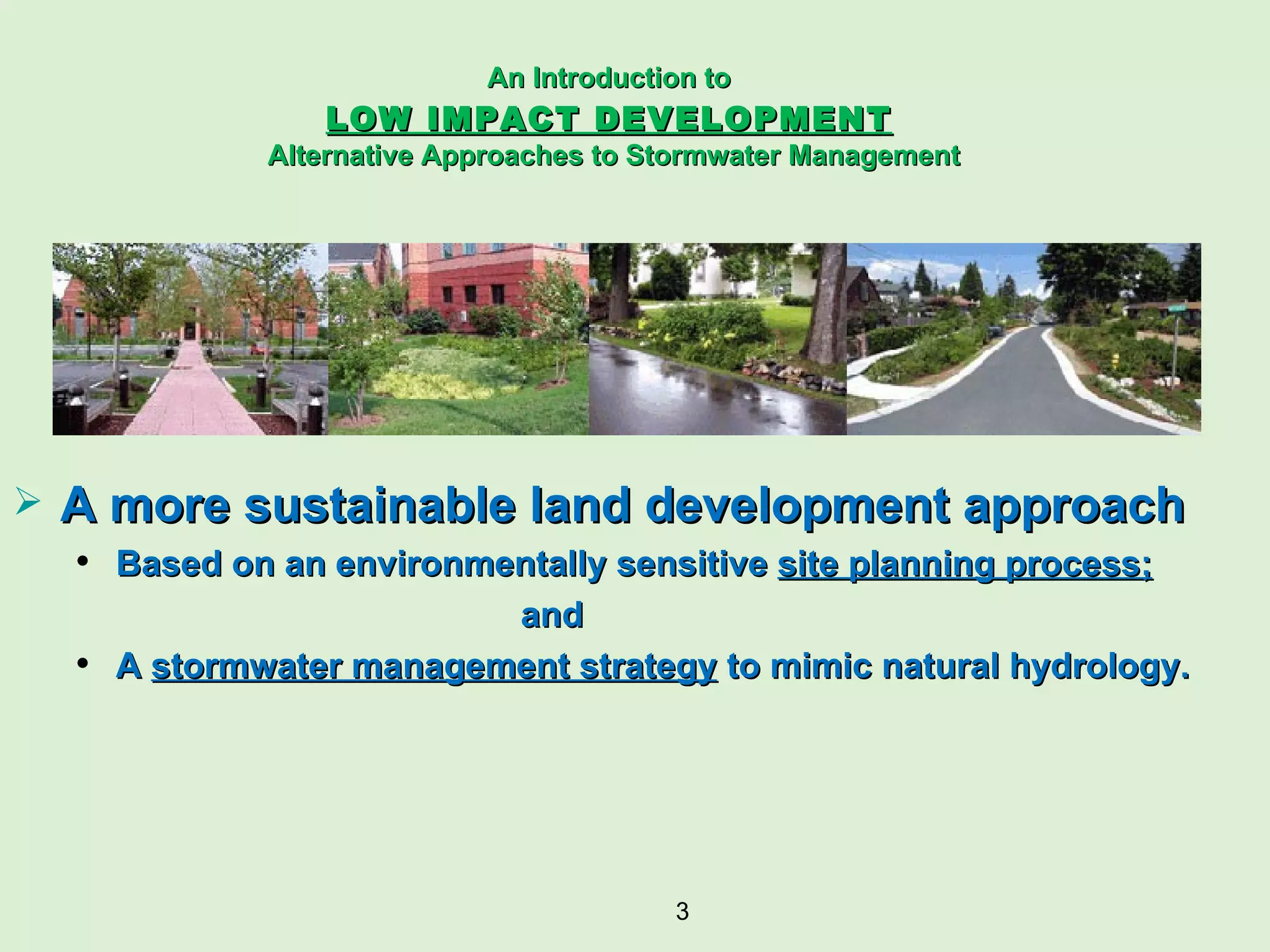
A more sustainable land development approach  Based on an environmentally sensitive  site planning process;   and A  stormwater management strategy  to mimic natural hydrology. An Introduction to   LOW IMPACT DEVELOPMENT   Alternative Approaches to Stormwater Management
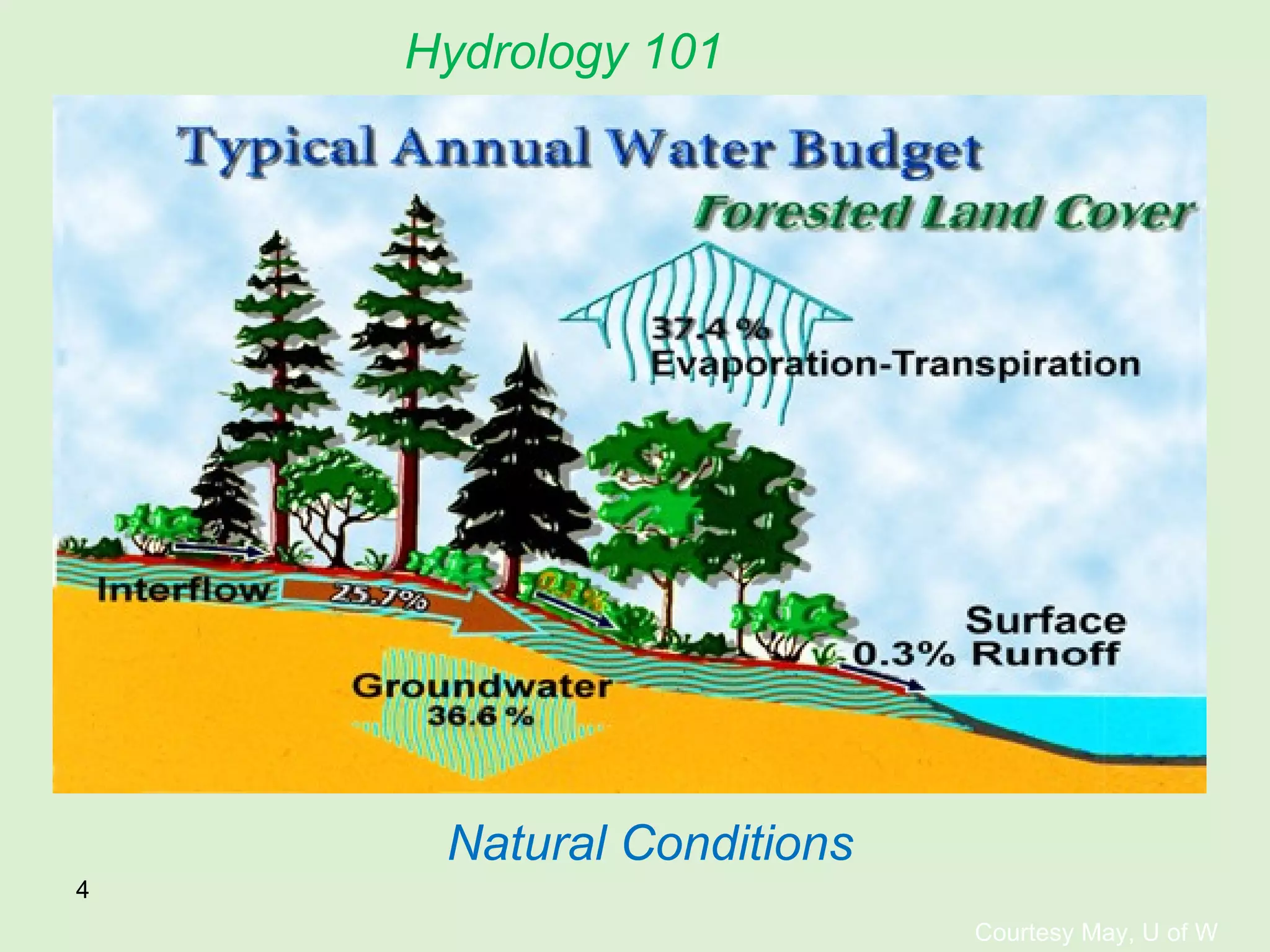
Courtesy May, U of W Natural Conditions Hydrology 101
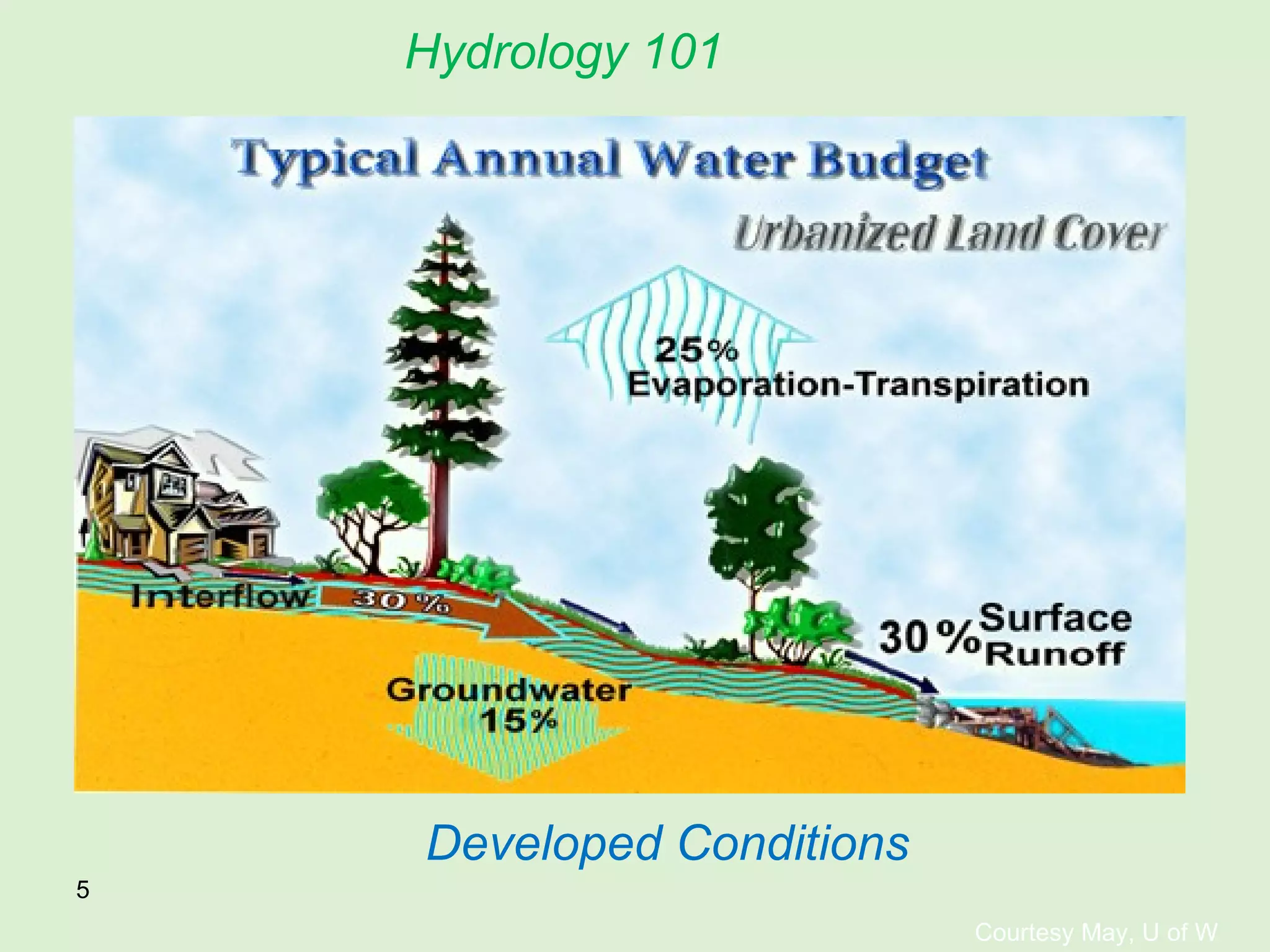
Courtesy May, U of W Developed Conditions Hydrology 101
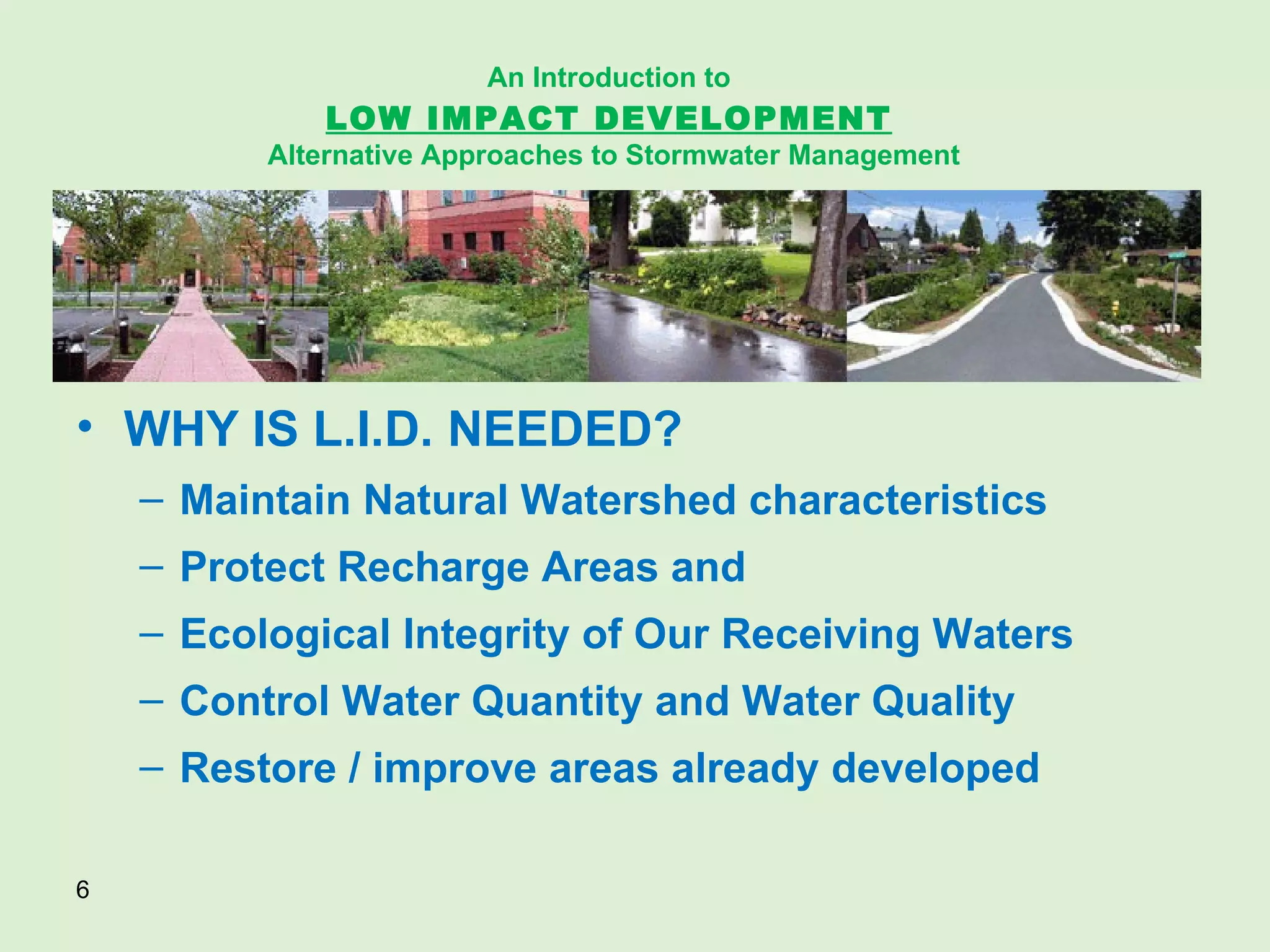
WHY IS L.I.D. NEEDED? Maintain Natural Watershed characteristics Protect Recharge Areas and Ecological Integrity of Our Receiving Waters Control Water Quantity and Water Quality Restore / improve areas already developed An Introduction to   LOW IMPACT DEVELOPMENT   Alternative Approaches to Stormwater Management
Better site design: to identify and preserve natural features; to maintain natural hydrology; to help respect abutter’s properties; to retain property values; to augment groundwater supplies; to maintain high water quality. Local Authorities’ Perspective:
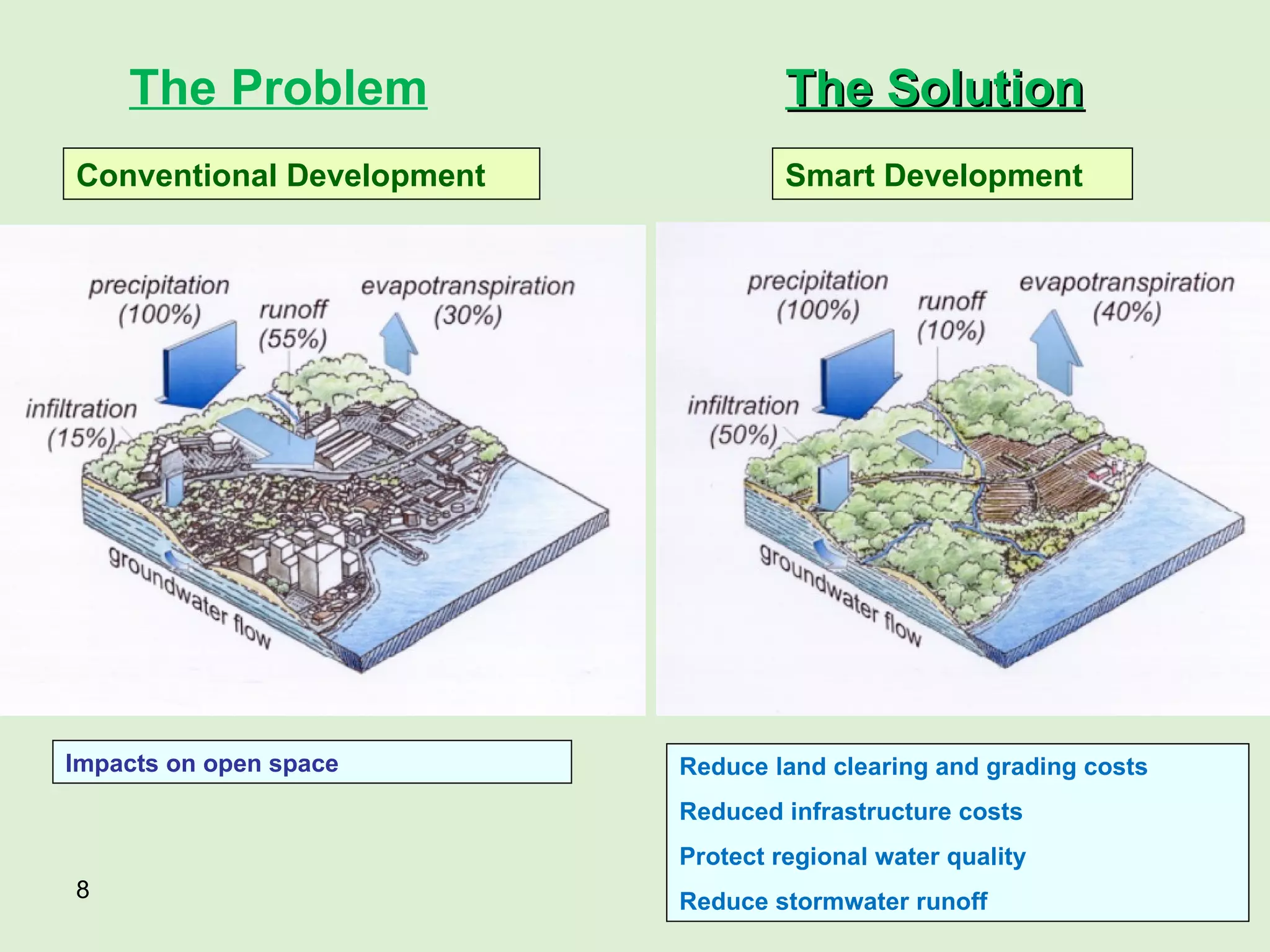
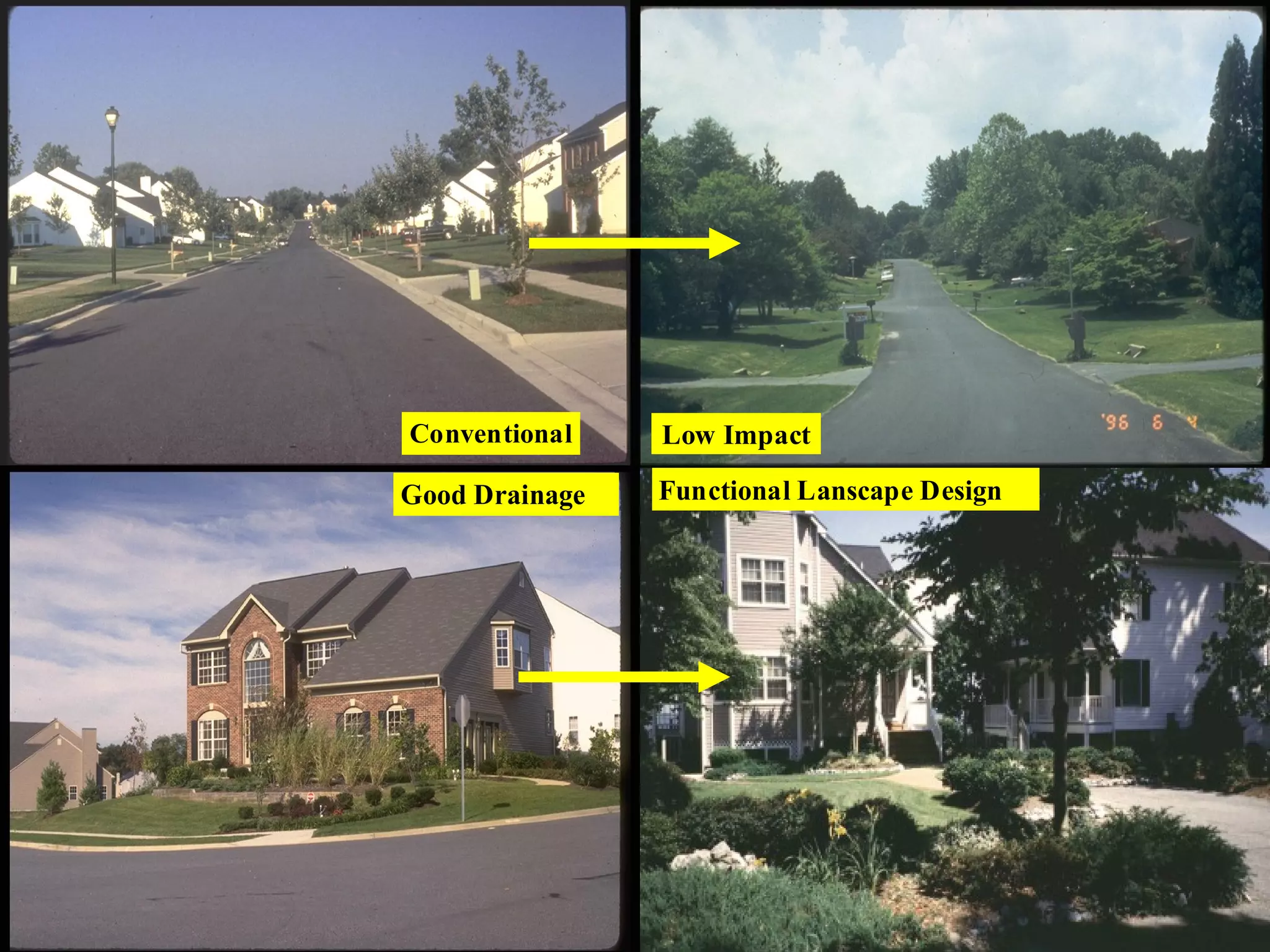
The Problem Conventional Development Smart Development Reduce land clearing and grading costs Reduced infrastructure costs Protect regional water quality Reduce stormwater runoff The Solution Impacts on open space
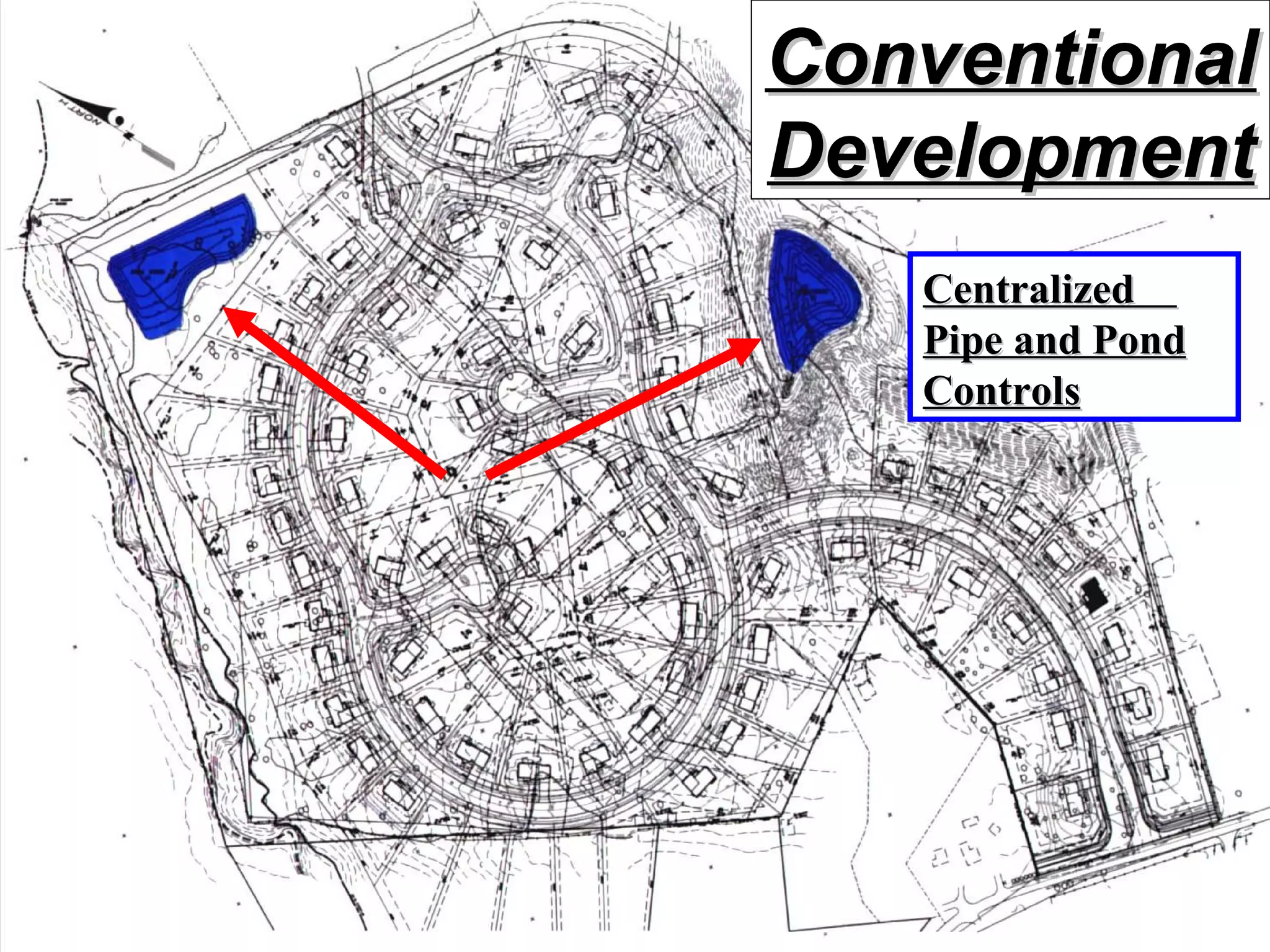
Conventional Development Centralized  Pipe and Pond Controls
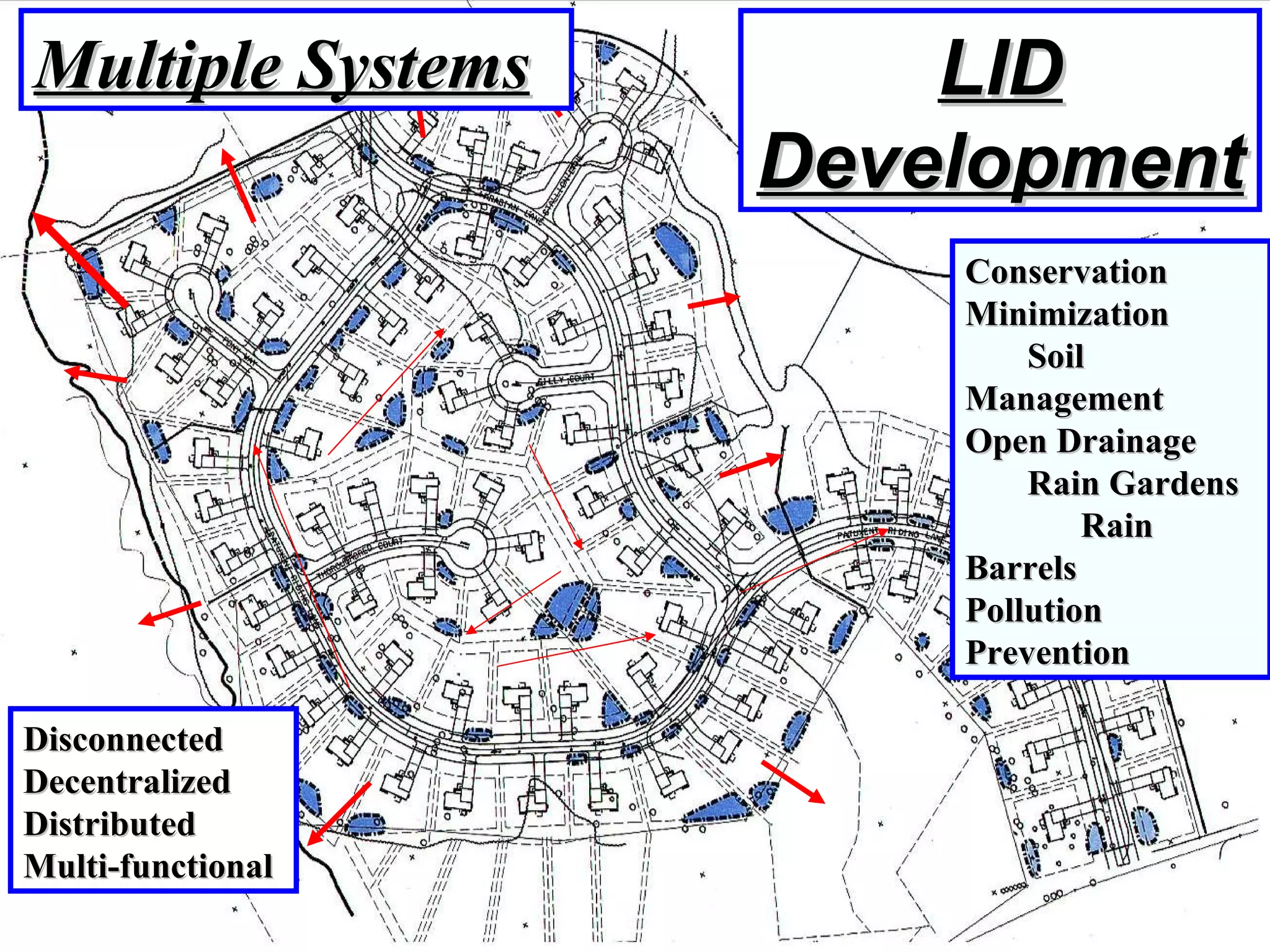
LID Development Conservation  Minimization  Soil Management  Open Drainage  Rain Gardens  Rain Barrels  Pollution Prevention  Disconnected Decentralized  Distributed  Multi-functional  Multiple Systems
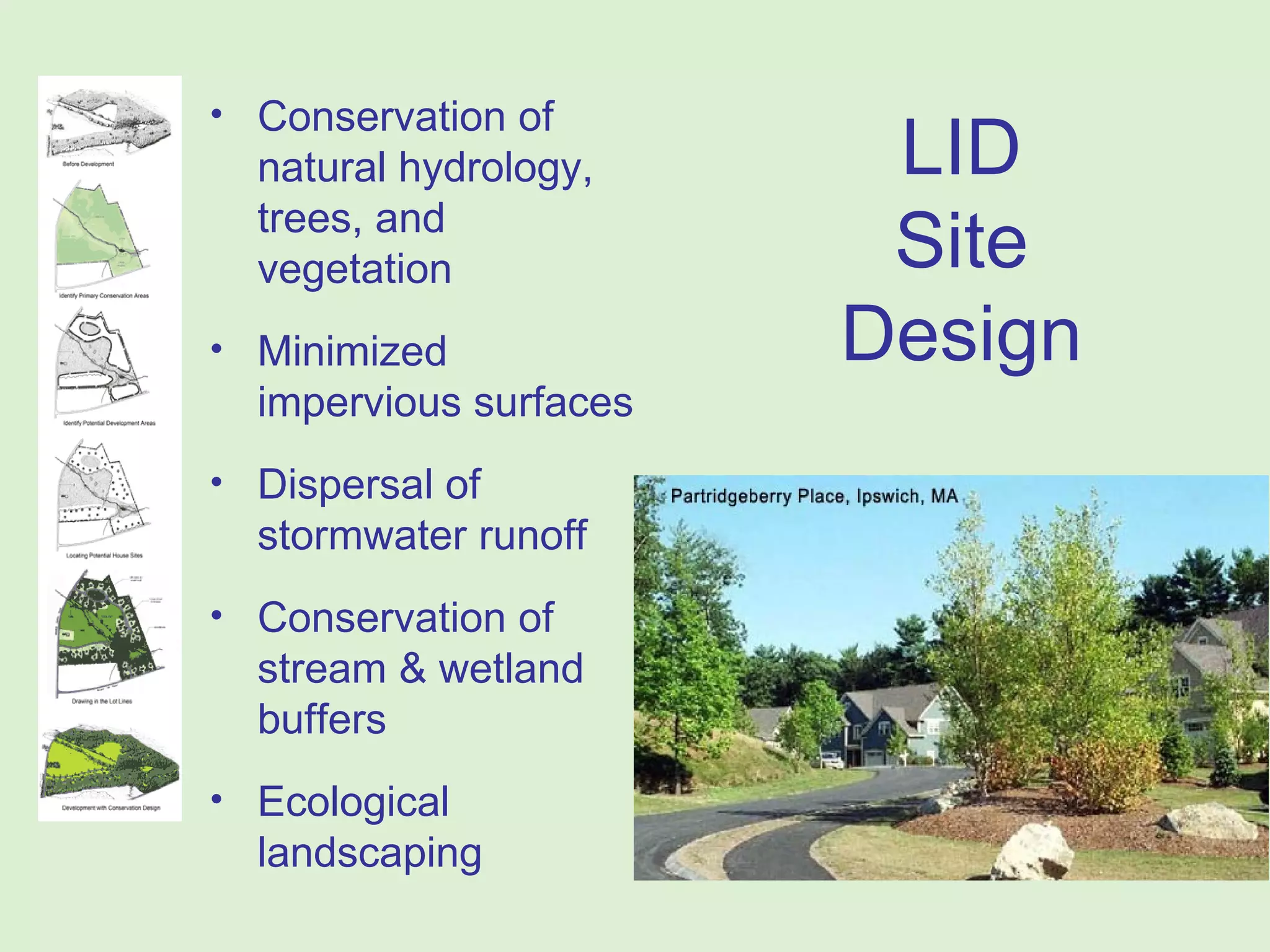
LID  Site  Design Conservation of natural hydrology, trees, and vegetation Minimized impervious surfaces Dispersal of stormwater runoff Conservation of stream & wetland buffers Ecological landscaping
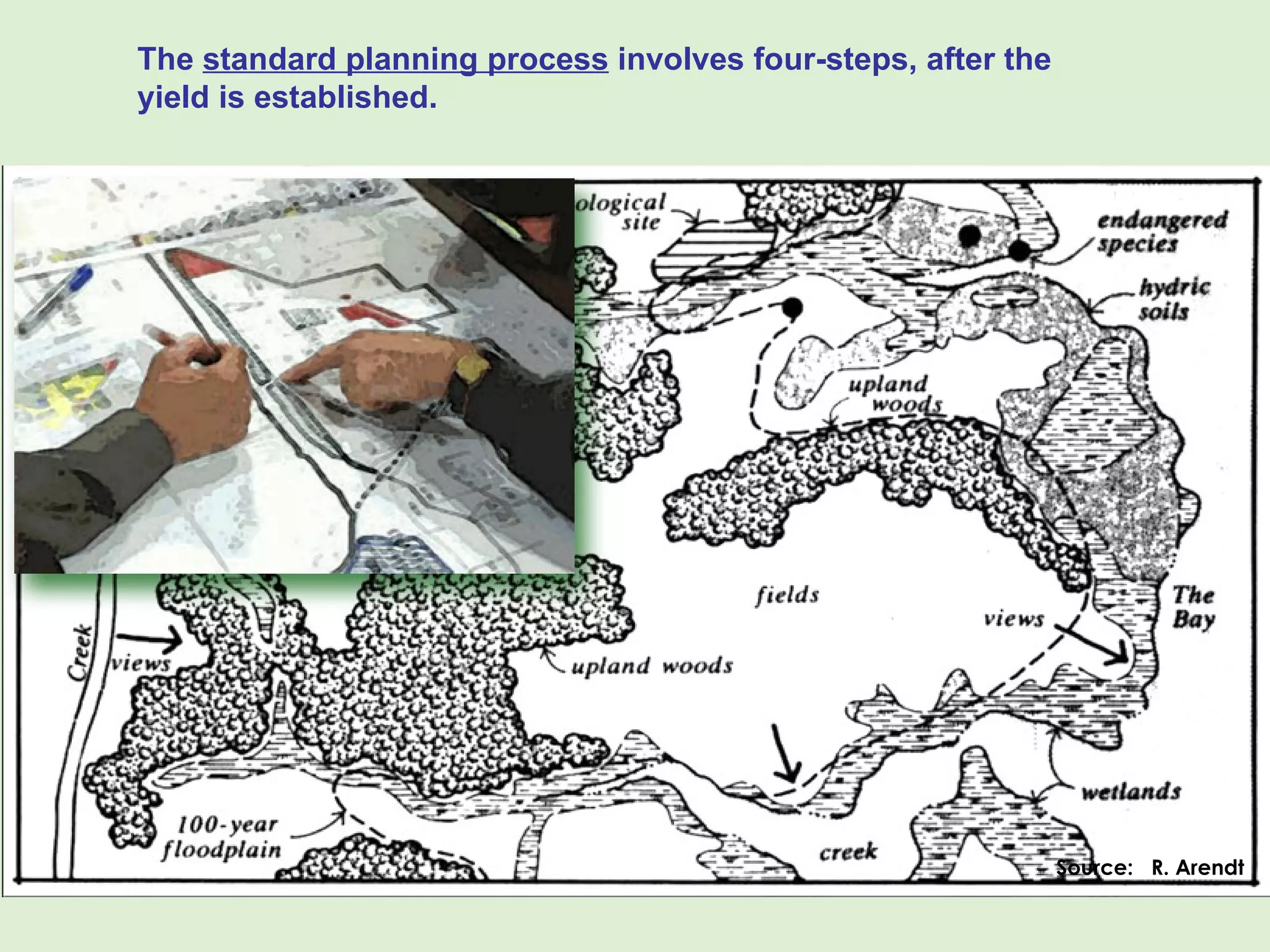
The  standard planning process  involves four-steps, after the yield is established. Source:  R. Arendt
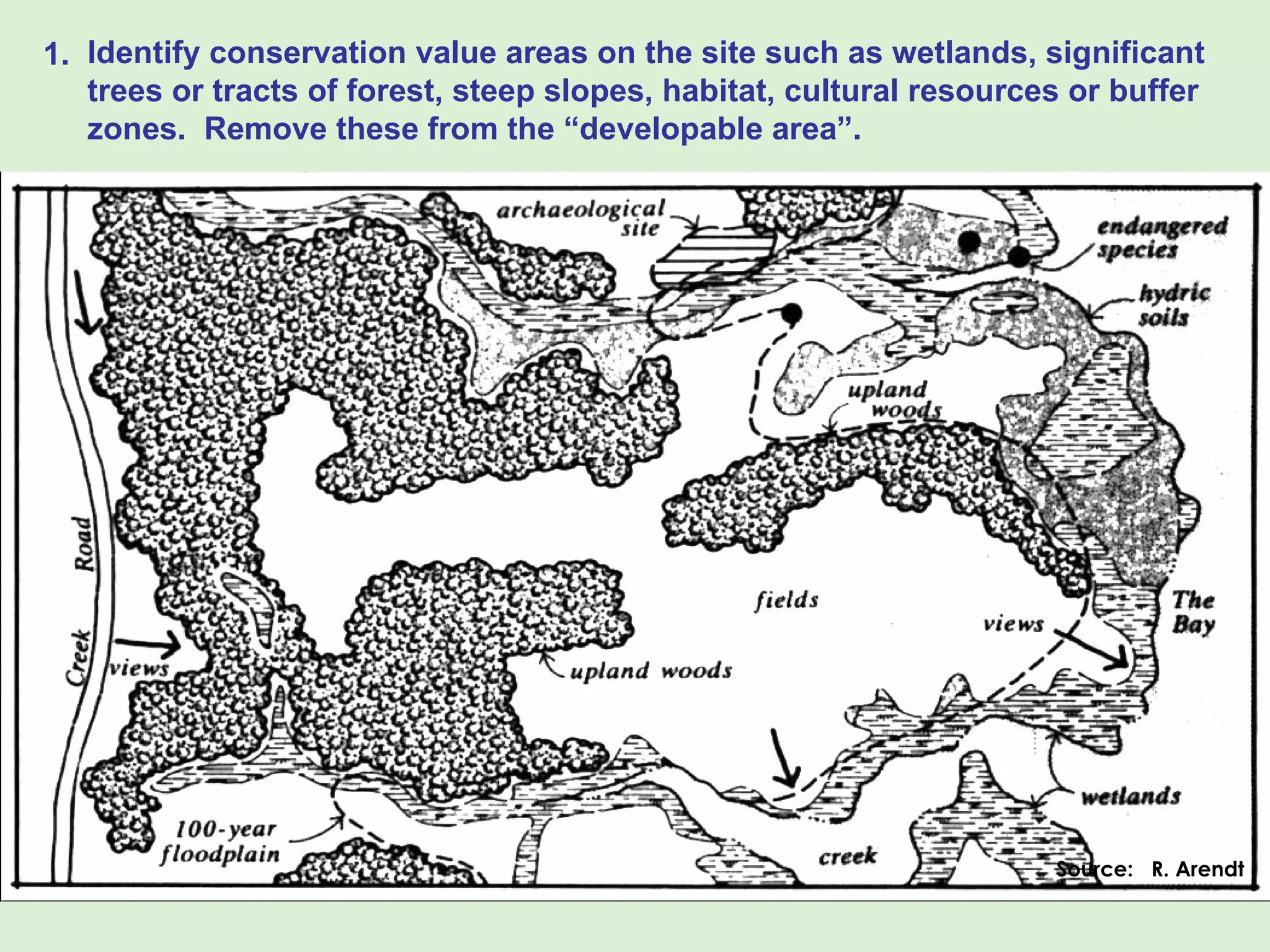
Identify conservation value areas on the site such as wetlands, significant trees or tracts of forest, steep slopes, habitat, cultural resources or buffer zones.  Remove these from the “developable area”. 1. Source:  R. Arendt
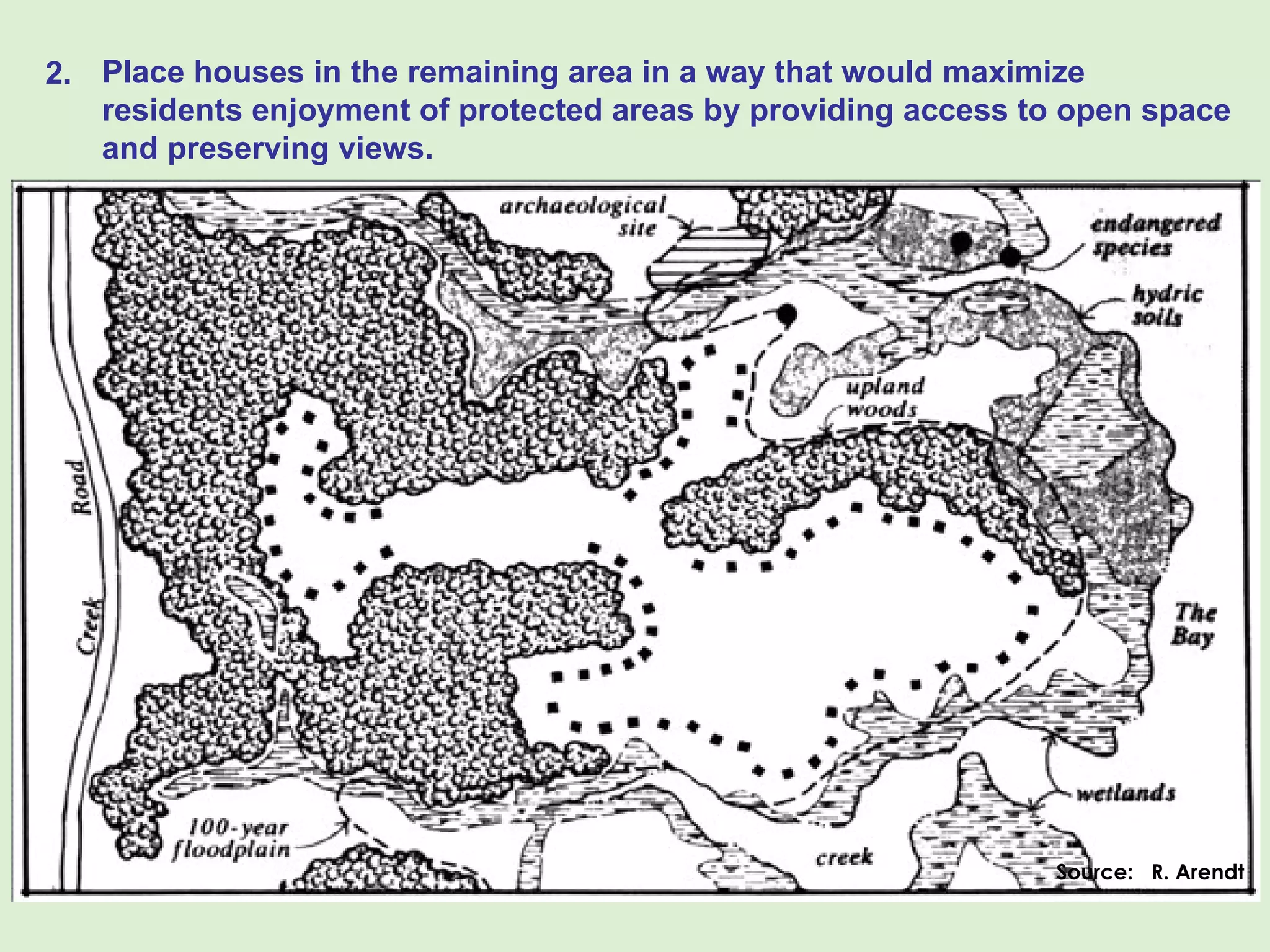
Place houses in the remaining area in a way that would maximize  residents enjoyment of protected areas by providing access to open space and preserving views. 2. Source:  R. Arendt
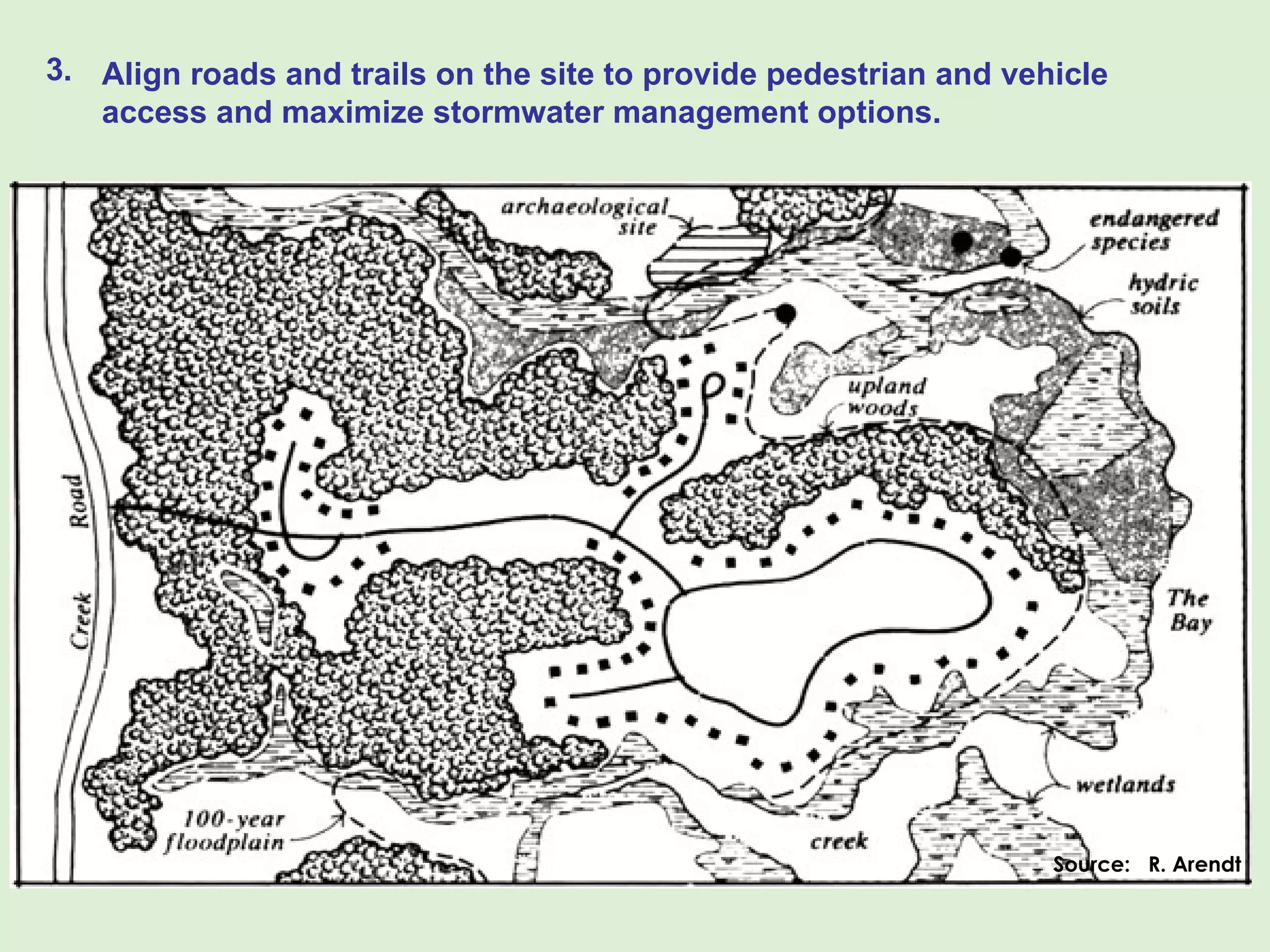
Align roads and trails on the site to provide pedestrian and vehicle access and maximize stormwater management options. 3. Source:  R. Arendt
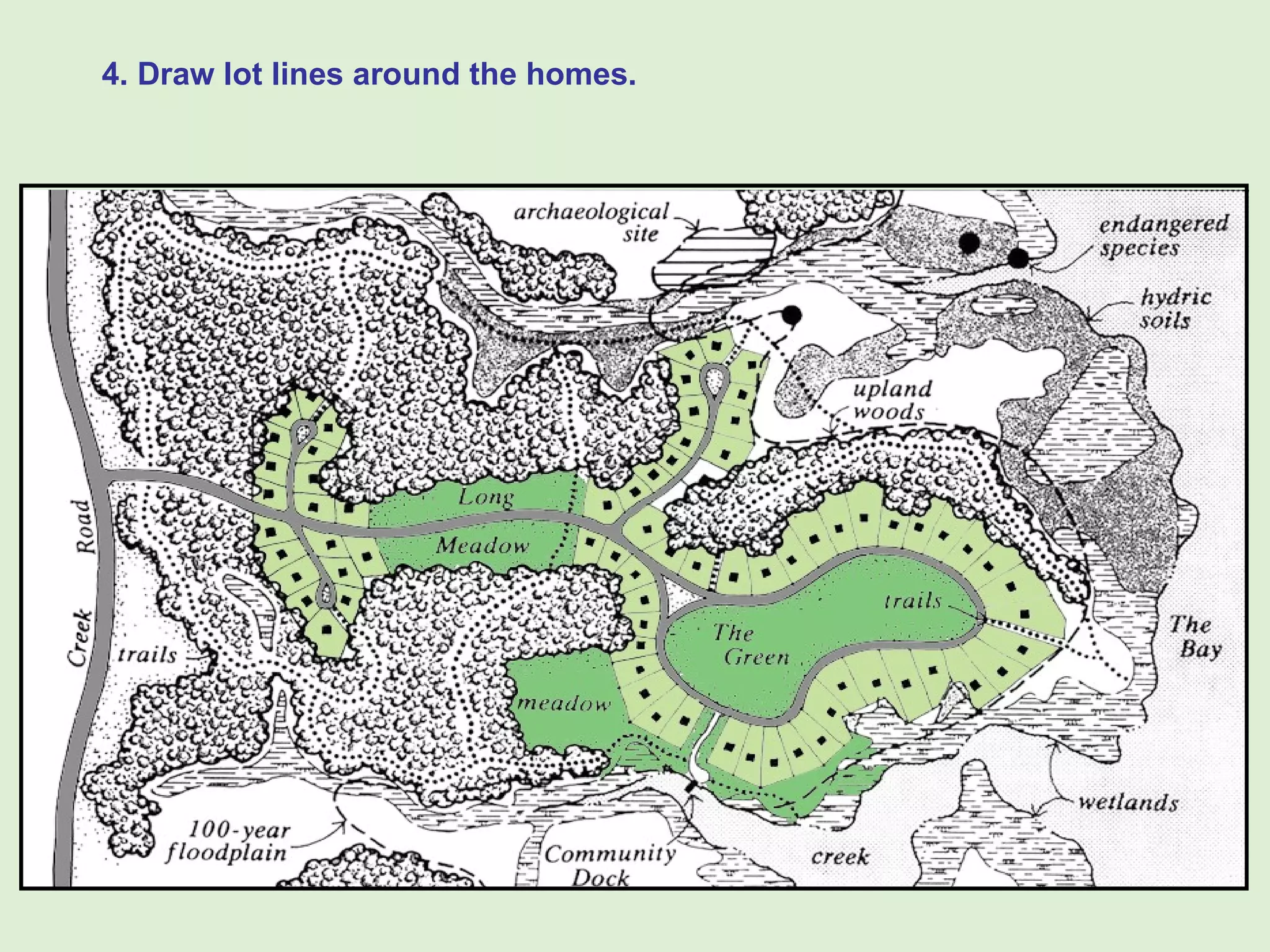
4. Draw lot lines around the homes.
Reduce Stormwater Runoff, Treat Non-Point Source Pollution Site planning techniques  (narrower roads, conserved natural  areas, preserve natural depressions) Dry wells for rooftop runoff; Grassed (vegetated) swales; Filter buffer strips; Soil Augmentation; Bioretention areas; Permeable pavers; Green roofs; Rain barrels and cisterns; and Stormwater planters. LID Best Management Practices
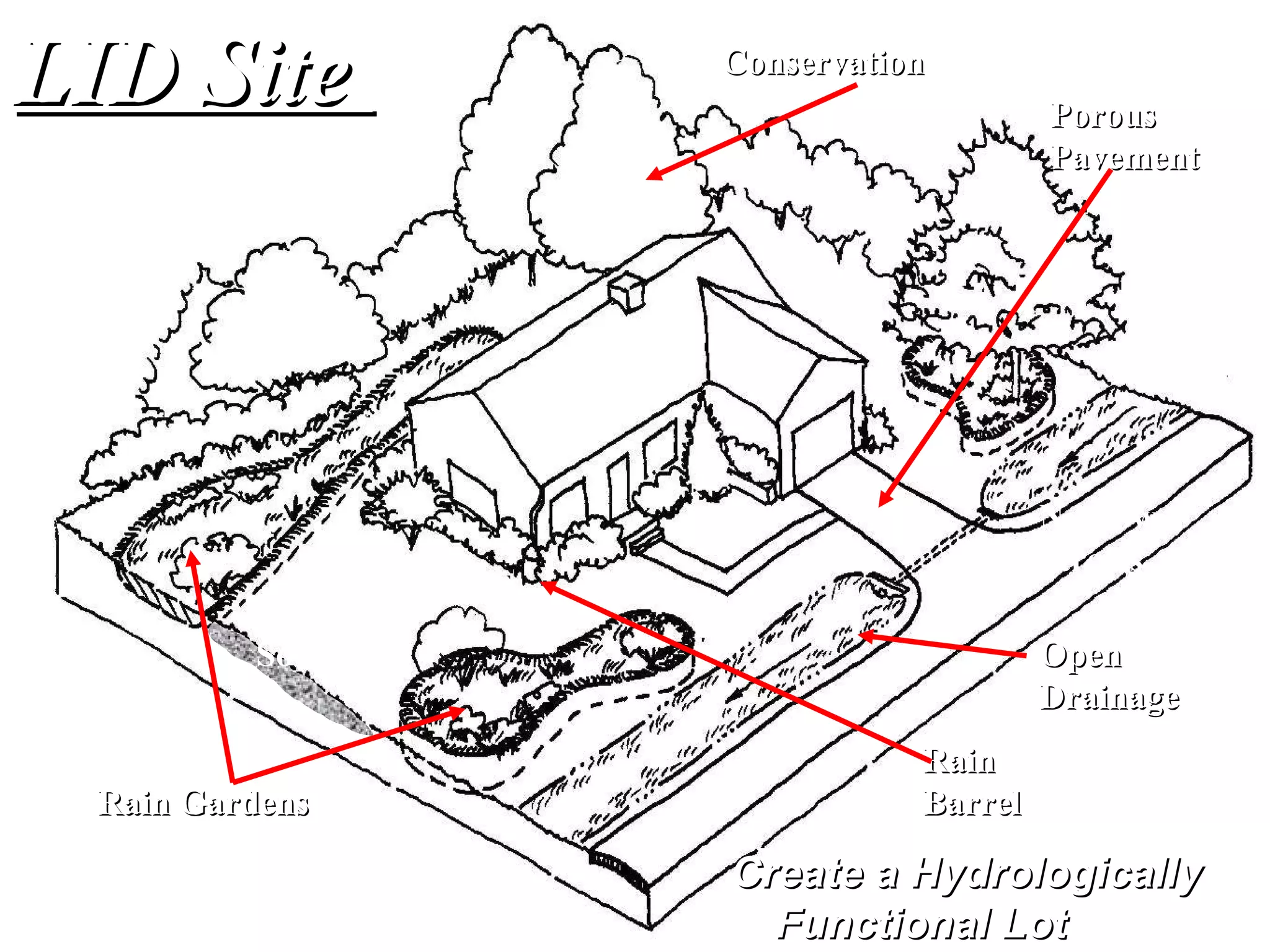
Conservation  Open Drainage Rain Gardens   Amended Soils Rain Barrel Lot Level  Source Controls LID Site  Porous Pavement  Create a Hydrologically  Functional Lot Narrower Streets
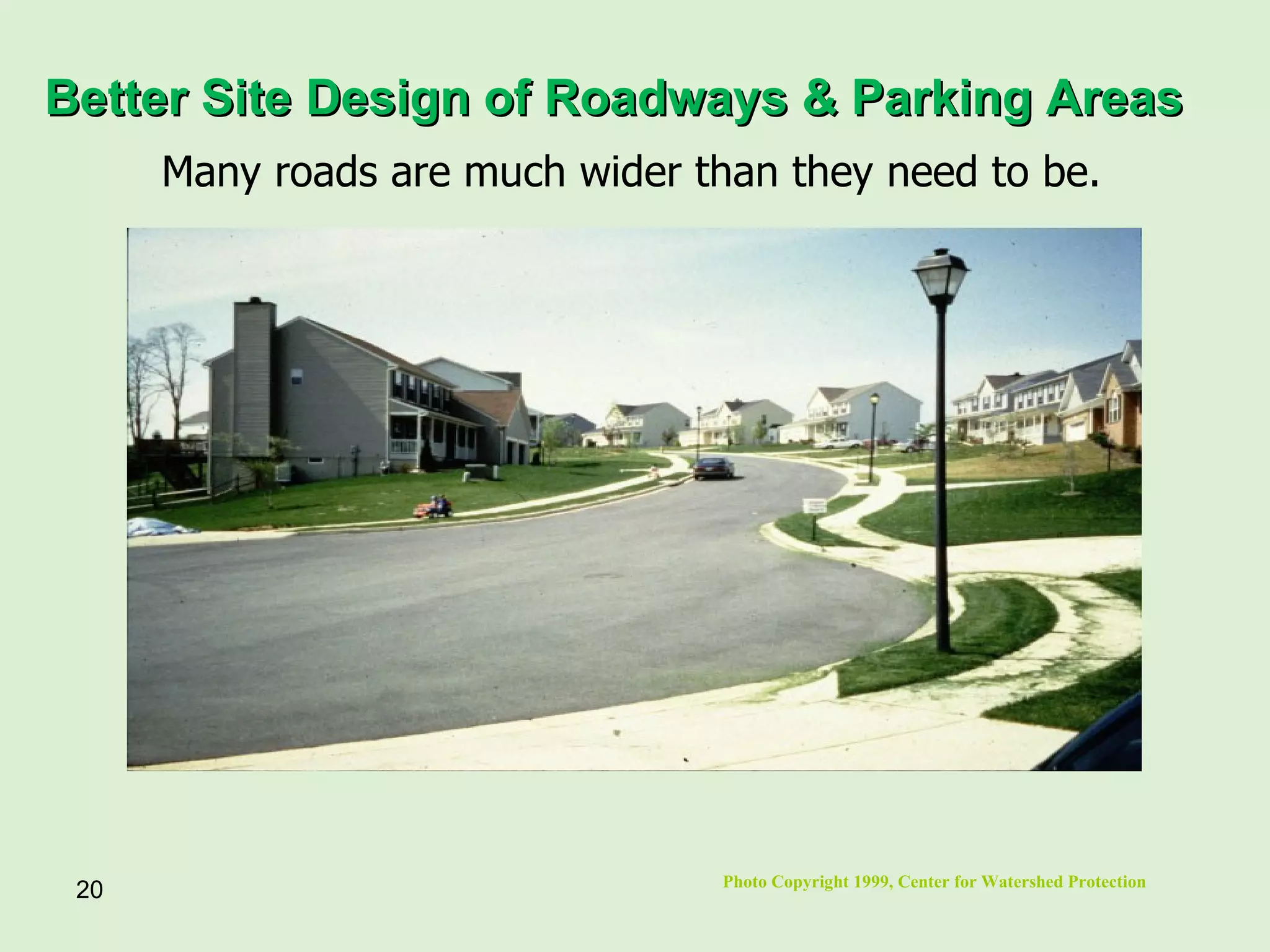
Photo Copyright 1999, Center for Watershed Protection Many roads are much wider than they need to be.   Better Site Design of Roadways & Parking Areas
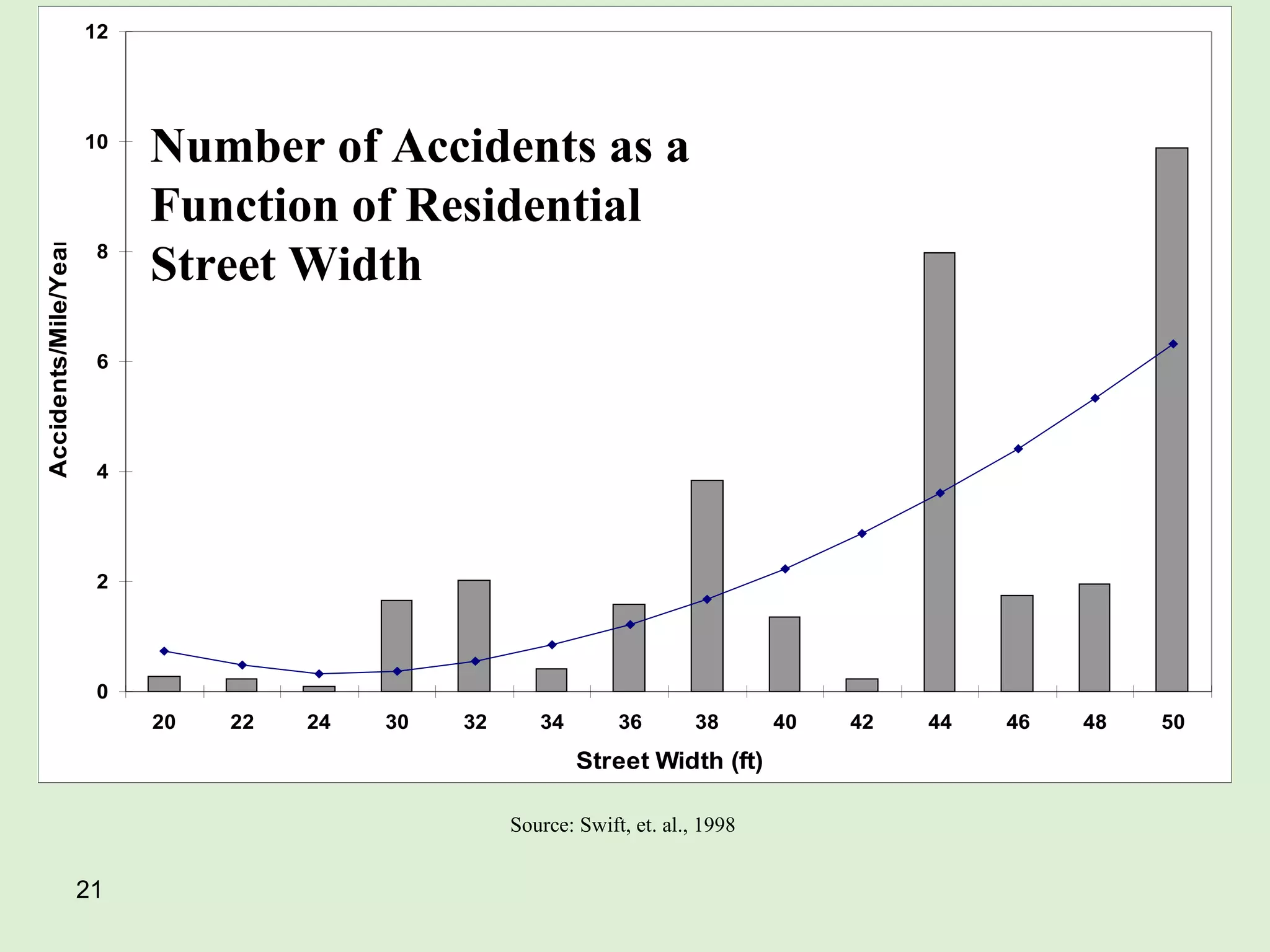
Number of Accidents as a Function of Residential  Street Width Source: Swift, et. al., 1998
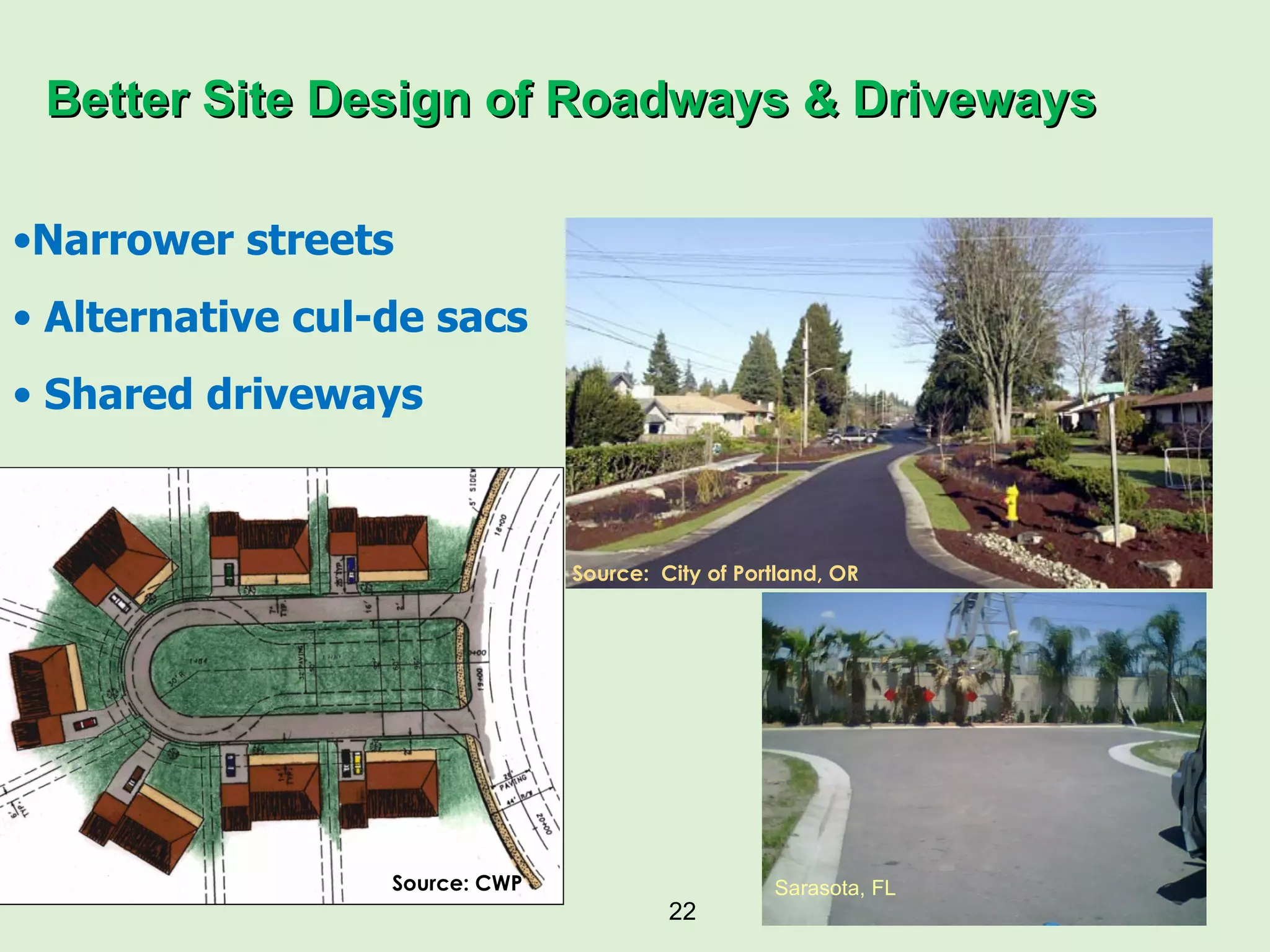
Better Site Design of Roadways & Driveways Narrower streets Alternative cul-de sacs Shared driveways Source:  City of Portland, OR Source: CWP Sarasota, FL
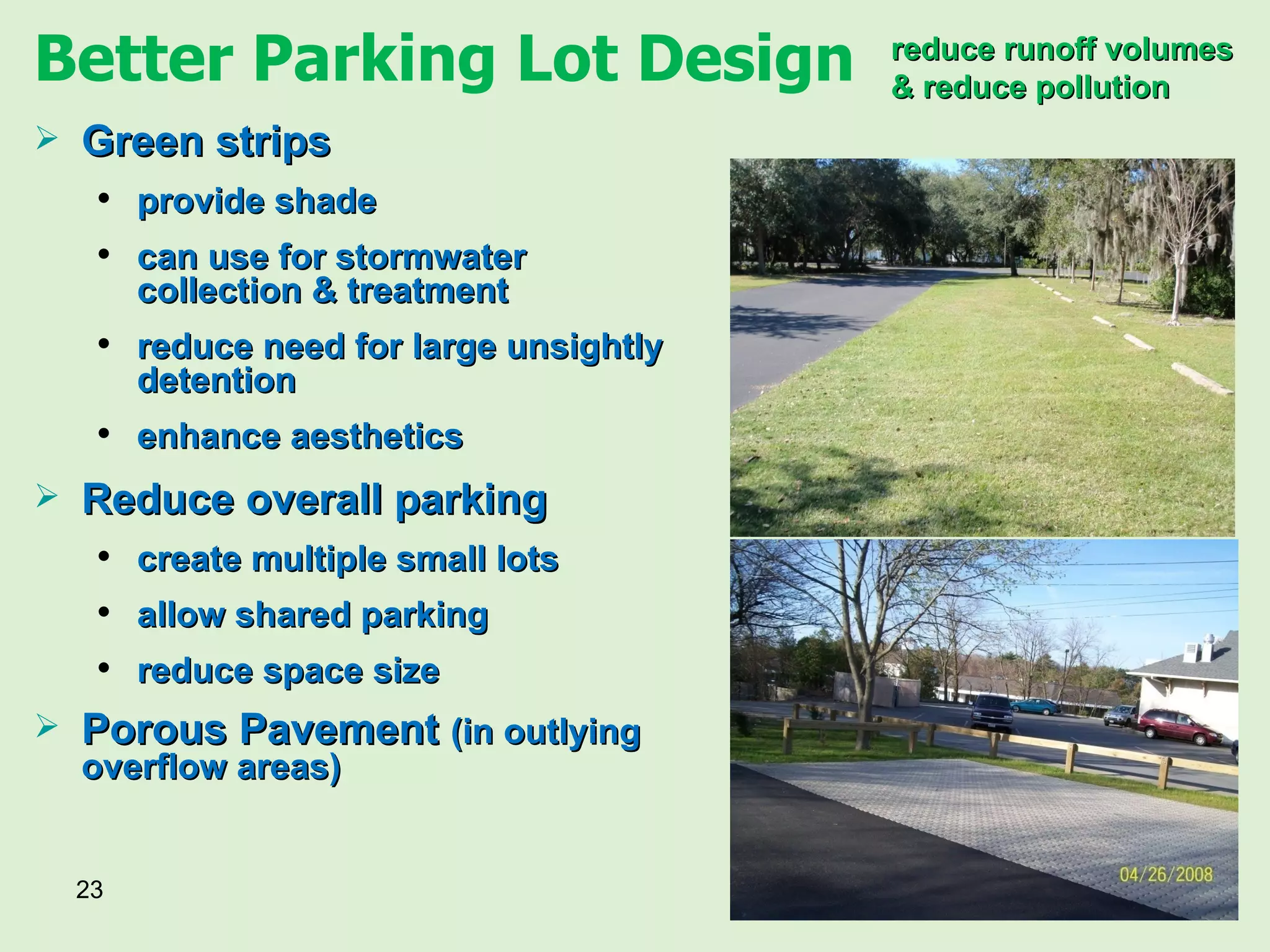
Better Parking Lot Design Green strips provide shade can use for stormwater collection & treatment reduce need for large unsightly detention enhance aesthetics Reduce overall parking create multiple small lots allow shared parking reduce space size Porous Pavement  (in outlying overflow areas) Sarasota FL reduce runoff volumes & reduce pollution
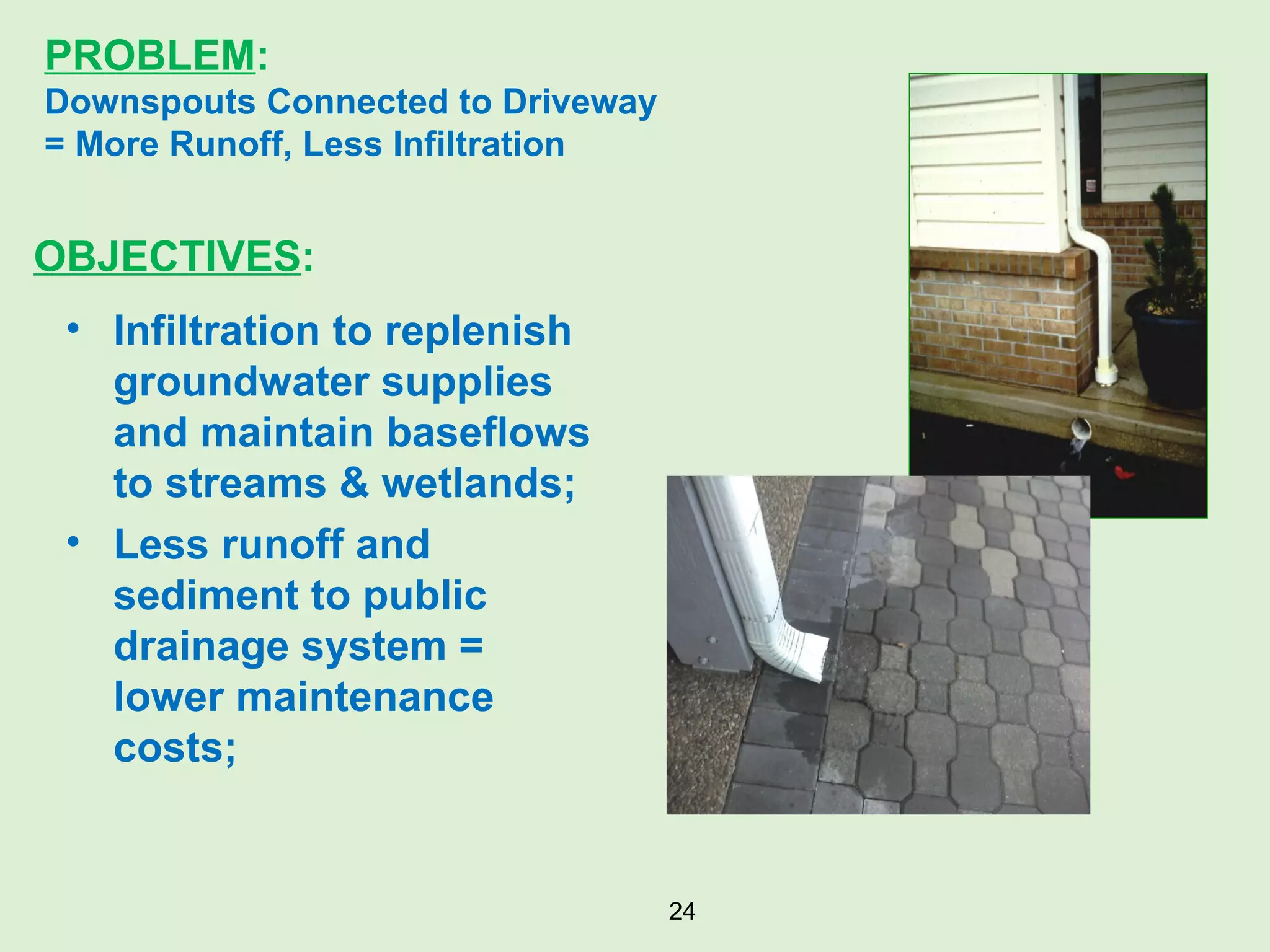
Infiltration to replenish groundwater supplies and maintain baseflows to streams & wetlands; Less runoff and sediment to public drainage system = lower maintenance costs; PROBLEM :   Downspouts Connected to Driveway = More Runoff, Less Infiltration OBJECTIVES :
SOLUTIONS : Dry Well Infiltration of Roof Runoff Rooftop Runoff to vegetated swale Source: CWP
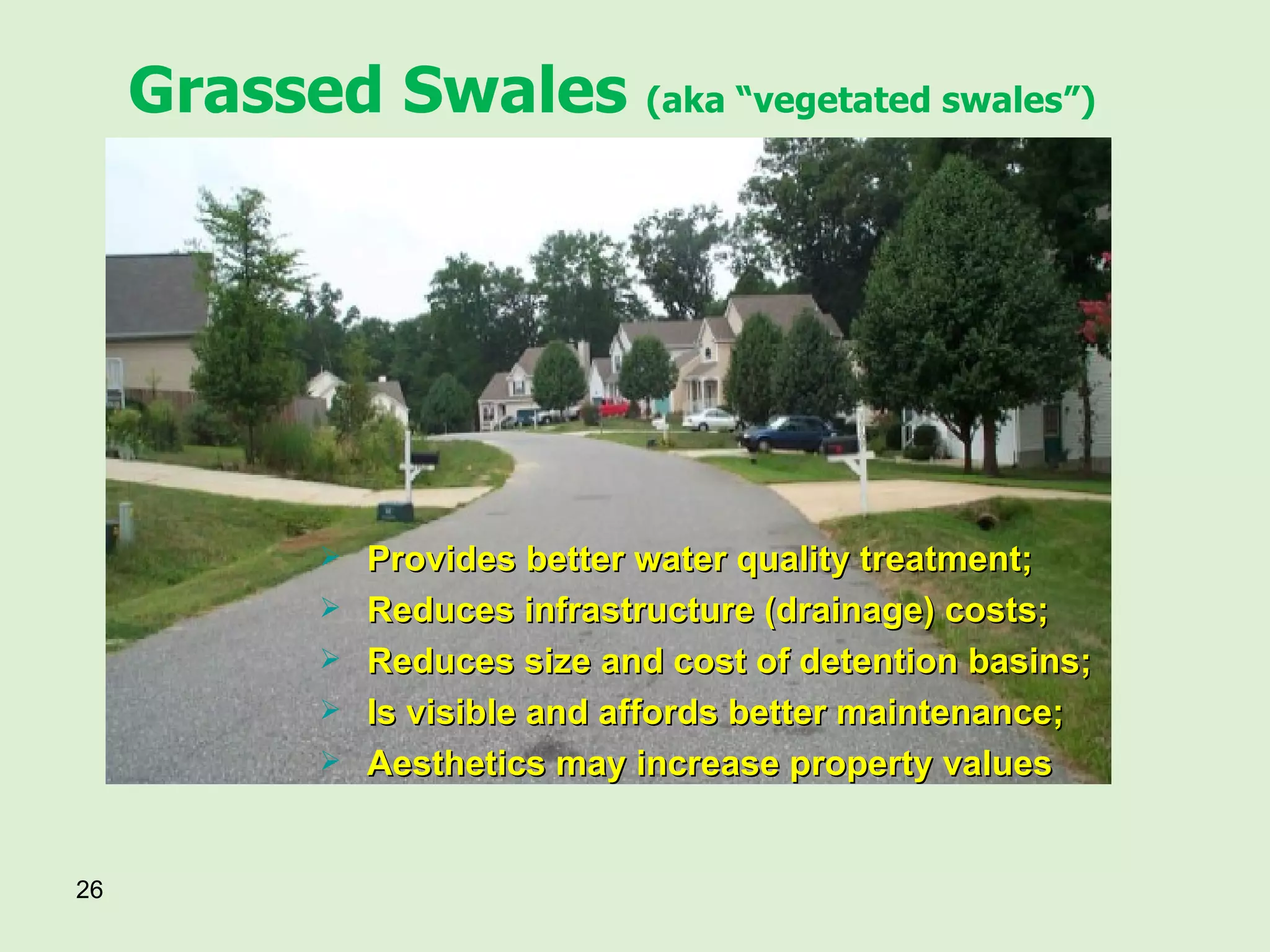
Grassed Swales  (aka “vegetated swales”) Provides better water quality treatment; Reduces infrastructure (drainage) costs; Reduces size and cost of detention basins; Is visible and affords better maintenance; Aesthetics may increase property values
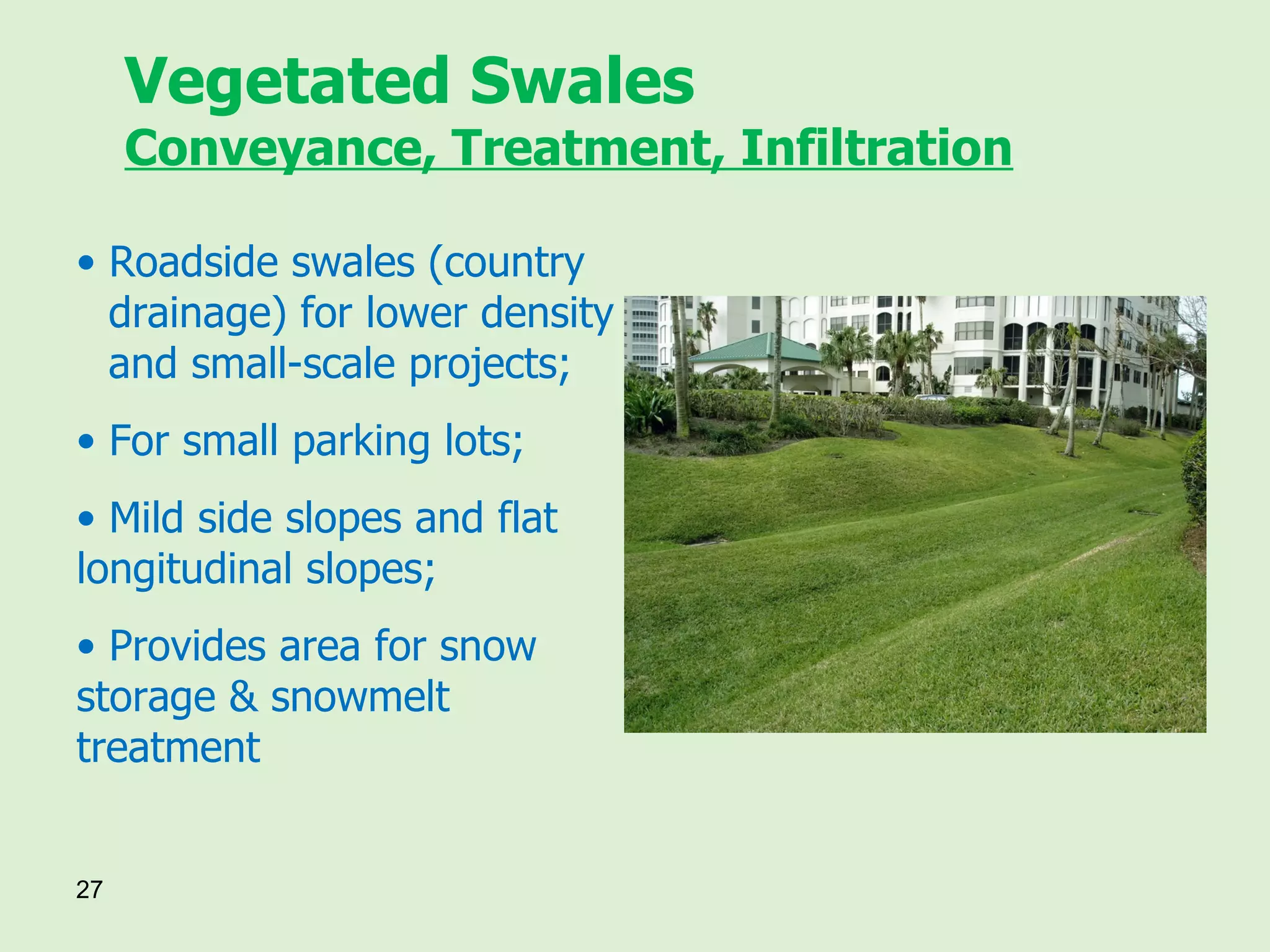
Vegetated Swales Conveyance, Treatment, Infiltration Roadside swales (country  drainage) for lower density  and small-scale projects; For small parking lots; Mild side slopes and flat  longitudinal slopes; Provides area for snow  storage & snowmelt  treatment
Bioretention (Biofiltration) Treatment, Retention, Infiltration, Landscaping Excavation filled with  engineered soil mix Herbaceous perennials,  shrubs, trees Ponded water infiltrates  within 72 hours Overflow outlet and  optional underdrain Source: CWP
Bioretention Treatment, Retention, Infiltration, Landscaping
Ref:  Preliminary Sarasota County LID Manual, 2008 Bioretention Plan View
Soil / Flora / Fauna  Ecological Structure A Dynamic Living Ecosystem Cycling Nutrients, Chemicals and Organic Energy Sources Plants,  Bacteria Protozoa, Fungus Worms, Insects Mammals .
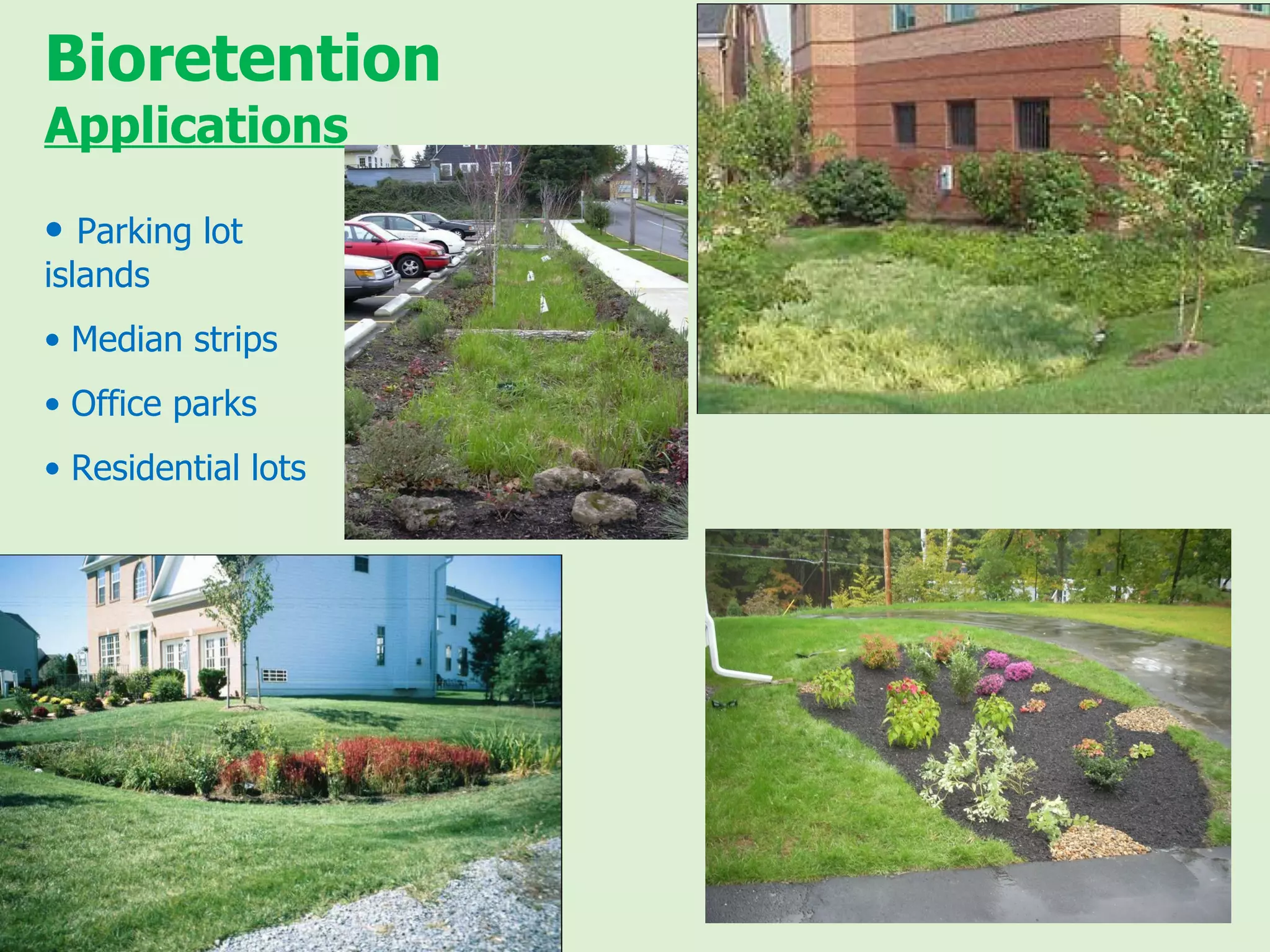
Bioretention Applications Parking lot islands Median strips Office parks Residential lots
Bioretention Area Small parking lots
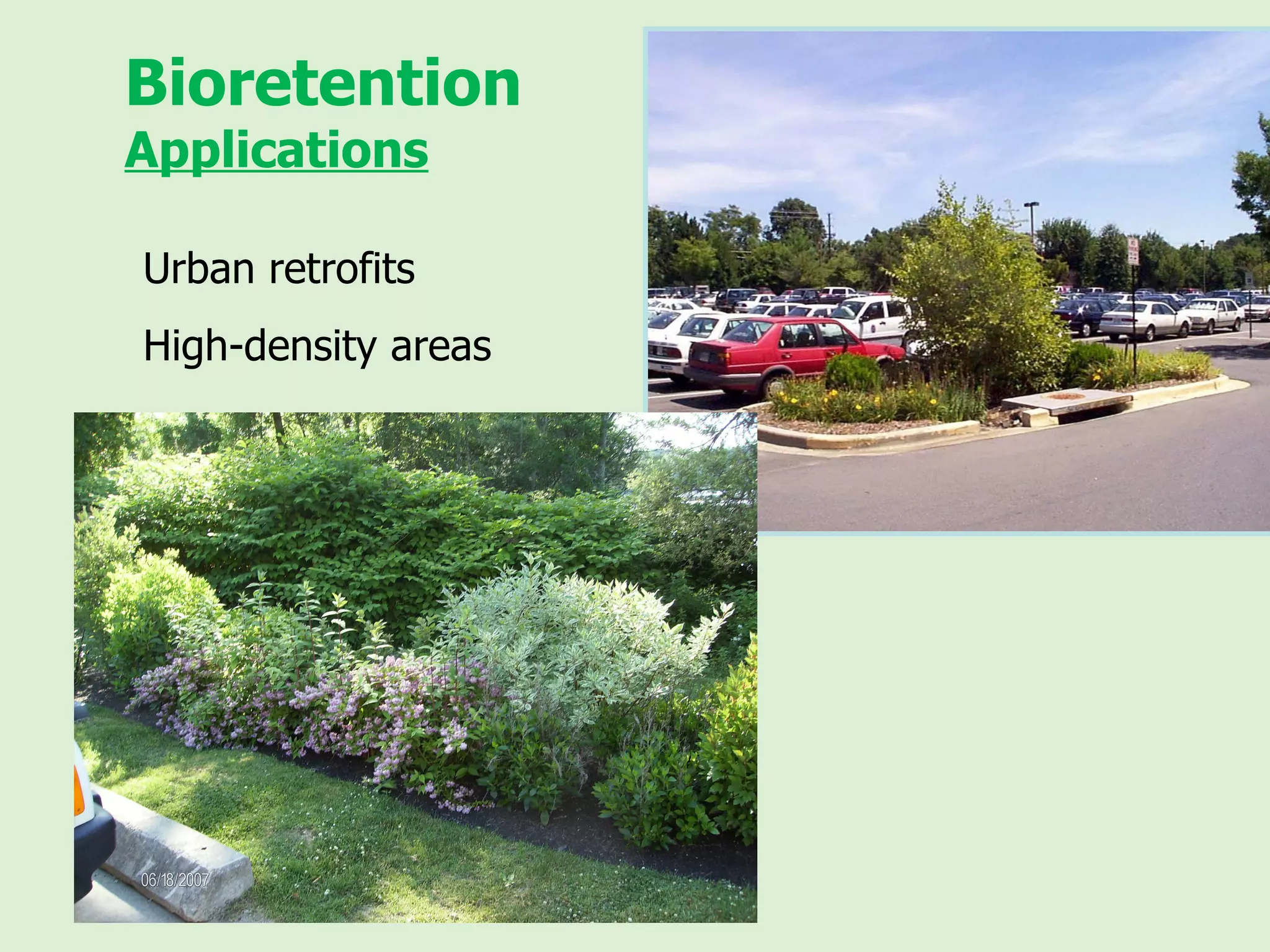
Bioretention Applications Urban retrofits High-density areas
 
Grass pavers Paving stones Porous asphalt Pervious concrete Reinforced turf Permeable  Paving Runoff Reduction
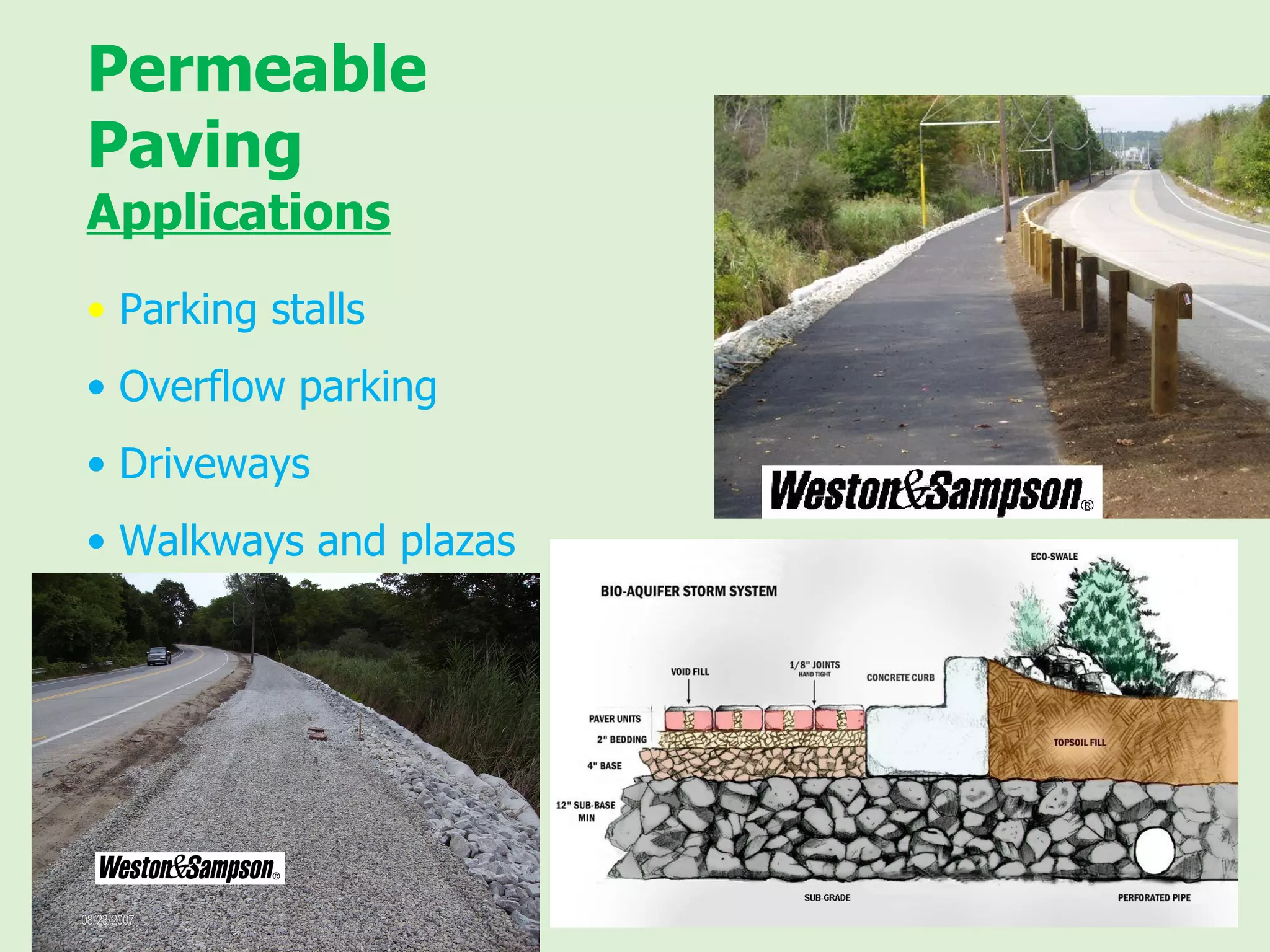
Permeable  Paving Applications Parking stalls Overflow parking Driveways Walkways and plazas
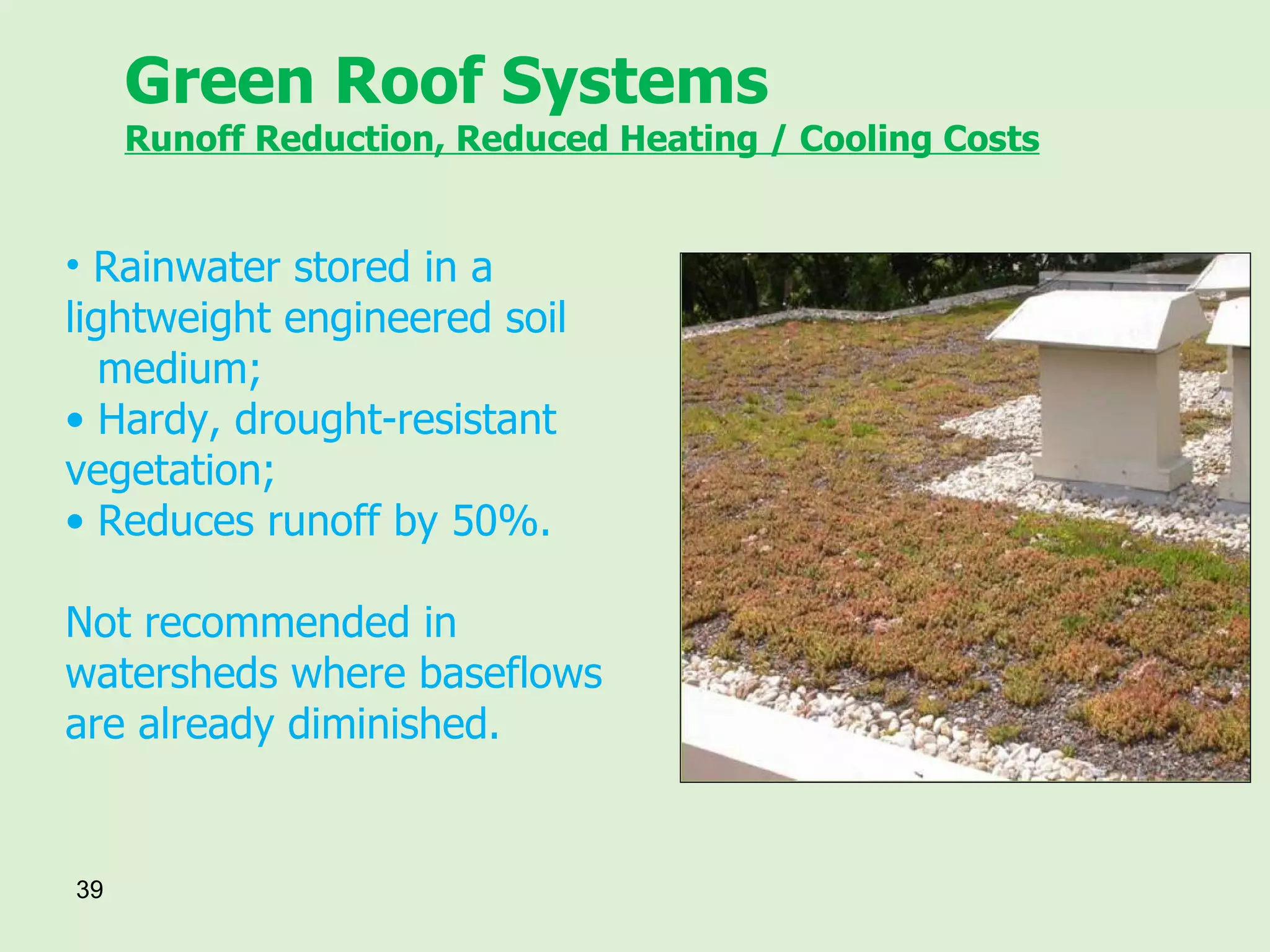
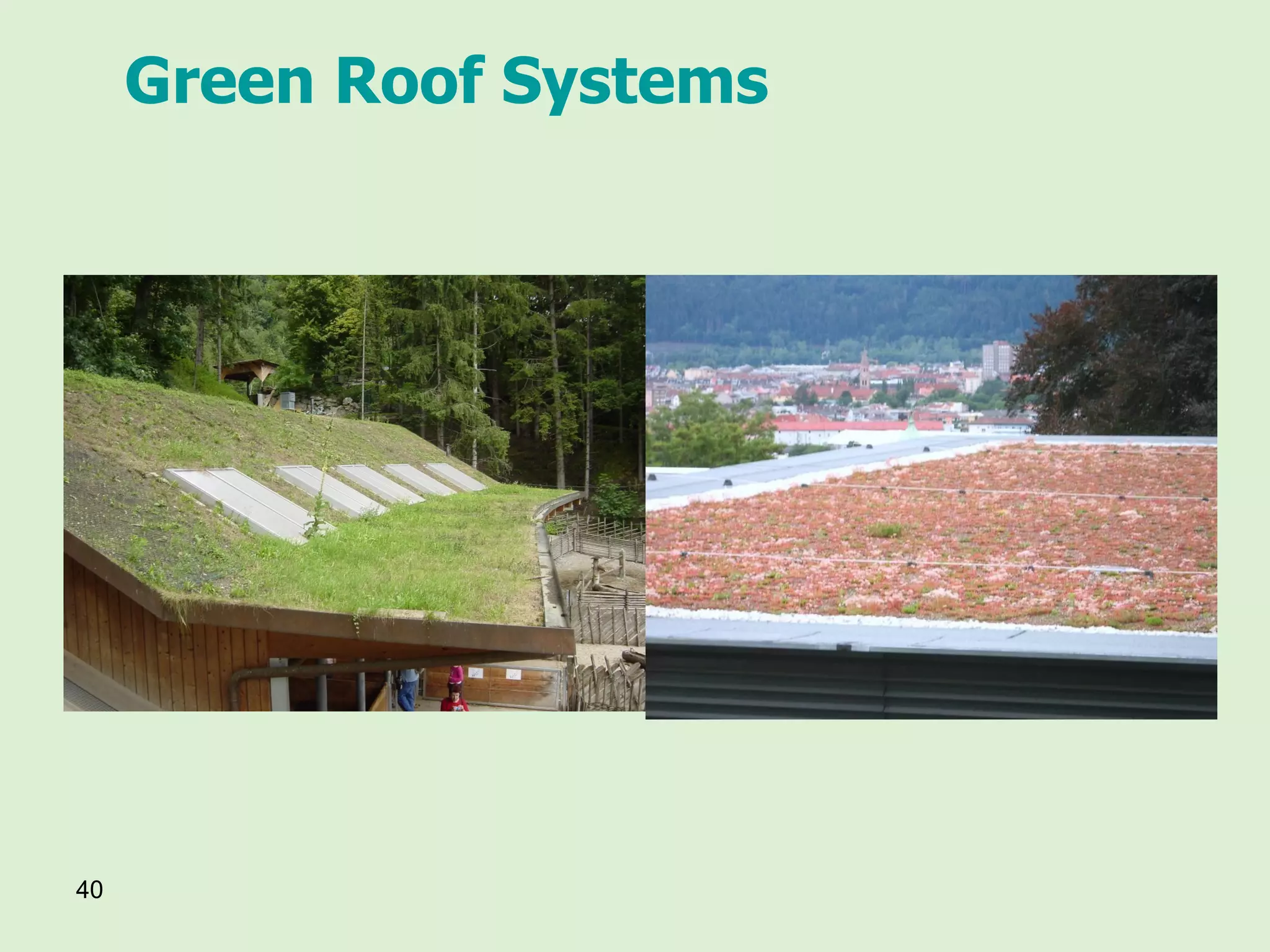
Green Roof Systems Runoff Reduction, Reduced Heating / Cooling Costs Rainwater stored in a  lightweight engineered soil  medium; Hardy, drought-resistant  vegetation; Reduces runoff by 50%. Not recommended in watersheds where baseflows are already diminished.
Green Roof Systems
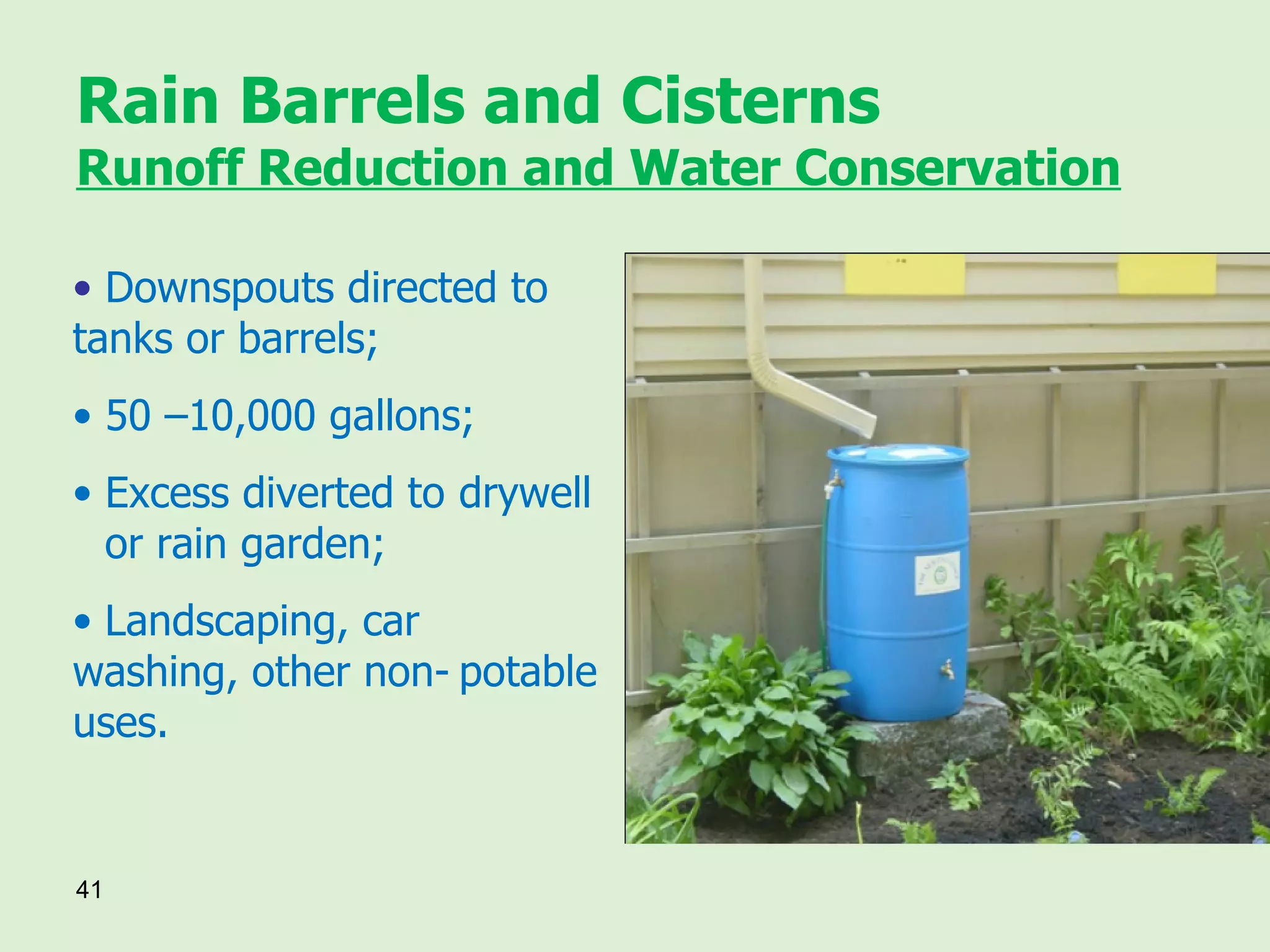
Rain Barrels and Cisterns Runoff Reduction and Water Conservation Downspouts directed to  tanks or barrels; 50 –10,000 gallons; Excess diverted to  drywell  or rain garden; Landscaping, car  washing, other non- potable uses.
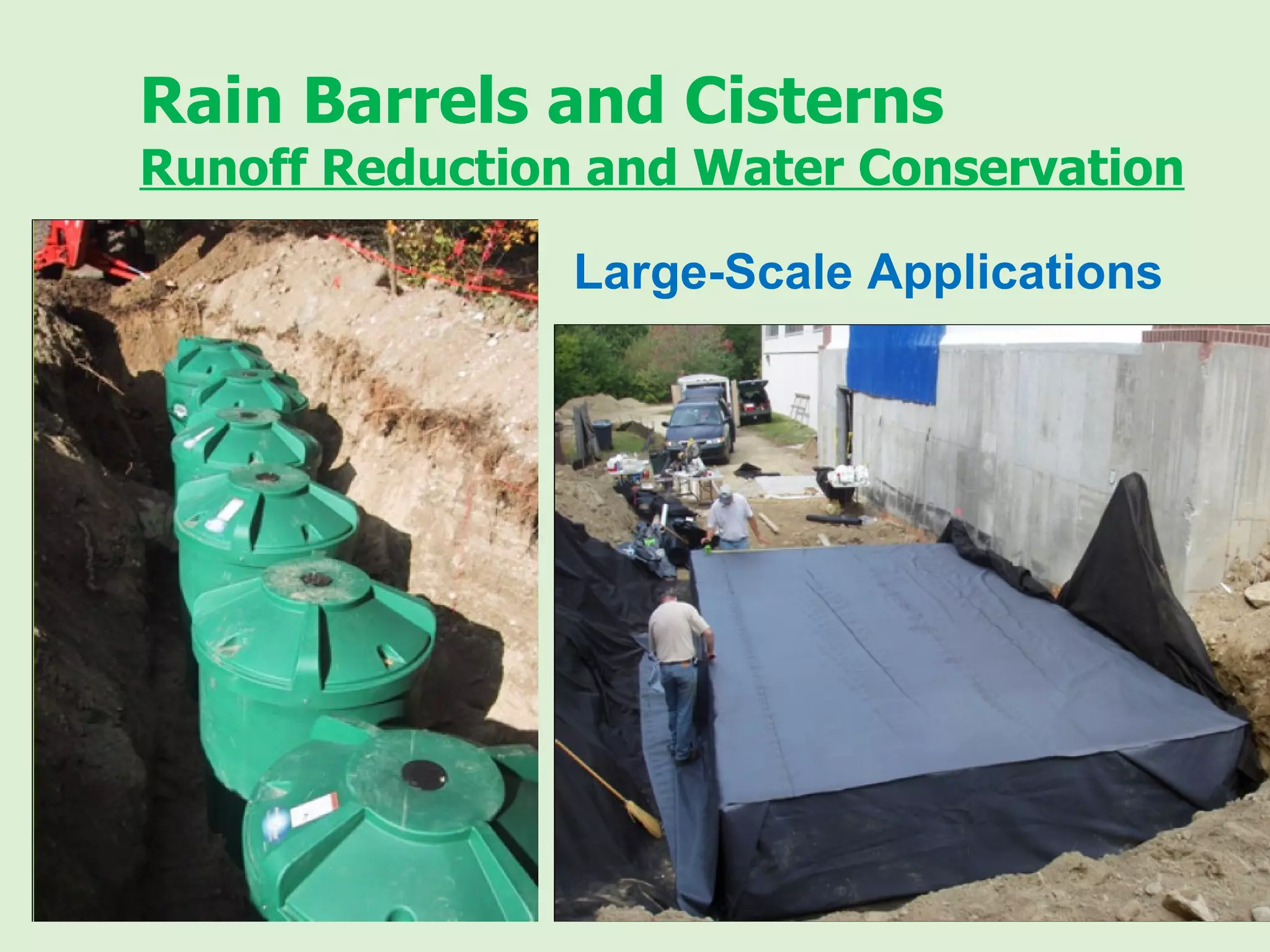
Rain Barrels and Cisterns Runoff Reduction and Water Conservation Large-Scale Applications
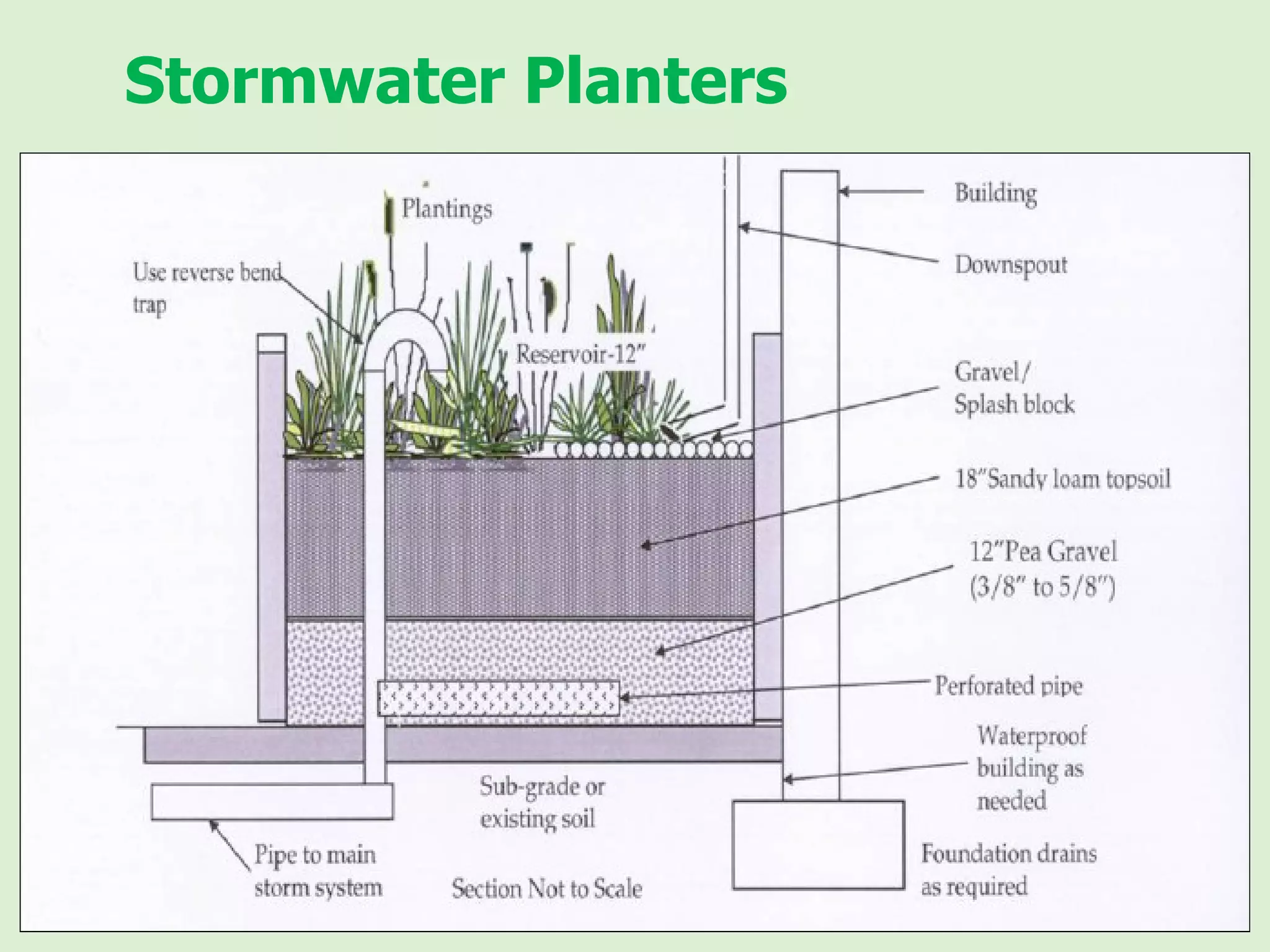
Stormwater Planters Runoff Reduction, Treatment, Attenuation “ Bioretention in a Box” Vegetative uptake of  stormwater pollutants Pretreatment for  suspended solids Aesthetically pleasing Reduction of peak  discharge rate Source:  City of Portland, OR Source:  City of Portland, OR
Stormwater Planters
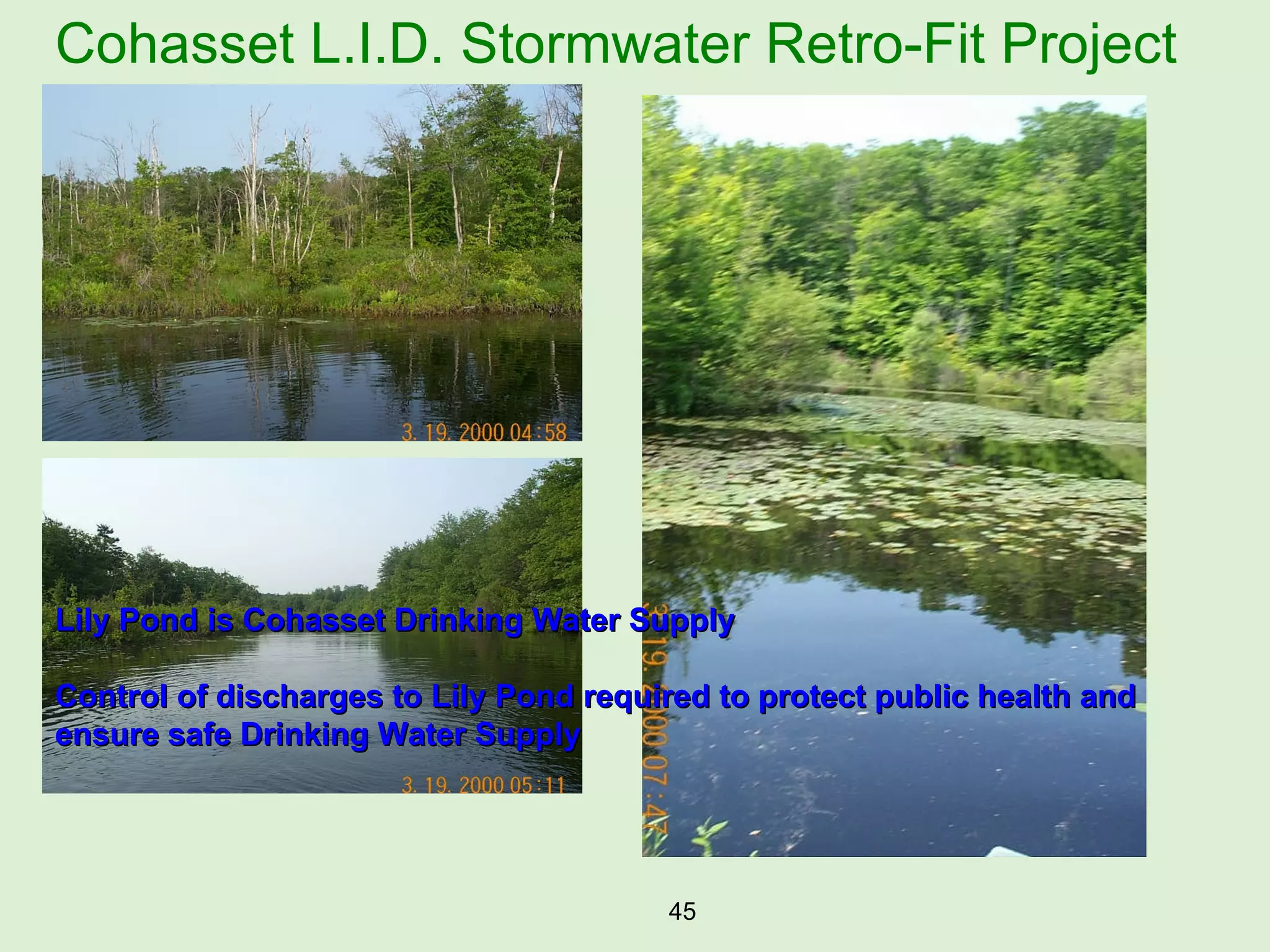
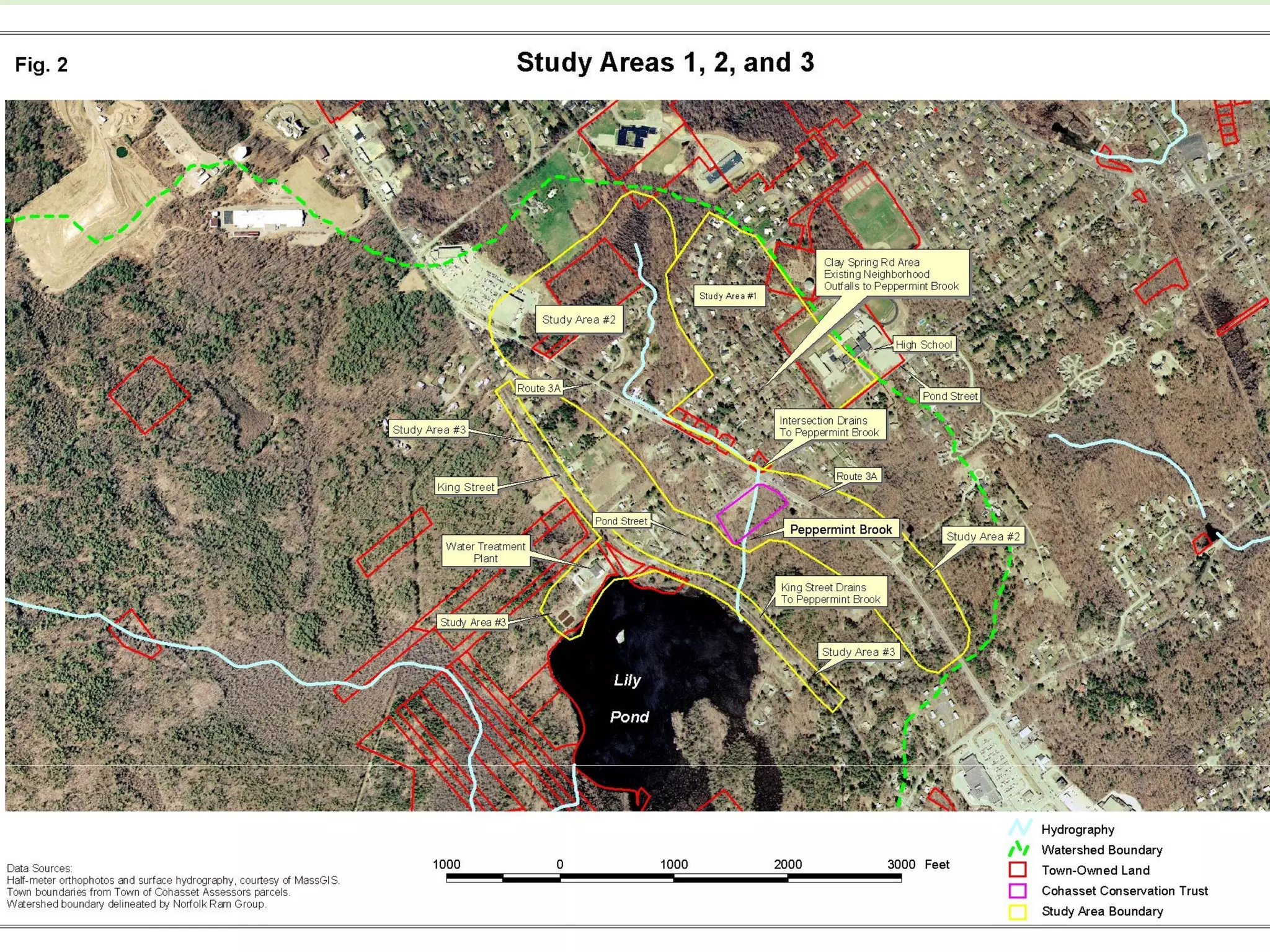
Cohasset L.I.D. Stormwater Retro-Fit Project Lily Pond is Cohasset Drinking Water Supply Control of discharges to Lily Pond required to protect public health and ensure safe Drinking Water Supply
Cohasset Stormwater LID Project Project Goals Reduce Nutrient Loading Reduce Other Pollution Suspended solids, organic pollutants, oils Help Prevent Catastrophic Contamination Public Education / Demonstration Project
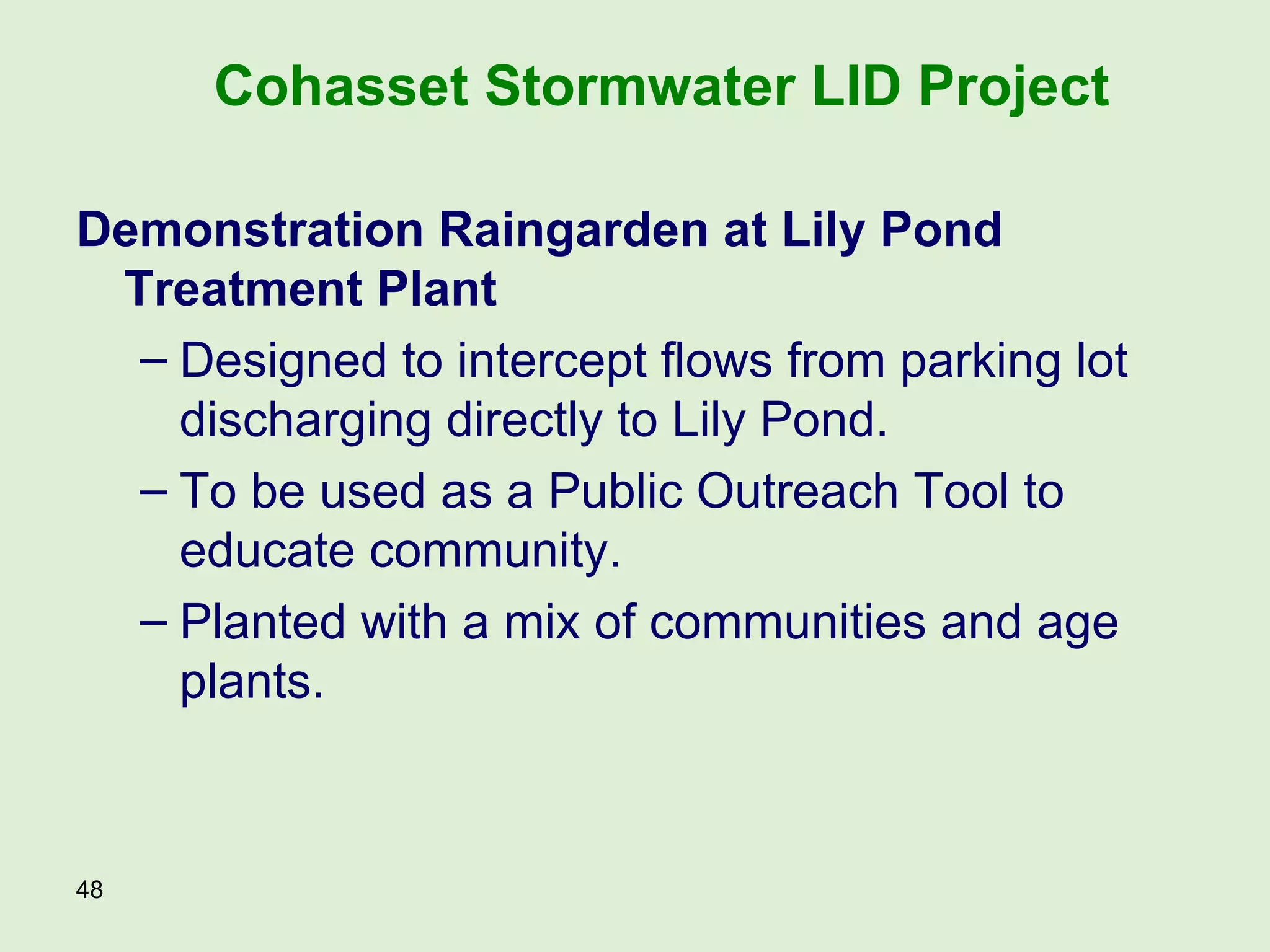
Demonstration Raingarden at Lily Pond Treatment Plant Designed to intercept flows from parking lot discharging directly to Lily Pond. To be used as a Public Outreach Tool to educate community. Planted with a mix of communities and age plants. Cohasset Stormwater LID Project
Site prior to excavation Cohasset Stormwater LID Project Demonstration Raingarden at Lily Pond
Biorentention Soil Mixing Cohasset Stormwater LID Project Demonstration Raingarden at Lily Pond
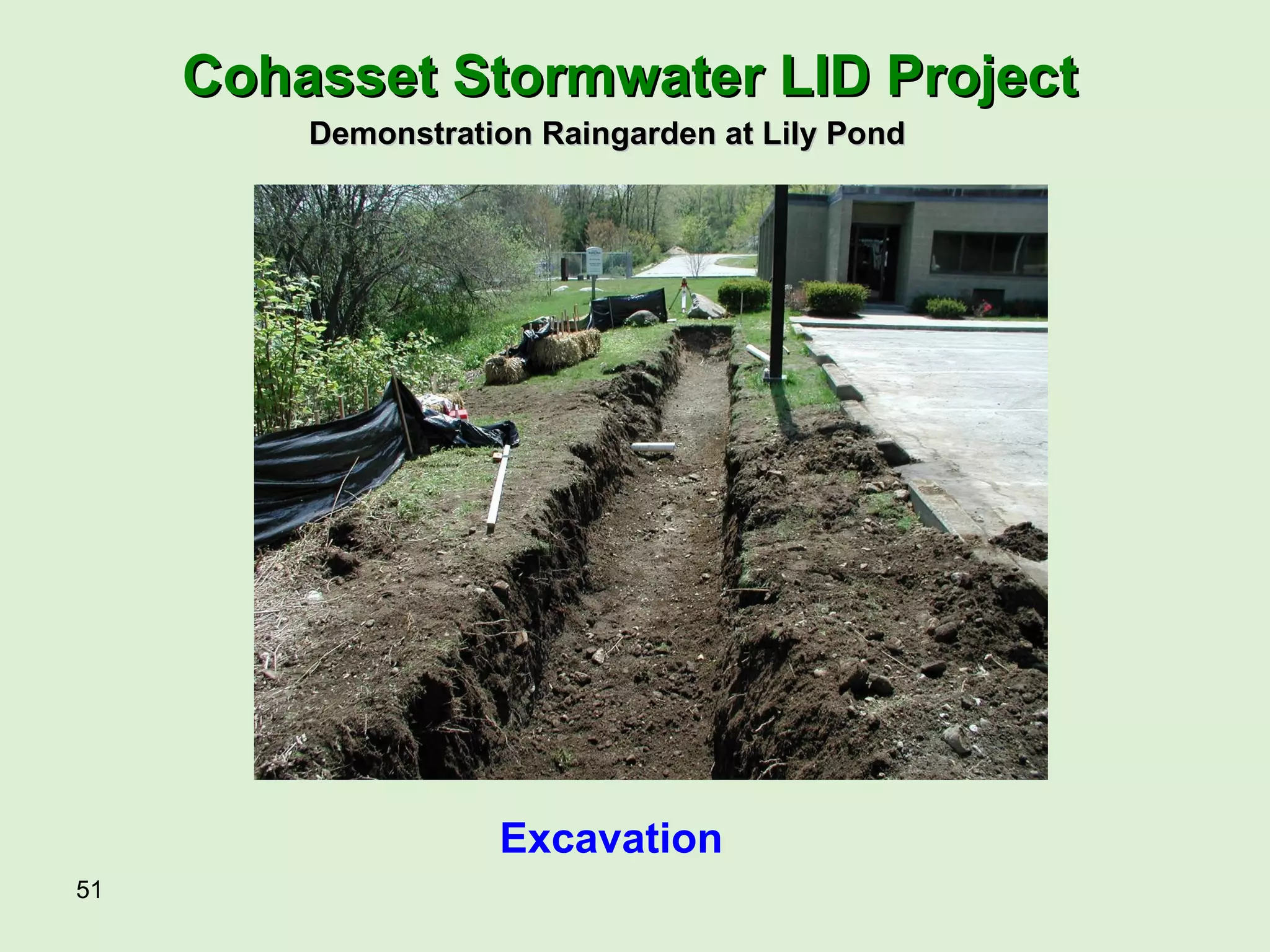
Excavation Cohasset Stormwater LID Project Demonstration Raingarden at Lily Pond
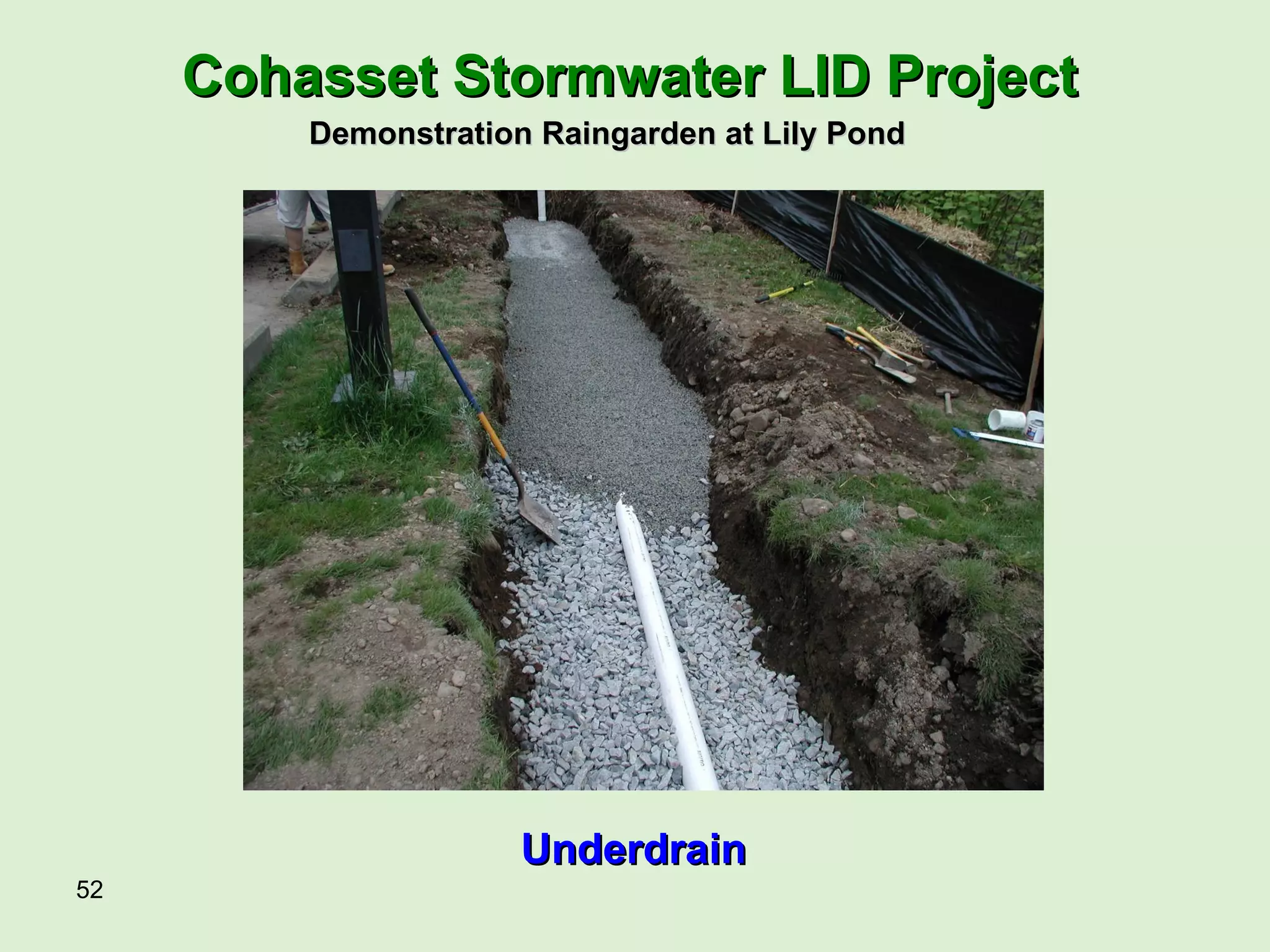
Underdrain Cohasset Stormwater LID Project Demonstration Raingarden at Lily Pond
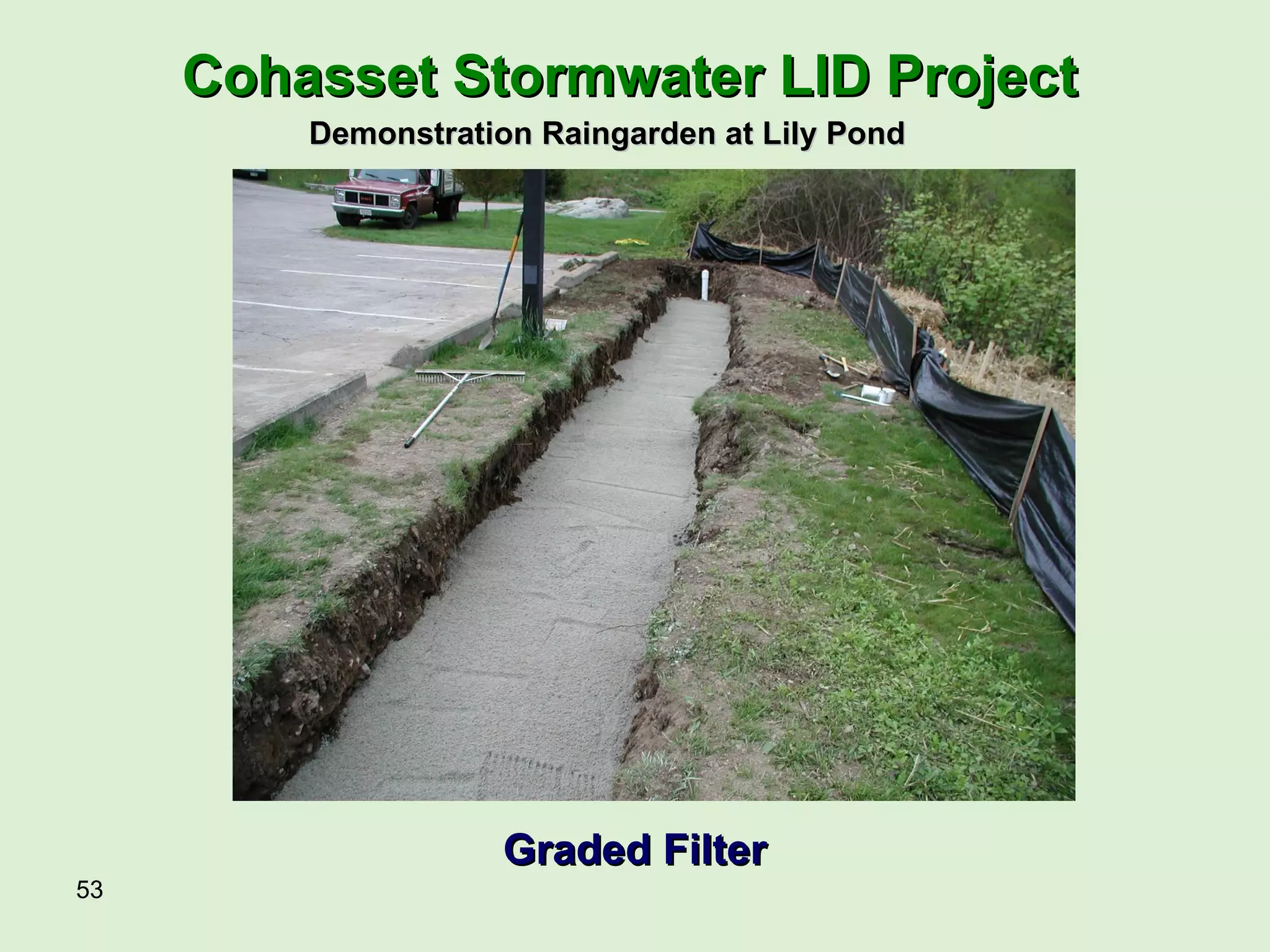
Cohasset Stormwater LID Project Demonstration Raingarden at Lily Pond Graded Filter
Placement of Bioretention Soil Mix Cohasset Stormwater LID Project Demonstration Raingarden at Lily Pond
Planting June 2005 Cohasset Stormwater LID Project Demonstration Raingarden at Lily Pond
First Rain Storm Cohasset Stormwater LID Project Demonstration Raingarden at Lily Pond
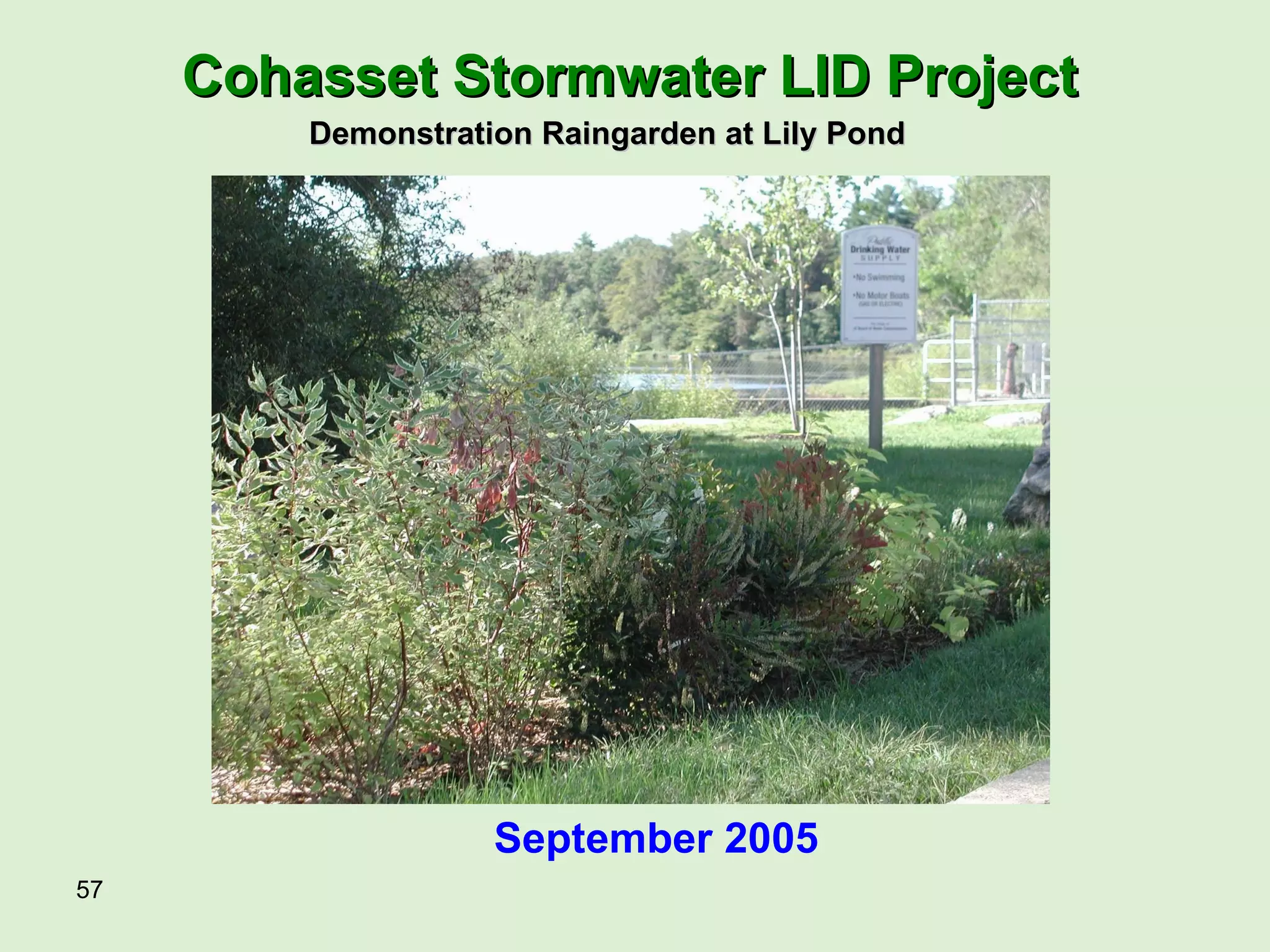
September 2005 Cohasset Stormwater LID Project Demonstration Raingarden at Lily Pond
Environmental and Community Protects unique or fragile habitats Reduces the pollution impacts of stormwater runoff Promotes aquifer recharge Provides opportunities to link wildlife habitats Conservation values are part of the planning process Can further goals of open space and community development plans The planning process inherently protects natural resources, minimizes direct and untreated stormwater runoff to water bodies,  and promotes recharge to underlying aquifers.  LID BENEFITS
Benefits for Implementing at Local Level Eliminate or minimize large detention basins Reduce Infrastructure requiring town maintenance (reduced clearing, grading, paving, pipes, ponds) Improve water quality Reduce flooding Preserve natural features Encourage “functional” landscapes  SWM controls become part of property owners’ landscape reduces public burden for centralized SWM facilities on-lot cost and scale of maintenance is affordable An Introduction to   LOW IMPACT DEVELOPMENT   Alternative Approaches to Stormwater Management

Green Connection Lid 3 12 09

  • 1.
    Sustainable Site Development:Land Development as Nature Intended Sustainable Urban Planning Policies Green Building Site Standards Low Impact Development Specifics
  • 2.
    Michael Clark, PE,LEED AP www.westonandsampson.com Low Impact Development Specifics
  • 3.
    A more sustainableland development approach Based on an environmentally sensitive site planning process; and A stormwater management strategy to mimic natural hydrology. An Introduction to LOW IMPACT DEVELOPMENT Alternative Approaches to Stormwater Management
  • 4.
    Courtesy May, Uof W Natural Conditions Hydrology 101
  • 5.
    Courtesy May, Uof W Developed Conditions Hydrology 101
  • 6.
    WHY IS L.I.D.NEEDED? Maintain Natural Watershed characteristics Protect Recharge Areas and Ecological Integrity of Our Receiving Waters Control Water Quantity and Water Quality Restore / improve areas already developed An Introduction to LOW IMPACT DEVELOPMENT Alternative Approaches to Stormwater Management
  • 7.
    Better site design:to identify and preserve natural features; to maintain natural hydrology; to help respect abutter’s properties; to retain property values; to augment groundwater supplies; to maintain high water quality. Local Authorities’ Perspective:
  • 8.
    The Problem ConventionalDevelopment Smart Development Reduce land clearing and grading costs Reduced infrastructure costs Protect regional water quality Reduce stormwater runoff The Solution Impacts on open space
  • 9.
    Conventional Development Centralized Pipe and Pond Controls
  • 10.
    LID Development Conservation Minimization Soil Management Open Drainage Rain Gardens Rain Barrels Pollution Prevention Disconnected Decentralized Distributed Multi-functional Multiple Systems
  • 12.
    LID Site Design Conservation of natural hydrology, trees, and vegetation Minimized impervious surfaces Dispersal of stormwater runoff Conservation of stream & wetland buffers Ecological landscaping
  • 13.
    The standardplanning process involves four-steps, after the yield is established. Source: R. Arendt
  • 14.
    Identify conservation valueareas on the site such as wetlands, significant trees or tracts of forest, steep slopes, habitat, cultural resources or buffer zones. Remove these from the “developable area”. 1. Source: R. Arendt
  • 15.
    Place houses inthe remaining area in a way that would maximize residents enjoyment of protected areas by providing access to open space and preserving views. 2. Source: R. Arendt
  • 16.
    Align roads andtrails on the site to provide pedestrian and vehicle access and maximize stormwater management options. 3. Source: R. Arendt
  • 17.
    4. Draw lotlines around the homes.
  • 18.
    Reduce Stormwater Runoff,Treat Non-Point Source Pollution Site planning techniques (narrower roads, conserved natural areas, preserve natural depressions) Dry wells for rooftop runoff; Grassed (vegetated) swales; Filter buffer strips; Soil Augmentation; Bioretention areas; Permeable pavers; Green roofs; Rain barrels and cisterns; and Stormwater planters. LID Best Management Practices
  • 19.
    Conservation OpenDrainage Rain Gardens Amended Soils Rain Barrel Lot Level Source Controls LID Site Porous Pavement Create a Hydrologically Functional Lot Narrower Streets
  • 20.
    Photo Copyright 1999,Center for Watershed Protection Many roads are much wider than they need to be. Better Site Design of Roadways & Parking Areas
  • 21.
    Number of Accidentsas a Function of Residential Street Width Source: Swift, et. al., 1998
  • 22.
    Better Site Designof Roadways & Driveways Narrower streets Alternative cul-de sacs Shared driveways Source: City of Portland, OR Source: CWP Sarasota, FL
  • 23.
    Better Parking LotDesign Green strips provide shade can use for stormwater collection & treatment reduce need for large unsightly detention enhance aesthetics Reduce overall parking create multiple small lots allow shared parking reduce space size Porous Pavement (in outlying overflow areas) Sarasota FL reduce runoff volumes & reduce pollution
  • 24.
    Infiltration to replenishgroundwater supplies and maintain baseflows to streams & wetlands; Less runoff and sediment to public drainage system = lower maintenance costs; PROBLEM : Downspouts Connected to Driveway = More Runoff, Less Infiltration OBJECTIVES :
  • 25.
    SOLUTIONS : DryWell Infiltration of Roof Runoff Rooftop Runoff to vegetated swale Source: CWP
  • 26.
    Grassed Swales (aka “vegetated swales”) Provides better water quality treatment; Reduces infrastructure (drainage) costs; Reduces size and cost of detention basins; Is visible and affords better maintenance; Aesthetics may increase property values
  • 27.
    Vegetated Swales Conveyance,Treatment, Infiltration Roadside swales (country drainage) for lower density and small-scale projects; For small parking lots; Mild side slopes and flat longitudinal slopes; Provides area for snow storage & snowmelt treatment
  • 28.
    Bioretention (Biofiltration) Treatment,Retention, Infiltration, Landscaping Excavation filled with engineered soil mix Herbaceous perennials, shrubs, trees Ponded water infiltrates within 72 hours Overflow outlet and optional underdrain Source: CWP
  • 29.
    Bioretention Treatment, Retention,Infiltration, Landscaping
  • 30.
    Ref: PreliminarySarasota County LID Manual, 2008 Bioretention Plan View
  • 31.
    Soil / Flora/ Fauna Ecological Structure A Dynamic Living Ecosystem Cycling Nutrients, Chemicals and Organic Energy Sources Plants, Bacteria Protozoa, Fungus Worms, Insects Mammals .
  • 32.
    Bioretention Applications Parkinglot islands Median strips Office parks Residential lots
  • 33.
  • 34.
    Bioretention Applications Urbanretrofits High-density areas
  • 35.
  • 36.
    Grass pavers Pavingstones Porous asphalt Pervious concrete Reinforced turf Permeable Paving Runoff Reduction
  • 37.
    Permeable PavingApplications Parking stalls Overflow parking Driveways Walkways and plazas
  • 38.
    Permeable PavingApplications Parking stalls Overflow parking Driveways Walkways and plazas
  • 39.
    Green Roof SystemsRunoff Reduction, Reduced Heating / Cooling Costs Rainwater stored in a lightweight engineered soil medium; Hardy, drought-resistant vegetation; Reduces runoff by 50%. Not recommended in watersheds where baseflows are already diminished.
  • 40.
  • 41.
    Rain Barrels andCisterns Runoff Reduction and Water Conservation Downspouts directed to tanks or barrels; 50 –10,000 gallons; Excess diverted to drywell or rain garden; Landscaping, car washing, other non- potable uses.
  • 42.
    Rain Barrels andCisterns Runoff Reduction and Water Conservation Large-Scale Applications
  • 43.
    Stormwater Planters RunoffReduction, Treatment, Attenuation “ Bioretention in a Box” Vegetative uptake of stormwater pollutants Pretreatment for suspended solids Aesthetically pleasing Reduction of peak discharge rate Source: City of Portland, OR Source: City of Portland, OR
  • 44.
  • 45.
    Cohasset L.I.D. StormwaterRetro-Fit Project Lily Pond is Cohasset Drinking Water Supply Control of discharges to Lily Pond required to protect public health and ensure safe Drinking Water Supply
  • 46.
    Cohasset Stormwater LIDProject Project Goals Reduce Nutrient Loading Reduce Other Pollution Suspended solids, organic pollutants, oils Help Prevent Catastrophic Contamination Public Education / Demonstration Project
  • 48.
    Demonstration Raingarden atLily Pond Treatment Plant Designed to intercept flows from parking lot discharging directly to Lily Pond. To be used as a Public Outreach Tool to educate community. Planted with a mix of communities and age plants. Cohasset Stormwater LID Project
  • 49.
    Site prior toexcavation Cohasset Stormwater LID Project Demonstration Raingarden at Lily Pond
  • 50.
    Biorentention Soil MixingCohasset Stormwater LID Project Demonstration Raingarden at Lily Pond
  • 51.
    Excavation Cohasset StormwaterLID Project Demonstration Raingarden at Lily Pond
  • 52.
    Underdrain Cohasset StormwaterLID Project Demonstration Raingarden at Lily Pond
  • 53.
    Cohasset Stormwater LIDProject Demonstration Raingarden at Lily Pond Graded Filter
  • 54.
    Placement of BioretentionSoil Mix Cohasset Stormwater LID Project Demonstration Raingarden at Lily Pond
  • 55.
    Planting June 2005Cohasset Stormwater LID Project Demonstration Raingarden at Lily Pond
  • 56.
    First Rain StormCohasset Stormwater LID Project Demonstration Raingarden at Lily Pond
  • 57.
    September 2005 CohassetStormwater LID Project Demonstration Raingarden at Lily Pond
  • 58.
    Environmental and CommunityProtects unique or fragile habitats Reduces the pollution impacts of stormwater runoff Promotes aquifer recharge Provides opportunities to link wildlife habitats Conservation values are part of the planning process Can further goals of open space and community development plans The planning process inherently protects natural resources, minimizes direct and untreated stormwater runoff to water bodies, and promotes recharge to underlying aquifers. LID BENEFITS
  • 59.
    Benefits for Implementingat Local Level Eliminate or minimize large detention basins Reduce Infrastructure requiring town maintenance (reduced clearing, grading, paving, pipes, ponds) Improve water quality Reduce flooding Preserve natural features Encourage “functional” landscapes SWM controls become part of property owners’ landscape reduces public burden for centralized SWM facilities on-lot cost and scale of maintenance is affordable An Introduction to LOW IMPACT DEVELOPMENT Alternative Approaches to Stormwater Management