Lesson planning skill
SHWETA RAMANI
Road map
 Defination of lesson planning
 Why lesson planning
 Five Es of lesson planning
 Advantages of lesson planning
 Step of lesson planning
 What to consider when a writing a lesson plan
Definition
 Lesson plan is a teaching tool,that help the teachers in deciding what to
teach, why to teach, when to teach and how to teach in a classroom While
teaching.
Why lesson planning
 Effective teachers plan for productive use of their instrumental
time.Teachers at every level prepare plans that help them organize and
deliver their daily lessons.
Five Es of lesson planning
 Engaged
 Explore
 Explain
 Elaborate
 Evaluate
Advantages of lesson planning
 Purpose full teaching.
 Variety of teaching techniques.
 Effective utilization of time.
 Wide range of activities.
 Students involvement.
 Assesment.
Step of lesson planning
1. Pre
 preparation
 List of Activities
 Resources
2. While
 Smart students learning outcomes
 Previous knowledge
 Continuoes assessment
 Homework
 Final assessment
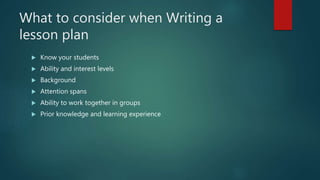
What to consider when Writing a
lesson plan
 Know your students
 Ability and interest levels
 Background
 Attention spans
 Ability to work together in groups
 Prior knowledge and learning experience

Microteaching lesson planning skill

  • 1.
  • 2.
    Road map  Definationof lesson planning  Why lesson planning  Five Es of lesson planning  Advantages of lesson planning  Step of lesson planning  What to consider when a writing a lesson plan
  • 3.
    Definition  Lesson planis a teaching tool,that help the teachers in deciding what to teach, why to teach, when to teach and how to teach in a classroom While teaching.
  • 4.
    Why lesson planning Effective teachers plan for productive use of their instrumental time.Teachers at every level prepare plans that help them organize and deliver their daily lessons.
  • 5.
    Five Es oflesson planning  Engaged  Explore  Explain  Elaborate  Evaluate
  • 6.
    Advantages of lessonplanning  Purpose full teaching.  Variety of teaching techniques.  Effective utilization of time.  Wide range of activities.  Students involvement.  Assesment.
  • 7.
    Step of lessonplanning 1. Pre  preparation  List of Activities  Resources 2. While  Smart students learning outcomes  Previous knowledge  Continuoes assessment  Homework  Final assessment
  • 8.
    What to considerwhen Writing a lesson plan  Know your students  Ability and interest levels  Background  Attention spans  Ability to work together in groups  Prior knowledge and learning experience