1-
Types of Light microscope
Brightfield microscope
Darkfield microscope
Phase-contrast microscope
Fluorescence microscope
Resolution- the ability of the lenses to distinguish two
adjacent objects or points from one another. When a
lens cannot
discriminate
units of measurement :
1 µm = 10–6 m = 10–3 mm
1 nm = 10–9 m = 10–6 mm
1000 nm = 1 µm
0.001 µm = 1 nm
1pm=0,001nm
2- Types of electron microscope :
-Transmission electron microscope (TEM)
-Scanning electron microscope (SEM)
Principal
TEM: To examine the viruses or the ultrastructure of microorganisms
SEM: To observe the surface of microorganisms
1- What is difference between naturally acquired and artificially acquired active immunity?
Naturally acquired active immunity:
 Resulting from infection - when person is exposed to antigens, becomes ill and recovers
 Can be lifelong ( measles)
 may last 1or 2 years ( intestinal infections)
Artificially acquired active immunity:
 Injection of Ag
 Introduction of vaccines into the body - Vaccination or Immunization
 - Killed or living microorganisms or inactivated toxins
2-how do opportunistic pathogens cause disease?
 It caused by bacteria or virus
 Do not cause infection in normal immune system ( healthy )
 It cause infection in weak immune system ,who is immunity impaired by disease or
burns
3-characterize normal microbiota of the upper and lower respiratory system
 UPPER contain taphylococci, Streptococci,Enterococci, Diptheroids Neisseria, Moraxella -is
a genus of Gramnegativebacteria may cause a pathogens
 LOWER contain Hair in nasal passages . IgA antibodies, Ciliary escalator make it sterile and
Alveolar macrophages make the lower respiratory sterile against bacteria
4-What are causative agents and treatments for the common cold?
Causative agent are Rhinoviruses (cause over 40-50% of common colds).
Enteroviruses and Coronaviruses
Treatment : no specific treatment , it recover in a week , also can relieved by
cough suppressants and antihistamine , vitamin C, licorice root
5- which part of the antibody molecule determined the variability of antibodies ?
 two sections located at the ends of the Y's arms are called variable (V)
regions
6- What group of bacterial pathogens causes what is informally called walking
pneumonia?
- Mycoplasmal Pneumonia
7- What is chemical nature of antigens?
 Most antigens are proteins or large polysaccharides
 Antigens are often components of invading microbes, such as
capsules,cell walls, flagella, fimbriae, and toxins of bacteria; the coats of
viruses.
8- What components of the immune system are required for the lysis of a target
antigenic cell?
 Complement protein attaches to the antibody
9- Would you expect the incidence of leptospirosis to be higher in urban or rural
communities?
 Leptospirosis is higher in rural because is transmitted by animals such as
Rats, foxes and raccoons and skunks, upon ingestion of food or water
contaminated with infected animal feces
10- Why are viral infections generally difficult to treat with chemotherapeutic agents?
 Because viruses do not have any of the organelles found in the above
and suffer from the inability to replicate or metabolize.
 Virus has a metabolic machinery host of their own host that limit the
potential point of attack
11- What is the difference between innate and adaptive immunity?
INNATE :
 defenses against any pathogen , refers to defenses that are present at birth(native or
natural)
 does not involve specific recognition of a microbe
 does not have a memory response
ADAPTIVE :
 Acquired immunity that develops in response to antigens.
 It is SPECIFIC to the antigen. Specificity is determined by B-cells and T-cells.
 slower to respond, but it does have a memory component
12- What is serology and what types of reactions it employs?
 Serology: Studies in vitro antigen-antibody reactions that have diagnostic therapeutic
and epidemiological purpose and importance In practice the term refers to the
diagnostic identification of Ab in serum (body fluids) .
Reactions:
 Agglutination reaction
 Precipitation reaction
13- What is the MMR vaccine?
 is an immunization vaccine against measles, mumps, and rubella .
14-What body fluid and at what location is sampled to diagnose bacterial meningitis?
 Investigation of CSF ( cerebrospinal fluid ) by gram stain and latex agglutination
 a lumbar puncture should be promptly performed.
 The diagnosis of bacterial meningitis is made by culture of the CSF sample.
15- What is the application of the botulinum toxine in modern medicine?
Type A toxin :

 most virulent (mortality rate 60-70% in untreated cases)
 type A endospore - most heat resistant -
 found in the US -California, Washington, Colorado
Type B toxin :
 ( mortality rate 25% )
 most European outbreaks, eastern United States
Type E toxin :
 produced by strainsfound in marine or lake sediments, outbreaks commonly involve
seafood
 less strictly anaerobic, non-proteolitic
16- What can be disadvantages of oral vaccines ( e.g. Sabin Vaccine for Polio)?
 Oral vaccines is living , attenuated virus strains
 Can cause poliomylites
 can cause paralysis
 may be triggered by an immunodeficiency.
17-How do you determine the identity of an unknown organism using the API system?
 interpret the strip and decide whether each had a negative or positive reaction.
 total up neg and pos in order to make it 7 digit
profile; which is used to identify it
18-Eosin Methylene Blue agar is selective for what type of organisms?
 stain for Gram-negative bacteria.
19-What are the major steps of Gram staining?
 Prepare a Slide Smear
 Add crystal violet stain over the fixed culture.
 Gently rinse the excess stain with a stream of water
 Add the iodine solution on the smear
 Gently rinse the slide with running water.
 Add a few drops of decolorizer until the alcohol runs almost clear.
 Gently rinse the slide with running water.
 Counterstain with basic fuchsin solution or safranin for 45 seconds.
 Wash off the solution with water.
 Blot with bibulous paper to remove the excess water.
 Add drop of immersion oil and observe under oil-immersion objective
20- What are the serological tests used for?
 Study antigen – antibody reaction ( complex )
21- What is trophozoite?
 Is a metabolically active cells produce by mature cysts
 Trophozoites move to the colon and establish infection. Trophozoithes multiply by binary
fission
 Infectiv resistant cysts are released through feces
 Ingestion of the Mature quadrinucleated cysts from contaminated food or water
22- What is cytopathic effect?
 Is the effect when virus causes the cells of monolayer or host cells to deteriorate
23- What measures can be taken to minimize drug resistance?
 Prolonged treatment with multiple antibiotics
 Following direction of prescription
 Administering two or more drugs simultaneously
 Wise use of antimicrobial agent
24- What substance in the cell membrane of fungi is the most common target for antifungal
action?
 Sterols fungi
25- Are skin bacteria more likely to be gram-positive or gram-negative?
 Gram –positive
26- How can we diagnose Salmonella typhi infection using serological tests?
 By the febrile antibody test
27- Which stage of lyfe cycle of Malaria Plasmodium takes place in humans?
 Reproductive schizogony
28- What is difference between a primary from a secondary immune response?
primary:
 body is first exposed to antigen, lymphocyte is activated.
 Amount of antibody produced is low
 Response is slow
secondary:
 same antigen is encountered at a later time.
 It is faster and of greater magnitude.
 Amount of antibody produced is high
29- What is main difference between prokaryotic and eukaryotic cells ?
Prokaryotic cell:
 Nucleus absent
 Usually unicellular
 True Membrane bound Nucleus absent
 Number of chromosomes (One--but not true chromosome: Plasmids)
 Example Bacteria and Archaea
Eukaryotic Cell:
 Nucleus Present
 Usually multicellular
 True Membrane bound Nucleus Present
 Number of chromosomes More than one
 Example Animals and Plants
30- What is the final step in the ELISA ?
 Colorimetric substrate is added to the wells and will form a colored solution when
catalyzed by the enzyme and bsorbance is measured in an ELISA reader and the amount
of protein in the samples is determined.
31 -What treatment is used against tetanus under following conditions?
a) before person suffers a deep puncture wound; b) after a person suffers a deep puncture wound
A. Prevention by vaccination with tetanus toxoid (DTaP) and booster (Td)
B. Tetanus immunoglobulin (TlG) is given to provide temporary protection and
Debridement(removal of damaged tissue that provides growth conditions for the pathogen )
32- What is the methodology used for diagnosing leprosy—culturing in laboratory on artificial
media or using special animal assays?
 Using special animal assays
 Armadillos : a useful way to culture the leprosy
33- Name at least four genera that belong to the Enterobacteriaceae that are lactose fermenters.?
 Salmonella
 Escherichia coli
 Yersinia pestis
 Klebsiella
 Shigella
34- In Gram Staining before you use your reagents to stain the bacteria, you need to heat fix
your sample first by waving the slide through the blue flame on a Bunsen burner a few times.
Why do you do this?
 So that the bacteria will not be washed off
 When you wash off the different compounds, your bacteria will simply wash off also if
they are not heat fixed to the slide.
35- What factors in perspiration discourage microbial growth?
 respiration provides moisture and some nutrients for microbial growth. However, it contains
salt, which inhibits many microorganisms; the enzyme lysozyme, which is capable of
breaking down the cell walls of certain bacteria; and antimicrobial peptides.
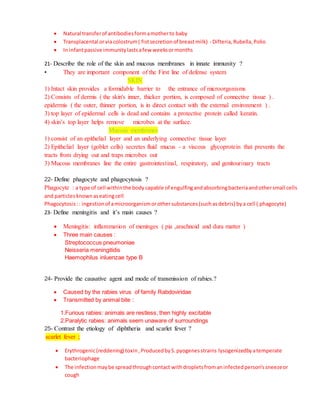
36- What are the normal microbiota of human skin?
 Gram-positive, salt-tolerant bacteria (Staphylococci , Micrococci , enterococci
,Diphtheroids )
 Microorganisms inhabiting the skin are resistant to drying and to relatively high salt
concentrations
 Bacteria on the skin tend to be grouped into small clumps
37- What serum fraction contains the most antibodies?
IgG accounts for about 80% of all antibodies in serum.
38 --How does lacrimal apparatus protect the eyes against infection?
 lacrimal apparatus, a group of structures ( lacrimal glands and tubes) that manufactures and
drains away tears
 Continual washing action helps keep microorganisms from settling on the surface of the eye
 Excessive production dilute and wash away the irritating substance or microorganisms
39- What are emerging infections? Give some examples
• Diseasesthatare new, increasinginincidence,orshowingapotential toincrease inthe nearfuture
• Contributingfactorsof emerginginfections are Geneticrecombination,Evolutionof newstrains,
Inappropriate use of antibioticsandpesticides,Changesinweatherpatterns
• Examplesare Hantavirus,Lyme disease ,Diphtheria,Antibiotic-resistantstrains
40- Is vaccination an example of adaptive or innate immunity? Explain
- Are adaptive immunity
- because innate immunity is native or natural and inborn in human body not because of
vaccination
- Adaptive immunity is acquired immunity by vaccination for immunity to kill
microorganisms or inactivated toxins
41 -Which parts of the antibody are responsible for the specificity?
 Antibody have two identical light chains and two identical heavy chains called ( Y
shaped ) , and Two sections located at the ends of the Y's arms are called variable (V)
regions are responsible for the specificity
-42- What are three methods of disease transmission ?
1. Contact Transmission- spread of agent by direct or indirect contact, and droplet
transmission. (person to person, fomite, mucus droplets)
2. Vehicle Transmission- , Pathogens are transferred through substances like water, food,
aerosols, blood, body fluids, or drugs. (salmonella poisioning)
3. Vectors- animal that carries pathogens from person to person (mosquitos)
-43- What are componenst of DTaP vaccine ?
- tetanustoxoid. ,
- diphtheria,
pertussis(whoopingcough),
44 -What is difference between Hepatatis A and Hepatatis B ?
hepatitis A
1) transmission through fecal-oral
2) pathogen is Picornaviridae
3) not chronic liver disease
4) vaccine inactivated virus
hepatitis B
1) transmission by parentral and sti
2) pathogen is Hepadnaviridae
3) is chronic liver disease
4) vaccine recombinant
45- What PID ?list causative agents?
PID : pelvicinflammatorydisease.
causative agents : Polymicrobic,usually N.gonorrhoeae andChlamydiatrachomatis
46- What is the primary stage of syphilis ?
• A hard chancre ( sore ) appears at the site of infection 10 – 90 days after exposure
• The chancre is painless and fluid forms in the center
• The chancre disappears in 2 – 6 weeks
• Bacteria enter the bloodstream and lymphatic system
Definitions:
1-Compare the modes of transmission for hepatitis A, B, and C ?
 Transmission A : fecel – oral and blood
 Transmission B : broken skin or parenteral and STI
 Transmission C : broken skin or parenteral
2-Describe the API identification System
41- Called analytical profile index
42- Is a standardizedidentificationsystemforenterobacteriaceae andothernon-fastidiousgram
negative rods
43- The API 20 E stripconsists20 micro tubescontainingdehydratedsubstrates
44- Are inoculatedwithabacterial suspensionthatreconstitutesthe media
3-What is septicemia and bacteremia, and explain the medical significance of each ?
 Bacteremia : may be encountered in the course of some bacterial infections such as
pneumonia , meningitis , typhoid fever and UTI , THE BACTEREMA OF THIS NATURE
DOES NOT PRESENT A life – threating situation because the bacteria are presented in low
concentrations and the activity of host*s innate immune system is capable of preventing
further systemic invasion of infection
 Septicemia : is a condition characterized with by rapid multiplication of microorganisms,
with the possible elaboration of their toxins into the bloodstream.
4- Contrast the nature and effects of exotoxins and endotoxins ?
Exotoxins
 Source are gram negative
 proteins produced inside bacteria and released into medium
 highly lethal, secreted of release upon lysis. (ex: A-B toxins, membrane-disrupting
toxins, superantigens)
 neutralize by antitoxin
 no fever
Endotoxins
 gram negative
 lipid – polysaccharides
 derived from an outer portion of the cell wall in Gram negative bacteria (outer
membrane)
 released when cell walls are broken or bacteria die
 no neutralize by antitoxin
 fever
5- Characterize the causative agent and main symptoms, prevention and preferred treatment for
tuberculosis ?
 the causative agent : is mycobacterium tubercrlosis .
 Main symptoms are : Coughing that lasts three or more weeks
Coughing up blood
Chest pain, or pain with breathing or coughing
Unintentional weight loss
Fatigue
Fever
Night sweats
Chills
Loss of appetite
 Prevention : BCG VACCINE (Bacillus Calmette-Guerin )
 the treatment : with mutable antibiotics , there are 4 drugs (isoniazid ,rifampin , ethambutol
and pyrazinamide ) and multidrugresistant TB staining and extensively drug resistant TB
6- Explain the dual nature of the adaptive immunity ?
 Humoral immunity is the formation of antibody to bind to specific antigene ,B cells mature
in the bone marrow
 Cell – mediated is an immune response that does not involve antibodies but rather involves
the activation of phagocytes ( T and B lymphocytes ) , T cells mature in the thymus
7-Define antigen, epitope, and hapten ?
 Antigen : substancesthatcausesthe bodyto produce specificsubstancescalledantibody
 Epitope :regionof antigenthat determines antibodytoantigenalsocalledantigenicdeterminant
 Hapten:small moleculesthatelicitsanimmune responseonlywhenattachtoa large carriessuch as
protein
8-List five modes of action of antibacterial drugs ?
1. inhibition of cell wall synthesis
2. inhibition of protein synthesis
3. inhibition of nucleic acid replication and transcription
4. injury to the plasma membrane
5. inhibition of synthesis of essential metabolites
9-Describe the causative agent of Syphilis and its mode of transmission ?
 Caused : by Treponema pallidum ( is a gram negative spirochaete bacterium with
subspecies ) stages are :
Primary stage: Chancre at site of infection
Secondary stage: Skin and mucosal rashes
Latent period: No symptoms
Tertiary stage: Gummas on many organs
 Transmitted through sexual contact
10- Describe tow tests for microbial susceptibility to antimicrobial chemotherapeutic agents
 The disk-diffusion method for determining the activity of antimicrobials.
 the E test (for epsilometer), a gradient diffusion method that determines antibiotic sensitivity
and estimates minimal inhibitory concentration (MIC).
11- Differentiate five modes of actions of antibacterial drugs
INHIBITION OF CELL WALL SYNTHESIS
 Cell wall of a bacterium consists of a macromolecular network called peptidoglycan.
 Penicillin and certain other antibiotics prevent the synthesis of intact peptidoglycan;
 Only actively growing cells are affected by these antibiotics
 penicillin has very little toxicity for host (human) cells.
INHIBITION OF PROTEIN SYNTHESIS
 Structure of ribosomes is notable different in prokaryotes and eukaryotes
 Eukaryotic cells have 80S ribosomes
 Prokaryotic cells have 70S ribosomes( 70S ribosome is made up of a 50S and a 30S unit)
 Antibiotics that interfere with protein synthesis are: chloramphenicol, erythromycin,
streptomycin, tetracyclines
INHIBITION OF NUCLEIC ACID REPLICATION AND TRANSCRIPTION
 many antibiotics interfere with the processes of DNA replication and transcription in
microbes
 some drugs that can do that have limited usefullness cuz they interfere w/ mammalian DNA
and RNA as well
INJURY TO PLASMA MEMBRANE
 ex: polypeptide antibiotics
 - change the permeability of the plasma membrane that result in the loss of important
metabolities from the microbial cell
Inhibiting the Synthesis of Essential Metabolites
 some enzymatic activity of a microorganism can be competitively inhibited by a substance
that closely resembles the normal substrate for the enzyme
 E.g. antimetabolite sulfanilamide (a sulfa drug) and paraaminobenzoic acid (PABA).
 Folic acid-a vitamin, functions as a coenzyme for the synthesis of the purine and pyrimidine
bases of nucleic acids and many amino acids.
12-Describe the slide agglutination test ?
 a test used to identify unknown antigens or antibody
 sample with the unknown antigen is mixed with a known antibody forming immunological
complexes that settle out and from visible clumps in the test chamber
 whether or not agglutination occurs helps to identify the antigen; agglutination test is used in
tissue matching and blood grouping and diagnosis of infections
13-Describe the function of natural killer cells?
 have the ability to kill a wide variety of infected body cells and certain tumor cells
 attack any body cells that display abnormal or unusual plasma membrane proteins
 binding of NK cells to a target cell causes release of vesicles containing toxic substances
14- Define antibody and characterize major classes of antibodies ?
 Define antibodies : substances that produce in response to antigen and attach to
yhe epitope of antigen to destroy them
 classes of antibodies :
IgG :
IgA :
IgM :
IgE :
IgD :
15-Describe what is API 20E system and its application ? ‫مهم‬
 The API 20E is a standardized identification system for Enterobacteriaceae and other
non-fastidious, Gram negative rods.
 The API 20 E strip consists of 20 micro tubes containing dehydrated substrates .
 These tests are inoculated with a bacterial suspension that reconstitutes the media.
 During incubation, metabolism produces color changes that are either spontaneous or
revealed by the addition of reagents.
 The reactions are read according to the reading table and the identification is obtained by
referring to the Analytical Profile Index or using the identification Software
16 -Describe the principle of The Kirby-Bauer - disk diffusion method ?
 This test is used to determine the resistance or sensitivity of aerobes or facultative
anaerobes to specific antibiotics, which can then be used by the clinician for
treatment of patients with bacterial infections
 The presence or absence of an inhibitory area around the disc identifies the
bacterial sensitivity to the drug
 The antibiotic diffuses from the disc into the agar in decreasing amounts the further
it is away from the disc
17 - Some of the tubes of the API 20E strip need to be filled with the bacterial suspension right to
the very top end including the cupule area. Explain why ?
 the media in |CIT|, |VP|, and |GEL| compartments require oxygen, completely fill both the
cupule and tube of these compartments.
18 -The bacturcult test is a newer method used for urine sample analysis (see Fig).List the
advantages of this test and Brifly describe how it’s done?
ADVANTAGES
 less conventional and less time-consuming method
 is sterile plastic tube coated with a special medium
 For the presumptive identification of bacteria, the medium contains two substrates, lactose
and urea, and the pH indicator.
PROCEDURES
 remove the cap from the Bacturcult tube and collect the specimen.
 Then pour urine out and replace the cap.
 Loosen the cap and incubate in cap-down position at 35° to 40°C for 18 to 24 hours
 After incubation, place the counting strip around the Bacturcult tube over an area of even
colony distribution and count the number of colonies within the circle
19- List the skin’s normal microbiota ?
20- Contrast active and passive natural immunity ?
Active natural :
 Resultingfrominfection - whenpersonisexposedtoantigens,becomesill andrecovers
 Can be lifelong( measles)
 may last1or 2 years ( intestinal infections)
Passive natural :
 Natural transferof antibodiesformamotherto baby
 Transplacental orviacolostrum( fistsecretionof breastmilk) - Difteria,Rubella,Polio
 In infantpassive immunitylastsafew weeksormonths
21- Describe the role of the skin and mucous membranes in innate immunity ?
• They are important component of the First line of defense system
SKIN
1) Intact skin provides a formidable barrier to the entrance of microorganisms
2) Consists of dermis ( the skin's inner, thicker portion, is composed of connective tissue ) .
epidermis ( the outer, thinner portion, is in direct contact with the external environment ) .
3) top layer of epidermal cells is dead and contains a protective protein called keratin.
4) skin’s top layer helps remove microbes at the surface.
Mucous membranes
1) consist of an epithelial layer and an underlying connective tissue layer
2) Epithelial layer (goblet cells) secretes fluid mucus - a viscous glycoprotein that prevents the
tracts from drying out and traps microbes out
3) Mucous membranes line the entire gastrointestinal, respiratory, and genitourinary tracts
22- Define phagocyte and phagocytosis ?
Phagocyte : a type of cell withinthe body capable of engulfingandabsorbingbacteriaandothersmall cells
and particlesknownaseatingcell
Phagocytosis:: ingestionof amicroorganismorothersubstances(suchasdebris) bya cell ( phagocyte)
23- Define meningitis and it’s main causes ?
 Meningitis: inflammation of meninges ( pia ,arachnoid and dura matter )
 Three main causes :
Streptococcus pneumoniae
Neisseria meningitidis
Haemophilus inluenzae type B
24- Provide the causative agent and mode of transmission of rabies.?
 Caused by the rabies virus of family Rabdoviridae
 Transmitted by animal bite :
1.Furious rabies: animals are restless, then highly excitable
2.Paralytic rabies: animals seem unaware of surroundings
25- Contrast the etiology of diphtheria and scarlet fever ?
scarlet fever ;
 Erythrogenic(reddening) toxin,ProducedbyS.pyogenesstrains lysogenizedbyatemperate
bacteriophage
 The infectionmaybe spreadthroughcontact withdropletsfromaninfectedperson'ssneezeor
cough
diphtheria ;
 Corynebacteriumdiphtheriae- Gram Positivepleiomorphicrod,veryresistanttodrying.
(Transmittedthroughdroplets)

Microbiology

  • 1.
    1- Types of Lightmicroscope Brightfield microscope Darkfield microscope Phase-contrast microscope Fluorescence microscope Resolution- the ability of the lenses to distinguish two adjacent objects or points from one another. When a lens cannot discriminate units of measurement : 1 µm = 10–6 m = 10–3 mm 1 nm = 10–9 m = 10–6 mm 1000 nm = 1 µm 0.001 µm = 1 nm 1pm=0,001nm 2- Types of electron microscope : -Transmission electron microscope (TEM) -Scanning electron microscope (SEM) Principal TEM: To examine the viruses or the ultrastructure of microorganisms SEM: To observe the surface of microorganisms 1- What is difference between naturally acquired and artificially acquired active immunity? Naturally acquired active immunity:  Resulting from infection - when person is exposed to antigens, becomes ill and recovers  Can be lifelong ( measles)  may last 1or 2 years ( intestinal infections) Artificially acquired active immunity:
  • 2.
     Injection ofAg  Introduction of vaccines into the body - Vaccination or Immunization  - Killed or living microorganisms or inactivated toxins 2-how do opportunistic pathogens cause disease?  It caused by bacteria or virus  Do not cause infection in normal immune system ( healthy )  It cause infection in weak immune system ,who is immunity impaired by disease or burns 3-characterize normal microbiota of the upper and lower respiratory system  UPPER contain taphylococci, Streptococci,Enterococci, Diptheroids Neisseria, Moraxella -is a genus of Gramnegativebacteria may cause a pathogens  LOWER contain Hair in nasal passages . IgA antibodies, Ciliary escalator make it sterile and Alveolar macrophages make the lower respiratory sterile against bacteria 4-What are causative agents and treatments for the common cold? Causative agent are Rhinoviruses (cause over 40-50% of common colds). Enteroviruses and Coronaviruses Treatment : no specific treatment , it recover in a week , also can relieved by cough suppressants and antihistamine , vitamin C, licorice root 5- which part of the antibody molecule determined the variability of antibodies ?  two sections located at the ends of the Y's arms are called variable (V) regions 6- What group of bacterial pathogens causes what is informally called walking pneumonia? - Mycoplasmal Pneumonia 7- What is chemical nature of antigens?  Most antigens are proteins or large polysaccharides  Antigens are often components of invading microbes, such as capsules,cell walls, flagella, fimbriae, and toxins of bacteria; the coats of viruses. 8- What components of the immune system are required for the lysis of a target antigenic cell?  Complement protein attaches to the antibody 9- Would you expect the incidence of leptospirosis to be higher in urban or rural communities?
  • 3.
     Leptospirosis ishigher in rural because is transmitted by animals such as Rats, foxes and raccoons and skunks, upon ingestion of food or water contaminated with infected animal feces 10- Why are viral infections generally difficult to treat with chemotherapeutic agents?  Because viruses do not have any of the organelles found in the above and suffer from the inability to replicate or metabolize.  Virus has a metabolic machinery host of their own host that limit the potential point of attack 11- What is the difference between innate and adaptive immunity? INNATE :  defenses against any pathogen , refers to defenses that are present at birth(native or natural)  does not involve specific recognition of a microbe  does not have a memory response ADAPTIVE :  Acquired immunity that develops in response to antigens.  It is SPECIFIC to the antigen. Specificity is determined by B-cells and T-cells.  slower to respond, but it does have a memory component 12- What is serology and what types of reactions it employs?  Serology: Studies in vitro antigen-antibody reactions that have diagnostic therapeutic and epidemiological purpose and importance In practice the term refers to the diagnostic identification of Ab in serum (body fluids) . Reactions:  Agglutination reaction  Precipitation reaction 13- What is the MMR vaccine?  is an immunization vaccine against measles, mumps, and rubella . 14-What body fluid and at what location is sampled to diagnose bacterial meningitis?  Investigation of CSF ( cerebrospinal fluid ) by gram stain and latex agglutination  a lumbar puncture should be promptly performed.  The diagnosis of bacterial meningitis is made by culture of the CSF sample. 15- What is the application of the botulinum toxine in modern medicine? Type A toxin :   most virulent (mortality rate 60-70% in untreated cases)  type A endospore - most heat resistant -  found in the US -California, Washington, Colorado Type B toxin :
  • 4.
     ( mortalityrate 25% )  most European outbreaks, eastern United States Type E toxin :  produced by strainsfound in marine or lake sediments, outbreaks commonly involve seafood  less strictly anaerobic, non-proteolitic 16- What can be disadvantages of oral vaccines ( e.g. Sabin Vaccine for Polio)?  Oral vaccines is living , attenuated virus strains  Can cause poliomylites  can cause paralysis  may be triggered by an immunodeficiency. 17-How do you determine the identity of an unknown organism using the API system?  interpret the strip and decide whether each had a negative or positive reaction.  total up neg and pos in order to make it 7 digit profile; which is used to identify it 18-Eosin Methylene Blue agar is selective for what type of organisms?  stain for Gram-negative bacteria. 19-What are the major steps of Gram staining?  Prepare a Slide Smear  Add crystal violet stain over the fixed culture.  Gently rinse the excess stain with a stream of water  Add the iodine solution on the smear  Gently rinse the slide with running water.  Add a few drops of decolorizer until the alcohol runs almost clear.  Gently rinse the slide with running water.  Counterstain with basic fuchsin solution or safranin for 45 seconds.  Wash off the solution with water.  Blot with bibulous paper to remove the excess water.  Add drop of immersion oil and observe under oil-immersion objective 20- What are the serological tests used for?  Study antigen – antibody reaction ( complex ) 21- What is trophozoite?  Is a metabolically active cells produce by mature cysts  Trophozoites move to the colon and establish infection. Trophozoithes multiply by binary fission  Infectiv resistant cysts are released through feces  Ingestion of the Mature quadrinucleated cysts from contaminated food or water 22- What is cytopathic effect?
  • 5.
     Is theeffect when virus causes the cells of monolayer or host cells to deteriorate 23- What measures can be taken to minimize drug resistance?  Prolonged treatment with multiple antibiotics  Following direction of prescription  Administering two or more drugs simultaneously  Wise use of antimicrobial agent 24- What substance in the cell membrane of fungi is the most common target for antifungal action?  Sterols fungi 25- Are skin bacteria more likely to be gram-positive or gram-negative?  Gram –positive 26- How can we diagnose Salmonella typhi infection using serological tests?  By the febrile antibody test 27- Which stage of lyfe cycle of Malaria Plasmodium takes place in humans?  Reproductive schizogony 28- What is difference between a primary from a secondary immune response? primary:  body is first exposed to antigen, lymphocyte is activated.  Amount of antibody produced is low  Response is slow secondary:  same antigen is encountered at a later time.  It is faster and of greater magnitude.  Amount of antibody produced is high 29- What is main difference between prokaryotic and eukaryotic cells ? Prokaryotic cell:  Nucleus absent  Usually unicellular  True Membrane bound Nucleus absent  Number of chromosomes (One--but not true chromosome: Plasmids)  Example Bacteria and Archaea Eukaryotic Cell:  Nucleus Present  Usually multicellular  True Membrane bound Nucleus Present  Number of chromosomes More than one  Example Animals and Plants 30- What is the final step in the ELISA ?
  • 6.
     Colorimetric substrateis added to the wells and will form a colored solution when catalyzed by the enzyme and bsorbance is measured in an ELISA reader and the amount of protein in the samples is determined. 31 -What treatment is used against tetanus under following conditions? a) before person suffers a deep puncture wound; b) after a person suffers a deep puncture wound A. Prevention by vaccination with tetanus toxoid (DTaP) and booster (Td) B. Tetanus immunoglobulin (TlG) is given to provide temporary protection and Debridement(removal of damaged tissue that provides growth conditions for the pathogen ) 32- What is the methodology used for diagnosing leprosy—culturing in laboratory on artificial media or using special animal assays?  Using special animal assays  Armadillos : a useful way to culture the leprosy 33- Name at least four genera that belong to the Enterobacteriaceae that are lactose fermenters.?  Salmonella  Escherichia coli  Yersinia pestis  Klebsiella  Shigella 34- In Gram Staining before you use your reagents to stain the bacteria, you need to heat fix your sample first by waving the slide through the blue flame on a Bunsen burner a few times. Why do you do this?  So that the bacteria will not be washed off
  • 7.
     When youwash off the different compounds, your bacteria will simply wash off also if they are not heat fixed to the slide. 35- What factors in perspiration discourage microbial growth?  respiration provides moisture and some nutrients for microbial growth. However, it contains salt, which inhibits many microorganisms; the enzyme lysozyme, which is capable of breaking down the cell walls of certain bacteria; and antimicrobial peptides. 36- What are the normal microbiota of human skin?  Gram-positive, salt-tolerant bacteria (Staphylococci , Micrococci , enterococci ,Diphtheroids )  Microorganisms inhabiting the skin are resistant to drying and to relatively high salt concentrations  Bacteria on the skin tend to be grouped into small clumps 37- What serum fraction contains the most antibodies? IgG accounts for about 80% of all antibodies in serum. 38 --How does lacrimal apparatus protect the eyes against infection?  lacrimal apparatus, a group of structures ( lacrimal glands and tubes) that manufactures and drains away tears  Continual washing action helps keep microorganisms from settling on the surface of the eye  Excessive production dilute and wash away the irritating substance or microorganisms 39- What are emerging infections? Give some examples • Diseasesthatare new, increasinginincidence,orshowingapotential toincrease inthe nearfuture • Contributingfactorsof emerginginfections are Geneticrecombination,Evolutionof newstrains, Inappropriate use of antibioticsandpesticides,Changesinweatherpatterns • Examplesare Hantavirus,Lyme disease ,Diphtheria,Antibiotic-resistantstrains
  • 8.
    40- Is vaccinationan example of adaptive or innate immunity? Explain - Are adaptive immunity - because innate immunity is native or natural and inborn in human body not because of vaccination - Adaptive immunity is acquired immunity by vaccination for immunity to kill microorganisms or inactivated toxins 41 -Which parts of the antibody are responsible for the specificity?  Antibody have two identical light chains and two identical heavy chains called ( Y shaped ) , and Two sections located at the ends of the Y's arms are called variable (V) regions are responsible for the specificity -42- What are three methods of disease transmission ? 1. Contact Transmission- spread of agent by direct or indirect contact, and droplet transmission. (person to person, fomite, mucus droplets) 2. Vehicle Transmission- , Pathogens are transferred through substances like water, food, aerosols, blood, body fluids, or drugs. (salmonella poisioning) 3. Vectors- animal that carries pathogens from person to person (mosquitos) -43- What are componenst of DTaP vaccine ? - tetanustoxoid. , - diphtheria, pertussis(whoopingcough), 44 -What is difference between Hepatatis A and Hepatatis B ? hepatitis A 1) transmission through fecal-oral 2) pathogen is Picornaviridae 3) not chronic liver disease 4) vaccine inactivated virus hepatitis B 1) transmission by parentral and sti 2) pathogen is Hepadnaviridae 3) is chronic liver disease 4) vaccine recombinant 45- What PID ?list causative agents? PID : pelvicinflammatorydisease. causative agents : Polymicrobic,usually N.gonorrhoeae andChlamydiatrachomatis
  • 9.
    46- What isthe primary stage of syphilis ? • A hard chancre ( sore ) appears at the site of infection 10 – 90 days after exposure • The chancre is painless and fluid forms in the center • The chancre disappears in 2 – 6 weeks • Bacteria enter the bloodstream and lymphatic system Definitions: 1-Compare the modes of transmission for hepatitis A, B, and C ?  Transmission A : fecel – oral and blood  Transmission B : broken skin or parenteral and STI  Transmission C : broken skin or parenteral 2-Describe the API identification System 41- Called analytical profile index 42- Is a standardizedidentificationsystemforenterobacteriaceae andothernon-fastidiousgram negative rods 43- The API 20 E stripconsists20 micro tubescontainingdehydratedsubstrates 44- Are inoculatedwithabacterial suspensionthatreconstitutesthe media 3-What is septicemia and bacteremia, and explain the medical significance of each ?  Bacteremia : may be encountered in the course of some bacterial infections such as pneumonia , meningitis , typhoid fever and UTI , THE BACTEREMA OF THIS NATURE DOES NOT PRESENT A life – threating situation because the bacteria are presented in low concentrations and the activity of host*s innate immune system is capable of preventing further systemic invasion of infection  Septicemia : is a condition characterized with by rapid multiplication of microorganisms, with the possible elaboration of their toxins into the bloodstream. 4- Contrast the nature and effects of exotoxins and endotoxins ? Exotoxins  Source are gram negative  proteins produced inside bacteria and released into medium  highly lethal, secreted of release upon lysis. (ex: A-B toxins, membrane-disrupting toxins, superantigens)  neutralize by antitoxin  no fever Endotoxins  gram negative  lipid – polysaccharides  derived from an outer portion of the cell wall in Gram negative bacteria (outer membrane)
  • 10.
     released whencell walls are broken or bacteria die  no neutralize by antitoxin  fever 5- Characterize the causative agent and main symptoms, prevention and preferred treatment for tuberculosis ?  the causative agent : is mycobacterium tubercrlosis .  Main symptoms are : Coughing that lasts three or more weeks Coughing up blood Chest pain, or pain with breathing or coughing Unintentional weight loss Fatigue Fever Night sweats Chills Loss of appetite  Prevention : BCG VACCINE (Bacillus Calmette-Guerin )  the treatment : with mutable antibiotics , there are 4 drugs (isoniazid ,rifampin , ethambutol and pyrazinamide ) and multidrugresistant TB staining and extensively drug resistant TB 6- Explain the dual nature of the adaptive immunity ?  Humoral immunity is the formation of antibody to bind to specific antigene ,B cells mature in the bone marrow  Cell – mediated is an immune response that does not involve antibodies but rather involves the activation of phagocytes ( T and B lymphocytes ) , T cells mature in the thymus 7-Define antigen, epitope, and hapten ?  Antigen : substancesthatcausesthe bodyto produce specificsubstancescalledantibody  Epitope :regionof antigenthat determines antibodytoantigenalsocalledantigenicdeterminant  Hapten:small moleculesthatelicitsanimmune responseonlywhenattachtoa large carriessuch as protein 8-List five modes of action of antibacterial drugs ? 1. inhibition of cell wall synthesis 2. inhibition of protein synthesis 3. inhibition of nucleic acid replication and transcription 4. injury to the plasma membrane 5. inhibition of synthesis of essential metabolites 9-Describe the causative agent of Syphilis and its mode of transmission ?
  • 11.
     Caused :by Treponema pallidum ( is a gram negative spirochaete bacterium with subspecies ) stages are : Primary stage: Chancre at site of infection Secondary stage: Skin and mucosal rashes Latent period: No symptoms Tertiary stage: Gummas on many organs  Transmitted through sexual contact 10- Describe tow tests for microbial susceptibility to antimicrobial chemotherapeutic agents  The disk-diffusion method for determining the activity of antimicrobials.  the E test (for epsilometer), a gradient diffusion method that determines antibiotic sensitivity and estimates minimal inhibitory concentration (MIC). 11- Differentiate five modes of actions of antibacterial drugs INHIBITION OF CELL WALL SYNTHESIS  Cell wall of a bacterium consists of a macromolecular network called peptidoglycan.  Penicillin and certain other antibiotics prevent the synthesis of intact peptidoglycan;  Only actively growing cells are affected by these antibiotics  penicillin has very little toxicity for host (human) cells. INHIBITION OF PROTEIN SYNTHESIS  Structure of ribosomes is notable different in prokaryotes and eukaryotes  Eukaryotic cells have 80S ribosomes  Prokaryotic cells have 70S ribosomes( 70S ribosome is made up of a 50S and a 30S unit)  Antibiotics that interfere with protein synthesis are: chloramphenicol, erythromycin, streptomycin, tetracyclines INHIBITION OF NUCLEIC ACID REPLICATION AND TRANSCRIPTION  many antibiotics interfere with the processes of DNA replication and transcription in microbes  some drugs that can do that have limited usefullness cuz they interfere w/ mammalian DNA and RNA as well INJURY TO PLASMA MEMBRANE  ex: polypeptide antibiotics  - change the permeability of the plasma membrane that result in the loss of important metabolities from the microbial cell Inhibiting the Synthesis of Essential Metabolites  some enzymatic activity of a microorganism can be competitively inhibited by a substance that closely resembles the normal substrate for the enzyme  E.g. antimetabolite sulfanilamide (a sulfa drug) and paraaminobenzoic acid (PABA).  Folic acid-a vitamin, functions as a coenzyme for the synthesis of the purine and pyrimidine bases of nucleic acids and many amino acids.
  • 12.
    12-Describe the slideagglutination test ?  a test used to identify unknown antigens or antibody  sample with the unknown antigen is mixed with a known antibody forming immunological complexes that settle out and from visible clumps in the test chamber  whether or not agglutination occurs helps to identify the antigen; agglutination test is used in tissue matching and blood grouping and diagnosis of infections 13-Describe the function of natural killer cells?  have the ability to kill a wide variety of infected body cells and certain tumor cells  attack any body cells that display abnormal or unusual plasma membrane proteins  binding of NK cells to a target cell causes release of vesicles containing toxic substances 14- Define antibody and characterize major classes of antibodies ?  Define antibodies : substances that produce in response to antigen and attach to yhe epitope of antigen to destroy them  classes of antibodies : IgG : IgA : IgM : IgE : IgD : 15-Describe what is API 20E system and its application ? ‫مهم‬  The API 20E is a standardized identification system for Enterobacteriaceae and other non-fastidious, Gram negative rods.  The API 20 E strip consists of 20 micro tubes containing dehydrated substrates .  These tests are inoculated with a bacterial suspension that reconstitutes the media.  During incubation, metabolism produces color changes that are either spontaneous or revealed by the addition of reagents.  The reactions are read according to the reading table and the identification is obtained by referring to the Analytical Profile Index or using the identification Software 16 -Describe the principle of The Kirby-Bauer - disk diffusion method ?  This test is used to determine the resistance or sensitivity of aerobes or facultative anaerobes to specific antibiotics, which can then be used by the clinician for treatment of patients with bacterial infections  The presence or absence of an inhibitory area around the disc identifies the bacterial sensitivity to the drug  The antibiotic diffuses from the disc into the agar in decreasing amounts the further it is away from the disc
  • 13.
    17 - Someof the tubes of the API 20E strip need to be filled with the bacterial suspension right to the very top end including the cupule area. Explain why ?  the media in |CIT|, |VP|, and |GEL| compartments require oxygen, completely fill both the cupule and tube of these compartments. 18 -The bacturcult test is a newer method used for urine sample analysis (see Fig).List the advantages of this test and Brifly describe how it’s done? ADVANTAGES  less conventional and less time-consuming method  is sterile plastic tube coated with a special medium  For the presumptive identification of bacteria, the medium contains two substrates, lactose and urea, and the pH indicator. PROCEDURES  remove the cap from the Bacturcult tube and collect the specimen.  Then pour urine out and replace the cap.  Loosen the cap and incubate in cap-down position at 35° to 40°C for 18 to 24 hours  After incubation, place the counting strip around the Bacturcult tube over an area of even colony distribution and count the number of colonies within the circle 19- List the skin’s normal microbiota ? 20- Contrast active and passive natural immunity ? Active natural :  Resultingfrominfection - whenpersonisexposedtoantigens,becomesill andrecovers  Can be lifelong( measles)  may last1or 2 years ( intestinal infections) Passive natural :
  • 14.
     Natural transferofantibodiesformamotherto baby  Transplacental orviacolostrum( fistsecretionof breastmilk) - Difteria,Rubella,Polio  In infantpassive immunitylastsafew weeksormonths 21- Describe the role of the skin and mucous membranes in innate immunity ? • They are important component of the First line of defense system SKIN 1) Intact skin provides a formidable barrier to the entrance of microorganisms 2) Consists of dermis ( the skin's inner, thicker portion, is composed of connective tissue ) . epidermis ( the outer, thinner portion, is in direct contact with the external environment ) . 3) top layer of epidermal cells is dead and contains a protective protein called keratin. 4) skin’s top layer helps remove microbes at the surface. Mucous membranes 1) consist of an epithelial layer and an underlying connective tissue layer 2) Epithelial layer (goblet cells) secretes fluid mucus - a viscous glycoprotein that prevents the tracts from drying out and traps microbes out 3) Mucous membranes line the entire gastrointestinal, respiratory, and genitourinary tracts 22- Define phagocyte and phagocytosis ? Phagocyte : a type of cell withinthe body capable of engulfingandabsorbingbacteriaandothersmall cells and particlesknownaseatingcell Phagocytosis:: ingestionof amicroorganismorothersubstances(suchasdebris) bya cell ( phagocyte) 23- Define meningitis and it’s main causes ?  Meningitis: inflammation of meninges ( pia ,arachnoid and dura matter )  Three main causes : Streptococcus pneumoniae Neisseria meningitidis Haemophilus inluenzae type B 24- Provide the causative agent and mode of transmission of rabies.?  Caused by the rabies virus of family Rabdoviridae  Transmitted by animal bite : 1.Furious rabies: animals are restless, then highly excitable 2.Paralytic rabies: animals seem unaware of surroundings 25- Contrast the etiology of diphtheria and scarlet fever ? scarlet fever ;  Erythrogenic(reddening) toxin,ProducedbyS.pyogenesstrains lysogenizedbyatemperate bacteriophage  The infectionmaybe spreadthroughcontact withdropletsfromaninfectedperson'ssneezeor cough
  • 15.
    diphtheria ;  Corynebacteriumdiphtheriae-Gram Positivepleiomorphicrod,veryresistanttodrying. (Transmittedthroughdroplets)