Periapical lesionsPeriapical lesions
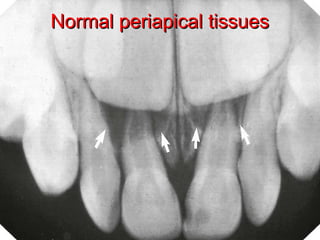
Normal periapical tissuesNormal periapical tissues
 No pain al allNo pain al all
 Not be abnormally sensitive to percussionNot be abnormally sensitive to percussion
or palpation testingor palpation testing
 Normal intact lamina duraNormal intact lamina dura
 Normal PDLNormal PDL
Symptomatic apicalSymptomatic apical
periodontitisperiodontitis
 painful inflammation of periodontiumpainful inflammation of periodontium
through root canal, regardless of whetherthrough root canal, regardless of whether
tooth is vital or non-vitaltooth is vital or non-vital
 Result:Result:
 trauma,trauma,
 irritationirritation
 infectioninfection
ETIOLOGYETIOLOGY
 IN VITAL TEETH
 - Abnormal occlusal contacts
 over occlual plan restoration
 foreign object between the teeth
 Trauma
IN NONVITAL TEETHIN NONVITAL TEETH
 Sequelae of pulpal diseases,
 Iatrogenic
 root canal instrumentation
 foramen Forcing of irrigating irrigants
 Extension of obturating material
 Perforation of the root
overinstrumentation during cleaning &
shaping of root canals.
Signs and SymptomsSigns and Symptoms
 Tender on percussion
 Dull, throbbing and constant pain
 pain on closure and mastication.
Negative or delayed vitality test
 Cold may relieve pain
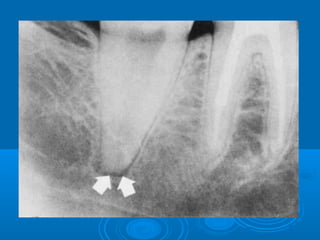
 Radiographically, widening of the pdl
space

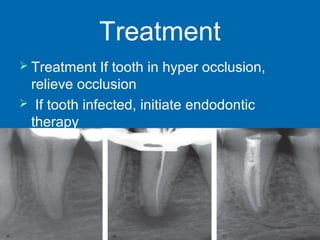
Treatment
 Treatment If tooth in hyper occlusion,
relieve occlusion
 If tooth infected, initiate endodontic
therapy
ASYMPTOMATICAPICALASYMPTOMATICAPICAL
 A clinical asymptomatic condition of
pulpal origin with inflammation and
destruction periapical tissues

ASYMPTOMATICASYMPTOMATIC
 Defined as a clinical asymptomatic
conditian of pulpal origin with inflammation
and destruction of periapical tissues.
Etiology
 Results from pulp necrosis and a
sequelae of symptomatic apical
periodontitis.

SIGNS AND SYMPTOMSSIGNS AND SYMPTOMS
 Does not respond to vitality test
 Percussion no pain Slight sensitivity to
palpation
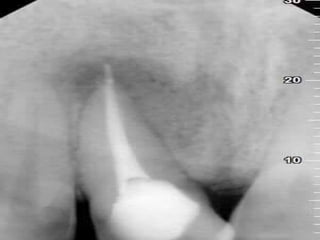
 Radio graphically interruption in lamina
dura Destruction of periapical tissues

TreatmentTreatment
 Remove of necrotic pulpRemove of necrotic pulp
 Complete the opturationComplete the opturation
Periradicular lesions (1)

Periradicular lesions (1)

  • 1.
  • 2.
  • 3.
    Normal periapical tissuesNormalperiapical tissues  No pain al allNo pain al all  Not be abnormally sensitive to percussionNot be abnormally sensitive to percussion or palpation testingor palpation testing  Normal intact lamina duraNormal intact lamina dura  Normal PDLNormal PDL
  • 4.
    Symptomatic apicalSymptomatic apical periodontitisperiodontitis painful inflammation of periodontiumpainful inflammation of periodontium through root canal, regardless of whetherthrough root canal, regardless of whether tooth is vital or non-vitaltooth is vital or non-vital  Result:Result:  trauma,trauma,  irritationirritation  infectioninfection
  • 5.
    ETIOLOGYETIOLOGY  IN VITALTEETH  - Abnormal occlusal contacts  over occlual plan restoration  foreign object between the teeth  Trauma
  • 6.
    IN NONVITAL TEETHINNONVITAL TEETH  Sequelae of pulpal diseases,  Iatrogenic  root canal instrumentation  foramen Forcing of irrigating irrigants  Extension of obturating material  Perforation of the root overinstrumentation during cleaning & shaping of root canals.
  • 7.
    Signs and SymptomsSignsand Symptoms  Tender on percussion  Dull, throbbing and constant pain  pain on closure and mastication. Negative or delayed vitality test  Cold may relieve pain  Radiographically, widening of the pdl space 
  • 9.
    Treatment  Treatment Iftooth in hyper occlusion, relieve occlusion  If tooth infected, initiate endodontic therapy
  • 10.
    ASYMPTOMATICAPICALASYMPTOMATICAPICAL  A clinicalasymptomatic condition of pulpal origin with inflammation and destruction periapical tissues 
  • 11.
    ASYMPTOMATICASYMPTOMATIC  Defined asa clinical asymptomatic conditian of pulpal origin with inflammation and destruction of periapical tissues.
  • 12.
    Etiology  Results frompulp necrosis and a sequelae of symptomatic apical periodontitis. 
  • 13.
    SIGNS AND SYMPTOMSSIGNSAND SYMPTOMS  Does not respond to vitality test  Percussion no pain Slight sensitivity to palpation  Radio graphically interruption in lamina dura Destruction of periapical tissues 
  • 14.
    TreatmentTreatment  Remove ofnecrotic pulpRemove of necrotic pulp  Complete the opturationComplete the opturation