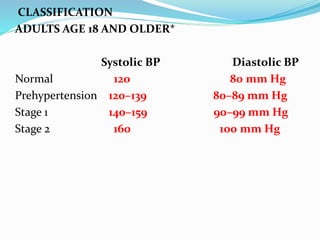
CLASSIFICATION
ADULTS AGE 18 AND OLDER*
Systolic BP Diastolic BP
Normal 120 80 mm Hg
Prehypertension 120–139 80–89 mm Hg
Stage 1 140–159 90–99 mm Hg
Stage 2 160 100 mm Hg
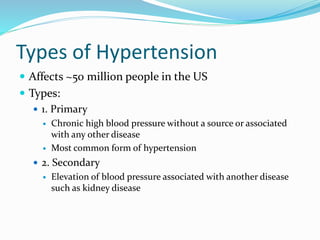
Types of Hypertension
 Affects ~50 million people in the US
 Types:
 1. Primary
 Chronic high blood pressure without a source or associated
with any other disease
 Most common form of hypertension
 2. Secondary
 Elevation of blood pressure associated with another disease
such as kidney disease
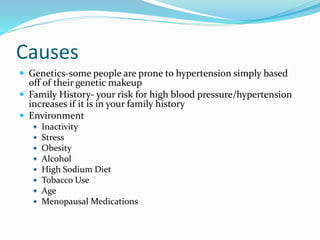
Causes
 Genetics-some people are prone to hypertension simply based
off of their genetic makeup
 Family History- your risk for high blood pressure/hypertension
increases if it is in your family history
 Environment
 Inactivity
 Stress
 Obesity
 Alcohol
 High Sodium Diet
 Tobacco Use
 Age
 Menopausal Medications
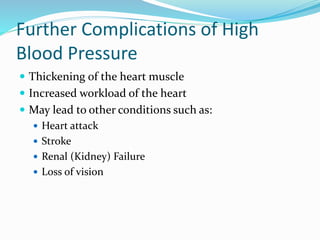
Further Complications of High
Blood Pressure
 Thickening of the heart muscle
 Increased workload of the heart
 May lead to other conditions such as:
 Heart attack
 Stroke
 Renal (Kidney) Failure
 Loss of vision
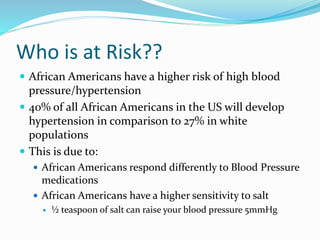
Who is at Risk??
 African Americans have a higher risk of high blood
pressure/hypertension
 40% of all African Americans in the US will develop
hypertension in comparison to 27% in white
populations
 This is due to:
 African Americans respond differently to Blood Pressure
medications
 African Americans have a higher sensitivity to salt
 ½ teaspoon of salt can raise your blood pressure 5mmHg
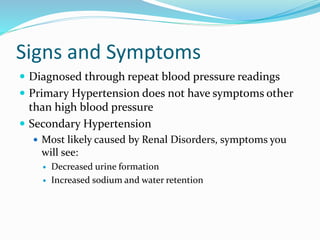
Signs and Symptoms
 Diagnosed through repeat blood pressure readings
 Primary Hypertension does not have symptoms other
than high blood pressure
 Secondary Hypertension
 Most likely caused by Renal Disorders, symptoms you
will see:
 Decreased urine formation
 Increased sodium and water retention
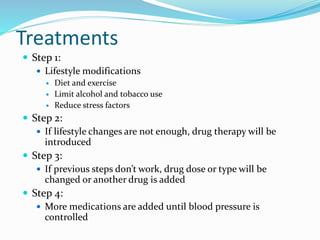
Treatments
 Step 1:
 Lifestyle modifications
 Diet and exercise
 Limit alcohol and tobacco use
 Reduce stress factors
 Step 2:
 If lifestyle changes are not enough, drug therapy will be
introduced
 Step 3:
 If previous steps don’t work, drug dose or type will be
changed or another drug is added
 Step 4:
 More medications are added until blood pressure is
controlled
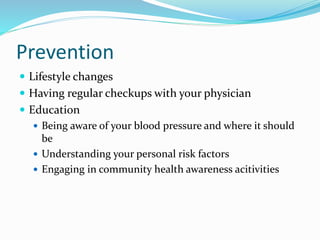
Prevention
 Lifestyle changes
 Having regular checkups with your physician
 Education
 Being aware of your blood pressure and where it should
be
 Understanding your personal risk factors
 Engaging in community health awareness acitivities
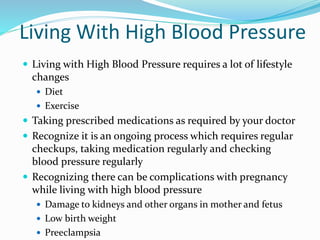
Living With High Blood Pressure
 Living with High Blood Pressure requires a lot of lifestyle
changes
 Diet
 Exercise
 Taking prescribed medications as required by your doctor
 Recognize it is an ongoing process which requires regular
checkups, taking medication regularly and checking
blood pressure regularly
 Recognizing there can be complications with pregnancy
while living with high blood pressure
 Damage to kidneys and other organs in mother and fetus
 Low birth weight
 Preeclampsia
References
 http://www.nhlbi.nih.gov/health/health-
topics/topics/hbp/signs.html

Hypertensionpowerpoint 120512103322-phpapp02

  • 2.
    CLASSIFICATION ADULTS AGE 18AND OLDER* Systolic BP Diastolic BP Normal 120 80 mm Hg Prehypertension 120–139 80–89 mm Hg Stage 1 140–159 90–99 mm Hg Stage 2 160 100 mm Hg
  • 3.
    Types of Hypertension Affects ~50 million people in the US  Types:  1. Primary  Chronic high blood pressure without a source or associated with any other disease  Most common form of hypertension  2. Secondary  Elevation of blood pressure associated with another disease such as kidney disease
  • 4.
    Causes  Genetics-some peopleare prone to hypertension simply based off of their genetic makeup  Family History- your risk for high blood pressure/hypertension increases if it is in your family history  Environment  Inactivity  Stress  Obesity  Alcohol  High Sodium Diet  Tobacco Use  Age  Menopausal Medications
  • 5.
    Further Complications ofHigh Blood Pressure  Thickening of the heart muscle  Increased workload of the heart  May lead to other conditions such as:  Heart attack  Stroke  Renal (Kidney) Failure  Loss of vision
  • 6.
    Who is atRisk??  African Americans have a higher risk of high blood pressure/hypertension  40% of all African Americans in the US will develop hypertension in comparison to 27% in white populations  This is due to:  African Americans respond differently to Blood Pressure medications  African Americans have a higher sensitivity to salt  ½ teaspoon of salt can raise your blood pressure 5mmHg
  • 7.
    Signs and Symptoms Diagnosed through repeat blood pressure readings  Primary Hypertension does not have symptoms other than high blood pressure  Secondary Hypertension  Most likely caused by Renal Disorders, symptoms you will see:  Decreased urine formation  Increased sodium and water retention
  • 8.
    Treatments  Step 1: Lifestyle modifications  Diet and exercise  Limit alcohol and tobacco use  Reduce stress factors  Step 2:  If lifestyle changes are not enough, drug therapy will be introduced  Step 3:  If previous steps don’t work, drug dose or type will be changed or another drug is added  Step 4:  More medications are added until blood pressure is controlled
  • 9.
    Prevention  Lifestyle changes Having regular checkups with your physician  Education  Being aware of your blood pressure and where it should be  Understanding your personal risk factors  Engaging in community health awareness acitivities
  • 10.
    Living With HighBlood Pressure  Living with High Blood Pressure requires a lot of lifestyle changes  Diet  Exercise  Taking prescribed medications as required by your doctor  Recognize it is an ongoing process which requires regular checkups, taking medication regularly and checking blood pressure regularly  Recognizing there can be complications with pregnancy while living with high blood pressure  Damage to kidneys and other organs in mother and fetus  Low birth weight  Preeclampsia
  • 11.