INNOVATIVE LESSON PLAN 
BY : 
RAMYATHA .T.R. 
B.Ed ENGLISH 
ROLL NO : 12 
N S S TRAINING COLLEGE, 
PANDALAM
Name of the student teacher : RAMYATHA .T.R. 
Name of the supervising teacher : Dr.MINI P 
Name of the school : V V H S S, 
Thamarakulam 
Subject : English 
Standard : 8th 
Duration : 45 minutes 
Unit : 2nd, 
On Telling A Tale 
Sub Unit : The Mice That Set The 
Elephants Free (1-3paragraph)
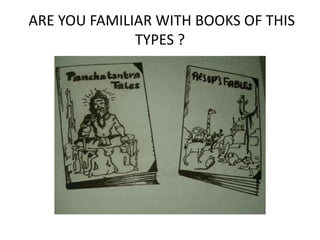
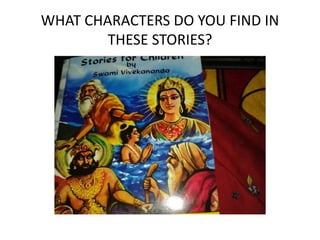
ARE YOU FAMILIAR WITH BOOKS OF THIS 
TYPES ?
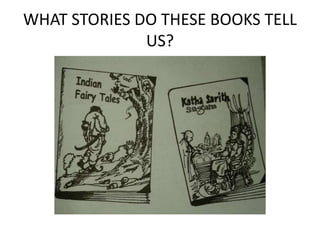
WHAT STORIES DO THESE BOOKS TELL 
US?
WHAT CHARACTERS DO YOU FIND IN 
THESE STORIES?
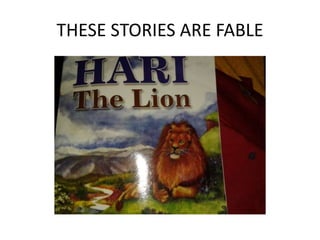
THESE STORIES ARE FABLE
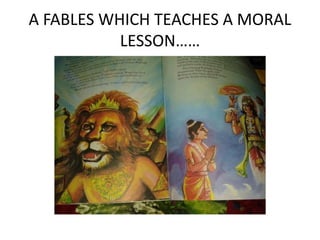
A FABLES WHICH TEACHES A MORAL 
LESSON……
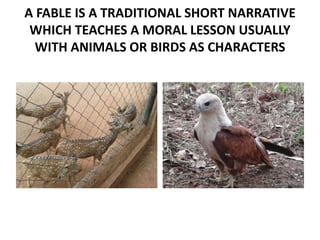
A FABLE IS A TRADITIONAL SHORT NARRATIVE 
WHICH TEACHES A MORAL LESSON USUALLY 
WITH ANIMALS OR BIRDS AS CHARACTERS
STORY OF MICE 
AND ELEPHANT
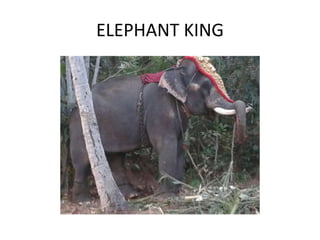
ELEPHANT KING
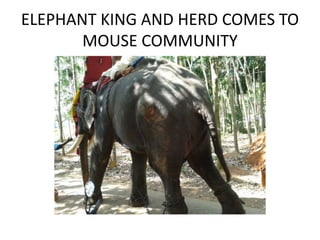
ELEPHANT KING AND HERD COMES TO 
MOUSE COMMUNITY
MICE HELD A 
CONVENTION
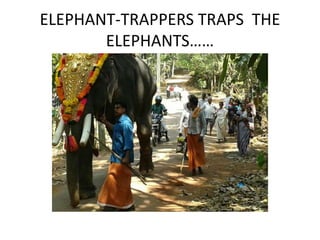
ELEPHANT-TRAPPERS TRAPS THE 
ELEPHANTS……
Issue : Lack of Universal Cohension. 
Sub Issue : Not realizing the importance of Social 
Mingling. 
Content Analysis : This Fable is taken from the 
Panchatantra tale.It is a translation from Sanskrit. The 
Mice,the old settlers in a ruined village occupied the 
chinks in the floors of house and temples there with 
their children and grand childrens.They found 
happiness in a variety of festivies.one day on their way 
in search of water an Elephant King & his herd marched 
through the mouse community,crushing the 
faces,eyes,head & neck of many.
New Vocabulary : Chinks, retinue, lumbering, 
crushed. 
Facts & Concepts : 1. One should make friends 
with all. 
2. One should give 
consideration & respect 
to others.
Curriculum Statement : The Learners 
1. Follow simple narration & dicussions. 
2. Understands the idea of what is spoken. 
3. Understands the meaning of new words in 
suitable context. 
4. Develops Self reading habits.
Pre-requisites : The Learners must have heard of 
Fables & importance of social communication, 
the need of mutual understanding. 
Learning Aids : Chart, Flashcards, 
Reference : Oxford English Dictionary,Ages, 
movement & Literary forms.
Class room interaction 
procedure 
Informal Interaction : The 
teacher communicate 
informally with students to 
create a rapport with them. 
Entry Activity : The teacher ask 
some questions. 
1.Do you like stories? 
2.Name some stories you have 
read? 
Expected Learners Responce 
Learners response activity… 
Yes 
Fox and Lion…..
Link Talk : Teacher ask some few 
more questions. 
1.Can you tell me what do you 
see in the book? 
2.Does it has only one story? 
Microprocessing of the input 
reading : Teacher read passage 
aloud with correct 
pronounciation, intonation, 
stress & voice modulation. 
Learners response actively 
Learners listens carefully.
Individual reading : Teacher 
ask students to read 
passage Individually . 
Tracking the reading : Teacher 
ask learners to track their 
reading by marking {?,*!} 
Sharing with pair/peer : 
Teacher ask them to share 
their findings with counter 
part. 
students to read passage 
Individually . 
learners do tracking. 
Learners share their findings
Sitting in group : Teacher ask 
learners to sit in group & 
discuss their understanding. 
Glossary reference with the 
help of teacher : teacher 
help learners to refer 
glossary to finds out the 
meaning of new words. 
Learners discuss 
Learners finds meanigs.
Megaphoning the doubts : 
teacher goes each group 
and megaphones their 
doubts. 
Scaffolded Reading : teacher 
ask scaffolded questions 
1.Where did the mice live? 
2.Who came to their way ? 
Learners doubts are cleared. 
Learners response correctly.
Finding answers to the 
questions in the course 
book : teacher help 
students to find answers . 
Reading aloud by learners : 
teacher makes learners 
read passage aloud with 
correct pronounciation, 
intonation, stress & voice 
modulation 
Learners participate actively. 
Learners reads..
Discourse construction : 
teacher ask learners to find 
out what remedy would the 
mice have taken? 
1.What would mice do? 
2.Will they try to kill the king? 
3.Will they try to fight with 
elephant? 
Learners participate actively.
Individual writing : teacher ask 
learners to write their 
discourse individually. 
Group writing : teacher ask 
learners to sit in group & 
share their ideas. 
Presentation & Editing : 
teacher goes each and 
directs them & to present 
their points & to edit it. 
Learners writes. 
Learners shares their ideas. 
Learners presents their work.
Teacher’s Version : teacher 
presents her version of the 
discourse. learners use it & 
make necessary correction 
in their writing.
ASSIGNMENT 
CREATE ANOTHER FABLE WITH ANIMALS AND 
BIRDS AS CHARACTERS.
THANKYOU

Mice & elephant- innovative lesson plan

  • 1.
    INNOVATIVE LESSON PLAN BY : RAMYATHA .T.R. B.Ed ENGLISH ROLL NO : 12 N S S TRAINING COLLEGE, PANDALAM
  • 2.
    Name of thestudent teacher : RAMYATHA .T.R. Name of the supervising teacher : Dr.MINI P Name of the school : V V H S S, Thamarakulam Subject : English Standard : 8th Duration : 45 minutes Unit : 2nd, On Telling A Tale Sub Unit : The Mice That Set The Elephants Free (1-3paragraph)
  • 3.
    ARE YOU FAMILIARWITH BOOKS OF THIS TYPES ?
  • 4.
    WHAT STORIES DOTHESE BOOKS TELL US?
  • 5.
    WHAT CHARACTERS DOYOU FIND IN THESE STORIES?
  • 6.
  • 7.
    A FABLES WHICHTEACHES A MORAL LESSON……
  • 8.
    A FABLE ISA TRADITIONAL SHORT NARRATIVE WHICH TEACHES A MORAL LESSON USUALLY WITH ANIMALS OR BIRDS AS CHARACTERS
  • 9.
    STORY OF MICE AND ELEPHANT
  • 10.
  • 11.
    ELEPHANT KING ANDHERD COMES TO MOUSE COMMUNITY
  • 12.
    MICE HELD A CONVENTION
  • 13.
  • 14.
    Issue : Lackof Universal Cohension. Sub Issue : Not realizing the importance of Social Mingling. Content Analysis : This Fable is taken from the Panchatantra tale.It is a translation from Sanskrit. The Mice,the old settlers in a ruined village occupied the chinks in the floors of house and temples there with their children and grand childrens.They found happiness in a variety of festivies.one day on their way in search of water an Elephant King & his herd marched through the mouse community,crushing the faces,eyes,head & neck of many.
  • 15.
    New Vocabulary :Chinks, retinue, lumbering, crushed. Facts & Concepts : 1. One should make friends with all. 2. One should give consideration & respect to others.
  • 16.
    Curriculum Statement :The Learners 1. Follow simple narration & dicussions. 2. Understands the idea of what is spoken. 3. Understands the meaning of new words in suitable context. 4. Develops Self reading habits.
  • 17.
    Pre-requisites : TheLearners must have heard of Fables & importance of social communication, the need of mutual understanding. Learning Aids : Chart, Flashcards, Reference : Oxford English Dictionary,Ages, movement & Literary forms.
  • 18.
    Class room interaction procedure Informal Interaction : The teacher communicate informally with students to create a rapport with them. Entry Activity : The teacher ask some questions. 1.Do you like stories? 2.Name some stories you have read? Expected Learners Responce Learners response activity… Yes Fox and Lion…..
  • 19.
    Link Talk :Teacher ask some few more questions. 1.Can you tell me what do you see in the book? 2.Does it has only one story? Microprocessing of the input reading : Teacher read passage aloud with correct pronounciation, intonation, stress & voice modulation. Learners response actively Learners listens carefully.
  • 20.
    Individual reading :Teacher ask students to read passage Individually . Tracking the reading : Teacher ask learners to track their reading by marking {?,*!} Sharing with pair/peer : Teacher ask them to share their findings with counter part. students to read passage Individually . learners do tracking. Learners share their findings
  • 21.
    Sitting in group: Teacher ask learners to sit in group & discuss their understanding. Glossary reference with the help of teacher : teacher help learners to refer glossary to finds out the meaning of new words. Learners discuss Learners finds meanigs.
  • 22.
    Megaphoning the doubts: teacher goes each group and megaphones their doubts. Scaffolded Reading : teacher ask scaffolded questions 1.Where did the mice live? 2.Who came to their way ? Learners doubts are cleared. Learners response correctly.
  • 23.
    Finding answers tothe questions in the course book : teacher help students to find answers . Reading aloud by learners : teacher makes learners read passage aloud with correct pronounciation, intonation, stress & voice modulation Learners participate actively. Learners reads..
  • 24.
    Discourse construction : teacher ask learners to find out what remedy would the mice have taken? 1.What would mice do? 2.Will they try to kill the king? 3.Will they try to fight with elephant? Learners participate actively.
  • 25.
    Individual writing :teacher ask learners to write their discourse individually. Group writing : teacher ask learners to sit in group & share their ideas. Presentation & Editing : teacher goes each and directs them & to present their points & to edit it. Learners writes. Learners shares their ideas. Learners presents their work.
  • 26.
    Teacher’s Version :teacher presents her version of the discourse. learners use it & make necessary correction in their writing.
  • 27.
    ASSIGNMENT CREATE ANOTHERFABLE WITH ANIMALS AND BIRDS AS CHARACTERS.
  • 28.