Aesop’s fable:
“The fox and the dog”
 A project conducted with
     pupils in C class!
The project is equally divided in three
      sessions of 45 minutes duration

•     Lesson 1: Warm – up and Pre – reading
                                activities
•     Lesson 2: Reading activity
             + follow – up speaking
                activities
•     Lesson 3: Follow – up listening activity
             + post reading activities
Activities in Lesson 1:
• Activity 1:
• Gap filling activity: Pupils experiment with
  structures, they write for a real purpose.
• Speaking with focus on grammatical patterns
  such as: demonstrative pronouns this is – that
  is, verbs “have” and “do”.
• Teaching aids:
  personal photocopy, board, picture flashcards:
  dog, fox, cat
  phrasal flashcards: this is, that is
• Activity 2: Speaking about the
     cover page of the story
• Grammar focus on the verb “do” and
  the auxiliary verb “can”. Pupils answer to
  the questions: “Do you like the colours?”
  “Can you tell me the colours?”

• Teaching aids: word flashcards with
  colours.
• Activity 3: Discussing about
          Aesop and fables

• The teacher asks pupils what they know
  about Aesop and his fables.
(The discussion is conducted in Greek
  because it is more convenient to pupils.)
Lesson 2: Reading activity
Benefits of story telling:
• Eye contact
• Characters’ dramatic placement
• Voice and gesture recreation
Benefits of listening to the story:

•Pupils directly reflect while listening
the story
•It is more entertaining to pupils, they
familiarize with authentic dialogues.

Teaching aid: CD player
Speaking activity 1:
•    Discussion upon the story’s slogan:

    Food is good, but a lot of food is bad for you!


    The discussion is conducted in Greek so
    that pupils can easily support their
    opinion.

Teaching aid: a poster
Speaking activity 2:
• Pupils use new structures and decide who
  is right and who is wrong.
• A rather fascinating activity because all
  pupils raise their hands, decide and judge
  at the same time.
  We should not forget that children are very
  strict in their judgments.
Speaking activity 3:
Teacher adds the Red Riding Hood in the
  story:
• Children are generally fond of using their
  imagination while describing events!
• Children find it interesting to give both a
  different end in the story and feel like fairy
  tale writers themselves!!!
Lesson 3: Listening activity
Benefits of listening to the story’s song:
• Pupils love songs
• They are great for movement and word-
  phrase repetition.
• They understand more English than any
  other method
Post – reading activities
Vocabulary elaboration activities:
• Activity 1: Pupils categorize verbs, nouns,
  adjectives of the story.
• Activity 2: word matching
• Activity 3: a fun activity with the fable’s
  slogan.
• Activity 4: focus on imperatives
• Activities 5 + 6: Gap filling
Extra fun activity:

• Pupils inspired by the fable prepare a
  poster using their imagination and many
  crayons!!!!
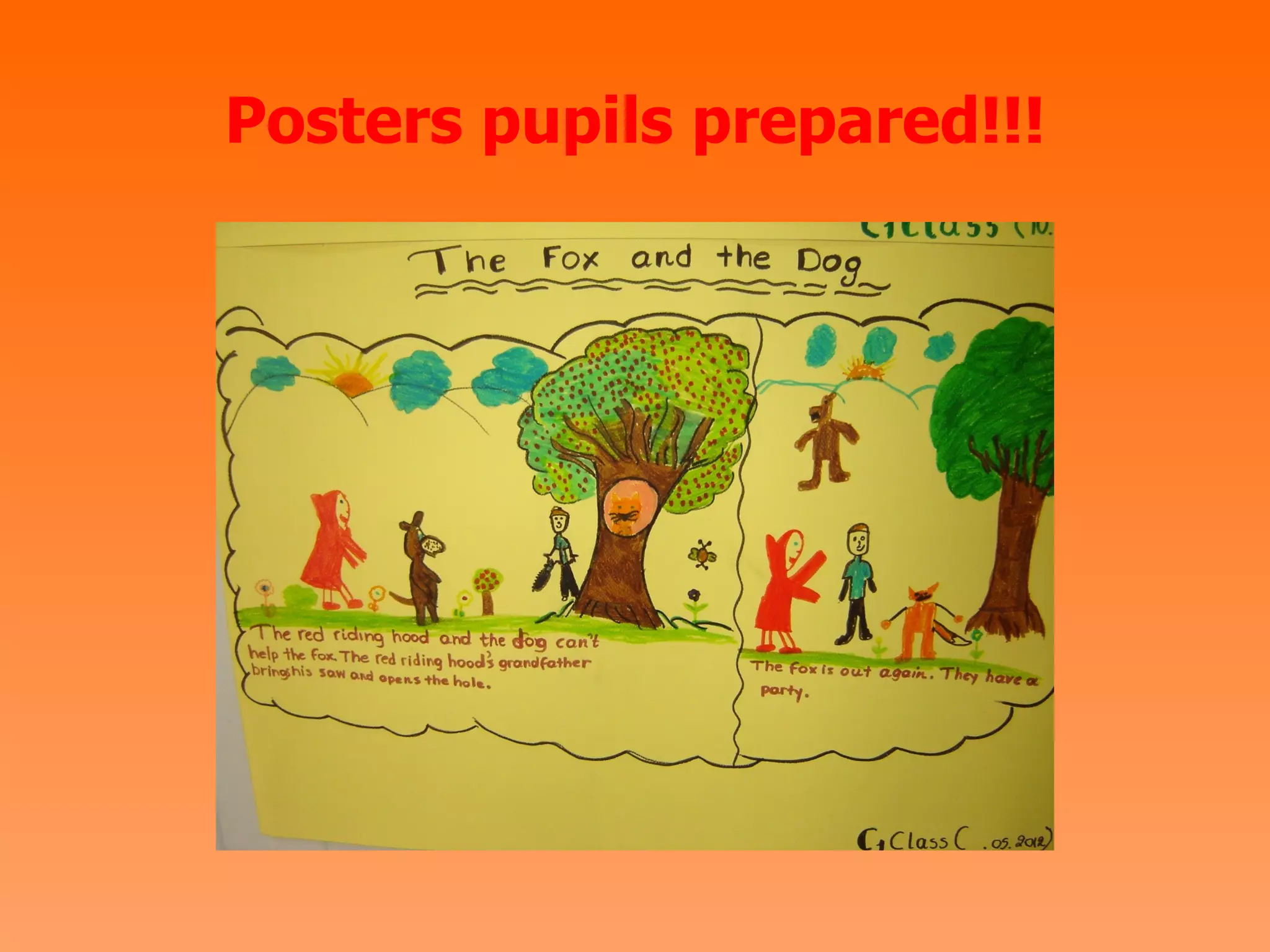
• Pupils make a second poster adding the
  red riding hood and her grandfather since
  they have given another end to the story.
Posters pupils prepared!!!
Power point presentation of the fable

Power point presentation of the fable

  • 1.
    Aesop’s fable: “The foxand the dog” A project conducted with pupils in C class!
  • 2.
    The project isequally divided in three sessions of 45 minutes duration • Lesson 1: Warm – up and Pre – reading activities • Lesson 2: Reading activity + follow – up speaking activities • Lesson 3: Follow – up listening activity + post reading activities
  • 3.
    Activities in Lesson1: • Activity 1: • Gap filling activity: Pupils experiment with structures, they write for a real purpose. • Speaking with focus on grammatical patterns such as: demonstrative pronouns this is – that is, verbs “have” and “do”. • Teaching aids: personal photocopy, board, picture flashcards: dog, fox, cat phrasal flashcards: this is, that is
  • 4.
    • Activity 2:Speaking about the cover page of the story • Grammar focus on the verb “do” and the auxiliary verb “can”. Pupils answer to the questions: “Do you like the colours?” “Can you tell me the colours?” • Teaching aids: word flashcards with colours.
  • 5.
    • Activity 3:Discussing about Aesop and fables • The teacher asks pupils what they know about Aesop and his fables. (The discussion is conducted in Greek because it is more convenient to pupils.)
  • 6.
    Lesson 2: Readingactivity Benefits of story telling: • Eye contact • Characters’ dramatic placement • Voice and gesture recreation
  • 7.
    Benefits of listeningto the story: •Pupils directly reflect while listening the story •It is more entertaining to pupils, they familiarize with authentic dialogues. Teaching aid: CD player
  • 8.
    Speaking activity 1: • Discussion upon the story’s slogan: Food is good, but a lot of food is bad for you! The discussion is conducted in Greek so that pupils can easily support their opinion. Teaching aid: a poster
  • 9.
    Speaking activity 2: •Pupils use new structures and decide who is right and who is wrong. • A rather fascinating activity because all pupils raise their hands, decide and judge at the same time. We should not forget that children are very strict in their judgments.
  • 10.
    Speaking activity 3: Teacheradds the Red Riding Hood in the story: • Children are generally fond of using their imagination while describing events! • Children find it interesting to give both a different end in the story and feel like fairy tale writers themselves!!!
  • 11.
    Lesson 3: Listeningactivity Benefits of listening to the story’s song: • Pupils love songs • They are great for movement and word- phrase repetition. • They understand more English than any other method
  • 12.
    Post – readingactivities Vocabulary elaboration activities: • Activity 1: Pupils categorize verbs, nouns, adjectives of the story. • Activity 2: word matching • Activity 3: a fun activity with the fable’s slogan. • Activity 4: focus on imperatives • Activities 5 + 6: Gap filling
  • 13.
    Extra fun activity: •Pupils inspired by the fable prepare a poster using their imagination and many crayons!!!! • Pupils make a second poster adding the red riding hood and her grandfather since they have given another end to the story.
  • 14.