Primary data collection methods include observation, interviews, questionnaires, and surveys. These methods allow researchers to gather original, firsthand data directly from sources.
METHODS OF PRIMARY
DATACOLLECTION
INTERVIEW- OBSERVATION –EXPERIMENTATION –PANEL METHOD –
MAIL SURVEY –PROJECTIVE TECHNIQUE
2.
OBSERVATION METHOD
Observation isa technique that involves
systematically selecting, watching, listening, reading,
touching, and recording behavior and characteristics
of living beings, objects, or phenomena without
making and disturbances.
3.
CHARACTERISTICS OF OBSERVATION
METHOD
•Both physical and mental activity
• It is selective. Not entire element.
• Purposive & not casual
• Capture natural social context of participant
• Grasp the significant event and occurrence
• Use standard tools
• Planned activity
4.
CONDITIONS
• When respondents’are not aware of the research concept.
• Accurate information 150 cannot be elicited by questioning
• Not cooperative.
5.
Examples
• Interaction ina group
• Study the dietary patterns of a population
• Ascertain the functions performed by a worker
• Study the behaviour or personality traits of an individual.
6.
TYPES OF OBSERVATIONMETHOD
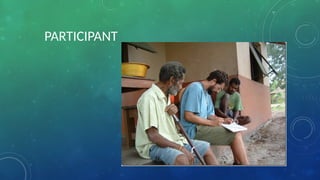
• Participant : Researcher becomes a member of the observed group.
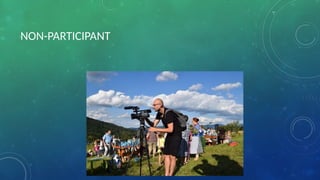
• Non-participant: Researcher remains stay away from the study
group & observe from the distance.
• Controlled: Observation performed in a controlled settings either in
lab or under the control of researcher
• Uncontrolled: Researcher has no control over the variables and
observe the natural behavior
• Direct: Researcher directly visit or participate the place
• Indirect: Researcher hide himself & use electronic devices –
CCTV, mic.
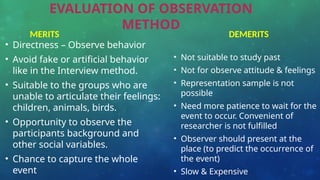
EVALUATION OF OBSERVATION
METHOD
•Directness – Observe behavior
• Avoid fake or artificial behavior
like in the Interview method.
• Suitable to the groups who are
unable to articulate their feelings:
children, animals, birds.
• Opportunity to observe the
participants background and
other social variables.
• Chance to capture the whole
event
• Not suitable to study past
• Not for observe attitude & feelings
• Representation sample is not
possible
• Need more patience to wait for the
event to occur. Convenient of
researcher is not fulfilled
• Observer should present at the
place (to predict the occurrence of
the event)
• Slow & Expensive
MERITS DEMERITS
14.
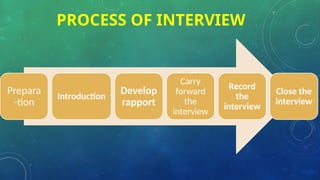
INTERVIEW
• A twoway systematic conversation between an investigator
and an informant, initiated for obtaining information relevant to
a specific study.
• It involves not only conversation, but also learning from the
respondents’ gestures, facial expressions, pauses and the
environment.
15.
CHARACTERISTICS OF INTERVIEW
•Both the interviewer and respondents are strangers
• Relationship between both the parties are transitory/
temporary.
• Interview is a specific purpose not a casual conversation
• Verbal questions and answers/ responses
• Time period is not regulated
• Time is an interactional process
• Flexible
16.
TYPES OF INTERVIEWSBASED ON METHODOLOGY
• Structured/ Directive - Same set of questions to all the
candidates/ so formal
• Unstructured/ Non-directive- Depends on the interviewees,
questions can be varied. Useful for case studies.
• Focused/ Semi-Structured- Very specific to a analyzing the
experiences of particular case/ incident to which the respondents
are exposed (e.g. Car accidents, thriller games, victim of
kidnap/theft)
• Clinical: To analyze the impact of specific situations and
respondents’ feelings, attitude and broad underlying motivations.
• Depth: Trained or professional interviewer can probe respondents’
to express about specific phenomenon.
17.
TYPES OF INTERVIEWSBASED ON TECHNIQUES
• Telephone Interview- Conduct interview over mobile
calls. Non-directive method.
• Group Interview: Group of interviewees will be
interviewed simultaneously.
18.
TELEPHONE INTERVIEW
MERITS
• Timeis less
• Less Cost
• Quality of data
• Can avoid field work
• Respondents who are
geographically disbursed can
be included
DEMERITS
• Contact only limited persons
• Time Limit of interview create frustration
• Personal matters can’t be asked
• Complex questionnaire can’t be collected
• Respondents’ background can’t be
recorded
• Not possible to show Visual aids
• Identity can not be collected & ensured
19.
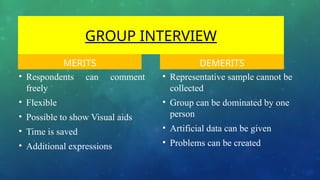
GROUP INTERVIEW
MERITS
• Respondentscan comment
freely
• Flexible
• Possible to show Visual aids
• Time is saved
• Additional expressions
DEMERITS
• Representative sample cannot be
collected
• Group can be dominated by one
person
• Artificial data can be given
• Problems can be created
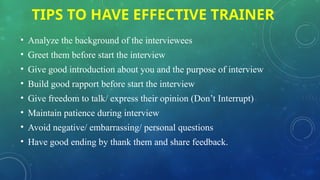
TIPS TO HAVEEFFECTIVE TRAINER
• Analyze the background of the interviewees
• Greet them before start the interview
• Give good introduction about you and the purpose of interview
• Build good rapport before start the interview
• Give freedom to talk/ express their opinion (Don’t Interrupt)
• Maintain patience during interview
• Avoid negative/ embarrassing/ personal questions
• Have good ending by thank them and share feedback.
• Study theeffect of dependent variable on independent
variables (casual relationship).
• E.g.
• Impact of advertising on sales.
• Effect of new teaching methodology on semester marks
•
EXPERIMENTATION
24.
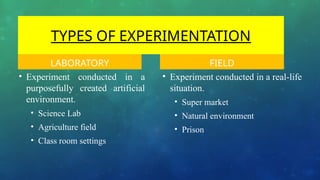
TYPES OF EXPERIMENTATION
LABORATORY
•Experiment conducted in a
purposefully created artificial
environment.
• Science Lab
• Agriculture field
• Class room settings
FIELD
• Experiment conducted in a real-life
situation.
• Super market
• Natural environment
• Prison
25.
EVALUATION OF LAB
EXPERIMENTATION
MERITS
•Have complete control over the
variables
• Manipulate the variables
• High degree of specificity
• Precise results
• Convenient of researchers
DEMERITS
• Costly
• Less flexibility
• Impossible to create natural settings.
• Outcome can be differed in real-life
• In real-life, several variables influence
the dependent variables.
26.
EVALUATION OF REAL-LIFE
EXPERIMENTATION
MERITS
•Real life situation
• Applicable for social science
research
• Suitable for studying complex
situations.
• Direct practical application
DEMERITS
• Practical difficulty
• Permission can be denied
• Lack of precision
• Difficult process
• Time-consuming
27.
• Longitudinal study
•Same set of respondents are studied for longer time period by using
either by mail, or interview.
• E.g.
• Consumer preference
• Medical study
• Expenditure pattern
• Economic condition
PANEL METHOD
EVALUATION OF PANELMETHOD
MERITS
• Collection of more accurate
data for longitudinal study
• Useful for before & after
study
• Useful to study the trends in
preference, attitude & etc.
• Create an evidence
• Facilitate depth interview
DEMERITS
• Very expensive
• Non-cooperation
• Non- participation
• Due to external factors, attitude can
differed
• Quality of data depends on panel-
conditioning
30.
• Ask therespondents to fill the questionnaire without having any
oral conversation.
MAIL SURVEY/ QUESTIONNAIRE
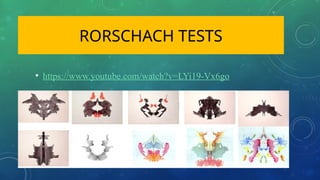
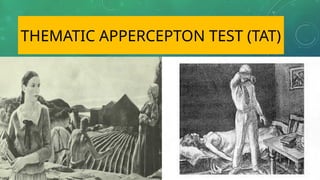
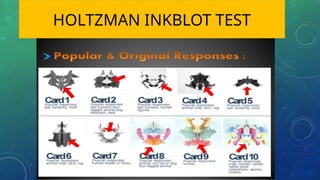
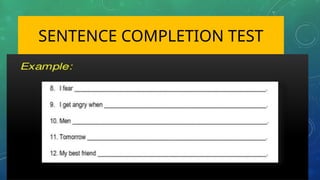
PROJECTIVE TECHNIQUES
• Asubset of personality testing in which the examinee is given a
simple unstructured task, with a goal of uncovering personality
characteristics.
• Indirect and unstructured methods of investigation which have
been developed by the psychologists.
• Use projection of respondents for inferring about underline motives,
urges or intentions which cannot be secure through direct
questioning as the respondent either resists to reveal them or is unable
to figure out himself.
DRAWBACKS
• Highly trainedinterviewers and skilled interpreters are needed.
• Interpreters bias can be there.
• It is a costly method.
• The respondent selected may not be representative of the entire
population.
42.
• The surveymethod is the practice of gathering data for a study by
asking people questions related to your research.
• Typically, researchers survey people who have particular knowledge,
insights or experiences related to the study
•
SURVEY






















![research methodolgy - methods anf types of data collection utosaved].pptx](https://cdn.slidesharecdn.com/ss_thumbnails/chapter2autosaved-250819040554-74ae78a7-thumbnail.jpg?width=640&height=640&fit=bounds)


