BIOPHARAMCEUTICS AND PHARMACOKINETICS - DAKSHINESH 1
NANDHA COLLEGE OF PHARMACY
ERODE-52
NAME: DAKSHINESH P
COURSE: B.PHARM
SEMESTER: VI
BIOPHARAMCEUTICS AND PHARMACOKINETICS - DAKSHINESH 2
BIOPHARMACEUTICS AND
PHARMACOKINETICS
METHODS TO ENHANCE
THE DISSOLUTION RATES
AND BIOAVILABILITY OF
POORLY SOLUBLE DRUGS
BIOPHARAMCEUTICS AND PHARMACOKINETICS - DAKSHINESH 3
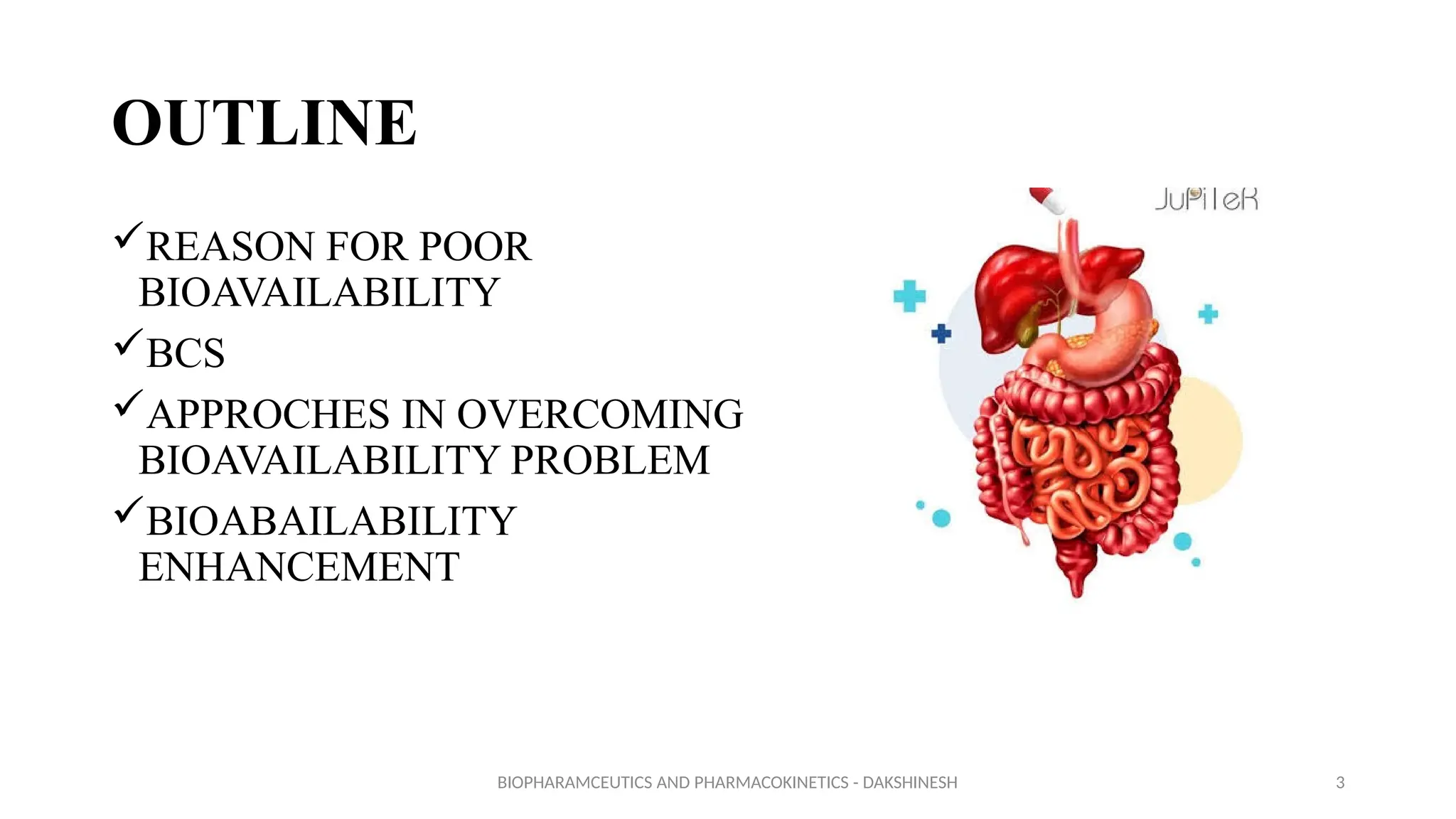
OUTLINE
REASON FOR POOR
BIOAVAILABILITY
BCS
APPROCHES IN OVERCOMING
BIOAVAILABILITY PROBLEM
BIOABAILABILITY
ENHANCEMENT
BIOPHARAMCEUTICS AND PHARMACOKINETICS - DAKSHINESH 4
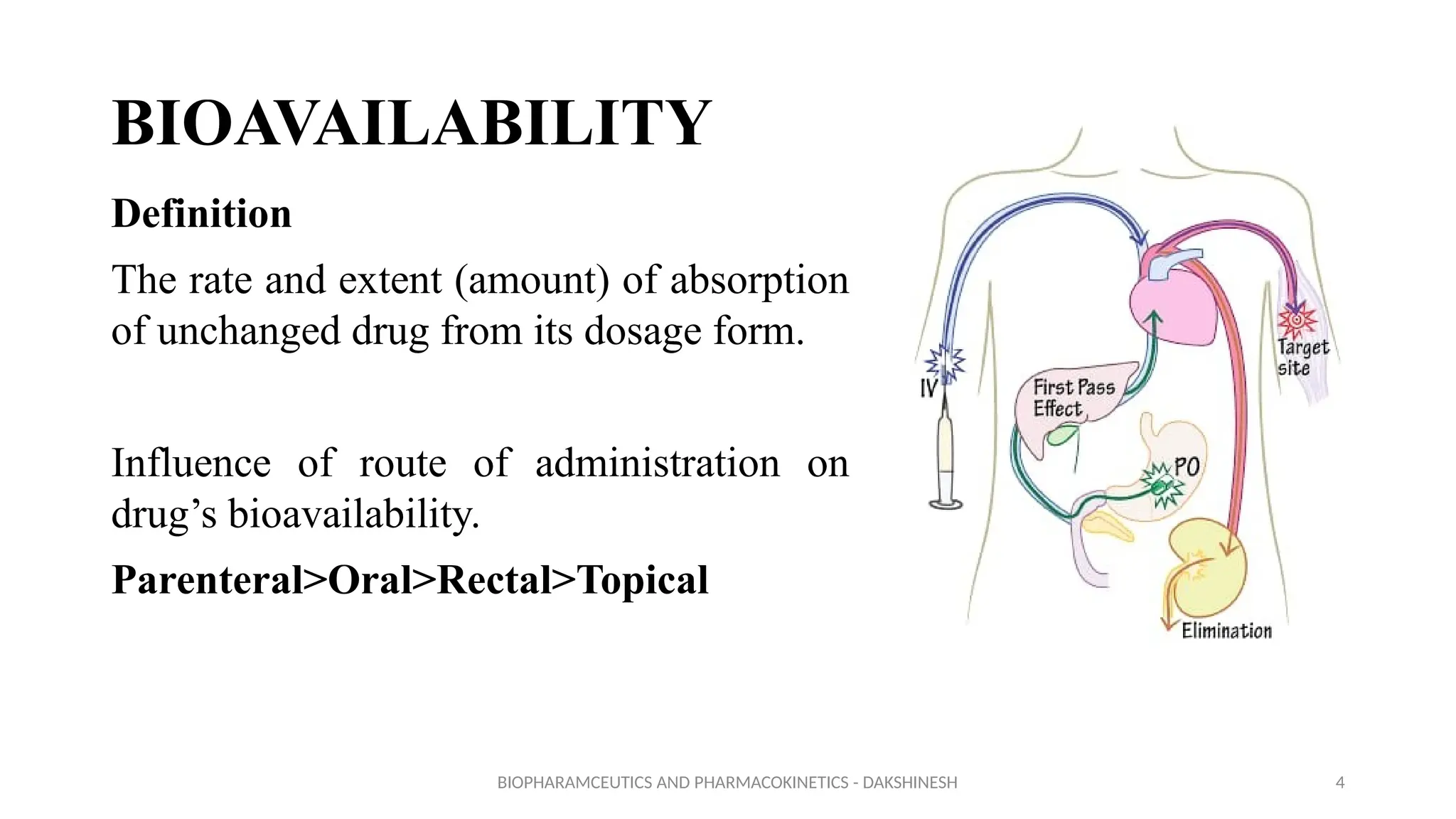
BIOAVAILABILITY
Definition
The rate and extent (amount) of absorption
of unchanged drug from its dosage form.
Influence of route of administration on
drug’s bioavailability.
Parenteral>Oral>Rectal>Topical
BIOPHARAMCEUTICS AND PHARMACOKINETICS - DAKSHINESH 5
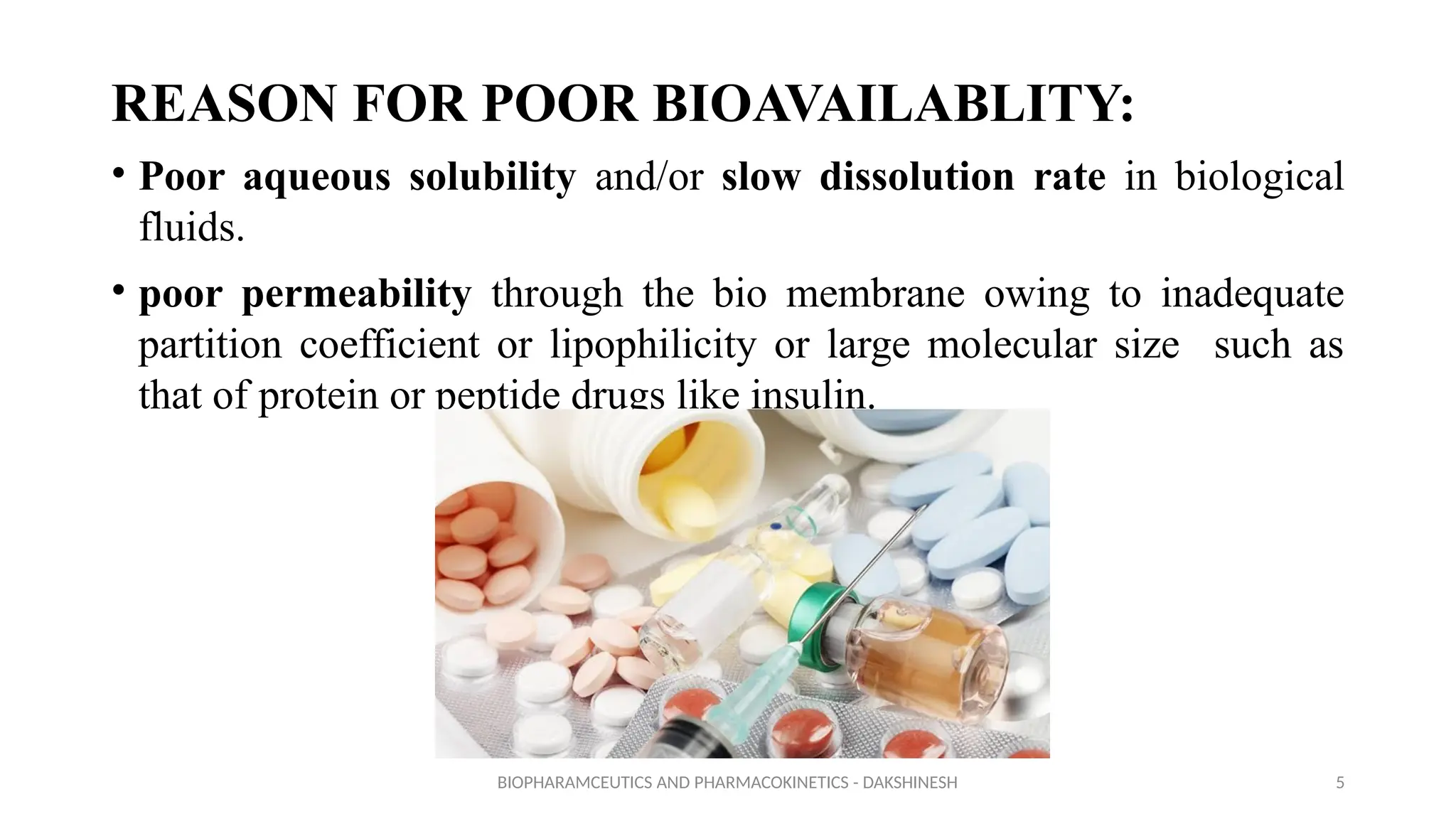
REASON FOR POOR BIOAVAILABLITY:
• Poor aqueous solubility and/or slow dissolution rate in biological
fluids.
• poor permeability through the bio membrane owing to inadequate
partition coefficient or lipophilicity or large molecular size such as
that of protein or peptide drugs like insulin.
BIOPHARAMCEUTICS AND PHARMACOKINETICS - DAKSHINESH 6
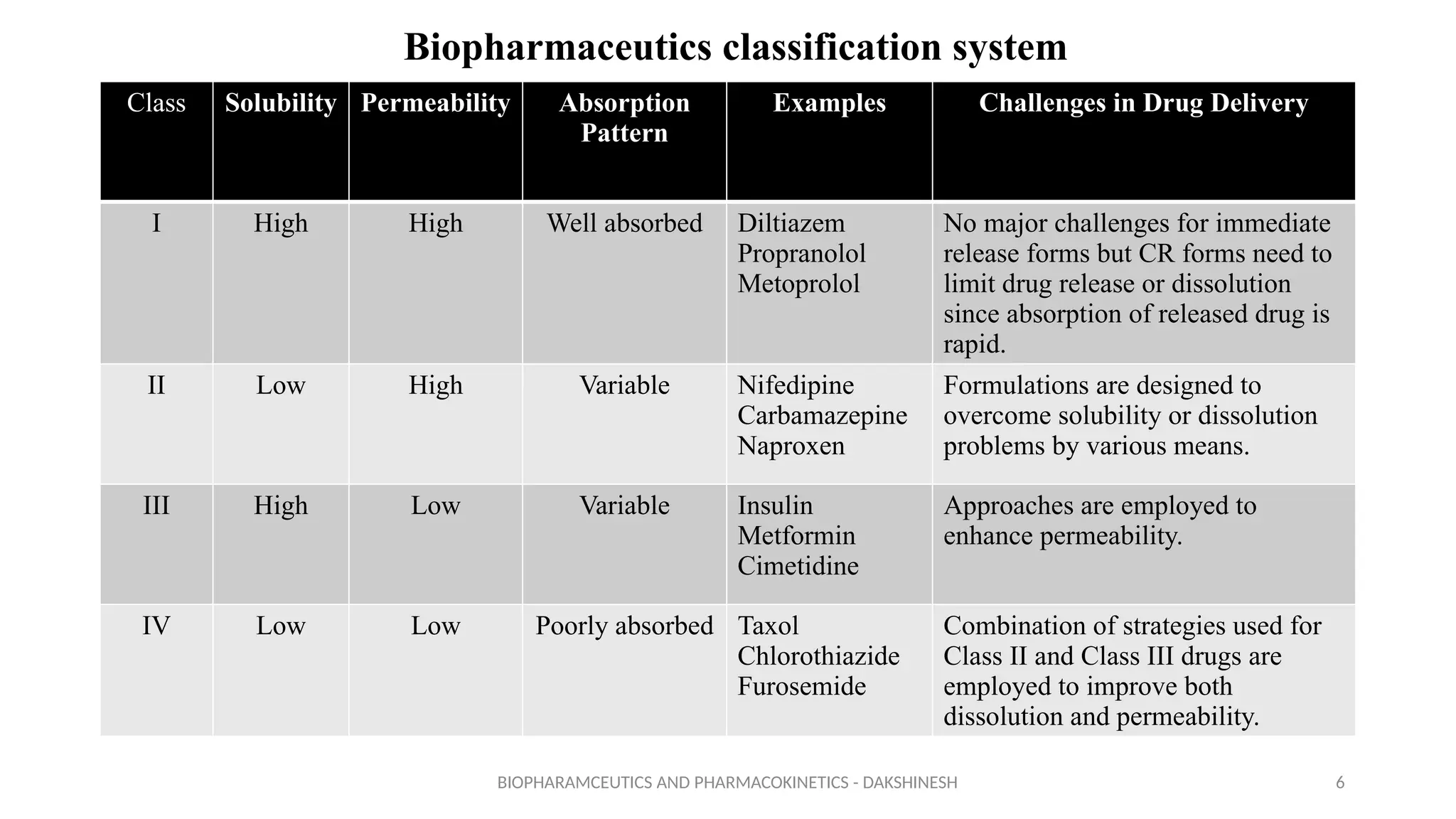
Biopharmaceutics classification system
Class Solubility Permeability Absorption
Pattern
Examples Challenges in Drug Delivery
I High High Well absorbed Diltiazem
Propranolol
Metoprolol
No major challenges for immediate
release forms but CR forms need to
limit drug release or dissolution
since absorption of released drug is
rapid.
II Low High Variable Nifedipine
Carbamazepine
Naproxen
Formulations are designed to
overcome solubility or dissolution
problems by various means.
III High Low Variable Insulin
Metformin
Cimetidine
Approaches are employed to
enhance permeability.
IV Low Low Poorly absorbed Taxol
Chlorothiazide
Furosemide
Combination of strategies used for
Class II and Class III drugs are
employed to improve both
dissolution and permeability.
BIOPHARAMCEUTICS AND PHARMACOKINETICS - DAKSHINESH 7
APPROCHES IN OVERCOMING THE
BIOAVAILABILITY PROBLEMS
• The Pharmaceutical Approach
• The Pharmacokinetic Approach
• The Biological Approach
BIOPHARAMCEUTICS AND PHARMACOKINETICS - DAKSHINESH 8
1. The Pharmaceutical Approach which involves modification of
formulation, manufacturing process or the physicochemical
properties of the drug without changing the chemical structure.
2. The Pharmaceutical Approach in which the pharmacokinetics of a
drug is altered by modifying its chemical structure. This approach is
further divided into two categories,
• Development of new chemical entity (NCE) with desirable features.
• Prodrug design.
3. The Biological Approach whereby the route of drug administration
may be changed such as changing from oral to parenteral route.
BIOPHARAMCEUTICS AND PHARMACOKINETICS - DAKSHINESH 9
BIOAVAILABILITY ENHANCEMENT
Bioavailability enhancement through enhancement of drug solubility
or dissolution rate.
Bioavailability enhancement through enhancement of drug
permeability across bio membrane.
Bioavailability enhancement through enhancement of drug stability.
Bioavailability enhancement through gastrointestinal retention.
BIOPHARAMCEUTICS AND PHARMACOKINETICS - DAKSHINESH 10
Bioavailability enhancement through enhancement of drug
solubility or dissolution rate
• Micronization
• Nanonisation
• Supercritical Fluid Recrystallization
• Spray Freezing into Liquid(SFL)
• Evaporative Precipitation into Aqueous Solution (EPAS)
• Use of Surfactants
• Use of Salt forms
• Use of Precipitation Inhibitors
BIOPHARAMCEUTICS AND PHARMACOKINETICS - DAKSHINESH 11
• Alteration of pH of the Drug Microenvironment
• Use of Amorphs, An hydrates, Solvates and Metastable
Polymorphs
• Solvent deposition
• Precipitation
• Selective Adsorption on Insoluble Carriers
• Solid Solutions
• Eutectic Mixtures
• Solid Dispersions
• Molecular Encapsulation with Cyclodextrins
BIOPHARAMCEUTICS AND PHARMACOKINETICS - DAKSHINESH 12
1. Micronization:
The process involves reducing the size of solid drug particles to 1
to 10 microns commonly by spray drying or by use of air attrition
methods (fluid energy or jet mill). This process is also called as micro
milling. Example: Griseofulvin
BIOPHARAMCEUTICS AND PHARMACOKINETICS - DAKSHINESH 13
2. Nanonisation:
A process whereby the drug powder is converted to nanocrystals
of sizes 200-600 nm. Example: Amphotericin B. the main production
technologies currently in use to produce drug nanocrystals yield as a
product a dispersion of drug nanocrystals in a liquid, typically water
(called nanosuspension). There are three basic technologies currently in
use to prepare nanoparticles:
i. Pearl milling
ii. Homogenisation in water (wet milling as in a colloid mill)
iii. Homogenisation in non-aqueous media or in water with water-
miscible liquids.
BIOPHARAMCEUTICS AND PHARMACOKINETICS - DAKSHINESH 14
3. Supercritical Fluid Recrystallization
• Another novel nanosizing and solubilisation technology whose
application has increased in recent years is particle size reduction via
supercritical fluid (SCF) processes.
• Supercritical fluids(e.g. carbon dioxide) are fluids whose temperature
and pressure are greater than its critical temperature (Tc) and critical
pressure(Tp), allowing it to assume the properties of a liquid and a gas.
• At near-critical temperatures, SCFs are highly compressible, allowing
moderate changes in pressure to greatly alter the density and mass
transport characteristics of fluid that largely determine its solvent power.
• Once the drug particles are solubilised within SCF, they may be
recrystallised at greatly reduced particle size.
BIOPHARAMCEUTICS AND PHARMACOKINETICS - DAKSHINESH 15
4. Spray Freezing into Liquid(SFL):
• This technique involves atomizing an aqueous, organic, aqueous-organic
cosolvent solution, aqueous-organic emulsion or suspension containing
a drug or pharmaceutical excipients directly into a compressed gas (i.e.
CO2, helium, propane, ethane), or the cryogenic liquids (i.e. nitrogen,
argon or hydro Fluro ethers).
• The frozen particles are then lyophilized to obtain dry and free-flowing
micronized powders use of acetonitrile as the solvent increases drug
loading and decreases the drying time for lyophilization.
• The dissolution rate is remarkably enhanced from the SFL powder
containing amorphous rate is remarkably enhanced from the SFL
powder containing amorphous nanostructured aggregates with high
surface area and excellent wettability.
BIOPHARAMCEUTICS AND PHARMACOKINETICS - DAKSHINESH 16
5. Evaporative Precipitation into Aqueous Solution (EPAS)
• The EPAS process utilizes rapid phase separation to nucleate and grow
nanoparticles and microparticles of lipophilic drugs.
• the drug is first dissolved in a low boiling point organic solvents.
• This solution is pumped through a tube where it is heated under pressure to a
temperature above the solvent's boiling point and then sprayed through a
fine atomizing nozzle into a heated aqueous solution.
• Surfactants are added to the organic solution and the aqueous solution to
optimize particle formation and stabilization.
• In EPAS, the surfactant migrates to the drug-water interface during particle
formation, and the hydrophilic segment is oriented towards the aqueous
continuous phase.
• The hydrophilic stabilizer on the surface inhibits crystallization of growing
particle and therefore facilitates dissolution rates.
BIOPHARAMCEUTICS AND PHARMACOKINETICS - DAKSHINESH 17
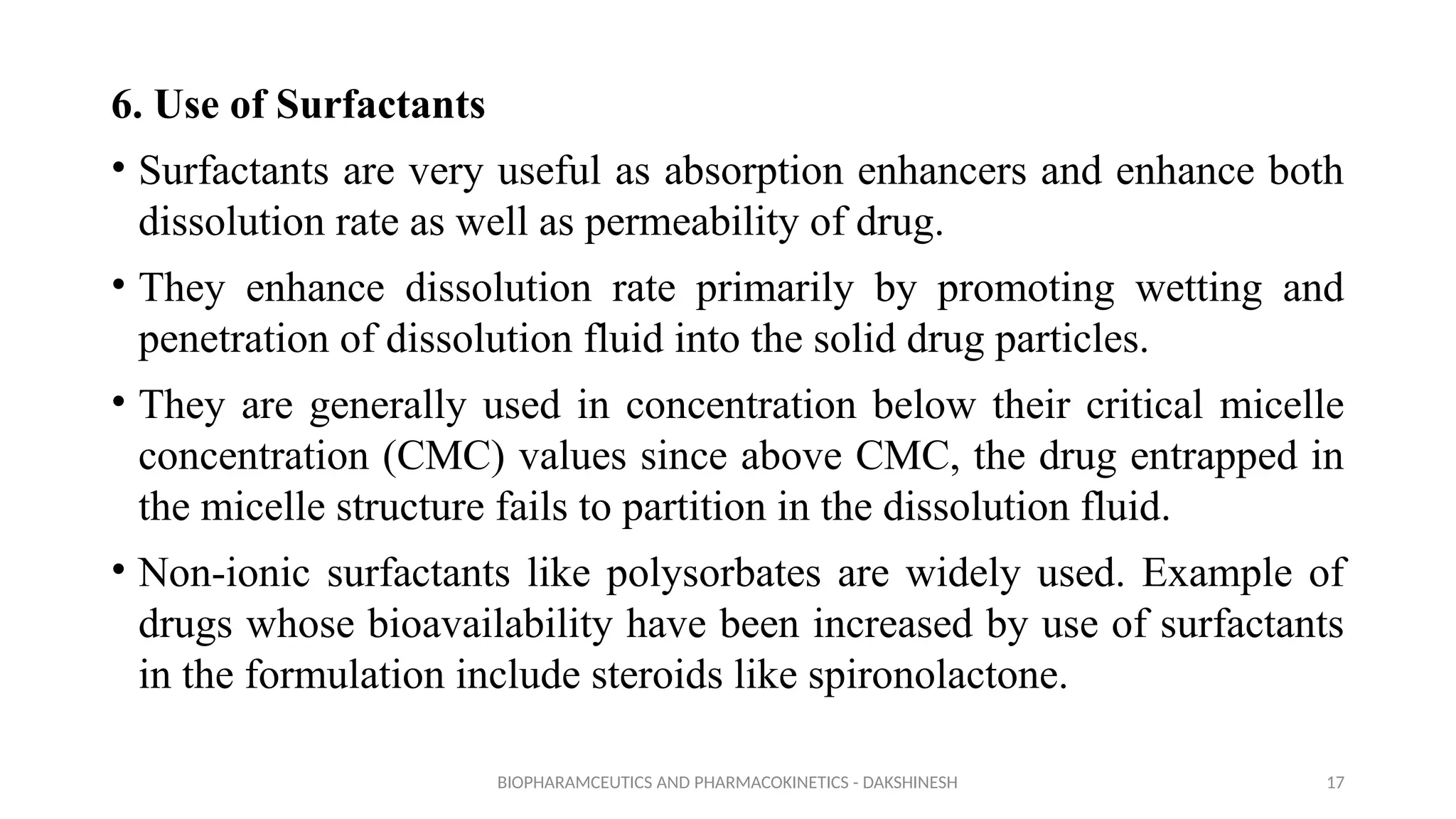
6. Use of Surfactants
• Surfactants are very useful as absorption enhancers and enhance both
dissolution rate as well as permeability of drug.
• They enhance dissolution rate primarily by promoting wetting and
penetration of dissolution fluid into the solid drug particles.
• They are generally used in concentration below their critical micelle
concentration (CMC) values since above CMC, the drug entrapped in
the micelle structure fails to partition in the dissolution fluid.
• Non-ionic surfactants like polysorbates are widely used. Example of
drugs whose bioavailability have been increased by use of surfactants
in the formulation include steroids like spironolactone.
BIOPHARAMCEUTICS AND PHARMACOKINETICS - DAKSHINESH 18
7. Use of Salt forms
• Salts have improved solubility and dissolution characteristics in
comparison to the original drug.
• It is generally accepted that a minimum difference of 3 units between
the pKa value of the group and that of its counter ion is required to
form stable salts.
• Alkali metal salts of acidic drugs like penicillin and strong acid salts of
basic drugs like atropine are more water soluble than the parent drug.
• Factors that influence salt selection are physical and chemical
properties of the salt, safety of counter ion, therapeutic indications and
route of administration.
BIOPHARAMCEUTICS AND PHARMACOKINETICS - DAKSHINESH 19
Limitations:
• It is not feasible to form salts of neutral compounds.
• It may be difficult to form salts of very weak bases or acids.
• The salt may be hygroscopic, exhibit polymorphism or has poor
processing characteristics.
• Conversion of salt to free acid or base form of the drug on surface of
solid dosage form that prevents or retards drug release.
• Precipitation of unionized drug in the GI milieu that has poor
solubility.
BIOPHARAMCEUTICS AND PHARMACOKINETICS - DAKSHINESH 20
8. Use of Precipitation Inhibitors
A significant increase in free drug concentration, above
equilibrium solubility results in super saturation, which can lead to drug
precipitation or crystallization. This can be prevented by use of inert
polymers such HPMC, PVP, PVA, PEG, etc. which act by one or more of
the following mechanism:
• Increase the viscosity of crystallization medium thereby reducing the
crystallization rate of drugs.
• Provide a steric barrier to drug molecules and inhibit crystallization
through specific intermolecular interactions on growing crystal surface.
• Adsorb onto faces of host crystals, reduce the crystal growth rate of the
host and produce smaller crystals.
BIOPHARAMCEUTICS AND PHARMACOKINETICS - DAKSHINESH 21
9. Alteration of pH of the Drug Microenvironment
This can be achieved in two ways – in situ salt formation and
addition of buffer to the formulation e.g. buffered aspirin tablets.
10. Use of Amorphs, An hydrates, Solvates and Metastable
Polymorphs
• Depending upon the internal structure of the solid drug, selection of
proper form of drug with greater solubility is important.
• In general, amorphs are more soluble than metastable polymorphs,
anhydrous are more stable then hydrates and solvates are more soluble
than non-solvates.
BIOPHARAMCEUTICS AND PHARMACOKINETICS - DAKSHINESH 22
11. Solvent deposition
In this method, the poorly aqueous soluble drug such as
nifedipine is dissolved in an organic solvent like alcohol and deposited
on an inert, hydrophilic, solid matrix such as starch or microcrystalline
cellulose by evaporation of solvent.
12. Precipitation
In this method, the poor aqueous soluble drug such as
cyclosporine is dissolved in an organic solvent followed by its rapid
mixing with a non-solvent to effect precipitation of drug in nano size
particles. The product so prepared is also called as hydrosol.
BIOPHARAMCEUTICS AND PHARMACOKINETICS - DAKSHINESH 23
13. Selective Adsorption on Insoluble Carriers
• A highly active adsorbent such as the inorganic clays like bentonite
can enhance the dissolution rate of poorly water-soluble drugs such as
griseofulvin, indomethacin and prednisone by maintain the
concentration gradient at its maximum.
• The two reasons suggested for the rapid release of drugs from the
surface of clays are – the weak physical bonding between the
adsorbate and adsorbent, and hydration and swelling of the clay in the
aqueous media.
BIOPHARAMCEUTICS AND PHARMACOKINETICS - DAKSHINESH 24
14. Solid Solutions
The three means by which the particle size of a drug can be
reduced to submicron level are
• Use of solid solutions
• Use of eutectic mixtures
• Use of solid dispersions
In all these case, the solute is frequently a poor water soluble drug
acting as the guest and the solvent is a highly water soluble compound
or polymer acting as a host or carrier.
A solid solution is a binary system comparing of a solid solute
molecularly dispersed in a solid solvent. Since the two components
crystallize together in a homogeneous one phase system, solid solutions
are called as molecular dispersions or mixed crystals.
BIOPHARAMCEUTICS AND PHARMACOKINETICS - DAKSHINESH 25
Because of reduction in particle
size to the molecular level, solid
solutions show grater aqueous
solubility and faster dissolution
than eutectics and solid
dispersions. They are generally
prepared by fusion method where
by a rapid solidification. Such
systems, prepared by fusion, are
often called as melts e.g.
griseofulvin-succinic acid. The
griseofulvin from such solid
solution dissolves 6 to 7 times
faster than pure Griseofulvin.
BIOPHARAMCEUTICS AND PHARMACOKINETICS - DAKSHINESH 26
• If the diameter of solute molecules is less than 60% of diameter of
solvent molecules or its volume less than 20% of volume of solvent
molecule, the solute molecule can be accommodated within the
intermolecular spaces of solvent molecules e.g. digitoxin-PEG 6000
solid solution.
• Such systems shows faster dissolution. When the resultant solid
solution is a homogeneous transparent and brittle system, it is called as
glass solution.
• Carriers that form glassy structure are citric acid, urea, PVP and PEG
and sugars such as dextrose, sucrose and galactose.
BIOPHARAMCEUTICS AND PHARMACOKINETICS - DAKSHINESH 27
Solid solutions can be classified on two bases:
A.Miscibility between the drug and the carrier – on this basis the
solid solutions are divided into two categories
1. Continuous solid solution is the one which both the drug and the
carrier are miscible in all proportions. Such a solid solution is not
reported in pharmaceutical literature.
2. Discontinuous solid solution is the one where solubility of each of
the component is the other is limited.
BIOPHARAMCEUTICS AND PHARMACOKINETICS - DAKSHINESH 28
B. Distribution of drug in carrier structure – on this basis the solid
solutions are divided into two categories
1. Substituted crystalline solid solution is the one in which the drug
molecules substitute for the carrier molecules in its crystal lattice.
This happens when the drug and carrier molecules are almost of same
size.
2. Interstitial crystalline solid solution is the one in which the drug
molecules occupy the interstitial spaces in the crystal lattice of carrier
molecules. This happens when the size of drug molecule is 40% or
less than the size of carrier molecules.
BIOPHARAMCEUTICS AND PHARMACOKINETICS - DAKSHINESH 29
BIOPHARAMCEUTICS AND PHARMACOKINETICS - DAKSHINESH 30
The two mechanisms suggested for enhanced solubility and rapid
dissolution of molecular dispersions are:
• When the binary mixture is exposed to water, the soluble carrier
dissolves rapidly leaving the insoluble drug in a state of
microcrystalline dispersion of very fine particles.
• When the solid solution, which is said to be in a state of randomly
arranged solute and solvent molecules in the crystal lattice, is exposed
to the dissolution fluid, the soluble carrier dissolves rapidly leaving
the insoluble drug stranded at almost molecular level.
BIOPHARAMCEUTICS AND PHARMACOKINETICS - DAKSHINESH 31
BIOPHARAMCEUTICS AND PHARMACOKINETICS - DAKSHINESH 32
15. Eutectic Mixtures
• These systems are also prepared by fusion method.
• Eutectic melts differ from solid solutions in that the fused melt of
solute-solvent show complete miscibility but negligible solid-solid
solubility i.e. such systems are basically intimately blended physical
mixture of two crystalline components.
• A phase of two component is shown.
• When the eutectic mixture is exposed in water, the soluble carrier
dissolves leaving the drug in a microcrystalline state which solubilizes
rapidly.
BIOPHARAMCEUTICS AND PHARMACOKINETICS - DAKSHINESH 33
BIOPHARAMCEUTICS AND PHARMACOKINETICS - DAKSHINESH 34
Examples of eutectic include paracetamol-urea, Griseofulvin-urea, etc.
solid solutions and eutectics, which are basically melts, are easy to
prepare and economical with no solvents involved. The method,
however, cannot be applied to:
• Drugs which fail to crystallize from the mixed melt.
• Drugs which are thermo labile.
• Carriers such as succinic acid that decompose at their higher melting
point. The eutectic product is often tacky, intractable for irregular
crystal.
BIOPHARAMCEUTICS AND PHARMACOKINETICS - DAKSHINESH 35
16. Solid Dispersions
• These are generally prepared by solvent or co-precipitation method
whereby both the guest solute and the solid carrier solvent are dissolved in
a common volatile liquid solvent such as alcohol.
• The liquid solvent is removed by evaporation under reduced pressure or
by freeze drying which results in amorphous precipitation of guest in a
crystalline carrier.
• Thus the basic difference between solid dispersion and solid solution is
that the drug is precipitated out in an amorphous form in the former as
opposed to crystalline form in the latter e.g. amorphous sulfathiazole in
crystalline urea.
• Such dispersion are often called as co evaporates or co precipitates.
BIOPHARAMCEUTICS AND PHARMACOKINETICS - DAKSHINESH 36
• The method is suitable for thermo labile substances but has a number
of disadvantages like higher cost of processing use of large quantity of
solvent, difficulty in complete removal of solvent etc.
• The carrier used are same as for eutectics or solid solutions. With
glassy materials the dispersions formed are called as glass dispersions
or glass suspensions.
• Other polymers such as PEG and HPMC are also employed to prepare
solid dispersions of poorly water soluble drugs such as nifedipine and
itraconazole.
• The image shows comparative dissolution rates of griseofulvin from
PVP dispersions.
BIOPHARAMCEUTICS AND PHARMACOKINETICS - DAKSHINESH 37
BIOPHARAMCEUTICS AND PHARMACOKINETICS - DAKSHINESH 38
Limitations:
• Since the carrier is hydrophilic and the drug is hydrophobic, it is
difficult to find a common solvent to dissolve both components.
• The product is often soft, wax and possesses poor compressibility and
flow ability.
• Physical instability of the solid dispersion.
• Difficult in preparation of a reproducible product.
BIOPHARAMCEUTICS AND PHARMACOKINETICS - DAKSHINESH 39
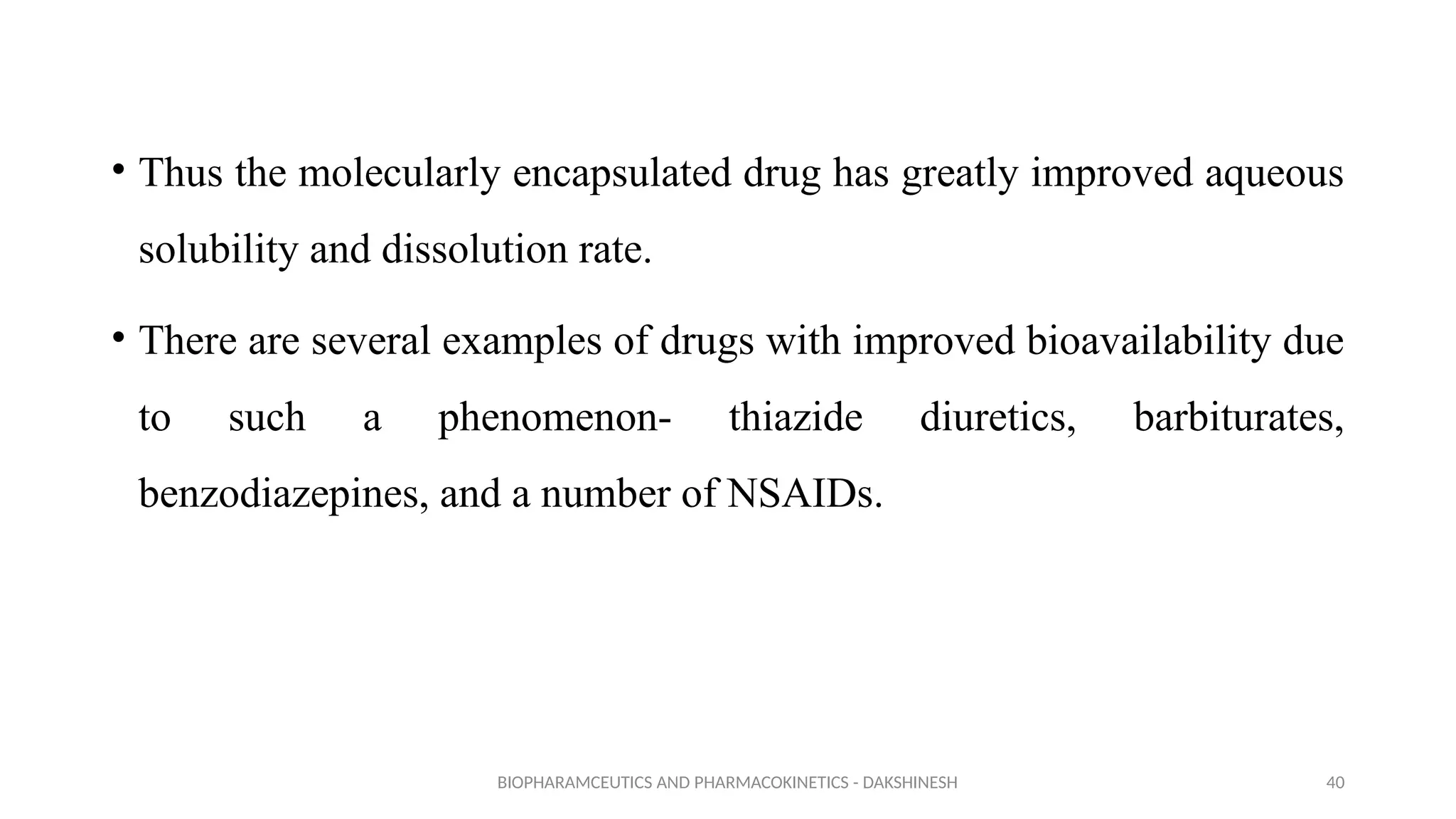
17. Molecular Encapsulation with Cyclodextrins
• The beta and gamma cyclodextrins and several of their derivatives are
unique in having the ability to form molecular inclusion complexes
with hydrophobic drugs having poor aqueous solubility.
• These bucket shaped
oligosaccharides produced from
starch are versatile in having a
hydrophobic cavity of size
suitable enough to accommodate
the lipophilic drugs as guest; the
outside of the host molecule is
relatively hydrophilic.
BIOPHARAMCEUTICS AND PHARMACOKINETICS - DAKSHINESH 40
• Thus the molecularly encapsulated drug has greatly improved aqueous
solubility and dissolution rate.
• There are several examples of drugs with improved bioavailability due
to such a phenomenon- thiazide diuretics, barbiturates,
benzodiazepines, and a number of NSAIDs.
BIOPHARAMCEUTICS AND PHARMACOKINETICS - DAKSHINESH 41
Bioavailability Enhancement Through Enhancement of
Drug Permeability Across Bio Membrane
on several occasions, the rate limiting step in drug
absorption is transport through the intestinal epithelium owing to
poor permeability. Several approaches besides the use of lipophilic
prodrugs that increase the drug permeation rate are discussed
below:
• Lipid technologies
• Ion Pairing
• Penetration Enhancer
BIOPHARAMCEUTICS AND PHARMACOKINETICS - DAKSHINESH 42
1. Lipid Technologies
With an increase in the number of emerging hydrophobic drugs,
several lipid-base formulations have been designed to improve their
bioavailability by a combination of various mechanisms briefly
summarized as follows:
a) Physiochemical - Enhanced dissolution and solubility.
b) Physiological – Potential mechanisms include
• Increased intestinal membrane permeability.
• Increased intestinal blood flow.
• Decreased luminal degradation.
• Increased uptake from the intestinal lumen into the lymphatic system
(and a reduction in first pass metabolism hepatic and Gi metabolism).
BIOPHARAMCEUTICS AND PHARMACOKINETICS - DAKSHINESH 43
The various lipid based dosage forms include lipid solution and
suspensions, micellar solubilization, coarse emulsion, micro emulsion,
multiple emulsion, self emulsifying drug delivery system (SEDDS), self
micro emulsifying drug delivery system (SMEDDS), nanoparticles and
liposomes.
Pouton has classified lipid based formulation into four categories,
• Type I formulations are simply oil based.
• Type II systems are water-insoluble self-emulsifying drug delivery
systems (SEDDS)
• Type III systems are SEDDS or self micro or nano emulsifying drug
delivery system (SMEDDS).
• Type IV systems are oil free formulations.
BIOPHARAMCEUTICS AND PHARMACOKINETICS - DAKSHINESH 44
Advantages:
1. Physicochemical advantages:
• Solubilization drugs with low aqueous solubility.
• Stabilisation of labile drugs against hydrolysis or oxidation.
2. Pharmaceutical advantages:
• Better characterisation of lipidic excipients.
• Formulation versatility and the choice of different drug delivery
system.
• Opportunity for formulation as sustained released products.
BIOPHARAMCEUTICS AND PHARMACOKINETICS - DAKSHINESH 45
3. Pharmacokinetics advantages:
• Improved understanding of the manner in which lipids enhance oral
bioavailability.
• Reduced plasma profile variability.
• Potential for drug targeting application.
4. Pharmacodynamic advantages:
• Reduced toxicity.
• Consistency in drug response.
BIOPHARAMCEUTICS AND PHARMACOKINETICS - DAKSHINESH 46
2. Ion Pairing
• The ion pairing approach involves coadministration of a hydrophilic
or polar drug with a suitable lipophilic counterion, which consequently
improves the portioning of the resultant ion-pair (relatively more
lipophilic) into the intestinal membrane.
• In fact, the approach since to increase the oral bioavailability of
ionisable drugs, such as atenolol, by approximately 2- fold.
• However, it is important that a counterion possesses high lipophilicity,
sufficient aqueous solubility, physiological compatibility, metabolic
stability.
BIOPHARAMCEUTICS AND PHARMACOKINETICS - DAKSHINESH 47
3. Penetration Enhancer
• Compounds which facilitate the transport of drugs across the bio
membrane are called as penetration/permeation enhancers or
promoters.
• This method is used mainly in cases of hydrophilic drugs which are
expected to have difficulty in penetrating the lipid structure of the bio
membrane.
• Penetration enhancers act by interaction of its lipid apart with the polar
component of membrane phospholipids.
BIOPHARAMCEUTICS AND PHARMACOKINETICS - DAKSHINESH 48
Penetration enhancers can be divided into three categories:
1. Substances that act very quickly, have a strong effect and cause
injury to the membrane (which is reversible), e.g. fatty acids such as
oleic, linoleic and arachidonic and their monoglycerides.
2. Substances that act quickly, cause temporary injury but have average
activity, e.g. salicylates and certain bile salts.
3. Substance having average to strong activity but cause sustained
histological changes, e.g. SLS, EDTA and citric acid.
BIOPHARAMCEUTICS AND PHARMACOKINETICS - DAKSHINESH 49
Bioavailability Enhancement Through Enhancement of
Drug Stability
The various ways by which improved of stability of a drug in the
GIT has a positive impact on bioavailability are discussed below
• Enteric coating
• Complexation
• Use of Metabolism Inhibitors
BIOPHARAMCEUTICS AND PHARMACOKINETICS - DAKSHINESH 50
1. Enteric coating
Enteric-coated systems utilizes polymeric coating that are
insoluble in the gastric media and therefore, prevent or retard drug
release in the stomach.
Such systems release the drug in the alkaline milieu, for e.g.
erythromycin, penicillin V, pancreatin and benzimidazoles such as
omeprazole can be improved by enteric coating.
BIOPHARAMCEUTICS AND PHARMACOKINETICS - DAKSHINESH 51
2. Complexation
Complexation, in certain instances, can be used to increase the
stability of drug in the Gi milieu, particularly those of ester drugs and
thus enhance their oral availability. are
Generally speaking, ß-cyclodexterins are potential carrier for
achieving such objectives but other complexing agents, such as caffeine,
sodium salicylate, sodium benzoate and nicotinamide, may also be used.
BIOPHARAMCEUTICS AND PHARMACOKINETICS - DAKSHINESH 52
3. Use of Metabolism Inhibitors
• Co-administration of a drug (without low bioavailability) and its
metabolism inhibitor, which can selectively inhibit any of the
contributing processes, would result in increased fractional absorption
and hence a higher bioavailability.
• In fact, this approach seems to be a promising alternative to overcome
the enzymatic barriers to oral delivery of metabolically labile drugs
such as peptides and proteins.
BIOPHARAMCEUTICS AND PHARMACOKINETICS - DAKSHINESH 53
Current novel approaches in this area include:
• Bio adhesive delivery systems that can reduce the drug degradation
between the delivery system and absorbing membrane by providing
intimate contact with GI mucosa.
• Controlled release microencapsulated systems that can provide
simultaneous delivery of a drug and its specific enzyme inhibitor at the
desired site for required period of time.
• Immobilization of enzyme incubators on mucoadhesive delivery
system.
BIOPHARAMCEUTICS AND PHARMACOKINETICS - DAKSHINESH 54
Bioavailability Enhancement Through Gastrointestinal
Retention
• Gastro-retentive drug delivery system (GRDDS) are designed on
the basis of delayed gastric emptying and CR principles, and are
intended to retain and localize the drug delivery device in the
stomach or within the upper part of small intestine until the entire
drug is released.
• Excipients that are bio adhesive or that swell on hydration when
incorporated in an oral dosage form, can promote gastro-retention
and absorption by,
Increased contact with epithelial surfaces.
Prolonging residence time in stomach.
Delaying intestinal transit.
BIOPHARAMCEUTICS AND PHARMACOKINETICS - DAKSHINESH 55
• Cellulose ethers, gums of natural origin and synthetic acrylic acid
polymers have been evaluated for such purposes.
• The range of materials available and their differing viscoelastic and
rheological behaviours mean that it is possible, by judicious
admixture, to develop delivery units with balanced properties so that
adhesion, density, hydration, drug release rate, etc. can be tailored to
the drug in question and the physiological characteristics of the target
delivery site.
BIOPHARAMCEUTICS AND PHARMACOKINETICS - DAKSHINESH 56
THANK YOU

Methods for enhancement of Bioavailability.pptx

  • 1.
    BIOPHARAMCEUTICS AND PHARMACOKINETICS- DAKSHINESH 1 NANDHA COLLEGE OF PHARMACY ERODE-52 NAME: DAKSHINESH P COURSE: B.PHARM SEMESTER: VI
  • 2.
    BIOPHARAMCEUTICS AND PHARMACOKINETICS- DAKSHINESH 2 BIOPHARMACEUTICS AND PHARMACOKINETICS METHODS TO ENHANCE THE DISSOLUTION RATES AND BIOAVILABILITY OF POORLY SOLUBLE DRUGS
  • 3.
    BIOPHARAMCEUTICS AND PHARMACOKINETICS- DAKSHINESH 3 OUTLINE REASON FOR POOR BIOAVAILABILITY BCS APPROCHES IN OVERCOMING BIOAVAILABILITY PROBLEM BIOABAILABILITY ENHANCEMENT
  • 4.
    BIOPHARAMCEUTICS AND PHARMACOKINETICS- DAKSHINESH 4 BIOAVAILABILITY Definition The rate and extent (amount) of absorption of unchanged drug from its dosage form. Influence of route of administration on drug’s bioavailability. Parenteral>Oral>Rectal>Topical
  • 5.
    BIOPHARAMCEUTICS AND PHARMACOKINETICS- DAKSHINESH 5 REASON FOR POOR BIOAVAILABLITY: • Poor aqueous solubility and/or slow dissolution rate in biological fluids. • poor permeability through the bio membrane owing to inadequate partition coefficient or lipophilicity or large molecular size such as that of protein or peptide drugs like insulin.
  • 6.
    BIOPHARAMCEUTICS AND PHARMACOKINETICS- DAKSHINESH 6 Biopharmaceutics classification system Class Solubility Permeability Absorption Pattern Examples Challenges in Drug Delivery I High High Well absorbed Diltiazem Propranolol Metoprolol No major challenges for immediate release forms but CR forms need to limit drug release or dissolution since absorption of released drug is rapid. II Low High Variable Nifedipine Carbamazepine Naproxen Formulations are designed to overcome solubility or dissolution problems by various means. III High Low Variable Insulin Metformin Cimetidine Approaches are employed to enhance permeability. IV Low Low Poorly absorbed Taxol Chlorothiazide Furosemide Combination of strategies used for Class II and Class III drugs are employed to improve both dissolution and permeability.
  • 7.
    BIOPHARAMCEUTICS AND PHARMACOKINETICS- DAKSHINESH 7 APPROCHES IN OVERCOMING THE BIOAVAILABILITY PROBLEMS • The Pharmaceutical Approach • The Pharmacokinetic Approach • The Biological Approach
  • 8.
    BIOPHARAMCEUTICS AND PHARMACOKINETICS- DAKSHINESH 8 1. The Pharmaceutical Approach which involves modification of formulation, manufacturing process or the physicochemical properties of the drug without changing the chemical structure. 2. The Pharmaceutical Approach in which the pharmacokinetics of a drug is altered by modifying its chemical structure. This approach is further divided into two categories, • Development of new chemical entity (NCE) with desirable features. • Prodrug design. 3. The Biological Approach whereby the route of drug administration may be changed such as changing from oral to parenteral route.
  • 9.
    BIOPHARAMCEUTICS AND PHARMACOKINETICS- DAKSHINESH 9 BIOAVAILABILITY ENHANCEMENT Bioavailability enhancement through enhancement of drug solubility or dissolution rate. Bioavailability enhancement through enhancement of drug permeability across bio membrane. Bioavailability enhancement through enhancement of drug stability. Bioavailability enhancement through gastrointestinal retention.
  • 10.
    BIOPHARAMCEUTICS AND PHARMACOKINETICS- DAKSHINESH 10 Bioavailability enhancement through enhancement of drug solubility or dissolution rate • Micronization • Nanonisation • Supercritical Fluid Recrystallization • Spray Freezing into Liquid(SFL) • Evaporative Precipitation into Aqueous Solution (EPAS) • Use of Surfactants • Use of Salt forms • Use of Precipitation Inhibitors
  • 11.
    BIOPHARAMCEUTICS AND PHARMACOKINETICS- DAKSHINESH 11 • Alteration of pH of the Drug Microenvironment • Use of Amorphs, An hydrates, Solvates and Metastable Polymorphs • Solvent deposition • Precipitation • Selective Adsorption on Insoluble Carriers • Solid Solutions • Eutectic Mixtures • Solid Dispersions • Molecular Encapsulation with Cyclodextrins
  • 12.
    BIOPHARAMCEUTICS AND PHARMACOKINETICS- DAKSHINESH 12 1. Micronization: The process involves reducing the size of solid drug particles to 1 to 10 microns commonly by spray drying or by use of air attrition methods (fluid energy or jet mill). This process is also called as micro milling. Example: Griseofulvin
  • 13.
    BIOPHARAMCEUTICS AND PHARMACOKINETICS- DAKSHINESH 13 2. Nanonisation: A process whereby the drug powder is converted to nanocrystals of sizes 200-600 nm. Example: Amphotericin B. the main production technologies currently in use to produce drug nanocrystals yield as a product a dispersion of drug nanocrystals in a liquid, typically water (called nanosuspension). There are three basic technologies currently in use to prepare nanoparticles: i. Pearl milling ii. Homogenisation in water (wet milling as in a colloid mill) iii. Homogenisation in non-aqueous media or in water with water- miscible liquids.
  • 14.
    BIOPHARAMCEUTICS AND PHARMACOKINETICS- DAKSHINESH 14 3. Supercritical Fluid Recrystallization • Another novel nanosizing and solubilisation technology whose application has increased in recent years is particle size reduction via supercritical fluid (SCF) processes. • Supercritical fluids(e.g. carbon dioxide) are fluids whose temperature and pressure are greater than its critical temperature (Tc) and critical pressure(Tp), allowing it to assume the properties of a liquid and a gas. • At near-critical temperatures, SCFs are highly compressible, allowing moderate changes in pressure to greatly alter the density and mass transport characteristics of fluid that largely determine its solvent power. • Once the drug particles are solubilised within SCF, they may be recrystallised at greatly reduced particle size.
  • 15.
    BIOPHARAMCEUTICS AND PHARMACOKINETICS- DAKSHINESH 15 4. Spray Freezing into Liquid(SFL): • This technique involves atomizing an aqueous, organic, aqueous-organic cosolvent solution, aqueous-organic emulsion or suspension containing a drug or pharmaceutical excipients directly into a compressed gas (i.e. CO2, helium, propane, ethane), or the cryogenic liquids (i.e. nitrogen, argon or hydro Fluro ethers). • The frozen particles are then lyophilized to obtain dry and free-flowing micronized powders use of acetonitrile as the solvent increases drug loading and decreases the drying time for lyophilization. • The dissolution rate is remarkably enhanced from the SFL powder containing amorphous rate is remarkably enhanced from the SFL powder containing amorphous nanostructured aggregates with high surface area and excellent wettability.
  • 16.
    BIOPHARAMCEUTICS AND PHARMACOKINETICS- DAKSHINESH 16 5. Evaporative Precipitation into Aqueous Solution (EPAS) • The EPAS process utilizes rapid phase separation to nucleate and grow nanoparticles and microparticles of lipophilic drugs. • the drug is first dissolved in a low boiling point organic solvents. • This solution is pumped through a tube where it is heated under pressure to a temperature above the solvent's boiling point and then sprayed through a fine atomizing nozzle into a heated aqueous solution. • Surfactants are added to the organic solution and the aqueous solution to optimize particle formation and stabilization. • In EPAS, the surfactant migrates to the drug-water interface during particle formation, and the hydrophilic segment is oriented towards the aqueous continuous phase. • The hydrophilic stabilizer on the surface inhibits crystallization of growing particle and therefore facilitates dissolution rates.
  • 17.
    BIOPHARAMCEUTICS AND PHARMACOKINETICS- DAKSHINESH 17 6. Use of Surfactants • Surfactants are very useful as absorption enhancers and enhance both dissolution rate as well as permeability of drug. • They enhance dissolution rate primarily by promoting wetting and penetration of dissolution fluid into the solid drug particles. • They are generally used in concentration below their critical micelle concentration (CMC) values since above CMC, the drug entrapped in the micelle structure fails to partition in the dissolution fluid. • Non-ionic surfactants like polysorbates are widely used. Example of drugs whose bioavailability have been increased by use of surfactants in the formulation include steroids like spironolactone.
  • 18.
    BIOPHARAMCEUTICS AND PHARMACOKINETICS- DAKSHINESH 18 7. Use of Salt forms • Salts have improved solubility and dissolution characteristics in comparison to the original drug. • It is generally accepted that a minimum difference of 3 units between the pKa value of the group and that of its counter ion is required to form stable salts. • Alkali metal salts of acidic drugs like penicillin and strong acid salts of basic drugs like atropine are more water soluble than the parent drug. • Factors that influence salt selection are physical and chemical properties of the salt, safety of counter ion, therapeutic indications and route of administration.
  • 19.
    BIOPHARAMCEUTICS AND PHARMACOKINETICS- DAKSHINESH 19 Limitations: • It is not feasible to form salts of neutral compounds. • It may be difficult to form salts of very weak bases or acids. • The salt may be hygroscopic, exhibit polymorphism or has poor processing characteristics. • Conversion of salt to free acid or base form of the drug on surface of solid dosage form that prevents or retards drug release. • Precipitation of unionized drug in the GI milieu that has poor solubility.
  • 20.
    BIOPHARAMCEUTICS AND PHARMACOKINETICS- DAKSHINESH 20 8. Use of Precipitation Inhibitors A significant increase in free drug concentration, above equilibrium solubility results in super saturation, which can lead to drug precipitation or crystallization. This can be prevented by use of inert polymers such HPMC, PVP, PVA, PEG, etc. which act by one or more of the following mechanism: • Increase the viscosity of crystallization medium thereby reducing the crystallization rate of drugs. • Provide a steric barrier to drug molecules and inhibit crystallization through specific intermolecular interactions on growing crystal surface. • Adsorb onto faces of host crystals, reduce the crystal growth rate of the host and produce smaller crystals.
  • 21.
    BIOPHARAMCEUTICS AND PHARMACOKINETICS- DAKSHINESH 21 9. Alteration of pH of the Drug Microenvironment This can be achieved in two ways – in situ salt formation and addition of buffer to the formulation e.g. buffered aspirin tablets. 10. Use of Amorphs, An hydrates, Solvates and Metastable Polymorphs • Depending upon the internal structure of the solid drug, selection of proper form of drug with greater solubility is important. • In general, amorphs are more soluble than metastable polymorphs, anhydrous are more stable then hydrates and solvates are more soluble than non-solvates.
  • 22.
    BIOPHARAMCEUTICS AND PHARMACOKINETICS- DAKSHINESH 22 11. Solvent deposition In this method, the poorly aqueous soluble drug such as nifedipine is dissolved in an organic solvent like alcohol and deposited on an inert, hydrophilic, solid matrix such as starch or microcrystalline cellulose by evaporation of solvent. 12. Precipitation In this method, the poor aqueous soluble drug such as cyclosporine is dissolved in an organic solvent followed by its rapid mixing with a non-solvent to effect precipitation of drug in nano size particles. The product so prepared is also called as hydrosol.
  • 23.
    BIOPHARAMCEUTICS AND PHARMACOKINETICS- DAKSHINESH 23 13. Selective Adsorption on Insoluble Carriers • A highly active adsorbent such as the inorganic clays like bentonite can enhance the dissolution rate of poorly water-soluble drugs such as griseofulvin, indomethacin and prednisone by maintain the concentration gradient at its maximum. • The two reasons suggested for the rapid release of drugs from the surface of clays are – the weak physical bonding between the adsorbate and adsorbent, and hydration and swelling of the clay in the aqueous media.
  • 24.
    BIOPHARAMCEUTICS AND PHARMACOKINETICS- DAKSHINESH 24 14. Solid Solutions The three means by which the particle size of a drug can be reduced to submicron level are • Use of solid solutions • Use of eutectic mixtures • Use of solid dispersions In all these case, the solute is frequently a poor water soluble drug acting as the guest and the solvent is a highly water soluble compound or polymer acting as a host or carrier. A solid solution is a binary system comparing of a solid solute molecularly dispersed in a solid solvent. Since the two components crystallize together in a homogeneous one phase system, solid solutions are called as molecular dispersions or mixed crystals.
  • 25.
    BIOPHARAMCEUTICS AND PHARMACOKINETICS- DAKSHINESH 25 Because of reduction in particle size to the molecular level, solid solutions show grater aqueous solubility and faster dissolution than eutectics and solid dispersions. They are generally prepared by fusion method where by a rapid solidification. Such systems, prepared by fusion, are often called as melts e.g. griseofulvin-succinic acid. The griseofulvin from such solid solution dissolves 6 to 7 times faster than pure Griseofulvin.
  • 26.
    BIOPHARAMCEUTICS AND PHARMACOKINETICS- DAKSHINESH 26 • If the diameter of solute molecules is less than 60% of diameter of solvent molecules or its volume less than 20% of volume of solvent molecule, the solute molecule can be accommodated within the intermolecular spaces of solvent molecules e.g. digitoxin-PEG 6000 solid solution. • Such systems shows faster dissolution. When the resultant solid solution is a homogeneous transparent and brittle system, it is called as glass solution. • Carriers that form glassy structure are citric acid, urea, PVP and PEG and sugars such as dextrose, sucrose and galactose.
  • 27.
    BIOPHARAMCEUTICS AND PHARMACOKINETICS- DAKSHINESH 27 Solid solutions can be classified on two bases: A.Miscibility between the drug and the carrier – on this basis the solid solutions are divided into two categories 1. Continuous solid solution is the one which both the drug and the carrier are miscible in all proportions. Such a solid solution is not reported in pharmaceutical literature. 2. Discontinuous solid solution is the one where solubility of each of the component is the other is limited.
  • 28.
    BIOPHARAMCEUTICS AND PHARMACOKINETICS- DAKSHINESH 28 B. Distribution of drug in carrier structure – on this basis the solid solutions are divided into two categories 1. Substituted crystalline solid solution is the one in which the drug molecules substitute for the carrier molecules in its crystal lattice. This happens when the drug and carrier molecules are almost of same size. 2. Interstitial crystalline solid solution is the one in which the drug molecules occupy the interstitial spaces in the crystal lattice of carrier molecules. This happens when the size of drug molecule is 40% or less than the size of carrier molecules.
  • 29.
  • 30.
    BIOPHARAMCEUTICS AND PHARMACOKINETICS- DAKSHINESH 30 The two mechanisms suggested for enhanced solubility and rapid dissolution of molecular dispersions are: • When the binary mixture is exposed to water, the soluble carrier dissolves rapidly leaving the insoluble drug in a state of microcrystalline dispersion of very fine particles. • When the solid solution, which is said to be in a state of randomly arranged solute and solvent molecules in the crystal lattice, is exposed to the dissolution fluid, the soluble carrier dissolves rapidly leaving the insoluble drug stranded at almost molecular level.
  • 31.
  • 32.
    BIOPHARAMCEUTICS AND PHARMACOKINETICS- DAKSHINESH 32 15. Eutectic Mixtures • These systems are also prepared by fusion method. • Eutectic melts differ from solid solutions in that the fused melt of solute-solvent show complete miscibility but negligible solid-solid solubility i.e. such systems are basically intimately blended physical mixture of two crystalline components. • A phase of two component is shown. • When the eutectic mixture is exposed in water, the soluble carrier dissolves leaving the drug in a microcrystalline state which solubilizes rapidly.
  • 33.
  • 34.
    BIOPHARAMCEUTICS AND PHARMACOKINETICS- DAKSHINESH 34 Examples of eutectic include paracetamol-urea, Griseofulvin-urea, etc. solid solutions and eutectics, which are basically melts, are easy to prepare and economical with no solvents involved. The method, however, cannot be applied to: • Drugs which fail to crystallize from the mixed melt. • Drugs which are thermo labile. • Carriers such as succinic acid that decompose at their higher melting point. The eutectic product is often tacky, intractable for irregular crystal.
  • 35.
    BIOPHARAMCEUTICS AND PHARMACOKINETICS- DAKSHINESH 35 16. Solid Dispersions • These are generally prepared by solvent or co-precipitation method whereby both the guest solute and the solid carrier solvent are dissolved in a common volatile liquid solvent such as alcohol. • The liquid solvent is removed by evaporation under reduced pressure or by freeze drying which results in amorphous precipitation of guest in a crystalline carrier. • Thus the basic difference between solid dispersion and solid solution is that the drug is precipitated out in an amorphous form in the former as opposed to crystalline form in the latter e.g. amorphous sulfathiazole in crystalline urea. • Such dispersion are often called as co evaporates or co precipitates.
  • 36.
    BIOPHARAMCEUTICS AND PHARMACOKINETICS- DAKSHINESH 36 • The method is suitable for thermo labile substances but has a number of disadvantages like higher cost of processing use of large quantity of solvent, difficulty in complete removal of solvent etc. • The carrier used are same as for eutectics or solid solutions. With glassy materials the dispersions formed are called as glass dispersions or glass suspensions. • Other polymers such as PEG and HPMC are also employed to prepare solid dispersions of poorly water soluble drugs such as nifedipine and itraconazole. • The image shows comparative dissolution rates of griseofulvin from PVP dispersions.
  • 37.
  • 38.
    BIOPHARAMCEUTICS AND PHARMACOKINETICS- DAKSHINESH 38 Limitations: • Since the carrier is hydrophilic and the drug is hydrophobic, it is difficult to find a common solvent to dissolve both components. • The product is often soft, wax and possesses poor compressibility and flow ability. • Physical instability of the solid dispersion. • Difficult in preparation of a reproducible product.
  • 39.
    BIOPHARAMCEUTICS AND PHARMACOKINETICS- DAKSHINESH 39 17. Molecular Encapsulation with Cyclodextrins • The beta and gamma cyclodextrins and several of their derivatives are unique in having the ability to form molecular inclusion complexes with hydrophobic drugs having poor aqueous solubility. • These bucket shaped oligosaccharides produced from starch are versatile in having a hydrophobic cavity of size suitable enough to accommodate the lipophilic drugs as guest; the outside of the host molecule is relatively hydrophilic.
  • 40.
    BIOPHARAMCEUTICS AND PHARMACOKINETICS- DAKSHINESH 40 • Thus the molecularly encapsulated drug has greatly improved aqueous solubility and dissolution rate. • There are several examples of drugs with improved bioavailability due to such a phenomenon- thiazide diuretics, barbiturates, benzodiazepines, and a number of NSAIDs.
  • 41.
    BIOPHARAMCEUTICS AND PHARMACOKINETICS- DAKSHINESH 41 Bioavailability Enhancement Through Enhancement of Drug Permeability Across Bio Membrane on several occasions, the rate limiting step in drug absorption is transport through the intestinal epithelium owing to poor permeability. Several approaches besides the use of lipophilic prodrugs that increase the drug permeation rate are discussed below: • Lipid technologies • Ion Pairing • Penetration Enhancer
  • 42.
    BIOPHARAMCEUTICS AND PHARMACOKINETICS- DAKSHINESH 42 1. Lipid Technologies With an increase in the number of emerging hydrophobic drugs, several lipid-base formulations have been designed to improve their bioavailability by a combination of various mechanisms briefly summarized as follows: a) Physiochemical - Enhanced dissolution and solubility. b) Physiological – Potential mechanisms include • Increased intestinal membrane permeability. • Increased intestinal blood flow. • Decreased luminal degradation. • Increased uptake from the intestinal lumen into the lymphatic system (and a reduction in first pass metabolism hepatic and Gi metabolism).
  • 43.
    BIOPHARAMCEUTICS AND PHARMACOKINETICS- DAKSHINESH 43 The various lipid based dosage forms include lipid solution and suspensions, micellar solubilization, coarse emulsion, micro emulsion, multiple emulsion, self emulsifying drug delivery system (SEDDS), self micro emulsifying drug delivery system (SMEDDS), nanoparticles and liposomes. Pouton has classified lipid based formulation into four categories, • Type I formulations are simply oil based. • Type II systems are water-insoluble self-emulsifying drug delivery systems (SEDDS) • Type III systems are SEDDS or self micro or nano emulsifying drug delivery system (SMEDDS). • Type IV systems are oil free formulations.
  • 44.
    BIOPHARAMCEUTICS AND PHARMACOKINETICS- DAKSHINESH 44 Advantages: 1. Physicochemical advantages: • Solubilization drugs with low aqueous solubility. • Stabilisation of labile drugs against hydrolysis or oxidation. 2. Pharmaceutical advantages: • Better characterisation of lipidic excipients. • Formulation versatility and the choice of different drug delivery system. • Opportunity for formulation as sustained released products.
  • 45.
    BIOPHARAMCEUTICS AND PHARMACOKINETICS- DAKSHINESH 45 3. Pharmacokinetics advantages: • Improved understanding of the manner in which lipids enhance oral bioavailability. • Reduced plasma profile variability. • Potential for drug targeting application. 4. Pharmacodynamic advantages: • Reduced toxicity. • Consistency in drug response.
  • 46.
    BIOPHARAMCEUTICS AND PHARMACOKINETICS- DAKSHINESH 46 2. Ion Pairing • The ion pairing approach involves coadministration of a hydrophilic or polar drug with a suitable lipophilic counterion, which consequently improves the portioning of the resultant ion-pair (relatively more lipophilic) into the intestinal membrane. • In fact, the approach since to increase the oral bioavailability of ionisable drugs, such as atenolol, by approximately 2- fold. • However, it is important that a counterion possesses high lipophilicity, sufficient aqueous solubility, physiological compatibility, metabolic stability.
  • 47.
    BIOPHARAMCEUTICS AND PHARMACOKINETICS- DAKSHINESH 47 3. Penetration Enhancer • Compounds which facilitate the transport of drugs across the bio membrane are called as penetration/permeation enhancers or promoters. • This method is used mainly in cases of hydrophilic drugs which are expected to have difficulty in penetrating the lipid structure of the bio membrane. • Penetration enhancers act by interaction of its lipid apart with the polar component of membrane phospholipids.
  • 48.
    BIOPHARAMCEUTICS AND PHARMACOKINETICS- DAKSHINESH 48 Penetration enhancers can be divided into three categories: 1. Substances that act very quickly, have a strong effect and cause injury to the membrane (which is reversible), e.g. fatty acids such as oleic, linoleic and arachidonic and their monoglycerides. 2. Substances that act quickly, cause temporary injury but have average activity, e.g. salicylates and certain bile salts. 3. Substance having average to strong activity but cause sustained histological changes, e.g. SLS, EDTA and citric acid.
  • 49.
    BIOPHARAMCEUTICS AND PHARMACOKINETICS- DAKSHINESH 49 Bioavailability Enhancement Through Enhancement of Drug Stability The various ways by which improved of stability of a drug in the GIT has a positive impact on bioavailability are discussed below • Enteric coating • Complexation • Use of Metabolism Inhibitors
  • 50.
    BIOPHARAMCEUTICS AND PHARMACOKINETICS- DAKSHINESH 50 1. Enteric coating Enteric-coated systems utilizes polymeric coating that are insoluble in the gastric media and therefore, prevent or retard drug release in the stomach. Such systems release the drug in the alkaline milieu, for e.g. erythromycin, penicillin V, pancreatin and benzimidazoles such as omeprazole can be improved by enteric coating.
  • 51.
    BIOPHARAMCEUTICS AND PHARMACOKINETICS- DAKSHINESH 51 2. Complexation Complexation, in certain instances, can be used to increase the stability of drug in the Gi milieu, particularly those of ester drugs and thus enhance their oral availability. are Generally speaking, ß-cyclodexterins are potential carrier for achieving such objectives but other complexing agents, such as caffeine, sodium salicylate, sodium benzoate and nicotinamide, may also be used.
  • 52.
    BIOPHARAMCEUTICS AND PHARMACOKINETICS- DAKSHINESH 52 3. Use of Metabolism Inhibitors • Co-administration of a drug (without low bioavailability) and its metabolism inhibitor, which can selectively inhibit any of the contributing processes, would result in increased fractional absorption and hence a higher bioavailability. • In fact, this approach seems to be a promising alternative to overcome the enzymatic barriers to oral delivery of metabolically labile drugs such as peptides and proteins.
  • 53.
    BIOPHARAMCEUTICS AND PHARMACOKINETICS- DAKSHINESH 53 Current novel approaches in this area include: • Bio adhesive delivery systems that can reduce the drug degradation between the delivery system and absorbing membrane by providing intimate contact with GI mucosa. • Controlled release microencapsulated systems that can provide simultaneous delivery of a drug and its specific enzyme inhibitor at the desired site for required period of time. • Immobilization of enzyme incubators on mucoadhesive delivery system.
  • 54.
    BIOPHARAMCEUTICS AND PHARMACOKINETICS- DAKSHINESH 54 Bioavailability Enhancement Through Gastrointestinal Retention • Gastro-retentive drug delivery system (GRDDS) are designed on the basis of delayed gastric emptying and CR principles, and are intended to retain and localize the drug delivery device in the stomach or within the upper part of small intestine until the entire drug is released. • Excipients that are bio adhesive or that swell on hydration when incorporated in an oral dosage form, can promote gastro-retention and absorption by, Increased contact with epithelial surfaces. Prolonging residence time in stomach. Delaying intestinal transit.
  • 55.
    BIOPHARAMCEUTICS AND PHARMACOKINETICS- DAKSHINESH 55 • Cellulose ethers, gums of natural origin and synthetic acrylic acid polymers have been evaluated for such purposes. • The range of materials available and their differing viscoelastic and rheological behaviours mean that it is possible, by judicious admixture, to develop delivery units with balanced properties so that adhesion, density, hydration, drug release rate, etc. can be tailored to the drug in question and the physiological characteristics of the target delivery site.
  • 56.
    BIOPHARAMCEUTICS AND PHARMACOKINETICS- DAKSHINESH 56 THANK YOU