Presentation by:
Kiran Vinu
MSE (M.TECH)
1MS19MSE03
Topic : Effect of speed of deformation,
deformation zone geometry, friction and
residual stress on metal forming
 Metal forming
 Factors affecting metal forming
 Speed of deformation and its effect
 Deformation zone geometry and its effect
 Friction and its effect
 Residual stress and its effect
What is metal forming process ?
 Large set of manufacturing processes in which the
material is deformed plastically to take the shape of the
die geometry.
 The tools used for such deformation are die, punch etc.
depending on the type of process.
Examples of metal forming processes:
• Rolling
• Forging
• Sheet metal working
• Extrusion
 Temperature
 Metallurgical structure
 Speed of deformation
 Deformation zone geometry
 Friction
 Residual stress
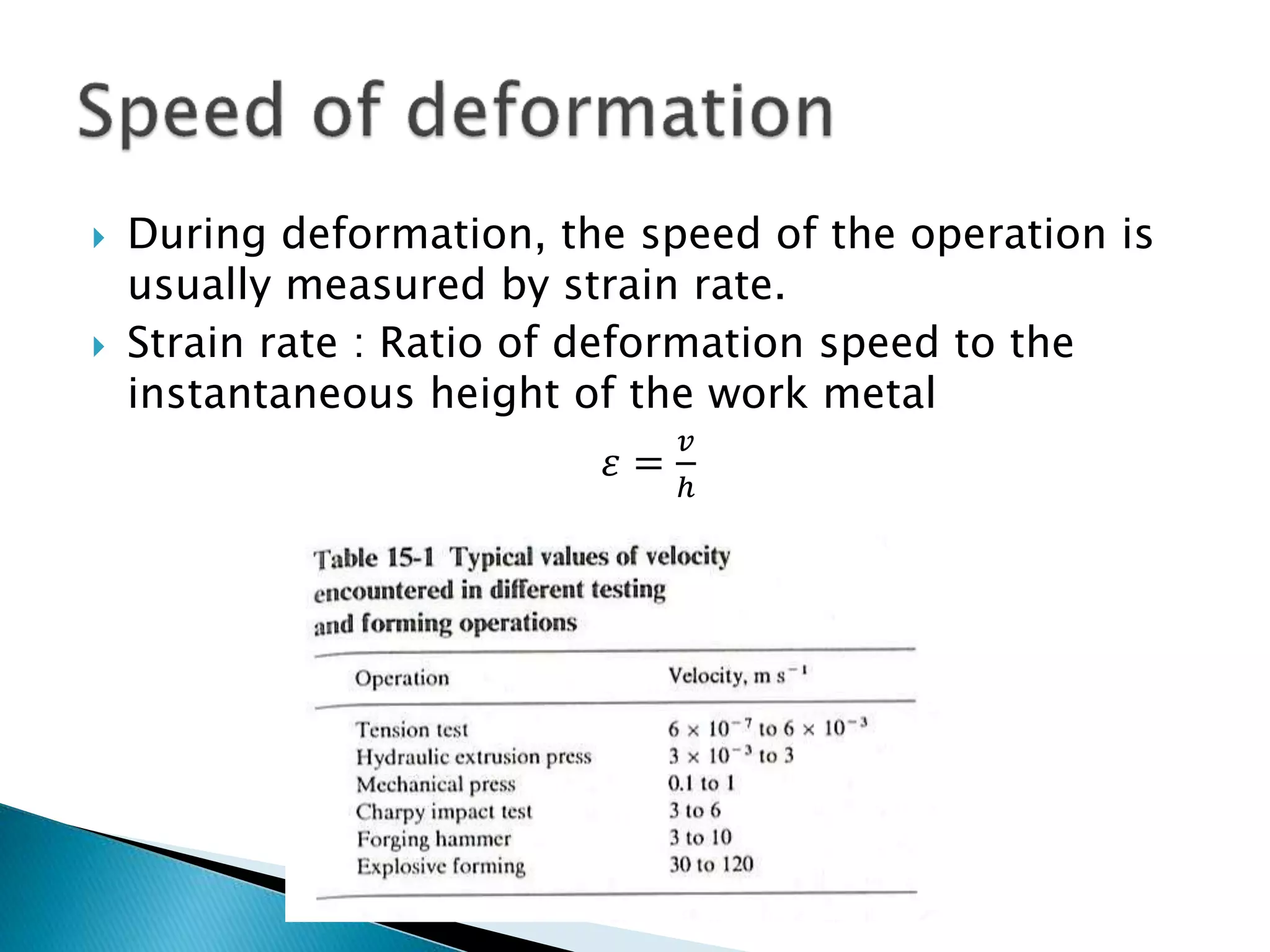
 During deformation, the speed of the operation is
usually measured by strain rate.
 Strain rate : Ratio of deformation speed to the
instantaneous height of the work metal
𝜀 =
𝑣
ℎ
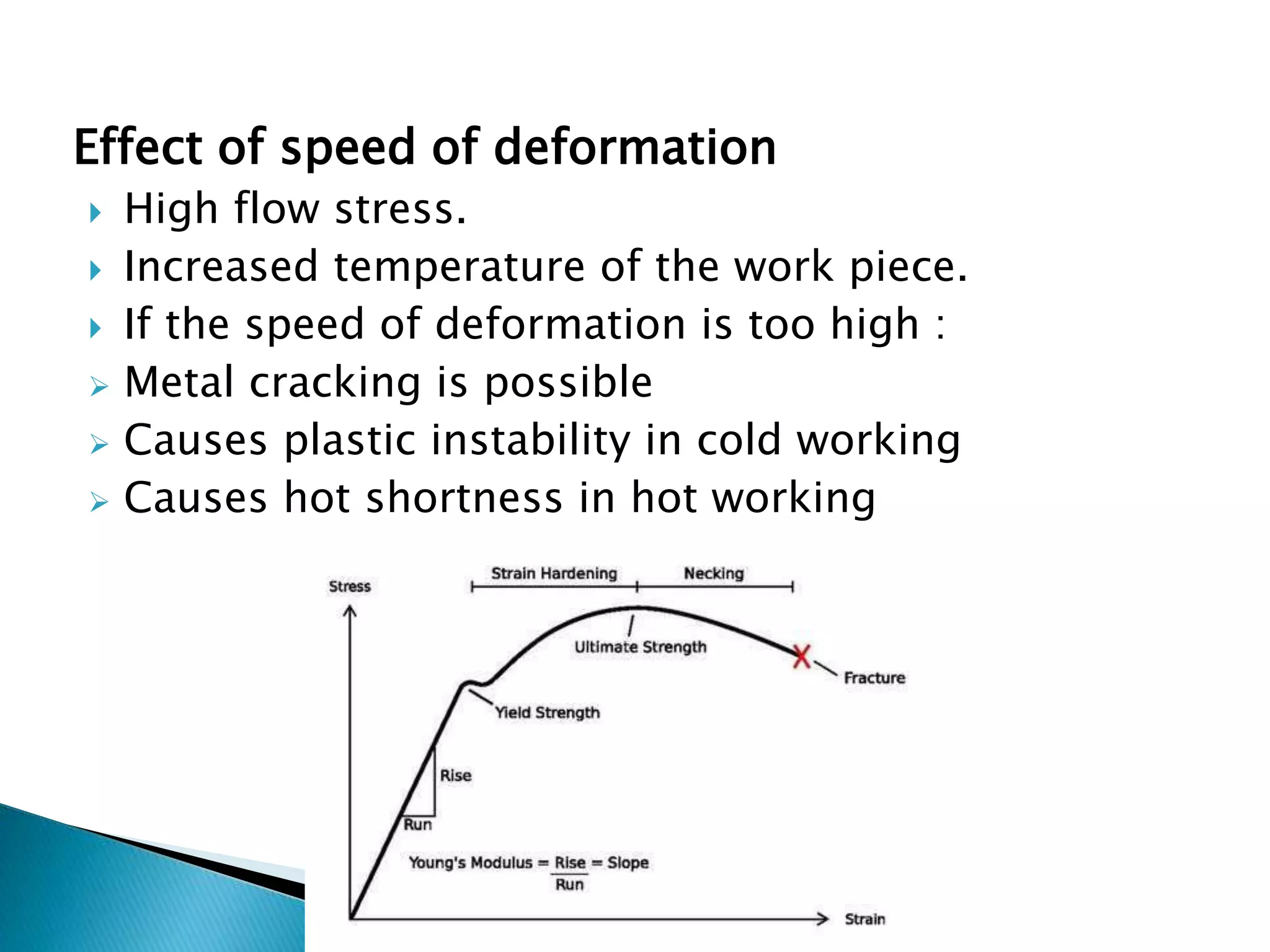
Effect of speed of deformation
 High flow stress.
 Increased temperature of the work piece.
 If the speed of deformation is too high :
 Metal cracking is possible
 Causes plastic instability in cold working
 Causes hot shortness in hot working
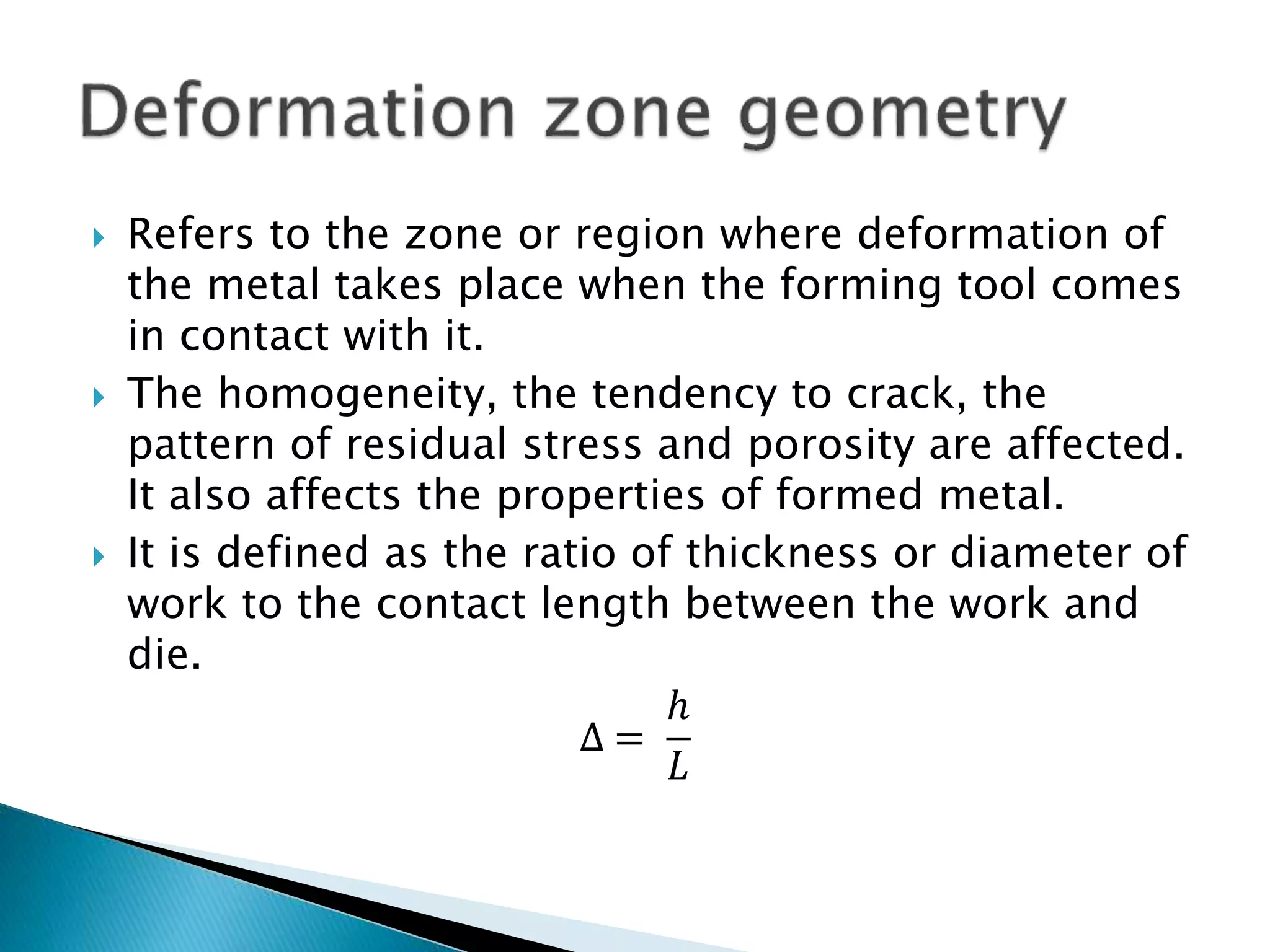
 Refers to the zone or region where deformation of
the metal takes place when the forming tool comes
in contact with it.
 The homogeneity, the tendency to crack, the
pattern of residual stress and porosity are affected.
It also affects the properties of formed metal.
 It is defined as the ratio of thickness or diameter of
work to the contact length between the work and
die.
∆ =
ℎ
𝐿
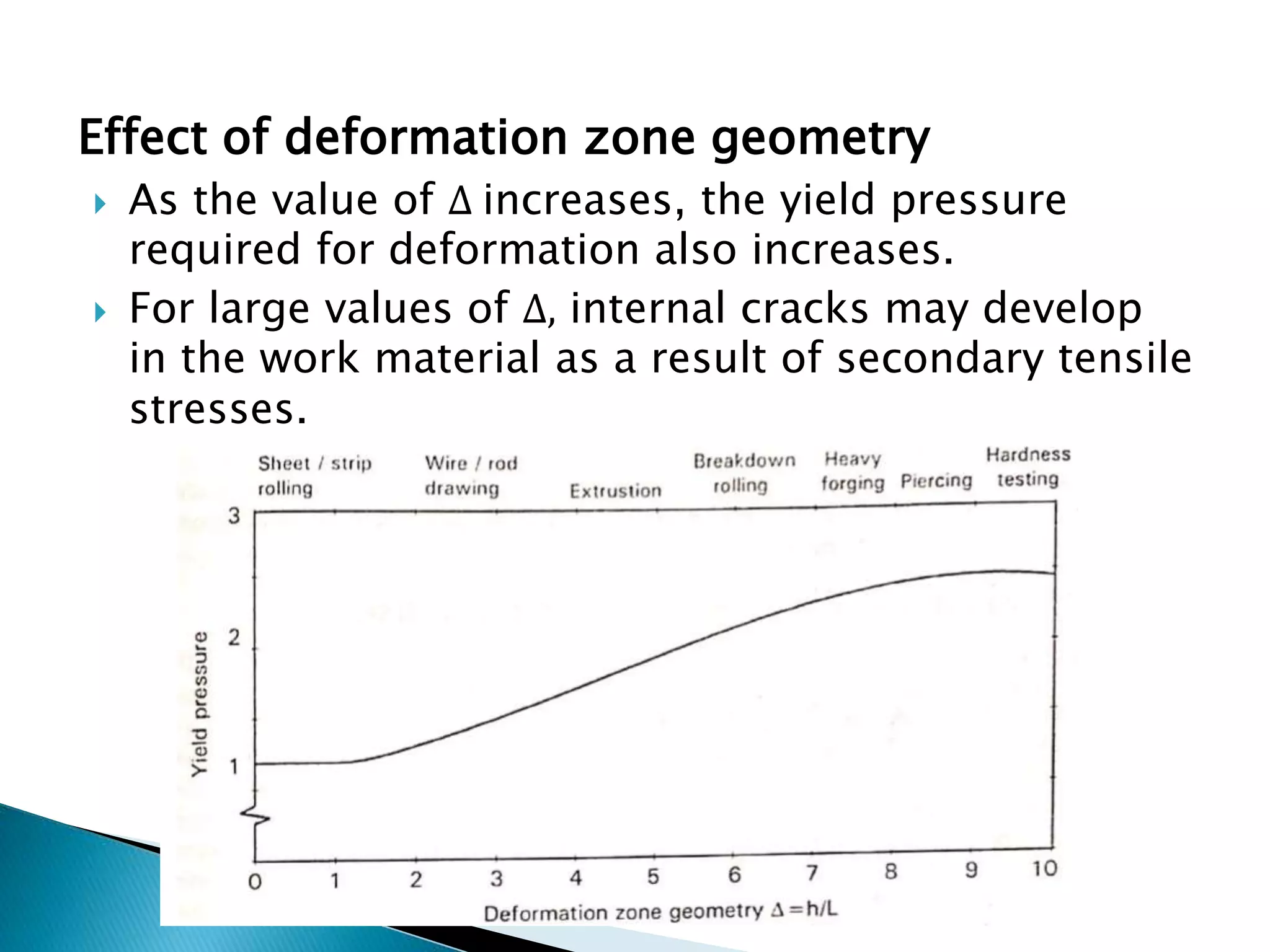
Effect of deformation zone geometry
 As the value of ∆ increases, the yield pressure
required for deformation also increases.
 For large values of ∆, internal cracks may develop
in the work material as a result of secondary tensile
stresses.
 Higher contact pressure between work and tool
results in higher friction and subsequently higher
deformation resistance.
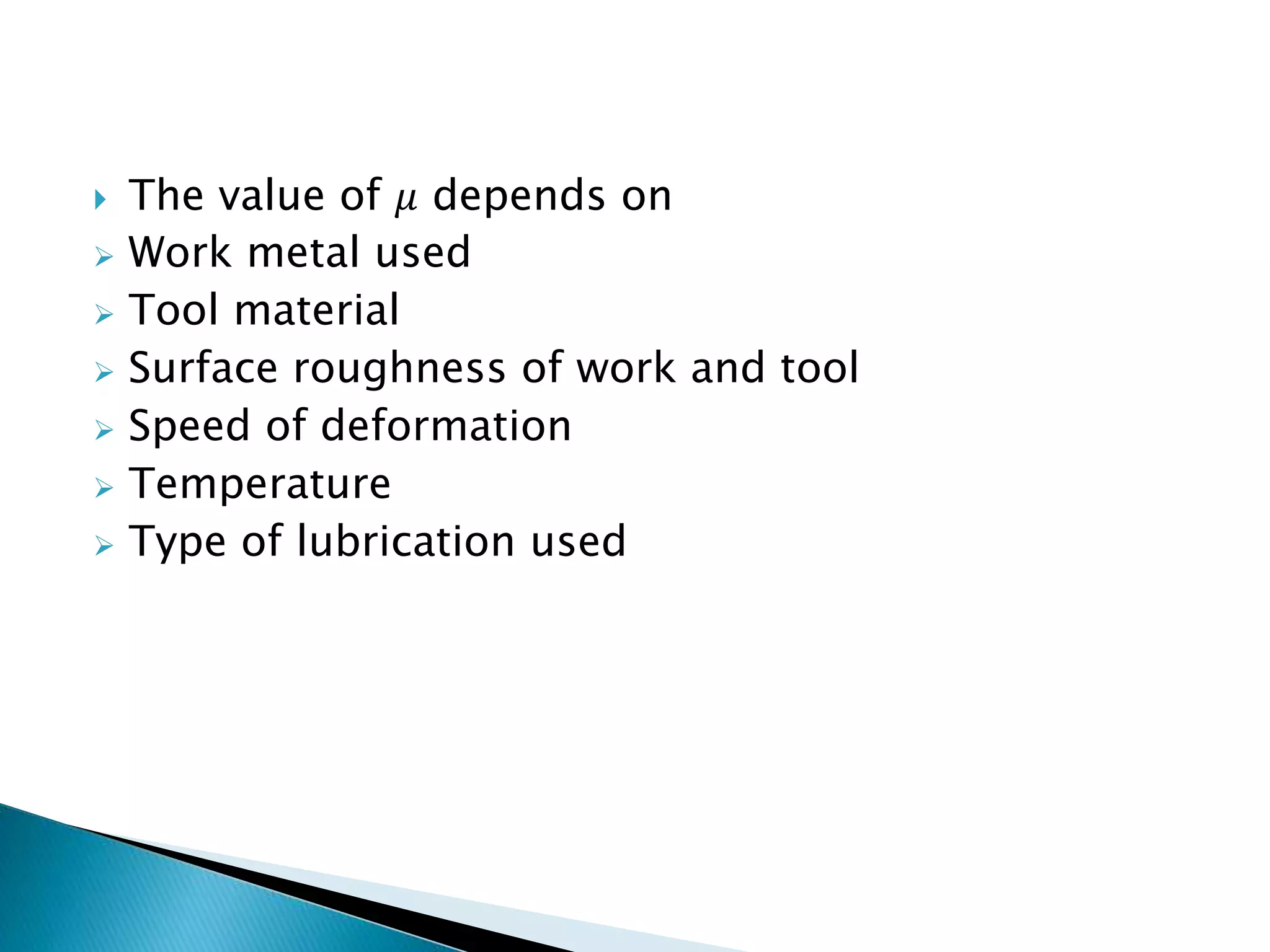
 The coefficient of friction 𝜇 can be given by the
relation
𝜇 =
𝐹
𝑁
𝜇 – Coefficient of friction
F – Shear force
N – Normal force
 The value of 𝜇 depends on
 Work metal used
 Tool material
 Surface roughness of work and tool
 Speed of deformation
 Temperature
 Type of lubrication used
Effect of friction
 It increases the amount of force or power required
to carry out an operation.
 Friction reduces metal flow, hence induces
inhomogeneity in the formed part leading to
certain defects.
 Friction increases heat at the interface leading to
wearing of the tools.
 Friction between the work and tool gives rise to
shearing stresses along the contact surfaces.
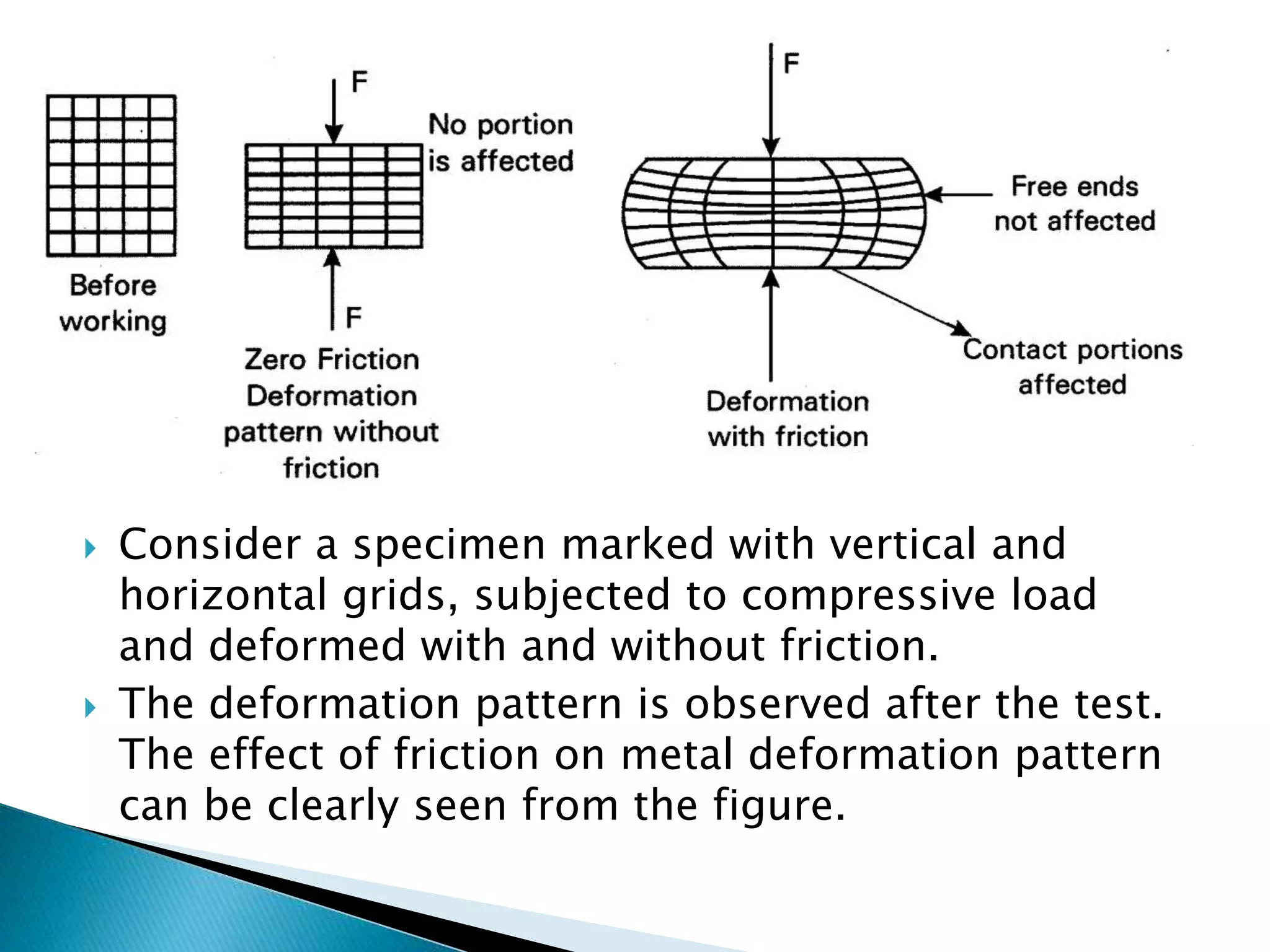
 Consider a specimen marked with vertical and
horizontal grids, subjected to compressive load
and deformed with and without friction.
 The deformation pattern is observed after the test.
The effect of friction on metal deformation pattern
can be clearly seen from the figure.
 When there is no friction, the deformation will be
uniform. The vertical and horizontal grids will
remain uniform and straight.
 When there is friction, the vertical grids and
horizontal grids are bent.
 Free ends are not affected whereas the contact
surfaces are held back causing bent pattern in the
metal flow.
 Residual stresses are locked up stresses existing within
a body in the absence of external loading or thermal
gradient.
 Residual stresses can occur through a variety of
mechanisms including plastic deformations,
temperature gradients or structural changes during
phase transformations.
 The maximum value which a residual stress can reach is
the yield stress of the material.
 Metals containing residual stresses can be stress
relieved by heating to a temperature where the yield
strength of the material is the same or lower than the
value of the residual stress such that the material can
deform and release stress.
 However slow cooling is required otherwise
residual stress can again develop during cooling.
 It can also be relieved by cryogenic cooling but it is
uncommon.
Effect of residual stress
 It can cause the component to be visibly distorted
and deform it while being machined or worked.
 It can cause warping of the worked part even after
the deformation process is completed.
 It reduces ductility, increases hardness and thereby
reduces the formability of the component.
Metal forming process (introduction)

Metal forming process (introduction)

  • 1.
    Presentation by: Kiran Vinu MSE(M.TECH) 1MS19MSE03 Topic : Effect of speed of deformation, deformation zone geometry, friction and residual stress on metal forming
  • 2.
     Metal forming Factors affecting metal forming  Speed of deformation and its effect  Deformation zone geometry and its effect  Friction and its effect  Residual stress and its effect
  • 3.
    What is metalforming process ?  Large set of manufacturing processes in which the material is deformed plastically to take the shape of the die geometry.  The tools used for such deformation are die, punch etc. depending on the type of process. Examples of metal forming processes: • Rolling • Forging • Sheet metal working • Extrusion
  • 4.
     Temperature  Metallurgicalstructure  Speed of deformation  Deformation zone geometry  Friction  Residual stress
  • 5.
     During deformation,the speed of the operation is usually measured by strain rate.  Strain rate : Ratio of deformation speed to the instantaneous height of the work metal 𝜀 = 𝑣 ℎ
  • 6.
    Effect of speedof deformation  High flow stress.  Increased temperature of the work piece.  If the speed of deformation is too high :  Metal cracking is possible  Causes plastic instability in cold working  Causes hot shortness in hot working
  • 7.
     Refers tothe zone or region where deformation of the metal takes place when the forming tool comes in contact with it.  The homogeneity, the tendency to crack, the pattern of residual stress and porosity are affected. It also affects the properties of formed metal.  It is defined as the ratio of thickness or diameter of work to the contact length between the work and die. ∆ = ℎ 𝐿
  • 8.
    Effect of deformationzone geometry  As the value of ∆ increases, the yield pressure required for deformation also increases.  For large values of ∆, internal cracks may develop in the work material as a result of secondary tensile stresses.
  • 9.
     Higher contactpressure between work and tool results in higher friction and subsequently higher deformation resistance.  The coefficient of friction 𝜇 can be given by the relation 𝜇 = 𝐹 𝑁 𝜇 – Coefficient of friction F – Shear force N – Normal force
  • 10.
     The valueof 𝜇 depends on  Work metal used  Tool material  Surface roughness of work and tool  Speed of deformation  Temperature  Type of lubrication used
  • 11.
    Effect of friction It increases the amount of force or power required to carry out an operation.  Friction reduces metal flow, hence induces inhomogeneity in the formed part leading to certain defects.  Friction increases heat at the interface leading to wearing of the tools.  Friction between the work and tool gives rise to shearing stresses along the contact surfaces.
  • 12.
     Consider aspecimen marked with vertical and horizontal grids, subjected to compressive load and deformed with and without friction.  The deformation pattern is observed after the test. The effect of friction on metal deformation pattern can be clearly seen from the figure.
  • 13.
     When thereis no friction, the deformation will be uniform. The vertical and horizontal grids will remain uniform and straight.  When there is friction, the vertical grids and horizontal grids are bent.  Free ends are not affected whereas the contact surfaces are held back causing bent pattern in the metal flow.
  • 14.
     Residual stressesare locked up stresses existing within a body in the absence of external loading or thermal gradient.  Residual stresses can occur through a variety of mechanisms including plastic deformations, temperature gradients or structural changes during phase transformations.  The maximum value which a residual stress can reach is the yield stress of the material.  Metals containing residual stresses can be stress relieved by heating to a temperature where the yield strength of the material is the same or lower than the value of the residual stress such that the material can deform and release stress.
  • 15.
     However slowcooling is required otherwise residual stress can again develop during cooling.  It can also be relieved by cryogenic cooling but it is uncommon.
  • 16.
    Effect of residualstress  It can cause the component to be visibly distorted and deform it while being machined or worked.  It can cause warping of the worked part even after the deformation process is completed.  It reduces ductility, increases hardness and thereby reduces the formability of the component.