Downloaded 75 times

![Merge Sort
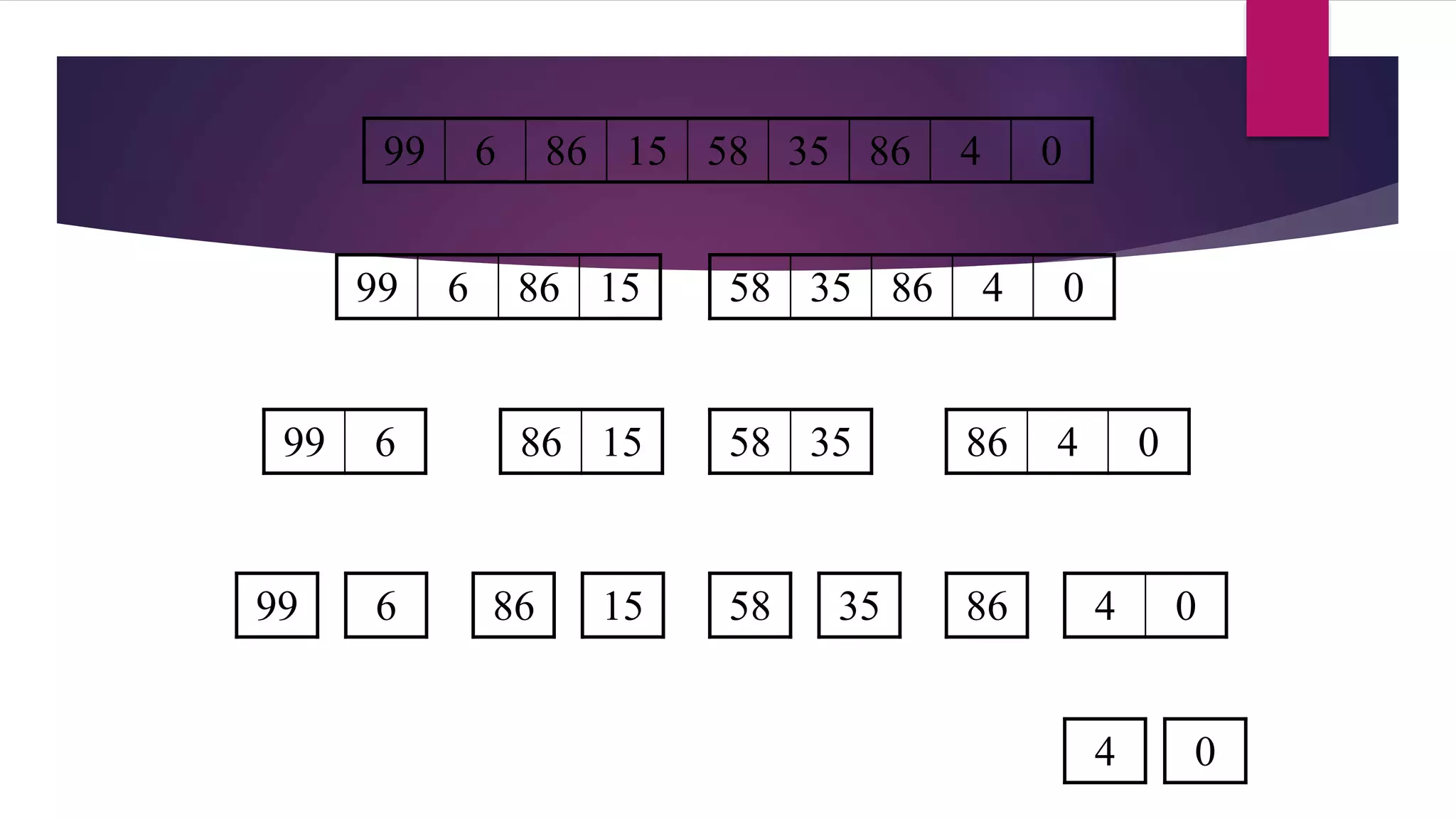
Merge sort is based on the divide-and-conquer paradigm.
To sort A[p .. r]:
1. Divide Step
If a given array A has zero or one element, simply return; it is already sorted.
Otherwise, split A[p .. r] into two subarrays A[p .. q] and A[q + 1 .. r], each
containing about half of the elements of A[p .. r]. That is, q is the halfway point of
A[p .. r].
2. Conquer Step
Conquer by recursively sorting the two subarrays A[p .. q] and A[q + 1 .. r].](https://image.slidesharecdn.com/mergesort-140305112146-phpapp02/75/Merge-sort-2-2048.jpg)
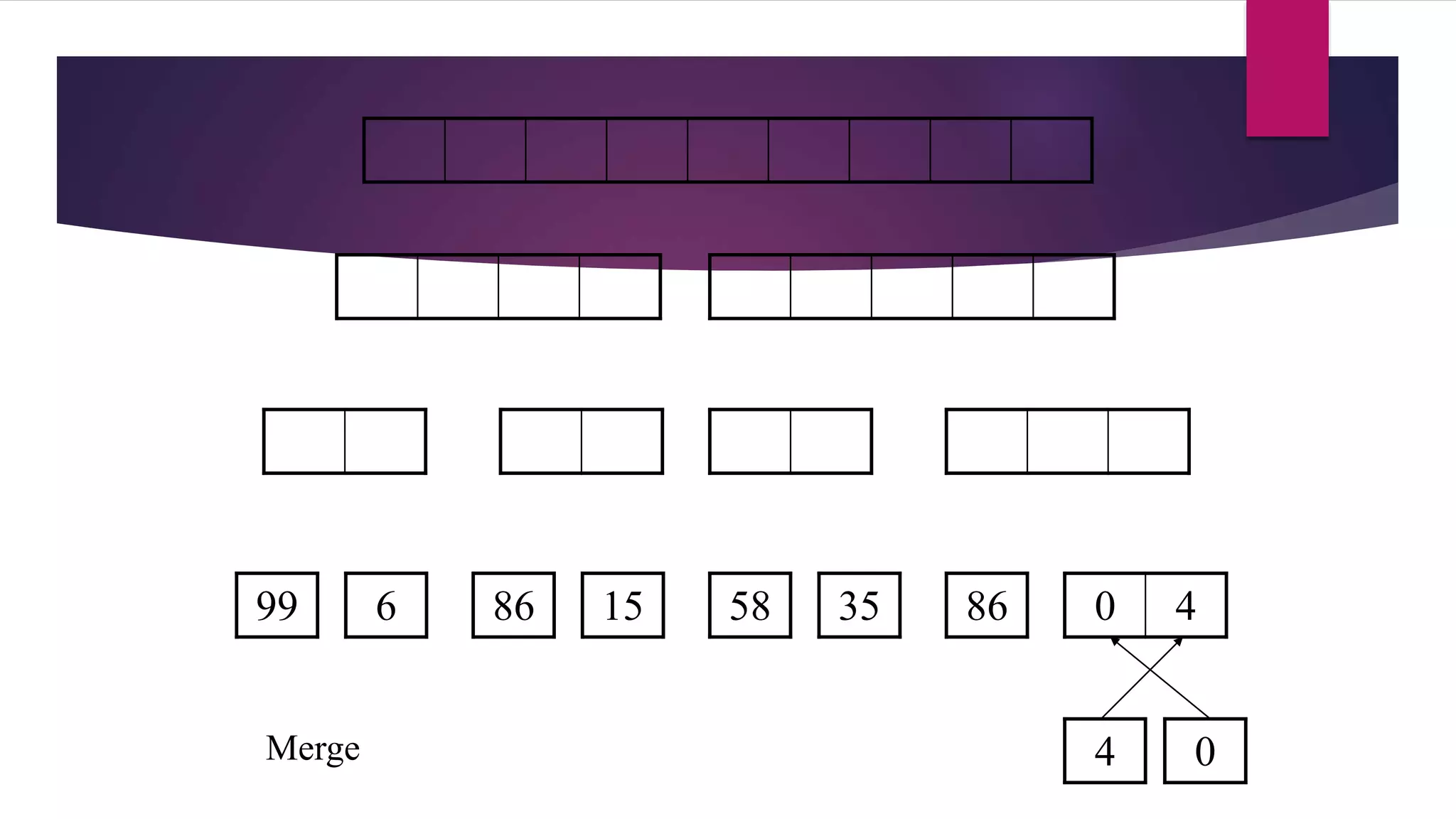
![3. Combine Step
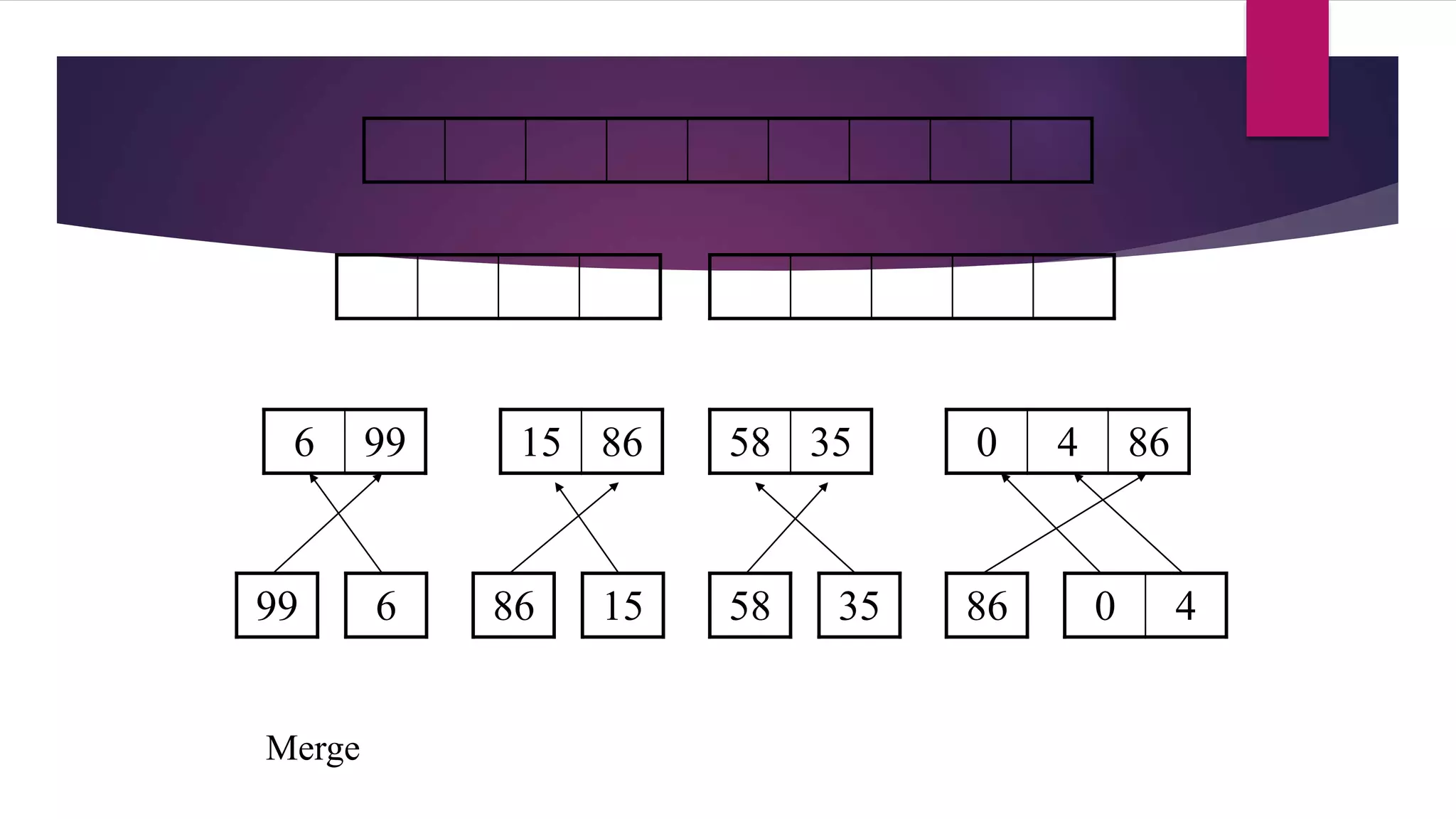
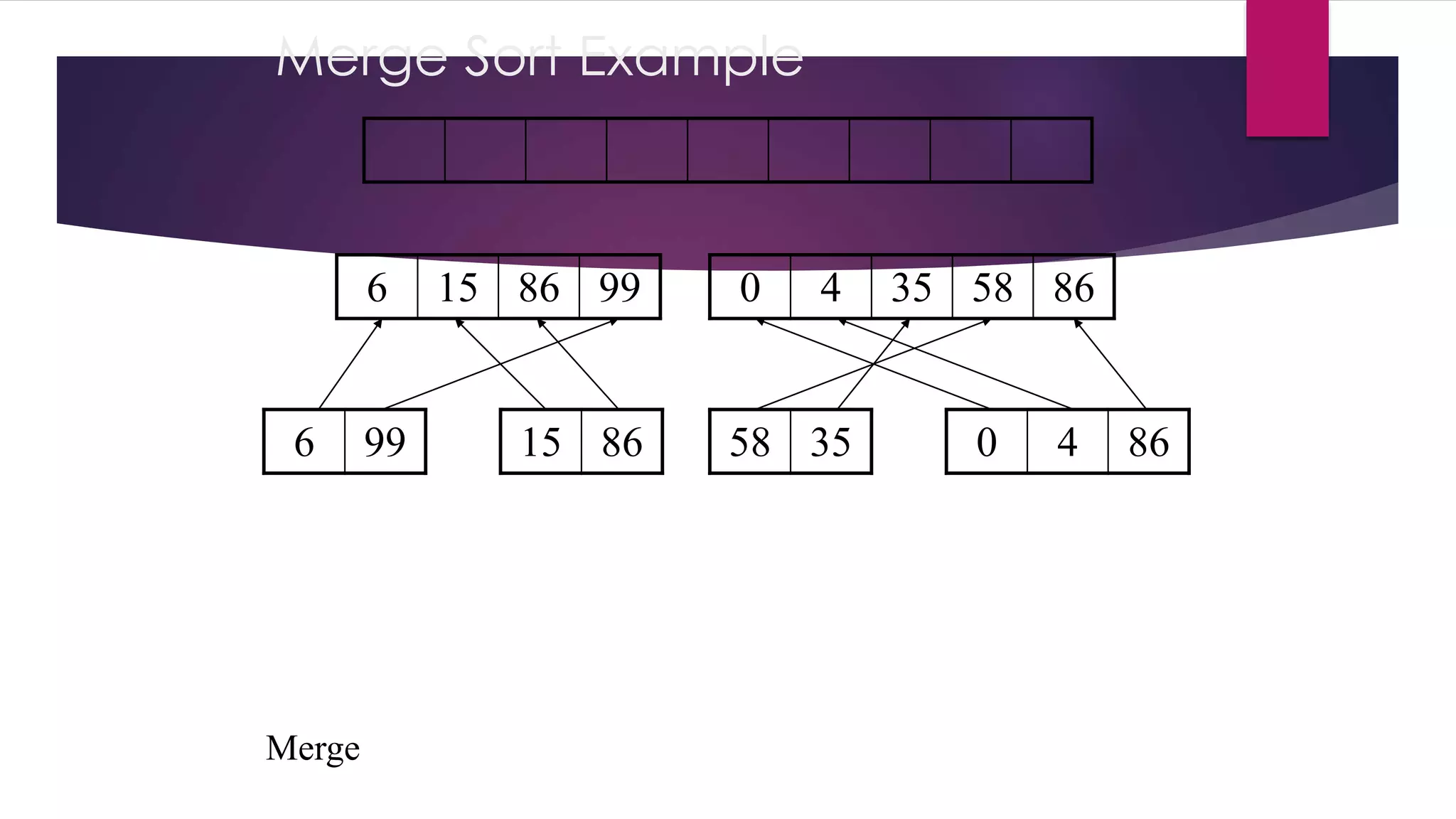
Combine the elements back in A[p .. r] by merging the two sorted subarrays A[p ..
q] and A[q + 1 .. r] into a sorted sequence. To accomplish this step, we will define a
procedure MERGE (A, p, q, r).
Note that the recursion bottoms out when the subarray has just one element, so
that it is trivially sorted.](https://image.slidesharecdn.com/mergesort-140305112146-phpapp02/75/Merge-sort-3-2048.jpg)
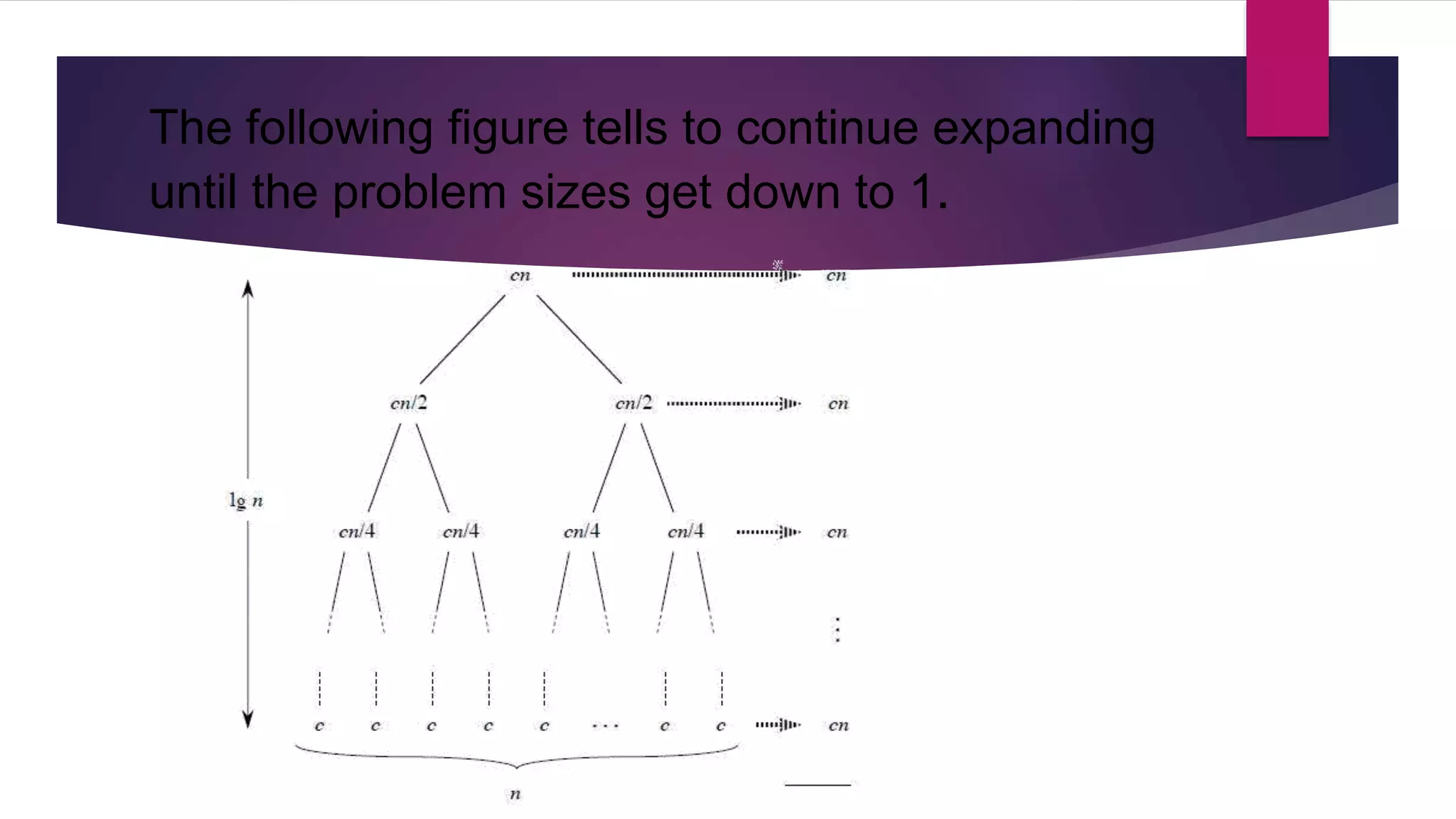
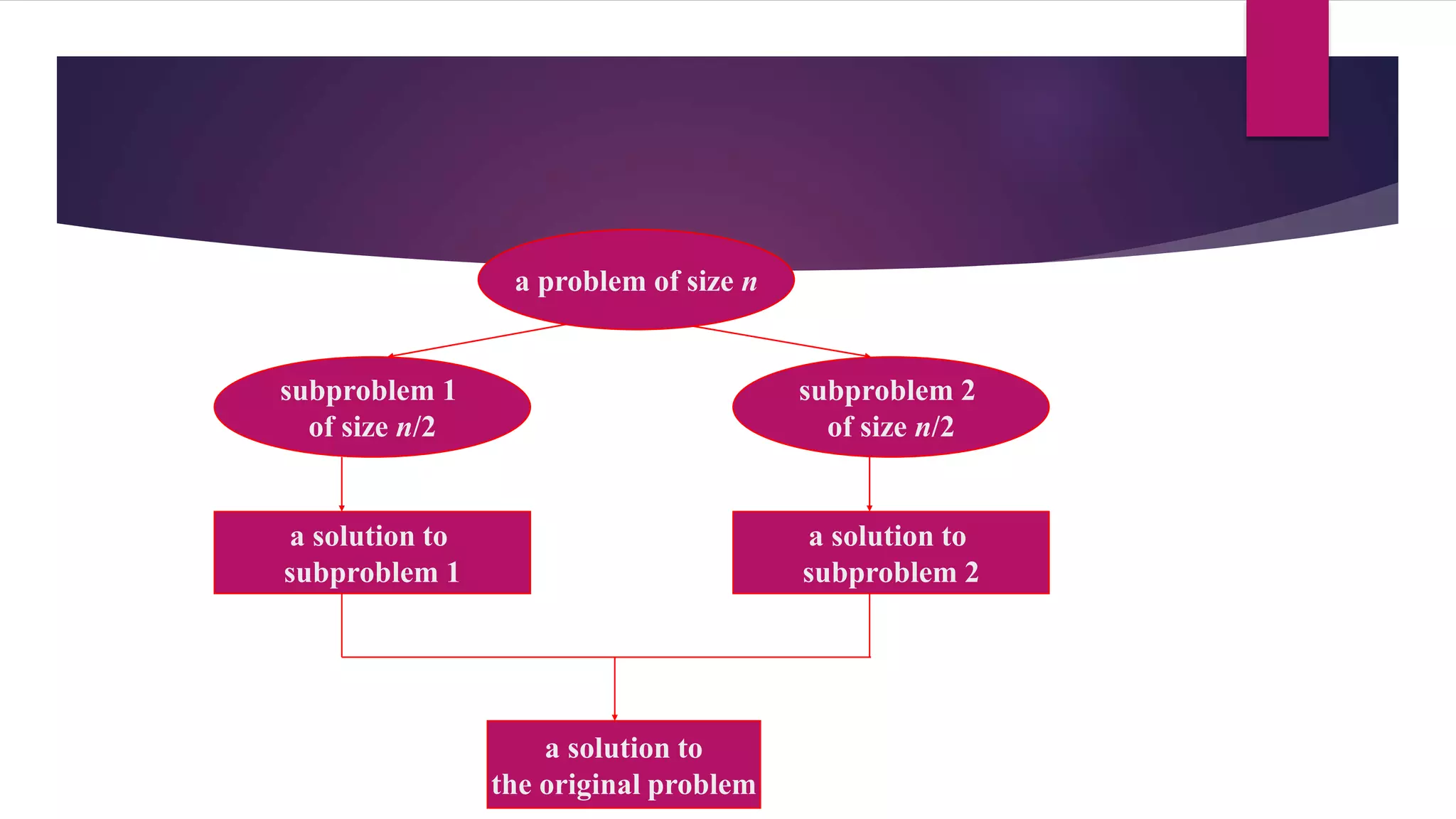
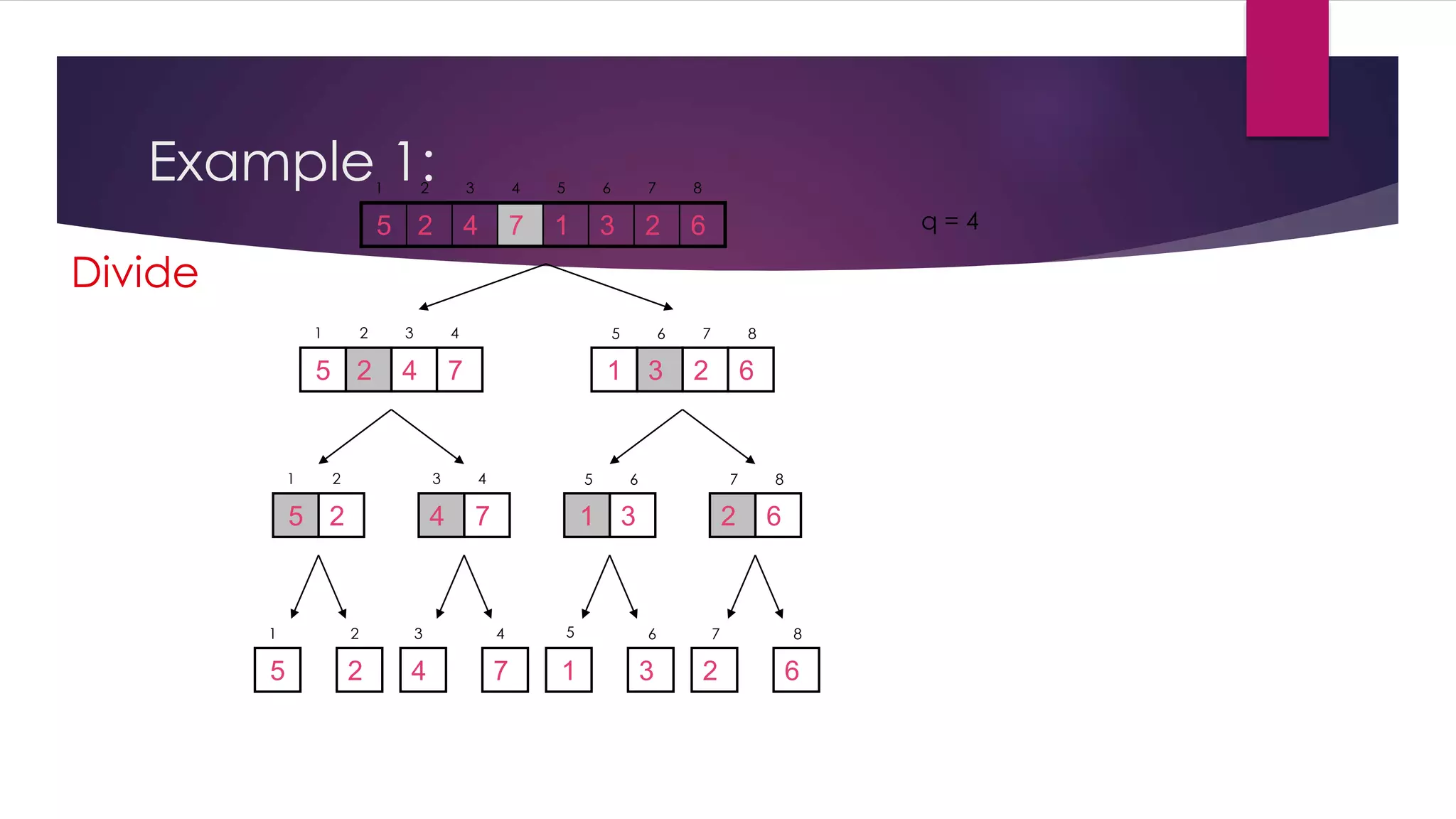
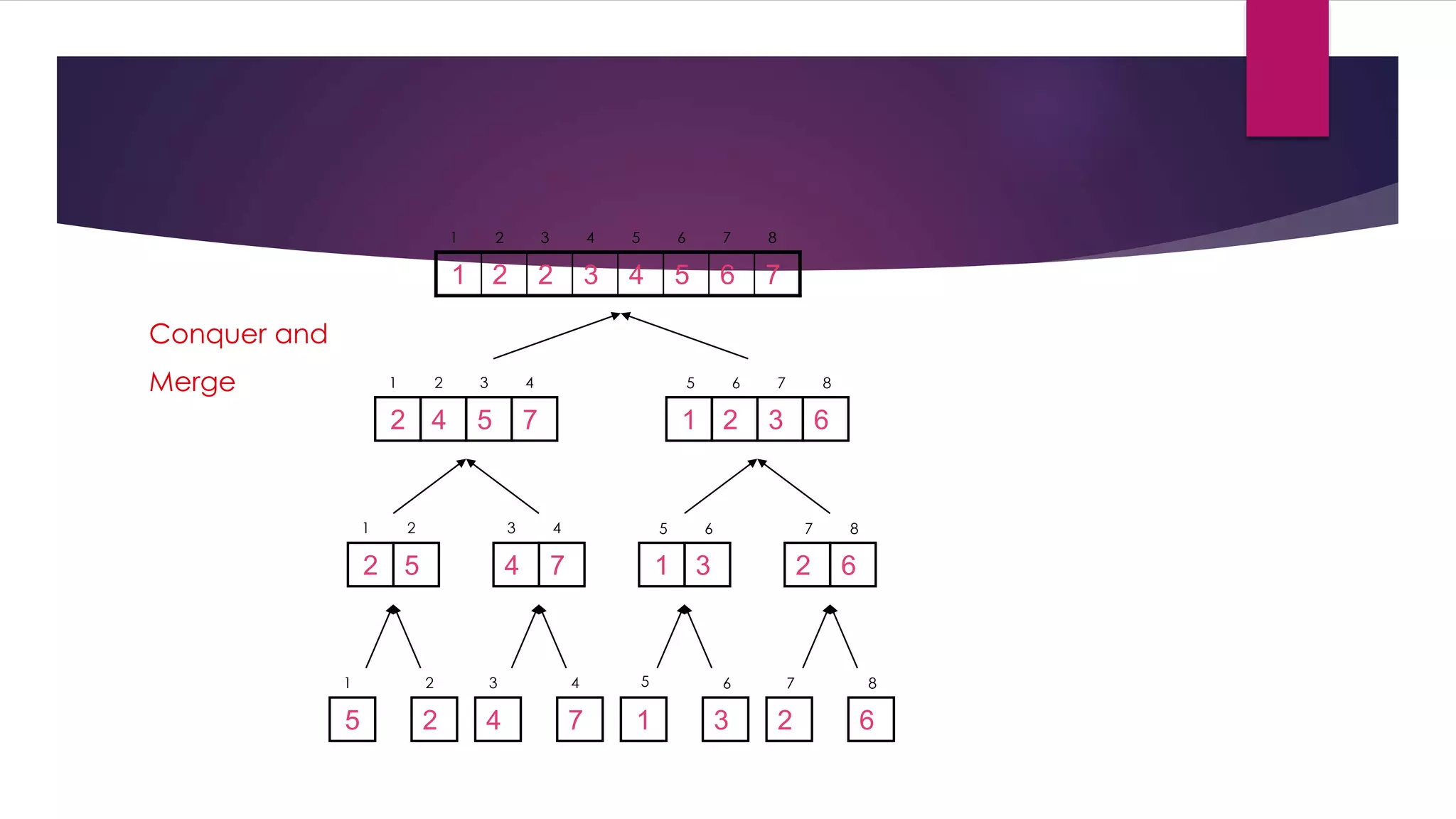
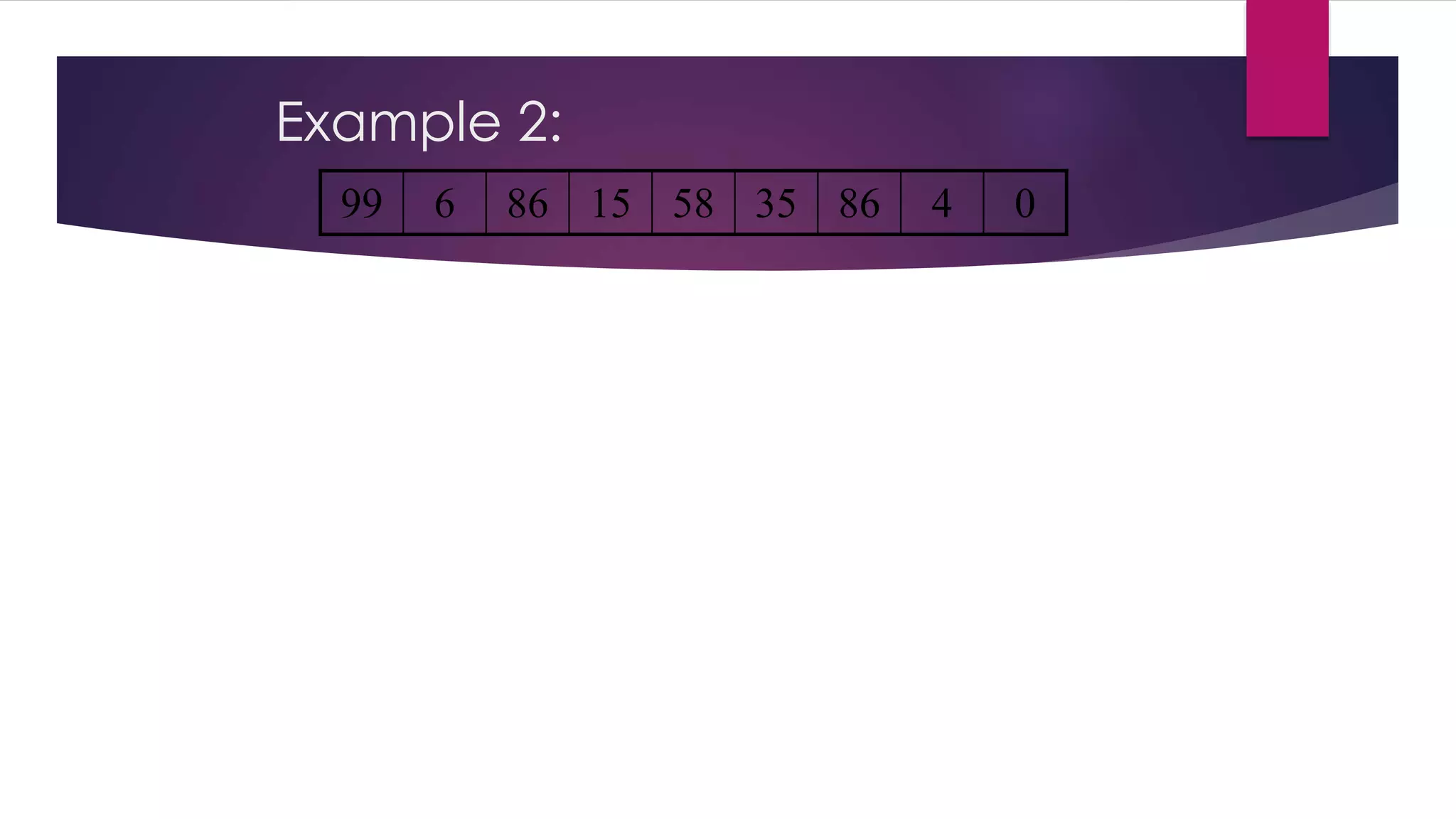
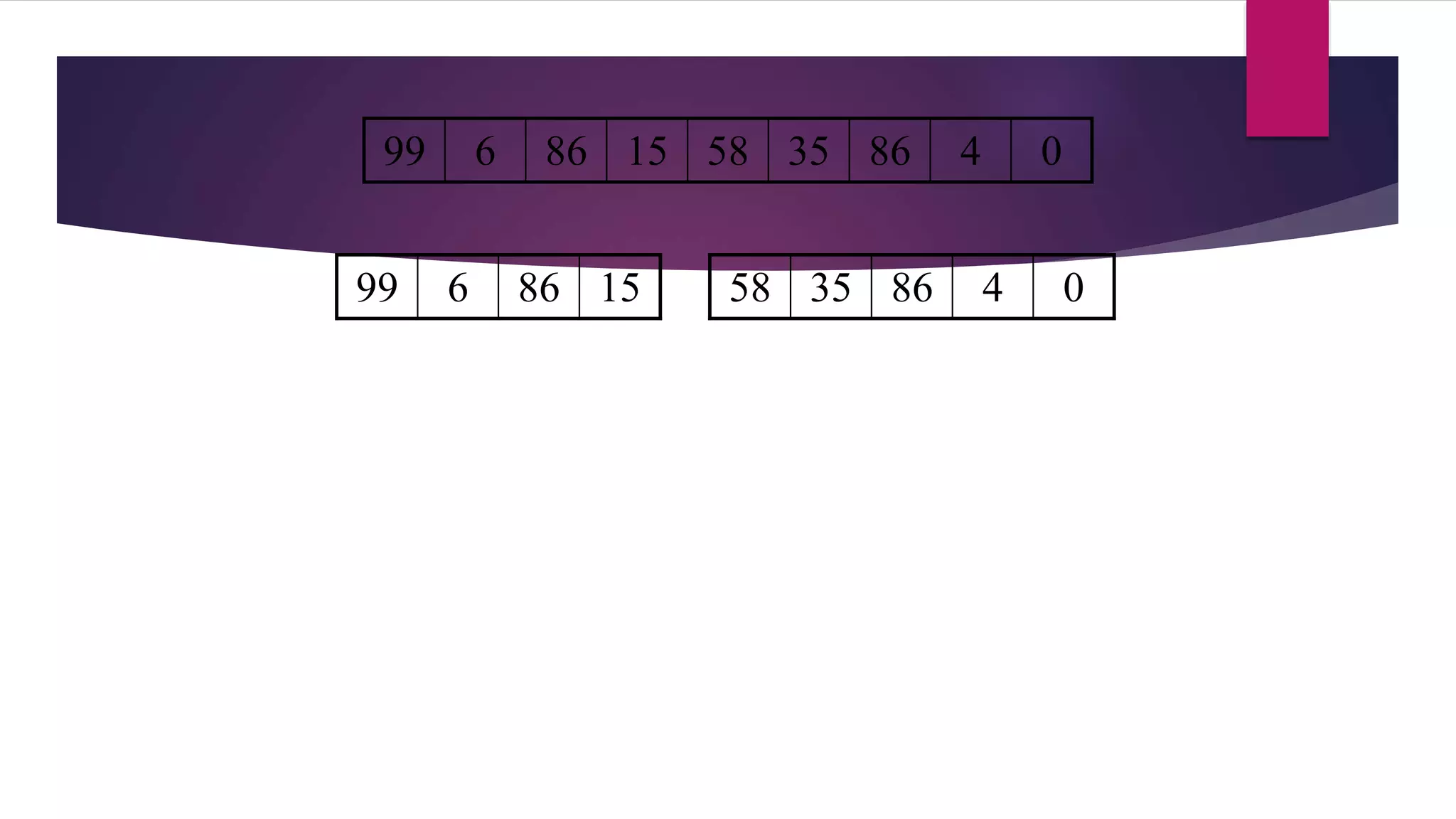
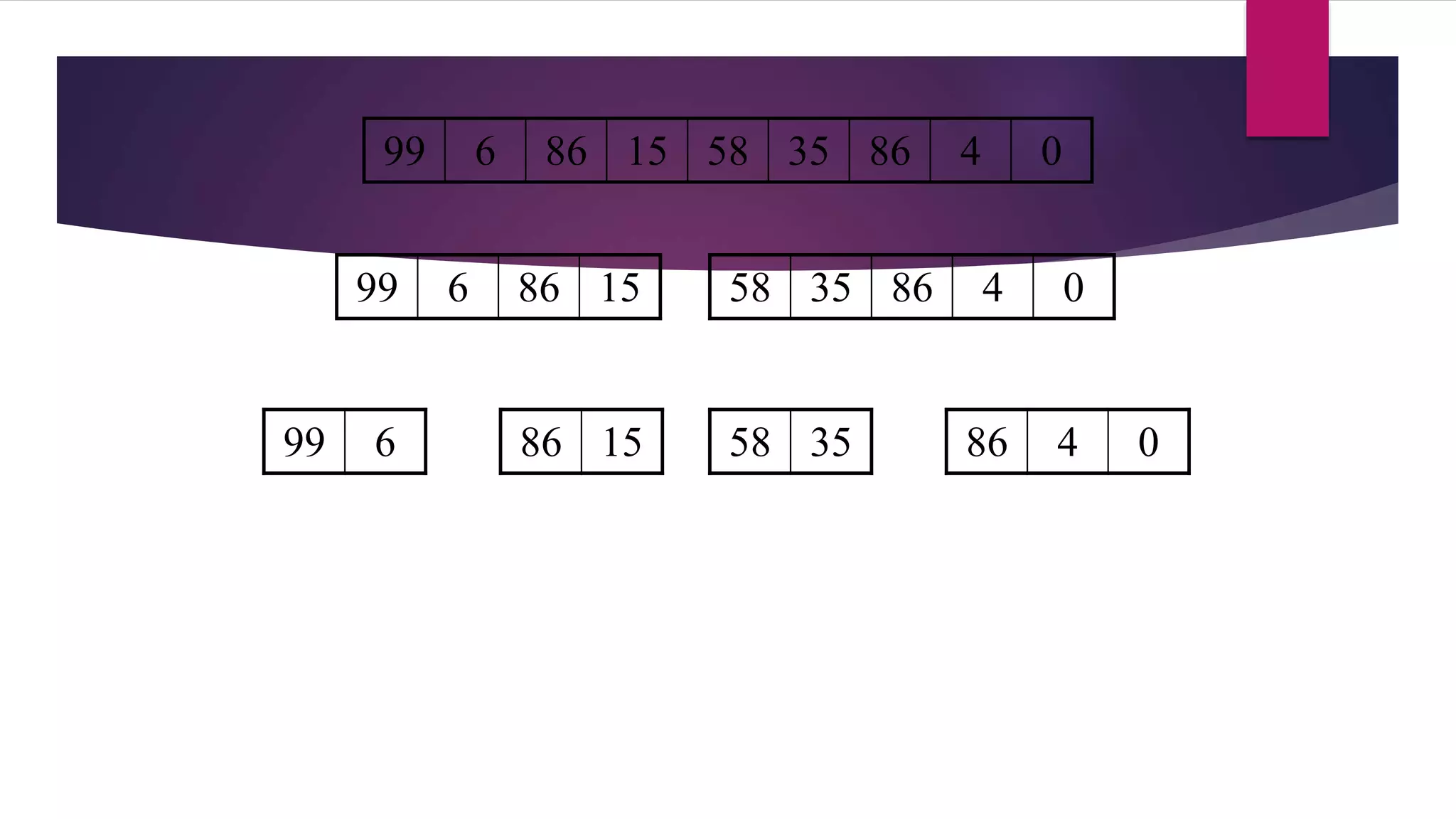
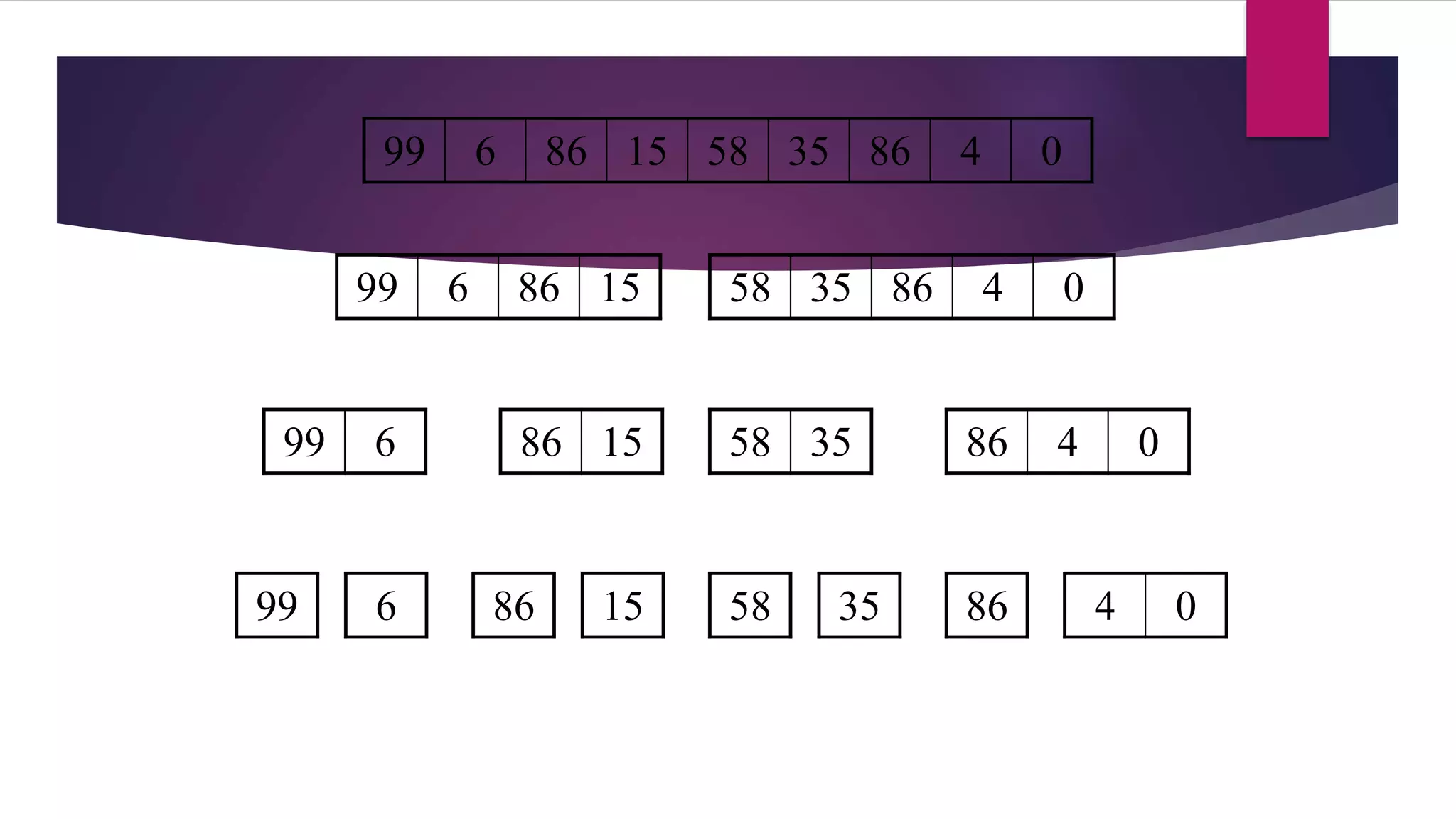

Merge sort is a sorting algorithm that uses a divide and conquer approach. It divides an array into halves, recursively sorts the halves, and then merges the sorted halves into a single sorted array. The key steps are dividing, conquering by recursively sorting subarrays, and combining the sorted subarrays through a merging process. It has advantages of being a stable sort and having no worst-case scenario, though it requires more memory than other sorts.
Introduction to Merge Sort, presented by Sindhoo Oad.
Explains the Divide-and-Conquer approach, with steps for sorting an array: Divide, Conquer, and Combine.
Illustration of recursive step-down of problem size, showing division into two subproblems of size n/2.
First example of merge sort with detailed steps showing the initial array division and merging process.
Second example illustrating multiple merge steps through visual representation, showing progress of sorting.
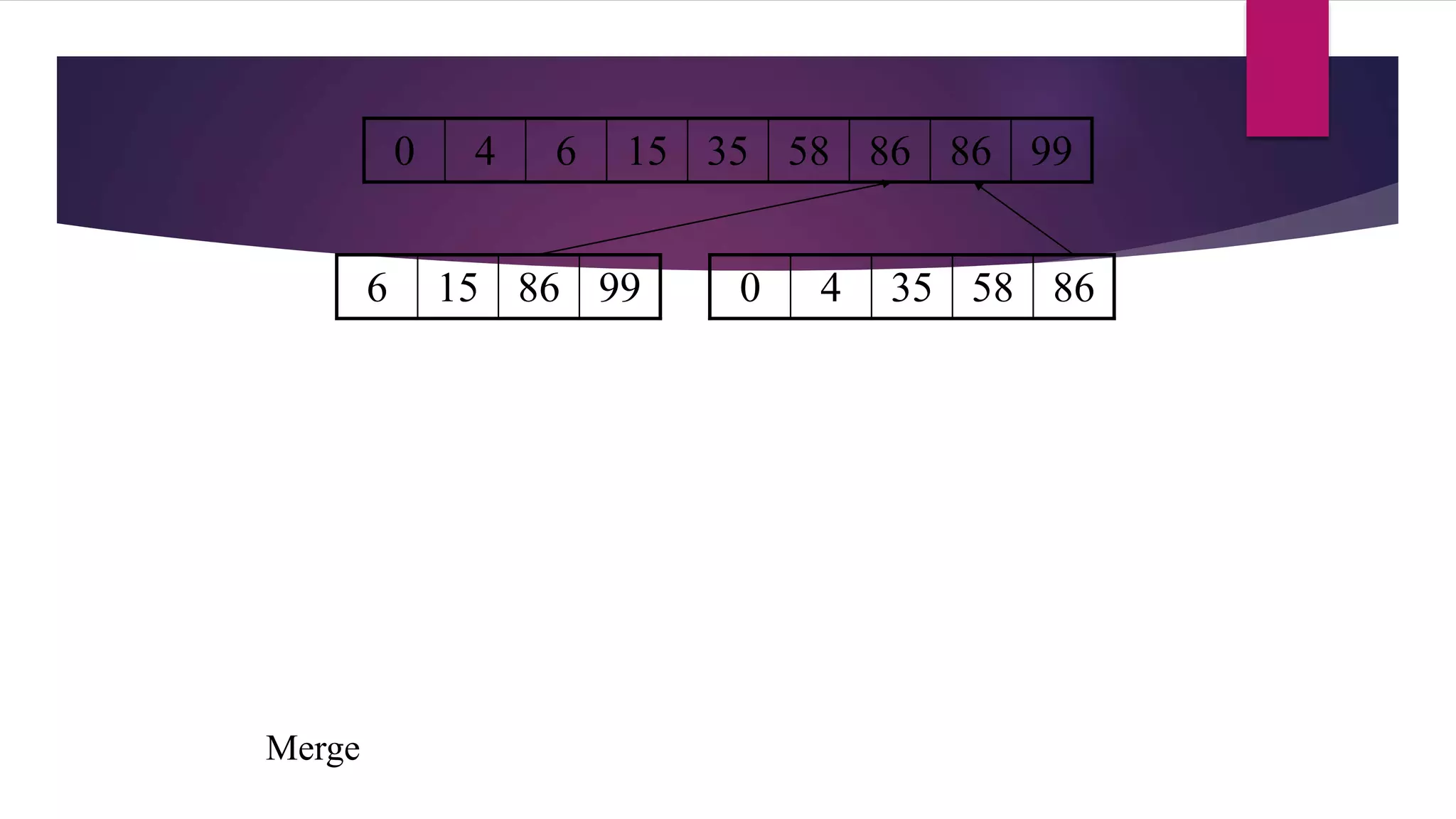
Final steps in merging two sorted arrays, demonstrating how the final sorted array is constructed.
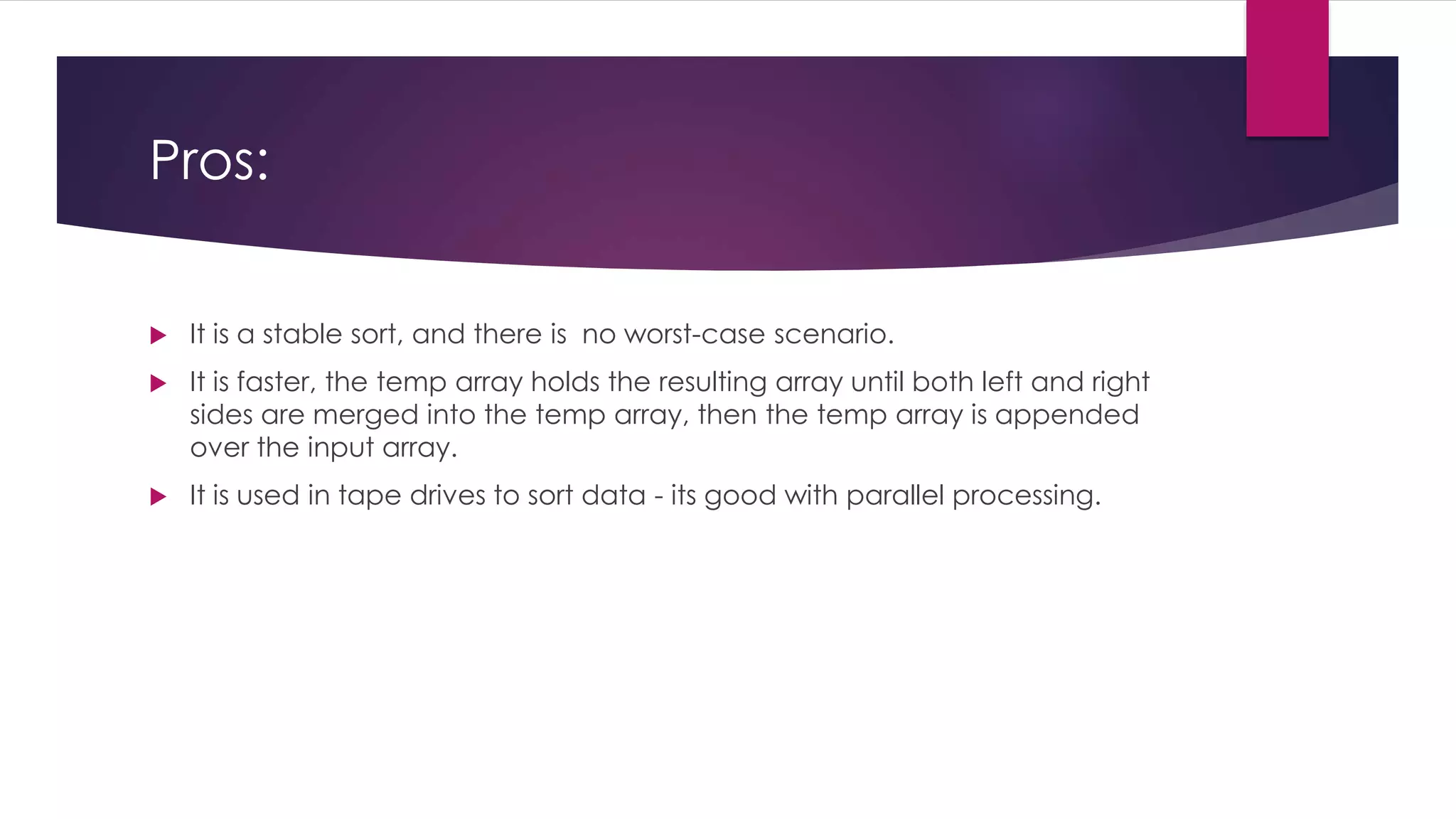
Advantages of Merge Sort: stability, performance, suitability for parallel processing.
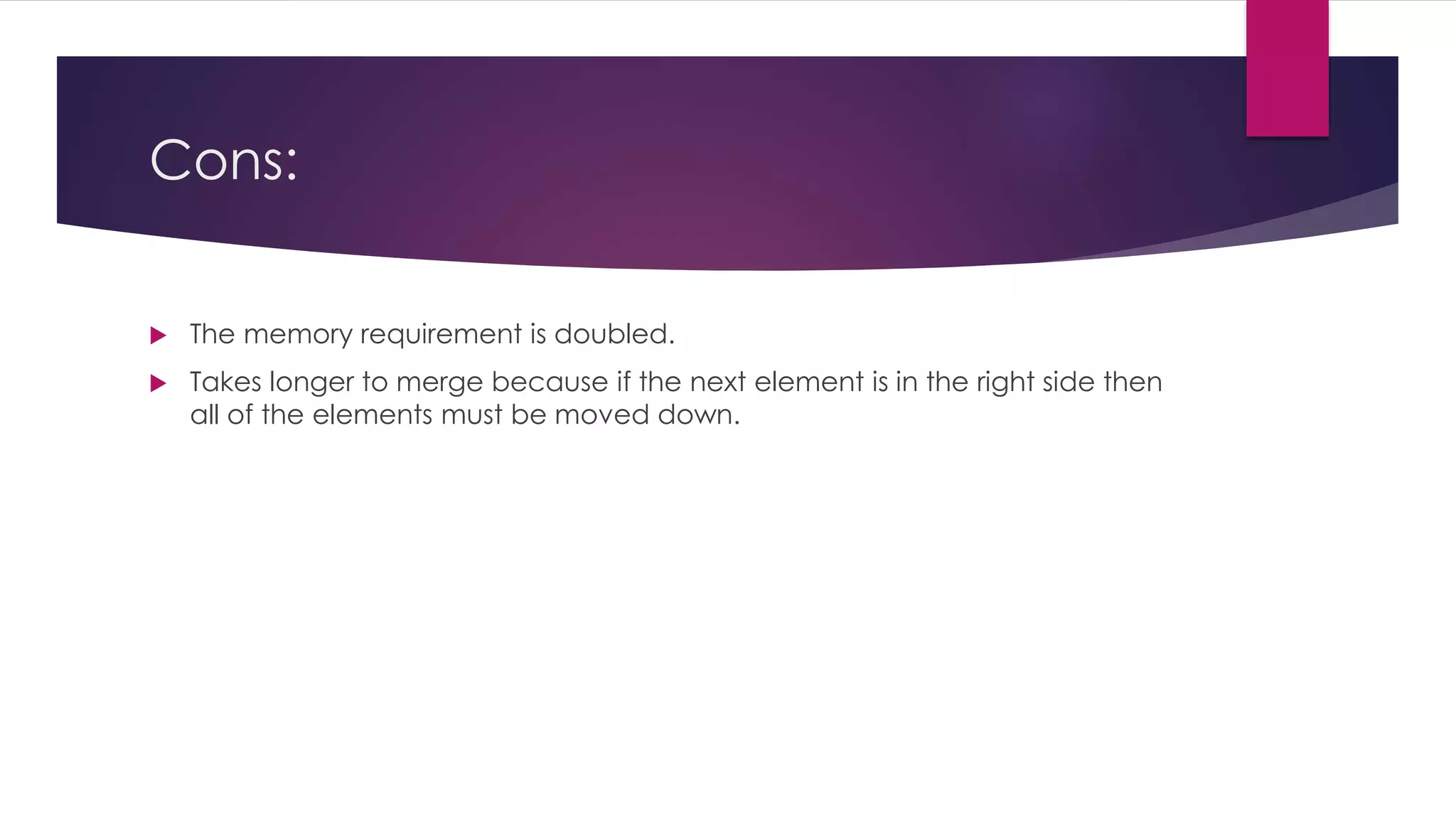
Disadvantages: increased memory usage and longer merging times.


