MERCURY HYGIENE
PRESENTED BY : DR
NADEEM AASHIQ
MDS 2nd YEAR
CONTENTS
• Introduction
• Properties of mercury
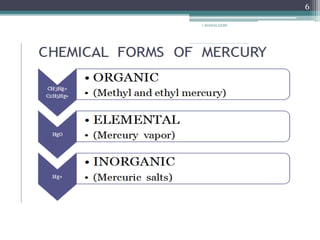
• Forms of Mercury
• Sources of mercury
• Mercury levels/ Concentration of mercury
• Mercury exposure in dentistry
• Mercury toxicity
• Mercury allergy
• Treatment
• Mercury hygiene
• Mercury phase out
• Conclusion
2
INTRODUCTION
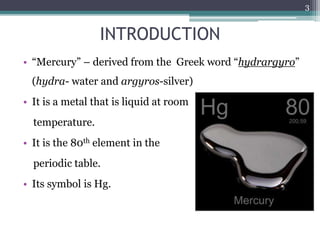
• “Mercury” – derived from the Greek word “hydrargyro”
(hydra- water and argyros-silver)
• It is a metal that is liquid at room
temperature.
• It is the 80th element in the
periodic table.
• Its symbol is Hg.
3
PROPERTIES
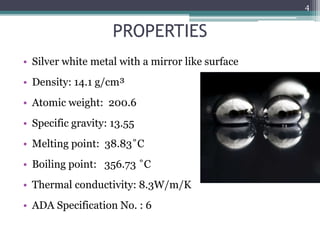
• Silver white metal with a mirror like surface
• Density: 14.1 g/cm³
• Atomic weight: 200.6
• Specific gravity: 13.55
• Melting point: 38.83˚C
• Boiling point: 356.73 ˚C
• Thermal conductivity: 8.3W/m/K
• ADA Specification No. : 6
4
• Low heat of vaporization allows oxide free metallic Hg to evaporate
easily at room temperature
• Hg is used along with silver alloy for the restoration of carious tooth
structure.
• Dental amalgam has been used for over 150 years for the treatment
of dental cavities & is still used, in particular in large cavities due to
its excellent mechanical properties & durability.
• Dental amalgam is a combination of alloy particles & mercury that
contains about 50% of mercury in the elemental form
1 MAHALAXMI
5
1 MAHALAXMI
6
ELEMENTAL MERCURY
• Most volatile
• Exist in liquid/vapor form
• Inhaled and absorbed into the lungs (80%) and
GIT (0.01%)
• Exposure can occur due to accidental spillage of
mercury in dental office
7
INORGANIC MERCURY
• Normally mined as inorganic sulfide ore.
• Least toxic of three forms
• Main route of entry is through lungs (80%)
• It form two series of compounds
Mercuric: soluble and more toxic
Mercurous: less soluble, thus, less active
8
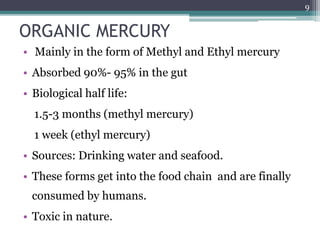
ORGANIC MERCURY
• Mainly in the form of Methyl and Ethyl mercury
• Absorbed 90%- 95% in the gut
• Biological half life:
1.5-3 months (methyl mercury)
1 week (ethyl mercury)
• Sources: Drinking water and seafood.
• These forms get into the food chain and are finally
consumed by humans.
• Toxic in nature.
9
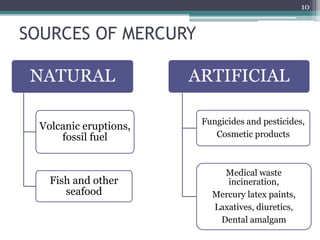
SOURCES OF MERCURY
NATURAL
Volcanic eruptions,
fossil fuel
Fish and other
seafood
ARTIFICIAL
Fungicides and pesticides,
Cosmetic products
Medical waste
incineration,
Mercury latex paints,
Laxatives, diuretics,
Dental amalgam
10
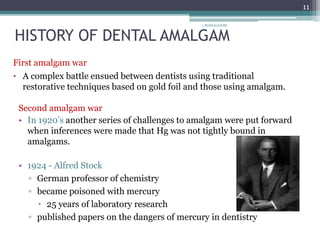
HISTORY OF DENTAL AMALGAM
1 MAHALAXMI
11
First amalgam war
• A complex battle ensued between dentists using traditional
restorative techniques based on gold foil and those using amalgam.
Second amalgam war
• In 1920’s another series of challenges to amalgam were put forward
when inferences were made that Hg was not tightly bound in
amalgams.
• 1924 - Alfred Stock
▫ German professor of chemistry
▫ became poisoned with mercury
 25 years of laboratory research
▫ published papers on the dangers of mercury in dentistry
1 MAHALAXMI
12
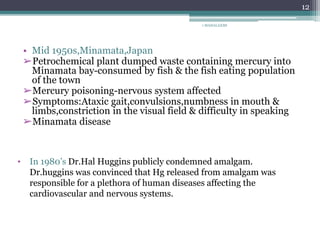
• Mid 1950s,Minamata,Japan
➢Petrochemical plant dumped waste containing mercury into
Minamata bay-consumed by fish & the fish eating population
of the town
➢Mercury poisoning-nervous system affected
➢Symptoms:Ataxic gait,convulsions,numbness in mouth &
limbs,constriction in the visual field & difficulty in speaking
➢Minamata disease
• In 1980’s Dr.Hal Huggins publicly condemned amalgam.
Dr.huggins was convinced that Hg released from amalgam was
responsible for a plethora of human diseases affecting the
cardiovascular and nervous systems.
1 MAHALAXMI
13
Third amalgam war
• It was not until 1981 that this mercury issue was reopened. Thus began the
Third Amalgam War. This time, Sweden was at the forefront of the battle.
• A brilliant neurobiologist, Mats Hansen, at the Institute of Zoo physiology at the
University in Lind, Sweden, sent a letter to the National Board of Health of
Sweden demanding an unprejudiced evaluation of the hazards of dental
amalgam.
• Due to Hansen and others' efforts, Sweden banned the use of amalgams in
pregnant women in 1987.
• Now the United States, Canada, and other European countries are all actively
engaged in the Third Amalgam War.
• Overall,the use of alternative materials such as composite resins,GIC,&
ceramics,is increasing,either due to their aesthetic properties or alleged health
concerns related to the use of dental amalgam
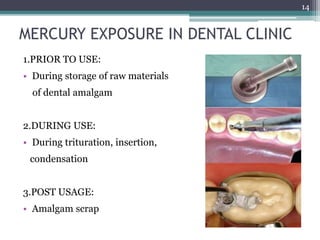
MERCURY EXPOSURE IN DENTAL CLINIC
1.PRIOR TO USE:
• During storage of raw materials
of dental amalgam
2.DURING USE:
• During trituration, insertion,
condensation
3.POST USAGE:
• Amalgam scrap
14
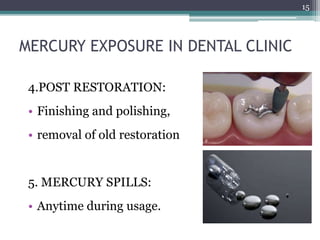
4.POST RESTORATION:
• Finishing and polishing,
• removal of old restoration
5. MERCURY SPILLS:
• Anytime during usage.
15
MERCURY EXPOSURE IN DENTAL CLINIC
1 MAHALAXMI
16
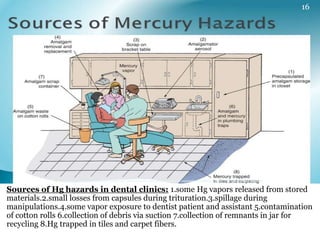
Sources of Hg hazards in dental clinics: 1.some Hg vapors released from stored
materials.2.small losses from capsules during trituration.3.spillage during
manipulations.4.some vapor exposure to dentist patient and assistant 5.contamination
of cotton rolls 6.collection of debris via suction 7.collection of remnants in jar for
recycling 8.Hg trapped in tiles and carpet fibers.
17
HARMFUL EFFECTS OF MERCURY
ALLERGY/HYPERSENSITIVITY
TOXICITY
18
MERCURY ALLERGY
Allergic responses present an antigen-antibody
reaction.
1. IMMEDIATE HYPERSENSITIVITY REACTION
- Skin lesion more common than oral lesions
- Urticarial rash on the face and limbs followed by
dermatitis.
19
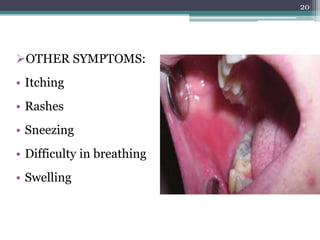
OTHER SYMPTOMS:
• Itching
• Rashes
• Sneezing
• Difficulty in breathing
• Swelling
20
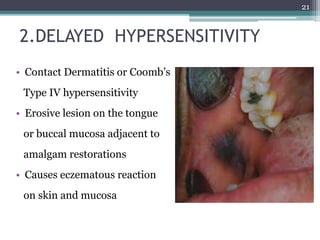
2.DELAYED HYPERSENSITIVITY
• Contact Dermatitis or Coomb’s
Type IV hypersensitivity
• Erosive lesion on the tongue
or buccal mucosa adjacent to
amalgam restorations
• Causes eczematous reaction
on skin and mucosa
21
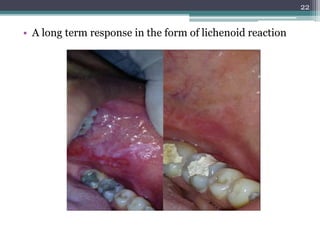
• A long term response in the form of lichenoid reaction
22
MERCURY TOXICITY
• TOXICITY:
It is the relative ability of a material to cause
injury to biological tissues, ranging from
improper biochemical function, organ damage
and cell destruction to death.
23
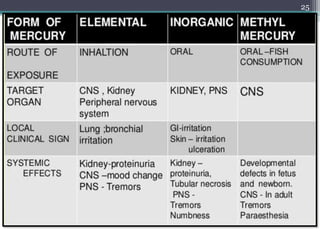
Toxic effects of mercury depend upon
• Amount of exposure
• Length of exposure
• Length of mercury accumulation in body
• Amount of mercury accumulated
• Overall health of patient (detoxification)
24
25
ACUTE MERCURY POISONING
• It occurs when there is sudden exposure of high
levels of mercury especially from elemental
mercury or organic mercury.
• It results in immediate and severe symptoms
requiring urgent medical attention.
26
Inhalation of mercury
vapor causes:
• Chemical pneumonia
• Pulmonary edema
• Gingivostomatits
• Increased salivation
CNS symptoms like:
• Ataxia
• Restriction of field of
vision
• Delerium
• Polyneuropathy
27
INGESTION OF MERCURY
The signs and symptoms start immediately after
swallowing the mercury:
• Metallic taste in mouth.
• Feeling of constriction or choking of throat.
• Hoarseness of voice.
• Difficulty in breathing
28
• Hot burning pain in mouth, stomach and abdomen.
• Stools are blood stained , urine is suppressed and
scanty, contain blood and albumin is accompanied
by necrosis of renal tubules and damage to the
glomeruli.
• Pulse is quick small and irregular
• Thrombocytopenia and bone marrow depression
29
INGESTION OF MERCURY
CHRONIC MERCURY POISONING /
HYDRARGYRISM
• Mercury exposure for a prolonged period
• Workers may get poisoned due to vapors or dust.
• The lowest level of total blood mercury at which
the earliest nonspecific symptoms occur is 35
ng/ml.
30
SIGNS AND SYMPTOMS
• Excessive salivation with swollen and painful salivary
glands.
• Foul smelling breathing, inflamed and ulcerated gums
with brownish blue line and loosening of teeth.
• Mercura lentis: A brownish reflex from the anterior
lens capsule of both the eyes is seen when observed in
slit lamp in person exposed to mercury vapors for some
years. It is bilateral and has no effect on the visual acuity
31
ORAL CAVITY PROBLEMS
• Inflammation of the mouth
• Loss of bone around teeth
• Ulcerated gums and other areas in the mouth
• Darkening of gums
• Taste of metal
• Bleeding gums
32
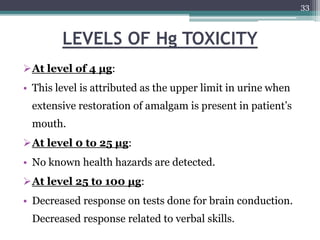
LEVELS OF Hg TOXICITY
At level of 4 μg:
• This level is attributed as the upper limit in urine when
extensive restoration of amalgam is present in patient’s
mouth.
At level 0 to 25 μg:
• No known health hazards are detected.
At level 25 to 100 μg:
• Decreased response on tests done for brain conduction.
Decreased response related to verbal skills.
33
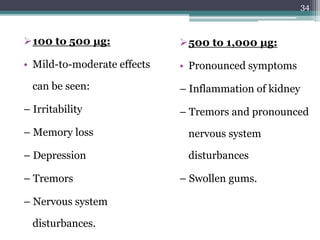
100 to 500 μg:
• Mild-to-moderate effects
can be seen:
– Irritability
– Memory loss
– Depression
– Tremors
– Nervous system
disturbances.
500 to 1,000 μg:
• Pronounced symptoms
– Inflammation of kidney
– Tremors and pronounced
nervous system
disturbances
– Swollen gums.
34
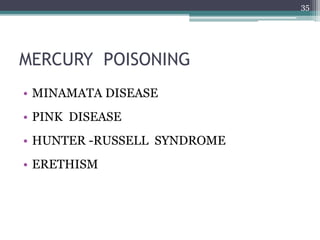
MERCURY POISONING
• MINAMATA DISEASE
• PINK DISEASE
• HUNTER -RUSSELL SYNDROME
• ERETHISM
35
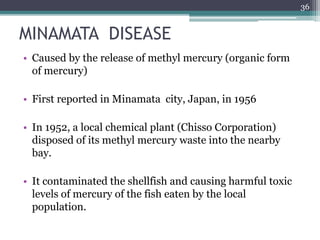
MINAMATA DISEASE
• Caused by the release of methyl mercury (organic form
of mercury)
• First reported in Minamata city, Japan, in 1956
• In 1952, a local chemical plant (Chisso Corporation)
disposed of its methyl mercury waste into the nearby
bay.
• It contaminated the shellfish and causing harmful toxic
levels of mercury of the fish eaten by the local
population.
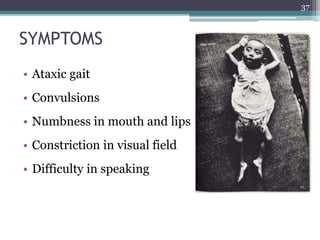
36
SYMPTOMS
• Ataxic gait
• Convulsions
• Numbness in mouth and lips
• Constriction in visual field
• Difficulty in speaking
37
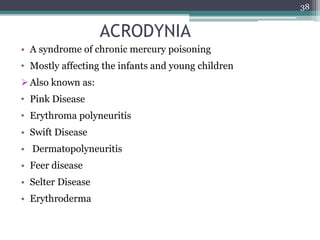
ACRODYNIA
• A syndrome of chronic mercury poisoning
• Mostly affecting the infants and young children
Also known as:
• Pink Disease
• Erythroma polyneuritis
• Swift Disease
• Dermatopolyneuritis
• Feer disease
• Selter Disease
• Erythroderma
38
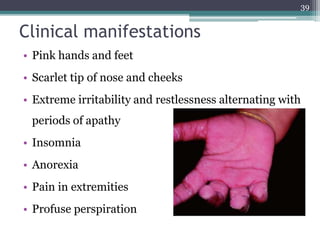
Clinical manifestations
• Pink hands and feet
• Scarlet tip of nose and cheeks
• Extreme irritability and restlessness alternating with
periods of apathy
• Insomnia
• Anorexia
• Pain in extremities
• Profuse perspiration
39
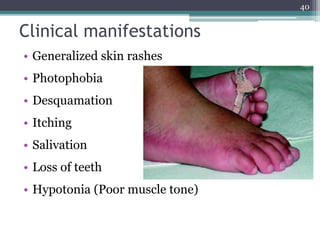
• Generalized skin rashes
• Photophobia
• Desquamation
• Itching
• Salivation
• Loss of teeth
• Hypotonia (Poor muscle tone)
40
Clinical manifestations
HUNTER- RUSELL SYNDROME
• A condition caused by methyl mercury poisoning
• The term Hunter-Russell syndrome derives from a
study of mercury poisoning among workers in a seed
packing factory in England in the late 1930s who
breathed methyl mercury that was being used as a
seed disinfectant and preservative.
41
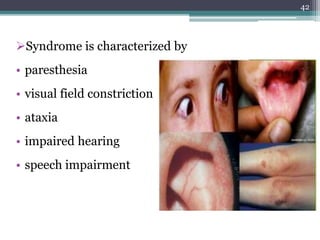
Syndrome is characterized by
• paresthesia
• visual field constriction
• ataxia
• impaired hearing
• speech impairment
42
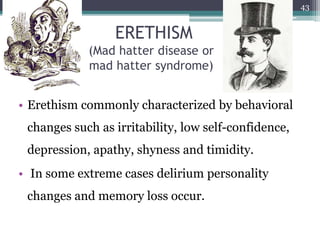
ERETHISM
(Mad hatter disease or
mad hatter syndrome)
• Erethism commonly characterized by behavioral
changes such as irritability, low self-confidence,
depression, apathy, shyness and timidity.
• In some extreme cases delirium personality
changes and memory loss occur.
43
LABORATORY TESTS
URINE TEST
• Urine levels of mercury provide the most
appropriate assessment of elemental mercury
exposure and are useful for the assessment of acute
and chronic exposures.
• A urinary mercury concentration of less than 4
micrograms per liter (μg/L) would be considered
within the background range
44
BLOOD TEST
• Blood is primarily tested to detect the presence of methyl
mercury.
• Amount present will decrease by half about every 3 days
as the mercury moves into organs such as the brain and
kidneys.
• Therefore, blood testing must be done within days of
suspected exposure
• Blood level greater than 10 mcg/L indicates an unusual
level of exposure for someone who does not regularly
work with mercury.
45
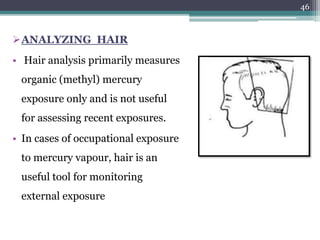
ANALYZING HAIR
• Hair analysis primarily measures
organic (methyl) mercury
exposure only and is not useful
for assessing recent exposures.
• In cases of occupational exposure
to mercury vapour, hair is an
useful tool for monitoring
external exposure
46
METHODS TO DETECT MERCURY VAPOR
RELEASE
1. Mercury thermometer
2. Jerome mercury vapours detectives
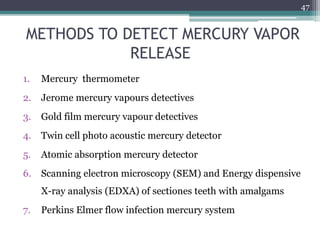
3. Gold film mercury vapour detectives
4. Twin cell photo acoustic mercury detector
5. Atomic absorption mercury detector
6. Scanning electron microscopy (SEM) and Energy dispensive
X-ray analysis (EDXA) of sectiones teeth with amalgams
7. Perkins Elmer flow infection mercury system
47
METHODS TO DETECT MERCURY VAPOR RELEASE
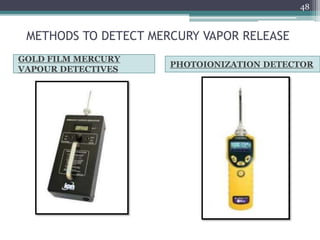
GOLD FILM MERCURY
VAPOUR DETECTIVES
PHOTOIONIZATION DETECTOR
48
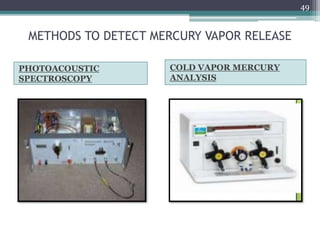
PHOTOACOUSTIC
SPECTROSCOPY
COLD VAPOR MERCURY
ANALYSIS
49
METHODS TO DETECT MERCURY VAPOR RELEASE
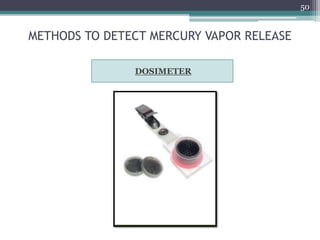
DOSIMETER
50
METHODS TO DETECT MERCURY VAPOR RELEASE
TREATMENT
• Chelation therapy is the administration of chelating
agents which bind mercury ions and facilitate their
excretion through urine and feces.
• A chelating agent could be given orally, I.M, I.V .
• Only Dimercaptosuccinic acid (DMSA) is FDA approved
for treating children with Hg toxicity
• DMSA is the most frequently used for severe
methylmercury poisoning.
51
α-Lipoic acid (ALA)
• If Kidneys show signs of damage peritoneal dialysis or
hemodialysis may be necessary.
• Treatment of shock and collapse are also required.
• 5-10% sulphoxylate and 5% sodium bi carbonate is used
for stomach wash. This is beneficial if given in the first
half an hour.
52
• If colitis has developed, high colonic lavage given with
1:1000 solution of sulphoxylate.
• For diuresis 5-10% glucose is used in normal saline.
53
• Symptomatic patients who have experienced acute high-
dose elemental mercury inhalation exposure should
receive supportive care and be monitored for
development of acute pneumonitis and pulmonary
edema in a hospital setting.
MERCURY HYGIENE RECOMMENDATIONS
• ADA recommendations No. 109
(1) “Train all personnel involved in the handling of
mercury or dental amalgam regarding the potential
hazard of mercury vapor and the necessity of observing
good hygiene practices.”
54
(2) “Make personnel aware of the potential sources of
mercury vapor in the operatory – that is, spills; open
storage of used capsules; trituration of amalgam;
placement, polishing or removal of amalgam; heating of
amalgam-contaminated instruments; leaky capsules; and
leaky bulk amalgam dispensers.
Personnel also should be knowledgeable about the proper
handling of amalgam waste and be aware of environmental
issues. Some state dental societies have published waste
management recommendations applicable to their state.”
55
(3) “Work in well-ventilated spaces, with fresh air
exchanges and outside exhaust. If the spaces are air-
conditioned, air-conditioning filters should be replaced
periodically.”
(4) “Periodically check the dental operatory atmosphere
for mercury vapor…”
1 MAHALAXMI
56
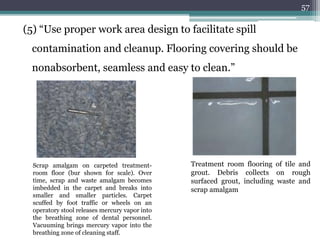
(5) “Use proper work area design to facilitate spill
contamination and cleanup. Flooring covering should be
nonabsorbent, seamless and easy to clean.”
57
Scrap amalgam on carpeted treatment-
room floor (bur shown for scale). Over
time, scrap and waste amalgam becomes
imbedded in the carpet and breaks into
smaller and smaller particles. Carpet
scuffed by foot traffic or wheels on an
operatory stool releases mercury vapor into
the breathing zone of dental personnel.
Vacuuming brings mercury vapor into the
breathing zone of cleaning staff.
Treatment room flooring of tile and
grout. Debris collects on rough
surfaced grout, including waste and
scrap amalgam
(6) “Use only precapsulated alloys; discontinue the use of
bulk mercury and bulk alloy.”
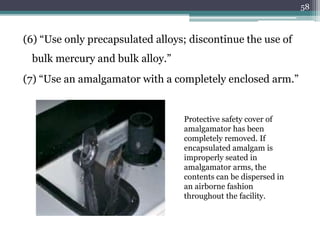
(7) “Use an amalgamator with a completely enclosed arm.”
58
Protective safety cover of
amalgamator has been
completely removed. If
encapsulated amalgam is
improperly seated in
amalgamator arms, the
contents can be dispersed in
an airborne fashion
throughout the facility.
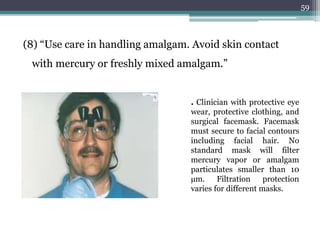
(8) “Use care in handling amalgam. Avoid skin contact
with mercury or freshly mixed amalgam.”
59
. Clinician with protective eye
wear, protective clothing, and
surgical facemask. Facemask
must secure to facial contours
including facial hair. No
standard mask will filter
mercury vapor or amalgam
particulates smaller than 10
µm. Filtration protection
varies for different masks.
(9) “If possible, recap single-use capsules from
precapsulated alloy after use. Properly dispose of them
according to applicable waste disposal laws.”
(10) “Use high-volume evacuation when finishing or
removing amalgam. Evacuation systems should have
traps or filters…”
(11) “Salvage and store all scrap amalgam (that is,
noncontact amalgam remaining after a procedure) in a
tightly closed container, either dry or under radiographic
fixer solution…”
60
(12) “Where feasible, recycle amalgam scrap and waste
amalgam. Otherwise, dispose of amalgam scrap and waste
amalgam in accordance with applicable laws…”
(13) “Dispose of mercury-contaminated items in sealed bags
according to applicable regulations…”
(14) “Clean up spilled mercury properly using trap bottles,
tapes or freshly mixed amalgam to pick up droplets, or use
commercial cleanup kits. Do not use a household vacuum
cleaner.”
(15) “Remove professional clothing before leaving the
workplace.”
61
MANAGEMENT OF MERCURY SPILLS
• Never use a vacuum cleaner of any type to clean up the
mercury.
• Never use household cleaning products to clean up the
spill, particularly those containing ammonia or chlorine.
• Never pour mercury, or allow it to go, down the drain.
• Never use a broom or a paintbrush to clean up the
mercury.
• Never allow people whose shoes may be contaminated
with mercury to walk around or leave the spill area until
the mercury-contaminated items have been removed.
62
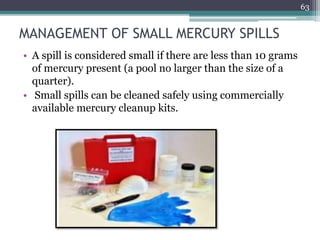
MANAGEMENT OF SMALL MERCURY SPILLS
• A spill is considered small if there are less than 10 grams
of mercury present (a pool no larger than the size of a
quarter).
• Small spills can be cleaned safely using commercially
available mercury cleanup kits.
63
MANAGEMENT OF LARGE MERCURY SPILLS
• A mercury spill is considered large if there are more than
10 g of mercury present (a pool larger than the size of a
quarter).
• Cleanup of large mercury spills requires the use of an
experienced environmental contractor who specializes in
toxic spill cleanup.
64
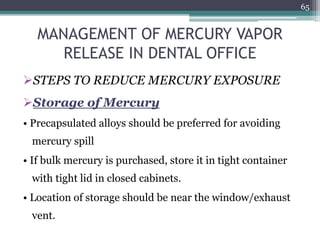
MANAGEMENT OF MERCURY VAPOR
RELEASE IN DENTAL OFFICE
STEPS TO REDUCE MERCURY EXPOSURE
Storage of Mercury
• Precapsulated alloys should be preferred for avoiding
mercury spill
• If bulk mercury is purchased, store it in tight container
with tight lid in closed cabinets.
• Location of storage should be near the window/exhaust
vent.
65
66
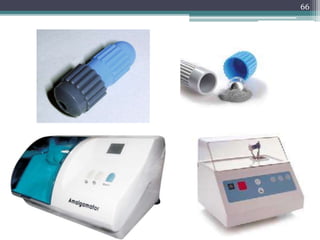
Trituration of Amalgam
• Use precapsulated alloy in amalgamator
• Avoid manual mixing
• High vibrations during mixing can create aerosols of
liquid droplets and these vapors may extend up to 6-12 ft
from the amalgamator. So, to minimize the risk, small
covers are used over the amalgamator to contain the
aerosol in that area
• Air flow should be reasonably high in dental office to
minimize air contamination
67
Designing of Office
• Office should be designed so as to reduce mercury
contamination.
• Following points are to be kept in mind while
designing:
• Proper ventilation of the dental office
• Avoid carpeting/floor coverings in dental office as there
is no way of removing mercury from the carpet.
68
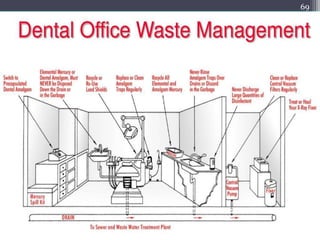
69
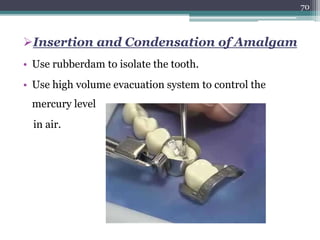
Insertion and Condensation of Amalgam
• Use rubberdam to isolate the tooth.
• Use high volume evacuation system to control the
mercury level
in air.
70
Polishing of Amalgam
• The mercury is tightly bound when amalgam is set.
Polishing should be done with coolant to decrease heat
and vapors present in atmosphere.
Disposal of Scrap Amalgam
• Scrap amalgam during insertion and condensation
should be carefully collected and stored under water,
glycerin or spent X-ray fixer solution in tightly capped
jar.
71
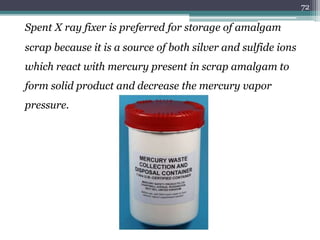
Spent X ray fixer is preferred for storage of amalgam
scrap because it is a source of both silver and sulfide ions
which react with mercury present in scrap amalgam to
form solid product and decrease the mercury vapor
pressure.
72
Disposal of Mercury Contaminated Waste
• Disposal of spent capsules, mercury contaminated cotton rolls
and paper napkins should be done properly. These items
should be disposed in tightly closed plastic container/plastic
bag which can be placed into sanitary landfill for disposal.
Removal of Old Amalgam Restorations
• Rubberdam and high volume evacuator should be used to
decrease mercury vapor.
• Watercooling should also be used as high rotary instruments
used without water, increase the temperature of filling and
increase the mercury vapors in that area.
73
Cleaning of Mercury Contaminated
Instruments
• Clean the mercury contaminated instrument used during
insertion, finishing and polishing and during removal of
restoration as amalgam material left on the instrument
surface, heated during sterilization can release mercury
vapor in atmosphere.
• Isolation of the area along with proper ventilation of
sterilization area is preferred.
74
Monitoring of Mercury Vapors
• The accepted threshold limit for exposure to mercury
vapor for a 40-hour work per week is 50 μg/m3 (given
by OSHA).
• Periodical monitoring of mercury vapor in dental office
should be done and carefully recorded.
75
SAFE MERCURY AMALGAM REMOVAL
TECHNIQUE (SMART)
• Recommendations given by the International Academy of Oral
Medicine and Toxicology (IAOMT):
• An amalgam separator should be properly installed, utilized
and maintained to collect mercury amalgam waste
• Protective gowns and covers
• Face shields and hair/head coverings
• Proper handling, cleaning and/or disposal of mercury
contaminated components, equipment, surfaces of the room
and flooring in the dental office.
76
MERCURY PHASE OUT
• There is a global effort spearheaded by the United Nations
Environment Programme (UNEP) to reduce mercury
usage.
77
• By the end of 2011, United Nations Environment
Program (UNEP)’s Intergovernmental Negotiating
Committee formalized a global, legally-binding treaty
named “Minamata Convention on Mercury” to protect
human health and environment from the adverse effects
of mercury.
• Thus a proposal for “phase -down” of dental amalgam
was supported.
78
• In 2012, United Nations adopted a legislation at the
Minamata Convention against mercury pollution.
• The legislation will phase out the use of mercury in
dental amalgam by 2030.
• The treaty has now been signed by over 128 countries.
79
CONCLUSION
80
• In spite of several predictions dental amalgams are
still safe and effective as direct restorative
materials .
• For almost a century now,the mercury contained in
dental amalgam has been the cause of much
controversy.
• Meticulous mercury hygiene measures and
mercury-contaminated waste disposal protocol
should be an integrated part of the operation of
every dental office.
REFERENCES
• Phillips' Science Of Dental Materials- 12th
Edition
• Sturdevant’s Art And Science Of Operative
Dentistry -6th , 7th Edition
• Craig RG. Restorative Dental Materials. 13TH
Edition
• Summitt’s Fundamentals Of Operative Dentistry
– 4th Edition
81
• Jain Rimjhim,Singh Santosh Kumar, Advani Uma, Kohli
Saurabh, Sharma Neha. Mercury toxicity and its
management. Int.Res J. Pharm 2013;4(8):38-41.
• Rathore M, Singh A, Pant VA. The dental amalgam toxicity
fear: A myth or actuality. Toxicol Int 2012;19:81-8.
• Spencer AJ.Dental Amalgam and mercury in dentistry.
Australian Dental Journal 2000;45:(4):224-234.
• Chin G, Chong J, Kluczewska A, Lau A, Gorjy S, Tennant
M. The environmental effects of dental amalgam.
Australian Dental Journal 2000;45:(4):246-249.
82
• ADA Council On Scientific Affairs. JADA, Vol. 134,
Issue.11November 2003:1498-99.
• A Review of the ADA Mercury Hygiene
Recommendations.Dentistry Today :January 2003.
83
THANK YOU
84

Mercury hygeine

  • 1.
    MERCURY HYGIENE PRESENTED BY: DR NADEEM AASHIQ MDS 2nd YEAR
  • 2.
    CONTENTS • Introduction • Propertiesof mercury • Forms of Mercury • Sources of mercury • Mercury levels/ Concentration of mercury • Mercury exposure in dentistry • Mercury toxicity • Mercury allergy • Treatment • Mercury hygiene • Mercury phase out • Conclusion 2
  • 3.
    INTRODUCTION • “Mercury” –derived from the Greek word “hydrargyro” (hydra- water and argyros-silver) • It is a metal that is liquid at room temperature. • It is the 80th element in the periodic table. • Its symbol is Hg. 3
  • 4.
    PROPERTIES • Silver whitemetal with a mirror like surface • Density: 14.1 g/cm³ • Atomic weight: 200.6 • Specific gravity: 13.55 • Melting point: 38.83˚C • Boiling point: 356.73 ˚C • Thermal conductivity: 8.3W/m/K • ADA Specification No. : 6 4
  • 5.
    • Low heatof vaporization allows oxide free metallic Hg to evaporate easily at room temperature • Hg is used along with silver alloy for the restoration of carious tooth structure. • Dental amalgam has been used for over 150 years for the treatment of dental cavities & is still used, in particular in large cavities due to its excellent mechanical properties & durability. • Dental amalgam is a combination of alloy particles & mercury that contains about 50% of mercury in the elemental form 1 MAHALAXMI 5
  • 6.
  • 7.
    ELEMENTAL MERCURY • Mostvolatile • Exist in liquid/vapor form • Inhaled and absorbed into the lungs (80%) and GIT (0.01%) • Exposure can occur due to accidental spillage of mercury in dental office 7
  • 8.
    INORGANIC MERCURY • Normallymined as inorganic sulfide ore. • Least toxic of three forms • Main route of entry is through lungs (80%) • It form two series of compounds Mercuric: soluble and more toxic Mercurous: less soluble, thus, less active 8
  • 9.
    ORGANIC MERCURY • Mainlyin the form of Methyl and Ethyl mercury • Absorbed 90%- 95% in the gut • Biological half life: 1.5-3 months (methyl mercury) 1 week (ethyl mercury) • Sources: Drinking water and seafood. • These forms get into the food chain and are finally consumed by humans. • Toxic in nature. 9
  • 10.
    SOURCES OF MERCURY NATURAL Volcaniceruptions, fossil fuel Fish and other seafood ARTIFICIAL Fungicides and pesticides, Cosmetic products Medical waste incineration, Mercury latex paints, Laxatives, diuretics, Dental amalgam 10
  • 11.
    HISTORY OF DENTALAMALGAM 1 MAHALAXMI 11 First amalgam war • A complex battle ensued between dentists using traditional restorative techniques based on gold foil and those using amalgam. Second amalgam war • In 1920’s another series of challenges to amalgam were put forward when inferences were made that Hg was not tightly bound in amalgams. • 1924 - Alfred Stock ▫ German professor of chemistry ▫ became poisoned with mercury  25 years of laboratory research ▫ published papers on the dangers of mercury in dentistry
  • 12.
    1 MAHALAXMI 12 • Mid1950s,Minamata,Japan ➢Petrochemical plant dumped waste containing mercury into Minamata bay-consumed by fish & the fish eating population of the town ➢Mercury poisoning-nervous system affected ➢Symptoms:Ataxic gait,convulsions,numbness in mouth & limbs,constriction in the visual field & difficulty in speaking ➢Minamata disease • In 1980’s Dr.Hal Huggins publicly condemned amalgam. Dr.huggins was convinced that Hg released from amalgam was responsible for a plethora of human diseases affecting the cardiovascular and nervous systems.
  • 13.
    1 MAHALAXMI 13 Third amalgamwar • It was not until 1981 that this mercury issue was reopened. Thus began the Third Amalgam War. This time, Sweden was at the forefront of the battle. • A brilliant neurobiologist, Mats Hansen, at the Institute of Zoo physiology at the University in Lind, Sweden, sent a letter to the National Board of Health of Sweden demanding an unprejudiced evaluation of the hazards of dental amalgam. • Due to Hansen and others' efforts, Sweden banned the use of amalgams in pregnant women in 1987. • Now the United States, Canada, and other European countries are all actively engaged in the Third Amalgam War. • Overall,the use of alternative materials such as composite resins,GIC,& ceramics,is increasing,either due to their aesthetic properties or alleged health concerns related to the use of dental amalgam
  • 14.
    MERCURY EXPOSURE INDENTAL CLINIC 1.PRIOR TO USE: • During storage of raw materials of dental amalgam 2.DURING USE: • During trituration, insertion, condensation 3.POST USAGE: • Amalgam scrap 14
  • 15.
    4.POST RESTORATION: • Finishingand polishing, • removal of old restoration 5. MERCURY SPILLS: • Anytime during usage. 15 MERCURY EXPOSURE IN DENTAL CLINIC
  • 16.
    1 MAHALAXMI 16 Sources ofHg hazards in dental clinics: 1.some Hg vapors released from stored materials.2.small losses from capsules during trituration.3.spillage during manipulations.4.some vapor exposure to dentist patient and assistant 5.contamination of cotton rolls 6.collection of debris via suction 7.collection of remnants in jar for recycling 8.Hg trapped in tiles and carpet fibers.
  • 17.
  • 18.
    HARMFUL EFFECTS OFMERCURY ALLERGY/HYPERSENSITIVITY TOXICITY 18
  • 19.
    MERCURY ALLERGY Allergic responsespresent an antigen-antibody reaction. 1. IMMEDIATE HYPERSENSITIVITY REACTION - Skin lesion more common than oral lesions - Urticarial rash on the face and limbs followed by dermatitis. 19
  • 20.
    OTHER SYMPTOMS: • Itching •Rashes • Sneezing • Difficulty in breathing • Swelling 20
  • 21.
    2.DELAYED HYPERSENSITIVITY • ContactDermatitis or Coomb’s Type IV hypersensitivity • Erosive lesion on the tongue or buccal mucosa adjacent to amalgam restorations • Causes eczematous reaction on skin and mucosa 21
  • 22.
    • A longterm response in the form of lichenoid reaction 22
  • 23.
    MERCURY TOXICITY • TOXICITY: Itis the relative ability of a material to cause injury to biological tissues, ranging from improper biochemical function, organ damage and cell destruction to death. 23
  • 24.
    Toxic effects ofmercury depend upon • Amount of exposure • Length of exposure • Length of mercury accumulation in body • Amount of mercury accumulated • Overall health of patient (detoxification) 24
  • 25.
  • 26.
    ACUTE MERCURY POISONING •It occurs when there is sudden exposure of high levels of mercury especially from elemental mercury or organic mercury. • It results in immediate and severe symptoms requiring urgent medical attention. 26
  • 27.
    Inhalation of mercury vaporcauses: • Chemical pneumonia • Pulmonary edema • Gingivostomatits • Increased salivation CNS symptoms like: • Ataxia • Restriction of field of vision • Delerium • Polyneuropathy 27
  • 28.
    INGESTION OF MERCURY Thesigns and symptoms start immediately after swallowing the mercury: • Metallic taste in mouth. • Feeling of constriction or choking of throat. • Hoarseness of voice. • Difficulty in breathing 28
  • 29.
    • Hot burningpain in mouth, stomach and abdomen. • Stools are blood stained , urine is suppressed and scanty, contain blood and albumin is accompanied by necrosis of renal tubules and damage to the glomeruli. • Pulse is quick small and irregular • Thrombocytopenia and bone marrow depression 29 INGESTION OF MERCURY
  • 30.
    CHRONIC MERCURY POISONING/ HYDRARGYRISM • Mercury exposure for a prolonged period • Workers may get poisoned due to vapors or dust. • The lowest level of total blood mercury at which the earliest nonspecific symptoms occur is 35 ng/ml. 30
  • 31.
    SIGNS AND SYMPTOMS •Excessive salivation with swollen and painful salivary glands. • Foul smelling breathing, inflamed and ulcerated gums with brownish blue line and loosening of teeth. • Mercura lentis: A brownish reflex from the anterior lens capsule of both the eyes is seen when observed in slit lamp in person exposed to mercury vapors for some years. It is bilateral and has no effect on the visual acuity 31
  • 32.
    ORAL CAVITY PROBLEMS •Inflammation of the mouth • Loss of bone around teeth • Ulcerated gums and other areas in the mouth • Darkening of gums • Taste of metal • Bleeding gums 32
  • 33.
    LEVELS OF HgTOXICITY At level of 4 μg: • This level is attributed as the upper limit in urine when extensive restoration of amalgam is present in patient’s mouth. At level 0 to 25 μg: • No known health hazards are detected. At level 25 to 100 μg: • Decreased response on tests done for brain conduction. Decreased response related to verbal skills. 33
  • 34.
    100 to 500μg: • Mild-to-moderate effects can be seen: – Irritability – Memory loss – Depression – Tremors – Nervous system disturbances. 500 to 1,000 μg: • Pronounced symptoms – Inflammation of kidney – Tremors and pronounced nervous system disturbances – Swollen gums. 34
  • 35.
    MERCURY POISONING • MINAMATADISEASE • PINK DISEASE • HUNTER -RUSSELL SYNDROME • ERETHISM 35
  • 36.
    MINAMATA DISEASE • Causedby the release of methyl mercury (organic form of mercury) • First reported in Minamata city, Japan, in 1956 • In 1952, a local chemical plant (Chisso Corporation) disposed of its methyl mercury waste into the nearby bay. • It contaminated the shellfish and causing harmful toxic levels of mercury of the fish eaten by the local population. 36
  • 37.
    SYMPTOMS • Ataxic gait •Convulsions • Numbness in mouth and lips • Constriction in visual field • Difficulty in speaking 37
  • 38.
    ACRODYNIA • A syndromeof chronic mercury poisoning • Mostly affecting the infants and young children Also known as: • Pink Disease • Erythroma polyneuritis • Swift Disease • Dermatopolyneuritis • Feer disease • Selter Disease • Erythroderma 38
  • 39.
    Clinical manifestations • Pinkhands and feet • Scarlet tip of nose and cheeks • Extreme irritability and restlessness alternating with periods of apathy • Insomnia • Anorexia • Pain in extremities • Profuse perspiration 39
  • 40.
    • Generalized skinrashes • Photophobia • Desquamation • Itching • Salivation • Loss of teeth • Hypotonia (Poor muscle tone) 40 Clinical manifestations
  • 41.
    HUNTER- RUSELL SYNDROME •A condition caused by methyl mercury poisoning • The term Hunter-Russell syndrome derives from a study of mercury poisoning among workers in a seed packing factory in England in the late 1930s who breathed methyl mercury that was being used as a seed disinfectant and preservative. 41
  • 42.
    Syndrome is characterizedby • paresthesia • visual field constriction • ataxia • impaired hearing • speech impairment 42
  • 43.
    ERETHISM (Mad hatter diseaseor mad hatter syndrome) • Erethism commonly characterized by behavioral changes such as irritability, low self-confidence, depression, apathy, shyness and timidity. • In some extreme cases delirium personality changes and memory loss occur. 43
  • 44.
    LABORATORY TESTS URINE TEST •Urine levels of mercury provide the most appropriate assessment of elemental mercury exposure and are useful for the assessment of acute and chronic exposures. • A urinary mercury concentration of less than 4 micrograms per liter (μg/L) would be considered within the background range 44
  • 45.
    BLOOD TEST • Bloodis primarily tested to detect the presence of methyl mercury. • Amount present will decrease by half about every 3 days as the mercury moves into organs such as the brain and kidneys. • Therefore, blood testing must be done within days of suspected exposure • Blood level greater than 10 mcg/L indicates an unusual level of exposure for someone who does not regularly work with mercury. 45
  • 46.
    ANALYZING HAIR • Hairanalysis primarily measures organic (methyl) mercury exposure only and is not useful for assessing recent exposures. • In cases of occupational exposure to mercury vapour, hair is an useful tool for monitoring external exposure 46
  • 47.
    METHODS TO DETECTMERCURY VAPOR RELEASE 1. Mercury thermometer 2. Jerome mercury vapours detectives 3. Gold film mercury vapour detectives 4. Twin cell photo acoustic mercury detector 5. Atomic absorption mercury detector 6. Scanning electron microscopy (SEM) and Energy dispensive X-ray analysis (EDXA) of sectiones teeth with amalgams 7. Perkins Elmer flow infection mercury system 47
  • 48.
    METHODS TO DETECTMERCURY VAPOR RELEASE GOLD FILM MERCURY VAPOUR DETECTIVES PHOTOIONIZATION DETECTOR 48
  • 49.
  • 50.
    DOSIMETER 50 METHODS TO DETECTMERCURY VAPOR RELEASE
  • 51.
    TREATMENT • Chelation therapyis the administration of chelating agents which bind mercury ions and facilitate their excretion through urine and feces. • A chelating agent could be given orally, I.M, I.V . • Only Dimercaptosuccinic acid (DMSA) is FDA approved for treating children with Hg toxicity • DMSA is the most frequently used for severe methylmercury poisoning. 51
  • 52.
    α-Lipoic acid (ALA) •If Kidneys show signs of damage peritoneal dialysis or hemodialysis may be necessary. • Treatment of shock and collapse are also required. • 5-10% sulphoxylate and 5% sodium bi carbonate is used for stomach wash. This is beneficial if given in the first half an hour. 52
  • 53.
    • If colitishas developed, high colonic lavage given with 1:1000 solution of sulphoxylate. • For diuresis 5-10% glucose is used in normal saline. 53 • Symptomatic patients who have experienced acute high- dose elemental mercury inhalation exposure should receive supportive care and be monitored for development of acute pneumonitis and pulmonary edema in a hospital setting.
  • 54.
    MERCURY HYGIENE RECOMMENDATIONS •ADA recommendations No. 109 (1) “Train all personnel involved in the handling of mercury or dental amalgam regarding the potential hazard of mercury vapor and the necessity of observing good hygiene practices.” 54
  • 55.
    (2) “Make personnelaware of the potential sources of mercury vapor in the operatory – that is, spills; open storage of used capsules; trituration of amalgam; placement, polishing or removal of amalgam; heating of amalgam-contaminated instruments; leaky capsules; and leaky bulk amalgam dispensers. Personnel also should be knowledgeable about the proper handling of amalgam waste and be aware of environmental issues. Some state dental societies have published waste management recommendations applicable to their state.” 55
  • 56.
    (3) “Work inwell-ventilated spaces, with fresh air exchanges and outside exhaust. If the spaces are air- conditioned, air-conditioning filters should be replaced periodically.” (4) “Periodically check the dental operatory atmosphere for mercury vapor…” 1 MAHALAXMI 56
  • 57.
    (5) “Use properwork area design to facilitate spill contamination and cleanup. Flooring covering should be nonabsorbent, seamless and easy to clean.” 57 Scrap amalgam on carpeted treatment- room floor (bur shown for scale). Over time, scrap and waste amalgam becomes imbedded in the carpet and breaks into smaller and smaller particles. Carpet scuffed by foot traffic or wheels on an operatory stool releases mercury vapor into the breathing zone of dental personnel. Vacuuming brings mercury vapor into the breathing zone of cleaning staff. Treatment room flooring of tile and grout. Debris collects on rough surfaced grout, including waste and scrap amalgam
  • 58.
    (6) “Use onlyprecapsulated alloys; discontinue the use of bulk mercury and bulk alloy.” (7) “Use an amalgamator with a completely enclosed arm.” 58 Protective safety cover of amalgamator has been completely removed. If encapsulated amalgam is improperly seated in amalgamator arms, the contents can be dispersed in an airborne fashion throughout the facility.
  • 59.
    (8) “Use carein handling amalgam. Avoid skin contact with mercury or freshly mixed amalgam.” 59 . Clinician with protective eye wear, protective clothing, and surgical facemask. Facemask must secure to facial contours including facial hair. No standard mask will filter mercury vapor or amalgam particulates smaller than 10 µm. Filtration protection varies for different masks.
  • 60.
    (9) “If possible,recap single-use capsules from precapsulated alloy after use. Properly dispose of them according to applicable waste disposal laws.” (10) “Use high-volume evacuation when finishing or removing amalgam. Evacuation systems should have traps or filters…” (11) “Salvage and store all scrap amalgam (that is, noncontact amalgam remaining after a procedure) in a tightly closed container, either dry or under radiographic fixer solution…” 60
  • 61.
    (12) “Where feasible,recycle amalgam scrap and waste amalgam. Otherwise, dispose of amalgam scrap and waste amalgam in accordance with applicable laws…” (13) “Dispose of mercury-contaminated items in sealed bags according to applicable regulations…” (14) “Clean up spilled mercury properly using trap bottles, tapes or freshly mixed amalgam to pick up droplets, or use commercial cleanup kits. Do not use a household vacuum cleaner.” (15) “Remove professional clothing before leaving the workplace.” 61
  • 62.
    MANAGEMENT OF MERCURYSPILLS • Never use a vacuum cleaner of any type to clean up the mercury. • Never use household cleaning products to clean up the spill, particularly those containing ammonia or chlorine. • Never pour mercury, or allow it to go, down the drain. • Never use a broom or a paintbrush to clean up the mercury. • Never allow people whose shoes may be contaminated with mercury to walk around or leave the spill area until the mercury-contaminated items have been removed. 62
  • 63.
    MANAGEMENT OF SMALLMERCURY SPILLS • A spill is considered small if there are less than 10 grams of mercury present (a pool no larger than the size of a quarter). • Small spills can be cleaned safely using commercially available mercury cleanup kits. 63
  • 64.
    MANAGEMENT OF LARGEMERCURY SPILLS • A mercury spill is considered large if there are more than 10 g of mercury present (a pool larger than the size of a quarter). • Cleanup of large mercury spills requires the use of an experienced environmental contractor who specializes in toxic spill cleanup. 64
  • 65.
    MANAGEMENT OF MERCURYVAPOR RELEASE IN DENTAL OFFICE STEPS TO REDUCE MERCURY EXPOSURE Storage of Mercury • Precapsulated alloys should be preferred for avoiding mercury spill • If bulk mercury is purchased, store it in tight container with tight lid in closed cabinets. • Location of storage should be near the window/exhaust vent. 65
  • 66.
  • 67.
    Trituration of Amalgam •Use precapsulated alloy in amalgamator • Avoid manual mixing • High vibrations during mixing can create aerosols of liquid droplets and these vapors may extend up to 6-12 ft from the amalgamator. So, to minimize the risk, small covers are used over the amalgamator to contain the aerosol in that area • Air flow should be reasonably high in dental office to minimize air contamination 67
  • 68.
    Designing of Office •Office should be designed so as to reduce mercury contamination. • Following points are to be kept in mind while designing: • Proper ventilation of the dental office • Avoid carpeting/floor coverings in dental office as there is no way of removing mercury from the carpet. 68
  • 69.
  • 70.
    Insertion and Condensationof Amalgam • Use rubberdam to isolate the tooth. • Use high volume evacuation system to control the mercury level in air. 70
  • 71.
    Polishing of Amalgam •The mercury is tightly bound when amalgam is set. Polishing should be done with coolant to decrease heat and vapors present in atmosphere. Disposal of Scrap Amalgam • Scrap amalgam during insertion and condensation should be carefully collected and stored under water, glycerin or spent X-ray fixer solution in tightly capped jar. 71
  • 72.
    Spent X rayfixer is preferred for storage of amalgam scrap because it is a source of both silver and sulfide ions which react with mercury present in scrap amalgam to form solid product and decrease the mercury vapor pressure. 72
  • 73.
    Disposal of MercuryContaminated Waste • Disposal of spent capsules, mercury contaminated cotton rolls and paper napkins should be done properly. These items should be disposed in tightly closed plastic container/plastic bag which can be placed into sanitary landfill for disposal. Removal of Old Amalgam Restorations • Rubberdam and high volume evacuator should be used to decrease mercury vapor. • Watercooling should also be used as high rotary instruments used without water, increase the temperature of filling and increase the mercury vapors in that area. 73
  • 74.
    Cleaning of MercuryContaminated Instruments • Clean the mercury contaminated instrument used during insertion, finishing and polishing and during removal of restoration as amalgam material left on the instrument surface, heated during sterilization can release mercury vapor in atmosphere. • Isolation of the area along with proper ventilation of sterilization area is preferred. 74
  • 75.
    Monitoring of MercuryVapors • The accepted threshold limit for exposure to mercury vapor for a 40-hour work per week is 50 μg/m3 (given by OSHA). • Periodical monitoring of mercury vapor in dental office should be done and carefully recorded. 75
  • 76.
    SAFE MERCURY AMALGAMREMOVAL TECHNIQUE (SMART) • Recommendations given by the International Academy of Oral Medicine and Toxicology (IAOMT): • An amalgam separator should be properly installed, utilized and maintained to collect mercury amalgam waste • Protective gowns and covers • Face shields and hair/head coverings • Proper handling, cleaning and/or disposal of mercury contaminated components, equipment, surfaces of the room and flooring in the dental office. 76
  • 77.
    MERCURY PHASE OUT •There is a global effort spearheaded by the United Nations Environment Programme (UNEP) to reduce mercury usage. 77
  • 78.
    • By theend of 2011, United Nations Environment Program (UNEP)’s Intergovernmental Negotiating Committee formalized a global, legally-binding treaty named “Minamata Convention on Mercury” to protect human health and environment from the adverse effects of mercury. • Thus a proposal for “phase -down” of dental amalgam was supported. 78
  • 79.
    • In 2012,United Nations adopted a legislation at the Minamata Convention against mercury pollution. • The legislation will phase out the use of mercury in dental amalgam by 2030. • The treaty has now been signed by over 128 countries. 79
  • 80.
    CONCLUSION 80 • In spiteof several predictions dental amalgams are still safe and effective as direct restorative materials . • For almost a century now,the mercury contained in dental amalgam has been the cause of much controversy. • Meticulous mercury hygiene measures and mercury-contaminated waste disposal protocol should be an integrated part of the operation of every dental office.
  • 81.
    REFERENCES • Phillips' ScienceOf Dental Materials- 12th Edition • Sturdevant’s Art And Science Of Operative Dentistry -6th , 7th Edition • Craig RG. Restorative Dental Materials. 13TH Edition • Summitt’s Fundamentals Of Operative Dentistry – 4th Edition 81
  • 82.
    • Jain Rimjhim,SinghSantosh Kumar, Advani Uma, Kohli Saurabh, Sharma Neha. Mercury toxicity and its management. Int.Res J. Pharm 2013;4(8):38-41. • Rathore M, Singh A, Pant VA. The dental amalgam toxicity fear: A myth or actuality. Toxicol Int 2012;19:81-8. • Spencer AJ.Dental Amalgam and mercury in dentistry. Australian Dental Journal 2000;45:(4):224-234. • Chin G, Chong J, Kluczewska A, Lau A, Gorjy S, Tennant M. The environmental effects of dental amalgam. Australian Dental Journal 2000;45:(4):246-249. 82
  • 83.
    • ADA CouncilOn Scientific Affairs. JADA, Vol. 134, Issue.11November 2003:1498-99. • A Review of the ADA Mercury Hygiene Recommendations.Dentistry Today :January 2003. 83
  • 84.