DEPARTMENTOF PHARMACEUTICAL
MICROBIOLOGY
MEASLES
GROUP 7
GROUP MEMBERS
S/N NAMES MATRIC NO
1. Bankole Olukemi M. 170482
2. Ubogwu Joshua *179018
3. Adebisi Yusuff Adebayo 185416
4. Adeoye Adejuwon 185425
5. Babalola Khadeejah A. 185446
6. Fakeye Mojola 185460
7. Jacobs Tolulope 185464
8. Lawal Sodiq 185470
9. Olatunji Adebowale 185487
10. Rufai Basirat O. 185503
INTRODUCTION
 The disease is also known as RUBEOLA.
 The virus is known to infect only humans, especially young children below the
age of 2 years in developing countries.
 Measles occurs worldwide and is still a significant cause of childhood
morbidity and mortality despite the availability of vaccines.
EPIDEMIOLOGY
 Major epidemics occur every 2-3 years.
 Measles causes an average of 2.6 million deaths each year.
 89780 measles mortalities were recorded in 2016.
 After the introduction of measles vaccine, an appreciable drop of 84% in the
mortality rate worldwide was recorded.
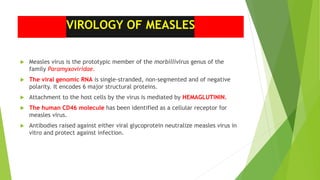
VIROLOGY OF MEASLES
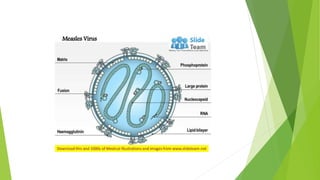
 Measles virus is the prototypic member of the morbillivirus genus of the
family Paramyxoviridae.
 The viral genomic RNA is single-stranded, non-segmented and of negative
polarity. It encodes 6 major structural proteins.
 Attachment to the host cells by the virus is mediated by HEMAGLUTININ.
 The human CD46 molecule has been identified as a cellular receptor for
measles virus.
 Antibodies raised against either viral glycoprotein neutralize measles virus in
vitro and protect against infection.
PATHOPHYSIOLOGY
 The virus is transmitted via respiratory droplets which remain contagious up
to two hours after release.
 Measles infection in Nigeria is promoted by heat.
 Initial infection and replication occurs 2-4 days after release.
 Immunosuppression may predispose individuals to secondary opportunistic
infections, particularly bronchopneumonia.
 Measles virus causes a progressive and often fatal giant cell pneumonia.
 After replication, the virus infects local lymphatic tissues where they are
amplified in population.
 The virus causes a delayed type hypersensitivity interleukin-12 production.
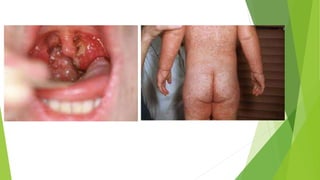
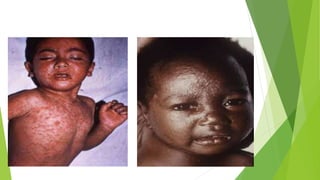
SYMPTOMS
 These do not appear until 10-14 days after exposure.
 Symptoms include the following: cough; runny nose; sneezing; inflamed
eyes, sore throat; fever; red botchy skin rash; malaise; fatigue; loss of
appetite; and head ache.
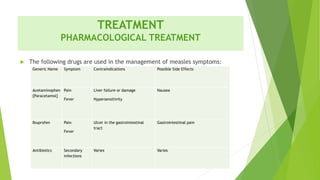
TREATMENT
PHARMACOLOGICAL TREATMENT
 The following drugs are used in the management of measles symptoms:
Generic Name Symptom Contraindications Possible Side Effects
Acetaminophen
{Paracetamol}
Pain
Fever
Liver failure or damage
Hypersensitivity
Nausea
Ibuprofen Pain
Fever
Ulcer in the gastrointestinal
tract
Gastrointestinal pain
Antibiotics Secondary
infections
Varies Varies
HOME REMEDIES THAT ASSIST
 Bed rest
 Drinking a lot of water
 Turmeric
 Garlic
 Lemon juice
 Orange juice
 Coconut flesh and water
 Eggplant
 Butter
 Food rich in vitamin A (e.g. carrot,
PREVENTION OF MEASLES
 Measles vaccine
This is given in doses, the first one is given between 12-25 months after
delivery and the second, 4-6 years after delivery.
 Human immunoglobulin.
 Vitamin A.
 Ribavirin
COMPLICATIONS
 Miscarriage and premature delivery.
 Febrile seizure.
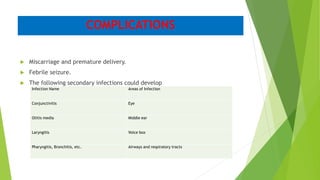
 The following secondary infections could develop
Infection Name Areas of Infection
Conjunctivitis Eye
Otitis media Middle ear
Laryngitis Voice box
Pharyngitis, Bronchitis, etc. Airways and respiratory tracts
REFERENCES
 Emedine.medscape.com
 McLean HQ, Fiebelkorn AP, Temte JL, et al; Centers for Disease Control and
Prevention of measles, rubella, congenital rubella syndrome, and mumps,
2013: summary recommendations of the Advisory Committee on Immunization
Practices (ACIP). MMWR Recomm Rep. 2013; 62:1-34
 Demicheli V, Rivetti A, Debalini MG, et al. Vaccines for measles, mumps and
rubella in children.
 Cochrane Database Syst Rev. 2012; (2): CD004407.
Measles

Measles

  • 1.
  • 2.
    GROUP MEMBERS S/N NAMESMATRIC NO 1. Bankole Olukemi M. 170482 2. Ubogwu Joshua *179018 3. Adebisi Yusuff Adebayo 185416 4. Adeoye Adejuwon 185425 5. Babalola Khadeejah A. 185446 6. Fakeye Mojola 185460 7. Jacobs Tolulope 185464 8. Lawal Sodiq 185470 9. Olatunji Adebowale 185487 10. Rufai Basirat O. 185503
  • 3.
    INTRODUCTION  The diseaseis also known as RUBEOLA.  The virus is known to infect only humans, especially young children below the age of 2 years in developing countries.  Measles occurs worldwide and is still a significant cause of childhood morbidity and mortality despite the availability of vaccines.
  • 4.
    EPIDEMIOLOGY  Major epidemicsoccur every 2-3 years.  Measles causes an average of 2.6 million deaths each year.  89780 measles mortalities were recorded in 2016.  After the introduction of measles vaccine, an appreciable drop of 84% in the mortality rate worldwide was recorded.
  • 5.
    VIROLOGY OF MEASLES Measles virus is the prototypic member of the morbillivirus genus of the family Paramyxoviridae.  The viral genomic RNA is single-stranded, non-segmented and of negative polarity. It encodes 6 major structural proteins.  Attachment to the host cells by the virus is mediated by HEMAGLUTININ.  The human CD46 molecule has been identified as a cellular receptor for measles virus.  Antibodies raised against either viral glycoprotein neutralize measles virus in vitro and protect against infection.
  • 7.
    PATHOPHYSIOLOGY  The virusis transmitted via respiratory droplets which remain contagious up to two hours after release.  Measles infection in Nigeria is promoted by heat.  Initial infection and replication occurs 2-4 days after release.  Immunosuppression may predispose individuals to secondary opportunistic infections, particularly bronchopneumonia.  Measles virus causes a progressive and often fatal giant cell pneumonia.  After replication, the virus infects local lymphatic tissues where they are amplified in population.  The virus causes a delayed type hypersensitivity interleukin-12 production.
  • 8.
    SYMPTOMS  These donot appear until 10-14 days after exposure.  Symptoms include the following: cough; runny nose; sneezing; inflamed eyes, sore throat; fever; red botchy skin rash; malaise; fatigue; loss of appetite; and head ache.
  • 11.
    TREATMENT PHARMACOLOGICAL TREATMENT  Thefollowing drugs are used in the management of measles symptoms: Generic Name Symptom Contraindications Possible Side Effects Acetaminophen {Paracetamol} Pain Fever Liver failure or damage Hypersensitivity Nausea Ibuprofen Pain Fever Ulcer in the gastrointestinal tract Gastrointestinal pain Antibiotics Secondary infections Varies Varies
  • 12.
    HOME REMEDIES THATASSIST  Bed rest  Drinking a lot of water  Turmeric  Garlic  Lemon juice  Orange juice  Coconut flesh and water  Eggplant  Butter  Food rich in vitamin A (e.g. carrot,
  • 13.
    PREVENTION OF MEASLES Measles vaccine This is given in doses, the first one is given between 12-25 months after delivery and the second, 4-6 years after delivery.  Human immunoglobulin.  Vitamin A.  Ribavirin
  • 14.
    COMPLICATIONS  Miscarriage andpremature delivery.  Febrile seizure.  The following secondary infections could develop Infection Name Areas of Infection Conjunctivitis Eye Otitis media Middle ear Laryngitis Voice box Pharyngitis, Bronchitis, etc. Airways and respiratory tracts
  • 15.
    REFERENCES  Emedine.medscape.com  McLeanHQ, Fiebelkorn AP, Temte JL, et al; Centers for Disease Control and Prevention of measles, rubella, congenital rubella syndrome, and mumps, 2013: summary recommendations of the Advisory Committee on Immunization Practices (ACIP). MMWR Recomm Rep. 2013; 62:1-34  Demicheli V, Rivetti A, Debalini MG, et al. Vaccines for measles, mumps and rubella in children.  Cochrane Database Syst Rev. 2012; (2): CD004407.