Meningitis
Definition
• Inflammation of meninges (membrane surrounding the brain and
spinal cord)
• Pachymeningitis : inflammation of dura
• Leptomeningitis : inflammation of arachnoid
• Common in children less than 4 years old
• Peak 3-8 months old
• Incidence of encephalitis related to vaccination in childhood
Etiology
• Neonates
• GBS,E.Coli,Staph. Aureus,Listeria Monocytogenes,Group A Streptococcus
• Infants
• GBS,E.Coli,Listeria Monocytogenes
• Children
• Neisseria Meningitides,Strep. Pneumonia,Haemophilus Influenza,Myco. TB,
Staph. Aureus
• School age children
• Neisseria Menigitides,Strep. Pneumonia
Pathogenesis
1. Nasopharynx > haematogenous > cross BBB > subarachnoid space
2. Direct through the skull from infected loci (parasinus/middle ear/
PNS/nose > meninges)
3. Direct spread following skull fractur
4. Direct inoculation into CSF
• Meningomyelocele
• Neurosurgical procedure
Clinical Features
• Neonatal : vague and non specific
• Fever
• Refuse to feed + vomit
• Irritable + drowsiness
• Irregular respirations
• Neck stiffness > rare and late findings
• Tense + bulging fontanelle > late course of illness
Clinical Features
• Infant
• Fever + vomiting
• Marked irritability + convulsion + somnolence
• Tense + bulging fontanelle > late course of illness
Clinical Features
• Children
• Fever + chills
• Headache + photophobia + vomiting
• Stiff neck + lethargy
• Convulsion + delirium + drowsiness + irritability
Physical Examination
• General
• GCS
• Level of consciousness
• Vital signs
• Febrile
• Shock
• Hypertension
• Bradycardia/apnea
• Head
• Bulging and tense fontanelles
• Eye
• papilledema
• Skin
• Purpuric rash (meningococcal rash)
• Brudzinki's : Knee automatically brought up toward body when neck is bent forward or
pain in the legs when bent
• Kernig's : Inability to straighten a child's knee after hip flexion 90 degree
• Focal neurological sign
Differential diagnosis
• Intracranial infection
• Brain abscess
• Cerebral malaria
• Metabolic disorder
• Acid-base disorder
• Inherited metabolic disease (urea cycle disorder and lactic acidosis)
• Seizure disorder
• Status epilepticus
• Hemiconvulsion-hemiplegia syndrome
• Increase ICP
• Tumor
• Hematoma
• Acute hydrocephalus
• Lead poisoning
• Subarachnoid haemorrhage
Investigations
• Full blood count
• BUSE
• Blood C&S
• Urine C&S
• RBS
• LP
• Imaging
• CT brain
• MRI
• Throat swab
• Rapid antigen test in body fluid
• CSR and Mantoux test
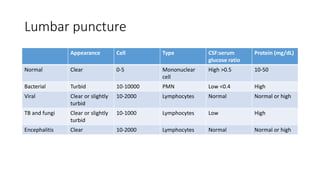
Lumbar puncture
Appearance Cell Type CSF:serum
glucose ratio
Protein (mg/dL)
Normal Clear 0-5 Mononuclear
cell
High >0.5 10-50
Bacterial Turbid 10-10000 PMN Low <0.4 High
Viral Clear or slightly
turbid
10-2000 Lymphocytes Normal Normal or high
TB and fungi Clear or slightly
turbid
10-1000 Lymphocytes Low High
Encephalitis Clear 10-2000 Lymphocytes Normal Normal or high
Management
• Supportive
1. Vital sign monitoring 4 hourly
2. Input and output chart
3. KNBM in unconscious
4. Fluid therapy : maintenance fluid
• If SiADH occur : reduce to 2/3 maintenance for initial 24h,may need more fluid if
dehydrated
5. Daily head circumference
6. Daily CNS assessment
7. Observe 24h after stopping therapy > no complications,discharged
Management
• General
1. Increase ICP : rapid administration of IV mannitol
2. Seizures : anticonvulsant drugs (IV diazepam in acute phase)
• Anti-microbial therapy
• 0-1 months : C.Penicillin + Cefotaxime for 3 weeks
• 1-3 months : C.Penicillin + Cefotaxime for 3 weeks
• >3 months : C.Penicillin + Cefotaxime or Ceftriaxone
• HiB : 10 days
• S.Pneumonia : 2 weeks
• N.Meningitides : 1 weeks
Management
• Steroid therapy
• Dexamethasone 0.15mg/kg 6hourly for 4 days or 4mg/kg 12hourly for 2 days
• Improve meningeal inflammation and reduce hearing impairment
• Tubercular meningitis
• Triple therapy : isoniazid + rifampicin + ethambutol ± pyrazinamide (excellent
penetration into CSF)
Follow-up
• Development of child
• Head circumference
• Occurrence of fit or behaviour abnormalities
• Assessment of vision,hearing and speech
Complications
• Meningococcemia – shock + DIVC
• Neurologic - hemi/quadriparesis,facial palsy or visual defects
• Seizures
• Subdural collection of fluid
• Arthritis(Hib)
• Buccal cellulitis
• Pericarditis
• Pneumonia
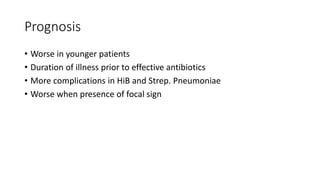
Prognosis
• Worse in younger patients
• Duration of illness prior to effective antibiotics
• More complications in HiB and Strep. Pneumoniae
• Worse when presence of focal sign
Prevention
• Immunization : N.Meningitis,Strep. Pneumonia,Hib
• Chemoprophylaxis : intrapartum ampiccilin for GBS,rifampicin for HiB
contact,azithromycin/ciprofloxacin for meningococcal carriage in
adult

Meningitis

  • 1.
  • 2.
    Definition • Inflammation ofmeninges (membrane surrounding the brain and spinal cord) • Pachymeningitis : inflammation of dura • Leptomeningitis : inflammation of arachnoid • Common in children less than 4 years old • Peak 3-8 months old • Incidence of encephalitis related to vaccination in childhood
  • 3.
    Etiology • Neonates • GBS,E.Coli,Staph.Aureus,Listeria Monocytogenes,Group A Streptococcus • Infants • GBS,E.Coli,Listeria Monocytogenes • Children • Neisseria Meningitides,Strep. Pneumonia,Haemophilus Influenza,Myco. TB, Staph. Aureus • School age children • Neisseria Menigitides,Strep. Pneumonia
  • 4.
    Pathogenesis 1. Nasopharynx >haematogenous > cross BBB > subarachnoid space 2. Direct through the skull from infected loci (parasinus/middle ear/ PNS/nose > meninges) 3. Direct spread following skull fractur 4. Direct inoculation into CSF • Meningomyelocele • Neurosurgical procedure
  • 5.
    Clinical Features • Neonatal: vague and non specific • Fever • Refuse to feed + vomit • Irritable + drowsiness • Irregular respirations • Neck stiffness > rare and late findings • Tense + bulging fontanelle > late course of illness
  • 6.
    Clinical Features • Infant •Fever + vomiting • Marked irritability + convulsion + somnolence • Tense + bulging fontanelle > late course of illness
  • 7.
    Clinical Features • Children •Fever + chills • Headache + photophobia + vomiting • Stiff neck + lethargy • Convulsion + delirium + drowsiness + irritability
  • 8.
    Physical Examination • General •GCS • Level of consciousness • Vital signs • Febrile • Shock • Hypertension • Bradycardia/apnea • Head • Bulging and tense fontanelles • Eye • papilledema • Skin • Purpuric rash (meningococcal rash) • Brudzinki's : Knee automatically brought up toward body when neck is bent forward or pain in the legs when bent • Kernig's : Inability to straighten a child's knee after hip flexion 90 degree • Focal neurological sign
  • 9.
    Differential diagnosis • Intracranialinfection • Brain abscess • Cerebral malaria • Metabolic disorder • Acid-base disorder • Inherited metabolic disease (urea cycle disorder and lactic acidosis) • Seizure disorder • Status epilepticus • Hemiconvulsion-hemiplegia syndrome • Increase ICP • Tumor • Hematoma • Acute hydrocephalus • Lead poisoning • Subarachnoid haemorrhage
  • 10.
    Investigations • Full bloodcount • BUSE • Blood C&S • Urine C&S • RBS • LP • Imaging • CT brain • MRI • Throat swab • Rapid antigen test in body fluid • CSR and Mantoux test
  • 11.
    Lumbar puncture Appearance CellType CSF:serum glucose ratio Protein (mg/dL) Normal Clear 0-5 Mononuclear cell High >0.5 10-50 Bacterial Turbid 10-10000 PMN Low <0.4 High Viral Clear or slightly turbid 10-2000 Lymphocytes Normal Normal or high TB and fungi Clear or slightly turbid 10-1000 Lymphocytes Low High Encephalitis Clear 10-2000 Lymphocytes Normal Normal or high
  • 12.
    Management • Supportive 1. Vitalsign monitoring 4 hourly 2. Input and output chart 3. KNBM in unconscious 4. Fluid therapy : maintenance fluid • If SiADH occur : reduce to 2/3 maintenance for initial 24h,may need more fluid if dehydrated 5. Daily head circumference 6. Daily CNS assessment 7. Observe 24h after stopping therapy > no complications,discharged
  • 13.
    Management • General 1. IncreaseICP : rapid administration of IV mannitol 2. Seizures : anticonvulsant drugs (IV diazepam in acute phase) • Anti-microbial therapy • 0-1 months : C.Penicillin + Cefotaxime for 3 weeks • 1-3 months : C.Penicillin + Cefotaxime for 3 weeks • >3 months : C.Penicillin + Cefotaxime or Ceftriaxone • HiB : 10 days • S.Pneumonia : 2 weeks • N.Meningitides : 1 weeks
  • 14.
    Management • Steroid therapy •Dexamethasone 0.15mg/kg 6hourly for 4 days or 4mg/kg 12hourly for 2 days • Improve meningeal inflammation and reduce hearing impairment • Tubercular meningitis • Triple therapy : isoniazid + rifampicin + ethambutol ± pyrazinamide (excellent penetration into CSF)
  • 15.
    Follow-up • Development ofchild • Head circumference • Occurrence of fit or behaviour abnormalities • Assessment of vision,hearing and speech
  • 16.
    Complications • Meningococcemia –shock + DIVC • Neurologic - hemi/quadriparesis,facial palsy or visual defects • Seizures • Subdural collection of fluid • Arthritis(Hib) • Buccal cellulitis • Pericarditis • Pneumonia
  • 17.
    Prognosis • Worse inyounger patients • Duration of illness prior to effective antibiotics • More complications in HiB and Strep. Pneumoniae • Worse when presence of focal sign
  • 18.
    Prevention • Immunization :N.Meningitis,Strep. Pneumonia,Hib • Chemoprophylaxis : intrapartum ampiccilin for GBS,rifampicin for HiB contact,azithromycin/ciprofloxacin for meningococcal carriage in adult

Editor's Notes

  • #13 If fever persists: Thrombophlebitis and intramuscular abscess Intercurrent infection : pneumonia,UTI or nosocomial infection Resistant organism Subdural effusion,empyema or brain abscee Antibiotic fever