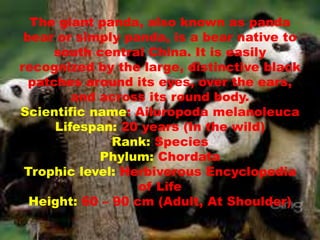
The giant panda, also known as panda
bear or simply panda, is a bear native to
south central China. It is easily
recognized by the large, distinctive black
patches around its eyes, over the ears,
and across its round body.
Scientific name: Ailuropoda melanoleuca
Lifespan: 20 years (In the wild)
Rank: Species
Phylum: Chordata
Trophic level: Herbivorous Encyclopedia
of Life
Height: 60 – 90 cm (Adult, At Shoulder)
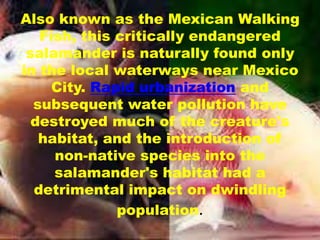
Also known as the Mexican Walking
Fish, this critically endangered
salamander is naturally found only
in the local waterways near Mexico
City. Rapid urbanization and
subsequent water pollution have
destroyed much of the creature's
habitat, and the introduction of
non-native species into the
salamander's habitat had a
detrimental impact on dwindling
population.
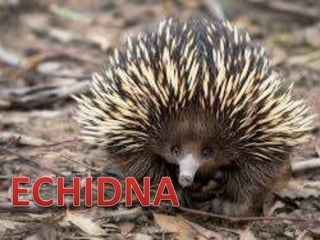
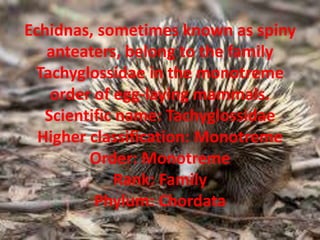
Echidnas, sometimes known as spiny
anteaters, belong to the family
Tachyglossidae in the monotreme
order of egg-laying mammals.
Scientific name: Tachyglossidae
Higher classification: Monotreme
Order: Monotreme
Rank: Family
Phylum: Chordata
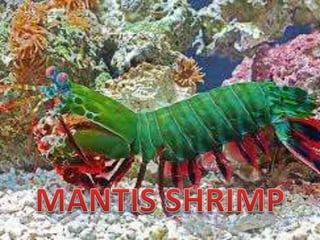
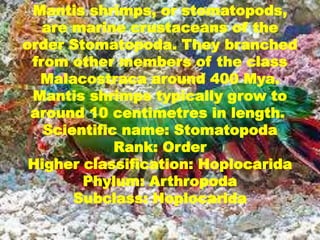
Mantis shrimps, or stomatopods,
are marine crustaceans of the
order Stomatopoda. They branched
from other members of the class
Malacostraca around 400 Mya.
Mantis shrimps typically grow to
around 10 centimetres in length.
Scientific name: Stomatopoda
Rank: Order
Higher classification: Hoplocarida
Phylum: Arthropoda
Subclass: Hoplocarida
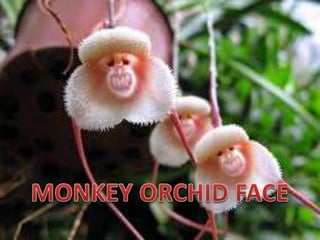
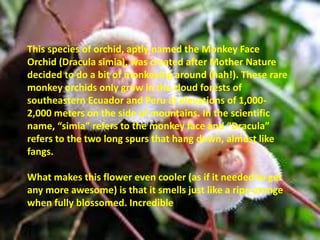
This species of orchid, aptly named the Monkey Face
Orchid (Dracula simia), was created after Mother Nature
decided to do a bit of monkeying around (hah!). These rare
monkey orchids only grow in the cloud forests of
southeastern Ecuador and Peru at elevations of 1,000-
2,000 meters on the side of mountains. In the scientific
name, “simia” refers to the monkey face and “Dracula”
refers to the two long spurs that hang down, almost like
fangs.
What makes this flower even cooler (as if it needed to get
any more awesome) is that it smells just like a ripe orange
when fully blossomed. Incredible!
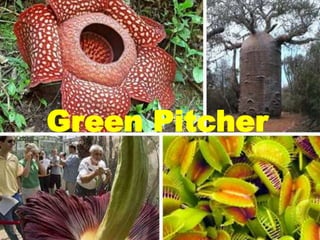
Green Pitcher
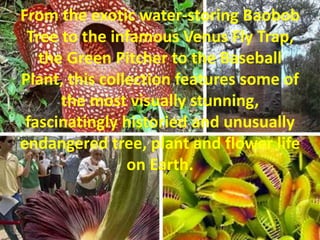
From the exotic water-storing Baobob
Tree to the infamous Venus Fly Trap,
the Green Pitcher to the Baseball
Plant, this collection features some of
the most visually stunning,
fascinatingly historied and unusually
endangered tree, plant and flower life
on Earth.
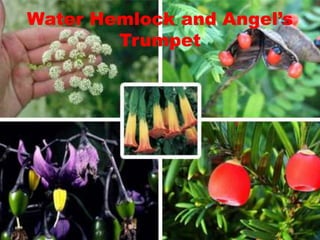
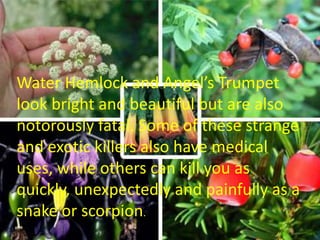
Water Hemlock and Angel’s
Trumpet
Water Hemlock and Angel’s Trumpet
look bright and beautiful but are also
notorously fatal. Some of these strange
and exotic killers also have medical
uses, while others can kill you as
quickly, unexpectedly and painfully as a
snake or scorpion.
REFERENCES/ SOURCES
http://webecoist.momtastic.com/2008/11/19/exotic-
endangered-plants-flowers-trees-
forests/#25by1smRv0qedz67.99
http://video.nationalgeographic.com/video/worlds-
deadliest/deadliest-mantis-shrim
https://www.gardeningknowhow.com/ornamental/fl
owers/monkey-flower/growing-monkey-flower-
plant.htm

Mendoza manliguez-feria

  • 3.
    The giant panda,also known as panda bear or simply panda, is a bear native to south central China. It is easily recognized by the large, distinctive black patches around its eyes, over the ears, and across its round body. Scientific name: Ailuropoda melanoleuca Lifespan: 20 years (In the wild) Rank: Species Phylum: Chordata Trophic level: Herbivorous Encyclopedia of Life Height: 60 – 90 cm (Adult, At Shoulder)
  • 5.
    Also known asthe Mexican Walking Fish, this critically endangered salamander is naturally found only in the local waterways near Mexico City. Rapid urbanization and subsequent water pollution have destroyed much of the creature's habitat, and the introduction of non-native species into the salamander's habitat had a detrimental impact on dwindling population.
  • 7.
    Echidnas, sometimes knownas spiny anteaters, belong to the family Tachyglossidae in the monotreme order of egg-laying mammals. Scientific name: Tachyglossidae Higher classification: Monotreme Order: Monotreme Rank: Family Phylum: Chordata
  • 9.
    Mantis shrimps, orstomatopods, are marine crustaceans of the order Stomatopoda. They branched from other members of the class Malacostraca around 400 Mya. Mantis shrimps typically grow to around 10 centimetres in length. Scientific name: Stomatopoda Rank: Order Higher classification: Hoplocarida Phylum: Arthropoda Subclass: Hoplocarida
  • 11.
    This species oforchid, aptly named the Monkey Face Orchid (Dracula simia), was created after Mother Nature decided to do a bit of monkeying around (hah!). These rare monkey orchids only grow in the cloud forests of southeastern Ecuador and Peru at elevations of 1,000- 2,000 meters on the side of mountains. In the scientific name, “simia” refers to the monkey face and “Dracula” refers to the two long spurs that hang down, almost like fangs. What makes this flower even cooler (as if it needed to get any more awesome) is that it smells just like a ripe orange when fully blossomed. Incredible!
  • 12.
  • 13.
    From the exoticwater-storing Baobob Tree to the infamous Venus Fly Trap, the Green Pitcher to the Baseball Plant, this collection features some of the most visually stunning, fascinatingly historied and unusually endangered tree, plant and flower life on Earth.
  • 14.
    Water Hemlock andAngel’s Trumpet
  • 15.
    Water Hemlock andAngel’s Trumpet look bright and beautiful but are also notorously fatal. Some of these strange and exotic killers also have medical uses, while others can kill you as quickly, unexpectedly and painfully as a snake or scorpion.
  • 16.