Based on these results, Mendel postulated the
3. Principle of Independent Assortment:
“Members of one gene pair segregate independently
from other gene pairs during gamete formation”
Genes get shuffled – these many combinations are one of
the advantages of sexual reproduction
There’s a correlation between the movement of
chromosomes in meiosis and the segregation of alleles that
occurs in meiosis
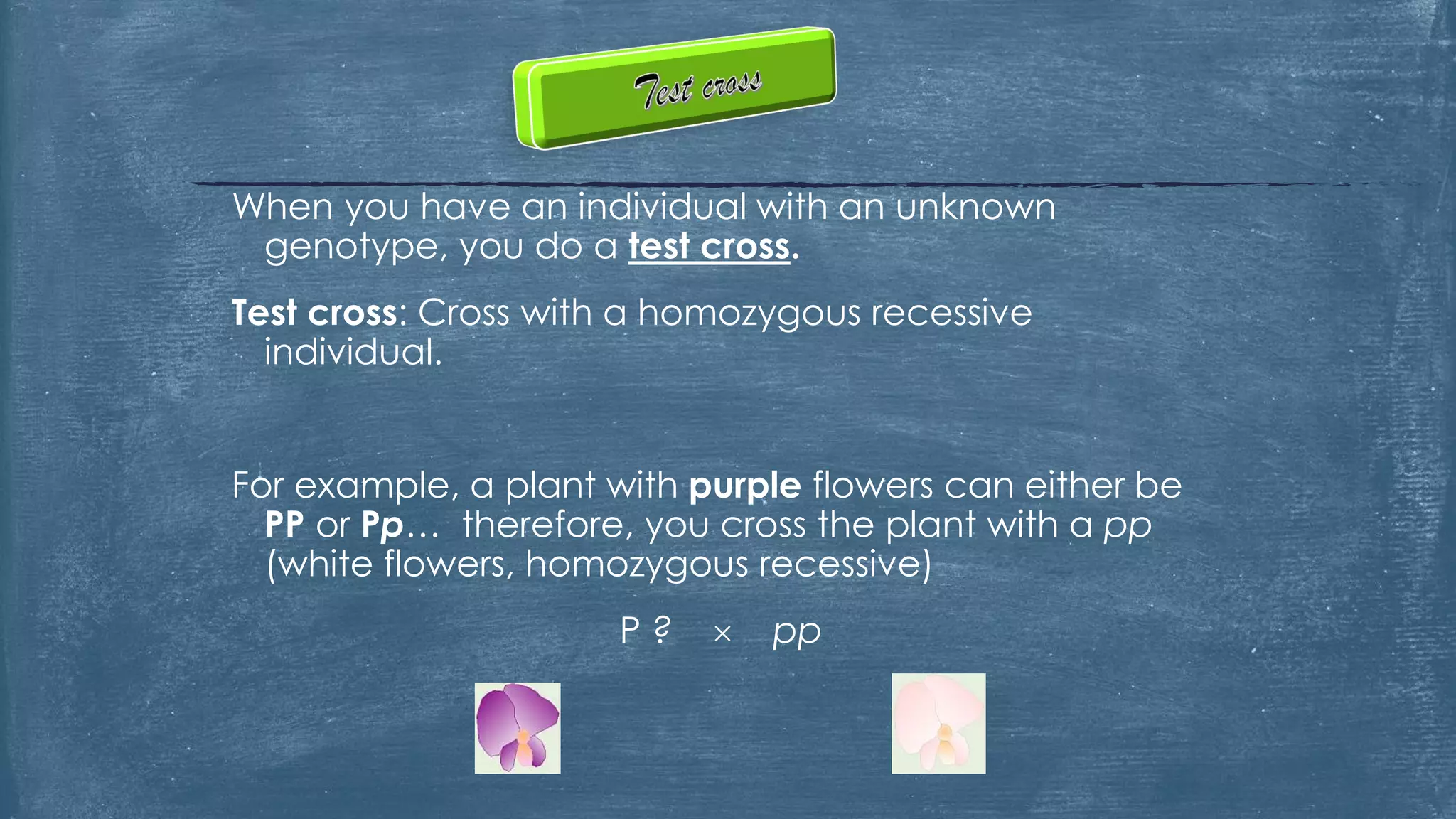
When you have an individual with an unknown
genotype, you do a test cross.
Test cross: Cross with a homozygous recessive
individual.
For example, a plant with purple flowers can either be
PP or Pp… therefore, you cross the plant with a pp
(white flowers, homozygous recessive)
P ?  pp
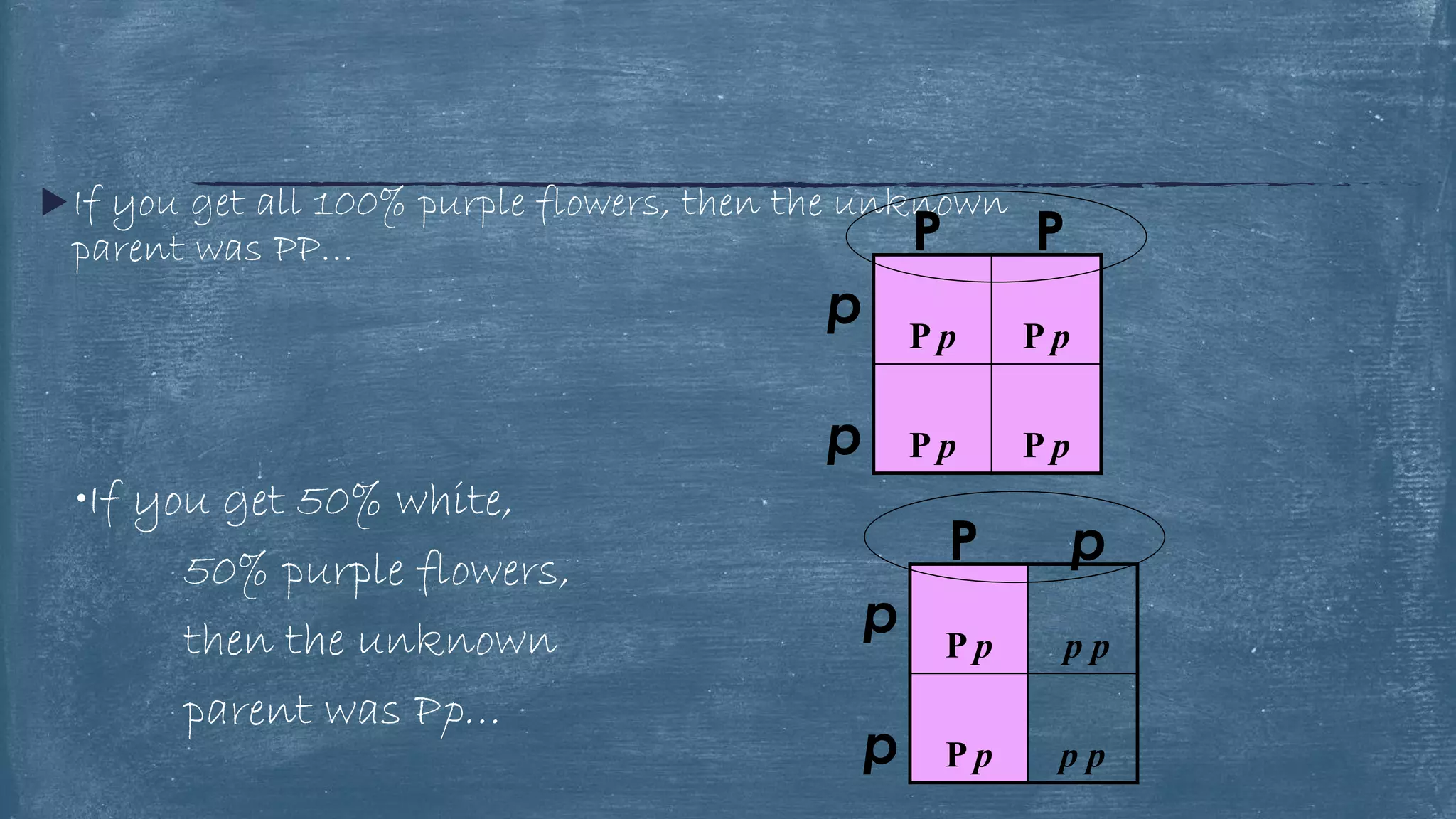
If you get all 100% purple flowers, then the unknown
parent was PP…
P p P p
P p P p
P P
p
p
P p p p
P p p p
P p
p
p
•If you get 50% white,
50% purple flowers,
then the unknown
parent was Pp…
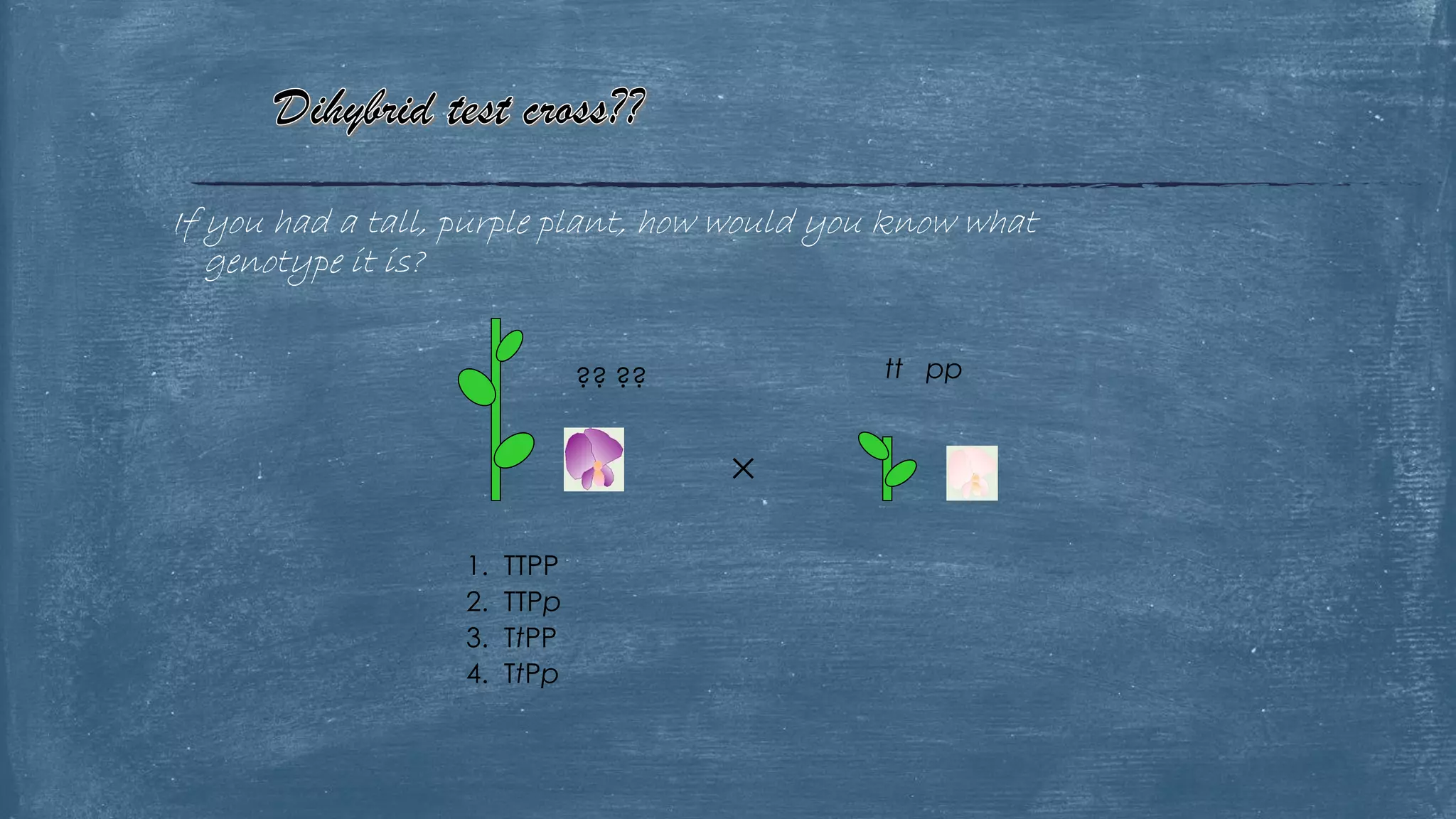
If you had a tall, purple plant, how would you know what
genotype it is?

tt pp?? ??
1. TTPP
2. TTPp
3. TtPP
4. TtPp
Mendel was lucky!
Traits he chose in the
pea plant showed up
very clearly…
One allele was dominant over another, so phenotypes were
easy to recognize.
But sometimes phenotypes are not very obvious…
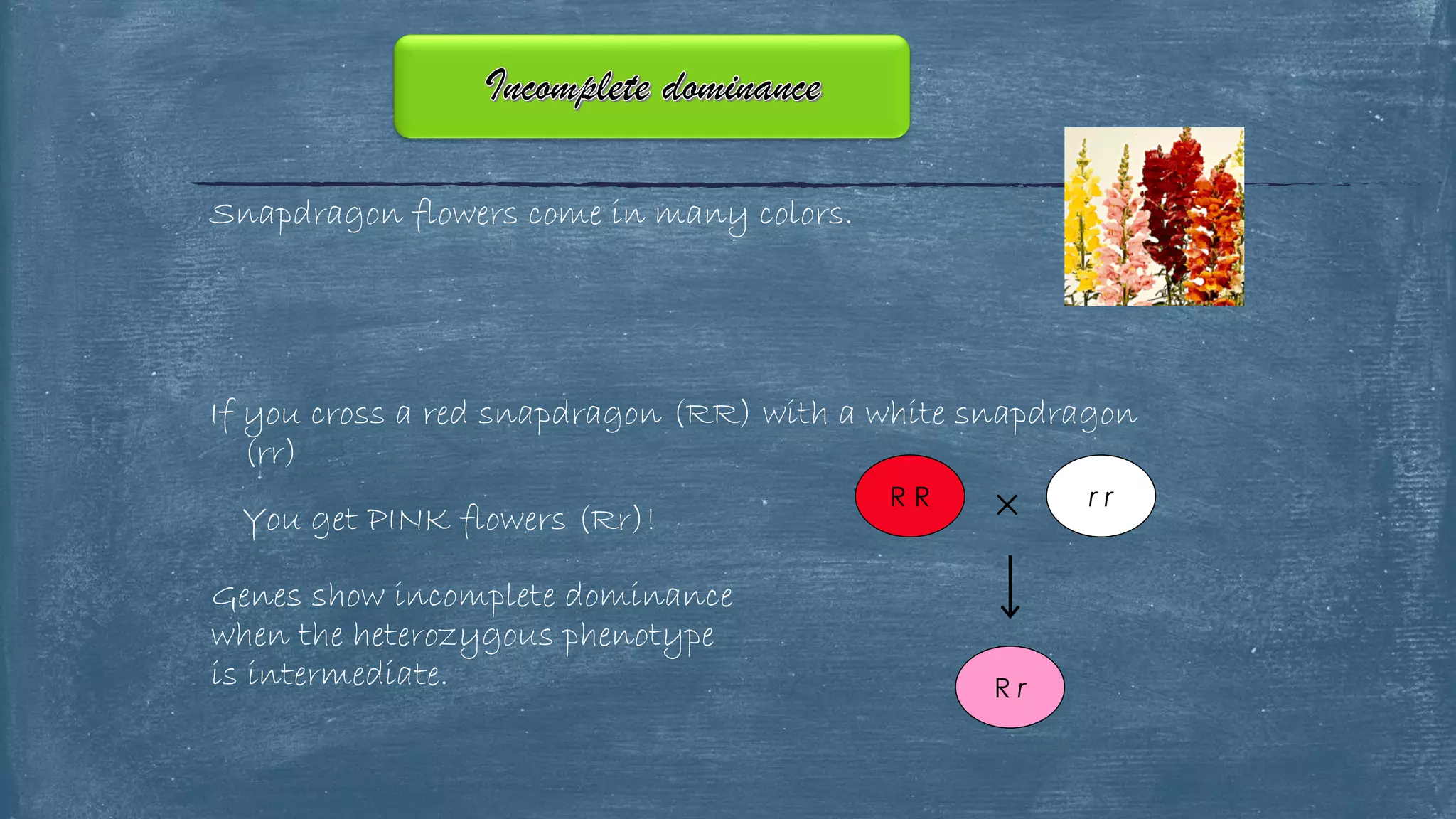
Snapdragon flowers come in many colors.
If you cross a red snapdragon (RR) with a white snapdragon
(rr)
You get PINK flowers (Rr)!
R R
R r
r r
Genes show incomplete dominance
when the heterozygous phenotype
is intermediate.
Incomplete Dominance
When F1 generation (all pink flowers) is self
pollinated, the F2 generation is 1:2:1
red, pink, white
R R R r
R r r r
R r
R
r
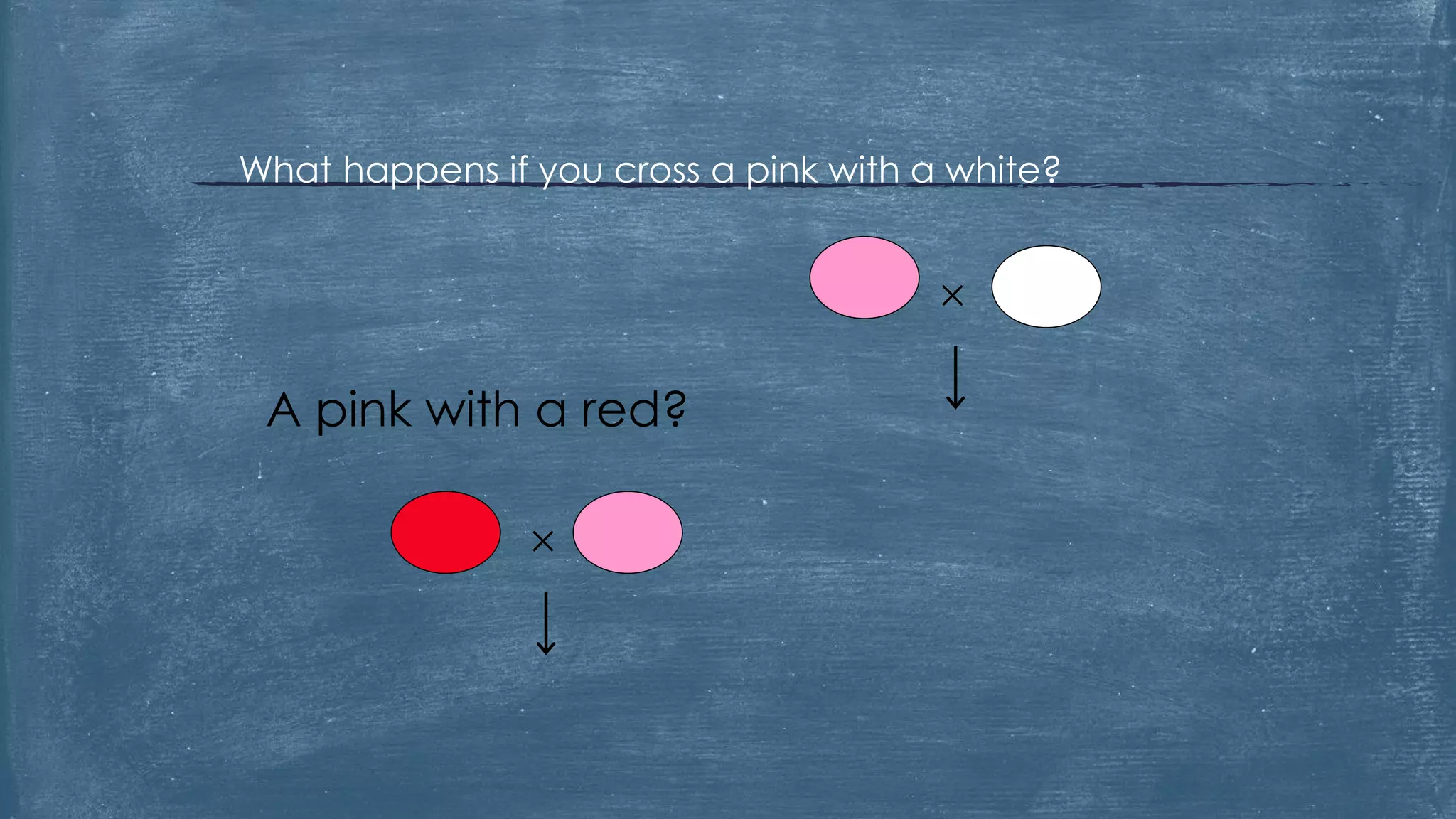
What happens if you cross a pink with a white?


A pink with a red?
Chromosomes carry hereditary info (genes)
Chromosomes (and genes) occur in pairs
New combinations of genes occur in sexual
reproduction
Monohybrid vs. Dihybrid crosses
Mendel’s Principles:
Dominance: one allele masks another
Segregation: genes become separated in gamete formation
 Independent Assortment: Members of one gene pair
segregate independently from other gene pairs during
gamete formation

mendel laws of inheritance part 3

  • 1.
    Based on theseresults, Mendel postulated the 3. Principle of Independent Assortment: “Members of one gene pair segregate independently from other gene pairs during gamete formation” Genes get shuffled – these many combinations are one of the advantages of sexual reproduction
  • 2.
    There’s a correlationbetween the movement of chromosomes in meiosis and the segregation of alleles that occurs in meiosis
  • 3.
    When you havean individual with an unknown genotype, you do a test cross. Test cross: Cross with a homozygous recessive individual. For example, a plant with purple flowers can either be PP or Pp… therefore, you cross the plant with a pp (white flowers, homozygous recessive) P ?  pp
  • 4.
    If you getall 100% purple flowers, then the unknown parent was PP… P p P p P p P p P P p p P p p p P p p p P p p p •If you get 50% white, 50% purple flowers, then the unknown parent was Pp…
  • 5.
    If you hada tall, purple plant, how would you know what genotype it is?  tt pp?? ?? 1. TTPP 2. TTPp 3. TtPP 4. TtPp
  • 6.
    Mendel was lucky! Traitshe chose in the pea plant showed up very clearly… One allele was dominant over another, so phenotypes were easy to recognize. But sometimes phenotypes are not very obvious…
  • 7.
    Snapdragon flowers comein many colors. If you cross a red snapdragon (RR) with a white snapdragon (rr) You get PINK flowers (Rr)! R R R r r r Genes show incomplete dominance when the heterozygous phenotype is intermediate.
  • 8.
    Incomplete Dominance When F1generation (all pink flowers) is self pollinated, the F2 generation is 1:2:1 red, pink, white R R R r R r r r R r R r
  • 9.
    What happens ifyou cross a pink with a white?   A pink with a red?
  • 10.
    Chromosomes carry hereditaryinfo (genes) Chromosomes (and genes) occur in pairs New combinations of genes occur in sexual reproduction Monohybrid vs. Dihybrid crosses Mendel’s Principles: Dominance: one allele masks another Segregation: genes become separated in gamete formation  Independent Assortment: Members of one gene pair segregate independently from other gene pairs during gamete formation