MBR Technology for On-site
Wastewater Systems
By
Michael Moreau
J&R Sales and Service
Coalition for Buzards Bay’s
2011 Decision Makers Workshop Series
March 24, 2011
Membrane BioReactors (MBR)
Membranes: What They Are
 Membrane are thin barriers or films of material that

allow certain substances to pass.

 Synthetic membranes are usually 100 to 500 microns

thick.

 Membranes that allow only some substrates to pass

through them are called semi permeable membranes.

 Useful membranes can be made from polymers,

ceramics, metals, or porous materials impregnated with
liquid or gelatin-like substances.
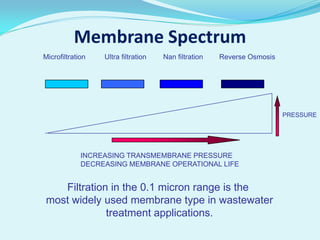
Membrane Spectrum
Microfiltration

Ultra filtration

Nan filtration

Reverse Osmosis

PRESSURE

INCREASING TRANSMEMBRANE PRESSURE
DECREASING MEMBRANE OPERATIONAL LIFE

Filtration in the 0.1 micron range is the
most widely used membrane type in wastewater
treatment applications.
Type of Membranes
 Pore Size:





Microfiltration
Ultra filtration
Nan filtration
Reverse Osmosis (RO)

 Configuration



Flat sheet
Hollow fiber
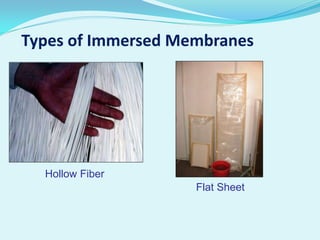
Types of Immersed Membranes

Hollow Fiber
Flat Sheet
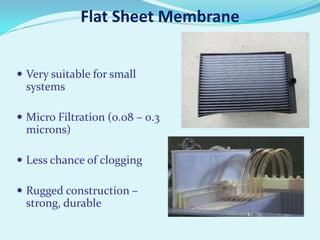
Flat Sheet Membrane
 Very suitable for small

systems
 Micro Filtration (0.08 – 0.3

microns)
 Less chance of clogging
 Rugged construction –

strong, durable
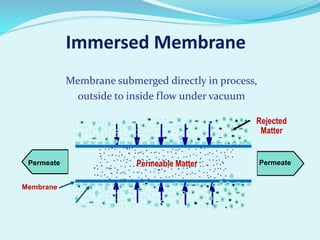
Immersed Membrane
Membrane submerged directly in process,
outside to inside flow under vacuum
Rejected
Matter

Permeate
Membrane

Permeable Matter

Permeate
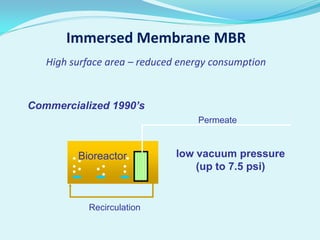
Immersed Membrane MBR
High surface area – reduced energy consumption

Commercialized 1990’s
Permeate

Bioreactor

Recirculation

low vacuum pressure
(up to 7.5 psi)
Why MBR?
 The Highest, Consistent Effluent Quality
 BOD < 5 mg/L
 TSS < 2 mg/L
 Turbidity < 0.5 NTU
 Fecal coli form < 200 CFU/100 mL (without
disinfection)
 Significant nutrient removal capability
 Complete virus removal
 Reduction of pharmaceutical byproducts
Why MBR?
 Simple to operate (compared to other processes trying

to achieve same effluent quality)
 Robust biological process
 Energy efficient
 Ability to treat difficult wastewater
Why MBR?
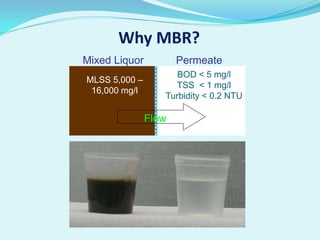
Mixed Liquor
MLSS 5,000 –
16,000 mg/l

Permeate
BOD < 5 mg/l
TSS < 1 mg/l
Turbidity < 0.2 NTU

Flow
MBR for On-Site Applications
 Pre-engineered modules ship install-ready
 Simple to install
 Designed specifically for both new and existing
onsite tank configurations
 Minimum number of reliable mechanical devices
MBR for On-Site Applications
 Completely automated

 Extended operation without needs for membrane
cleaning and de-sludgeing
 Safe to use
 Cost effective
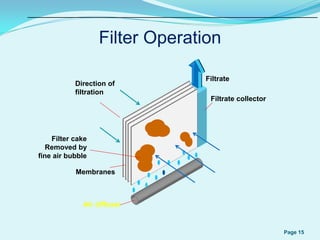
Filter Operation
Direction of
filtration

Filtrate
Filtrate collector

Filter cake
Removed by
fine air bubble
Membranes

Air diffuser

Page 15
Cleaning Procedures
 Every six to twelve months

 Requires chemical(s) cleaning
 Clean–In– Place (CIP) or remove module(s)
BioBarrier™ MBR Markets
 Single-Home Residential
 Clustered Residential
 High-Strength Commercial
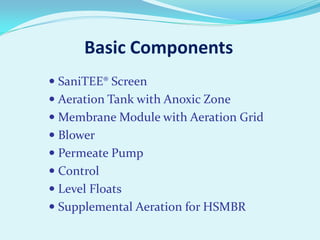
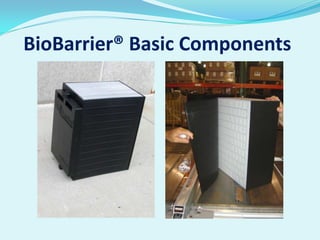
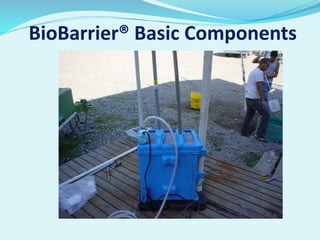
Basic Components
 SaniTEE® Screen
 Aeration Tank with Anoxic Zone

 Membrane Module with Aeration Grid
 Blower
 Permeate Pump

 Control
 Level Floats

 Supplemental Aeration for HSMBR
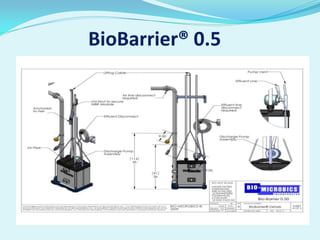
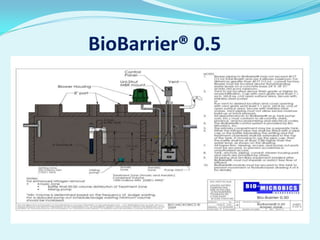
BioBarrier® 0.5
BioBarrier® Basic Components
BioBarrier® 0.5
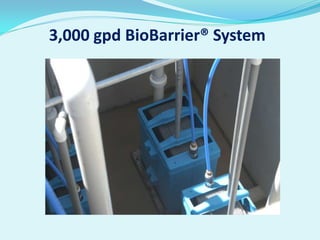
3,000 gpd BioBarrier® System
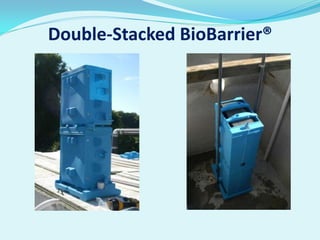
Double-Stacked BioBarrier®
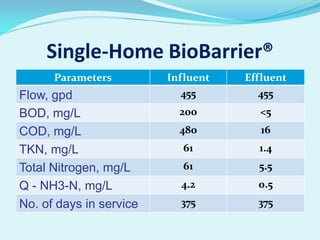
Single-Home BioBarrier®
Parameters

Flow, gpd
BOD, mg/L
COD, mg/L
TKN, mg/L
Total Nitrogen, mg/L
Q - NH3-N, mg/L
No. of days in service

Influent
455

Effluent
455

200

<5

480

16

61

1.4

61

5.5

4.2

0.5

375

375
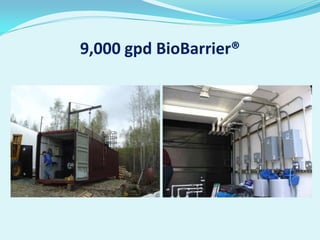
9,000 gpd BioBarrier®
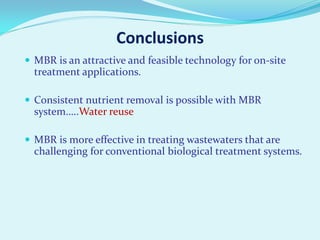
Conclusions
 MBR is an attractive and feasible technology for on-site

treatment applications.
 Consistent nutrient removal is possible with MBR

system…..Water reuse
 MBR is more effective in treating wastewaters that are

challenging for conventional biological treatment systems.

Membrane Bioreactor (MBR) Technology for Decentralized Wastewater Systems

  • 1.
    MBR Technology forOn-site Wastewater Systems By Michael Moreau J&R Sales and Service Coalition for Buzards Bay’s 2011 Decision Makers Workshop Series March 24, 2011
  • 2.
  • 3.
    Membranes: What TheyAre  Membrane are thin barriers or films of material that allow certain substances to pass.  Synthetic membranes are usually 100 to 500 microns thick.  Membranes that allow only some substrates to pass through them are called semi permeable membranes.  Useful membranes can be made from polymers, ceramics, metals, or porous materials impregnated with liquid or gelatin-like substances.
  • 4.
    Membrane Spectrum Microfiltration Ultra filtration Nanfiltration Reverse Osmosis PRESSURE INCREASING TRANSMEMBRANE PRESSURE DECREASING MEMBRANE OPERATIONAL LIFE Filtration in the 0.1 micron range is the most widely used membrane type in wastewater treatment applications.
  • 5.
    Type of Membranes Pore Size:     Microfiltration Ultra filtration Nan filtration Reverse Osmosis (RO)  Configuration   Flat sheet Hollow fiber
  • 6.
    Types of ImmersedMembranes Hollow Fiber Flat Sheet
  • 7.
    Flat Sheet Membrane Very suitable for small systems  Micro Filtration (0.08 – 0.3 microns)  Less chance of clogging  Rugged construction – strong, durable
  • 8.
    Immersed Membrane Membrane submergeddirectly in process, outside to inside flow under vacuum Rejected Matter Permeate Membrane Permeable Matter Permeate
  • 9.
    Immersed Membrane MBR Highsurface area – reduced energy consumption Commercialized 1990’s Permeate Bioreactor Recirculation low vacuum pressure (up to 7.5 psi)
  • 10.
    Why MBR?  TheHighest, Consistent Effluent Quality  BOD < 5 mg/L  TSS < 2 mg/L  Turbidity < 0.5 NTU  Fecal coli form < 200 CFU/100 mL (without disinfection)  Significant nutrient removal capability  Complete virus removal  Reduction of pharmaceutical byproducts
  • 11.
    Why MBR?  Simpleto operate (compared to other processes trying to achieve same effluent quality)  Robust biological process  Energy efficient  Ability to treat difficult wastewater
  • 12.
    Why MBR? Mixed Liquor MLSS5,000 – 16,000 mg/l Permeate BOD < 5 mg/l TSS < 1 mg/l Turbidity < 0.2 NTU Flow
  • 13.
    MBR for On-SiteApplications  Pre-engineered modules ship install-ready  Simple to install  Designed specifically for both new and existing onsite tank configurations  Minimum number of reliable mechanical devices
  • 14.
    MBR for On-SiteApplications  Completely automated  Extended operation without needs for membrane cleaning and de-sludgeing  Safe to use  Cost effective
  • 15.
    Filter Operation Direction of filtration Filtrate Filtratecollector Filter cake Removed by fine air bubble Membranes Air diffuser Page 15
  • 16.
    Cleaning Procedures  Everysix to twelve months  Requires chemical(s) cleaning  Clean–In– Place (CIP) or remove module(s)
  • 17.
    BioBarrier™ MBR Markets Single-Home Residential  Clustered Residential  High-Strength Commercial
  • 18.
    Basic Components  SaniTEE®Screen  Aeration Tank with Anoxic Zone  Membrane Module with Aeration Grid  Blower  Permeate Pump  Control  Level Floats  Supplemental Aeration for HSMBR
  • 19.
  • 20.
  • 21.
  • 22.
  • 23.
  • 24.
  • 27.
    Single-Home BioBarrier® Parameters Flow, gpd BOD,mg/L COD, mg/L TKN, mg/L Total Nitrogen, mg/L Q - NH3-N, mg/L No. of days in service Influent 455 Effluent 455 200 <5 480 16 61 1.4 61 5.5 4.2 0.5 375 375
  • 29.
  • 30.
    Conclusions  MBR isan attractive and feasible technology for on-site treatment applications.  Consistent nutrient removal is possible with MBR system…..Water reuse  MBR is more effective in treating wastewaters that are challenging for conventional biological treatment systems.