INNOVATIVE LESSON PLAN
 Learners Outcome:-
 Can read and understand a prose text, helps to enrich
vocabulary by identifying the meaning of words from
the context, refer to a glossary or dictionary to find
out the meaning of unfamiliar words, can effectively
communicate in the target language, can construct
language discourses like narrative,conversation,
character sketch,story map etc.
●Brief idea about the content:-
 Hasegawa Takejiro’s ‘The Boy who Drew Cats’ is a
Japanese folk tale in which a small boy who is a
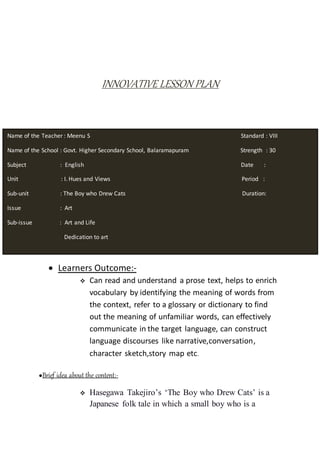
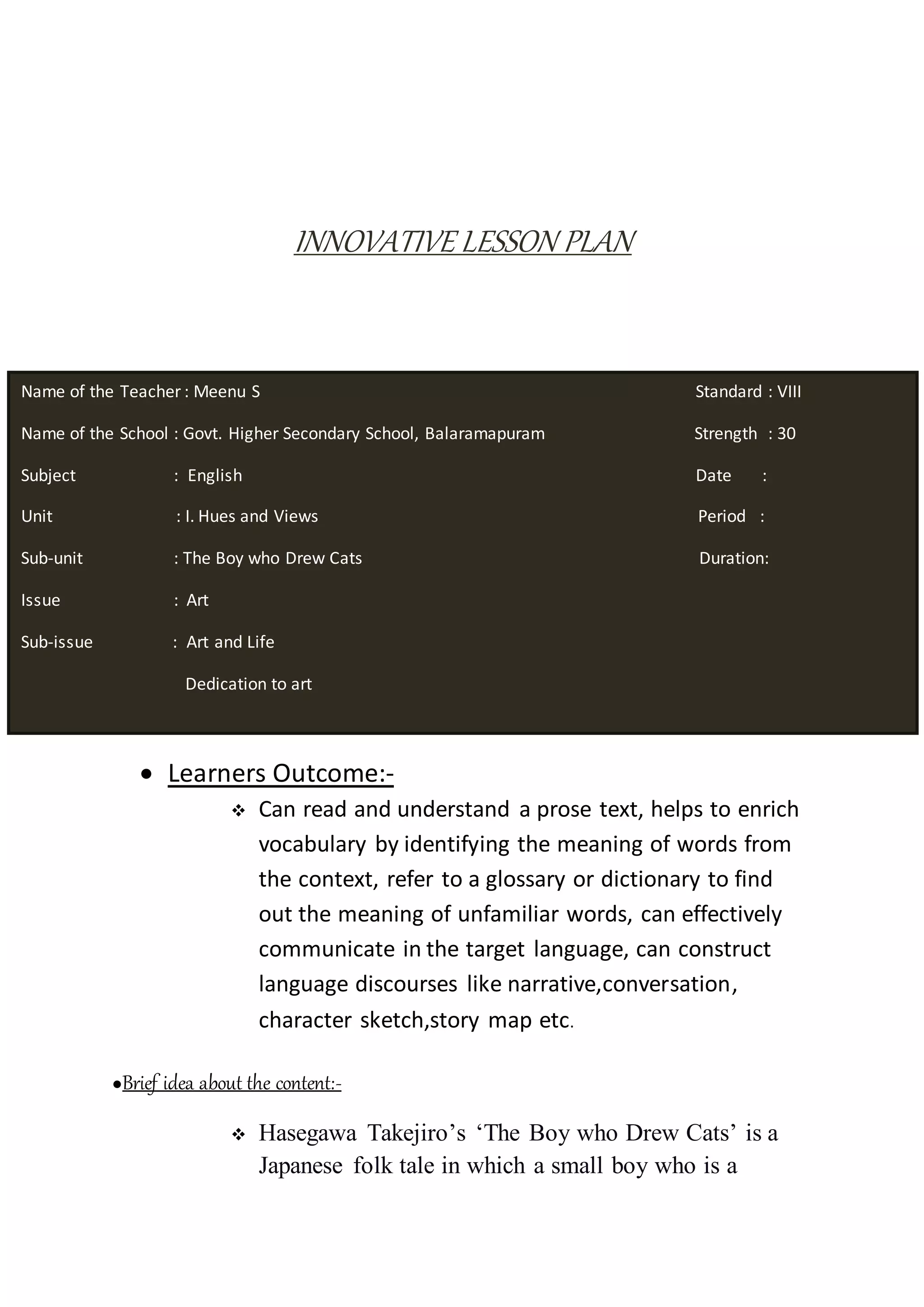
Name of the Teacher : Meenu S Standard : VIII
Name of the School : Govt. Higher Secondary School, Balaramapuram Strength : 30
Subject : English Date :
Unit : I. Hues and Views Period :
Sub-unit : The Boy who Drew Cats Duration:
Issue : Art
Sub-issue : Art and Life
Dedication to art
painter, who knows todraw only cats. Atfirst, he has to
suffer a lot but finally his art saves his life.The story
glorifies art which ultimately helps in the realisation of
the self.
●Previousknowledge ofthelearner:-
 The learner already familiar with folk tale and were
interested in the characters and events appeared in
folk tale. They also understand the power of art in
one’s life.
●Teachingmaterials
Course book, source book, Blackboard, and
chart.
Learning outcome
Teacher tries to maintaina good relationshipwith the learner by asking
some questionsrelatedto their interest and favorites. Teacher then collect
the student’s view or idea about the term folk tale and ask to mention the
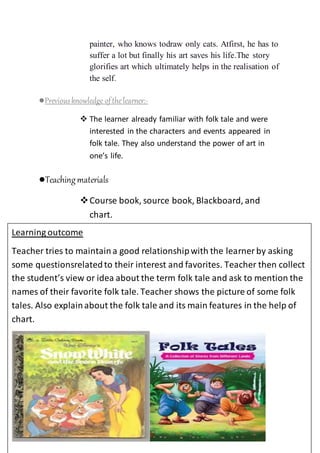
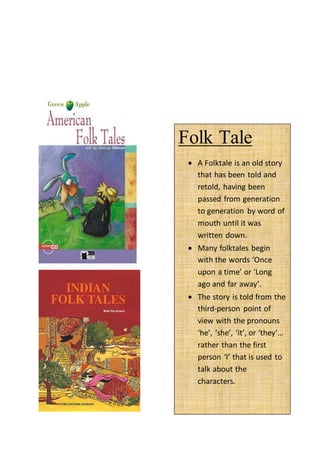
names of their favorite folk tale. Teacher shows the picture of some folk
tales. Also explainabout the folk tale and its main features in the help of
chart.
Folk Tale
 A Folktale is an old story
that has been told and
retold, having been
passed from generation
to generation by word of
mouth until it was
written down.
 Many folktales begin
with the words ‘Once
upon a time’ or ‘Long
ago and far away’.
 The story is told from the
third-person point of
view with the pronouns
‘he’, ‘she’, ‘it’, or ‘they’…
rather than the first
person ‘I’ that is used to
talk about the
characters.
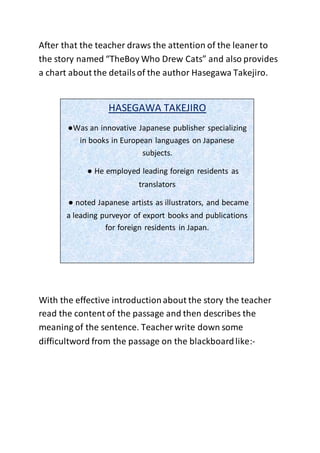
After that the teacher draws the attention of the leaner to
the story named “TheBoy Who Drew Cats” and also provides
a chart about the detailsof the author Hasegawa Takejiro.
With the effective introductionabout the story the teacher
read the content of the passage and then describes the
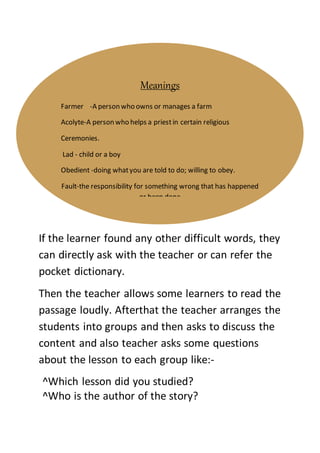
meaning of the sentence. Teacher write down some
difficultword from the passage on the blackboardlike:-
HASEGAWA TAKEJIRO
●Was an innovative Japanese publisher specializing
in books in European languages on Japanese
subjects.
● He employed leading foreign residents as
translators
● noted Japanese artists as illustrators, and became
a leading purveyor of export books and publications
for foreign residents in Japan.
If the learner found any other difficult words, they
can directly ask with the teacher or can refer the
pocket dictionary.
Then the teacher allows some learners to read the
passage loudly. Afterthat the teacher arranges the
students into groups and then asks to discuss the
content and also teacher asks some questions
about the lesson to each group like:-
^Which lesson did you studied?
^Who is the author of the story?
Meanings
Farmer -A person who owns or manages a farm
Acolyte-A person who helps a priestin certain religious
Ceremonies.
Lad - child or a boy
Obedient -doing whatyou are told to do; willing to obey.
Fault-the responsibility for something wrong that has happened
or been done
^Why did the parents take the boy to the priest?
^Did the priest agreed to take the boy as an
acolyte?
^How did the priest agreed to make him as an
acolyte?
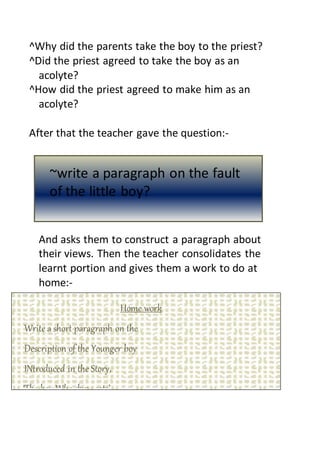
After that the teacher gave the question:-
And asks them to construct a paragraph about
their views. Then the teacher consolidates the
learnt portion and gives them a work to do at
home:-
~write a paragraph on the fault
of the little boy?
Home work
Write a short paragraph on the
Description of the Younger boy
INtroduced in the Story,
T ‘The boy Who drew cats’.
THANK YOU

Meenu innovative lesson plan

  • 1.
    INNOVATIVE LESSON PLAN Learners Outcome:-  Can read and understand a prose text, helps to enrich vocabulary by identifying the meaning of words from the context, refer to a glossary or dictionary to find out the meaning of unfamiliar words, can effectively communicate in the target language, can construct language discourses like narrative,conversation, character sketch,story map etc. ●Brief idea about the content:-  Hasegawa Takejiro’s ‘The Boy who Drew Cats’ is a Japanese folk tale in which a small boy who is a Name of the Teacher : Meenu S Standard : VIII Name of the School : Govt. Higher Secondary School, Balaramapuram Strength : 30 Subject : English Date : Unit : I. Hues and Views Period : Sub-unit : The Boy who Drew Cats Duration: Issue : Art Sub-issue : Art and Life Dedication to art
  • 2.
    painter, who knowstodraw only cats. Atfirst, he has to suffer a lot but finally his art saves his life.The story glorifies art which ultimately helps in the realisation of the self. ●Previousknowledge ofthelearner:-  The learner already familiar with folk tale and were interested in the characters and events appeared in folk tale. They also understand the power of art in one’s life. ●Teachingmaterials Course book, source book, Blackboard, and chart. Learning outcome Teacher tries to maintaina good relationshipwith the learner by asking some questionsrelatedto their interest and favorites. Teacher then collect the student’s view or idea about the term folk tale and ask to mention the names of their favorite folk tale. Teacher shows the picture of some folk tales. Also explainabout the folk tale and its main features in the help of chart.
  • 3.
    Folk Tale  AFolktale is an old story that has been told and retold, having been passed from generation to generation by word of mouth until it was written down.  Many folktales begin with the words ‘Once upon a time’ or ‘Long ago and far away’.  The story is told from the third-person point of view with the pronouns ‘he’, ‘she’, ‘it’, or ‘they’… rather than the first person ‘I’ that is used to talk about the characters.
  • 4.
    After that theteacher draws the attention of the leaner to the story named “TheBoy Who Drew Cats” and also provides a chart about the detailsof the author Hasegawa Takejiro. With the effective introductionabout the story the teacher read the content of the passage and then describes the meaning of the sentence. Teacher write down some difficultword from the passage on the blackboardlike:- HASEGAWA TAKEJIRO ●Was an innovative Japanese publisher specializing in books in European languages on Japanese subjects. ● He employed leading foreign residents as translators ● noted Japanese artists as illustrators, and became a leading purveyor of export books and publications for foreign residents in Japan.
  • 5.
    If the learnerfound any other difficult words, they can directly ask with the teacher or can refer the pocket dictionary. Then the teacher allows some learners to read the passage loudly. Afterthat the teacher arranges the students into groups and then asks to discuss the content and also teacher asks some questions about the lesson to each group like:- ^Which lesson did you studied? ^Who is the author of the story? Meanings Farmer -A person who owns or manages a farm Acolyte-A person who helps a priestin certain religious Ceremonies. Lad - child or a boy Obedient -doing whatyou are told to do; willing to obey. Fault-the responsibility for something wrong that has happened or been done
  • 6.
    ^Why did theparents take the boy to the priest? ^Did the priest agreed to take the boy as an acolyte? ^How did the priest agreed to make him as an acolyte? After that the teacher gave the question:- And asks them to construct a paragraph about their views. Then the teacher consolidates the learnt portion and gives them a work to do at home:- ~write a paragraph on the fault of the little boy? Home work Write a short paragraph on the Description of the Younger boy INtroduced in the Story, T ‘The boy Who drew cats’.
  • 7.