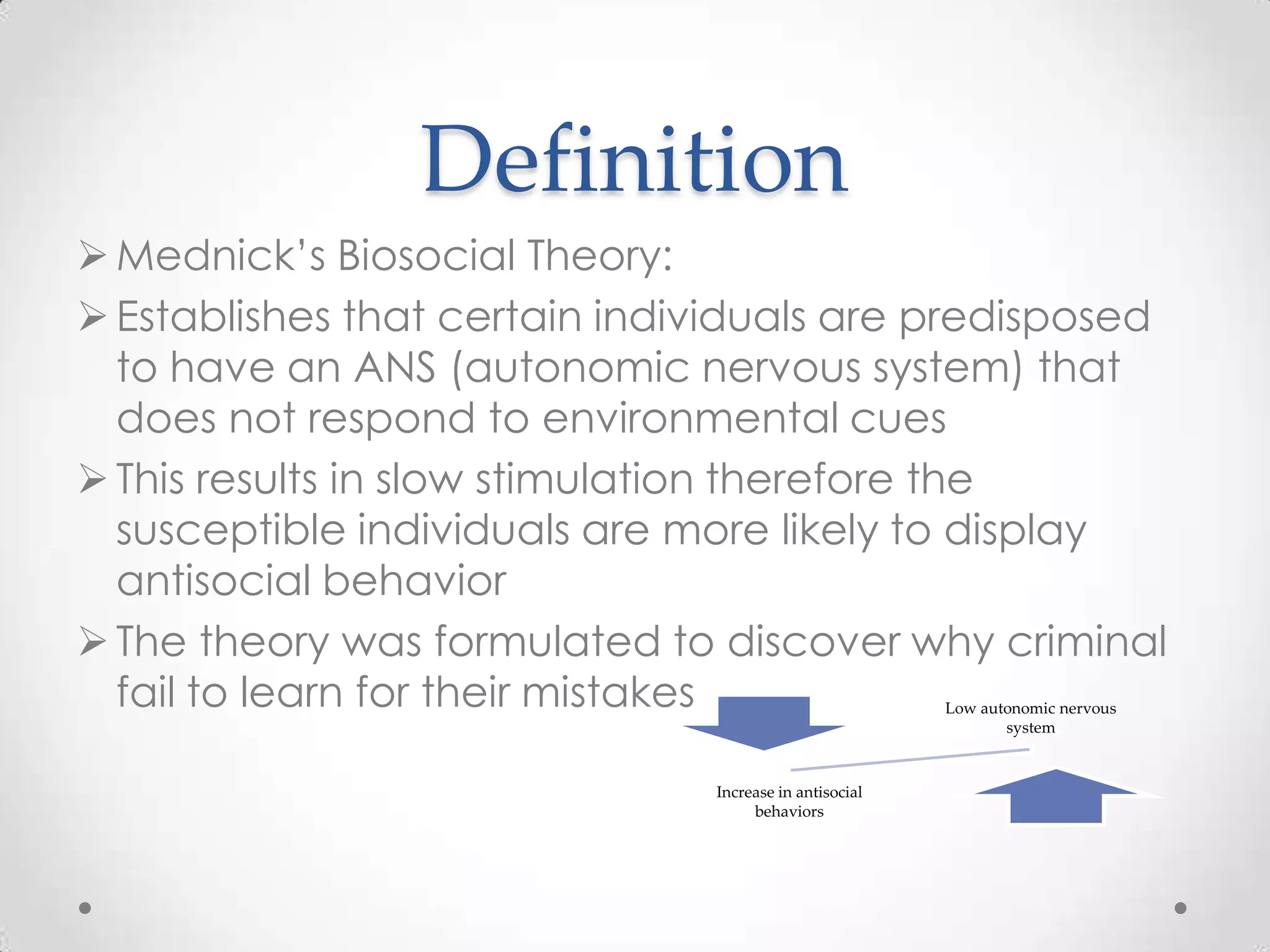
Mednick's biosocial theory proposes that some individuals are biologically predisposed to have an autonomic nervous system that does not respond strongly to environmental cues. This results in a tendency toward low arousal and stimulation. According to the theory, these individuals are then more likely to engage in antisocial behaviors either due to a lack of fear (fearlessness theory) or a drive to seek stimulation. The theory links deficits in the autonomic nervous system to impairments in the central nervous system that can affect personality and criminal tendencies.