


Table of Contents
 Overview of Original Medicare
 Medicare Part A
 Medicare Part B
 Medicare Part D
 Medicare Part C (Medicare Advantage Program)
 Medicare Supplements
 Purpose
 Plans
Original Medicare
Created to help elderly with health care costs as an
entitlement program.
 Medicare covers two markets: 65 and older, Or
those who are qualified under SSDI, or ESRD
 SSDI
 ESRD- End Stage Renal Disease
 Provided “free” to all Social Security and
Railroad Retirment beneficiaries upon
registering for Social Security at age 65
 The program is administered by the Center for
Medicare and Medicaid Services- CMS
Overview
 http://www.youtube.com/watch?v=slVO3p83_S0
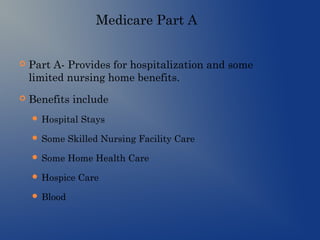
Medicare Part A
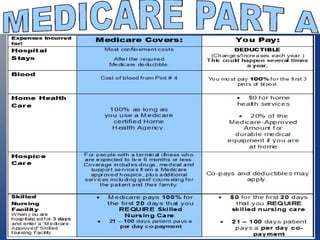
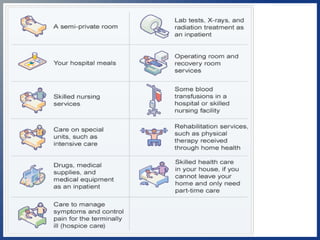
 Part A- Provides for hospitalization and some
limited nursing home benefits.
 Benefits include
 Hospital Stays
 Some Skilled Nursing Facility Care
 Some Home Health Care
 Hospice Care
 Blood
Medicare Part B
 Part B- provides for medical and some limited
home health care coverage for Social Security
and railroad retirees.
 Part B is purchased (or optionally rejected) and
can be conveniently withheld from a retirees
social security check.
 The premium for Part B increases annually due
to ever increasing health care costs.
Benefits Included with purchase of Part
B
 Medical Services
 Doctors Services
 Outpatient medical and surgical
 Diagnostic tests
 Ambulatory surgery center
 Durable Medical Equipment
 Second surgical options
 Outpatient mental health care
 Outpatient physical and occupational therapy
Benefits included with purchase of Part
B continued
 Clinical Laboratory Services-blood, Urinalysis,
etc.
 Home Health Care
 Outpatient Hospital Services
 Blood- with a 3 pint deductible.
 Preventive services- Bone mass, Colorectal
Cancer screening, Diabetes services and supplies,
Medicare Part D
(Medicare Prescription Drug Coverage)
 Helps cover the cost of prescription drugs
 May help lower your prescription drug costs and
help protect against higher costs
 Run by Medicare-approved private insurance
companies
 Rates, Coverages, and Premiums will vary by
carrier.
Medicare Part D continued
 May have to pay $325 deductible for initial drug
costs
 During initial coverage phase, insured pays a
copayment or coinsurance…Insured’s Part D
plan pays the rest up until your combined
amount hits $2970
 Once insured hits $2970, they then enter what is
known as the “donut hole” where they are
responsible for covering 47.5% of named-brand
prescription drug costs and 79% for generic
prescription drugs.
 Once out-of-pocket expenses hit $4,750 the
Medicare Part C
(Medicare Advantage Plan)
 Medicare Advantage plans (MA) are offered by private
companies approved by Medicare ( HMO, PPO, etc.)…
http://www.youtube.com/watch?v=8OK7SuXVkpQ
 MA plans include:
 Part A (Hospital Insurance)
 Part B (Medical Insurance)
 Most cover Part D (Drug Coverage)
 May offer
 Vision
 Hearing
 Dental
Medicare Advantage Plans
 Health Maintenance Organization (HMO)
 Preferred Provider Organization (PPO)
 Private Fee-for-Service (PFFS)
Health Maintenance Organization (HMO)
 A type of health insurance plan that usually
limits coverage to care from doctors who work for
or contract with the HMO.
 It generally won't cover out-of-network care
except in an emergency.
 An HMO may require you to live or work in its
service area to be eligible for coverage.
Preferred Provider Organization
(PPO)
 A type of health plan that contracts with medical
providers, such as:
 Hospitals
 Doctors
 You pay less if you use providers that belong to
the plan’s network.
Private Fee-for-Service
(PFFS)
 A type of Medicare Health Plan in which you
may go to any Medicare-approved doctor or
hospital that accepts the plan's payment.
 You may pay more or less for Medicare-covered
benefits.
 You may have extra benefits Original Medicare
doesn't cover.
Medicare Supplements
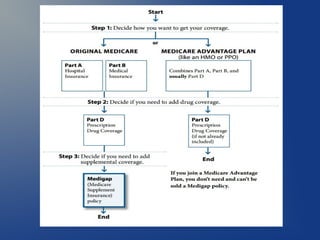
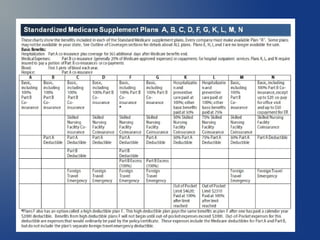
 Medicare Supplemental insurance (Medigap) is
designed to offer coverage for the costs not
covered by original Medicare
 If the insured has Original Medicare along with a
Medigap policy, Original Medicare will pay for its
share of expenses and the Medigap policy will
pickup the rest of the costs depending on the plan
 http://www.youtube.com/watch?v=sdVe-GlZ-mc
Medicare Supplements
(Medigap Policy)
 Must have Medicare Part A and Part B
 Guaranteed Issue Rights during open enrollment
period discussed earlier
 Guaranteed Issue Rights for other situations as
well as shown here...
http://www.medicare.gov/supplement-other-insurance/when
Medigap Issue Age (Community) Plans
 Senior consumers can purchase specific plans
based on their age
 Insurance provider can therefore not change
premiums on the plan as the insured’s age
increases
 Although the provider can raise premium rates
by class for all policies issued in their state
Medigap Attained Age Plans
 Attained age plans include premiums that
increase incrementally as the insured age
increases
 Some providers increase rates every year while
some increase based on attained age of insured
 Prices can change based on changes in Medicare
 Rates may also change due to increases in
medical costs
Medicare overview presentation

Medicare overview presentation

  • 2.
    Table of Contents Overview of Original Medicare  Medicare Part A  Medicare Part B  Medicare Part D  Medicare Part C (Medicare Advantage Program)  Medicare Supplements  Purpose  Plans
  • 3.
    Original Medicare Created tohelp elderly with health care costs as an entitlement program.  Medicare covers two markets: 65 and older, Or those who are qualified under SSDI, or ESRD  SSDI  ESRD- End Stage Renal Disease  Provided “free” to all Social Security and Railroad Retirment beneficiaries upon registering for Social Security at age 65  The program is administered by the Center for Medicare and Medicaid Services- CMS
  • 5.
  • 6.
    Medicare Part A Part A- Provides for hospitalization and some limited nursing home benefits.  Benefits include  Hospital Stays  Some Skilled Nursing Facility Care  Some Home Health Care  Hospice Care  Blood
  • 8.
    Medicare Part B Part B- provides for medical and some limited home health care coverage for Social Security and railroad retirees.  Part B is purchased (or optionally rejected) and can be conveniently withheld from a retirees social security check.  The premium for Part B increases annually due to ever increasing health care costs.
  • 9.
    Benefits Included withpurchase of Part B  Medical Services  Doctors Services  Outpatient medical and surgical  Diagnostic tests  Ambulatory surgery center  Durable Medical Equipment  Second surgical options  Outpatient mental health care  Outpatient physical and occupational therapy
  • 10.
    Benefits included withpurchase of Part B continued  Clinical Laboratory Services-blood, Urinalysis, etc.  Home Health Care  Outpatient Hospital Services  Blood- with a 3 pint deductible.  Preventive services- Bone mass, Colorectal Cancer screening, Diabetes services and supplies,
  • 12.
    Medicare Part D (MedicarePrescription Drug Coverage)  Helps cover the cost of prescription drugs  May help lower your prescription drug costs and help protect against higher costs  Run by Medicare-approved private insurance companies  Rates, Coverages, and Premiums will vary by carrier.
  • 13.
    Medicare Part Dcontinued  May have to pay $325 deductible for initial drug costs  During initial coverage phase, insured pays a copayment or coinsurance…Insured’s Part D plan pays the rest up until your combined amount hits $2970  Once insured hits $2970, they then enter what is known as the “donut hole” where they are responsible for covering 47.5% of named-brand prescription drug costs and 79% for generic prescription drugs.  Once out-of-pocket expenses hit $4,750 the
  • 14.
    Medicare Part C (MedicareAdvantage Plan)  Medicare Advantage plans (MA) are offered by private companies approved by Medicare ( HMO, PPO, etc.)… http://www.youtube.com/watch?v=8OK7SuXVkpQ  MA plans include:  Part A (Hospital Insurance)  Part B (Medical Insurance)  Most cover Part D (Drug Coverage)  May offer  Vision  Hearing  Dental
  • 15.
    Medicare Advantage Plans Health Maintenance Organization (HMO)  Preferred Provider Organization (PPO)  Private Fee-for-Service (PFFS)
  • 16.
    Health Maintenance Organization(HMO)  A type of health insurance plan that usually limits coverage to care from doctors who work for or contract with the HMO.  It generally won't cover out-of-network care except in an emergency.  An HMO may require you to live or work in its service area to be eligible for coverage.
  • 17.
    Preferred Provider Organization (PPO) A type of health plan that contracts with medical providers, such as:  Hospitals  Doctors  You pay less if you use providers that belong to the plan’s network.
  • 18.
    Private Fee-for-Service (PFFS)  Atype of Medicare Health Plan in which you may go to any Medicare-approved doctor or hospital that accepts the plan's payment.  You may pay more or less for Medicare-covered benefits.  You may have extra benefits Original Medicare doesn't cover.
  • 19.
    Medicare Supplements  MedicareSupplemental insurance (Medigap) is designed to offer coverage for the costs not covered by original Medicare  If the insured has Original Medicare along with a Medigap policy, Original Medicare will pay for its share of expenses and the Medigap policy will pickup the rest of the costs depending on the plan  http://www.youtube.com/watch?v=sdVe-GlZ-mc
  • 20.
    Medicare Supplements (Medigap Policy) Must have Medicare Part A and Part B  Guaranteed Issue Rights during open enrollment period discussed earlier  Guaranteed Issue Rights for other situations as well as shown here... http://www.medicare.gov/supplement-other-insurance/when
  • 21.
    Medigap Issue Age(Community) Plans  Senior consumers can purchase specific plans based on their age  Insurance provider can therefore not change premiums on the plan as the insured’s age increases  Although the provider can raise premium rates by class for all policies issued in their state
  • 22.
    Medigap Attained AgePlans  Attained age plans include premiums that increase incrementally as the insured age increases  Some providers increase rates every year while some increase based on attained age of insured  Prices can change based on changes in Medicare  Rates may also change due to increases in medical costs