Presented by: Manidipa
INTRODUCTION
 Medicare coverage
 Original Medicare Plan
 Medicare Supplement Insurance (Medigap)
 Medicare Advantage and other Medicare plans
 Medicare prescription drug coverage
 Medicaid and Medicare Savings Programs
What Is Medicare?
 A health insurance program for
 People 65 years of age and older
 People under age 65 with certain disabilities
 People with End-Stage Renal Disease (ESRD)
 Administered by Centers for Medicare & Medicaid Services
(CMS)
 Enrollment by Social Security Administration (SSA) or
Railroad Retirement Board (RRB)
Applying for Medicare
 Apply 3 months before age 65
 Don’t have to be retired
 Contact the Social Security Administration
 Enrollment automatic if receiving Social Security or
Railroad Retirement benefits
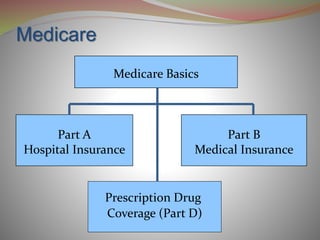
Medicare
Medicare Basics
Part A
Hospital Insurance
Part B
Medical Insurance
Prescription Drug
Coverage (Part D)
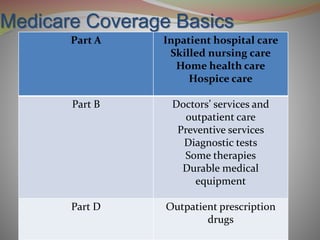
Medicare Coverage Basics
Part A Inpatient hospital care
Skilled nursing care
Home health care
Hospice care
Part B Doctors’ services and
outpatient care
Preventive services
Diagnostic tests
Some therapies
Durable medical
equipment
Part D Outpatient prescription
drugs
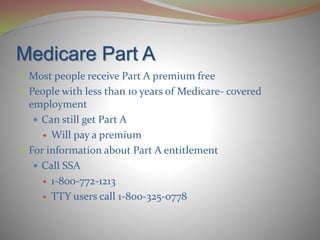
Medicare Part A
 Most people receive Part A premium free
 People with less than 10 years of Medicare- covered
employment
 Can still get Part A
 Will pay a premium
 For information about Part A entitlement
 Call SSA
 1-800-772-1213
 TTY users call 1-800-325-0778
Medigap
 Health insurance policy
 Sold by private insurance companies
 Must say “Medicare Supplement Insurance”
 Covers “gaps” in the Original Medicare Plan
 Deductibles, coinsurance, copayments
 Does not work with Medicare Advantage Plans
 Up to 12 standardized plans A – L
 Except in Massachusetts, Minnesota, Wisconsin
 So people can compare easily
How Medigap Works
 People can buy a Medigap policy
 Within 6 months of enrolling in Part B
 Must be age 65 or older
 If they lose certain kinds of health coverage
 Through no fault of their own
 If they leave MA Plan under certain circumstances
 Whenever the company will sell them one
 Monthly premium
 Generally go to any doctor or specialist
Medicare Advantage Plans
 Health Maintenance Organization (HMO) Plans
 Some have Point-of-Service option
 Preferred Provider Organization (PPO) Plans
 Regional PPOs new in 2006
 Private Fee-for-Service (PFFS) Plans
 Special Needs Plans
 Medicare Medical Savings Account (MSA) Plans
 New in 2007
Eligibility for MA Plans
 Live in plan’s service area
 Entitled to Medicare Part A
 Enrolled in Medicare Part B
 Continue to pay Part B premium
 May also pay monthly premium to plan
 Don’t have ESRD at enrollment
 Some exceptions
Medicare Prescription Drug
Coverage
 Coverage began January 1, 2006
 Available to all people with Medicare
 Provided through
 Medicare Prescription Drug Plans
 Medicare Advantage and other Medicare plans
 Some employers and unions
Medicaid
 Joint Federal and state program
 For some people with limited income and resources
 If eligible, most health care costs covered
 Eligibility determined by state
 Application processes vary
 Office names vary
 Social Services
 Public Assistance
 Human Services
Medicare

Medicare

  • 1.
  • 2.
    INTRODUCTION  Medicare coverage Original Medicare Plan  Medicare Supplement Insurance (Medigap)  Medicare Advantage and other Medicare plans  Medicare prescription drug coverage  Medicaid and Medicare Savings Programs
  • 3.
    What Is Medicare? A health insurance program for  People 65 years of age and older  People under age 65 with certain disabilities  People with End-Stage Renal Disease (ESRD)  Administered by Centers for Medicare & Medicaid Services (CMS)  Enrollment by Social Security Administration (SSA) or Railroad Retirement Board (RRB)
  • 4.
    Applying for Medicare Apply 3 months before age 65  Don’t have to be retired  Contact the Social Security Administration  Enrollment automatic if receiving Social Security or Railroad Retirement benefits
  • 5.
    Medicare Medicare Basics Part A HospitalInsurance Part B Medical Insurance Prescription Drug Coverage (Part D)
  • 6.
    Medicare Coverage Basics PartA Inpatient hospital care Skilled nursing care Home health care Hospice care Part B Doctors’ services and outpatient care Preventive services Diagnostic tests Some therapies Durable medical equipment Part D Outpatient prescription drugs
  • 7.
    Medicare Part A Most people receive Part A premium free  People with less than 10 years of Medicare- covered employment  Can still get Part A  Will pay a premium  For information about Part A entitlement  Call SSA  1-800-772-1213  TTY users call 1-800-325-0778
  • 8.
    Medigap  Health insurancepolicy  Sold by private insurance companies  Must say “Medicare Supplement Insurance”  Covers “gaps” in the Original Medicare Plan  Deductibles, coinsurance, copayments  Does not work with Medicare Advantage Plans  Up to 12 standardized plans A – L  Except in Massachusetts, Minnesota, Wisconsin  So people can compare easily
  • 9.
    How Medigap Works People can buy a Medigap policy  Within 6 months of enrolling in Part B  Must be age 65 or older  If they lose certain kinds of health coverage  Through no fault of their own  If they leave MA Plan under certain circumstances  Whenever the company will sell them one  Monthly premium  Generally go to any doctor or specialist
  • 10.
    Medicare Advantage Plans Health Maintenance Organization (HMO) Plans  Some have Point-of-Service option  Preferred Provider Organization (PPO) Plans  Regional PPOs new in 2006  Private Fee-for-Service (PFFS) Plans  Special Needs Plans  Medicare Medical Savings Account (MSA) Plans  New in 2007
  • 11.
    Eligibility for MAPlans  Live in plan’s service area  Entitled to Medicare Part A  Enrolled in Medicare Part B  Continue to pay Part B premium  May also pay monthly premium to plan  Don’t have ESRD at enrollment  Some exceptions
  • 12.
    Medicare Prescription Drug Coverage Coverage began January 1, 2006  Available to all people with Medicare  Provided through  Medicare Prescription Drug Plans  Medicare Advantage and other Medicare plans  Some employers and unions
  • 13.
    Medicaid  Joint Federaland state program  For some people with limited income and resources  If eligible, most health care costs covered  Eligibility determined by state  Application processes vary  Office names vary  Social Services  Public Assistance  Human Services