How To Build A Professional
Network
Waleed Abdallah Ahmed
Middle East Medicare
Outline
• Networking– the basics
• When and where does networking take place?
• Social media and networking
• Networking Event!
Networking?
Professional Networking
• Networking is the art of forming and maintaining mutually beneficial
relationships with others who are linked to your career, profession, or
share your interest. Networking offers the opportunity to debate
issues related to your field, share experiences and exchange
perspectives
• 2 Types – Business and Social
• Goal: Building of relationships
• Business: Objective is to form relationships that will improve organizational
success or become employed
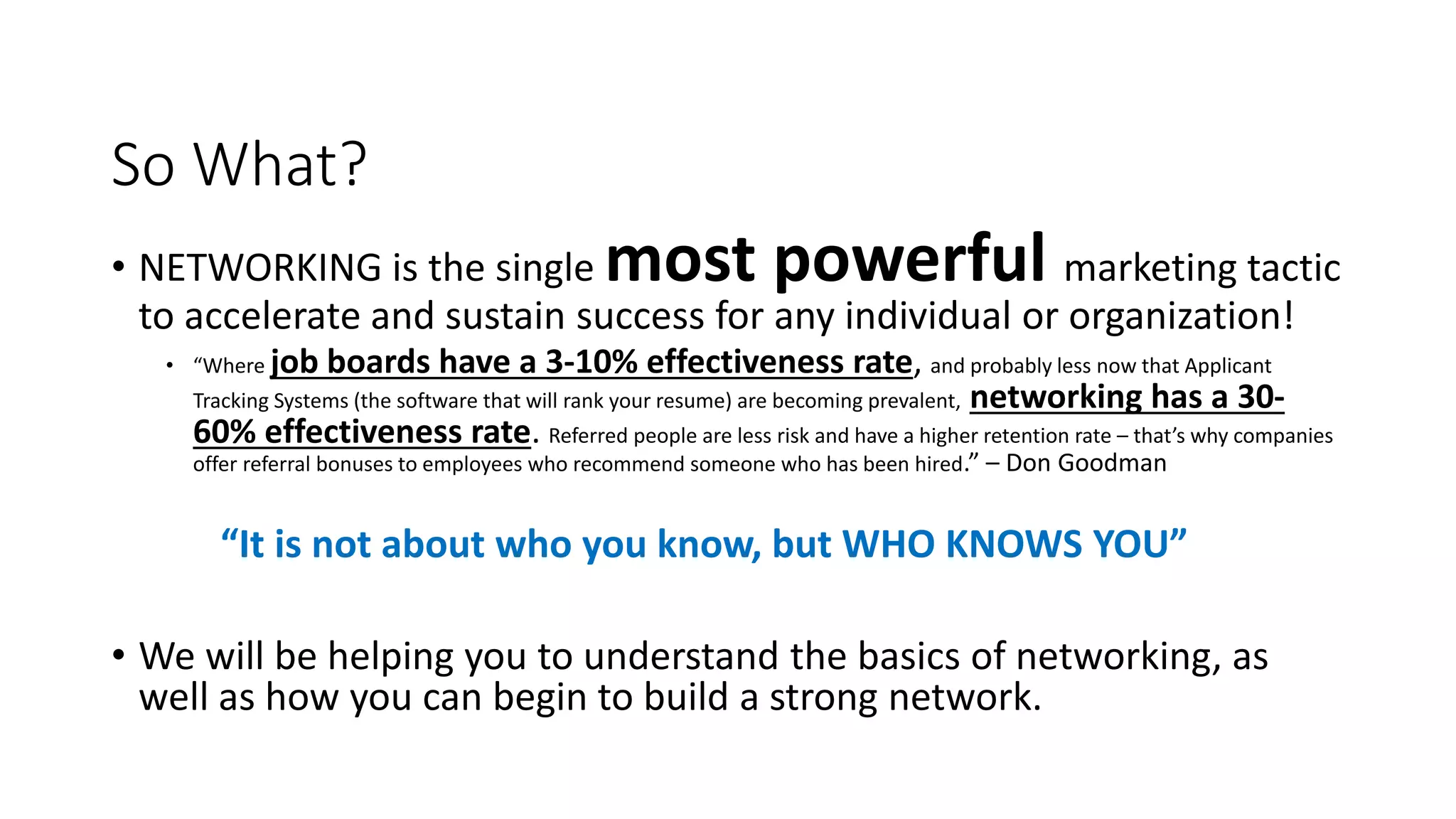
So What?
• NETWORKING is the single most powerful marketing tactic
to accelerate and sustain success for any individual or organization!
• “Where job boards have a 3-10% effectiveness rate, and probably less now that Applicant
Tracking Systems (the software that will rank your resume) are becoming prevalent, networking has a 30-
60% effectiveness rate. Referred people are less risk and have a higher retention rate – that’s why companies
offer referral bonuses to employees who recommend someone who has been hired.” – Don Goodman
“It is not about who you know, but WHO KNOWS YOU”
• We will be helping you to understand the basics of networking, as
well as how you can begin to build a strong network.
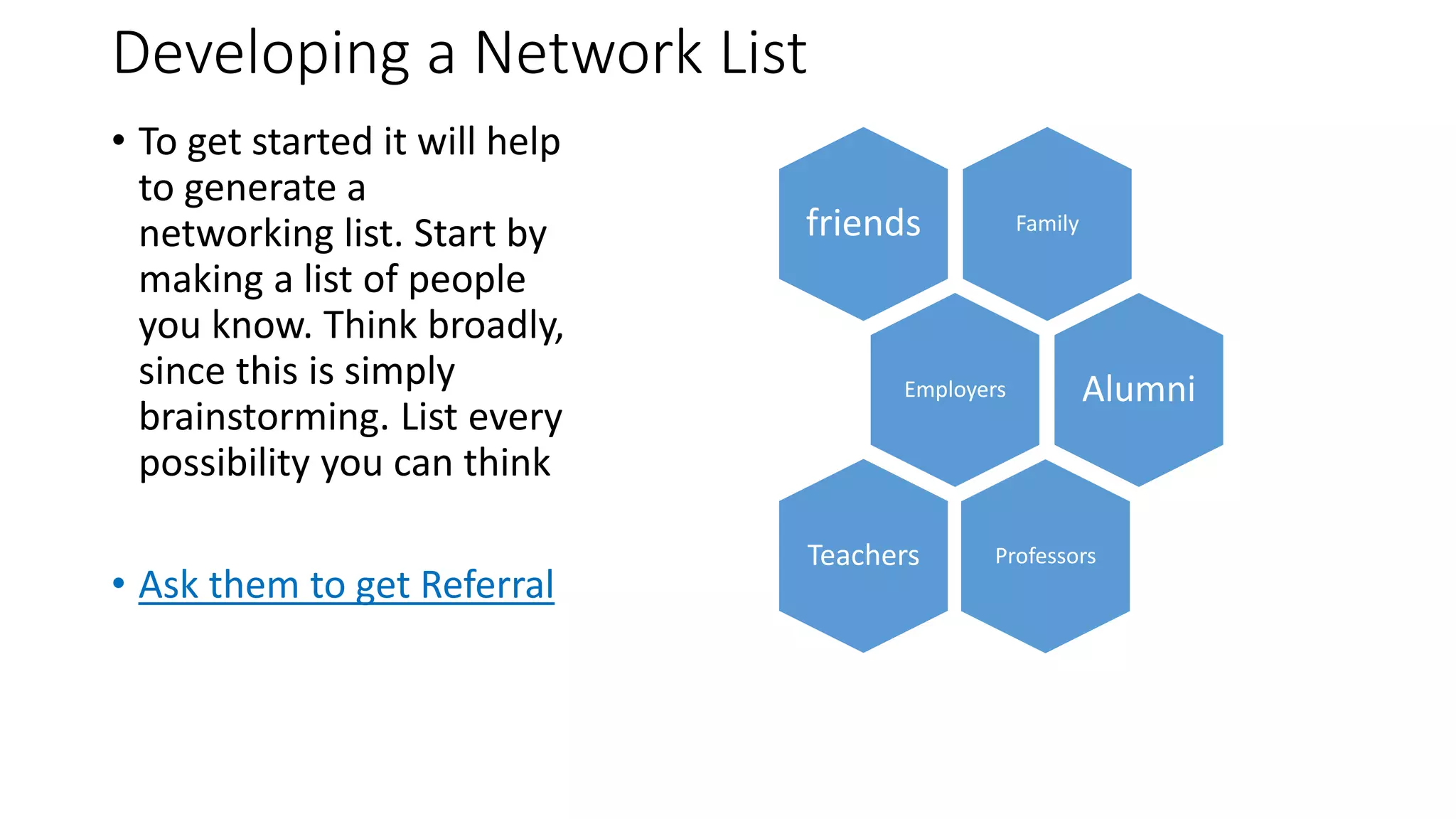
Developing a Network List
• To get started it will help
to generate a
networking list. Start by
making a list of people
you know. Think broadly,
since this is simply
brainstorming. List every
possibility you can think
• Ask them to get Referral
Familyfriends
Employers Alumni
ProfessorsTeachers
Goals & Objectives
• What are you trying to achieve?
• What type of people do you want to meet?
• HOW Many People do you want to talk to?
• What do you want to talk about?
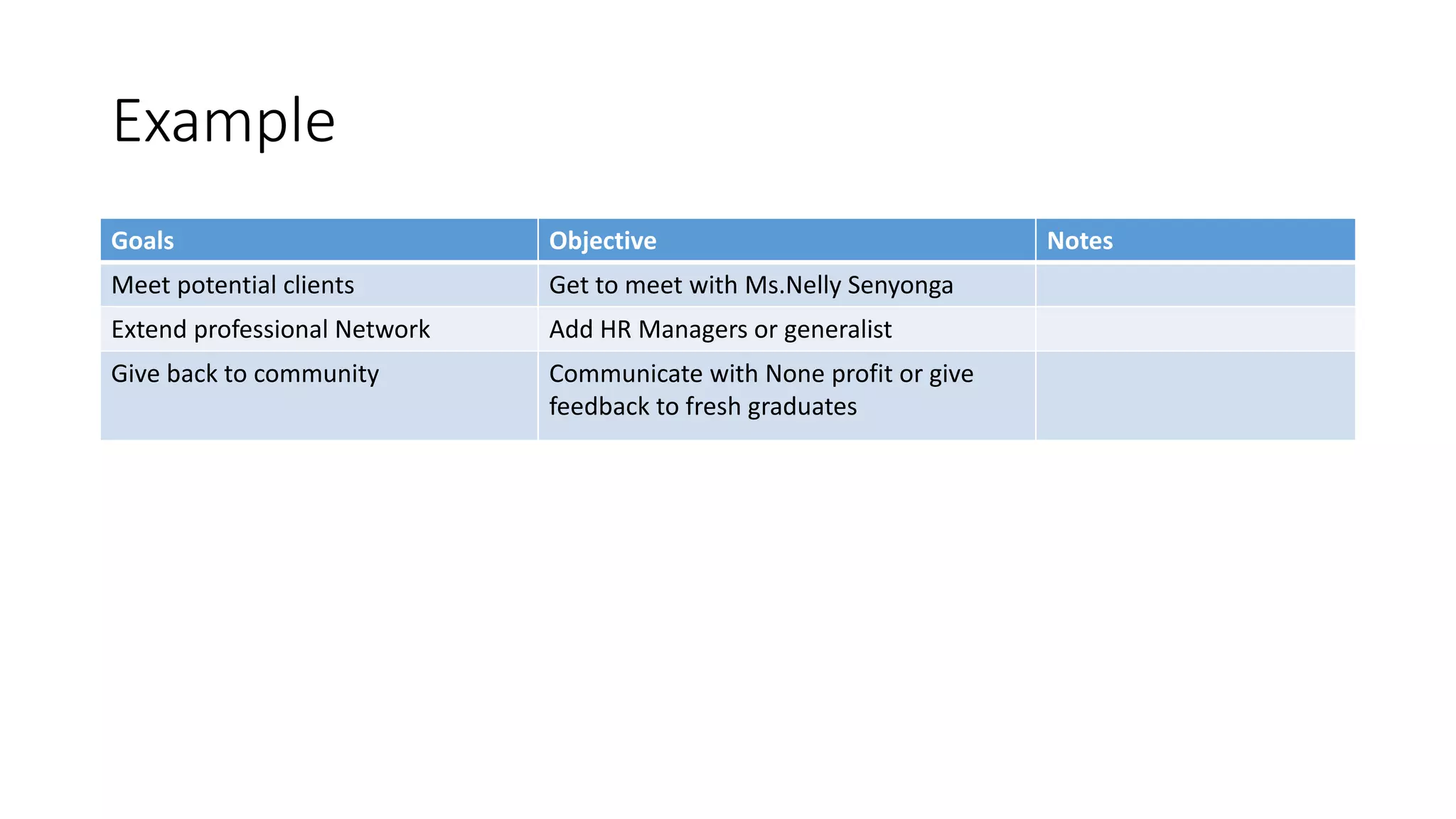
Example
Goals Objective Notes
Meet potential clients Get to meet with Ms.Nelly Senyonga
Extend professional Network Add HR Managers or generalist
Give back to community Communicate with None profit or give
feedback to fresh graduates
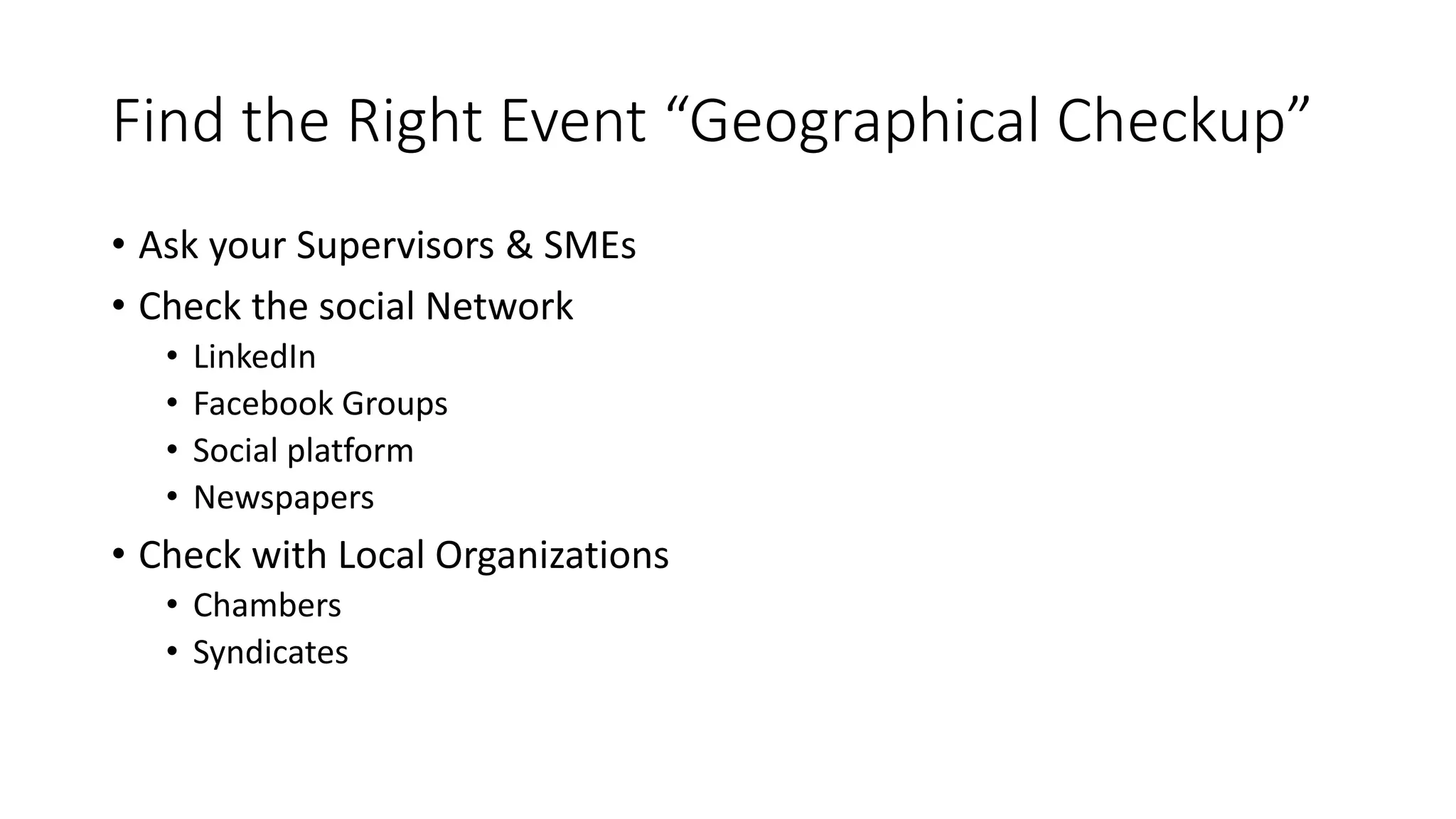
Find the Right Event “Geographical Checkup”
• Ask your Supervisors & SMEs
• Check the social Network
• LinkedIn
• Facebook Groups
• Social platform
• Newspapers
• Check with Local Organizations
• Chambers
• Syndicates
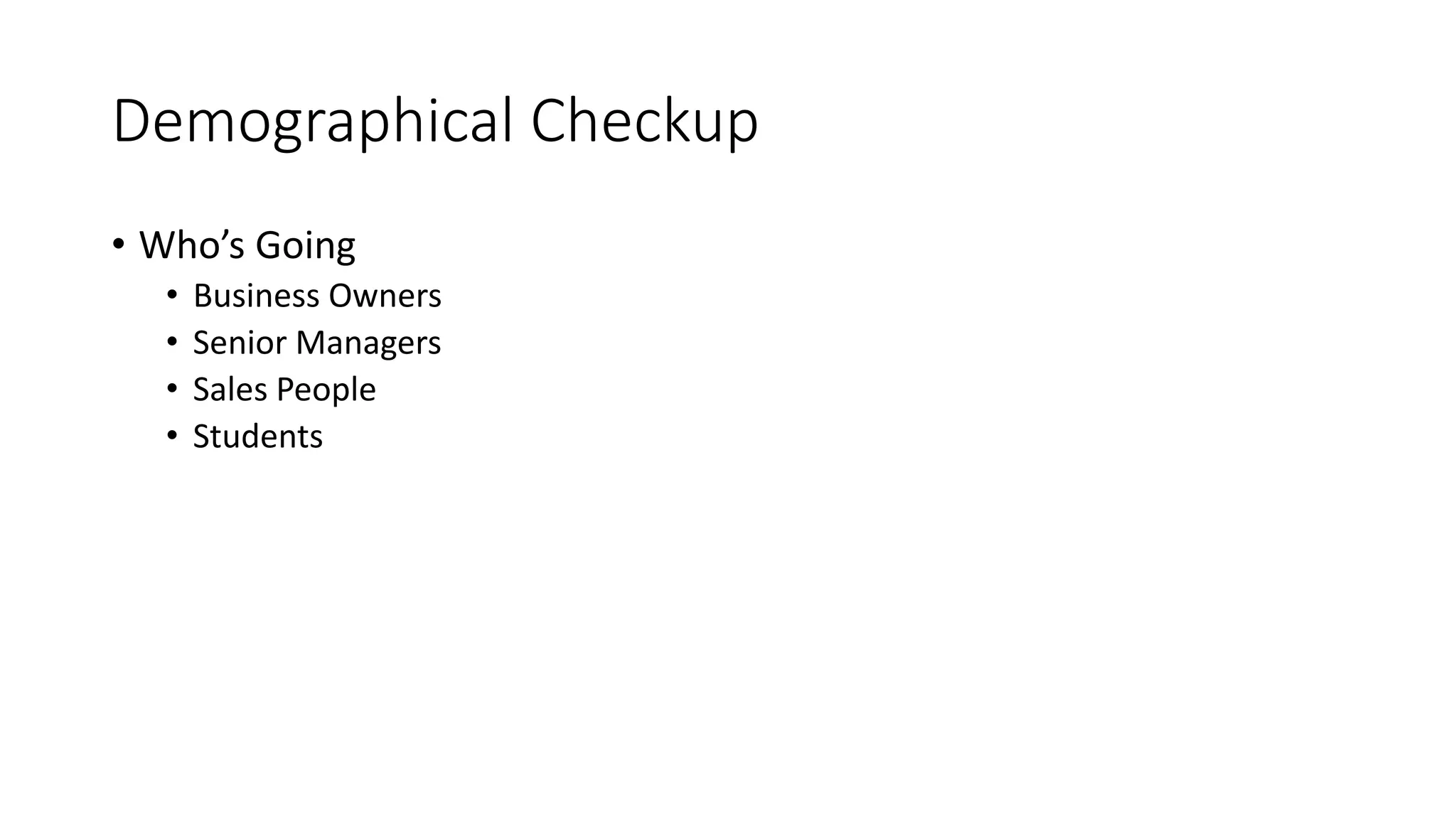
Demographical Checkup
• Who’s Going
• Business Owners
• Senior Managers
• Sales People
• Students
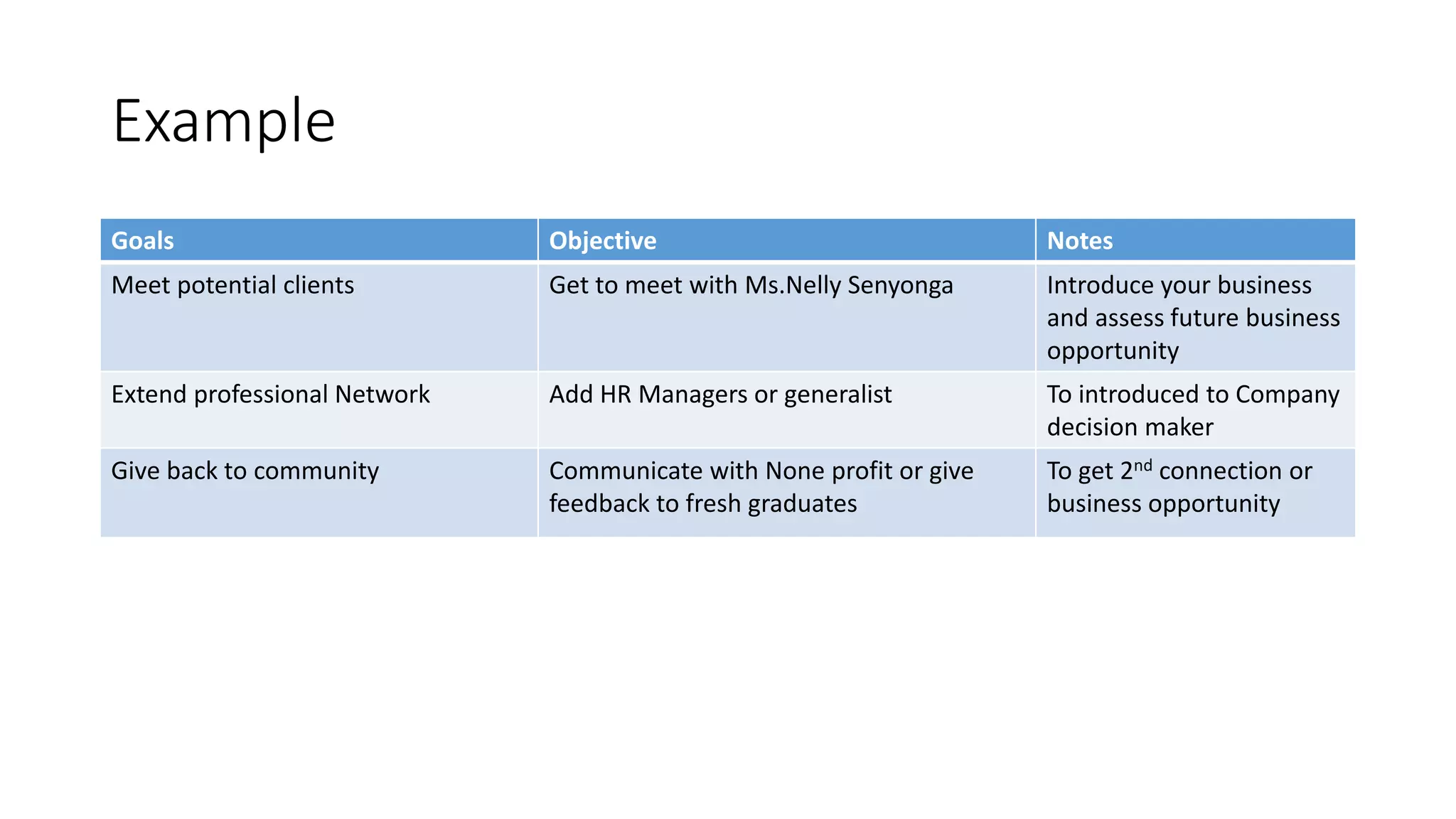
Example
Goals Objective Notes
Meet potential clients Get to meet with Ms.Nelly Senyonga Introduce your business
and assess future business
opportunity
Extend professional Network Add HR Managers or generalist To introduced to Company
decision maker
Give back to community Communicate with None profit or give
feedback to fresh graduates
To get 2nd connection or
business opportunity
How to prepare for networking events
• Ask yourself the following questions:
• Who am I?
• If you don’t know, how will you show or tell some one else?
• What have I done up until this point?
• Being able to describe this is essential to establishing credibility
• What do I want to do in the future?
• Having clearly defined goals provides context as to why you are networking
• What do you need or want from those attending the event?
• Establishing a purpose for your engagement gives structure to your conversations
Practice!
• Develop and improve your “Elevator Pitch” - What is this?
• Most successful pitches are simple and quick
• Consider your audience
• Individual? Company? Industry?
• Know yourself – REFLECTION
• Educational background
• Key Strengths
• What do you want them to know about you?
• Why are you giving this speech?
• Write it down – Approximately 90 words
Elevator pitch
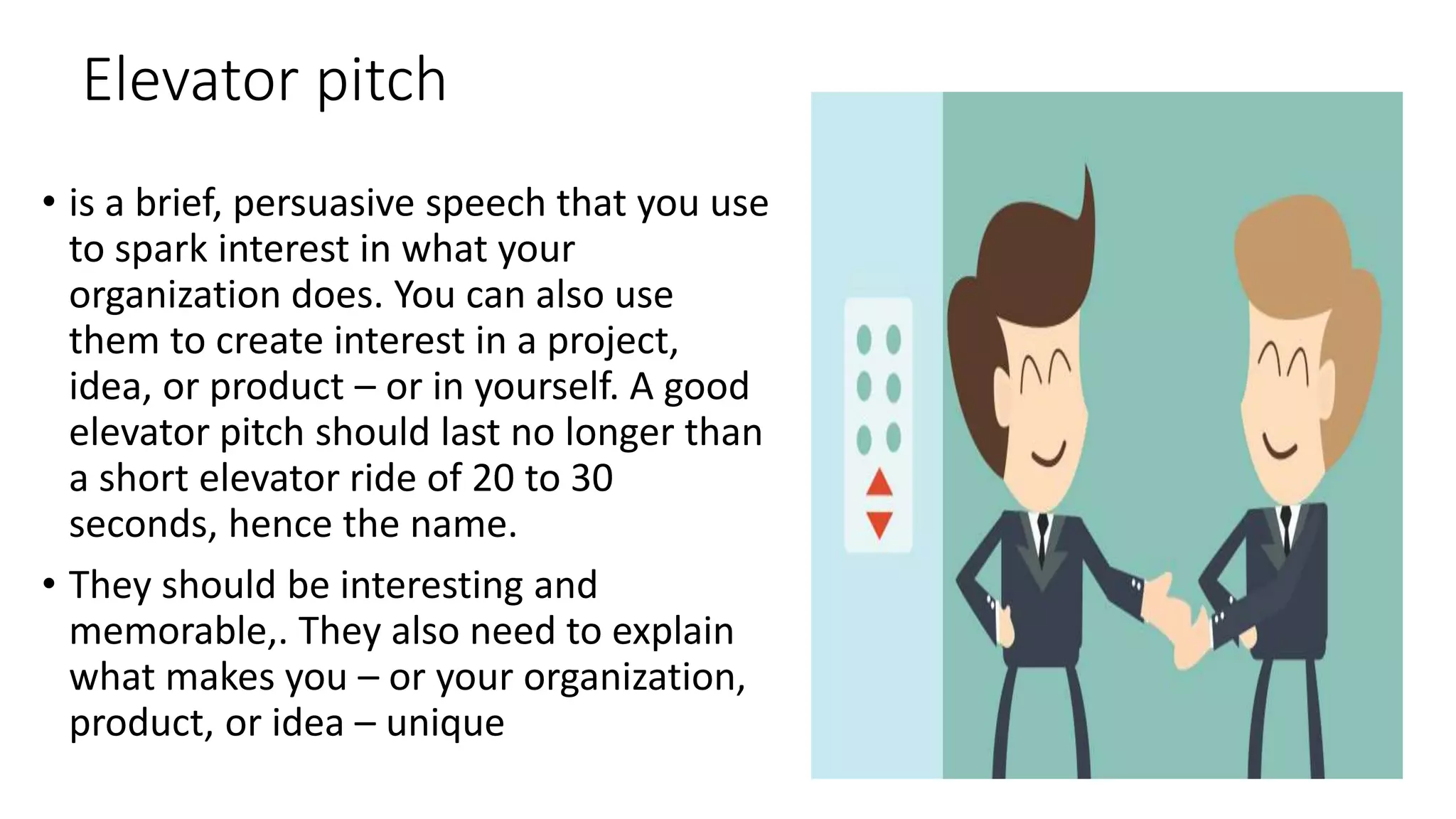
• is a brief, persuasive speech that you use
to spark interest in what your
organization does. You can also use
them to create interest in a project,
idea, or product – or in yourself. A good
elevator pitch should last no longer than
a short elevator ride of 20 to 30
seconds, hence the name.
• They should be interesting and
memorable,. They also need to explain
what makes you – or your organization,
product, or idea – unique
Key Components of an Elevator Pitch
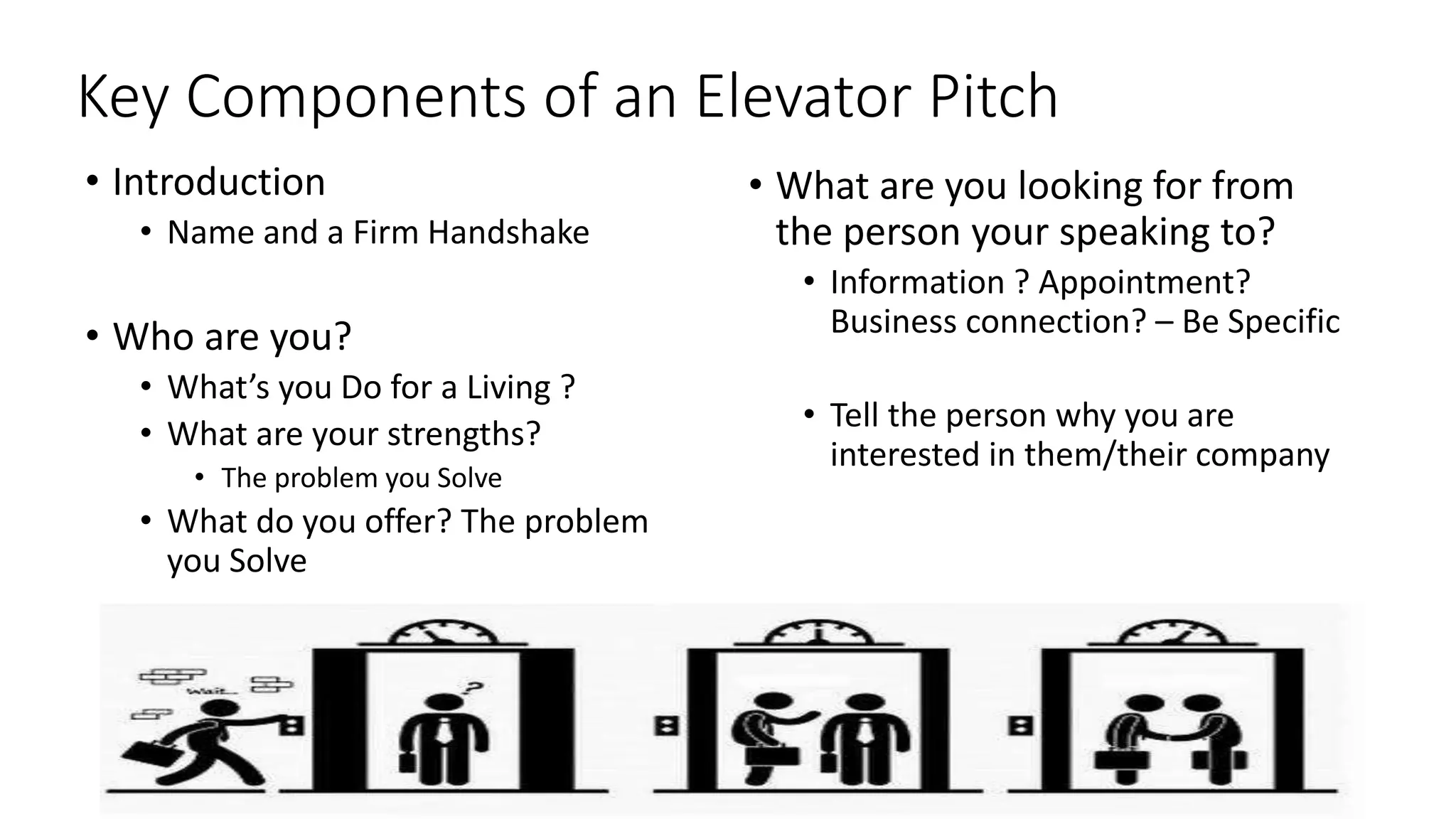
• Introduction
• Name and a Firm Handshake
• Who are you?
• What’s you Do for a Living ?
• What are your strengths?
• The problem you Solve
• What do you offer? The problem
you Solve
• What are you looking for from
the person your speaking to?
• Information ? Appointment?
Business connection? – Be Specific
• Tell the person why you are
interested in them/their company
Conversation Starters
• Go fishing at the food table
• “Everything looks so good, I don’t know what to get. What are you going to
have?”
• Find someone who is alone
• “These networking events can be so crazy. Would you mind if I joined you
over here where it’s a bit more quiet?”
• Give compliments
• “I love your dressing Style!”
• Just say hello
• “Hi, my name is….”
Do’s and Don’ts of Networking
DO’S
• The thank you’s
• Listen!!!
• Develop lasting relationships
• Always look for ways to reciprocate
in the future
• Remember to ask “what is your
story?” and “what advice do you
have for me?”
DON’TS
• Brag or exaggerate
• Spend too much time on unrelated topic
• Gossip
• Let your relationship become one sided
• Don’t just ask for a sales
• Forget to keep in touch
Example
• ‫ان‬ ‫حاليا‬ ‫عبدهللا‬ ‫وليد‬ ‫اسمى‬ ‫انا‬ ‫الخير‬ ‫مساء‬‫ا‬
‫كيرالشر‬ ‫ميدى‬ ‫شركه‬ ‫في‬ ‫مبيعات‬ ‫تنفيذى‬‫كه‬
‫تامين‬ ‫برامج‬ ‫تقديم‬ ‫على‬ ‫بتعمل‬ ‫بتاعتنا‬
‫انتاجيه‬ ‫ذياده‬ ‫على‬ ‫بتدور‬ ‫اللى‬ ‫للشركات‬
‫ع‬ ‫انا‬ ‫كده‬ ‫علشان‬ ‫التكلفه‬ ‫وتقليل‬ ‫العاملين‬‫ندى‬
‫بجوده‬ ‫بتهتم‬ ‫اللى‬ ‫الشركات‬ ‫من‬ ‫انك‬ ‫يقين‬
‫حضرتك‬ ‫اللى‬ ‫الخدمه‬ ‫على‬ ‫النعكاسها‬ ‫الحياه‬
‫ازاى‬ ‫ليك‬ ‫أوضح‬ ‫احب‬ ‫وقتك‬ ‫فلو‬ ‫بتقدمها‬
‫شركتك‬ ‫نجاح‬ ‫في‬ ‫نساهم‬ ‫نقدر‬ ‫ازاى‬ ‫احنا‬
Networking Tips
• Networking is not sales and sales is not networking
• Networking is a tool, an extremely valuable one that very successful
people rely on
• Networking requires a sincere desire to help others
• If you’re only in it for the money, or for yourself, ultimately it won’t
work
• Invest in helping others
• Networking is not just about you, it’s about the group, the network
After you leave a networking event…
Networking & Social Media
extensions of, but NOT replacements for personal networks
What’s the Difference?
• PERSONAL IMAGE
• Play games
• Share photos, videos, stories
• Provide relationship status
• Entertaining and informal
• PROFESSIONAL IMAGE
• Maintain business contacts
• Get introduced
• Recommend and endorse
• Find, post, or forward
information
Using Social Media as a Networking Tool
Twitter
• Form a creative bio
• Generate the conversation
• Follow people in the industry
• Retweet and interact
• Shout people out– get noticed!
Blogging
• Write about relevant topics in
the industry
• Become a guest blogger
• Ask to interview professionals
• Write reviews on related
products
• Be interactive in your comments
sections
The Day after the event
• Connect via Mail or LinkedIn
• Remind Them of how you Met
Practice!
Medicare how to build_a_professional_network

Medicare how to build_a_professional_network

  • 1.
    How To BuildA Professional Network Waleed Abdallah Ahmed Middle East Medicare
  • 2.
    Outline • Networking– thebasics • When and where does networking take place? • Social media and networking • Networking Event!
  • 4.
  • 5.
    Professional Networking • Networkingis the art of forming and maintaining mutually beneficial relationships with others who are linked to your career, profession, or share your interest. Networking offers the opportunity to debate issues related to your field, share experiences and exchange perspectives • 2 Types – Business and Social • Goal: Building of relationships • Business: Objective is to form relationships that will improve organizational success or become employed
  • 6.
    So What? • NETWORKINGis the single most powerful marketing tactic to accelerate and sustain success for any individual or organization! • “Where job boards have a 3-10% effectiveness rate, and probably less now that Applicant Tracking Systems (the software that will rank your resume) are becoming prevalent, networking has a 30- 60% effectiveness rate. Referred people are less risk and have a higher retention rate – that’s why companies offer referral bonuses to employees who recommend someone who has been hired.” – Don Goodman “It is not about who you know, but WHO KNOWS YOU” • We will be helping you to understand the basics of networking, as well as how you can begin to build a strong network.
  • 7.
    Developing a NetworkList • To get started it will help to generate a networking list. Start by making a list of people you know. Think broadly, since this is simply brainstorming. List every possibility you can think • Ask them to get Referral Familyfriends Employers Alumni ProfessorsTeachers
  • 8.
    Goals & Objectives •What are you trying to achieve? • What type of people do you want to meet? • HOW Many People do you want to talk to? • What do you want to talk about?
  • 9.
    Example Goals Objective Notes Meetpotential clients Get to meet with Ms.Nelly Senyonga Extend professional Network Add HR Managers or generalist Give back to community Communicate with None profit or give feedback to fresh graduates
  • 10.
    Find the RightEvent “Geographical Checkup” • Ask your Supervisors & SMEs • Check the social Network • LinkedIn • Facebook Groups • Social platform • Newspapers • Check with Local Organizations • Chambers • Syndicates
  • 11.
    Demographical Checkup • Who’sGoing • Business Owners • Senior Managers • Sales People • Students
  • 12.
    Example Goals Objective Notes Meetpotential clients Get to meet with Ms.Nelly Senyonga Introduce your business and assess future business opportunity Extend professional Network Add HR Managers or generalist To introduced to Company decision maker Give back to community Communicate with None profit or give feedback to fresh graduates To get 2nd connection or business opportunity
  • 13.
    How to preparefor networking events • Ask yourself the following questions: • Who am I? • If you don’t know, how will you show or tell some one else? • What have I done up until this point? • Being able to describe this is essential to establishing credibility • What do I want to do in the future? • Having clearly defined goals provides context as to why you are networking • What do you need or want from those attending the event? • Establishing a purpose for your engagement gives structure to your conversations
  • 14.
    Practice! • Develop andimprove your “Elevator Pitch” - What is this? • Most successful pitches are simple and quick • Consider your audience • Individual? Company? Industry? • Know yourself – REFLECTION • Educational background • Key Strengths • What do you want them to know about you? • Why are you giving this speech? • Write it down – Approximately 90 words
  • 15.
    Elevator pitch • isa brief, persuasive speech that you use to spark interest in what your organization does. You can also use them to create interest in a project, idea, or product – or in yourself. A good elevator pitch should last no longer than a short elevator ride of 20 to 30 seconds, hence the name. • They should be interesting and memorable,. They also need to explain what makes you – or your organization, product, or idea – unique
  • 16.
    Key Components ofan Elevator Pitch • Introduction • Name and a Firm Handshake • Who are you? • What’s you Do for a Living ? • What are your strengths? • The problem you Solve • What do you offer? The problem you Solve • What are you looking for from the person your speaking to? • Information ? Appointment? Business connection? – Be Specific • Tell the person why you are interested in them/their company
  • 17.
    Conversation Starters • Gofishing at the food table • “Everything looks so good, I don’t know what to get. What are you going to have?” • Find someone who is alone • “These networking events can be so crazy. Would you mind if I joined you over here where it’s a bit more quiet?” • Give compliments • “I love your dressing Style!” • Just say hello • “Hi, my name is….”
  • 18.
    Do’s and Don’tsof Networking DO’S • The thank you’s • Listen!!! • Develop lasting relationships • Always look for ways to reciprocate in the future • Remember to ask “what is your story?” and “what advice do you have for me?” DON’TS • Brag or exaggerate • Spend too much time on unrelated topic • Gossip • Let your relationship become one sided • Don’t just ask for a sales • Forget to keep in touch
  • 19.
    Example • ‫ان‬ ‫حاليا‬‫عبدهللا‬ ‫وليد‬ ‫اسمى‬ ‫انا‬ ‫الخير‬ ‫مساء‬‫ا‬ ‫كيرالشر‬ ‫ميدى‬ ‫شركه‬ ‫في‬ ‫مبيعات‬ ‫تنفيذى‬‫كه‬ ‫تامين‬ ‫برامج‬ ‫تقديم‬ ‫على‬ ‫بتعمل‬ ‫بتاعتنا‬ ‫انتاجيه‬ ‫ذياده‬ ‫على‬ ‫بتدور‬ ‫اللى‬ ‫للشركات‬ ‫ع‬ ‫انا‬ ‫كده‬ ‫علشان‬ ‫التكلفه‬ ‫وتقليل‬ ‫العاملين‬‫ندى‬ ‫بجوده‬ ‫بتهتم‬ ‫اللى‬ ‫الشركات‬ ‫من‬ ‫انك‬ ‫يقين‬ ‫حضرتك‬ ‫اللى‬ ‫الخدمه‬ ‫على‬ ‫النعكاسها‬ ‫الحياه‬ ‫ازاى‬ ‫ليك‬ ‫أوضح‬ ‫احب‬ ‫وقتك‬ ‫فلو‬ ‫بتقدمها‬ ‫شركتك‬ ‫نجاح‬ ‫في‬ ‫نساهم‬ ‫نقدر‬ ‫ازاى‬ ‫احنا‬
  • 20.
    Networking Tips • Networkingis not sales and sales is not networking • Networking is a tool, an extremely valuable one that very successful people rely on • Networking requires a sincere desire to help others • If you’re only in it for the money, or for yourself, ultimately it won’t work • Invest in helping others • Networking is not just about you, it’s about the group, the network
  • 21.
    After you leavea networking event…
  • 22.
    Networking & SocialMedia extensions of, but NOT replacements for personal networks
  • 23.
    What’s the Difference? •PERSONAL IMAGE • Play games • Share photos, videos, stories • Provide relationship status • Entertaining and informal • PROFESSIONAL IMAGE • Maintain business contacts • Get introduced • Recommend and endorse • Find, post, or forward information
  • 24.
    Using Social Mediaas a Networking Tool Twitter • Form a creative bio • Generate the conversation • Follow people in the industry • Retweet and interact • Shout people out– get noticed! Blogging • Write about relevant topics in the industry • Become a guest blogger • Ask to interview professionals • Write reviews on related products • Be interactive in your comments sections
  • 25.
    The Day afterthe event • Connect via Mail or LinkedIn • Remind Them of how you Met
  • 26.