Why is small team collaboration easy?
Why doesn’t small team success easily
scale to large organizations?
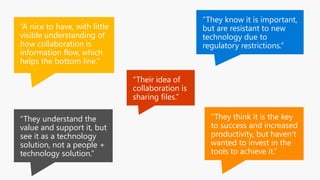
“A nice to have, with little
visible understanding of
how collaboration is
information flow, which
helps the bottom line.”
“They know it is important,
but are resistant to new
technology due to
regulatory restrictions.”
“They think it is the key
to success and increased
productivity, but haven’t
wanted to invest in the
tools to achieve it.”
“Their idea of
collaboration is
sharing files.”
“They understand the
value and support it, but
see it as a technology
solution, not a people +
technology solution.”
“Never underestimate
the amount of change
management, training,
and effort required to
get people to
collaborate effectively.”
“Don’t be afraid to
stumble. Do some
experiments.”
“Understand the
goals, and work with
leadership to ensure
their visible support.”
“Get everyone on the same
page. Agree on goals,
promote transparency and
sharing (instead of working
individually and in silos).”
“Start by talking about
your expectations. And
decide on some initial
metrics up front, refine
over time as people start
using the technology.”
“Engage people in the
planning process.
Build solutions in
small increments.”
Be sure to download
the whitepaper
http://hubs.ly/H03lxlP0
Don’t miss this great community feedback with
insights from our panel of experts on:
• Common success drivers for enterprise collaboration
• Creating a shared definition around collaboration success
• Insights into large vs. small team issues
• Guidance on best practices for your own strategy
• Wednesday, 10:20am to 10:40am -- MVP HubTalk 1
• Thursday, 11:00am to 11:45am – Beezy mini-theater (Booth 2044)

Measuring Collaboration Success

  • 5.
    Why is smallteam collaboration easy?
  • 6.
    Why doesn’t smallteam success easily scale to large organizations?
  • 8.
    “A nice tohave, with little visible understanding of how collaboration is information flow, which helps the bottom line.” “They know it is important, but are resistant to new technology due to regulatory restrictions.” “They think it is the key to success and increased productivity, but haven’t wanted to invest in the tools to achieve it.” “Their idea of collaboration is sharing files.” “They understand the value and support it, but see it as a technology solution, not a people + technology solution.”
  • 18.
    “Never underestimate the amountof change management, training, and effort required to get people to collaborate effectively.” “Don’t be afraid to stumble. Do some experiments.” “Understand the goals, and work with leadership to ensure their visible support.” “Get everyone on the same page. Agree on goals, promote transparency and sharing (instead of working individually and in silos).” “Start by talking about your expectations. And decide on some initial metrics up front, refine over time as people start using the technology.” “Engage people in the planning process. Build solutions in small increments.”
  • 19.
    Be sure todownload the whitepaper http://hubs.ly/H03lxlP0 Don’t miss this great community feedback with insights from our panel of experts on: • Common success drivers for enterprise collaboration • Creating a shared definition around collaboration success • Insights into large vs. small team issues • Guidance on best practices for your own strategy
  • 20.
    • Wednesday, 10:20amto 10:40am -- MVP HubTalk 1 • Thursday, 11:00am to 11:45am – Beezy mini-theater (Booth 2044)

Editor's Notes

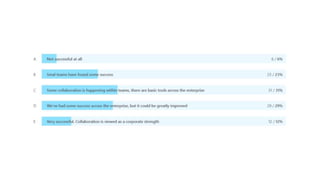
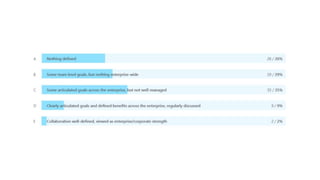
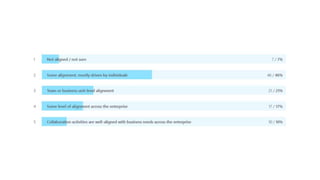
  • #8 Ask most information workers whether they feel their own organization does a good job at collaboration, and you’ll likely receive a wide array of mostly positive answers. But ask them to articulate their company’s definition of collaboration, and provide details as to why they think their company is successful, and their reasoning begins to break down. What companies need is a shared understanding of what constitutes successful collaboration, and guidance on how to implement and measure those guidelines.
  • #9 Within the survey, we asked respondents to share their thoughts on how their management teams viewed collaboration.