Measuring and modeling dermal exposure – developments in EuropeJohn W Cherrie
Outline of the talk…Schneider et al conceptual modelThe DREAM toolValidation of DREAMBy the authorsIn situations where heavy fuel oil is usedThe way forwardREACH and the Advanced REACH Tool (ART) and Bayesian statistical techniques
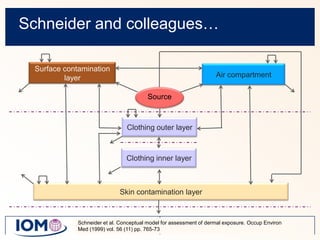
Schneider and colleagues…Surface contamination layerAir compartmentSourceClothing outer layerClothing inner layerSkin contamination layerSchneider et al. Conceptual model for assessment of dermal exposure. Occup Environ Med (1999) vol. 56 (11) pp. 765-73
DeRmalExposure Assessment Method - DREAMA dermal exposure prediction tool based on the Schneider et al conceptual modelvan Wendel de Joode et al. DREAM: A method for semi-quantitative dermal exposure assessment. Annals of Occupational Hygiene (2003) vol. 47 (1) pp. 71-87
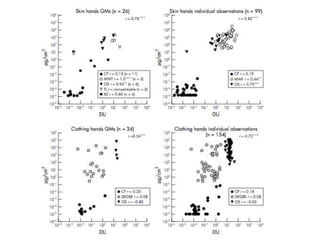
DREAM validations…van Wendel de Joode et al. Accuracy of a semiquantitative method for Dermal Exposure Assessment (DREAM). Occup Environ Med (2005) vol. 62 (9) pp. 623-32
Heavy fuel oil (HFO)…Industrial fuel for power stationsHeating large industrial sitesHeating fuel in hospitals and distilleries in remote area (e.g. Scottish Highlands)Marine oilHFO contains polycyclic aromatic hydrocarbons
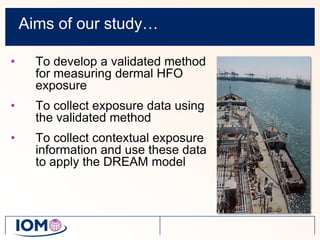
Aims of our study…To develop a validated method for measuring dermal HFO exposureTo collect exposure data using the validated methodTo collect contextual exposure information and use these data to apply the DREAM model
Methods…Removal method using clinical wipes saturated with 70% isopropyl alcohol – three sequential wipes25 cm2 forearm and neckPalms of each handCollected following the completion of task and before rest breaksSome pre-task samples also collectedFiled blanksGG-MS analysis for marker PAHs
Sites investigated…Production2 oil refineriesDistribution2 fuel distribution terminalsincluding 1 associated with distribution by shippingUse2 Energy providers1 Power plant engine building and repair
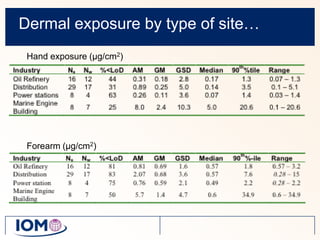
Dermal exposure by type of site…Hand exposure (µg/cm2)Forearm (µg/cm2)
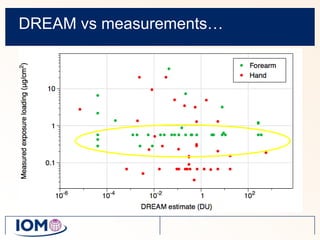
DREAM vs measurements…
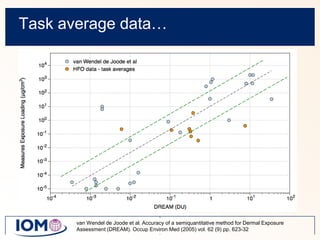
Task average data…van Wendel de Joode et al. Accuracy of a semiquantitative method for Dermal Exposure Assessment (DREAM). Occup Environ Med (2005) vol. 62 (9) pp. 623-32
The way forward…The Advanced REACH Tool www.AdvancedREACHtool.comCurrently for inhalation exposure onlyUses Bayesian algorithm to combine model prediction with measurementsPlans to use DREAM to develop a dermal toolExpect to start preparatory work this year
The slides are available at OH-world.orgYou can download this and other presentations from my website www.OH-world.orgFollow my blog on Twitter at www.Twitter.com/JohnCherrie

Measuring and modeling dermal exposure – developments in Europe

  • 1.
    Measuring and modelingdermal exposure – developments in EuropeJohn W Cherrie
  • 2.
    Outline of thetalk…Schneider et al conceptual modelThe DREAM toolValidation of DREAMBy the authorsIn situations where heavy fuel oil is usedThe way forwardREACH and the Advanced REACH Tool (ART) and Bayesian statistical techniques
  • 3.
    Schneider and colleagues…Surfacecontamination layerAir compartmentSourceClothing outer layerClothing inner layerSkin contamination layerSchneider et al. Conceptual model for assessment of dermal exposure. Occup Environ Med (1999) vol. 56 (11) pp. 765-73
  • 4.
    DeRmalExposure Assessment Method- DREAMA dermal exposure prediction tool based on the Schneider et al conceptual modelvan Wendel de Joode et al. DREAM: A method for semi-quantitative dermal exposure assessment. Annals of Occupational Hygiene (2003) vol. 47 (1) pp. 71-87
  • 5.
    DREAM validations…van Wendelde Joode et al. Accuracy of a semiquantitative method for Dermal Exposure Assessment (DREAM). Occup Environ Med (2005) vol. 62 (9) pp. 623-32
  • 6.
    Heavy fuel oil(HFO)…Industrial fuel for power stationsHeating large industrial sitesHeating fuel in hospitals and distilleries in remote area (e.g. Scottish Highlands)Marine oilHFO contains polycyclic aromatic hydrocarbons
  • 7.
    Aims of ourstudy…To develop a validated method for measuring dermal HFO exposureTo collect exposure data using the validated methodTo collect contextual exposure information and use these data to apply the DREAM model
  • 8.
    Methods…Removal method usingclinical wipes saturated with 70% isopropyl alcohol – three sequential wipes25 cm2 forearm and neckPalms of each handCollected following the completion of task and before rest breaksSome pre-task samples also collectedFiled blanksGG-MS analysis for marker PAHs
  • 9.
    Sites investigated…Production2 oilrefineriesDistribution2 fuel distribution terminalsincluding 1 associated with distribution by shippingUse2 Energy providers1 Power plant engine building and repair
  • 10.
    Dermal exposure bytype of site…Hand exposure (µg/cm2)Forearm (µg/cm2)
  • 11.
  • 12.
    Task average data…vanWendel de Joode et al. Accuracy of a semiquantitative method for Dermal Exposure Assessment (DREAM). Occup Environ Med (2005) vol. 62 (9) pp. 623-32
  • 13.
    The way forward…TheAdvanced REACH Tool www.AdvancedREACHtool.comCurrently for inhalation exposure onlyUses Bayesian algorithm to combine model prediction with measurementsPlans to use DREAM to develop a dermal toolExpect to start preparatory work this year
  • 14.
    The slides areavailable at OH-world.orgYou can download this and other presentations from my website www.OH-world.orgFollow my blog on Twitter at www.Twitter.com/JohnCherrie

Editor's Notes

  • #11 Why are average levels higher on forearms and exposure mode variable for first three situations?
  • #13 50% within +- 100% of average