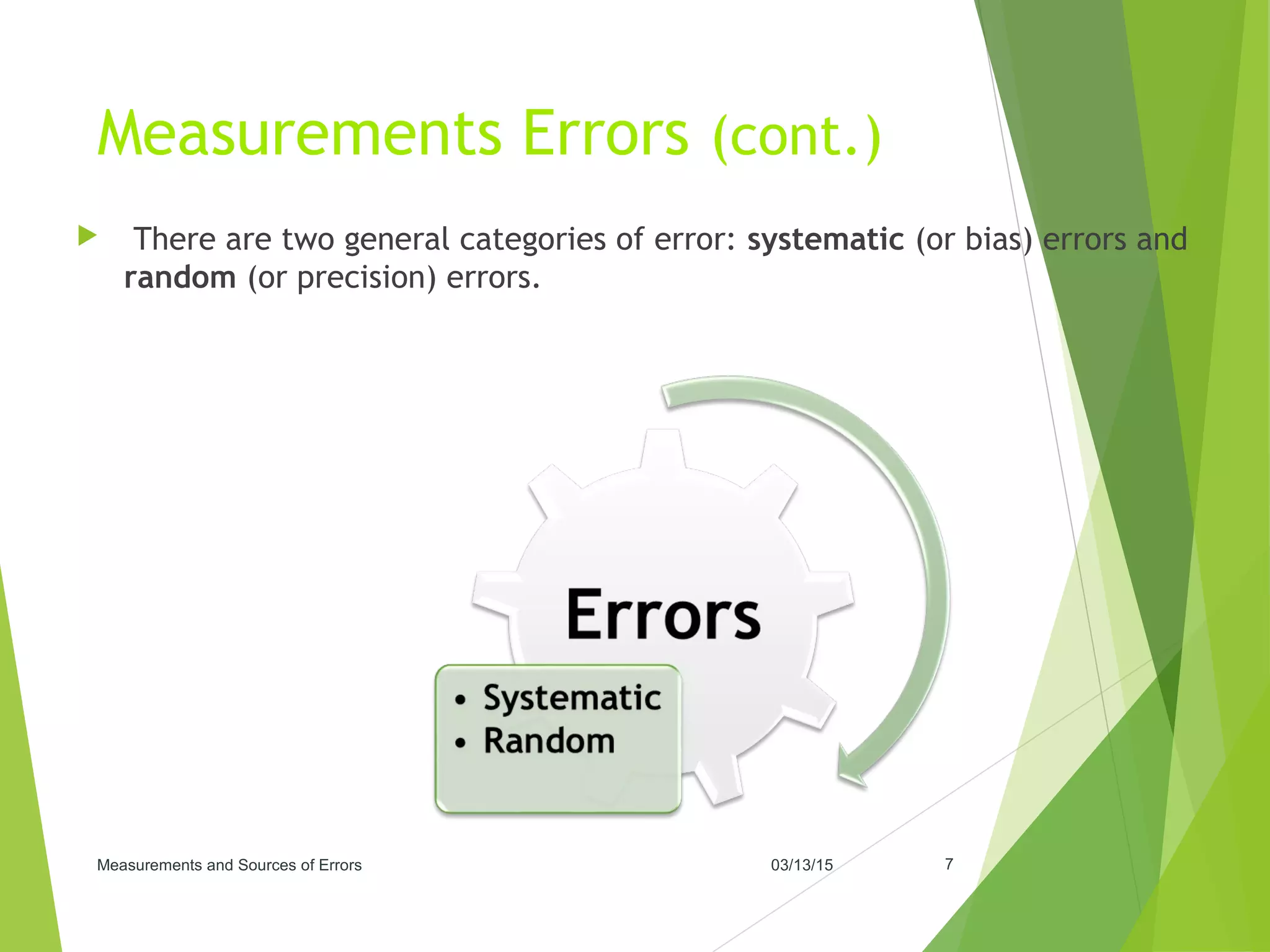
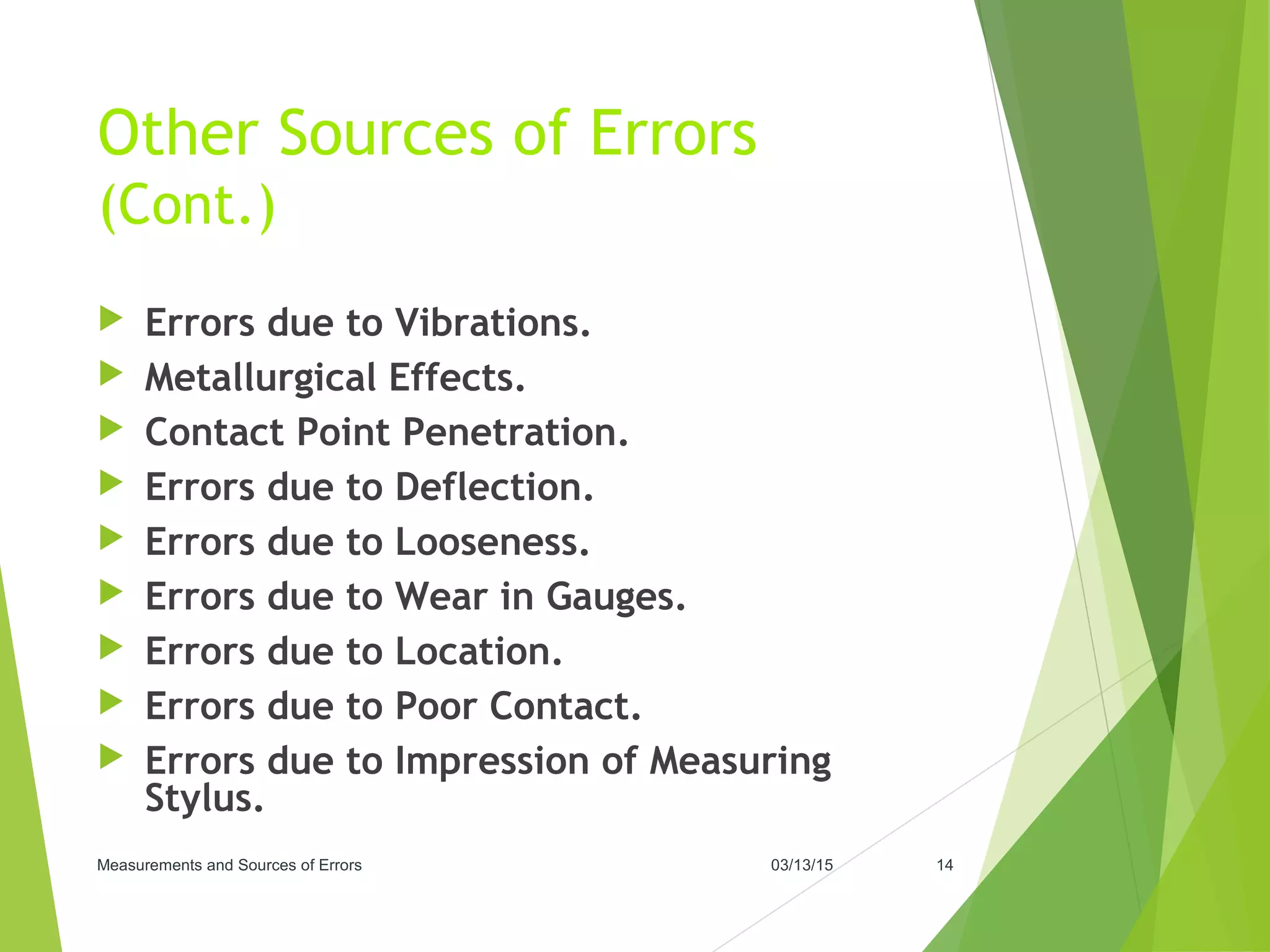
There are two categories of measurement errors: systematic errors, which are consistent and repeatable, and random errors, which produce inconsistent scatter in measurements. Systematic errors can be caused by calibration issues, loading effects, defective equipment, or human biases. Random errors result from unpredictable fluctuations and limit measurement precision. Sources of error also include zero offset, nonlinearity, sensitivity problems, finite resolution, environmental factors, and issues with reading techniques, instrument loading, supports, dirt, vibrations, metallurgy, contacts, deflection, looseness, gauge wear, location, contact quality, and stylus impression. Careful consideration of error sources is important for obtaining accurate measurements.