Prof. Dr. A.MAHABOOBJAN
BHARATHIDASAN UNIVERSITY,
TIRUCHIRAPPALLI, TAMILNADU, INDIA.
TRAINING FOR MOTOR
COMPONENT - FLEXIBILITY
FLEXIBILITY
Range of movements of joint is
known as flexibility.
It is an ability of a joint to execute
movements with greater range.
Forms of Flexibility
 General Flexibility: It is the level of
flexibility of all important joints of the
body. Eg. Shoulder trunk and hip.
 Specific Flexibility: Ability to do
movement or movements of a
sportsmen with greater amplitude.
Flexibility Further it divided in to
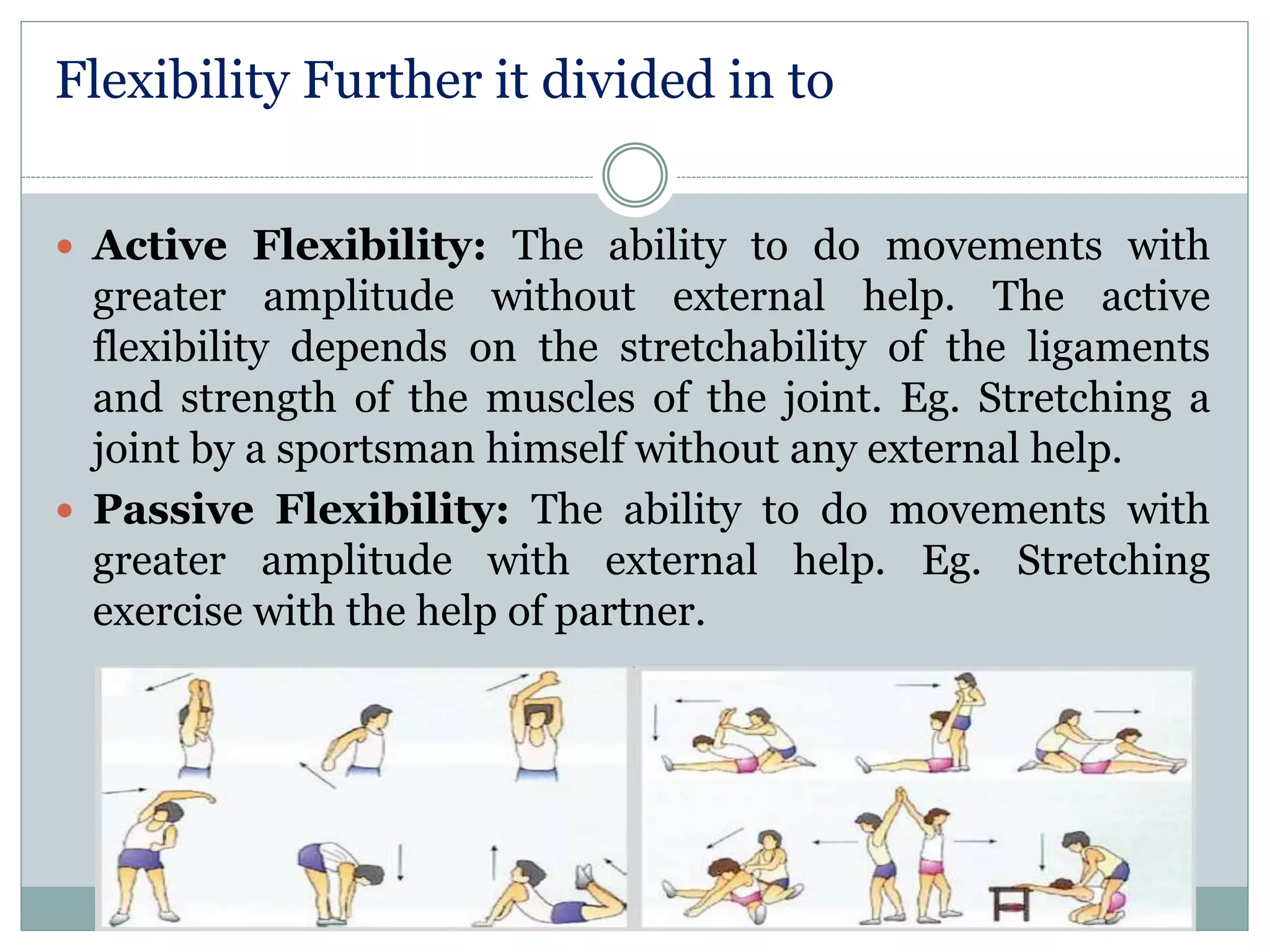
 Active Flexibility: The ability to do movements with
greater amplitude without external help. The active
flexibility depends on the stretchability of the ligaments
and strength of the muscles of the joint. Eg. Stretching a
joint by a sportsman himself without any external help.
 Passive Flexibility: The ability to do movements with
greater amplitude with external help. Eg. Stretching
exercise with the help of partner.
Active Flexibility further divided in to
 Static Flexibility: It is required for movements
done while the sportsman sitting, standing or
lying.
 Dynamic Flexibility: It is required for executive
movements with greater amplitude when the
sportsman is moving.
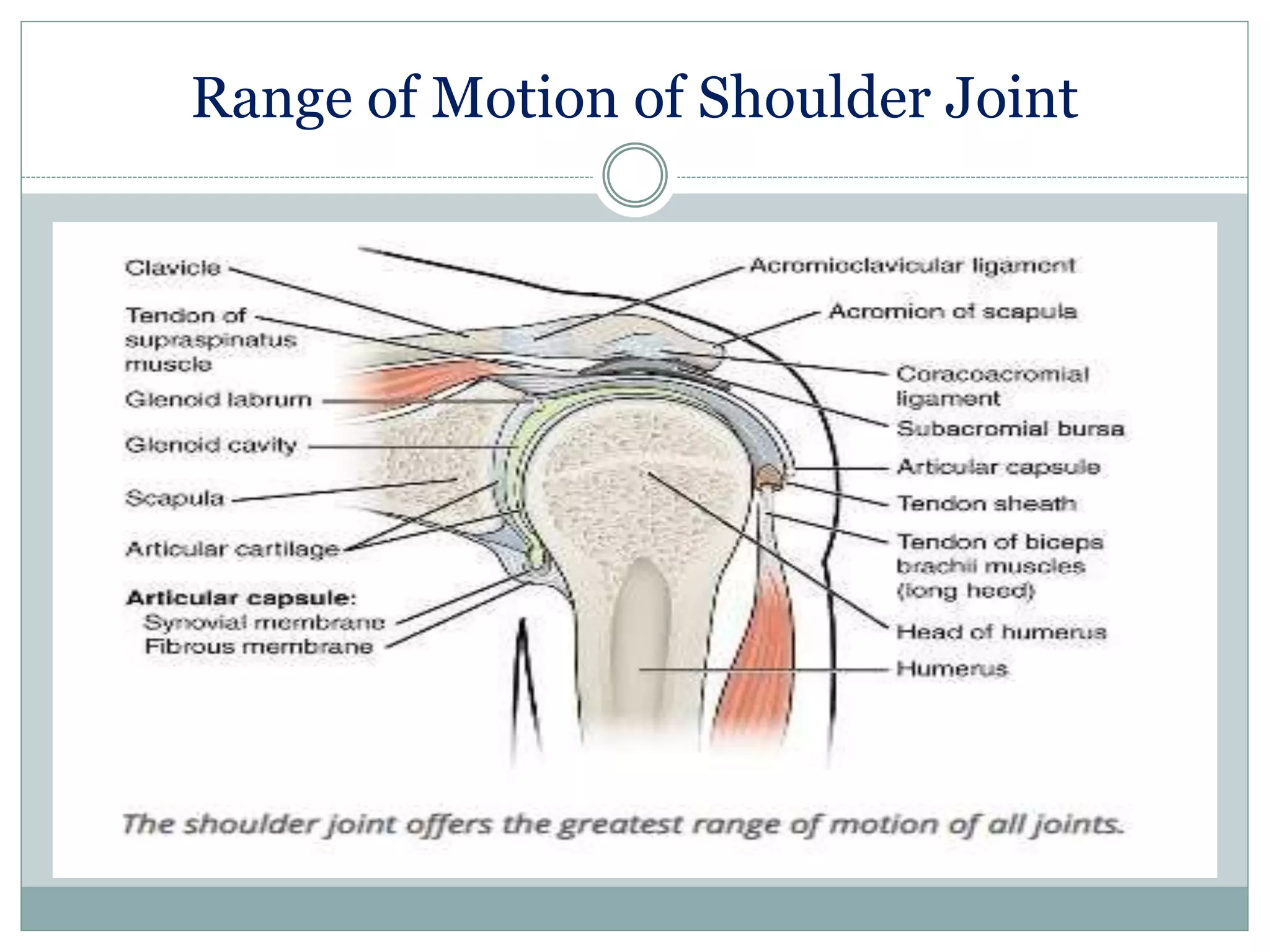
Range of Motion of Shoulder Joint
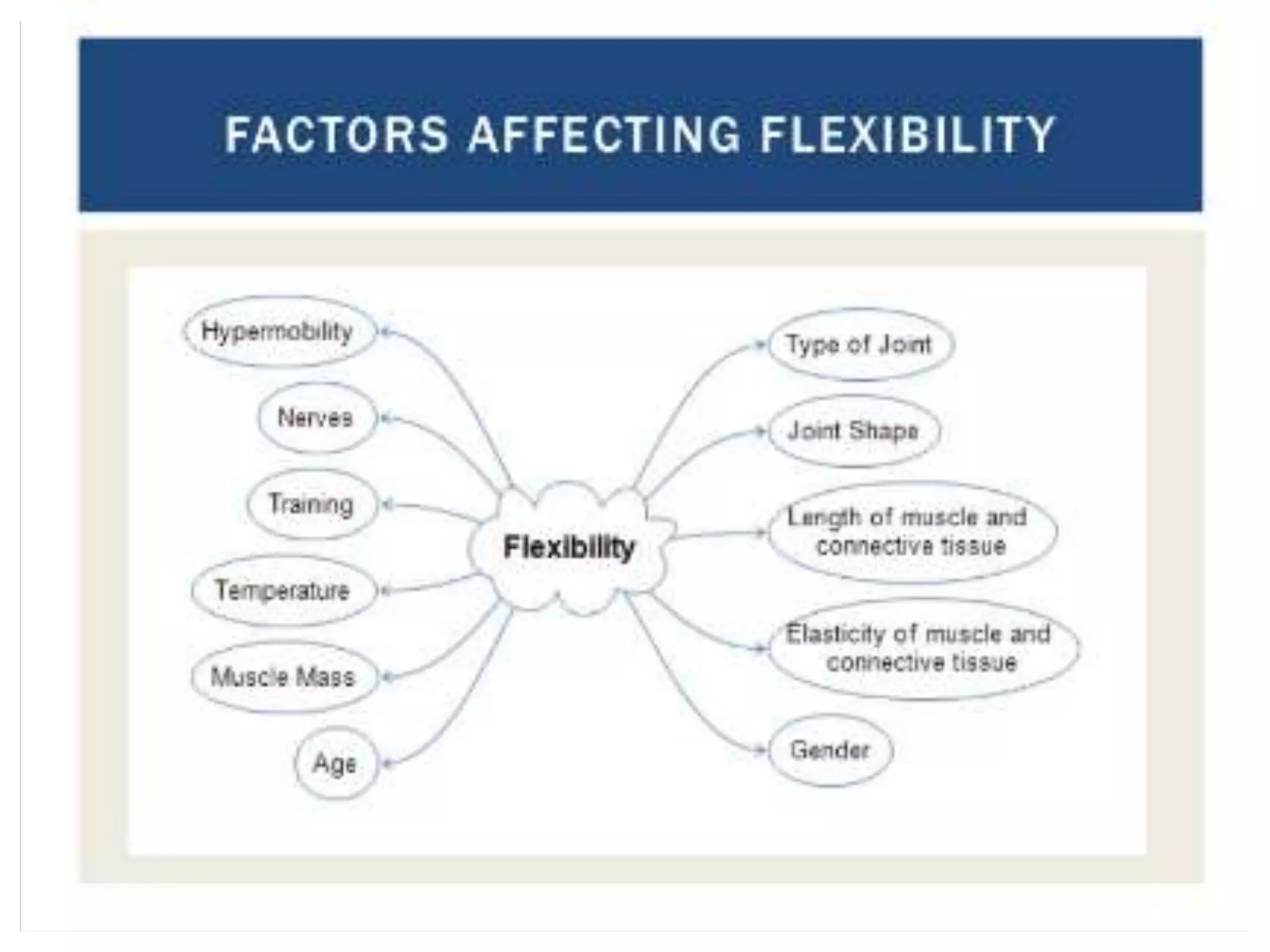
Factors Determining the Flexibility
(Basis of Flexibility)
 Anatomical Structure of the Joint: The mobility
of the joints depends upon the anatomical structure.
 Ligaments of Joints: The ligaments basically
ensure the stability of the joint. The length of the
ligaments and their alignment in a joint determines
to what extent and in which direction the movement
can take place.
 Stretchability of Muscles: The stretchability of
the muscle is most common factor limiting the range
of movements. The co-ordination of agonist and
antagonistic muscles regulate the joints movements.
Factors Determining the Flexibility Cond…
 Co-ordination: The optimum range of movement
depends upon the ability of the nervous system to
meaningfully integrate the contraction and
relaxation of the muscles of a joint.
 Strength: The sports movements are done against
gravity, the strength is essential for achieving larger
level of movements.
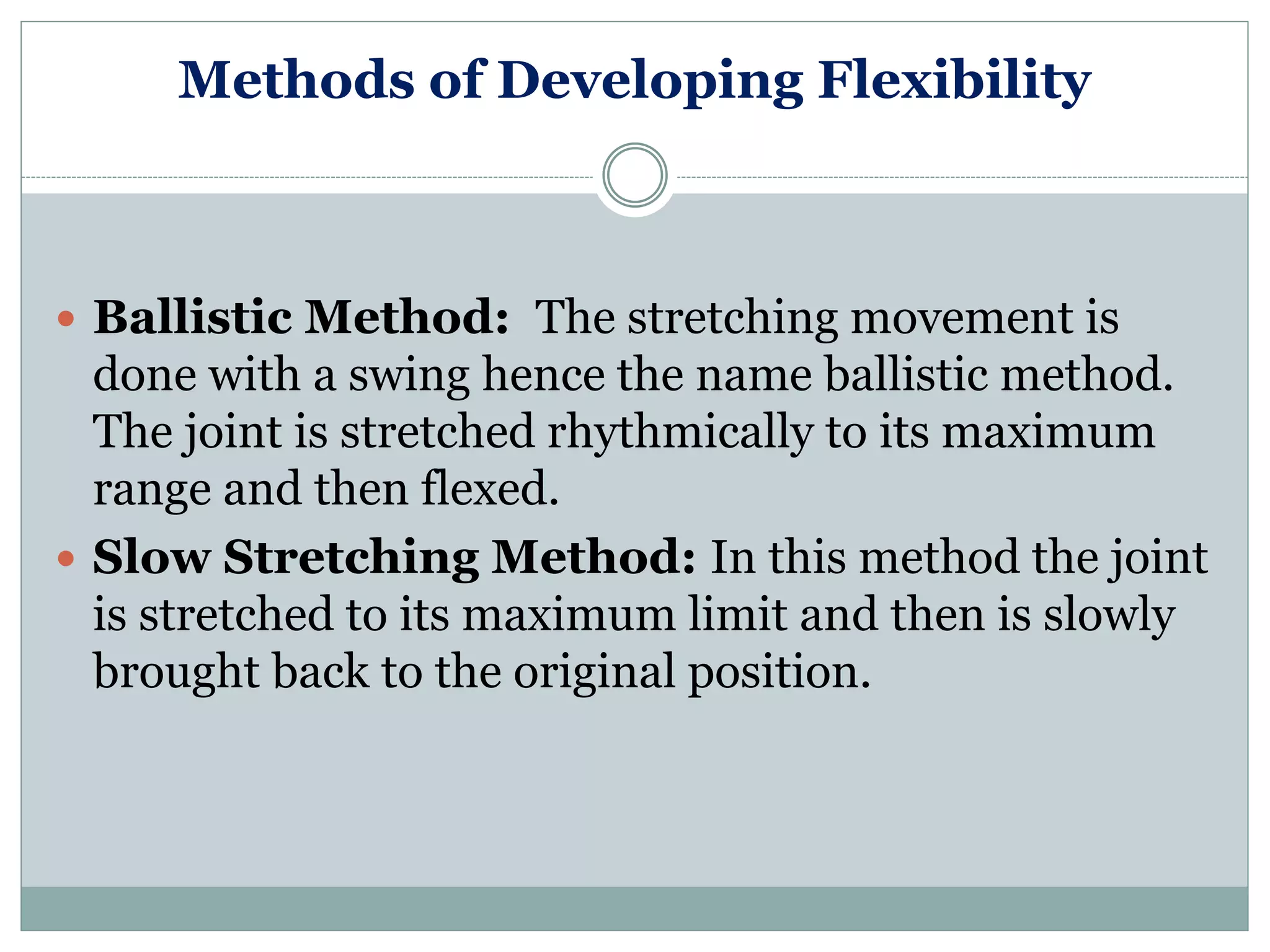
Methods of Developing Flexibility
 Ballistic Method: The stretching movement is
done with a swing hence the name ballistic method.
The joint is stretched rhythmically to its maximum
range and then flexed.
 Slow Stretching Method: In this method the joint
is stretched to its maximum limit and then is slowly
brought back to the original position.
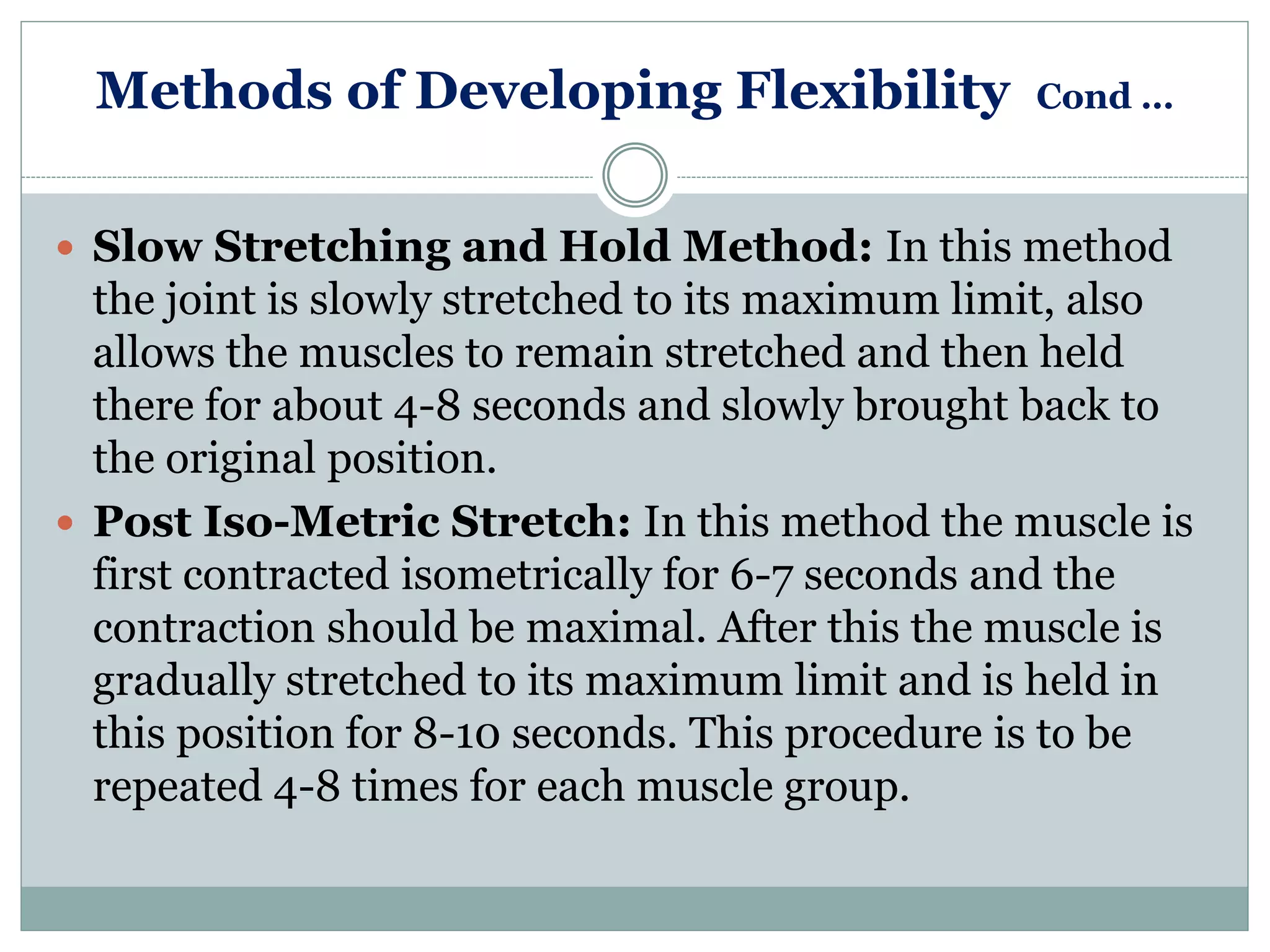
Methods of Developing Flexibility Cond …
 Slow Stretching and Hold Method: In this method
the joint is slowly stretched to its maximum limit, also
allows the muscles to remain stretched and then held
there for about 4-8 seconds and slowly brought back to
the original position.
 Post Iso-Metric Stretch: In this method the muscle is
first contracted isometrically for 6-7 seconds and the
contraction should be maximal. After this the muscle is
gradually stretched to its maximum limit and is held in
this position for 8-10 seconds. This procedure is to be
repeated 4-8 times for each muscle group.
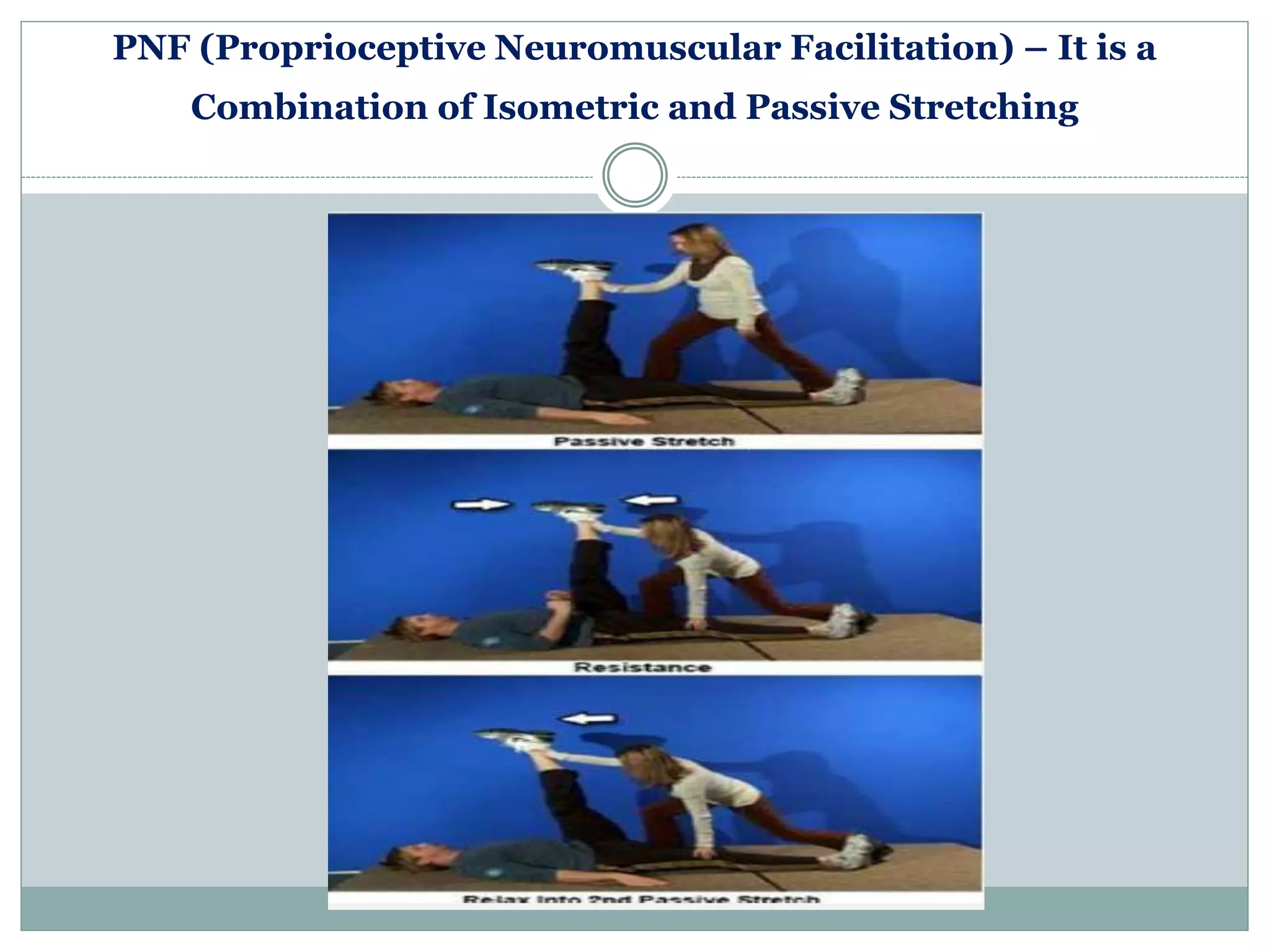
PNF (Proprioceptive Neuromuscular Facilitation) – It is a
Combination of Isometric and Passive Stretching

Mean and Methods of Flexibility Development

  • 1.
    Prof. Dr. A.MAHABOOBJAN BHARATHIDASANUNIVERSITY, TIRUCHIRAPPALLI, TAMILNADU, INDIA. TRAINING FOR MOTOR COMPONENT - FLEXIBILITY
  • 2.
    FLEXIBILITY Range of movementsof joint is known as flexibility. It is an ability of a joint to execute movements with greater range.
  • 3.
    Forms of Flexibility General Flexibility: It is the level of flexibility of all important joints of the body. Eg. Shoulder trunk and hip.  Specific Flexibility: Ability to do movement or movements of a sportsmen with greater amplitude.
  • 4.
    Flexibility Further itdivided in to  Active Flexibility: The ability to do movements with greater amplitude without external help. The active flexibility depends on the stretchability of the ligaments and strength of the muscles of the joint. Eg. Stretching a joint by a sportsman himself without any external help.  Passive Flexibility: The ability to do movements with greater amplitude with external help. Eg. Stretching exercise with the help of partner.
  • 5.
    Active Flexibility furtherdivided in to  Static Flexibility: It is required for movements done while the sportsman sitting, standing or lying.  Dynamic Flexibility: It is required for executive movements with greater amplitude when the sportsman is moving.
  • 6.
    Range of Motionof Shoulder Joint
  • 7.
    Factors Determining theFlexibility (Basis of Flexibility)  Anatomical Structure of the Joint: The mobility of the joints depends upon the anatomical structure.  Ligaments of Joints: The ligaments basically ensure the stability of the joint. The length of the ligaments and their alignment in a joint determines to what extent and in which direction the movement can take place.  Stretchability of Muscles: The stretchability of the muscle is most common factor limiting the range of movements. The co-ordination of agonist and antagonistic muscles regulate the joints movements.
  • 8.
    Factors Determining theFlexibility Cond…  Co-ordination: The optimum range of movement depends upon the ability of the nervous system to meaningfully integrate the contraction and relaxation of the muscles of a joint.  Strength: The sports movements are done against gravity, the strength is essential for achieving larger level of movements.
  • 10.
    Methods of DevelopingFlexibility  Ballistic Method: The stretching movement is done with a swing hence the name ballistic method. The joint is stretched rhythmically to its maximum range and then flexed.  Slow Stretching Method: In this method the joint is stretched to its maximum limit and then is slowly brought back to the original position.
  • 11.
    Methods of DevelopingFlexibility Cond …  Slow Stretching and Hold Method: In this method the joint is slowly stretched to its maximum limit, also allows the muscles to remain stretched and then held there for about 4-8 seconds and slowly brought back to the original position.  Post Iso-Metric Stretch: In this method the muscle is first contracted isometrically for 6-7 seconds and the contraction should be maximal. After this the muscle is gradually stretched to its maximum limit and is held in this position for 8-10 seconds. This procedure is to be repeated 4-8 times for each muscle group.
  • 12.
    PNF (Proprioceptive NeuromuscularFacilitation) – It is a Combination of Isometric and Passive Stretching