RETROGRADE
URETHROGRAPHY
(RGU)
ASCENDING URETHROGRAM
(ASU)
Definition
 A retrograde urethrogram is a routine radiologic procedure
(most typically in males) used to image the integrity of
the urethra by using iodinated contrast media.
Indications
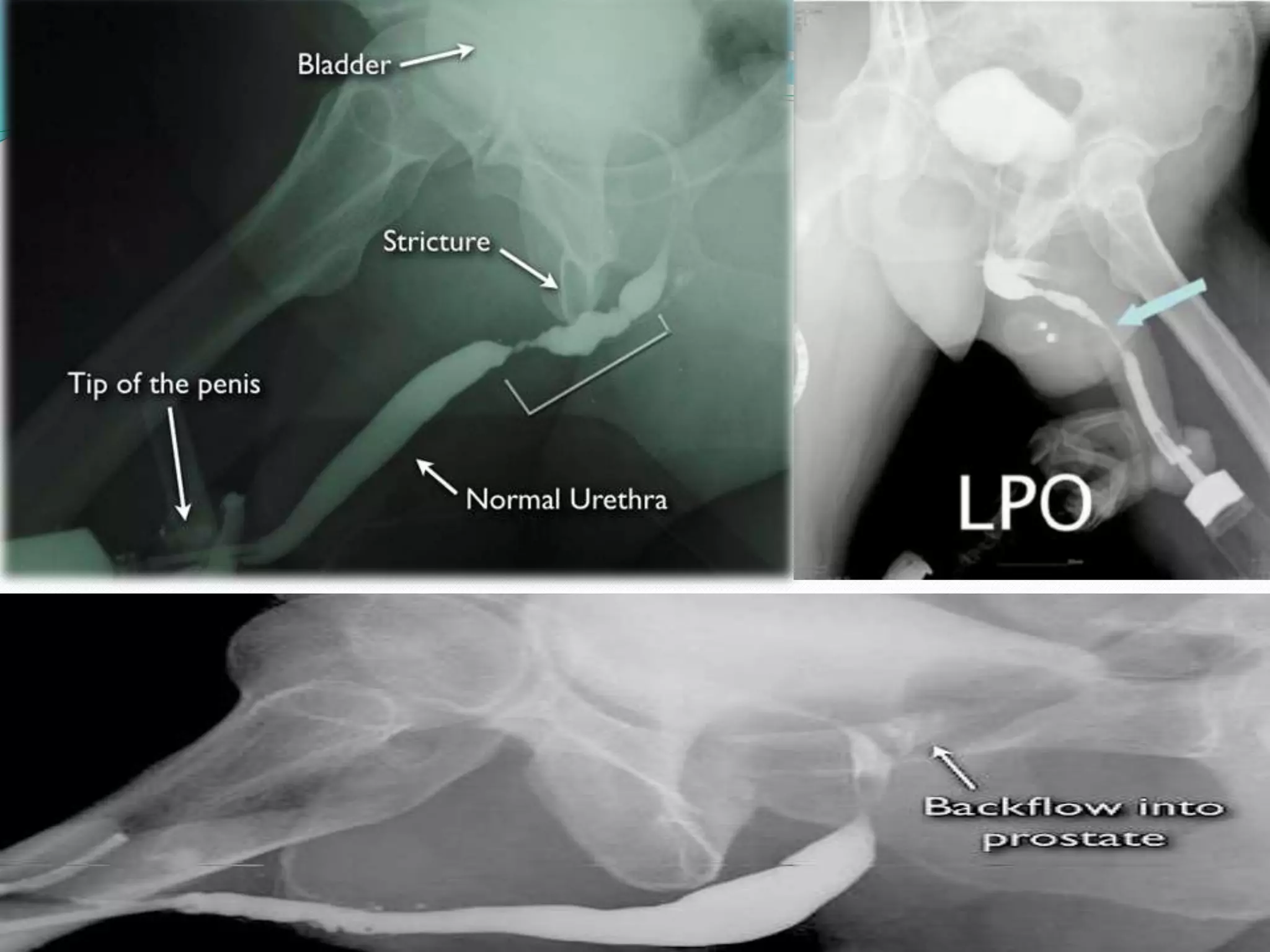
 Strictures
 Urethral tears
 Fistulae
 urethral diverticulam
 urethral obstruction
Contraindications
 Acute urinary tract
infection
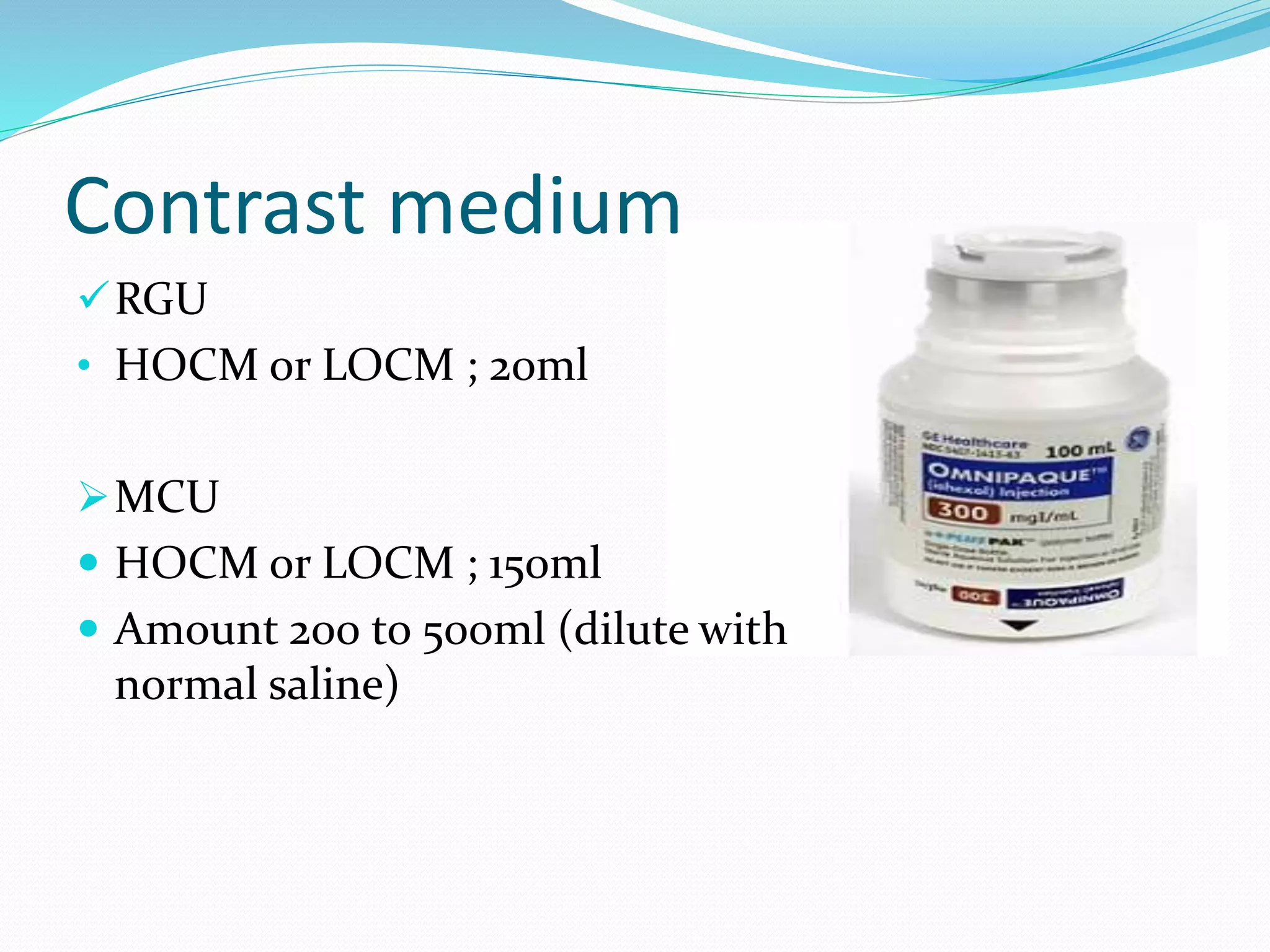
Contrast medium
RGU
• HOCM or LOCM ; 20ml
MCU
 HOCM or LOCM ; 150ml
 Amount 200 to 500ml (dilute with
normal saline)
Equipment
 Fluoroscopy unit with spot film device and tilting table
 Video recorder
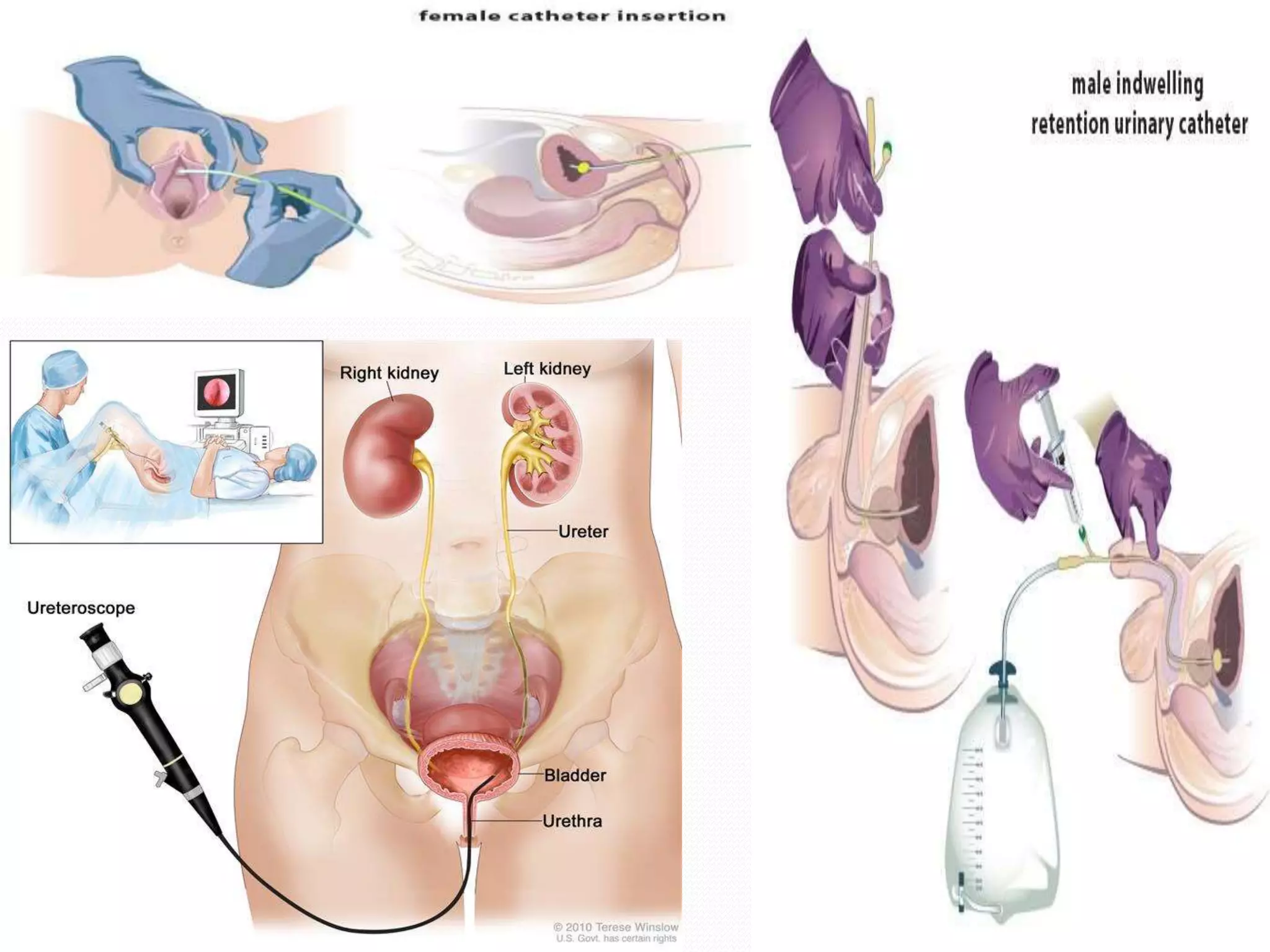
 Jaques or foley catheter
 In small infants a fine (5-7F) feeding tube is adequate
 Syringes
 Xylocaine jelly 1-2%
Patient preparation
 Patients micturates prior to the examination
 Informed consent should be taken.
Technique
 Patient lies supine on the x-ray table
 Retract the fore skin and clean the tip of penis with betadine or
antiseptic solution.
 Inject a small amount of local anesthetic into the urethra with a 8-
F Foley catheter or syringe and balloon is inflated with 1-3 ml of
water.
 Local anesthesia helps to relax the sphincter as the patient may
contract it during the procedure thus leading to a diagnosis of a
stricture
 Contrast medium is injected under fluoroscopy control and films
are taken
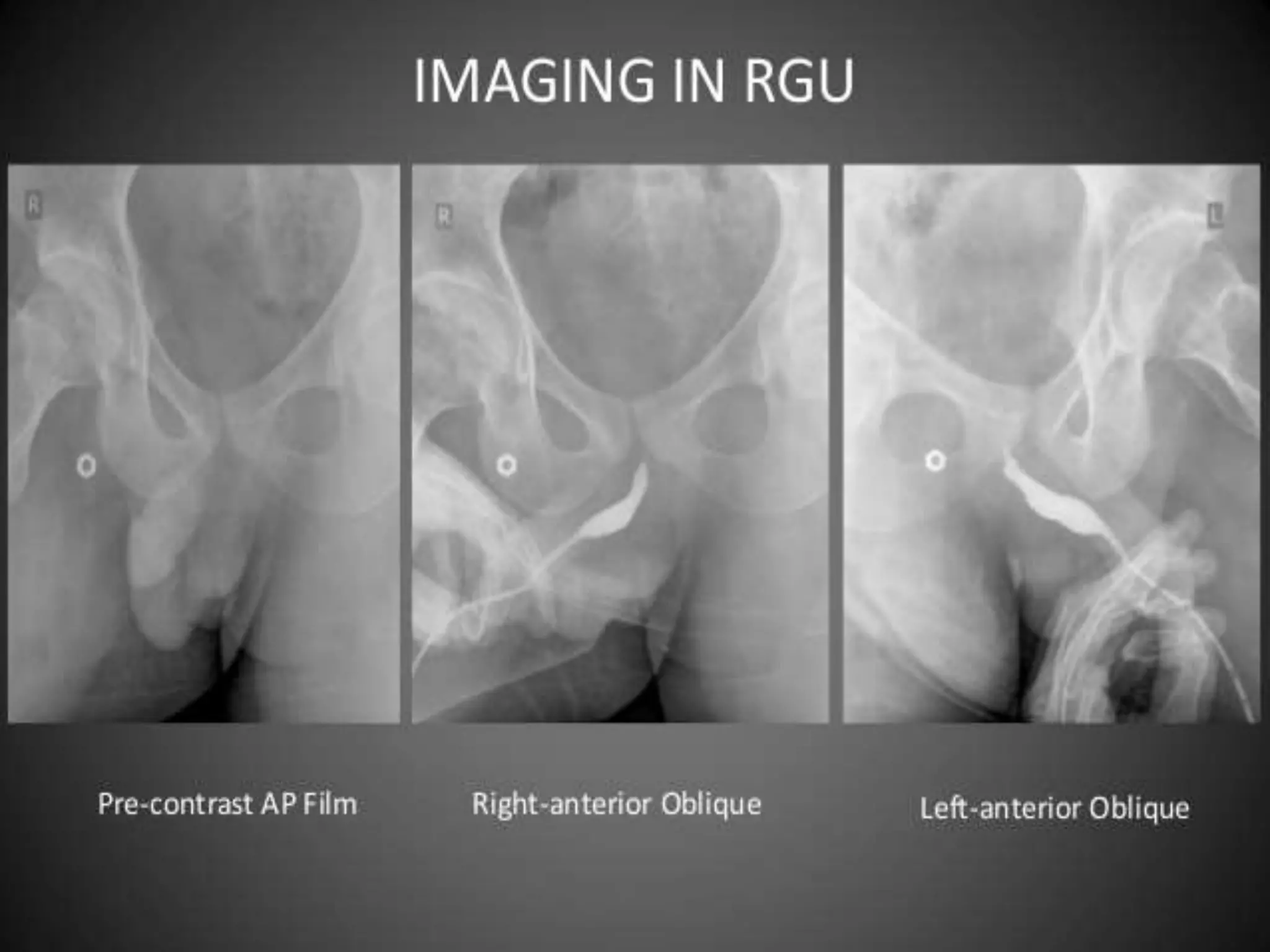
 The male urethra is best seen in the oblique position. • Female
urethra is best seen in lateral or anteroposterior position .
Imaging
 The view of films:
30 left anterior oblique with right leg abducted and knee
flexed
Supine PA
30 right anterior oblique with left leg abducted and knee
flexed
MICTURATING
CYSTOURETHROGRAPHY
VOIDING
CYSTOURETHROGRAM
(VCUG)
DESCENDING
URETHROGRAM
 MCU is a fluoroscopic study of the lower urinary tract in
which contrast is introduced into the bladder via a catheter
 Voiding cystourethrogram demonstrates the lower urinary
tract and helps to detect the existence of any vesico-urethral
reflux, bladder pathology and congenital or acquired of
bladder outflow tract.
MCU
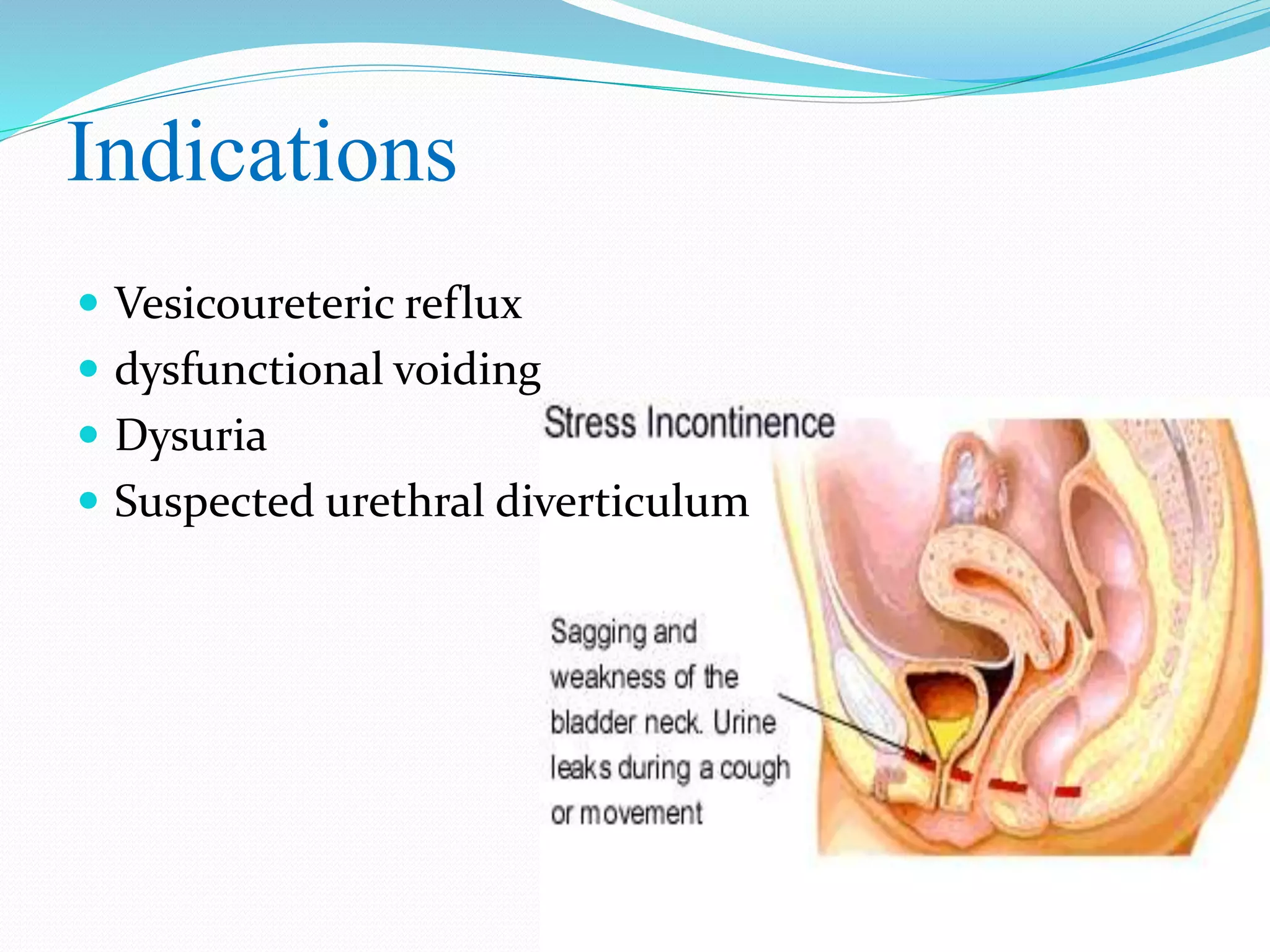
Indications
 Vesicoureteric reflux
 dysfunctional voiding
 Dysuria
 Suspected urethral diverticulum
Vesicoureteric reflux
Technique
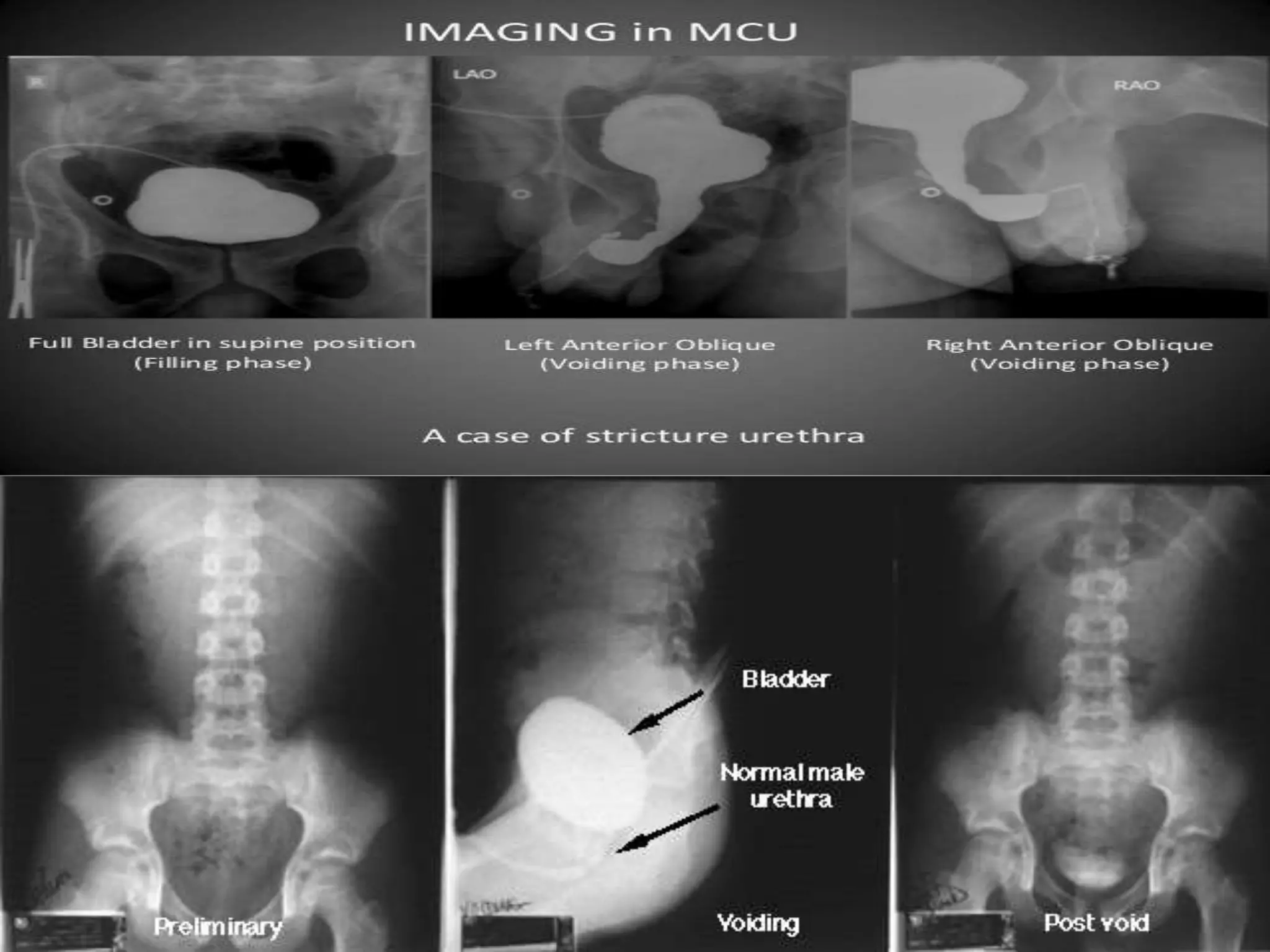
 The bladder is filled with the contrast media using
foley catheter(5-7F)
 After the bladder is filled to its capacity; then the
patient is asked to void(micturate)
 AP with full bladder for demonstration of the presence
or absence of VUR.
 both obliques to demonstrate bilateral vesicoureteric
junctions.
 post void film to check for a ureterocoele.
UTI
Films taken
 Lateral bladder
 Lateral bladder,
straining-catheter is
then removed
 Lateral bladder
during micturation
Aftercare
 No special aftercare is necessary, but patients and
parents of children should be warned that dysuria,
possibly leading to retention of urine, may rarely be
experienced. In such cases a simple analgesic helpful
and children may be helped by allowing them to
micturate in a warm bath.
Complication
 Contrast reaction (due to absorption through bladder
mucosa) • UTI • Urethral trauma. • Intravasation of
contrast – due to use of excessive pressure in stricture.
 Due to the contrast medium
i. Adverse reactions may result from absorption of
contrast medium by the bladder mucosa. The risk is
small when compared with excretion urography.
ii. Contrast medium induced cystitis
Due to the technique
 Acute urinary tract infection
 Catheter trauma- may produce dysuria, frequency
haematuria and urinary retention
 Complications of bladder filling e.g, perforation from
overdistension- prevented by using a non-retaining
catheter, e.g. Jaques
 Catheterization of vagina or an etopic urethral orifice
 Retention of a foley catheter
Mcu

Mcu

  • 2.
  • 3.
    Definition  A retrogradeurethrogram is a routine radiologic procedure (most typically in males) used to image the integrity of the urethra by using iodinated contrast media.
  • 4.
    Indications  Strictures  Urethraltears  Fistulae  urethral diverticulam  urethral obstruction
  • 5.
  • 6.
    Contrast medium RGU • HOCMor LOCM ; 20ml MCU  HOCM or LOCM ; 150ml  Amount 200 to 500ml (dilute with normal saline)
  • 7.
    Equipment  Fluoroscopy unitwith spot film device and tilting table  Video recorder  Jaques or foley catheter  In small infants a fine (5-7F) feeding tube is adequate  Syringes  Xylocaine jelly 1-2%
  • 9.
    Patient preparation  Patientsmicturates prior to the examination  Informed consent should be taken.
  • 10.
    Technique  Patient liessupine on the x-ray table  Retract the fore skin and clean the tip of penis with betadine or antiseptic solution.  Inject a small amount of local anesthetic into the urethra with a 8- F Foley catheter or syringe and balloon is inflated with 1-3 ml of water.  Local anesthesia helps to relax the sphincter as the patient may contract it during the procedure thus leading to a diagnosis of a stricture  Contrast medium is injected under fluoroscopy control and films are taken  The male urethra is best seen in the oblique position. • Female urethra is best seen in lateral or anteroposterior position .
  • 12.
    Imaging  The viewof films: 30 left anterior oblique with right leg abducted and knee flexed Supine PA 30 right anterior oblique with left leg abducted and knee flexed
  • 16.
  • 17.
     MCU isa fluoroscopic study of the lower urinary tract in which contrast is introduced into the bladder via a catheter  Voiding cystourethrogram demonstrates the lower urinary tract and helps to detect the existence of any vesico-urethral reflux, bladder pathology and congenital or acquired of bladder outflow tract. MCU
  • 18.
    Indications  Vesicoureteric reflux dysfunctional voiding  Dysuria  Suspected urethral diverticulum
  • 19.
  • 20.
    Technique  The bladderis filled with the contrast media using foley catheter(5-7F)  After the bladder is filled to its capacity; then the patient is asked to void(micturate)  AP with full bladder for demonstration of the presence or absence of VUR.  both obliques to demonstrate bilateral vesicoureteric junctions.  post void film to check for a ureterocoele.
  • 22.
  • 23.
    Films taken  Lateralbladder  Lateral bladder, straining-catheter is then removed  Lateral bladder during micturation
  • 25.
    Aftercare  No specialaftercare is necessary, but patients and parents of children should be warned that dysuria, possibly leading to retention of urine, may rarely be experienced. In such cases a simple analgesic helpful and children may be helped by allowing them to micturate in a warm bath.
  • 26.
    Complication  Contrast reaction(due to absorption through bladder mucosa) • UTI • Urethral trauma. • Intravasation of contrast – due to use of excessive pressure in stricture.  Due to the contrast medium i. Adverse reactions may result from absorption of contrast medium by the bladder mucosa. The risk is small when compared with excretion urography. ii. Contrast medium induced cystitis
  • 27.
    Due to thetechnique  Acute urinary tract infection  Catheter trauma- may produce dysuria, frequency haematuria and urinary retention  Complications of bladder filling e.g, perforation from overdistension- prevented by using a non-retaining catheter, e.g. Jaques  Catheterization of vagina or an etopic urethral orifice  Retention of a foley catheter