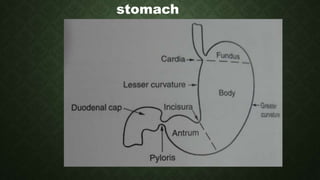
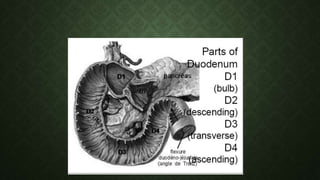
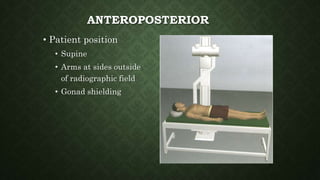
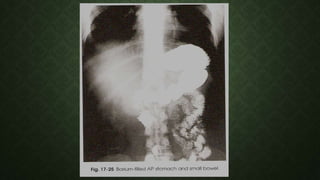
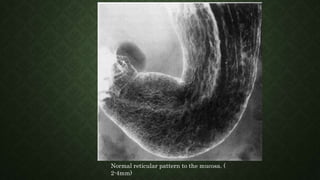
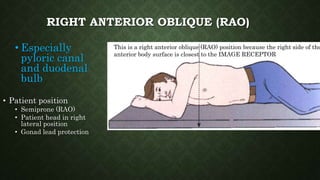
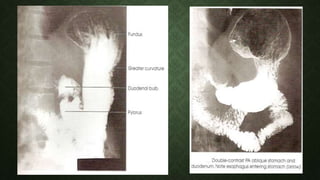
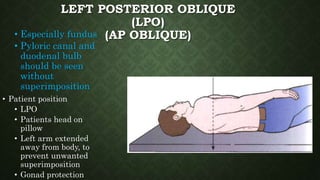
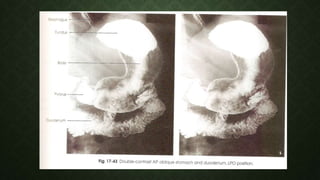
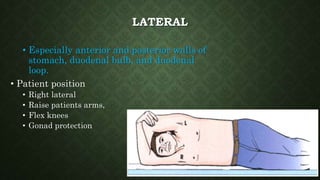
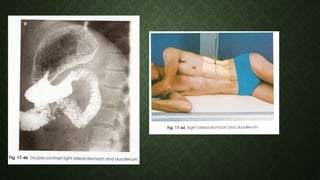
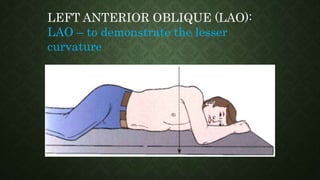
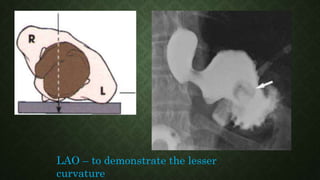
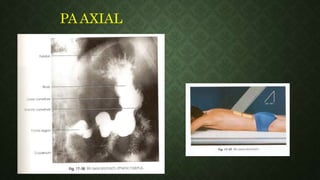
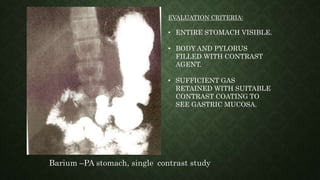
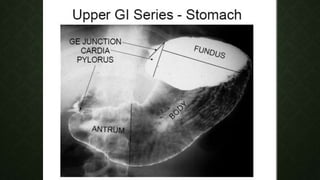
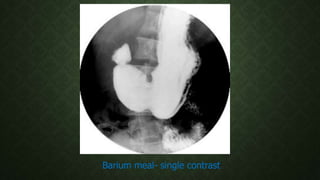
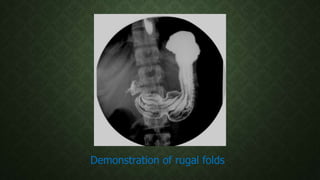
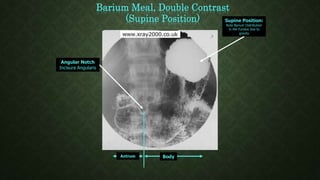
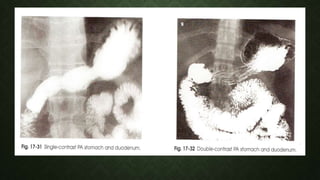
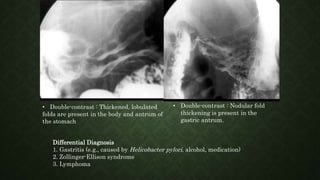
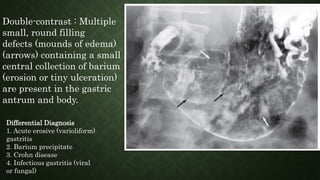
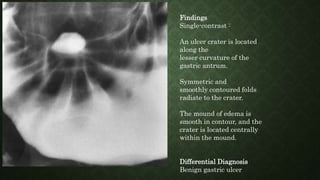
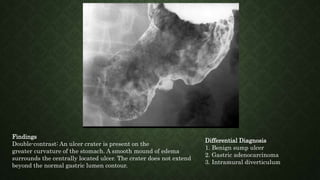
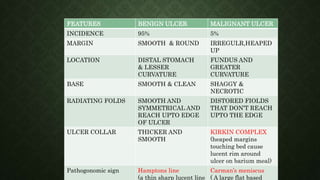
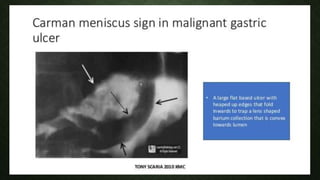
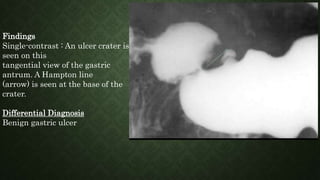
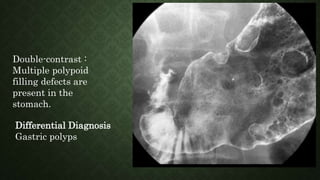
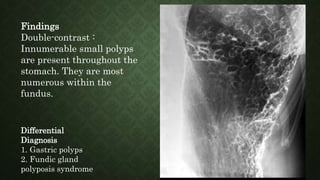
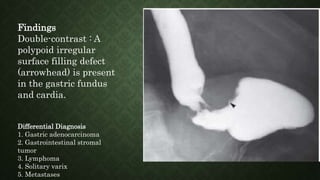
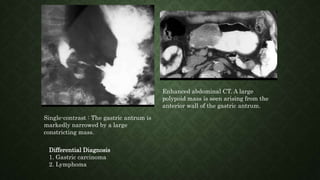
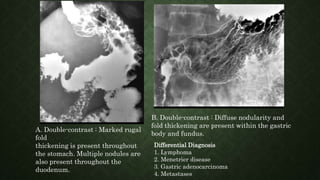
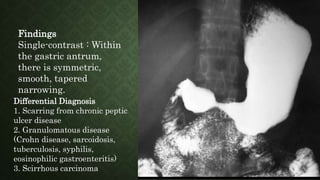
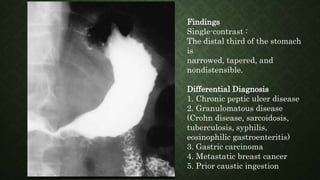
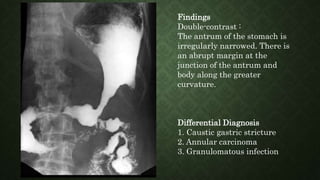
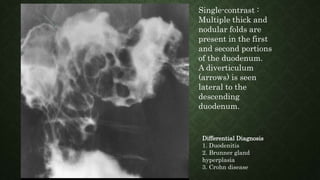
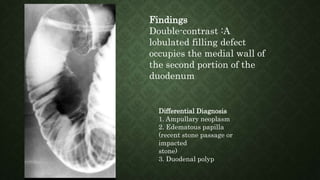
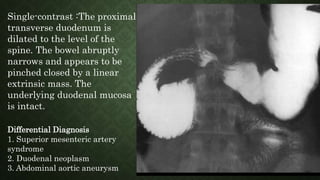
Barium meal is a radiological study used to examine the esophagus, stomach, duodenum, and proximal jejunum. It involves oral administration of barium contrast media. There are several types of barium meal studies including single contrast, double contrast, and biphase studies. Single contrast studies visualize the gross anatomy while double contrast studies provide better mucosal detail using barium and gas contrast. Barium meal exams can detect abnormalities such as ulcers, masses, polyps, and narrowings that may indicate conditions like peptic ulcer disease, gastritis, cancer, or motility disorders.