MATTER AND ITS
CHARACTERISTICS
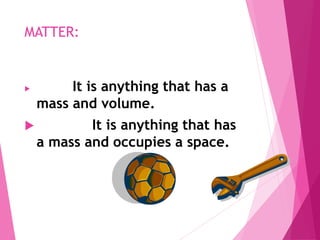
MATTER:
 It is anything that has a
mass and volume.
 It is anything that has
a mass and occupies a space.
Objects are
distinguished
from each other by :
Physical properties Chemical properties
Physical properties:
 1- Colour ,taste and smell.
 2- Density.
 3- Melting point.
 4- Boiling point.
 5- Hardness.
 6-Electric conductivity.
 7- Thermal conductivity.
** the colour ,taste and
smell:
To differentiate between gold and
iron we used co lour.
To differentiate between salt and
sugar we used Taste.
To differentiate between perfume
and vinegar we used smell.
DENSITY:
 MASS:
It is the amount
of matter that
the body
contains.
‫٭‬measured unit :
Kg -gm
 VOLUME:
It is the space
that a
substance
occupies.
‫٭‬measured unit :
cm3
DENSITY:
 It is the mass of unit volume of
matter.
 OR
 It is the mass of one cubic
centimeters of matter.
 Density=
M
D V
Mass
volume
Measuring unit:
gmcm3
Problems:
Note:
 Materials which have higher
density than water sink in it .
 Ex: iron – metallic- coin .
 Materials which have lower
density than water float on its
surface .
 Ex: ice- cork – drops of oil.
Life applications on the
density:
 1- water is not used to put out
petrol fires.
 2- Balloons filled with hydrogen or
helium rise up in air carrying flags
during festivals.
 3- the determination of the change
in the of matter is taken as an
evidence of the purity of matter .
3- Melting point:
 It is the temperature at which a matter
begins to change from a solid state to a
liquid state.
 Note:
different solids have a definite melting
point .
some solid have low melting point
such as wax –butter
some solids have high melting point
such as iron –copper.
Life applications on melting
process:
 1- In manufacture of alloys
copper-gold to make jewels .
Nickel –chrome to make heating
coils.
 2- In manufacture of cooking
pots
From aluminum – stainless steel
which do not rust.
4- Boiling point
 It is the temperature at which a matter
begins to change from a liquid state to a
gaseous state.
 Note :
Each substances have different boiling point
(water boil at 100 ).
 Life applications :
Separation of the components of petroleum
oil depends on the difference between
them in their boiling points.
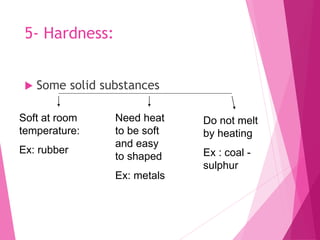
5- Hardness:
 Some solid substances
Soft at room
temperature:
Ex: rubber
Need heat
to be soft
and easy
to shaped
Ex: metals
Do not melt
by heating
Ex : coal -
sulphur
Life applications :
 1- the screwdrivers are made of steel iron
because it is very hard.
 2- the rods used in building houses
concrete are made of iron not copper.
because the hardness of iron is more
than that of copper.
6- Electric conductivity:
Good conductors of
electricity.
Substances allow
electricity of flow
through.
Ex: acidic solutions
Alkaline solutions
Some salt solution
Metals as iron
Bad conductors of
electricity.
Substances do not
allow electricity
to flow through.
Ex: gases
Sugary solution
solution of
hydrogen chloride
in benzene
Sulphur –
phosphorus.
Life applications:
1- electric wires are made of
copper or aluminum and cover
by plastic layer.
2- screwdrivers are made of steel
iron, while their handles are
made of wood or plastic.
Thermal conductivity:
 Good
conductors of
heat
 substance that
allow heat to
flow through
 Ex: metals iron
– copper
aluminum.
 Bad conductors
of heat
 Substances
that do not
allow heat to
flow through
 Ex: wood -
plastic
Life applications:
 1- cooking pans are made of
aluminum
because it is good conductor of
heat and has high melting point and
easy to transfer heat.
 2- handles of cooking pans are made
of wood or plastic
because wood and plastic are
bad conductors of heat.
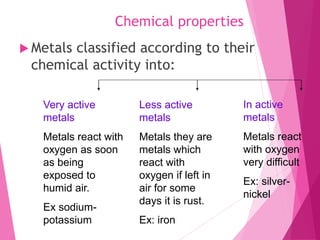
Chemical properties
 Metals classified according to their
chemical activity into:
Very active
metals
Metals react with
oxygen as soon
as being
exposed to
humid air.
Ex sodium-
potassium
Less active
metals
Metals they are
metals which
react with
oxygen if left in
air for some
days it is rust.
Ex: iron
In active
metals
Metals react
with oxygen
very difficult
Ex: silver-
nickel
Give reasons:
1- sodium and potassium are kept under kerosene
surface.
to prevent their reaction with atmospheric oxygen.
2- steel bridges and the holders of light bulbs painted
from time to time
to protect them from rust and corrosion
3- metallic spare parts of cars are covered with
grease.
to protect them from rust and corrosion.
4- washing of cooking pans made of aluminum with a
rough material .
to remove any layer formed on them.
Give reasons:
5- silver and gold are used in making
jewels.
because they are chemically poor
active .
6-nickel,gold and silver are used to
cover other substances which rapidly
gain rust.
to protect them from corrosion.

Matter and its characteristics

  • 1.
  • 2.
    MATTER:  It isanything that has a mass and volume.  It is anything that has a mass and occupies a space.
  • 3.
    Objects are distinguished from eachother by : Physical properties Chemical properties
  • 4.
    Physical properties:  1-Colour ,taste and smell.  2- Density.  3- Melting point.  4- Boiling point.  5- Hardness.  6-Electric conductivity.  7- Thermal conductivity.
  • 5.
    ** the colour,taste and smell: To differentiate between gold and iron we used co lour. To differentiate between salt and sugar we used Taste. To differentiate between perfume and vinegar we used smell.
  • 6.
    DENSITY:  MASS: It isthe amount of matter that the body contains. ‫٭‬measured unit : Kg -gm  VOLUME: It is the space that a substance occupies. ‫٭‬measured unit : cm3
  • 7.
    DENSITY:  It isthe mass of unit volume of matter.  OR  It is the mass of one cubic centimeters of matter.
  • 8.
  • 9.
  • 10.
    Note:  Materials whichhave higher density than water sink in it .  Ex: iron – metallic- coin .  Materials which have lower density than water float on its surface .  Ex: ice- cork – drops of oil.
  • 11.
    Life applications onthe density:  1- water is not used to put out petrol fires.  2- Balloons filled with hydrogen or helium rise up in air carrying flags during festivals.  3- the determination of the change in the of matter is taken as an evidence of the purity of matter .
  • 12.
    3- Melting point: It is the temperature at which a matter begins to change from a solid state to a liquid state.  Note: different solids have a definite melting point . some solid have low melting point such as wax –butter some solids have high melting point such as iron –copper.
  • 13.
    Life applications onmelting process:  1- In manufacture of alloys copper-gold to make jewels . Nickel –chrome to make heating coils.  2- In manufacture of cooking pots From aluminum – stainless steel which do not rust.
  • 14.
    4- Boiling point It is the temperature at which a matter begins to change from a liquid state to a gaseous state.  Note : Each substances have different boiling point (water boil at 100 ).  Life applications : Separation of the components of petroleum oil depends on the difference between them in their boiling points.
  • 15.
    5- Hardness:  Somesolid substances Soft at room temperature: Ex: rubber Need heat to be soft and easy to shaped Ex: metals Do not melt by heating Ex : coal - sulphur
  • 16.
    Life applications : 1- the screwdrivers are made of steel iron because it is very hard.  2- the rods used in building houses concrete are made of iron not copper. because the hardness of iron is more than that of copper.
  • 17.
    6- Electric conductivity: Goodconductors of electricity. Substances allow electricity of flow through. Ex: acidic solutions Alkaline solutions Some salt solution Metals as iron Bad conductors of electricity. Substances do not allow electricity to flow through. Ex: gases Sugary solution solution of hydrogen chloride in benzene Sulphur – phosphorus.
  • 18.
    Life applications: 1- electricwires are made of copper or aluminum and cover by plastic layer. 2- screwdrivers are made of steel iron, while their handles are made of wood or plastic.
  • 19.
    Thermal conductivity:  Good conductorsof heat  substance that allow heat to flow through  Ex: metals iron – copper aluminum.  Bad conductors of heat  Substances that do not allow heat to flow through  Ex: wood - plastic
  • 20.
    Life applications:  1-cooking pans are made of aluminum because it is good conductor of heat and has high melting point and easy to transfer heat.  2- handles of cooking pans are made of wood or plastic because wood and plastic are bad conductors of heat.
  • 21.
    Chemical properties  Metalsclassified according to their chemical activity into: Very active metals Metals react with oxygen as soon as being exposed to humid air. Ex sodium- potassium Less active metals Metals they are metals which react with oxygen if left in air for some days it is rust. Ex: iron In active metals Metals react with oxygen very difficult Ex: silver- nickel
  • 22.
    Give reasons: 1- sodiumand potassium are kept under kerosene surface. to prevent their reaction with atmospheric oxygen. 2- steel bridges and the holders of light bulbs painted from time to time to protect them from rust and corrosion 3- metallic spare parts of cars are covered with grease. to protect them from rust and corrosion. 4- washing of cooking pans made of aluminum with a rough material . to remove any layer formed on them.
  • 23.
    Give reasons: 5- silverand gold are used in making jewels. because they are chemically poor active . 6-nickel,gold and silver are used to cover other substances which rapidly gain rust. to protect them from corrosion.