Download to read offline


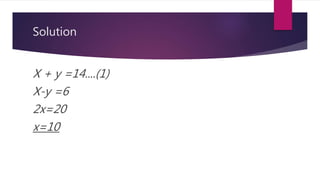
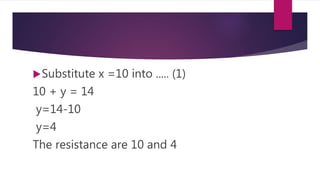
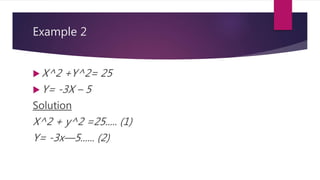
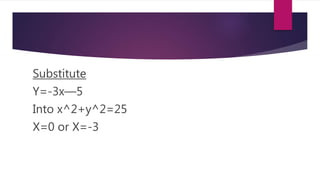

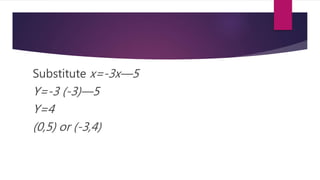





This document provides instructions on solving simultaneous equations in three main steps: 1) using elimination or substitution to remove one variable and solve for the other, 2) determining the intersection point of two graphs, and 3) working through two examples that apply these steps. The examples calculate two resistances given their sum and difference, and find the points where two equations for x^2 + y^2 and y = -3x - 5 intersect. References for further information are also included.


