SIMULTANEOUS EQUATIONS
SIMULTANEOUS EQUATIONS ARE TWO EQUATIONS WITH
TWO UNKNOWNS (e.g. x and y)
THEY ARE CALLED SIMULTANEOUS BECAUSE THEY HAVE TO
BE SOLVED AT THE SAME TIME.
FOR MOST QUESTIONS WITH SIMULTANEOUS EQUATIONS
YOU WILL BE GIVEN TWO EQUATIONS WITH TWO UNKNOWN
VALUES.
THERE ARE TWO WAYS YOU CAN SOLVE SIMULTANEOUS
EQUATIONS:
 BY SUBSTITUTION
 BY ELIMINATION
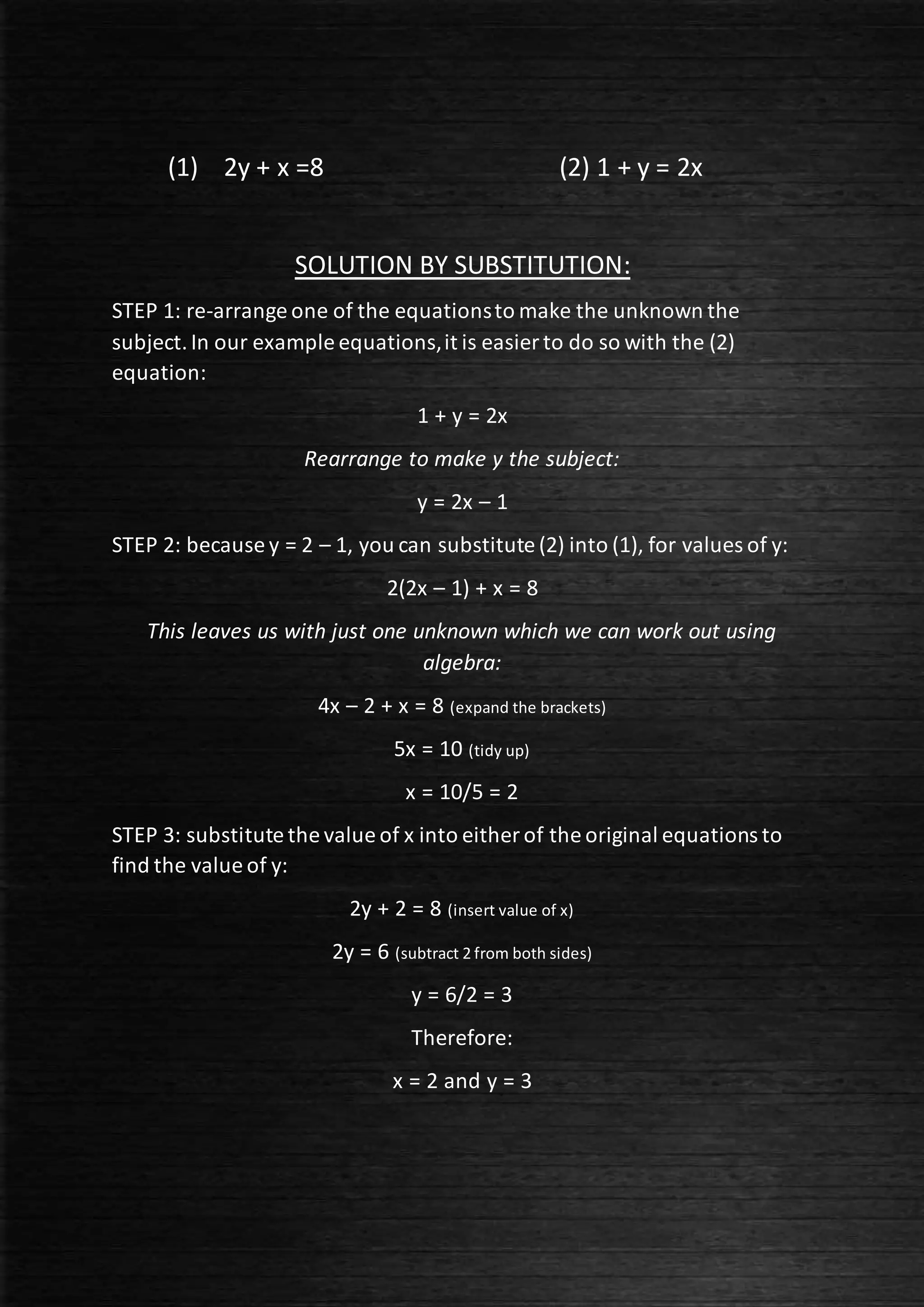
(1) 2y + x =8 (2) 1 + y = 2x
SOLUTION BY SUBSTITUTION:
STEP 1: re-arrange one of the equationsto make the unknown the
subject.In our example equations,it is easier to do so with the (2)
equation:
1 + y = 2x
Rearrange to make y the subject:
y = 2x – 1
STEP 2: because y = 2 – 1, you can substitute (2) into (1), for values of y:
2(2x – 1) + x = 8
This leaves us with just one unknown which we can work out using
algebra:
4x – 2 + x = 8 (expand the brackets)
5x = 10 (tidy up)
x = 10/5 = 2
STEP 3: substitute the value of x into either of the original equations to
find the value of y:
2y + 2 = 8 (insert value of x)
2y = 6 (subtract 2 from both sides)
y = 6/2 = 3
Therefore:
x = 2 and y = 3
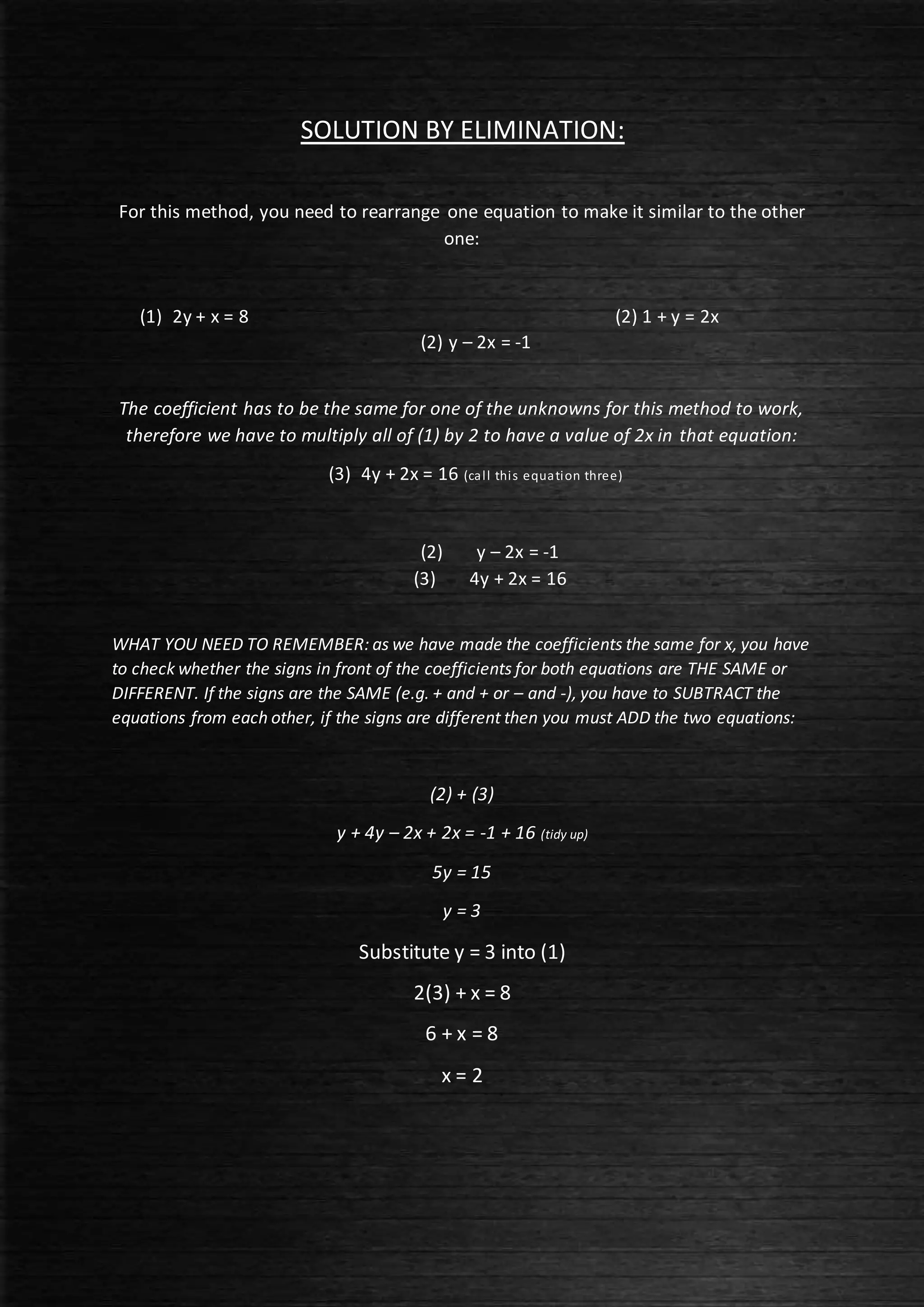
SOLUTION BY ELIMINATION:
For this method, you need to rearrange one equation to make it similar to the other
one:
(1) 2y + x = 8 (2) 1 + y = 2x
(2) y – 2x = -1
The coefficient has to be the same for one of the unknowns for this method to work,
therefore we have to multiply all of (1) by 2 to have a value of 2x in that equation:
(3) 4y + 2x = 16 (call this equation three)
(2) y – 2x = -1
(3) 4y + 2x = 16
WHAT YOU NEED TO REMEMBER: as we have made the coefficients the same for x, you have
to check whether the signs in front of the coefficients for both equations are THE SAME or
DIFFERENT. If the signs are the SAME (e.g. + and + or – and -), you have to SUBTRACT the
equations from each other, if the signs are different then you must ADD the two equations:
(2) + (3)
y + 4y – 2x + 2x = -1 + 16 (tidy up)
5y = 15
y = 3
Substitute y = 3 into (1)
2(3) + x = 8
6 + x = 8
x = 2

Simultaneous equations

  • 1.
    SIMULTANEOUS EQUATIONS SIMULTANEOUS EQUATIONSARE TWO EQUATIONS WITH TWO UNKNOWNS (e.g. x and y) THEY ARE CALLED SIMULTANEOUS BECAUSE THEY HAVE TO BE SOLVED AT THE SAME TIME. FOR MOST QUESTIONS WITH SIMULTANEOUS EQUATIONS YOU WILL BE GIVEN TWO EQUATIONS WITH TWO UNKNOWN VALUES. THERE ARE TWO WAYS YOU CAN SOLVE SIMULTANEOUS EQUATIONS:  BY SUBSTITUTION  BY ELIMINATION
  • 2.
    (1) 2y +x =8 (2) 1 + y = 2x SOLUTION BY SUBSTITUTION: STEP 1: re-arrange one of the equationsto make the unknown the subject.In our example equations,it is easier to do so with the (2) equation: 1 + y = 2x Rearrange to make y the subject: y = 2x – 1 STEP 2: because y = 2 – 1, you can substitute (2) into (1), for values of y: 2(2x – 1) + x = 8 This leaves us with just one unknown which we can work out using algebra: 4x – 2 + x = 8 (expand the brackets) 5x = 10 (tidy up) x = 10/5 = 2 STEP 3: substitute the value of x into either of the original equations to find the value of y: 2y + 2 = 8 (insert value of x) 2y = 6 (subtract 2 from both sides) y = 6/2 = 3 Therefore: x = 2 and y = 3
  • 3.
    SOLUTION BY ELIMINATION: Forthis method, you need to rearrange one equation to make it similar to the other one: (1) 2y + x = 8 (2) 1 + y = 2x (2) y – 2x = -1 The coefficient has to be the same for one of the unknowns for this method to work, therefore we have to multiply all of (1) by 2 to have a value of 2x in that equation: (3) 4y + 2x = 16 (call this equation three) (2) y – 2x = -1 (3) 4y + 2x = 16 WHAT YOU NEED TO REMEMBER: as we have made the coefficients the same for x, you have to check whether the signs in front of the coefficients for both equations are THE SAME or DIFFERENT. If the signs are the SAME (e.g. + and + or – and -), you have to SUBTRACT the equations from each other, if the signs are different then you must ADD the two equations: (2) + (3) y + 4y – 2x + 2x = -1 + 16 (tidy up) 5y = 15 y = 3 Substitute y = 3 into (1) 2(3) + x = 8 6 + x = 8 x = 2