Welcome to
Tourism Destination
Physical Planning
Master Plan for Destination
Development
Dr. Myrza Rahmanita, SE, M.Sc
Area Characteristic (AREA MAPPING)
Location
specified and mapped -> for consideration-> major tourist market1
Natural environment
Climate pattern include rainfall, humidity, extent of sunshine (or cloudiness), fog, wind speed
and direction, and seasonal variations. -> for consideration -> a major type of tourist
attraction.
2
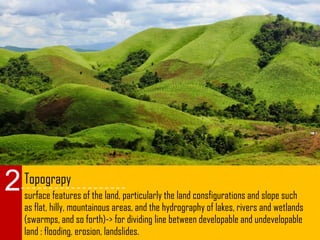
Topograpy
surface features of the land, particularly the land consfigurations and slope such
as flat, hilly, mountainous areas, and the hydrography of lakes, rivers and wetlands
(swarmps, and so forth)-> for dividing line between developable and undevelopable
land : flooding, erosion, landslides.
2
Area Characteristic (AREA MAPPING)
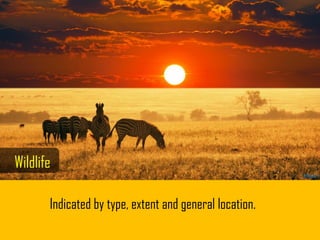
Indicated by type, extent and general location.
Wildlife
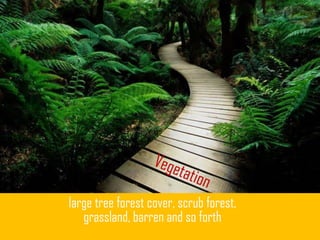
large tree forest cover, scrub forest,
grassland, barren and so forth
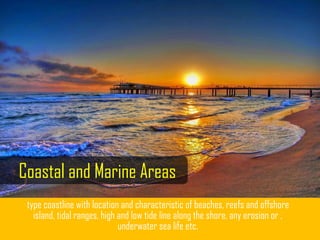
type coastline with location and characteristic of beaches, reefs and offshore
island, tidal ranges, high and low tide line along the shore, any erosion or ,
underwater sea life etc.
Coastal and Marine Areas
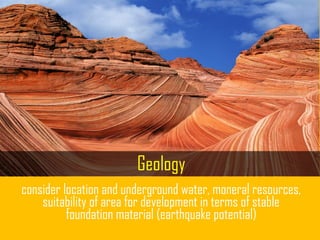
Geology
consider location and underground water, moneral resources,
suitability of area for development in terms of stable
foundation material (earthquake potential)
Ecological system
Comprising a combination of climate , topography , vegetation,
wildlifeand ecological system of both land and water areas.
Natural resources Areas
Agricultural/ commercial fisgeries potential
Area Characteristic (AREA MAPPING)
Historical Influences
archaeological, historic site, places of historic event lifestyle, customs, art,
handicraft.
3
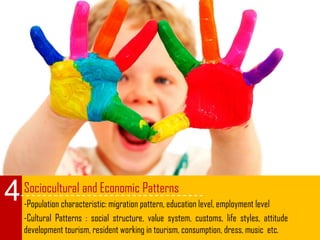
Sociocultural and Economic Patterns
-Population characteristic: migration pattern, education level, employment level
-Cultural Patterns : social structure, value system, customs, life styles, attitude
development tourism, resident working in tourism, consumption, dress, music etc.
4
Area Characteristic (AREA MAPPING)
income, distribution, economic activities etc
Economic Patterns
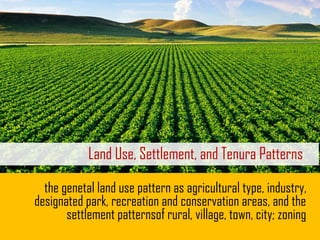
Land Use, Settlement, and Tenura Patterns
the genetal land use pattern as agricultural type, industry,
designated park, recreation and conservation areas, and the
settlement patternsof rural, village, town, city; zoning
Enviromental Quality
Air, water supply, surface water, underground water, noise
levels etc.
Tourist Market
1. Tourist Arrivals and Characteristic
2. Cruise Ship Tourist
3. Tour Operators
4. General Travel Patters and tourism trends
Tourist Facilities and Services
1. Accomodation
2. Tour and travel Operations
3. Eating and Drinking Establishment
4. Tourist Information
5. Shopping and Personal Services
6. Money Exchange and Other Financial Services
7. Medical Facilities and Services
8. Ptblic safety
9. Postal Services
10. Entry and Exit Facilities (i.e imigration procedures)
11. Other facilities Service (i.e. Gasoline service station, self service loundry )
Transportation and Other Infrastructure
1. Transportation and Services
2. Water Supply
3. Electrical Power
4. Sewage Disposal
5. Solid Waste Disposal
6. Telecomunication
7. Drainage
8. Employe Housing and Community Services

Master Plan

  • 1.
    Welcome to Tourism Destination PhysicalPlanning Master Plan for Destination Development Dr. Myrza Rahmanita, SE, M.Sc
  • 3.
  • 4.
    Location specified and mapped-> for consideration-> major tourist market1
  • 5.
    Natural environment Climate patterninclude rainfall, humidity, extent of sunshine (or cloudiness), fog, wind speed and direction, and seasonal variations. -> for consideration -> a major type of tourist attraction. 2
  • 6.
    Topograpy surface features ofthe land, particularly the land consfigurations and slope such as flat, hilly, mountainous areas, and the hydrography of lakes, rivers and wetlands (swarmps, and so forth)-> for dividing line between developable and undevelopable land : flooding, erosion, landslides. 2
  • 7.
  • 8.
    Indicated by type,extent and general location. Wildlife
  • 9.
    large tree forestcover, scrub forest, grassland, barren and so forth
  • 10.
    type coastline withlocation and characteristic of beaches, reefs and offshore island, tidal ranges, high and low tide line along the shore, any erosion or , underwater sea life etc. Coastal and Marine Areas
  • 11.
    Geology consider location andunderground water, moneral resources, suitability of area for development in terms of stable foundation material (earthquake potential)
  • 12.
    Ecological system Comprising acombination of climate , topography , vegetation, wildlifeand ecological system of both land and water areas.
  • 13.
    Natural resources Areas Agricultural/commercial fisgeries potential
  • 14.
  • 15.
    Historical Influences archaeological, historicsite, places of historic event lifestyle, customs, art, handicraft. 3
  • 16.
    Sociocultural and EconomicPatterns -Population characteristic: migration pattern, education level, employment level -Cultural Patterns : social structure, value system, customs, life styles, attitude development tourism, resident working in tourism, consumption, dress, music etc. 4
  • 17.
  • 18.
    income, distribution, economicactivities etc Economic Patterns
  • 19.
    Land Use, Settlement,and Tenura Patterns the genetal land use pattern as agricultural type, industry, designated park, recreation and conservation areas, and the settlement patternsof rural, village, town, city; zoning
  • 20.
    Enviromental Quality Air, watersupply, surface water, underground water, noise levels etc.
  • 21.
    Tourist Market 1. TouristArrivals and Characteristic 2. Cruise Ship Tourist 3. Tour Operators 4. General Travel Patters and tourism trends
  • 22.
    Tourist Facilities andServices 1. Accomodation 2. Tour and travel Operations 3. Eating and Drinking Establishment 4. Tourist Information 5. Shopping and Personal Services 6. Money Exchange and Other Financial Services 7. Medical Facilities and Services 8. Ptblic safety 9. Postal Services 10. Entry and Exit Facilities (i.e imigration procedures) 11. Other facilities Service (i.e. Gasoline service station, self service loundry )
  • 23.
    Transportation and OtherInfrastructure 1. Transportation and Services 2. Water Supply 3. Electrical Power 4. Sewage Disposal 5. Solid Waste Disposal 6. Telecomunication 7. Drainage 8. Employe Housing and Community Services