DIRECTOR : DR. S .C. GANESHPRABU M.D;D.A,
CHIEF :DR. SHANMUGAM M.D;DCH
ASSISTANT: DR.GANGANAGALAKHMI M.D;
DR. P.SALAMON RAJA PG
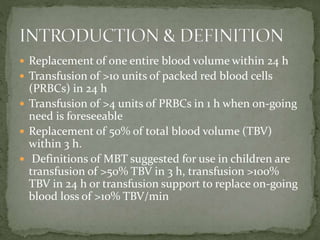
 Replacement of one entire blood volume within 24 h
 Transfusion of >10 units of packed red blood cells
(PRBCs) in 24 h
 Transfusion of >4 units of PRBCs in 1 h when on-going
need is foreseeable
 Replacement of 50% of total blood volume (TBV)
within 3 h.
 Definitions of MBT suggested for use in children are
transfusion of >50% TBV in 3 h, transfusion >100%
TBV in 24 h or transfusion support to replace on-going
blood loss of >10% TBV/min
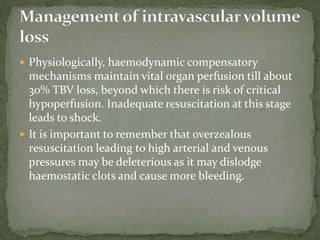
 Physiologically, haemodynamic compensatory
mechanisms maintain vital organ perfusion till about
30% TBV loss, beyond which there is risk of critical
hypoperfusion. Inadequate resuscitation at this stage
leads to shock.
 It is important to remember that overzealous
resuscitation leading to high arterial and venous
pressures may be deleterious as it may dislodge
haemostatic clots and cause more bleeding.
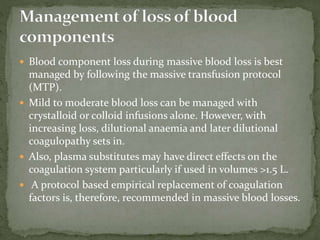
 Blood component loss during massive blood loss is best
managed by following the massive transfusion protocol
(MTP).
 Mild to moderate blood loss can be managed with
crystalloid or colloid infusions alone. However, with
increasing loss, dilutional anaemia and later dilutional
coagulopathy sets in.
 Also, plasma substitutes may have direct effects on the
coagulation system particularly if used in volumes >1.5 L.
 A protocol based empirical replacement of coagulation
factors is, therefore, recommended in massive blood losses.
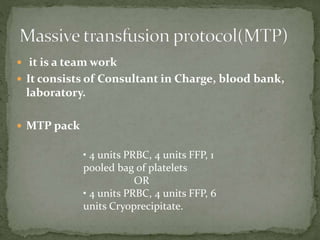
 it is a team work
 It consists of Consultant in Charge, blood bank,
laboratory.
 MTP pack
• 4 units PRBC, 4 units FFP, 1
pooled bag of platelets
OR
• 4 units PRBC, 4 units FFP, 6
units Cryoprecipitate.
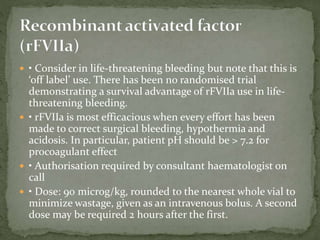
 • Consider in life-threatening bleeding but note that this is
‘off label’ use. There has been no randomised trial
demonstrating a survival advantage of rFVIIa use in life-
threatening bleeding.
 • rFVIIa is most efficacious when every effort has been
made to correct surgical bleeding, hypothermia and
acidosis. In particular, patient pH should be > 7.2 for
procoagulant effect
 • Authorisation required by consultant haematologist on
call
 • Dose: 90 microg/kg, rounded to the nearest whole vial to
minimize wastage, given as an intravenous bolus. A second
dose may be required 2 hours after the first.
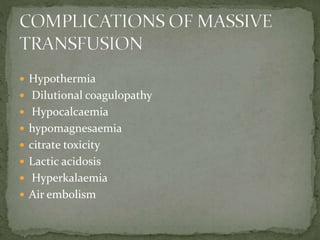
 Hypothermia
 Dilutional coagulopathy
 Hypocalcaemia
 hypomagnesaemia
 citrate toxicity
 Lactic acidosis
 Hyperkalaemia
 Air embolism
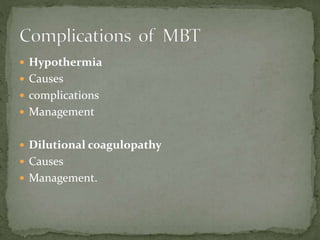
 Hypothermia
 Causes
 complications
 Management
 Dilutional coagulopathy
 Causes
 Management.
 Hyperkalemia
 Cause
 red blood cell membrane ATPase pump inactivation.
 Predisposing factors
 Hypokalemia
 Cause
 Hypocalcemia
 Cause
 Citrate toxicity
 Management
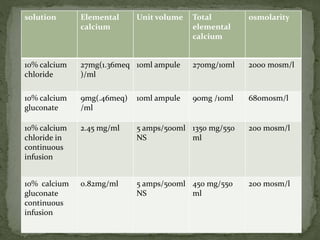
solution Elemental
calcium
Unit volume Total
elemental
calcium
osmolarity
10% calcium
chloride
27mg(1.36meq
)/ml
10ml ampule 270mg/10ml 2000 mosm/l
10% calcium
gluconate
9mg(.46meq)
/ml
10ml ampule 90mg /10ml 680mosm/l
10% calcium
chloride in
continuous
infusion
2.45 mg/ml 5 amps/500ml
NS
1350 mg/550
ml
200 mosm/l
10% calcium
gluconate
continuous
infusion
0.82mg/ml 5 amps/500ml
NS
450 mg/550
ml
200 mosm/l
Transfusion reactions (immune-
related reactions)
Nonimmune reactions
 Infections
 Non hemolytic fever reactions .
 Hemolytic transfusion reactions
 Immediate( acute)
 or
 delayed
 TACO
 TRALI
 ALLERGIC REACTIONS
 HYPOTENSIVE REACTIONS
 TAD
 POST TRANSFUSION PURPURA
 TA-GVHD
 HEMOSIDEROSIS
 TTI
 BACTERIAL CONTAMINATION
 VIRAL CONTAMINATION
 VARIANT CREUTZFELD JACOB DISEASE
Massive blood transfusion

Massive blood transfusion

  • 1.
    DIRECTOR : DR.S .C. GANESHPRABU M.D;D.A, CHIEF :DR. SHANMUGAM M.D;DCH ASSISTANT: DR.GANGANAGALAKHMI M.D; DR. P.SALAMON RAJA PG
  • 2.
     Replacement ofone entire blood volume within 24 h  Transfusion of >10 units of packed red blood cells (PRBCs) in 24 h  Transfusion of >4 units of PRBCs in 1 h when on-going need is foreseeable  Replacement of 50% of total blood volume (TBV) within 3 h.  Definitions of MBT suggested for use in children are transfusion of >50% TBV in 3 h, transfusion >100% TBV in 24 h or transfusion support to replace on-going blood loss of >10% TBV/min
  • 3.
     Physiologically, haemodynamiccompensatory mechanisms maintain vital organ perfusion till about 30% TBV loss, beyond which there is risk of critical hypoperfusion. Inadequate resuscitation at this stage leads to shock.  It is important to remember that overzealous resuscitation leading to high arterial and venous pressures may be deleterious as it may dislodge haemostatic clots and cause more bleeding.
  • 4.
     Blood componentloss during massive blood loss is best managed by following the massive transfusion protocol (MTP).  Mild to moderate blood loss can be managed with crystalloid or colloid infusions alone. However, with increasing loss, dilutional anaemia and later dilutional coagulopathy sets in.  Also, plasma substitutes may have direct effects on the coagulation system particularly if used in volumes >1.5 L.  A protocol based empirical replacement of coagulation factors is, therefore, recommended in massive blood losses.
  • 5.
     it isa team work  It consists of Consultant in Charge, blood bank, laboratory.  MTP pack • 4 units PRBC, 4 units FFP, 1 pooled bag of platelets OR • 4 units PRBC, 4 units FFP, 6 units Cryoprecipitate.
  • 7.
     • Considerin life-threatening bleeding but note that this is ‘off label’ use. There has been no randomised trial demonstrating a survival advantage of rFVIIa use in life- threatening bleeding.  • rFVIIa is most efficacious when every effort has been made to correct surgical bleeding, hypothermia and acidosis. In particular, patient pH should be > 7.2 for procoagulant effect  • Authorisation required by consultant haematologist on call  • Dose: 90 microg/kg, rounded to the nearest whole vial to minimize wastage, given as an intravenous bolus. A second dose may be required 2 hours after the first.
  • 8.
     Hypothermia  Dilutionalcoagulopathy  Hypocalcaemia  hypomagnesaemia  citrate toxicity  Lactic acidosis  Hyperkalaemia  Air embolism
  • 9.
     Hypothermia  Causes complications  Management  Dilutional coagulopathy  Causes  Management.
  • 10.
     Hyperkalemia  Cause red blood cell membrane ATPase pump inactivation.  Predisposing factors  Hypokalemia  Cause  Hypocalcemia  Cause  Citrate toxicity  Management
  • 11.
    solution Elemental calcium Unit volumeTotal elemental calcium osmolarity 10% calcium chloride 27mg(1.36meq )/ml 10ml ampule 270mg/10ml 2000 mosm/l 10% calcium gluconate 9mg(.46meq) /ml 10ml ampule 90mg /10ml 680mosm/l 10% calcium chloride in continuous infusion 2.45 mg/ml 5 amps/500ml NS 1350 mg/550 ml 200 mosm/l 10% calcium gluconate continuous infusion 0.82mg/ml 5 amps/500ml NS 450 mg/550 ml 200 mosm/l
  • 12.
    Transfusion reactions (immune- relatedreactions) Nonimmune reactions  Infections
  • 13.
     Non hemolyticfever reactions .  Hemolytic transfusion reactions  Immediate( acute)  or  delayed
  • 14.
     TACO  TRALI ALLERGIC REACTIONS  HYPOTENSIVE REACTIONS  TAD  POST TRANSFUSION PURPURA  TA-GVHD  HEMOSIDEROSIS  TTI
  • 15.
     BACTERIAL CONTAMINATION VIRAL CONTAMINATION  VARIANT CREUTZFELD JACOB DISEASE