Supravat Mahata
M.Sc. Zoology, SEM I
D.I.B.N.S, DEHRADUN
INDIA
What is Mass Extinction?
The extinction of large number of
species within a relatively short period of
geological time, thought to be due to factors
such as a catastrophic global event or
widespread environmental change that occurs
too rapidly for most species to adapt.[1]
 Each mass extinction ended in a geologic period —
that’s why researchers refer to them by that period
name such as End-Cretaceous.[2]
 Marine fossils are mostly used to measure extinction
rates because of their superior fossil record and
stratigraphic range compared to land animals.[2]
There were total 5 Mass
extinctions happened till now.
1.End- Ordovician
2.End- Devonian
3.End- Permian
4.End- Triassic
5.End- Cretaceous
Mass extinctions occur
when global extinction
rates rise significantly
above background levels
in a geologically short
period of time.
Mass extinctions can be
observed by looking at
diversity levels over time.
This graph shows number
of marine genera alive at
different points in life's
history. While diversity
levels generally increase
over time, mass
extinctions cause sudden
drop-offs in diversity.[3]
What Happened and When?
Affected Species during different stages of Mass Extinction
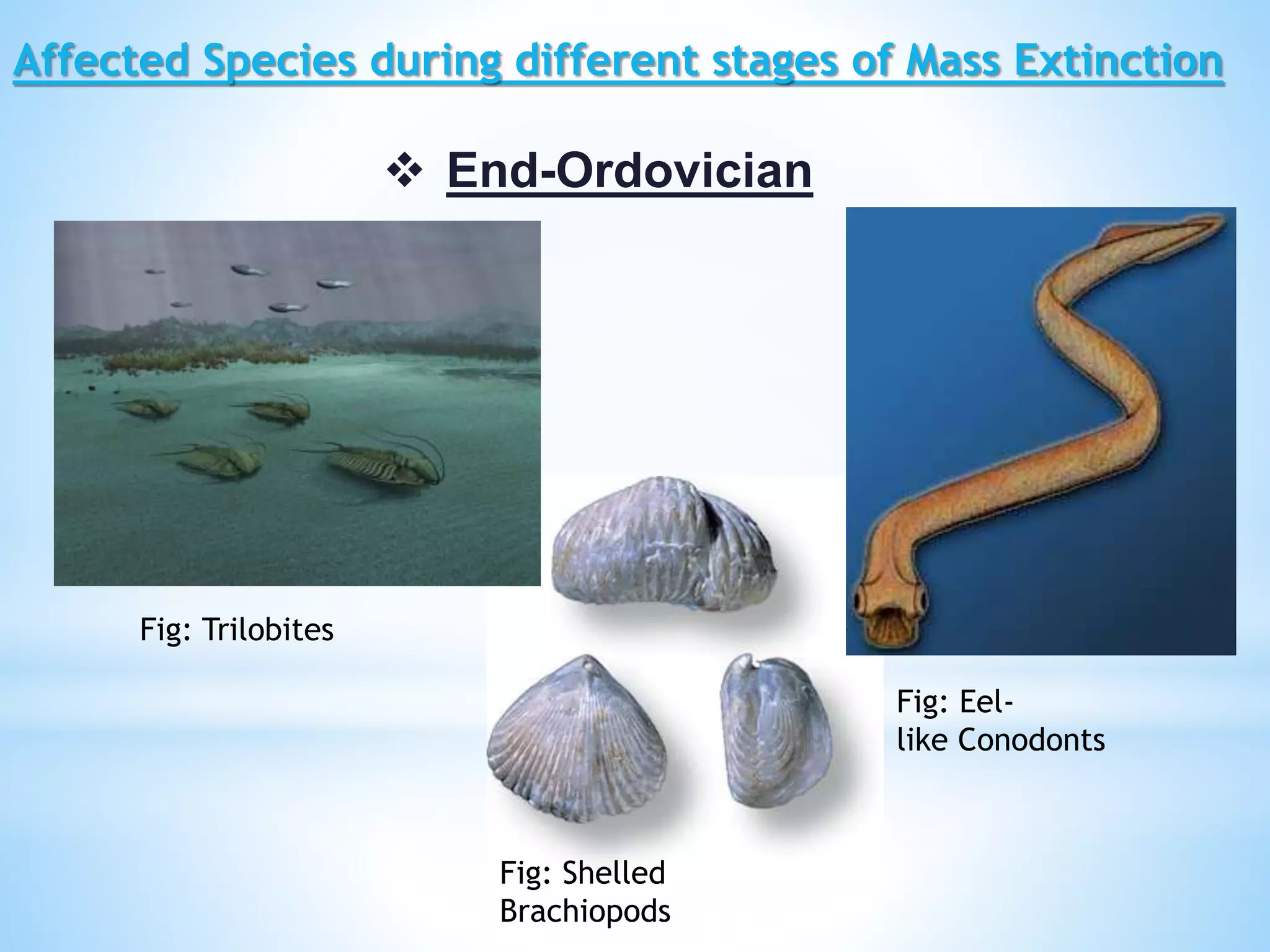
 End-Ordovician
Fig: Trilobites
Fig: Eel-
like Conodonts
Fig: Shelled
Brachiopods
 End-Devonian
Fig: Armoured Fish Fig: Skull of Placoderms:
Vienna Natural History Museum
Fig: Corals
 End-Permian
Fig: Sea scorpions,
probably the largest
arthropods ever to have
lived.
Fig: Pelycosaurs
: the mammal-
like reptiles
 End-Triassic
Fig: Conodonts, an
entire extinct class
of animal that
looked like some
sort of fanged
nightmare eel.
Fig: Scleractinian
Corals
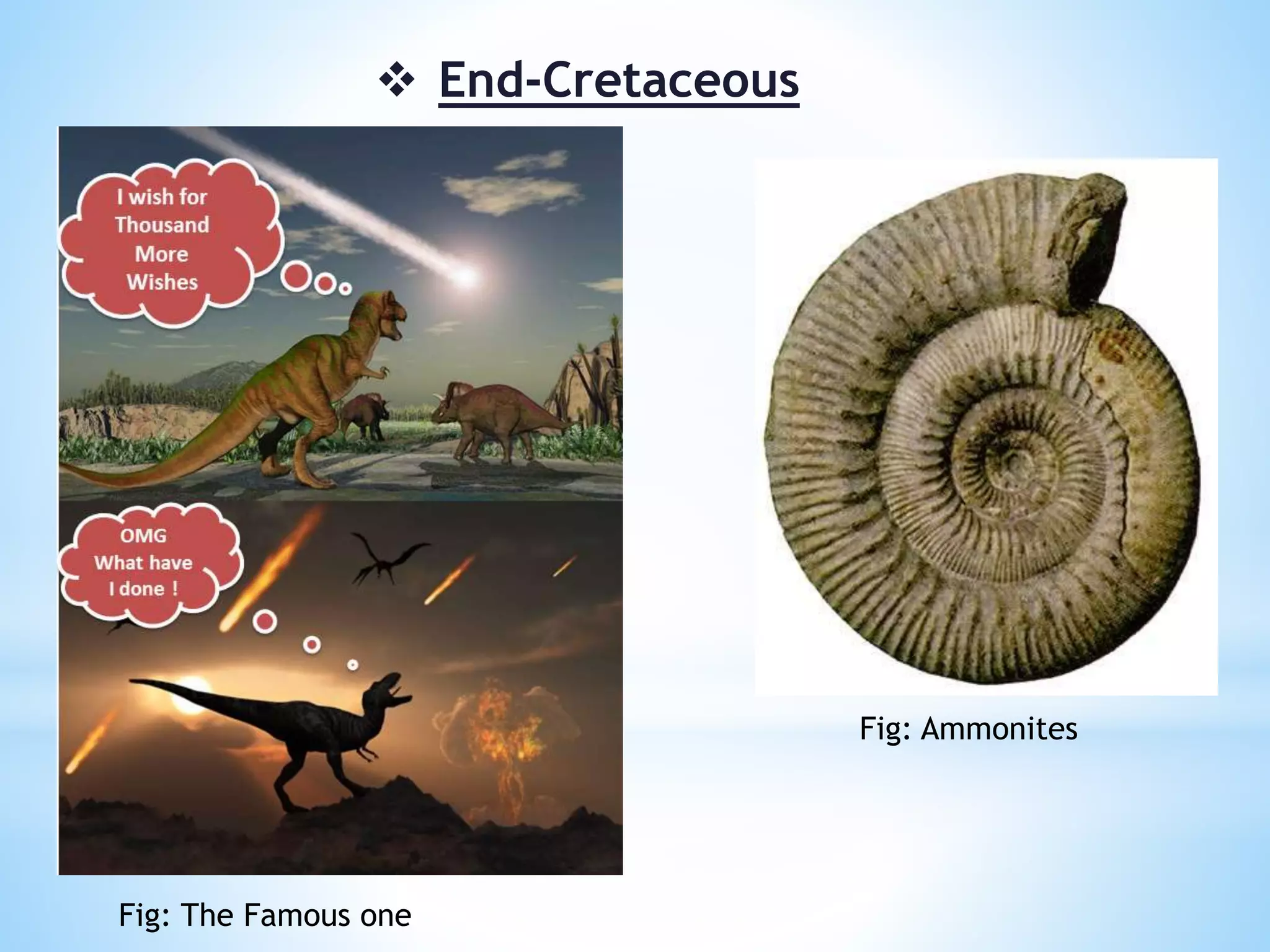
 End-Cretaceous
Fig: The Famous one
Fig: Ammonites
The best-known cause of a
mass extinction is the
asteroid impact that killed
off the non-avian dinosaurs.
Volcanic activity is
implicated in at least three
mass extinctions.
It is true that multiple
causes may have
contributed to many mass
extinctions, but they have
some things in common:
they cause major changes
in Earth systems — its
ecology, atmosphere,
surface, and waters — at
rapid rates.[4]
Causes of Mass Extinction
0
10
20
30
40
50
60
70
80
90
100
End Ordovician
End Devonian
End Permian
End Triassic
End Cretaceous
57
35
56
47
40
86
75
96
80
76
Genera
Species
Percentage of Genera & Species Extinction
Evolutionary Importance of Mass Extinction
Mass extinctions have sometimes accelerated the evolution of
life on Earth. When dominance of particular ecological niches
passes from one group of organisms to another, it is rarely
because the new dominant group is "superior" to the old and
usually because an extinction event eliminates the old
dominant group and makes way for the new one.[5]
For example, mammals have been around for more than 200
million years — but for most of that time, they've remained a
small group of rodent-like organisms. It was only when the
non-avian dinosaurs went extinct 65 million years ago in the
end-Cretaceous mass extinction, that mammals really
diversified. In less than 20 million years, they evolved into
the great variety of mammals we know today.[2]
Earth Facing Sixth Mass Extinction?
Many researchers claim that we are in the middle of the
Sixth Mass Extinction event faster than the Late Cretaceous
extinction which wiped out the dinosaurs. This extinction is
referred to as the Holocene Extinction.
Possible causes are as following:
Habitat destruction including human-induced climate
change.
Invasive species. Invasive/aliens species displace native
species through predation, competition, and disease
organisms.
Pollution.
Human overpopulation.
Over-harvesting (hunting, fishing, and gathering).
Conclusion
The impact of mass extinction events varied widely. After a
major extinction event, usually only weedy species survive
due to their ability to live in diverse habitats. Later, species
diversify and occupy empty niches.
Generally, biodiversity recovers 5 to 10 million years after
the extinction event. In the most severe mass extinctions it
may take 15 to 30 million years.[5]
As our scientists predicted for another Mass extinction
where we will be the affected species, so we definitely
have some responsibilities to find a way to overcome or
avoid this situation. Otherwise, this vast knowledge and
intelligence will be GOOD FOR NOTHING!
References:
1. https://www.dictionary.com/browse/mass-extinction
2. http://discovermagazine.com/2018/jul-aug/mass-extinctions
3. https://evolution.berkeley.edu/evolibrary/article/0_0_0/massextinct_02
4. https://evolution.berkeley.edu/evolibrary/article/0_0_0/massextinct_08
5. https://en.wikipedia.org/wiki/Extinction_event

Mass extinction

  • 1.
    Supravat Mahata M.Sc. Zoology,SEM I D.I.B.N.S, DEHRADUN INDIA
  • 2.
    What is MassExtinction? The extinction of large number of species within a relatively short period of geological time, thought to be due to factors such as a catastrophic global event or widespread environmental change that occurs too rapidly for most species to adapt.[1]  Each mass extinction ended in a geologic period — that’s why researchers refer to them by that period name such as End-Cretaceous.[2]  Marine fossils are mostly used to measure extinction rates because of their superior fossil record and stratigraphic range compared to land animals.[2]
  • 3.
    There were total5 Mass extinctions happened till now. 1.End- Ordovician 2.End- Devonian 3.End- Permian 4.End- Triassic 5.End- Cretaceous
  • 4.
    Mass extinctions occur whenglobal extinction rates rise significantly above background levels in a geologically short period of time. Mass extinctions can be observed by looking at diversity levels over time. This graph shows number of marine genera alive at different points in life's history. While diversity levels generally increase over time, mass extinctions cause sudden drop-offs in diversity.[3] What Happened and When?
  • 5.
    Affected Species duringdifferent stages of Mass Extinction  End-Ordovician Fig: Trilobites Fig: Eel- like Conodonts Fig: Shelled Brachiopods
  • 6.
     End-Devonian Fig: ArmouredFish Fig: Skull of Placoderms: Vienna Natural History Museum Fig: Corals
  • 7.
     End-Permian Fig: Seascorpions, probably the largest arthropods ever to have lived. Fig: Pelycosaurs : the mammal- like reptiles
  • 8.
     End-Triassic Fig: Conodonts,an entire extinct class of animal that looked like some sort of fanged nightmare eel. Fig: Scleractinian Corals
  • 9.
     End-Cretaceous Fig: TheFamous one Fig: Ammonites
  • 10.
    The best-known causeof a mass extinction is the asteroid impact that killed off the non-avian dinosaurs. Volcanic activity is implicated in at least three mass extinctions. It is true that multiple causes may have contributed to many mass extinctions, but they have some things in common: they cause major changes in Earth systems — its ecology, atmosphere, surface, and waters — at rapid rates.[4] Causes of Mass Extinction
  • 11.
    0 10 20 30 40 50 60 70 80 90 100 End Ordovician End Devonian EndPermian End Triassic End Cretaceous 57 35 56 47 40 86 75 96 80 76 Genera Species Percentage of Genera & Species Extinction
  • 12.
    Evolutionary Importance ofMass Extinction Mass extinctions have sometimes accelerated the evolution of life on Earth. When dominance of particular ecological niches passes from one group of organisms to another, it is rarely because the new dominant group is "superior" to the old and usually because an extinction event eliminates the old dominant group and makes way for the new one.[5] For example, mammals have been around for more than 200 million years — but for most of that time, they've remained a small group of rodent-like organisms. It was only when the non-avian dinosaurs went extinct 65 million years ago in the end-Cretaceous mass extinction, that mammals really diversified. In less than 20 million years, they evolved into the great variety of mammals we know today.[2]
  • 13.
    Earth Facing SixthMass Extinction? Many researchers claim that we are in the middle of the Sixth Mass Extinction event faster than the Late Cretaceous extinction which wiped out the dinosaurs. This extinction is referred to as the Holocene Extinction. Possible causes are as following: Habitat destruction including human-induced climate change. Invasive species. Invasive/aliens species displace native species through predation, competition, and disease organisms. Pollution. Human overpopulation. Over-harvesting (hunting, fishing, and gathering).
  • 14.
    Conclusion The impact ofmass extinction events varied widely. After a major extinction event, usually only weedy species survive due to their ability to live in diverse habitats. Later, species diversify and occupy empty niches. Generally, biodiversity recovers 5 to 10 million years after the extinction event. In the most severe mass extinctions it may take 15 to 30 million years.[5] As our scientists predicted for another Mass extinction where we will be the affected species, so we definitely have some responsibilities to find a way to overcome or avoid this situation. Otherwise, this vast knowledge and intelligence will be GOOD FOR NOTHING!
  • 15.
    References: 1. https://www.dictionary.com/browse/mass-extinction 2. http://discovermagazine.com/2018/jul-aug/mass-extinctions 3.https://evolution.berkeley.edu/evolibrary/article/0_0_0/massextinct_02 4. https://evolution.berkeley.edu/evolibrary/article/0_0_0/massextinct_08 5. https://en.wikipedia.org/wiki/Extinction_event