MASS COMMUNICATION
BY: CHELDY S. ELUMBA-PABLEO,MPA;LLB
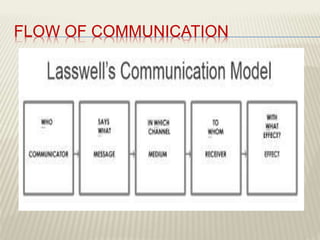
FLOW OF COMMUNICATION
CHELDY S. ELUMBA-PABLEO,MPA;LlB
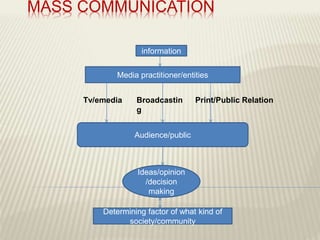
MASS COMMUNICATION
Media practitioner/entities
Tv/emedia Broadcastin
g
Print/Public Relation
Audience/public
Ideas/opinion
/decision
making
information
Determining factor of what kind of
society/community
CHELDY S. ELUMBA-
AS COMPARED TO INTERPERSONAL AND
ORGANIZATIONAL COMMUNICATION
 Unlike in Interpersonal and organizational
communication which focuses on a single
source of information dissemination to a
diversified audience, MASS
COMMUNICATION mainly concerns on the
‘CONTENT’ of information being
disseminated.
 How the content is relayed to the
audience that shapes the publics opinion,
attitude, behaviour, belief and perspective
CHELDY S. ELUMBA-PABLEO,MPA;LlB
FOUR MAJOR FIELDS OF MASS COMMUNICATION
 Journalism (print media)
 Broadcasting (television, radio, emedia)
 Advertising
 Public Relations ( memo and circulars)
CHELDY S. ELUMBA-PABLEO,MPA;LlB
OBJECTIVES OF MASS
COMMUNICATION
CHELDY S. ELUMBA-PABLEO,MPA;LlB
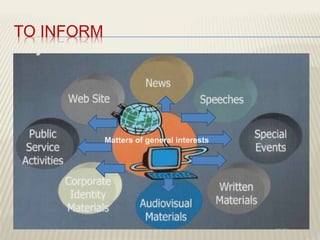
TO INFORM
Matters of general interests
CHELDY S. ELUMBA-
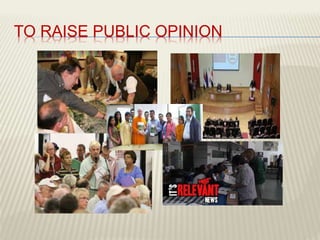
TO RAISE PUBLIC OPINION
CHELDY S. ELUMBA-
PABLEO,MPA;LlB
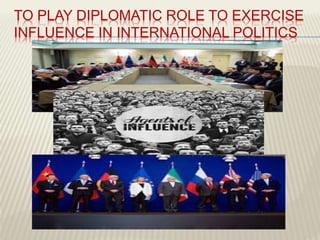
TO PLAY DIPLOMATIC ROLE TO EXERCISE
INFLUENCE IN INTERNATIONAL POLITICS
CHELDY S. ELUMBA-
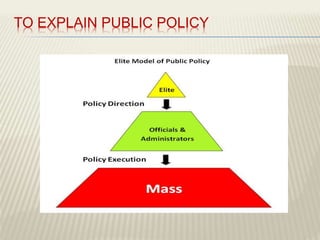
TO EXPLAIN PUBLIC POLICY
CHELDY S. ELUMBA-PABLEO,MPA;LlB
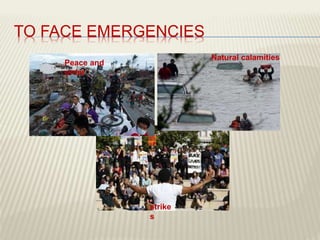
TO FACE EMERGENCIES
Peace and
order
Natural calamities
strike
s
CHELDY S. ELUMBA-
PABLEO,MPA;LlB
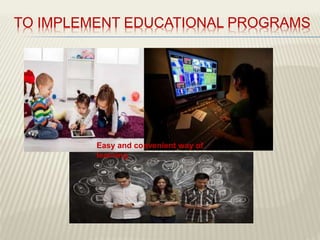
TO IMPLEMENT EDUCATIONAL PROGRAMS
Easy and convenient way of
learning
CHELDY S. ELUMBA-
PABLEO,MPA;LlB
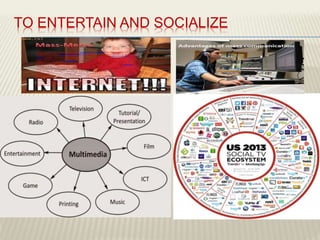
TO ENTERTAIN AND SOCIALIZE
CHELDY S. ELUMBA-
PABLEO,MPA;LlB
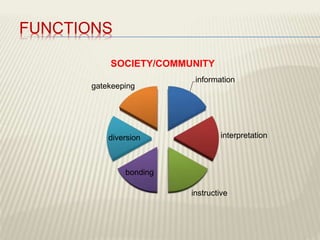
FUNCTIONS
information
interpretation
instructive
bonding
diversion
gatekeeping
SOCIETY/COMMUNITY
CHELDY S. ELUMBA-
PABLEO,MPA;LlB
INFORMATION FUNCTION
 a need for
information to
satisfy curiosity,
reduce uncertainty,
and better
understand how we
fit into the world.
CHELDY S. ELUMBA-
PABLEO,MPA;LlB
INFORMATION FUNCTION
 The amount and availability of information
now is very overwhelming compared 20
years ago where there is no internet access,
no social network, no cellular phones,
television or radio broadcasting that will
reach the far flung communities.
 The only information that they could get is
through the newspaper which will only have
its publication once or twice a week and with
a delayed information because of the
dissemination and transportation system.
CHELDY S. ELUMBA-
PABLEO,MPA;LlB
INTERPRETATION FUNCTION
 Media outlets interpret messages in more
or less explicit and ethical ways.
CHELDY S. ELUMBA-
PABLEO,MPA;LlB
INTERPRETATION
 Newspaper Editorials, radio commentary
programs have been long explicit
interpretation of current events and political
commentary that is full of subjective
interpretation.
 Most are often about their motives, political
inclinations.
 They interpret issues according to their
personal necessity. Although there are still
those who are still factual and not bias in
their interpretation. CHELDY S. ELUMBA-
PABLEO,MPA;LlB
INSTRUCTIVE FUNCTION
 Some media outlets
exist to cultivate
knowledge by
teaching instead of
just relaying
information.
CHELDY S. ELUMBA-
PABLEO,MPA;LlB
EXAMPLES OF INSTRUCTIVE NETWORKS
 Major
instructive
networks such
as CNN,
Discovery
Channels,
serves a mixture
of information.
CHELDY S. ELUMBA-PABLEO,MPA;LlB
BONDING FUNCTION
 Media outlets can bring people closer
together, which serves the bonding
function.
CHELDY S. ELUMBA-
PABLEO,MPA;LlB
BONDING FUNCTION
 People share common
values and interest can
gather on online forums
like facebook, twitter,
instagram.
 They can exchange ideas,
laugh together, give
sympathy that will create
a strong bonding
relationship. They create,
connect and reconnect
friends, family and the
CHELDY S. ELUMBA-
PABLEO,MPA;LlB
DIVERSION FUNCTION
 We all use the media to escape our day-to-
day lives, to distract us from our upcoming
exam, or to help us relax
CHELDY S. ELUMBA-
PABLEO,MPA;LlB
DIVERSION
 A saying that goes: “all work
without play will make a
child dull” is indeed very
true. When a person
becomes a ZOMBIE, he
becomes unproductive and
becomes so easily irritated
that will show off a potential
clients away. Thus
relaxation is not bad at all.
CHELDY S. ELUMBA-
PABLEO,MPA;LlB
GATEKEEPING
 “WATCH DOG”- This
watchdog role is intended
to keep government from
taking too much power
from the people and
overstepping their bounds.
 Central to this role is the
notion that the press works
independently of the
government.
CHELDY S. ELUMBA-
PABLEO,MPA;LlB
GATEKEEPERS
 Media practitioners serves as the eyes
and ears of the people.
 They engage in investigative reporting
which uncover danger or corruption so
that public can demand change.
 They are expected to present a factual,
fair and accurate reports.
CHELDY S. ELUMBA-
PABLEO,MPA;LlB
ROLE OF MEDIA IN THE SOCIETY
- Fundamentally a function of how this society
chooses to use the media that ultimately
leave the final judgment to the viewers or the
public to decide on a particular issue.
CHELDY S. ELUMBA-
PABLEO,MPA;LlB
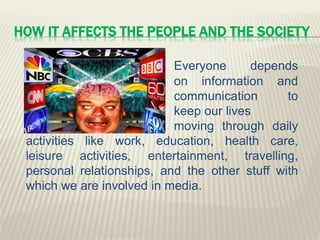
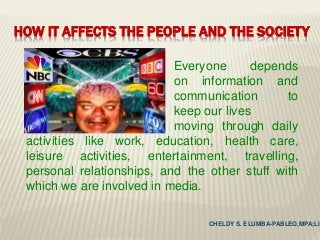
HOW IT AFFECTS THE PEOPLE AND THE SOCIETY
Everyone depends
on information and
communication to
keep our lives
moving through daily
activities like work, education, health care,
leisure activities, entertainment, travelling,
personal relationships, and the other stuff with
which we are involved in media.
CHELDY S. ELUMBA-PABLEO,MPA;LlB
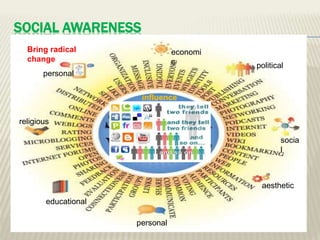
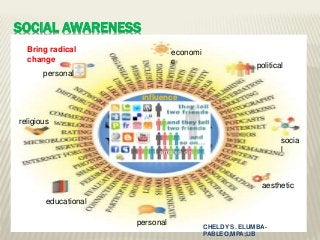
SOCIAL AWARENESS
Bring radical
change
influence
political
socia
l
economi
c
educational
personal
religious
personal
aesthetic
CHELDY S. ELUMBA-
PABLEO,MPA;LlB

Mass communication

  • 1.
    MASS COMMUNICATION BY: CHELDYS. ELUMBA-PABLEO,MPA;LLB
  • 2.
    FLOW OF COMMUNICATION CHELDYS. ELUMBA-PABLEO,MPA;LlB
  • 3.
    MASS COMMUNICATION Media practitioner/entities Tv/emediaBroadcastin g Print/Public Relation Audience/public Ideas/opinion /decision making information Determining factor of what kind of society/community CHELDY S. ELUMBA-
  • 4.
    AS COMPARED TOINTERPERSONAL AND ORGANIZATIONAL COMMUNICATION  Unlike in Interpersonal and organizational communication which focuses on a single source of information dissemination to a diversified audience, MASS COMMUNICATION mainly concerns on the ‘CONTENT’ of information being disseminated.  How the content is relayed to the audience that shapes the publics opinion, attitude, behaviour, belief and perspective CHELDY S. ELUMBA-PABLEO,MPA;LlB
  • 5.
    FOUR MAJOR FIELDSOF MASS COMMUNICATION  Journalism (print media)  Broadcasting (television, radio, emedia)  Advertising  Public Relations ( memo and circulars) CHELDY S. ELUMBA-PABLEO,MPA;LlB
  • 6.
  • 7.
    TO INFORM Matters ofgeneral interests CHELDY S. ELUMBA-
  • 8.
    TO RAISE PUBLICOPINION CHELDY S. ELUMBA- PABLEO,MPA;LlB
  • 9.
    TO PLAY DIPLOMATICROLE TO EXERCISE INFLUENCE IN INTERNATIONAL POLITICS CHELDY S. ELUMBA-
  • 10.
    TO EXPLAIN PUBLICPOLICY CHELDY S. ELUMBA-PABLEO,MPA;LlB
  • 11.
    TO FACE EMERGENCIES Peaceand order Natural calamities strike s CHELDY S. ELUMBA- PABLEO,MPA;LlB
  • 12.
    TO IMPLEMENT EDUCATIONALPROGRAMS Easy and convenient way of learning CHELDY S. ELUMBA- PABLEO,MPA;LlB
  • 13.
    TO ENTERTAIN ANDSOCIALIZE CHELDY S. ELUMBA- PABLEO,MPA;LlB
  • 14.
  • 15.
    INFORMATION FUNCTION  aneed for information to satisfy curiosity, reduce uncertainty, and better understand how we fit into the world. CHELDY S. ELUMBA- PABLEO,MPA;LlB
  • 16.
    INFORMATION FUNCTION  Theamount and availability of information now is very overwhelming compared 20 years ago where there is no internet access, no social network, no cellular phones, television or radio broadcasting that will reach the far flung communities.  The only information that they could get is through the newspaper which will only have its publication once or twice a week and with a delayed information because of the dissemination and transportation system. CHELDY S. ELUMBA- PABLEO,MPA;LlB
  • 17.
    INTERPRETATION FUNCTION  Mediaoutlets interpret messages in more or less explicit and ethical ways. CHELDY S. ELUMBA- PABLEO,MPA;LlB
  • 18.
    INTERPRETATION  Newspaper Editorials,radio commentary programs have been long explicit interpretation of current events and political commentary that is full of subjective interpretation.  Most are often about their motives, political inclinations.  They interpret issues according to their personal necessity. Although there are still those who are still factual and not bias in their interpretation. CHELDY S. ELUMBA- PABLEO,MPA;LlB
  • 19.
    INSTRUCTIVE FUNCTION  Somemedia outlets exist to cultivate knowledge by teaching instead of just relaying information. CHELDY S. ELUMBA- PABLEO,MPA;LlB
  • 20.
    EXAMPLES OF INSTRUCTIVENETWORKS  Major instructive networks such as CNN, Discovery Channels, serves a mixture of information. CHELDY S. ELUMBA-PABLEO,MPA;LlB
  • 21.
    BONDING FUNCTION  Mediaoutlets can bring people closer together, which serves the bonding function. CHELDY S. ELUMBA- PABLEO,MPA;LlB
  • 22.
    BONDING FUNCTION  Peopleshare common values and interest can gather on online forums like facebook, twitter, instagram.  They can exchange ideas, laugh together, give sympathy that will create a strong bonding relationship. They create, connect and reconnect friends, family and the CHELDY S. ELUMBA- PABLEO,MPA;LlB
  • 23.
    DIVERSION FUNCTION  Weall use the media to escape our day-to- day lives, to distract us from our upcoming exam, or to help us relax CHELDY S. ELUMBA- PABLEO,MPA;LlB
  • 24.
    DIVERSION  A sayingthat goes: “all work without play will make a child dull” is indeed very true. When a person becomes a ZOMBIE, he becomes unproductive and becomes so easily irritated that will show off a potential clients away. Thus relaxation is not bad at all. CHELDY S. ELUMBA- PABLEO,MPA;LlB
  • 25.
    GATEKEEPING  “WATCH DOG”-This watchdog role is intended to keep government from taking too much power from the people and overstepping their bounds.  Central to this role is the notion that the press works independently of the government. CHELDY S. ELUMBA- PABLEO,MPA;LlB
  • 26.
    GATEKEEPERS  Media practitionersserves as the eyes and ears of the people.  They engage in investigative reporting which uncover danger or corruption so that public can demand change.  They are expected to present a factual, fair and accurate reports. CHELDY S. ELUMBA- PABLEO,MPA;LlB
  • 27.
    ROLE OF MEDIAIN THE SOCIETY - Fundamentally a function of how this society chooses to use the media that ultimately leave the final judgment to the viewers or the public to decide on a particular issue. CHELDY S. ELUMBA- PABLEO,MPA;LlB
  • 28.
    HOW IT AFFECTSTHE PEOPLE AND THE SOCIETY Everyone depends on information and communication to keep our lives moving through daily activities like work, education, health care, leisure activities, entertainment, travelling, personal relationships, and the other stuff with which we are involved in media. CHELDY S. ELUMBA-PABLEO,MPA;LlB
  • 29.