SMERAJAINA
PRESENTED BY…
&
A marketing channel is a set of practices or
activities necessary to transfer the ownership of
goods, and to move goods, from the point of
production to the point of consumption.
MARKETING CHANNEL
CAN SELL THERE PRODUCT DIRECTLY TO
CUSTOMERS
CAN’T SELL THERE PRODUCT DIRECTLY TO CUSTOMERS
TYPES OF MARKETING CHANNEL
Direct marketing channel
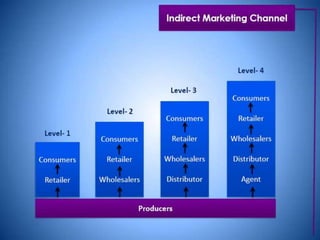
Indirect marketing channel
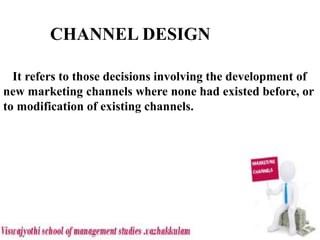
It refers to those decisions involving the development of
new marketing channels where none had existed before, or
to modification of existing channels.
CHANNEL DESIGN
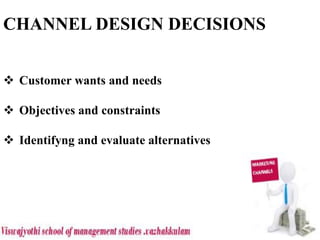
CHANNEL DESIGN DECISIONS
 Customer wants and needs
 Objectives and constraints
 Identifyng and evaluate alternatives
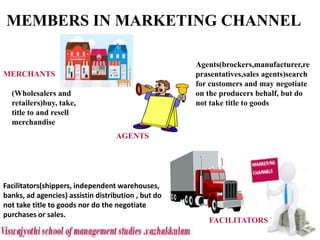
MEMBERS IN MARKETING CHANNEL
MERCHANTS
(Wholesalers and
retailers)buy, take,
title to and resell
merchandise
AGENTS
Agents(brockers,manufacturer,re
prasentatives,sales agents)search
for customers and may negotiate
on the producers behalf, but do
not take title to goods
FACILITATORS
Facilitators(shippers, independent warehouses,
banks, ad agencies) assistin distribution , but do
not take title to goods nor do the negotiate
purchases or sales.
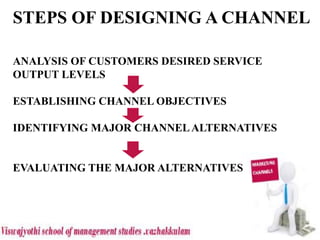
STEPS OF DESIGNING A CHANNEL
ANALYSIS OF CUSTOMERS DESIRED SERVICE
OUTPUT LEVELS
ESTABLISHING CHANNEL OBJECTIVES
IDENTIFYING MAJOR CHANNELALTERNATIVES
EVALUATING THE MAJOR ALTERNATIVES
1.ANALYSIS OF CUSTOMERS DESIRED
SERVICE OUTPUT LEVELS
 Analyzing customer needs
 Waiting time
 Product variety
 Service backup
2.ESTABLISHING CHANNEL OBJECTIVES
Each channel alternatives provide a different level of
sales, costs.
Eg: internet, telemarketing, retail stores, distributors.
3.IDENTIFYING MAJOR CHANNEL ALTERNATIVES
Company Sales Force
Dealer
Value Added Resellers
Merchants
Carrying and Forwarding Agents
Intensive Distribution
4.IDENTIFYING MAJOR CHANNEL
ALTERNATIVES
 Wholesaler
 Retailer
 Distributor
 Middlemen
 Agent or Broker
5.EVALUATING THE MAJOR ALTERNATIVES
Once the list of alternative channels is
selected, the marketing manager should
evaluate each channel alternative to arrive at
a final decision.
FACTORS AFFECTING CHANNEL CHOICE
1. MARKET FACTOR
 Customer Preferences
 Organizational Customers
 Geography
 Competitors
2. PRODUCT FACTOR
 Life Cycle
 Product Complexity
 Product Value
 Product Size and Weight
 Consumer Perception
3. MANUFACTURER FACTOR
 Company Objective
 Company Resources
 Desire for Control
 Breadth of Product Life
Thank you

Marketing channel design

  • 2.
  • 3.
    A marketing channelis a set of practices or activities necessary to transfer the ownership of goods, and to move goods, from the point of production to the point of consumption. MARKETING CHANNEL
  • 4.
    CAN SELL THEREPRODUCT DIRECTLY TO CUSTOMERS
  • 5.
    CAN’T SELL THEREPRODUCT DIRECTLY TO CUSTOMERS
  • 6.
    TYPES OF MARKETINGCHANNEL Direct marketing channel Indirect marketing channel
  • 9.
    It refers tothose decisions involving the development of new marketing channels where none had existed before, or to modification of existing channels. CHANNEL DESIGN
  • 10.
    CHANNEL DESIGN DECISIONS Customer wants and needs  Objectives and constraints  Identifyng and evaluate alternatives
  • 11.
    MEMBERS IN MARKETINGCHANNEL MERCHANTS (Wholesalers and retailers)buy, take, title to and resell merchandise AGENTS Agents(brockers,manufacturer,re prasentatives,sales agents)search for customers and may negotiate on the producers behalf, but do not take title to goods FACILITATORS Facilitators(shippers, independent warehouses, banks, ad agencies) assistin distribution , but do not take title to goods nor do the negotiate purchases or sales.
  • 12.
    STEPS OF DESIGNINGA CHANNEL ANALYSIS OF CUSTOMERS DESIRED SERVICE OUTPUT LEVELS ESTABLISHING CHANNEL OBJECTIVES IDENTIFYING MAJOR CHANNELALTERNATIVES EVALUATING THE MAJOR ALTERNATIVES
  • 13.
    1.ANALYSIS OF CUSTOMERSDESIRED SERVICE OUTPUT LEVELS  Analyzing customer needs  Waiting time  Product variety  Service backup
  • 14.
    2.ESTABLISHING CHANNEL OBJECTIVES Eachchannel alternatives provide a different level of sales, costs. Eg: internet, telemarketing, retail stores, distributors.
  • 15.
    3.IDENTIFYING MAJOR CHANNELALTERNATIVES Company Sales Force Dealer Value Added Resellers Merchants Carrying and Forwarding Agents Intensive Distribution
  • 16.
    4.IDENTIFYING MAJOR CHANNEL ALTERNATIVES Wholesaler  Retailer  Distributor  Middlemen  Agent or Broker
  • 17.
    5.EVALUATING THE MAJORALTERNATIVES Once the list of alternative channels is selected, the marketing manager should evaluate each channel alternative to arrive at a final decision.
  • 18.
    FACTORS AFFECTING CHANNELCHOICE 1. MARKET FACTOR  Customer Preferences  Organizational Customers  Geography  Competitors
  • 19.
    2. PRODUCT FACTOR Life Cycle  Product Complexity  Product Value  Product Size and Weight  Consumer Perception
  • 20.
    3. MANUFACTURER FACTOR Company Objective  Company Resources  Desire for Control  Breadth of Product Life
  • 21.