By Dr. Peter Hammond
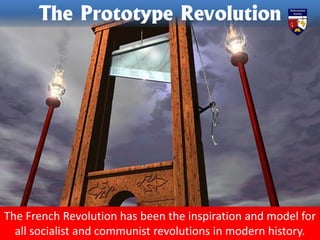
The French Revolution has been the inspiration and model for
all socialist and communist revolutions in modern history.
The Prototype Revolution
The tools of the French Revolution were: dis-information,
propaganda, the subversion of language, malice, envy,
hatred & jealousy………………
Tools of Revolution
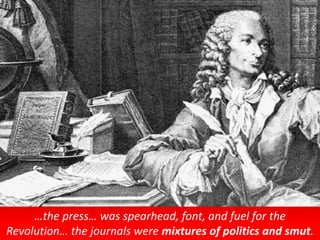
…the press… was spearhead, font, and fuel for the
Revolution… the journals were mixtures of politics and smut.
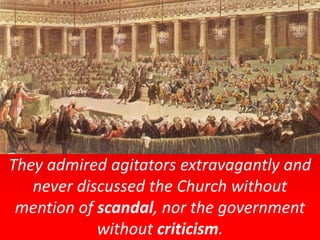
They admired agitators extravagantly and
never discussed the Church without
mention of scandal, nor the government
without criticism.
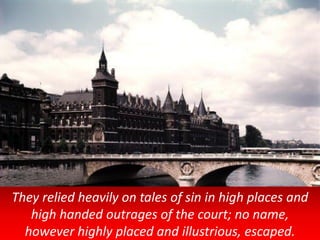
They relied heavily on tales of sin in high places and
high handed outrages of the court; no name,
however highly placed and illustrious, escaped.
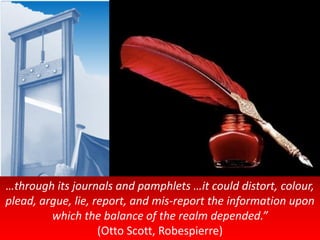
…through its journals and pamphlets …it could distort, colour,
plead, argue, lie, report, and mis-report the information upon
which the balance of the realm depended.”
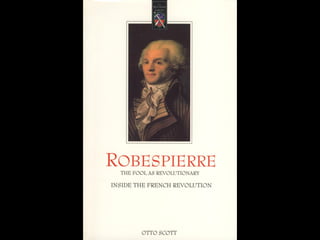
(Otto Scott, Robespierre)
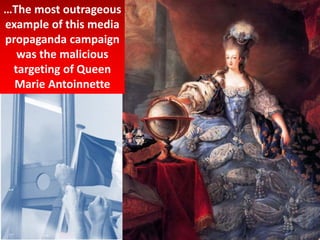
…The most outrageous
example of this media
propaganda campaign
was the malicious
targeting of Queen
Marie Antoinnette
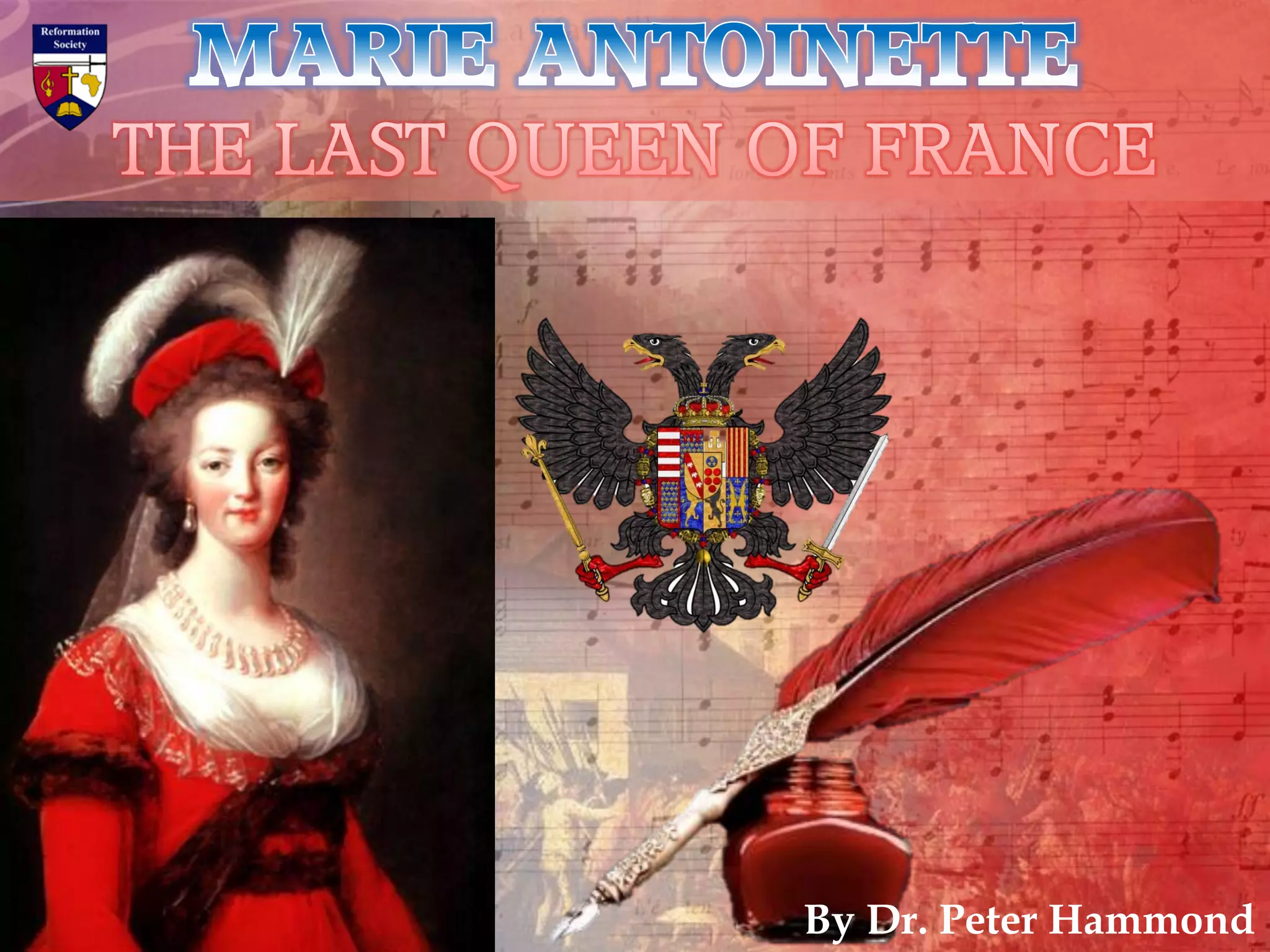
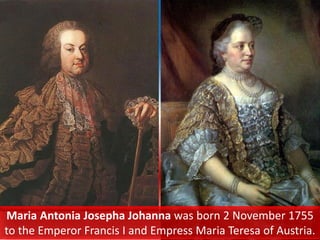
Maria Antonia Josepha Johanna was born 2 November 1755
to the Emperor Francis I and Empress Maria Teresa of Austria.
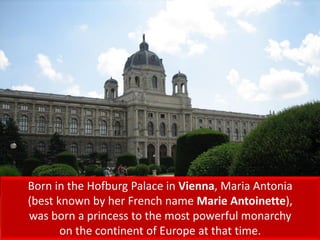
Born in the Hofburg Palace in Vienna, Maria Antonia
(best known by her French name Marie Antoinette),
was born a princess to the most powerful monarchy
on the continent of Europe at that time.
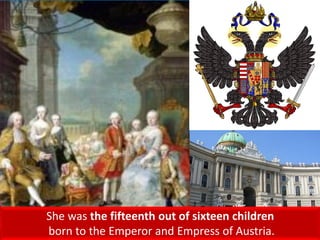
She was the fifteenth out of sixteen children
born to the Emperor and Empress of Austria.
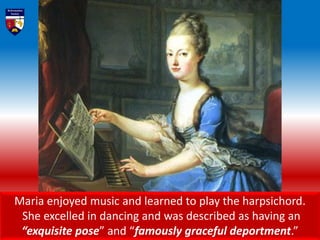
Maria enjoyed music and learned to play the harpsichord.
She excelled in dancing and was described as having an
“exquisite pose” and “famously graceful deportment.”
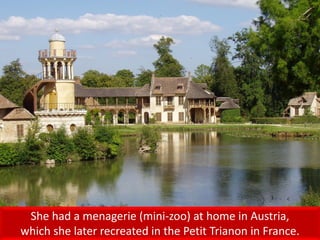
She had a menagerie (mini-zoo) at home in Austria,
which she later recreated in the Petit Trianon in France.
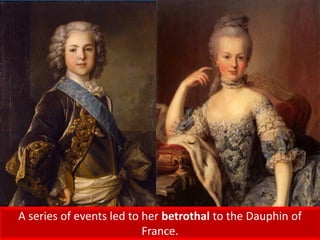
A series of events led to her betrothal to the Dauphin of
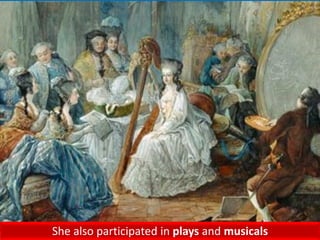
France.
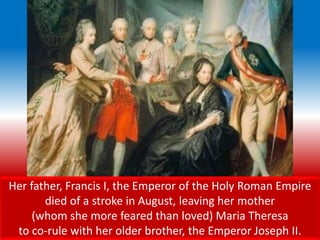
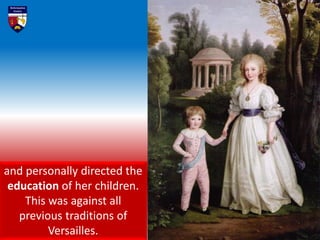
Her father, Francis I, the Emperor of the Holy Roman Empire
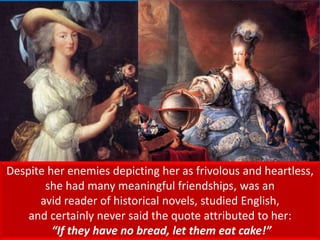
died of a stroke in August, leaving her mother
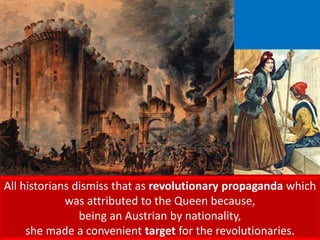
(whom she more feared than loved) Maria Theresa
to co-rule with her older brother, the Emperor Joseph II.
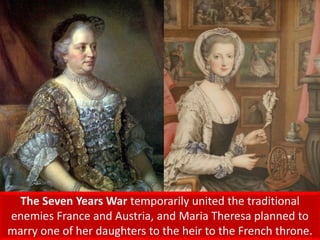
The Seven Years War temporarily united the traditional
enemies France and Austria, and Maria Theresa planned to
marry one of her daughters to the heir to the French throne.
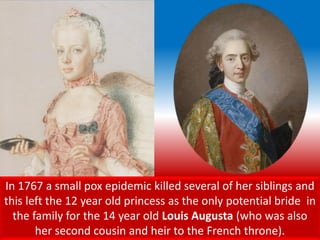
In 1767 a small pox epidemic killed several of her siblings and
this left the 12 year old princess as the only potential bride in
the family for the 14 year old Louis Augusta (who was also
her second cousin and heir to the French throne).
France at that time was the most powerful nation in
continental Europe. The young princess could hardly have
hoped for a more prestigious marriage.
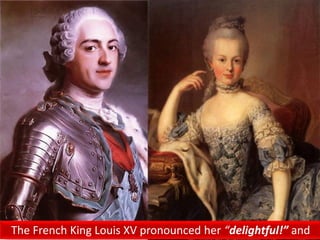
The French King Louis XV pronounced her “delightful!” and
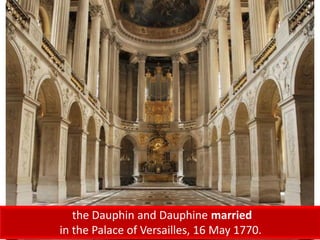
the Dauphin and Dauphine married
in the Palace of Versailles, 16 May 1770.
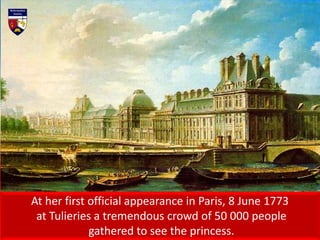
At her first official appearance in Paris, 8 June 1773
at Tulieries a tremendous crowd of 50 000 people
gathered to see the princess.
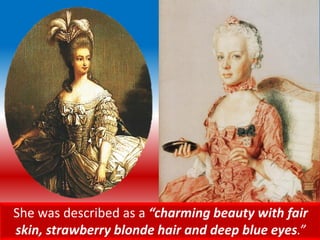
She was described as a “charming beauty with fair
skin, strawberry blonde hair and deep blue eyes.”
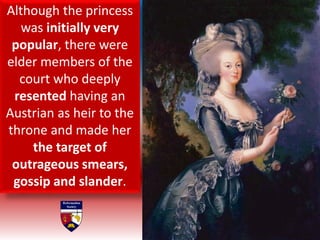
Although the princess
was initially very
popular, there were
elder members of the
court who deeply
resented having an
Austrian as heir to the
throne and made her
the target of
outrageous smears,
gossip and slander.
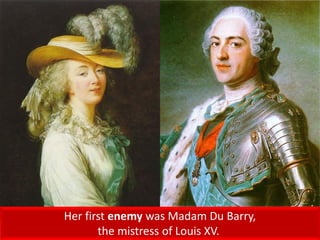
Her first enemy was Madam Du Barry,
the mistress of Louis XV.
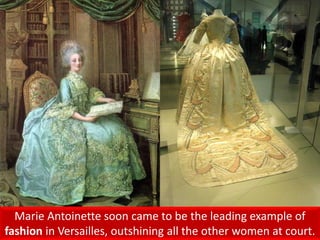
Marie Antoinette soon came to be the leading example of
fashion in Versailles, outshining all the other women at court.
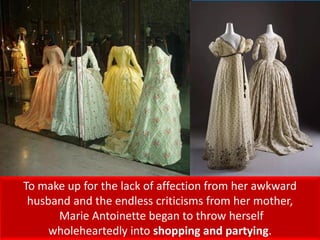
To make up for the lack of affection from her awkward
husband and the endless criticisms from her mother,
Marie Antoinette began to throw herself
wholeheartedly into shopping and partying.
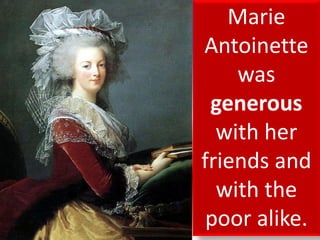
Marie
Antoinette
was
generous
with her
friends and
with the
poor alike.
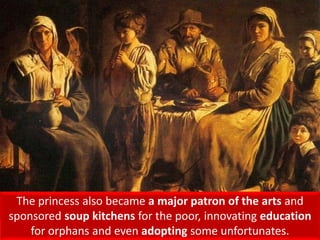
The princess also became a major patron of the arts and
sponsored soup kitchens for the poor, innovating education
for orphans and even adopting some unfortunates.
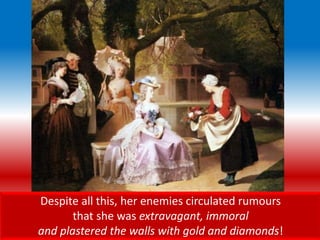
Despite all this, her enemies circulated rumours
that she was extravagant, immoral
and plastered the walls with gold and diamonds!
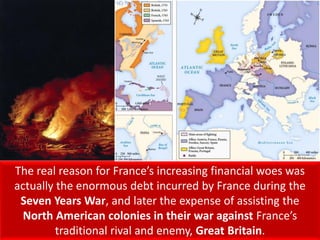
The real reason for France’s increasing financial woes was
actually the enormous debt incurred by France during the
Seven Years War, and later the expense of assisting the
North American colonies in their war against France’s
traditional rival and enemy, Great Britain.
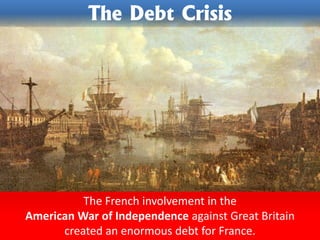
The French involvement in the
American War of Independence against Great Britain
created an enormous debt for France.
The Debt Crisis
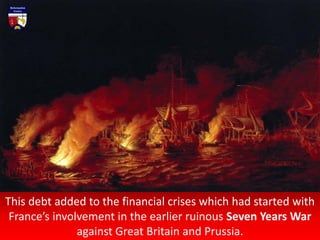
This debt added to the financial crises which had started with
France’s involvement in the earlier ruinous Seven Years War
against Great Britain and Prussia.
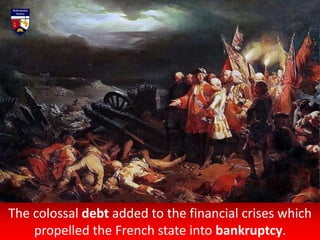
The colossal debt added to the financial crises which
propelled the French state into bankruptcy.
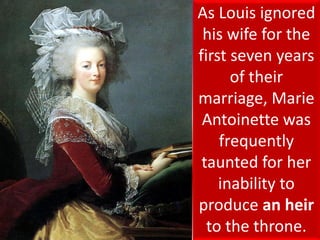
As Louis ignored
his wife for the
first seven years
of their
marriage, Marie
Antoinette was
frequently
taunted for her
inability to
produce an heir
to the throne.
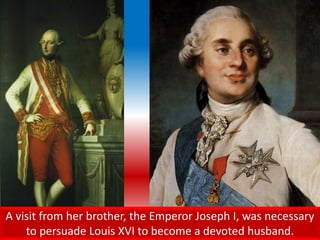
A visit from her brother, the Emperor Joseph I, was necessary
to persuade Louis XVI to become a devoted husband.
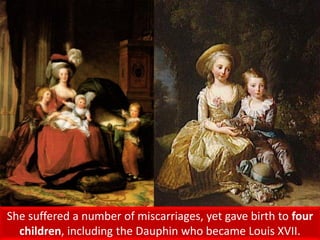
She suffered a number of miscarriages, yet gave birth to four
children, including the Dauphin who became Louis XVII.
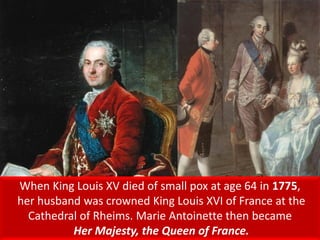
When King Louis XV died of small pox at age 64 in 1775,
her husband was crowned King Louis XVI of France at the
Cathedral of Rheims. Marie Antoinette then became
Her Majesty, the Queen of France.
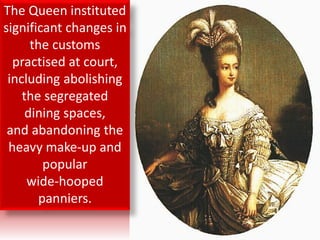
The Queen instituted
significant changes in
the customs
practised at court,
including abolishing
the segregated
dining spaces,
and abandoning the
heavy make-up and
popular
wide-hooped
panniers.
She also participated in plays and musicals
and personally directed the
education of her children.
This was against all
previous traditions of
Versailles.
Despite her enemies depicting her as frivolous and heartless,
she had many meaningful friendships, was an
avid reader of historical novels, studied English,
and certainly never said the quote attributed to her:
“If they have no bread, let them eat cake!”
All historians dismiss that as revolutionary propaganda which
was attributed to the Queen because,
being an Austrian by nationality,
she made a convenient target for the revolutionaries.
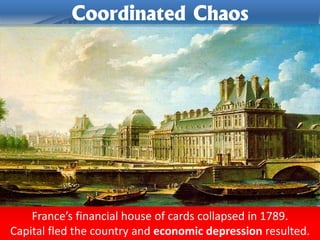
France’s financial house of cards collapsed in 1789.
Capital fled the country and economic depression resulted.
Coordinated Chaos
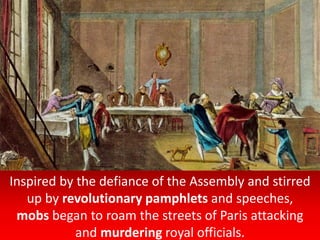
Inspired by the defiance of the Assembly and stirred
up by revolutionary pamphlets and speeches,
mobs began to roam the streets of Paris attacking
and murdering royal officials.
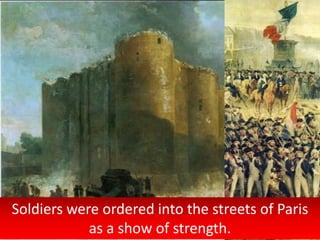
Soldiers were ordered into the streets of Paris
as a show of strength.
The appearance of the soldiers inspired mobs to seize
whatever weapons they could find and to storm the old
fortress of the Bastille.
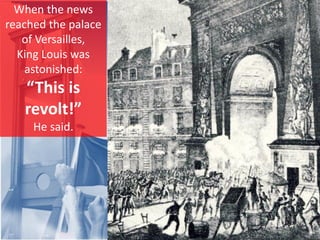
When the news
reached the palace
of Versailles,
King Louis was
astonished:
“This is
revolt!”
He said.
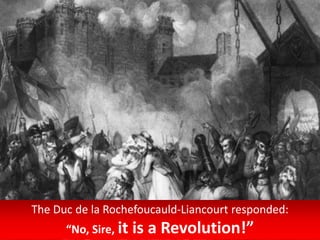
The Duc de la Rochefoucauld-Liancourt responded:
“No, Sire, it is a Revolution!”
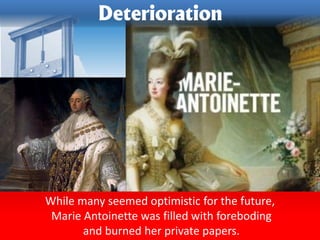
While many seemed optimistic for the future,
Marie Antoinette was filled with foreboding
and burned her private papers.
Deterioration
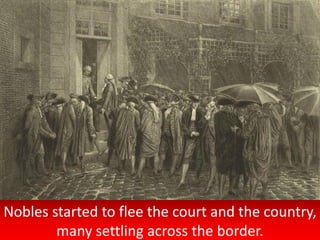
Nobles started to flee the court and the country,
many settling across the border.
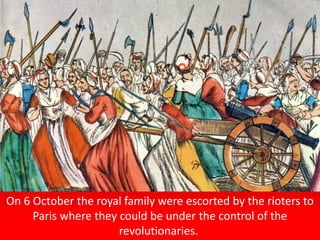
On 6 October the royal family were escorted by the rioters to
Paris where they could be under the control of the
revolutionaries.
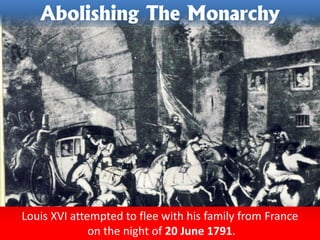
Louis XVI attempted to flee with his family from France
on the night of 20 June 1791.
Abolishing The Monarchy
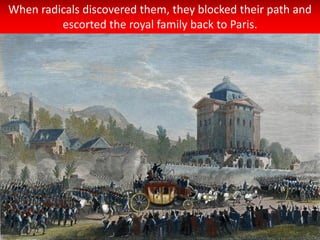
When radicals discovered them, they blocked their path and
escorted the royal family back to Paris.
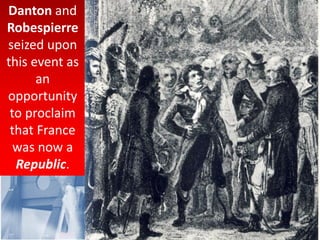
Danton and
Robespierre
seized upon
this event as
an
opportunity
to proclaim
that France
was now a
Republic.
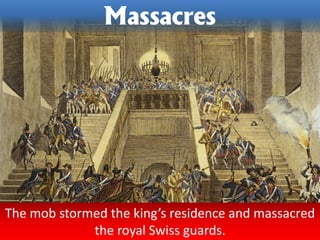
The mob stormed the king’s residence and massacred
the royal Swiss guards.
Massacres
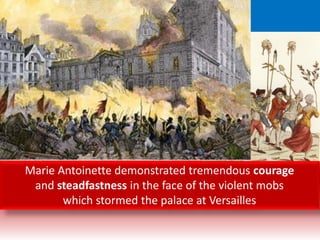
Marie Antoinette demonstrated tremendous courage
and steadfastness in the face of the violent mobs
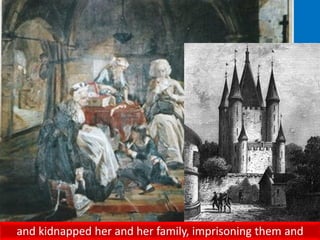
which stormed the palace at Versailles
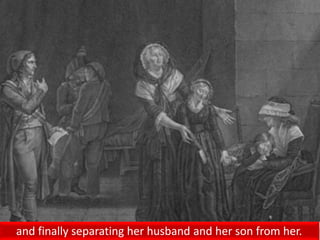
and kidnapped her and her family, imprisoning them and
and finally separating her husband and her son from her.
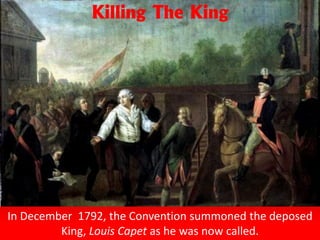
In December 1792, the Convention summoned the deposed
King, Louis Capet as he was now called.
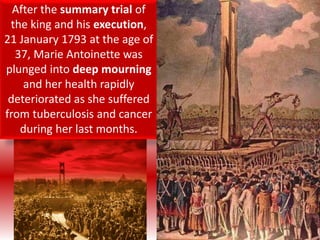
Killing The King
After the summary trial of
the king and his execution,
21 January 1793 at the age of
37, Marie Antoinette was
plunged into deep mourning
and her health rapidly
deteriorated as she suffered
from tuberculosis and cancer
during her last months.
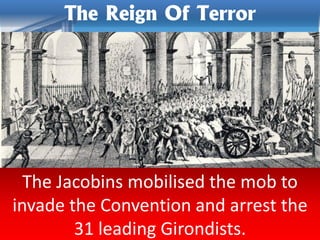
The Jacobins mobilised the mob to
invade the Convention and arrest the
31 leading Girondists.
The Reign Of Terror
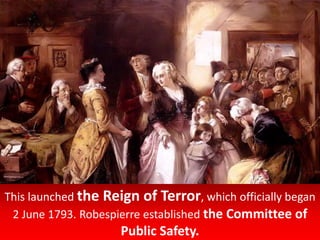
This launched the Reign of Terror, which officially began
2 June 1793. Robespierre established the Committee of
Public Safety.
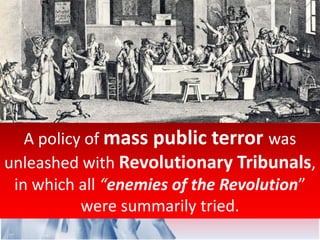
A policy of mass public terror was
unleashed with Revolutionary Tribunals,
in which all “enemies of the Revolution”
were summarily tried.
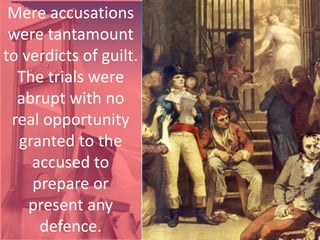
Mere accusations
were tantamount
to verdicts of guilt.
The trials were
abrupt with no
real opportunity
granted to the
accused to
prepare or
present any
defence.
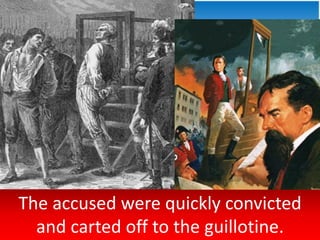
The accused were quickly convicted
and carted off to the guillotine.
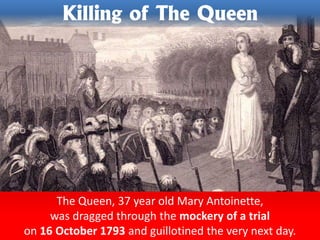
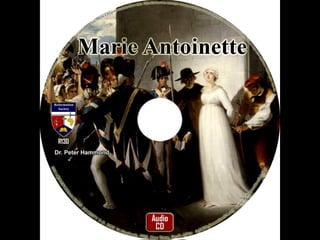
The Queen, 37 year old Mary Antoinette,
was dragged through the mockery of a trial
on 16 October 1793 and guillotined the very next day.
Killing of The Queen
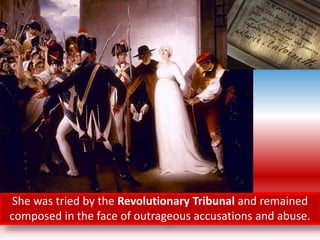
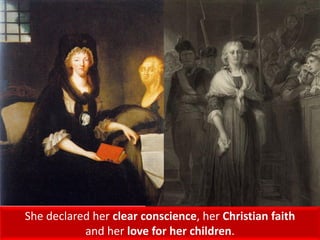
She was tried by the Revolutionary Tribunal and remained
composed in the face of outrageous accusations and abuse.
She declared her clear conscience, her Christian faith
and her love for her children.
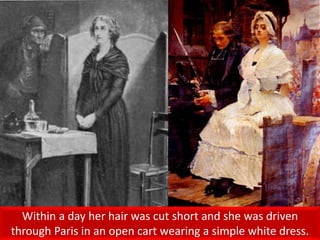
Within a day her hair was cut short and she was driven
through Paris in an open cart wearing a simple white dress.
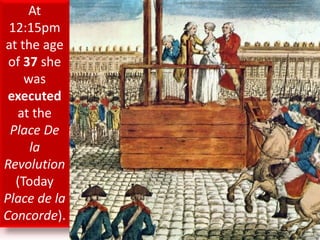
At
12:15pm
at the age
of 37 she
was
executed
at the
Place De
la
Revolution
(Today
Place de la
Concorde).
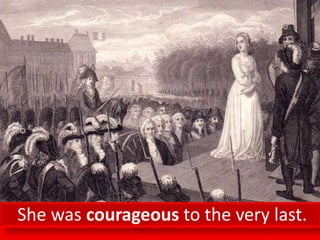
She was courageous to the very last.
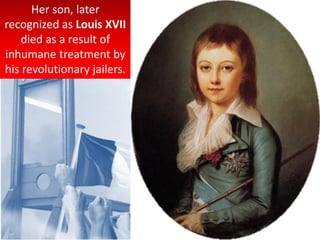
Her son, later
recognized as Louis XVII
died as a result of
inhumane treatment by
his revolutionary jailers.
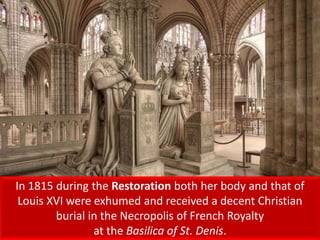
In 1815 during the Restoration both her body and that of
Louis XVI were exhumed and received a decent Christian
burial in the Necropolis of French Royalty
at the Basilica of St. Denis.
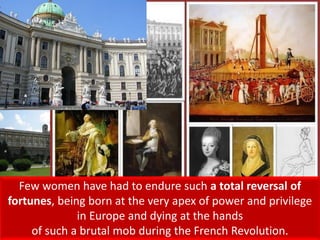
Few women have had to endure such a total reversal of
fortunes, being born at the very apex of power and privilege
in Europe and dying at the hands
of such a brutal mob during the French Revolution.
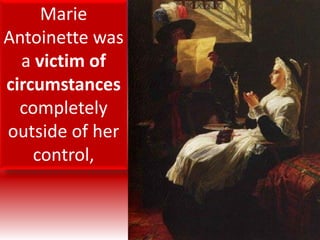
Marie
Antoinette was
a victim of
circumstances
completely
outside of her
control,
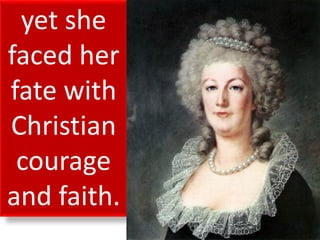
yet she
faced her
fate with
Christian
courage
and faith.
REFORMATION SOCIETY
PO Box 74
Newlands, 7725
Cape Town
South Africa
E-mail: info@ReformationSA.org
Web: www.ReformationSA.org

Marie Antoinette

  • 1.
    By Dr. PeterHammond
  • 3.
    By Dr. PeterHammond
  • 4.
    The French Revolutionhas been the inspiration and model for all socialist and communist revolutions in modern history. The Prototype Revolution
  • 5.
    The tools ofthe French Revolution were: dis-information, propaganda, the subversion of language, malice, envy, hatred & jealousy……………… Tools of Revolution
  • 6.
    …the press… wasspearhead, font, and fuel for the Revolution… the journals were mixtures of politics and smut.
  • 7.
    They admired agitatorsextravagantly and never discussed the Church without mention of scandal, nor the government without criticism.
  • 8.
    They relied heavilyon tales of sin in high places and high handed outrages of the court; no name, however highly placed and illustrious, escaped.
  • 9.
    …through its journalsand pamphlets …it could distort, colour, plead, argue, lie, report, and mis-report the information upon which the balance of the realm depended.” (Otto Scott, Robespierre)
  • 10.
    …The most outrageous exampleof this media propaganda campaign was the malicious targeting of Queen Marie Antoinnette
  • 11.
    Maria Antonia JosephaJohanna was born 2 November 1755 to the Emperor Francis I and Empress Maria Teresa of Austria.
  • 12.
    Born in theHofburg Palace in Vienna, Maria Antonia (best known by her French name Marie Antoinette), was born a princess to the most powerful monarchy on the continent of Europe at that time.
  • 13.
    She was thefifteenth out of sixteen children born to the Emperor and Empress of Austria.
  • 14.
    Maria enjoyed musicand learned to play the harpsichord. She excelled in dancing and was described as having an “exquisite pose” and “famously graceful deportment.”
  • 15.
    She had amenagerie (mini-zoo) at home in Austria, which she later recreated in the Petit Trianon in France.
  • 16.
    A series ofevents led to her betrothal to the Dauphin of France.
  • 17.
    Her father, FrancisI, the Emperor of the Holy Roman Empire died of a stroke in August, leaving her mother (whom she more feared than loved) Maria Theresa to co-rule with her older brother, the Emperor Joseph II.
  • 18.
    The Seven YearsWar temporarily united the traditional enemies France and Austria, and Maria Theresa planned to marry one of her daughters to the heir to the French throne.
  • 19.
    In 1767 asmall pox epidemic killed several of her siblings and this left the 12 year old princess as the only potential bride in the family for the 14 year old Louis Augusta (who was also her second cousin and heir to the French throne).
  • 20.
    France at thattime was the most powerful nation in continental Europe. The young princess could hardly have hoped for a more prestigious marriage.
  • 21.
    The French KingLouis XV pronounced her “delightful!” and
  • 22.
    the Dauphin andDauphine married in the Palace of Versailles, 16 May 1770.
  • 23.
    At her firstofficial appearance in Paris, 8 June 1773 at Tulieries a tremendous crowd of 50 000 people gathered to see the princess.
  • 24.
    She was describedas a “charming beauty with fair skin, strawberry blonde hair and deep blue eyes.”
  • 25.
    Although the princess wasinitially very popular, there were elder members of the court who deeply resented having an Austrian as heir to the throne and made her the target of outrageous smears, gossip and slander.
  • 26.
    Her first enemywas Madam Du Barry, the mistress of Louis XV.
  • 27.
    Marie Antoinette sooncame to be the leading example of fashion in Versailles, outshining all the other women at court.
  • 28.
    To make upfor the lack of affection from her awkward husband and the endless criticisms from her mother, Marie Antoinette began to throw herself wholeheartedly into shopping and partying.
  • 29.
  • 30.
    The princess alsobecame a major patron of the arts and sponsored soup kitchens for the poor, innovating education for orphans and even adopting some unfortunates.
  • 31.
    Despite all this,her enemies circulated rumours that she was extravagant, immoral and plastered the walls with gold and diamonds!
  • 32.
    The real reasonfor France’s increasing financial woes was actually the enormous debt incurred by France during the Seven Years War, and later the expense of assisting the North American colonies in their war against France’s traditional rival and enemy, Great Britain.
  • 33.
    The French involvementin the American War of Independence against Great Britain created an enormous debt for France. The Debt Crisis
  • 34.
    This debt addedto the financial crises which had started with France’s involvement in the earlier ruinous Seven Years War against Great Britain and Prussia.
  • 35.
    The colossal debtadded to the financial crises which propelled the French state into bankruptcy.
  • 36.
    As Louis ignored hiswife for the first seven years of their marriage, Marie Antoinette was frequently taunted for her inability to produce an heir to the throne.
  • 37.
    A visit fromher brother, the Emperor Joseph I, was necessary to persuade Louis XVI to become a devoted husband.
  • 38.
    She suffered anumber of miscarriages, yet gave birth to four children, including the Dauphin who became Louis XVII.
  • 39.
    When King LouisXV died of small pox at age 64 in 1775, her husband was crowned King Louis XVI of France at the Cathedral of Rheims. Marie Antoinette then became Her Majesty, the Queen of France.
  • 40.
    The Queen instituted significantchanges in the customs practised at court, including abolishing the segregated dining spaces, and abandoning the heavy make-up and popular wide-hooped panniers.
  • 41.
    She also participatedin plays and musicals
  • 42.
    and personally directedthe education of her children. This was against all previous traditions of Versailles.
  • 43.
    Despite her enemiesdepicting her as frivolous and heartless, she had many meaningful friendships, was an avid reader of historical novels, studied English, and certainly never said the quote attributed to her: “If they have no bread, let them eat cake!”
  • 44.
    All historians dismissthat as revolutionary propaganda which was attributed to the Queen because, being an Austrian by nationality, she made a convenient target for the revolutionaries.
  • 45.
    France’s financial houseof cards collapsed in 1789. Capital fled the country and economic depression resulted. Coordinated Chaos
  • 46.
    Inspired by thedefiance of the Assembly and stirred up by revolutionary pamphlets and speeches, mobs began to roam the streets of Paris attacking and murdering royal officials.
  • 47.
    Soldiers were orderedinto the streets of Paris as a show of strength.
  • 48.
    The appearance ofthe soldiers inspired mobs to seize whatever weapons they could find and to storm the old fortress of the Bastille.
  • 49.
    When the news reachedthe palace of Versailles, King Louis was astonished: “This is revolt!” He said.
  • 50.
    The Duc dela Rochefoucauld-Liancourt responded: “No, Sire, it is a Revolution!”
  • 51.
    While many seemedoptimistic for the future, Marie Antoinette was filled with foreboding and burned her private papers. Deterioration
  • 52.
    Nobles started toflee the court and the country, many settling across the border.
  • 53.
    On 6 Octoberthe royal family were escorted by the rioters to Paris where they could be under the control of the revolutionaries.
  • 54.
    Louis XVI attemptedto flee with his family from France on the night of 20 June 1791. Abolishing The Monarchy
  • 55.
    When radicals discoveredthem, they blocked their path and escorted the royal family back to Paris.
  • 56.
    Danton and Robespierre seized upon thisevent as an opportunity to proclaim that France was now a Republic.
  • 57.
    The mob stormedthe king’s residence and massacred the royal Swiss guards. Massacres
  • 58.
    Marie Antoinette demonstratedtremendous courage and steadfastness in the face of the violent mobs which stormed the palace at Versailles
  • 59.
    and kidnapped herand her family, imprisoning them and
  • 60.
    and finally separatingher husband and her son from her.
  • 61.
    In December 1792,the Convention summoned the deposed King, Louis Capet as he was now called. Killing The King
  • 62.
    After the summarytrial of the king and his execution, 21 January 1793 at the age of 37, Marie Antoinette was plunged into deep mourning and her health rapidly deteriorated as she suffered from tuberculosis and cancer during her last months.
  • 63.
    The Jacobins mobilisedthe mob to invade the Convention and arrest the 31 leading Girondists. The Reign Of Terror
  • 64.
    This launched theReign of Terror, which officially began 2 June 1793. Robespierre established the Committee of Public Safety.
  • 65.
    A policy ofmass public terror was unleashed with Revolutionary Tribunals, in which all “enemies of the Revolution” were summarily tried.
  • 66.
    Mere accusations were tantamount toverdicts of guilt. The trials were abrupt with no real opportunity granted to the accused to prepare or present any defence.
  • 67.
    The accused werequickly convicted and carted off to the guillotine.
  • 68.
    The Queen, 37year old Mary Antoinette, was dragged through the mockery of a trial on 16 October 1793 and guillotined the very next day. Killing of The Queen
  • 69.
    She was triedby the Revolutionary Tribunal and remained composed in the face of outrageous accusations and abuse.
  • 70.
    She declared herclear conscience, her Christian faith and her love for her children.
  • 71.
    Within a dayher hair was cut short and she was driven through Paris in an open cart wearing a simple white dress.
  • 72.
    At 12:15pm at the age of37 she was executed at the Place De la Revolution (Today Place de la Concorde).
  • 73.
    She was courageousto the very last.
  • 74.
    Her son, later recognizedas Louis XVII died as a result of inhumane treatment by his revolutionary jailers.
  • 75.
    In 1815 duringthe Restoration both her body and that of Louis XVI were exhumed and received a decent Christian burial in the Necropolis of French Royalty at the Basilica of St. Denis.
  • 76.
    Few women havehad to endure such a total reversal of fortunes, being born at the very apex of power and privilege in Europe and dying at the hands of such a brutal mob during the French Revolution.
  • 77.
    Marie Antoinette was a victimof circumstances completely outside of her control,
  • 78.
    yet she faced her fatewith Christian courage and faith.
  • 91.
    REFORMATION SOCIETY PO Box74 Newlands, 7725 Cape Town South Africa E-mail: info@ReformationSA.org Web: www.ReformationSA.org