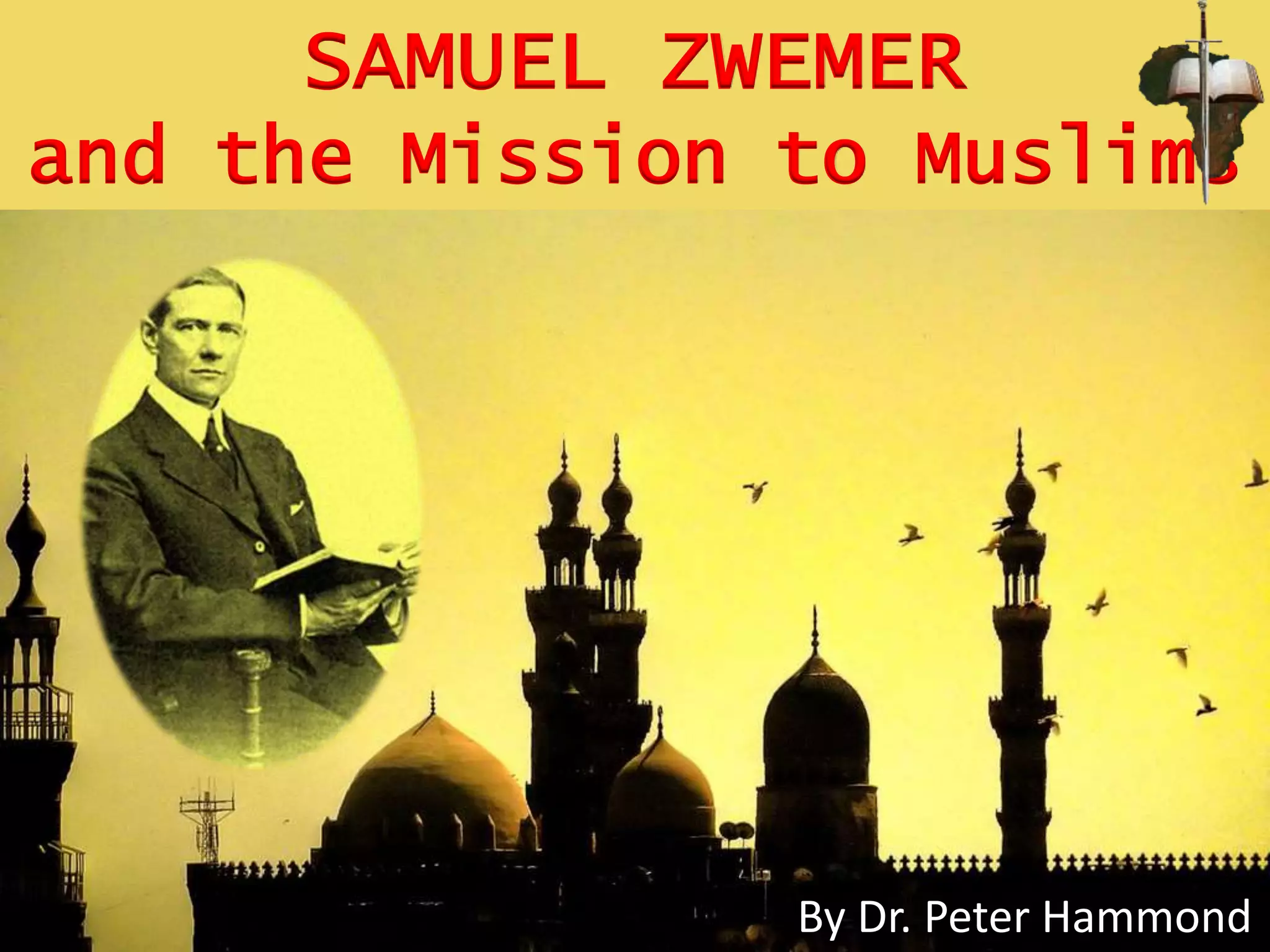
SAMUEL ZWEMER
and the Mission to Muslims
By Dr. Peter Hammond
Samuel Zwemer
(1867 – 1951),
was the thirteenth
of 15 children
born in Michigan, America, to Dutch immigrant parents.
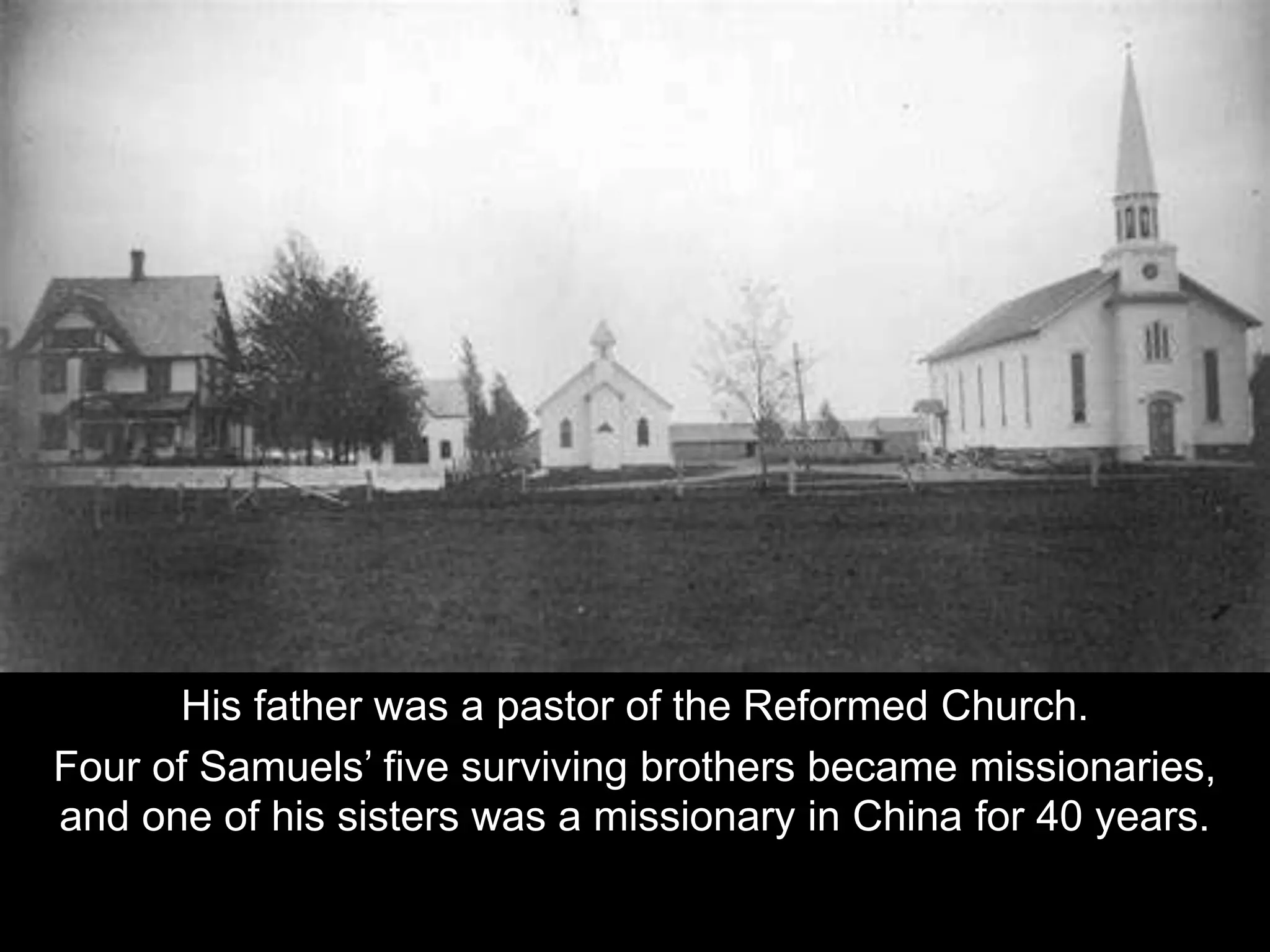
His father was a pastor of the Reformed Church.
Four of Samuels’ five surviving brothers became missionaries,
and one of his sisters was a missionary in China for 40 years.
From his earliest years, Samuel preferred books to sports.
Throughout his distinguished missionary career, he was to attach
great importance to the distribution of the Scriptures.
One of his earliest ministries was as a colporteur for the American
Bible Society.
The Power of the Printed Page
At age 20, Samuel entered a Theological Seminary in New Jersey,
where he simultaneously began to study medicine.
Theology, Medicine and Ministry to the Poor
He also played a full part in local Church activities and worked in
the neighborhood among the poor and disadvantaged.
He attended Student Missionary Conferences and he organised
one of these conferences.
Samuel was disciplined in his devotional life, regularly setting
aside the hour from 12 to 1pm as a special time for prayer and
devotion.
Disciplined and Dedicated to Strategic Missions
During his studies, the determination grew that he was called to
take the Gospel to the followers of Muhammad. He chose to
oppose the only faith that had caused Christianity to beat a
retreat.
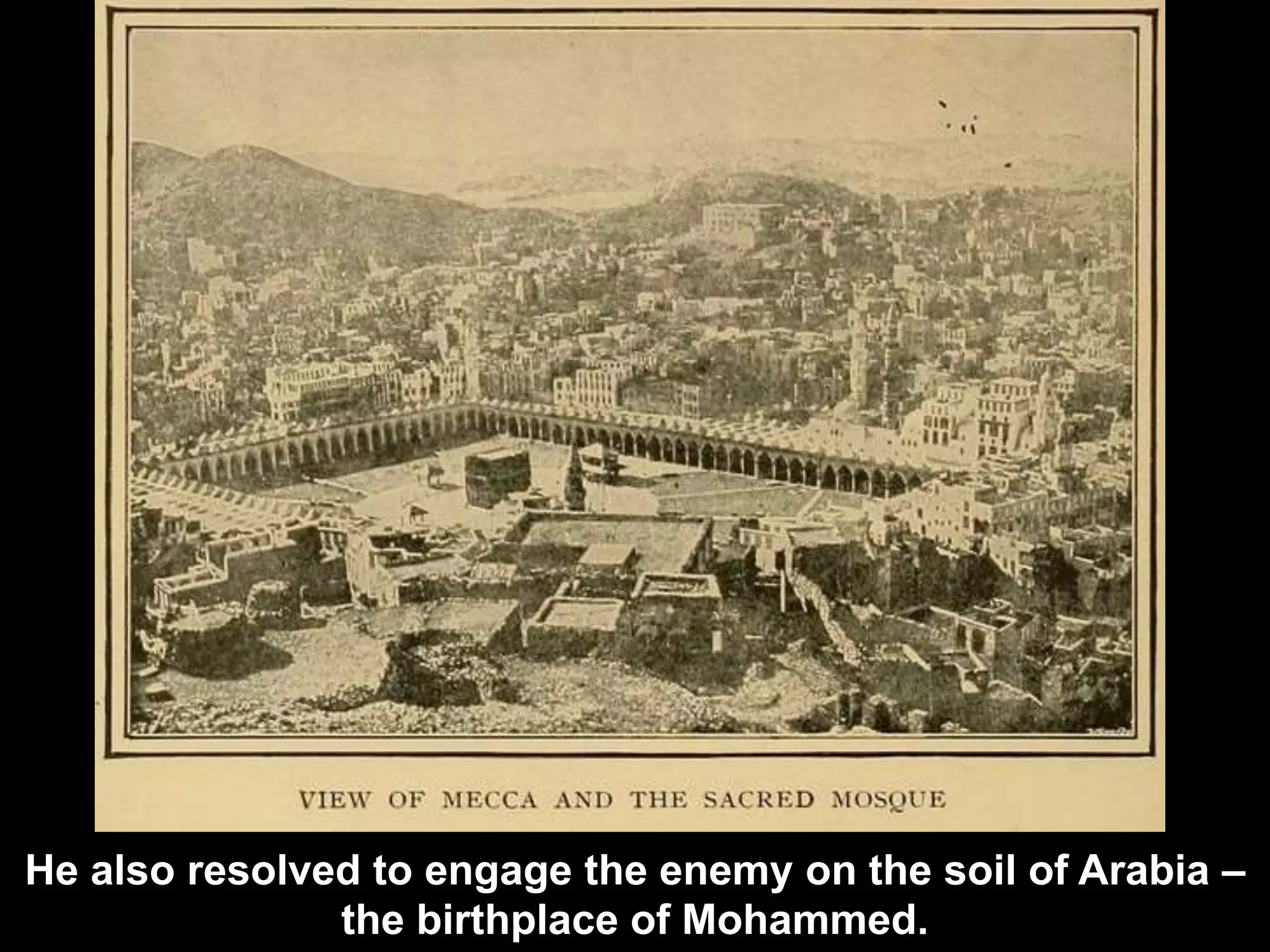
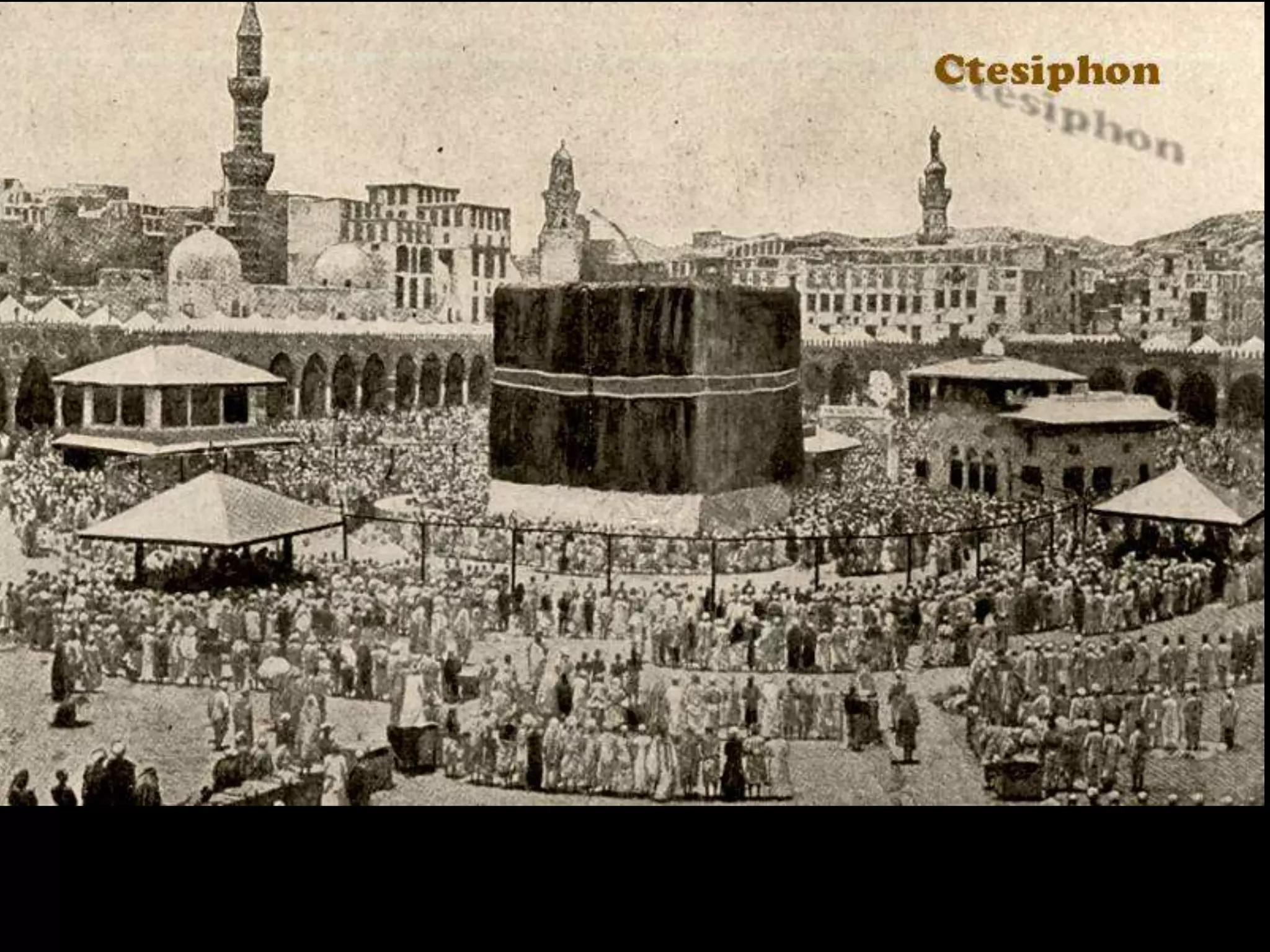
He also resolved to engage the enemy on the soil of Arabia –
the birthplace of Mohammed.
His plans were rejected as
ill-timed by the Reformed
Missions Board,
so Samuel formed the
American-Arabian Mission,
with James Cantine.
Deputation with
a Difference
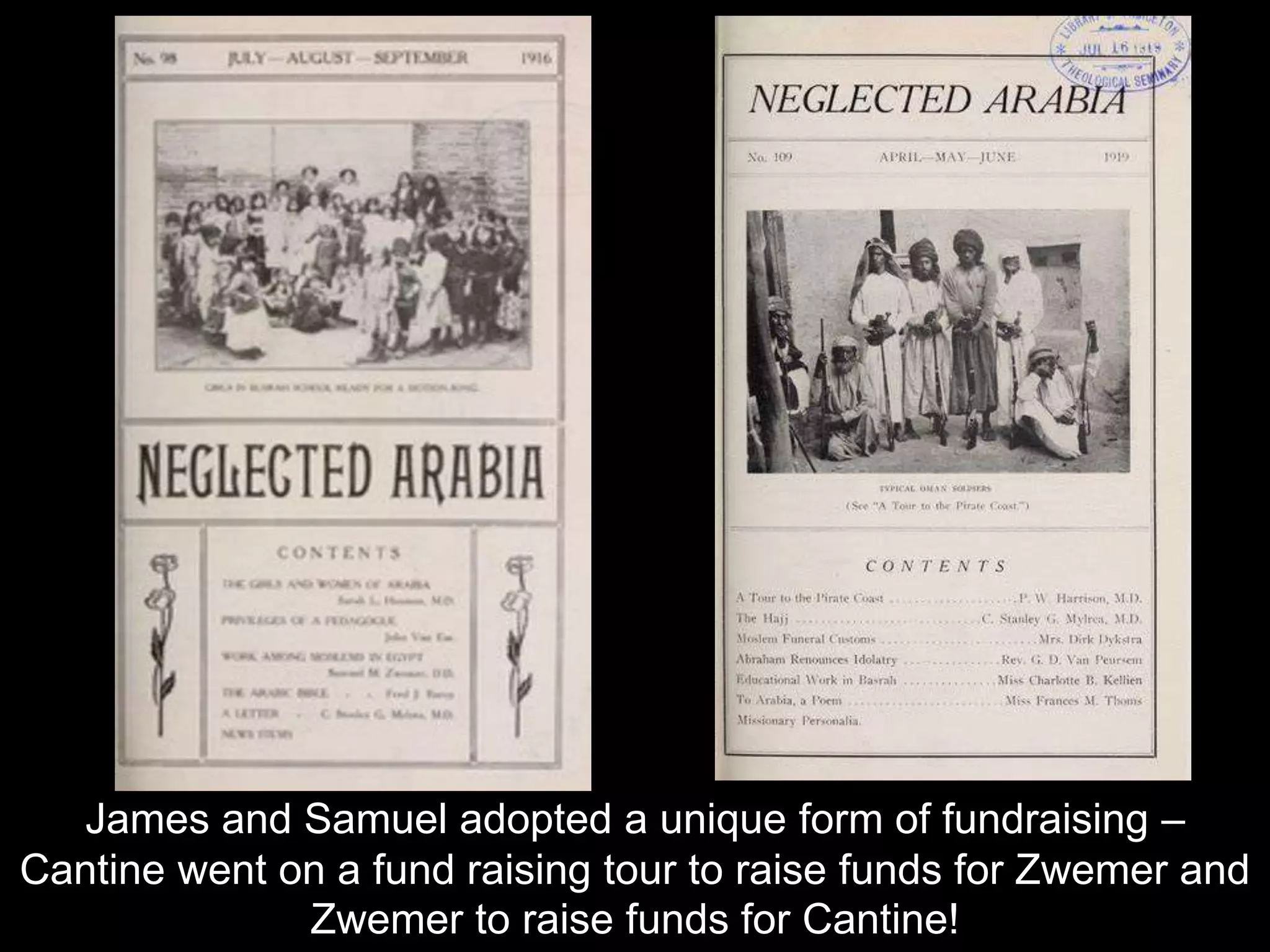
James and Samuel adopted a unique form of fundraising –
Cantine went on a fund raising tour to raise funds for Zwemer and
Zwemer to raise funds for Cantine!
During his 4000-mile deputation tour, Samuel encountered much
church lethargy and pettiness. On one occasion he was refused
permission to hang up a map on the wall because it was Sunday!
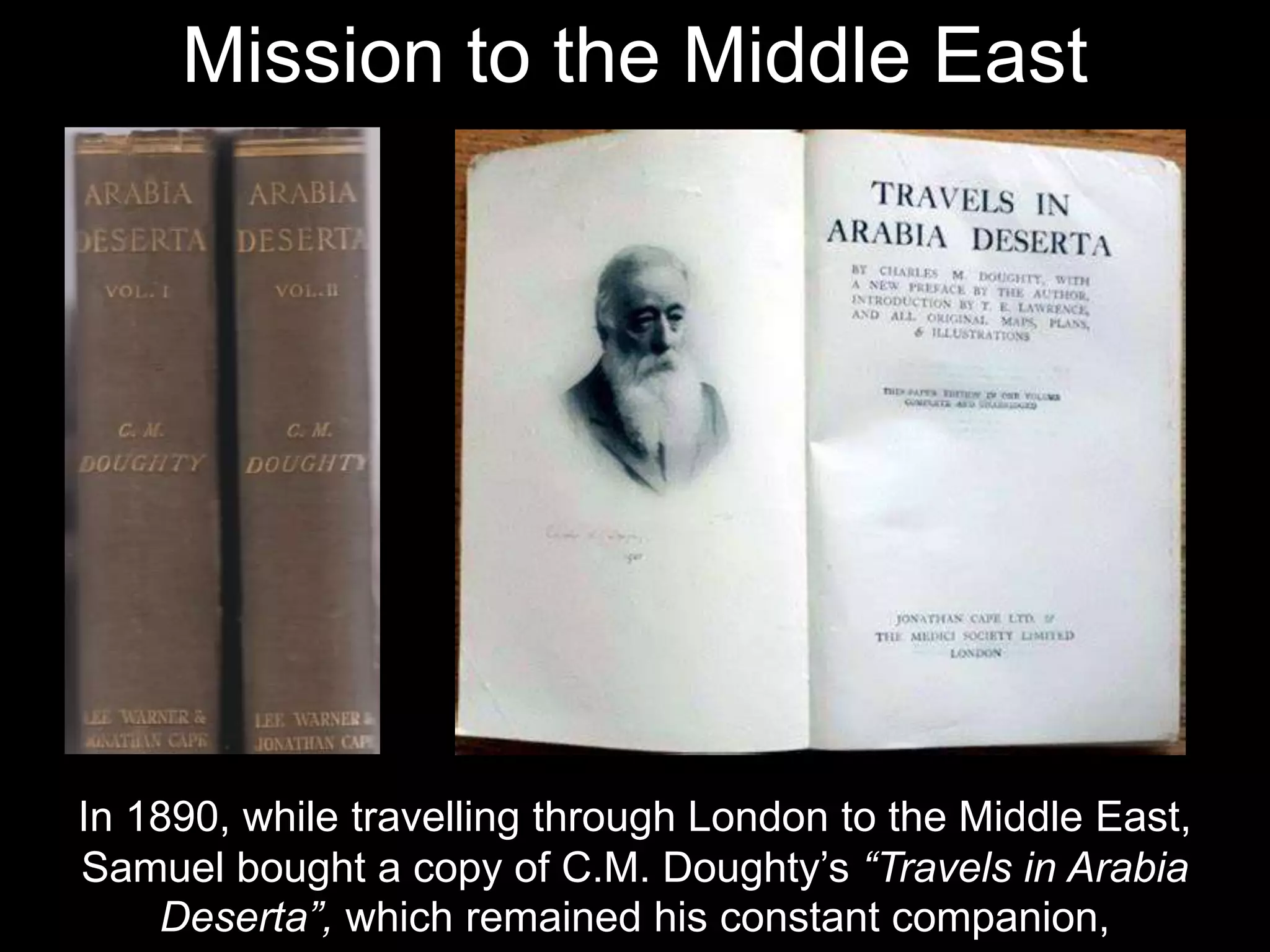
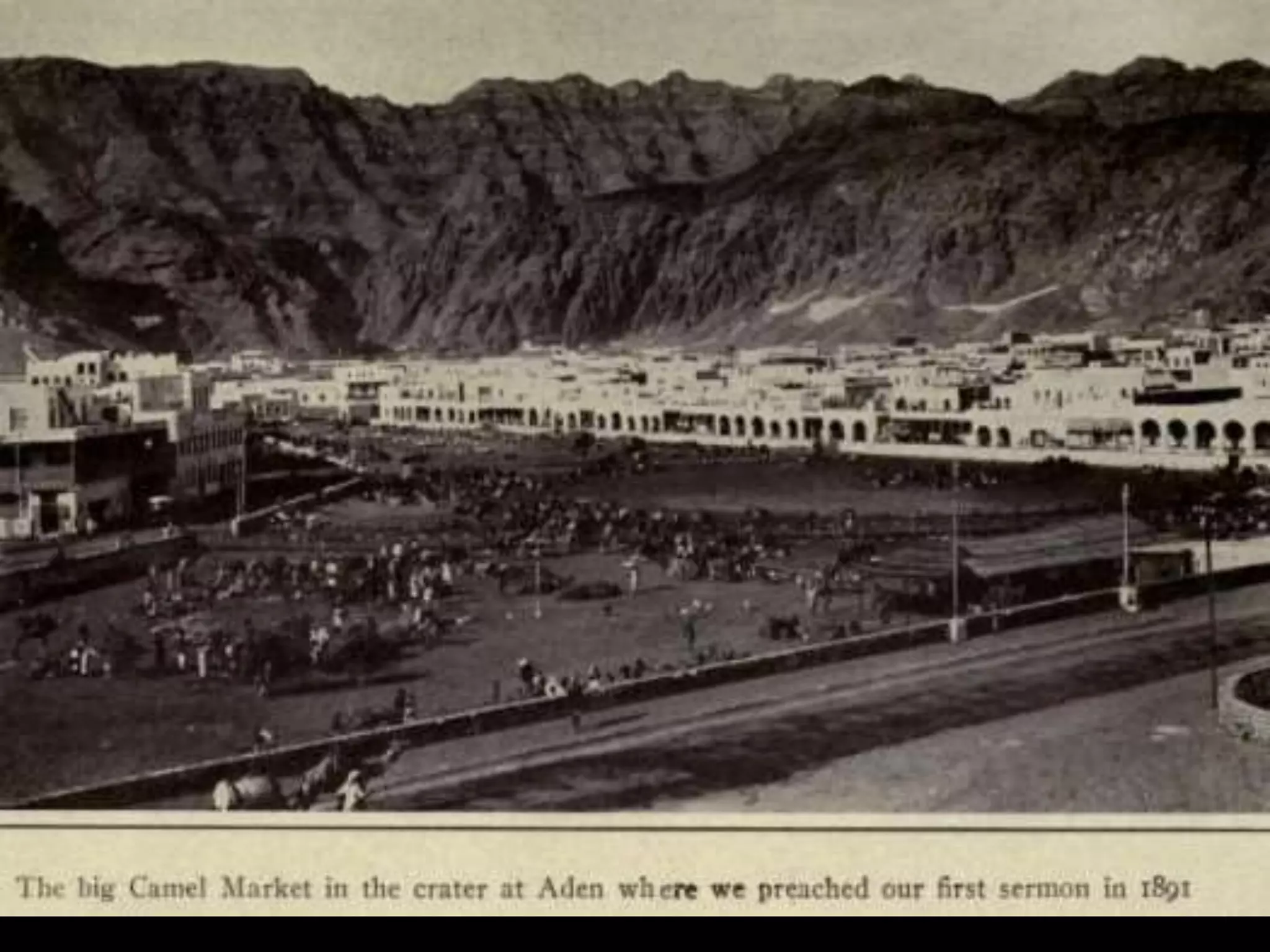
In 1890, while travelling through London to the Middle East,
Samuel bought a copy of C.M. Doughty’s “Travels in Arabia
Deserta”, which remained his constant companion,
Mission to the Middle East
until he sold it many years later in Cairo to another Westerner
destined to find fame in the Middle East, Lawrence of Arabia.
Zwemer and Cantine applied themselves to the study of Arabic
and settled in Basra, Iraq.
Their companion, Kamil, a Christian from Syria, was poisoned and
died shortly after their arrival at Basra.
Samuel travelled throughout the Middle East, distributing copies of
the Scriptures. In 1895, he met a young missionary nurse,
Amy Wilkes and they were married the following year.
Ministry and Marriage
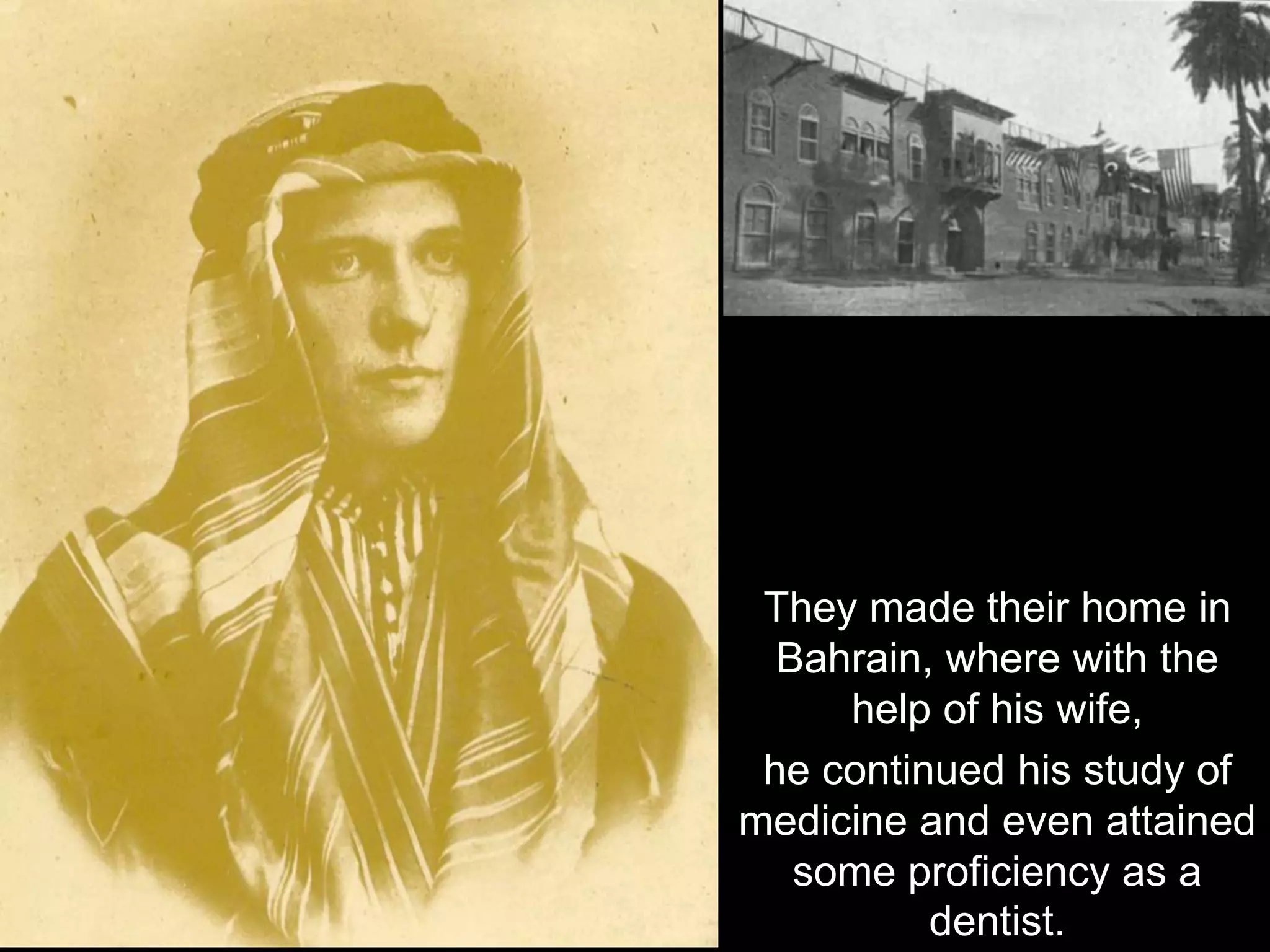
They made their home in
Bahrain, where with the
help of his wife,
he continued his study of
medicine and even attained
some proficiency as a
dentist.
At the request of the London Jewish Society, he visited Sana to
distribute copies of the Hebrew Scriptures. He also took copies of
the Bible in other languages and sold many of them to Turkish
officers.
Literature Evangelism in the Ottoman Empire
On one occasion, some Turkish officers returned, wanting their
money back, saying that a Greek bartender from Crete had told
them that their Protestant Bible versions were not genuine, but
false.
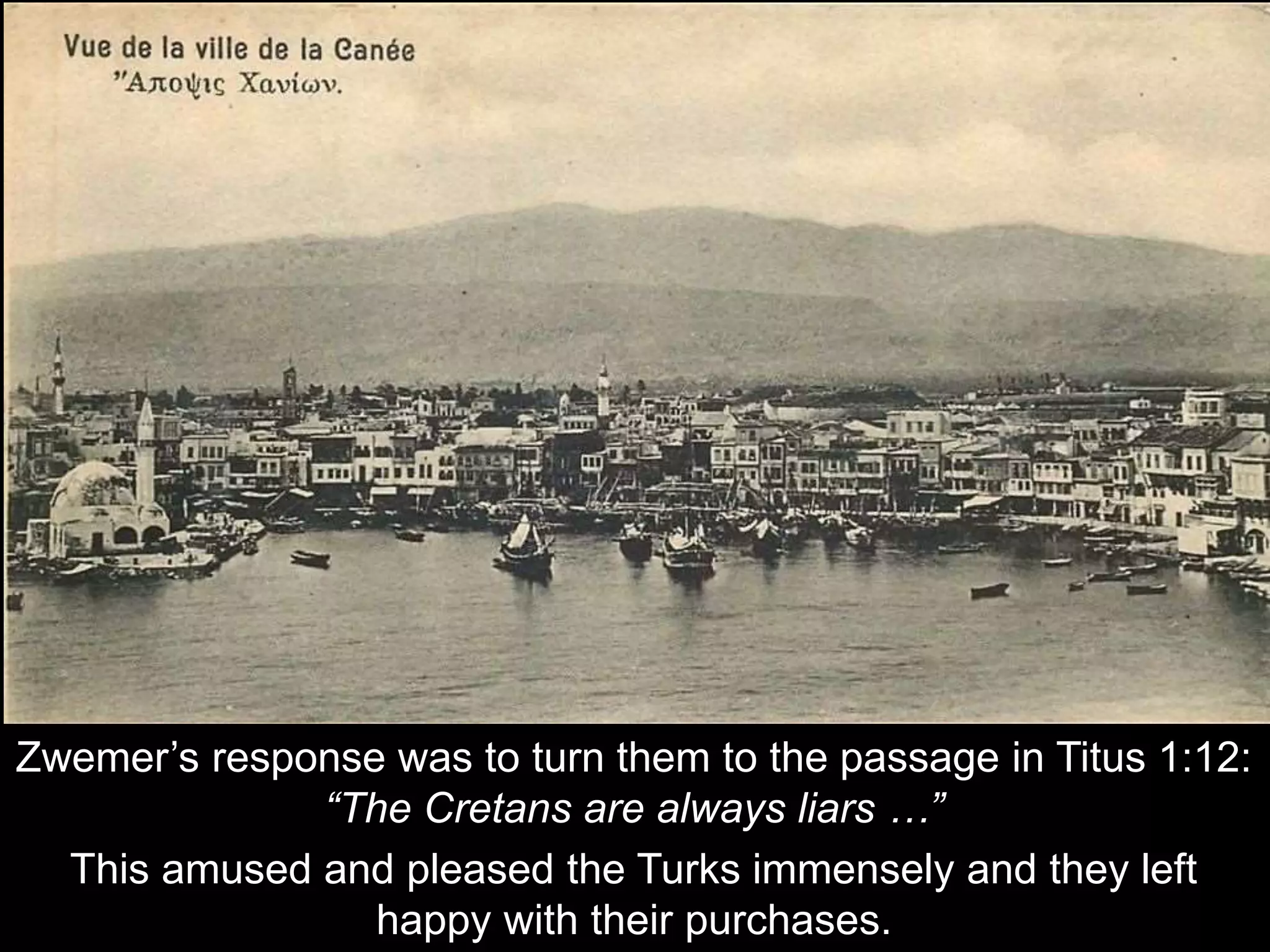
Zwemer’s response was to turn them to the passage in Titus 1:12:
“The Cretans are always liars …”
This amused and pleased the Turks immensely and they left
happy with their purchases.
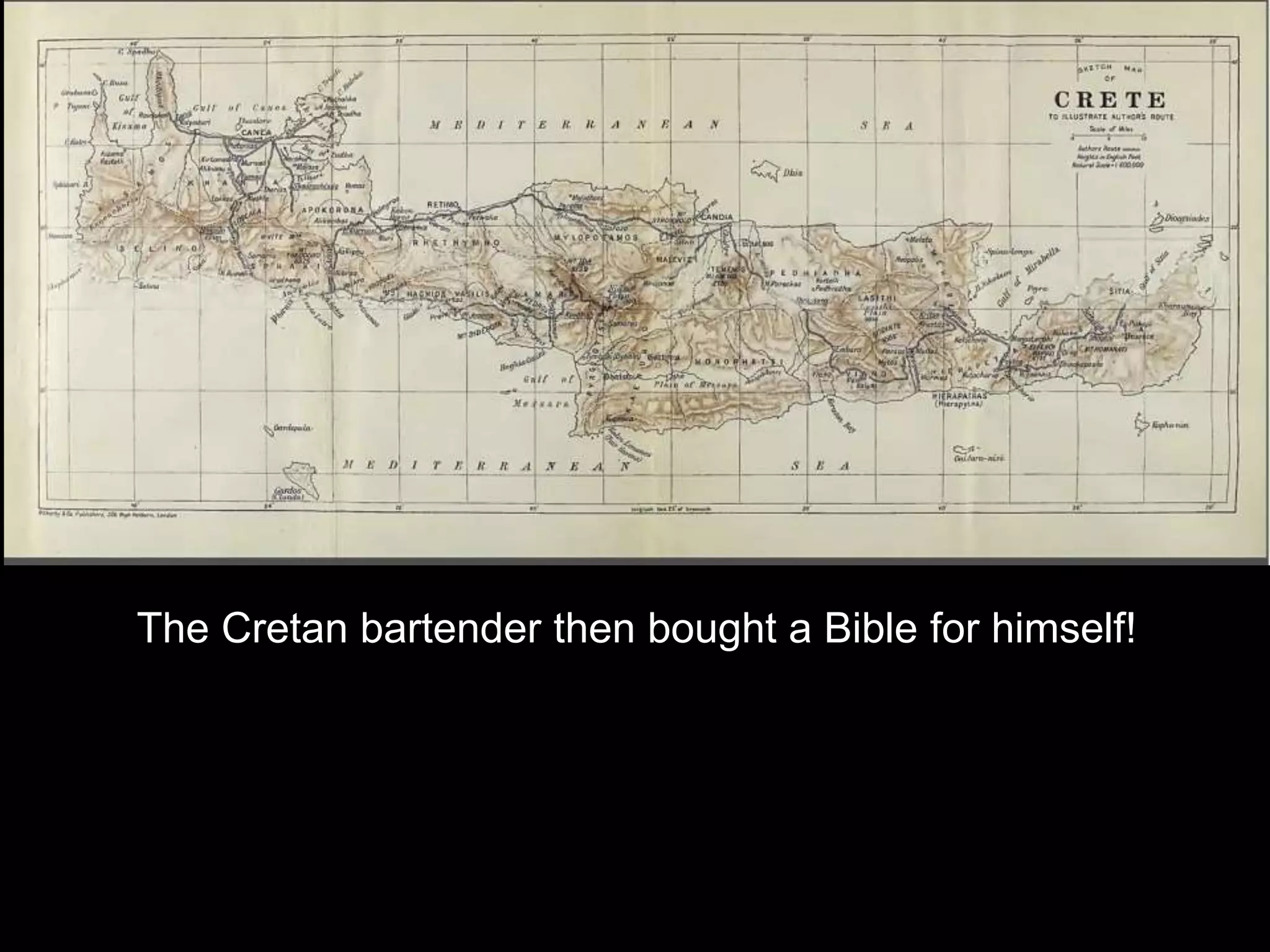
The Cretan bartender then bought a Bible for himself!
Samuel wrote of the
overwhelming task of such a
vast area to be rescued from
the grasp of such an
implacable spiritual foe, with
so few resources for the
accomplishment of the task.
Overwhelming Immensity of the Task
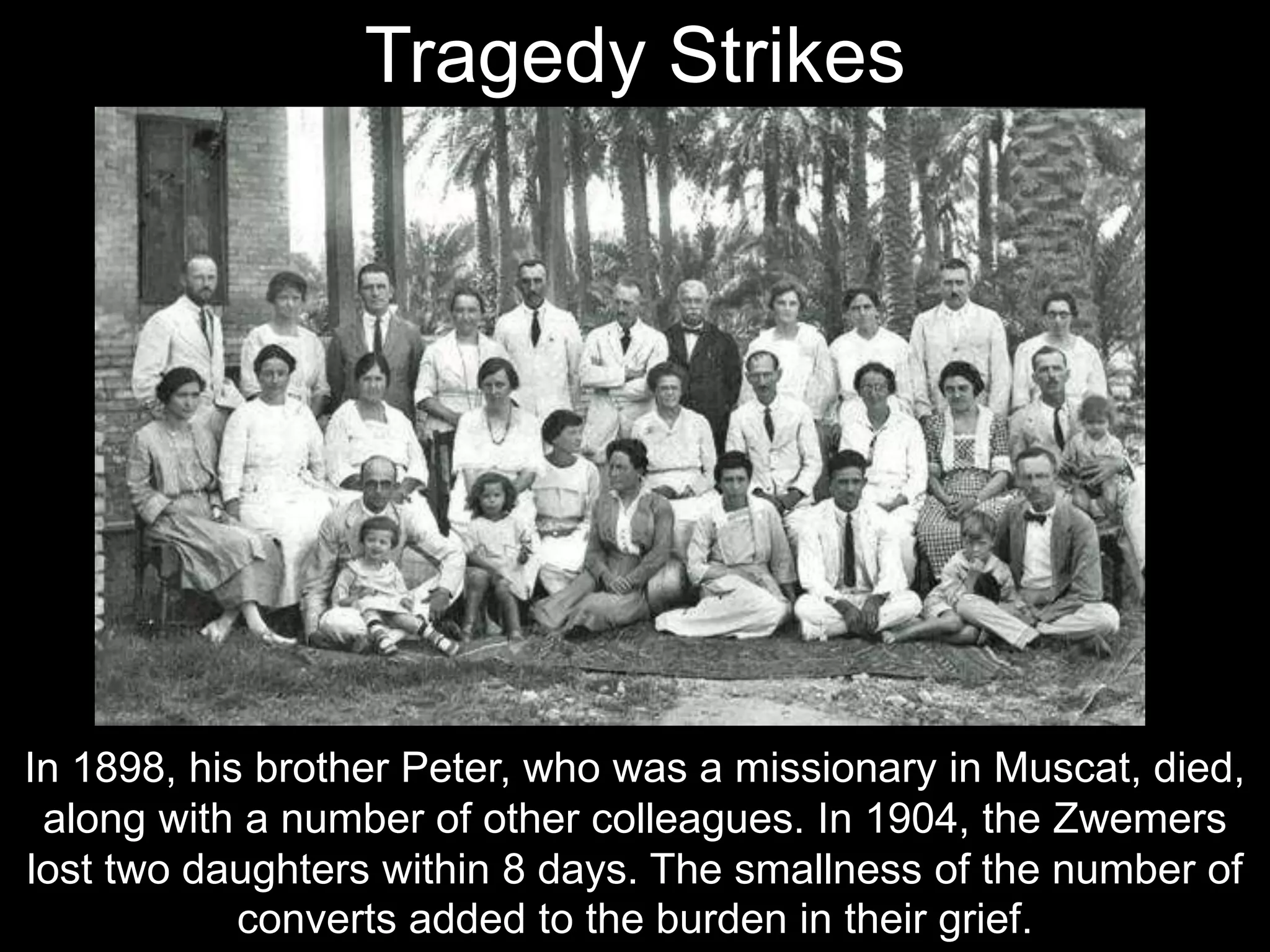
In 1898, his brother Peter, who was a missionary in Muscat, died,
along with a number of other colleagues. In 1904, the Zwemers
lost two daughters within 8 days. The smallness of the number of
converts added to the burden in their grief.
Tragedy Strikes
Yet, even during these dark and discouraging days, Samuel
looked forward with great confidence and hope towards the day
when the Muslim world would inevitably be won to Christ.
A Vision of Victory
In 1905, Samuel and Amy Zwemer returned to the USA. He
became the Field Secretary to the Reformed Board of Foreign
Missions and the travelling secretary to the Student Volunteer
Movement.
Mobilising for World Evangelisation
He soon made a great impact in arousing missionary vision for the
Muslim world. He developed a reputation for aggressive
fundraising and effective recruitment.
His writing, travelling and speaking placed him in the forefront of
authorities on Christian work amongst Muslims.
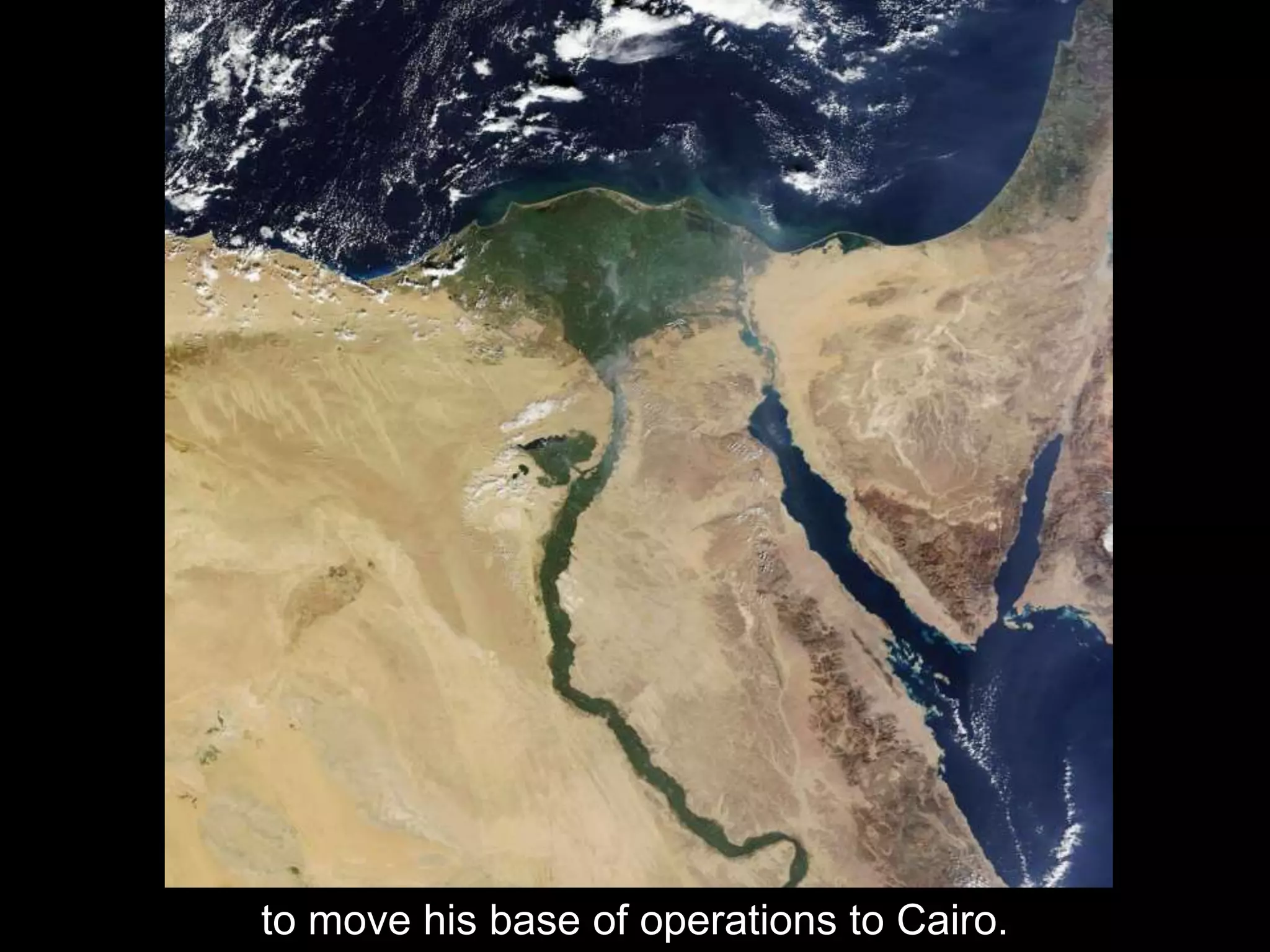
The United Presbyterian Mission in Egypt, the Nile Mission Press
and the American University of Cairo invited Zwemer
Co-ordinating from Cairo
to move his base of operations to Cairo.
From there he began to co-ordinate missionary work throughout
the entire Islamic world. He travelled on speaking tours across
Britain, North America, South Africa, China and Indonesia.
He was received at the famous universities of Europe.
On one visit to the USA, he delivered 151 lectures in 113 days.
Some of his meetings were attended by thousands of Muslims.
Universities for Christ
However, opposition was always strong and conversions were
very few. In his 40 years of ministry, he was only able to
personally lead 12 Muslims to Christ.
In 1925, he accepted an invitation to teach at Princeton
Theological Seminary as Professor of History of Religion and
Christian Missions. Yet this new academic role did not slow his
pace in missions.
Leadership Training
Even four months after a major
operation, he was on the back
of a mule in the mountains near
the Tibetan border, ministering
to missionaries.
His wife, Amy, died in January 1937, shortly before he retired.
A colleague who accompanied Samuel on one of his journeys,
remarked on his return that he would never again travel with him.
Prodigious Writer
Samuel appeared unable to stay in bed for more than ½ hour at a
time without putting on the light and making some notes!
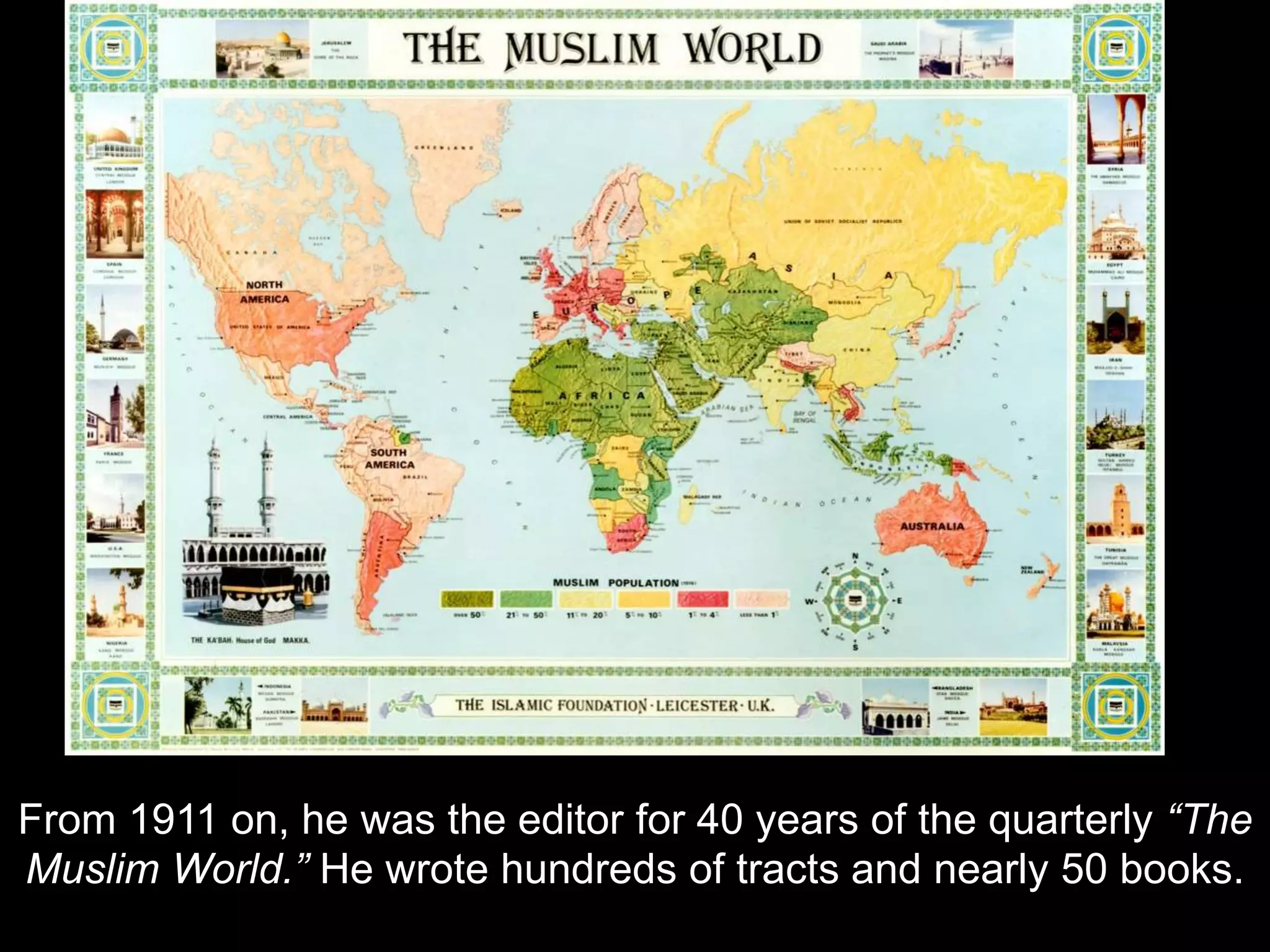
From 1911 on, he was the editor for 40 years of the quarterly “The
Muslim World.” He wrote hundreds of tracts and nearly 50 books.
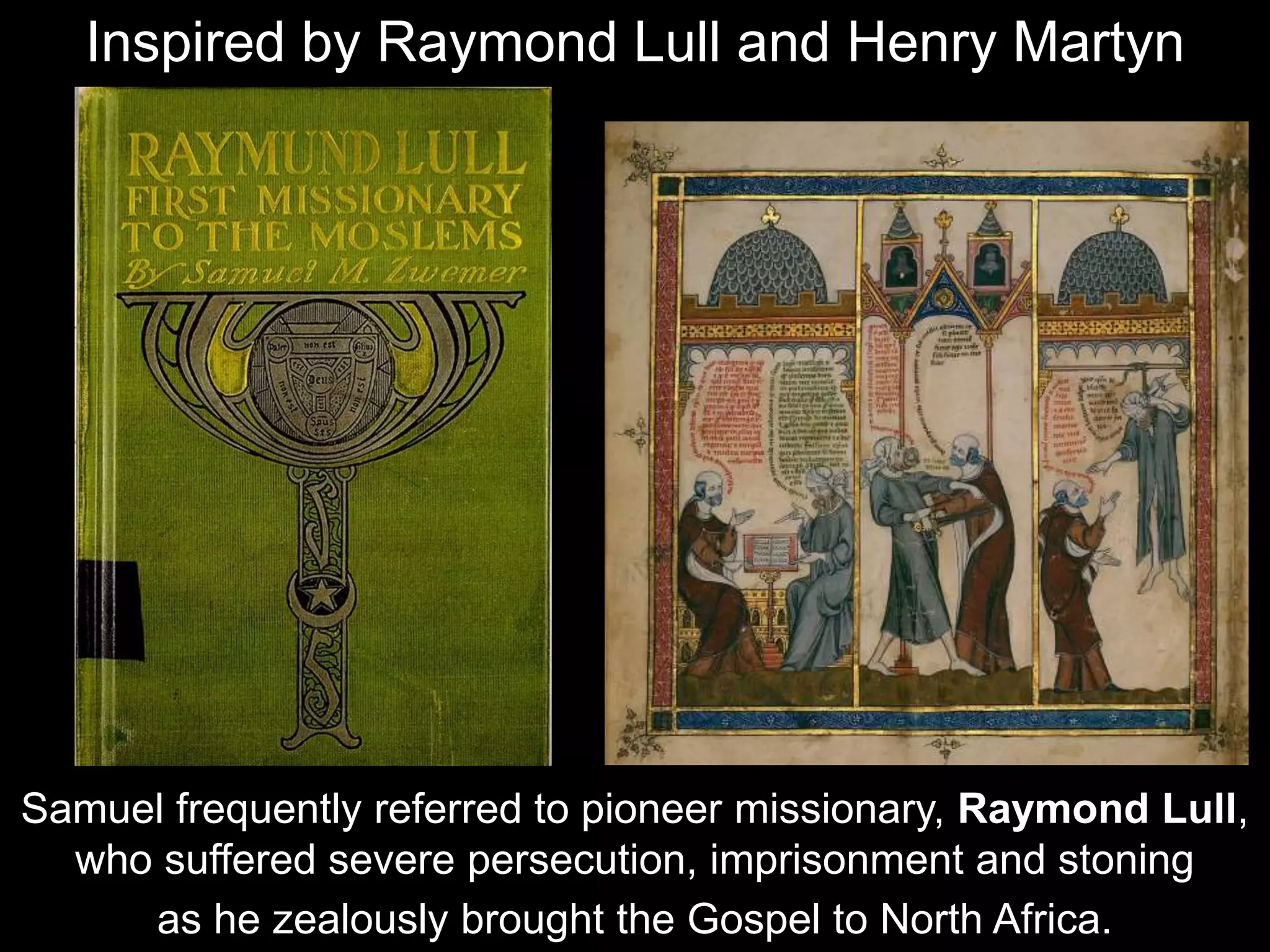
Samuel frequently referred to pioneer missionary, Raymond Lull,
who suffered severe persecution, imprisonment and stoning
as he zealously brought the Gospel to North Africa.
Inspired by Raymond Lull and Henry Martyn
Raymond Lull finally was stoned to death in Algiers at age 80.
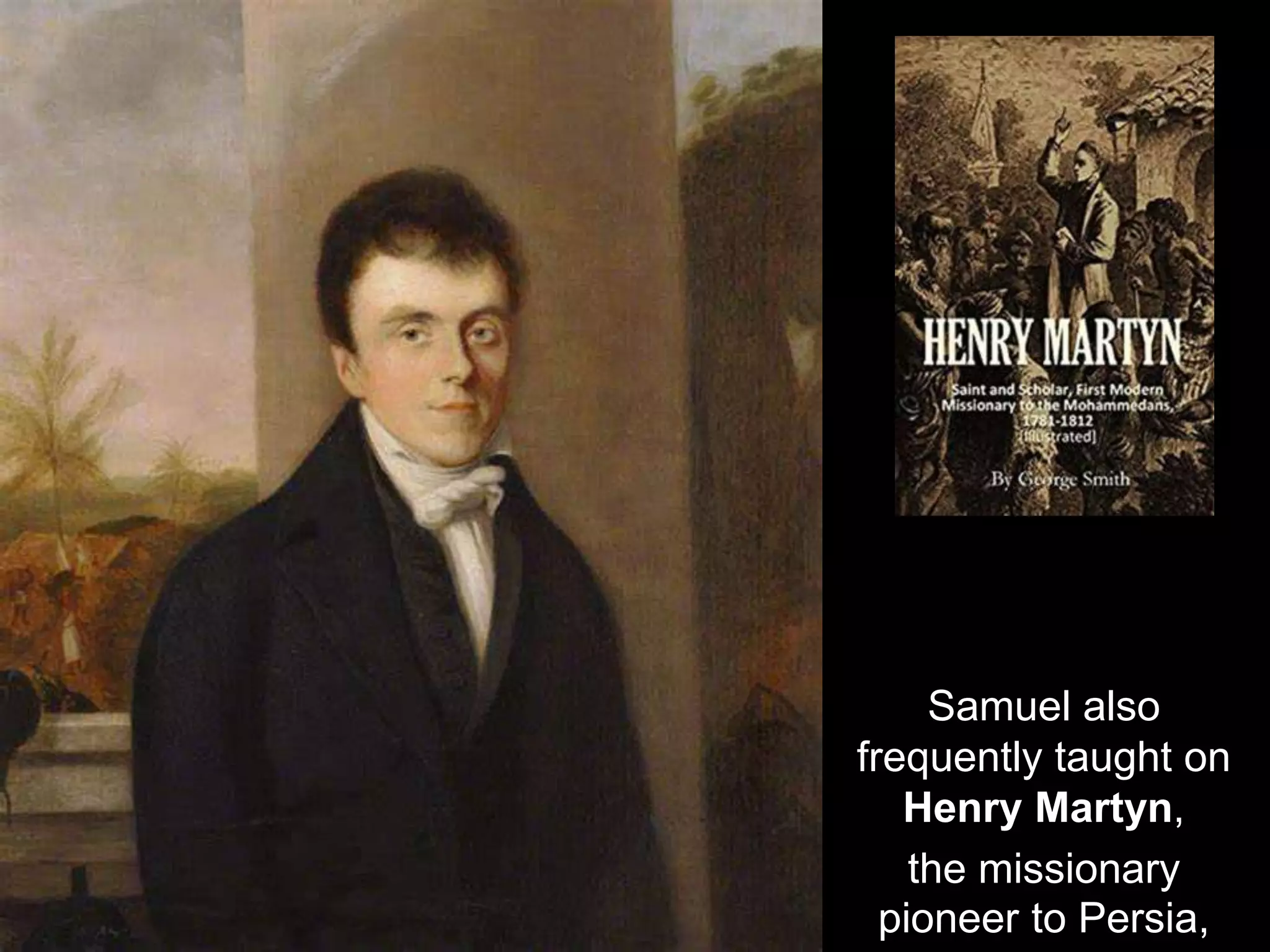
Samuel also
frequently taught on
Henry Martyn,
the missionary
pioneer to Persia,
Henry Martyn’s cry was:
“Let me burn out for Christ.”
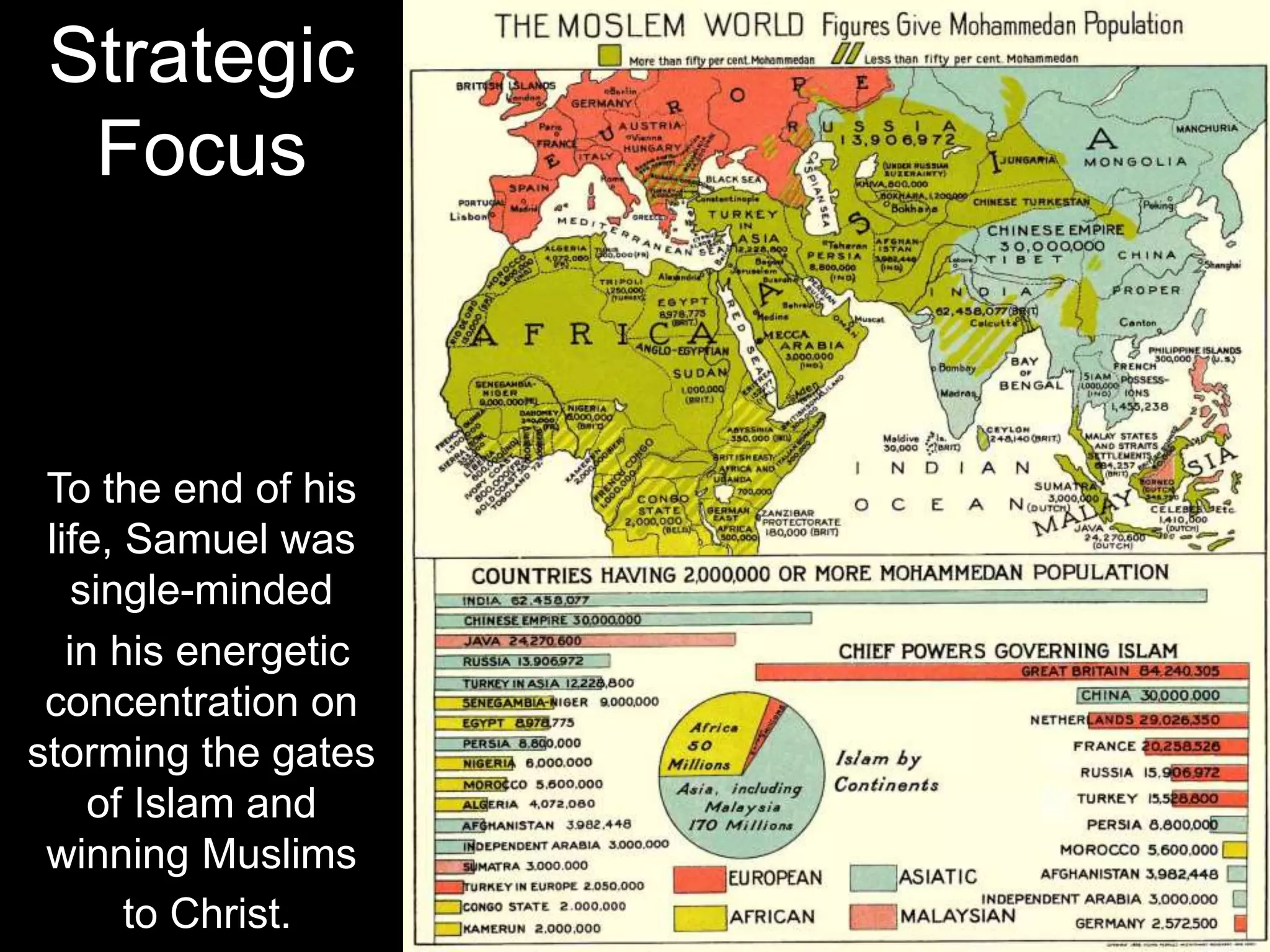
To the end of his
life, Samuel was
single-minded
in his energetic
concentration on
storming the gates
of Islam and
winning Muslims
to Christ.
Strategic
Focus
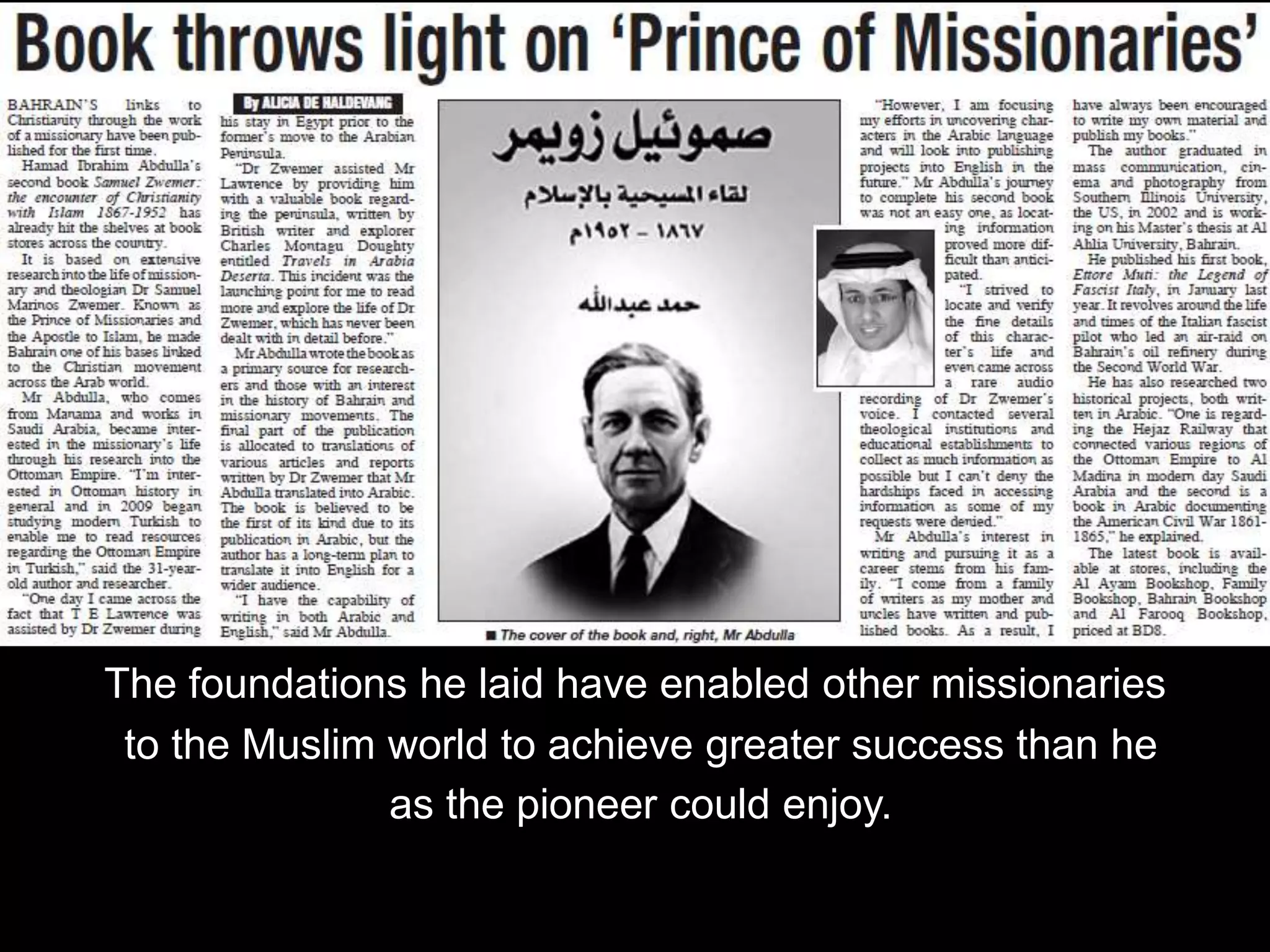
The foundations he laid have enabled other missionaries
to the Muslim world to achieve greater success than he
as the pioneer could enjoy.
Zwemer encouraged co-operation with missionaries
of all Bible believing churches and groups.
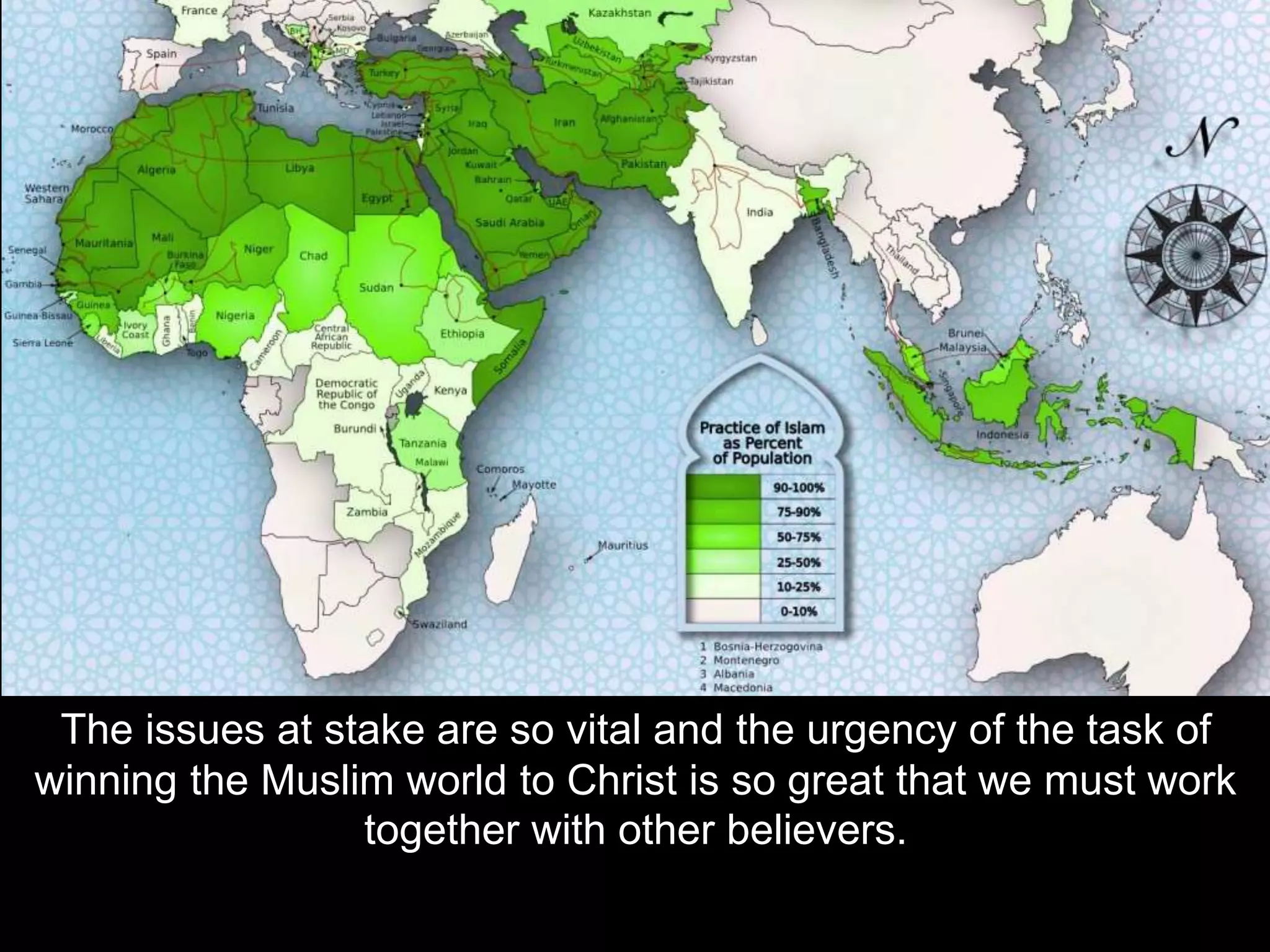
The issues at stake are so vital and the urgency of the task of
winning the Muslim world to Christ is so great that we must work
together with other believers.
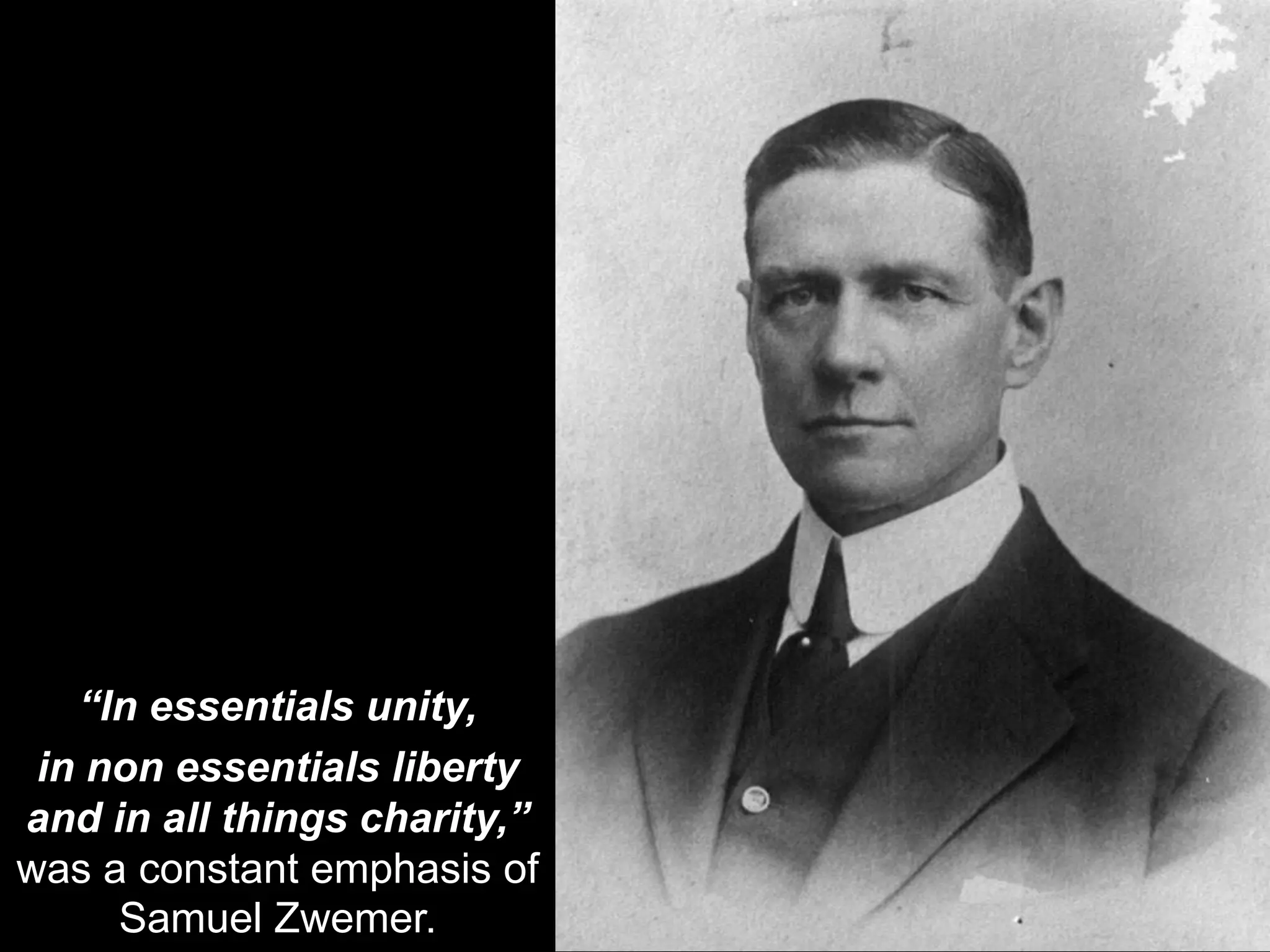
“In essentials unity,
in non essentials liberty
and in all things charity,”
was a constant emphasis of
Samuel Zwemer.
“But none of these things move me, nor do I count my life
dear to myself, so that I may finish my race with joy and the
ministry which I received from the Lord Jesus, to testify to
the Gospel of the grace of God.”
Acts 20:24
“The harvest truly is plentiful, but the labourers are few. Therefore
pray the Lord of the Harvest to send out labourers into His harvest.”
Matthew 9:37-38
www.FrontlineMissionSA.org
“The desert tribes
will bow before Him
and His enemies
will lick the dust ...
All kings will bow
down to Him and
all nations will
serve Him.”
Psalm 72: 9-11
Frontline Fellowship
PO Box 74
Newlands
7725
Cape Town
South Africa
E-mail: admin@frontline.org.za
Web: www.FrontlineMissionSA.org
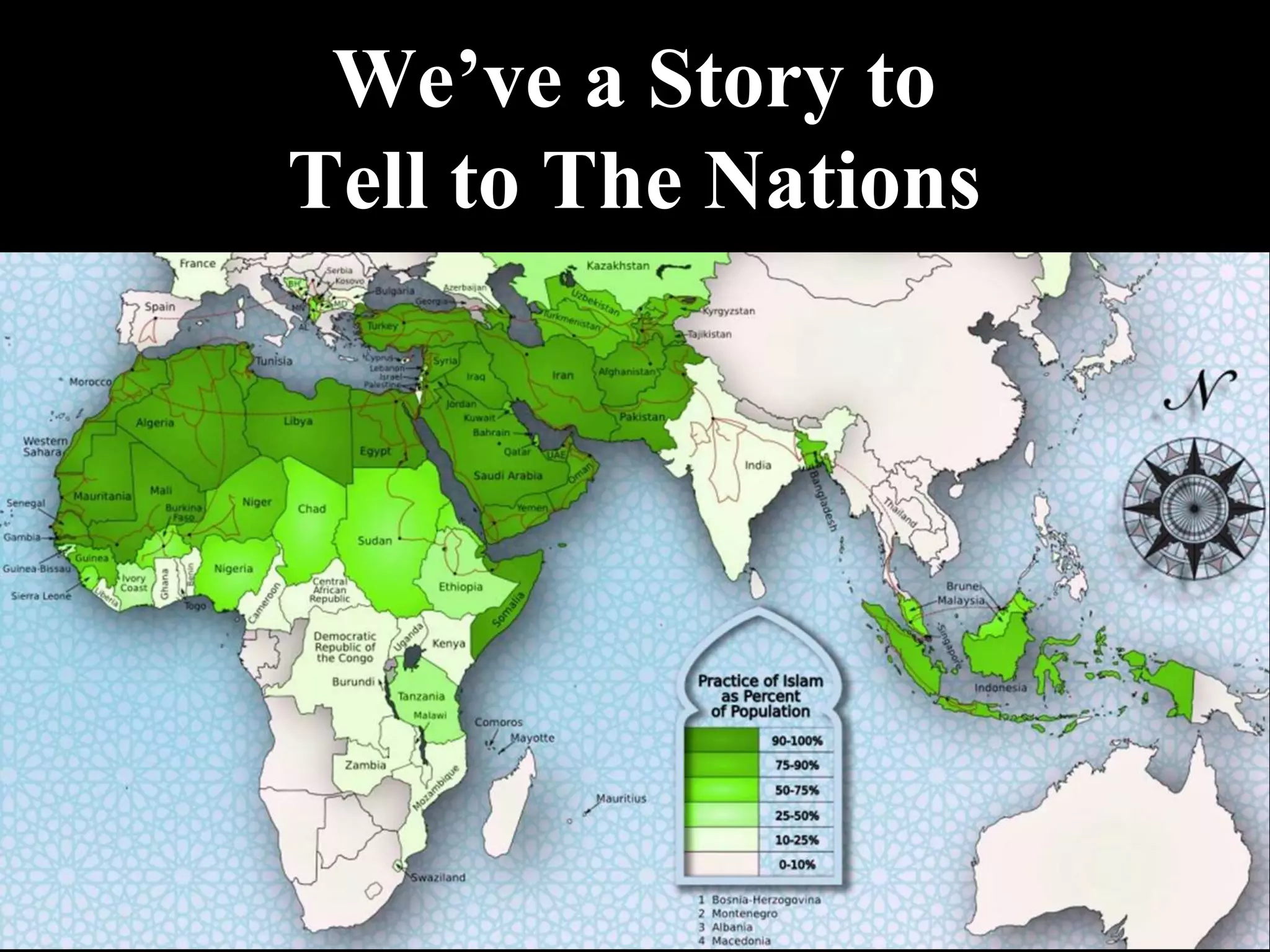
We’ve a Story to
Tell to The Nations
1: We’ve a story to tell to the nations,
that shall turn their hearts to the
right,
a story of truth and sweetness,
a story of peace and light.
2: For the darkness shall turn to the
dawning,
and the dawning to noon-day bright,
and Christ’s great Kingdom shall come
on earth,
the kingdom of love and light.
3: We’ve a song to be sung to the nations,
that shall lift their hearts to the Lord;
a song that shall conquer evil,
and shatter the spear and sword.
2: For the darkness shall turn to the
dawning,
and the dawning to noon-day bright,
and Christ’s great Kingdom shall come
on earth,
the kingdom of love and light.
4: We’ve a message to give to the
nations,
that the Lord Who reigneth above
hath sent us His Son to save us,
and show us that God is love.
2: For the darkness shall turn to the
dawning,
and the dawning to noon-day bright,
and Christ’s great Kingdom shall come
on earth,
the kingdom of love and light.
5: We’ve a Saviour to show to the nations,
Who the path of sorrow has trod,
that all of the world’s great peoples
might come to the truth of God.
2: For the darkness shall turn to the
dawning,
and the dawning to noon-day bright,
and Christ’s great Kingdom shall come
on earth,
the kingdom of love and light.
Samuel Zwemer and the Mission to Muslims

Samuel Zwemer and the Mission to Muslims

  • 1.
    SAMUEL ZWEMER and theMission to Muslims By Dr. Peter Hammond
  • 4.
    Samuel Zwemer (1867 –1951), was the thirteenth of 15 children
  • 5.
    born in Michigan,America, to Dutch immigrant parents.
  • 6.
    His father wasa pastor of the Reformed Church. Four of Samuels’ five surviving brothers became missionaries, and one of his sisters was a missionary in China for 40 years.
  • 7.
    From his earliestyears, Samuel preferred books to sports. Throughout his distinguished missionary career, he was to attach great importance to the distribution of the Scriptures. One of his earliest ministries was as a colporteur for the American Bible Society. The Power of the Printed Page
  • 8.
    At age 20,Samuel entered a Theological Seminary in New Jersey, where he simultaneously began to study medicine. Theology, Medicine and Ministry to the Poor
  • 9.
    He also playeda full part in local Church activities and worked in the neighborhood among the poor and disadvantaged.
  • 10.
    He attended StudentMissionary Conferences and he organised one of these conferences.
  • 11.
    Samuel was disciplinedin his devotional life, regularly setting aside the hour from 12 to 1pm as a special time for prayer and devotion. Disciplined and Dedicated to Strategic Missions
  • 12.
    During his studies,the determination grew that he was called to take the Gospel to the followers of Muhammad. He chose to oppose the only faith that had caused Christianity to beat a retreat.
  • 13.
    He also resolvedto engage the enemy on the soil of Arabia – the birthplace of Mohammed.
  • 15.
    His plans wererejected as ill-timed by the Reformed Missions Board, so Samuel formed the American-Arabian Mission, with James Cantine. Deputation with a Difference
  • 16.
    James and Samueladopted a unique form of fundraising – Cantine went on a fund raising tour to raise funds for Zwemer and Zwemer to raise funds for Cantine!
  • 17.
    During his 4000-miledeputation tour, Samuel encountered much church lethargy and pettiness. On one occasion he was refused permission to hang up a map on the wall because it was Sunday!
  • 18.
    In 1890, whiletravelling through London to the Middle East, Samuel bought a copy of C.M. Doughty’s “Travels in Arabia Deserta”, which remained his constant companion, Mission to the Middle East
  • 19.
    until he soldit many years later in Cairo to another Westerner destined to find fame in the Middle East, Lawrence of Arabia.
  • 21.
    Zwemer and Cantineapplied themselves to the study of Arabic and settled in Basra, Iraq. Their companion, Kamil, a Christian from Syria, was poisoned and died shortly after their arrival at Basra.
  • 22.
    Samuel travelled throughoutthe Middle East, distributing copies of the Scriptures. In 1895, he met a young missionary nurse, Amy Wilkes and they were married the following year. Ministry and Marriage
  • 23.
    They made theirhome in Bahrain, where with the help of his wife, he continued his study of medicine and even attained some proficiency as a dentist.
  • 24.
    At the requestof the London Jewish Society, he visited Sana to distribute copies of the Hebrew Scriptures. He also took copies of the Bible in other languages and sold many of them to Turkish officers. Literature Evangelism in the Ottoman Empire
  • 25.
    On one occasion,some Turkish officers returned, wanting their money back, saying that a Greek bartender from Crete had told them that their Protestant Bible versions were not genuine, but false.
  • 26.
    Zwemer’s response wasto turn them to the passage in Titus 1:12: “The Cretans are always liars …” This amused and pleased the Turks immensely and they left happy with their purchases.
  • 27.
    The Cretan bartenderthen bought a Bible for himself!
  • 28.
    Samuel wrote ofthe overwhelming task of such a vast area to be rescued from the grasp of such an implacable spiritual foe, with so few resources for the accomplishment of the task. Overwhelming Immensity of the Task
  • 29.
    In 1898, hisbrother Peter, who was a missionary in Muscat, died, along with a number of other colleagues. In 1904, the Zwemers lost two daughters within 8 days. The smallness of the number of converts added to the burden in their grief. Tragedy Strikes
  • 30.
    Yet, even duringthese dark and discouraging days, Samuel looked forward with great confidence and hope towards the day when the Muslim world would inevitably be won to Christ. A Vision of Victory
  • 31.
    In 1905, Samueland Amy Zwemer returned to the USA. He became the Field Secretary to the Reformed Board of Foreign Missions and the travelling secretary to the Student Volunteer Movement. Mobilising for World Evangelisation
  • 32.
    He soon madea great impact in arousing missionary vision for the Muslim world. He developed a reputation for aggressive fundraising and effective recruitment.
  • 33.
    His writing, travellingand speaking placed him in the forefront of authorities on Christian work amongst Muslims.
  • 34.
    The United PresbyterianMission in Egypt, the Nile Mission Press and the American University of Cairo invited Zwemer Co-ordinating from Cairo
  • 35.
    to move hisbase of operations to Cairo.
  • 36.
    From there hebegan to co-ordinate missionary work throughout the entire Islamic world. He travelled on speaking tours across Britain, North America, South Africa, China and Indonesia.
  • 37.
    He was receivedat the famous universities of Europe. On one visit to the USA, he delivered 151 lectures in 113 days. Some of his meetings were attended by thousands of Muslims. Universities for Christ
  • 38.
    However, opposition wasalways strong and conversions were very few. In his 40 years of ministry, he was only able to personally lead 12 Muslims to Christ.
  • 39.
    In 1925, heaccepted an invitation to teach at Princeton Theological Seminary as Professor of History of Religion and Christian Missions. Yet this new academic role did not slow his pace in missions. Leadership Training
  • 40.
    Even four monthsafter a major operation, he was on the back of a mule in the mountains near the Tibetan border, ministering to missionaries.
  • 41.
    His wife, Amy,died in January 1937, shortly before he retired.
  • 42.
    A colleague whoaccompanied Samuel on one of his journeys, remarked on his return that he would never again travel with him. Prodigious Writer
  • 43.
    Samuel appeared unableto stay in bed for more than ½ hour at a time without putting on the light and making some notes!
  • 44.
    From 1911 on,he was the editor for 40 years of the quarterly “The Muslim World.” He wrote hundreds of tracts and nearly 50 books.
  • 45.
    Samuel frequently referredto pioneer missionary, Raymond Lull, who suffered severe persecution, imprisonment and stoning as he zealously brought the Gospel to North Africa. Inspired by Raymond Lull and Henry Martyn
  • 46.
    Raymond Lull finallywas stoned to death in Algiers at age 80.
  • 47.
    Samuel also frequently taughton Henry Martyn, the missionary pioneer to Persia,
  • 48.
    Henry Martyn’s crywas: “Let me burn out for Christ.”
  • 49.
    To the endof his life, Samuel was single-minded in his energetic concentration on storming the gates of Islam and winning Muslims to Christ. Strategic Focus
  • 50.
    The foundations helaid have enabled other missionaries to the Muslim world to achieve greater success than he as the pioneer could enjoy.
  • 51.
    Zwemer encouraged co-operationwith missionaries of all Bible believing churches and groups.
  • 52.
    The issues atstake are so vital and the urgency of the task of winning the Muslim world to Christ is so great that we must work together with other believers.
  • 59.
    “In essentials unity, innon essentials liberty and in all things charity,” was a constant emphasis of Samuel Zwemer.
  • 60.
    “But none ofthese things move me, nor do I count my life dear to myself, so that I may finish my race with joy and the ministry which I received from the Lord Jesus, to testify to the Gospel of the grace of God.” Acts 20:24
  • 70.
    “The harvest trulyis plentiful, but the labourers are few. Therefore pray the Lord of the Harvest to send out labourers into His harvest.” Matthew 9:37-38
  • 72.
  • 76.
    “The desert tribes willbow before Him and His enemies will lick the dust ... All kings will bow down to Him and all nations will serve Him.” Psalm 72: 9-11
  • 77.
    Frontline Fellowship PO Box74 Newlands 7725 Cape Town South Africa E-mail: admin@frontline.org.za Web: www.FrontlineMissionSA.org
  • 78.
    We’ve a Storyto Tell to The Nations
  • 79.
    1: We’ve astory to tell to the nations, that shall turn their hearts to the right, a story of truth and sweetness, a story of peace and light.
  • 80.
    2: For thedarkness shall turn to the dawning, and the dawning to noon-day bright, and Christ’s great Kingdom shall come on earth, the kingdom of love and light.
  • 81.
    3: We’ve asong to be sung to the nations, that shall lift their hearts to the Lord; a song that shall conquer evil, and shatter the spear and sword.
  • 82.
    2: For thedarkness shall turn to the dawning, and the dawning to noon-day bright, and Christ’s great Kingdom shall come on earth, the kingdom of love and light.
  • 83.
    4: We’ve amessage to give to the nations, that the Lord Who reigneth above hath sent us His Son to save us, and show us that God is love.
  • 84.
    2: For thedarkness shall turn to the dawning, and the dawning to noon-day bright, and Christ’s great Kingdom shall come on earth, the kingdom of love and light.
  • 85.
    5: We’ve aSaviour to show to the nations, Who the path of sorrow has trod, that all of the world’s great peoples might come to the truth of God.
  • 86.
    2: For thedarkness shall turn to the dawning, and the dawning to noon-day bright, and Christ’s great Kingdom shall come on earth, the kingdom of love and light.