t 1  • t 2  • t 3  • y = P Technology, You, and Power Marcia Mardis (mmardis@umich.edu)  Kristin Fontichiaro (font@umich.edu) February 5, 2008 School of Information
Links for Today http://del.icio.us/marciam/web http://www.ia.usu.edu/
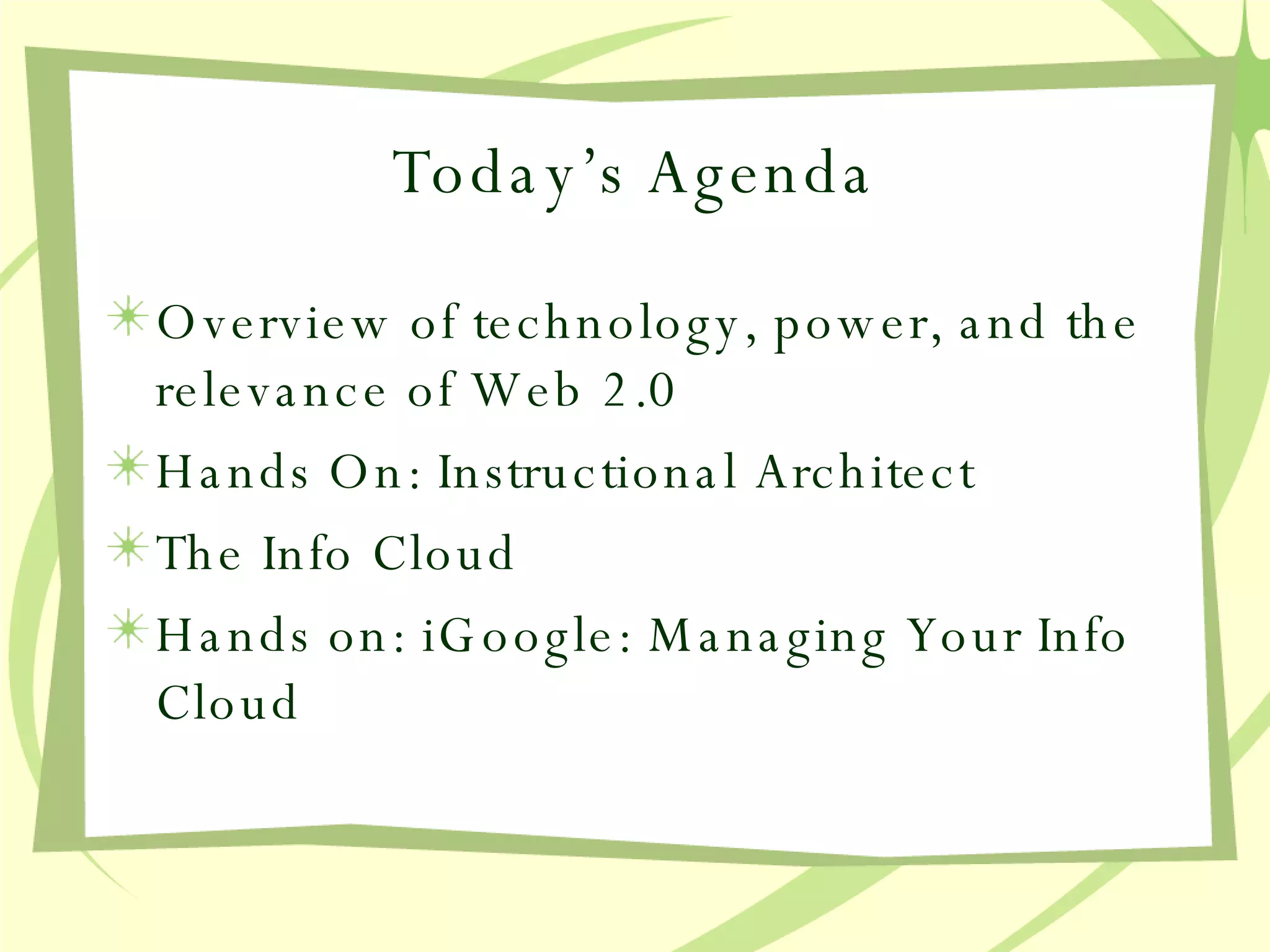
Today’s Agenda Overview of technology, power, and the relevance of Web 2.0 Hands On: Instructional Architect The Info Cloud Hands on: iGoogle: Managing Your Info Cloud
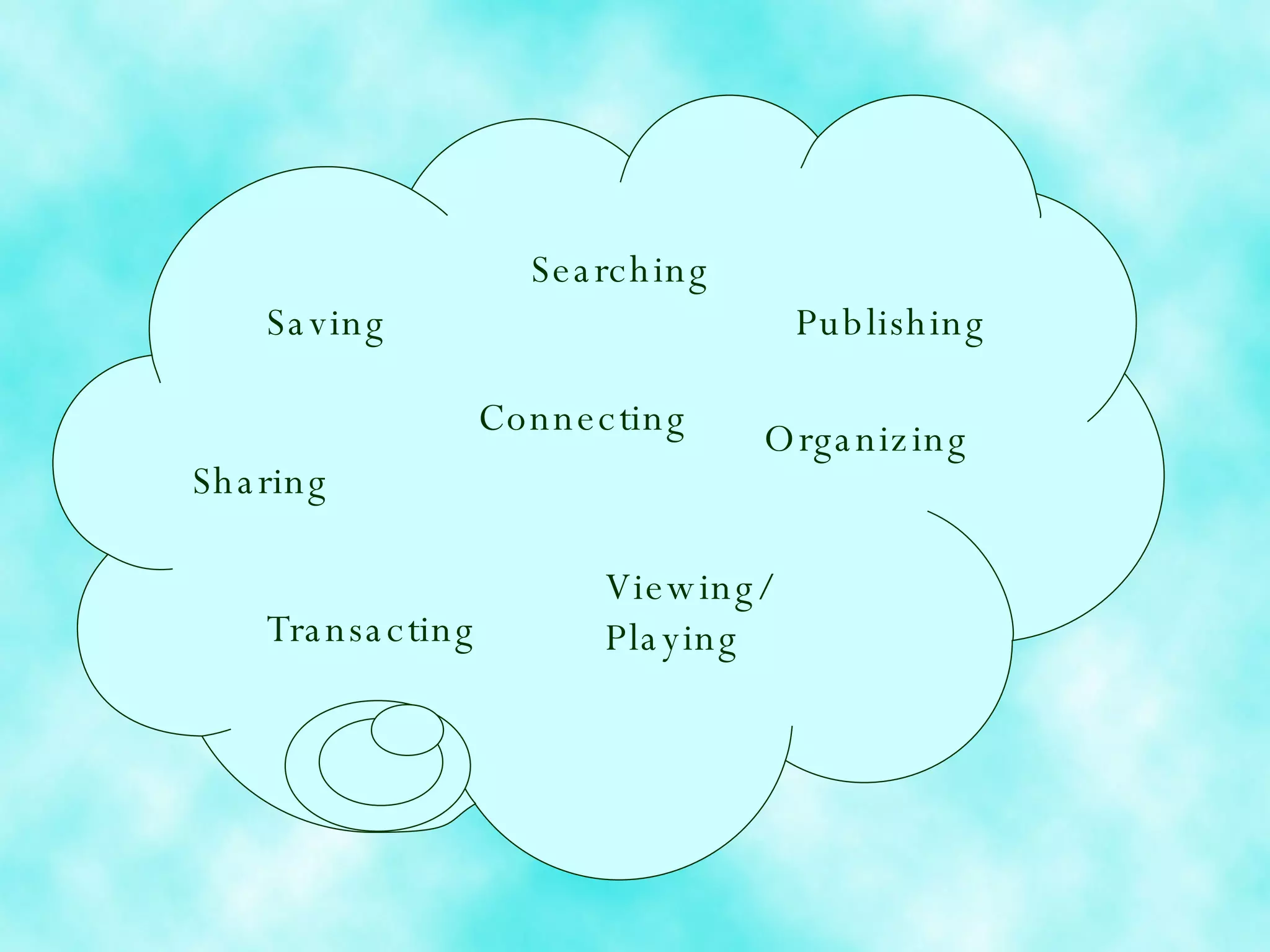
Saving Searching Organizing Sharing Viewing/Playing Transacting Connecting Publishing
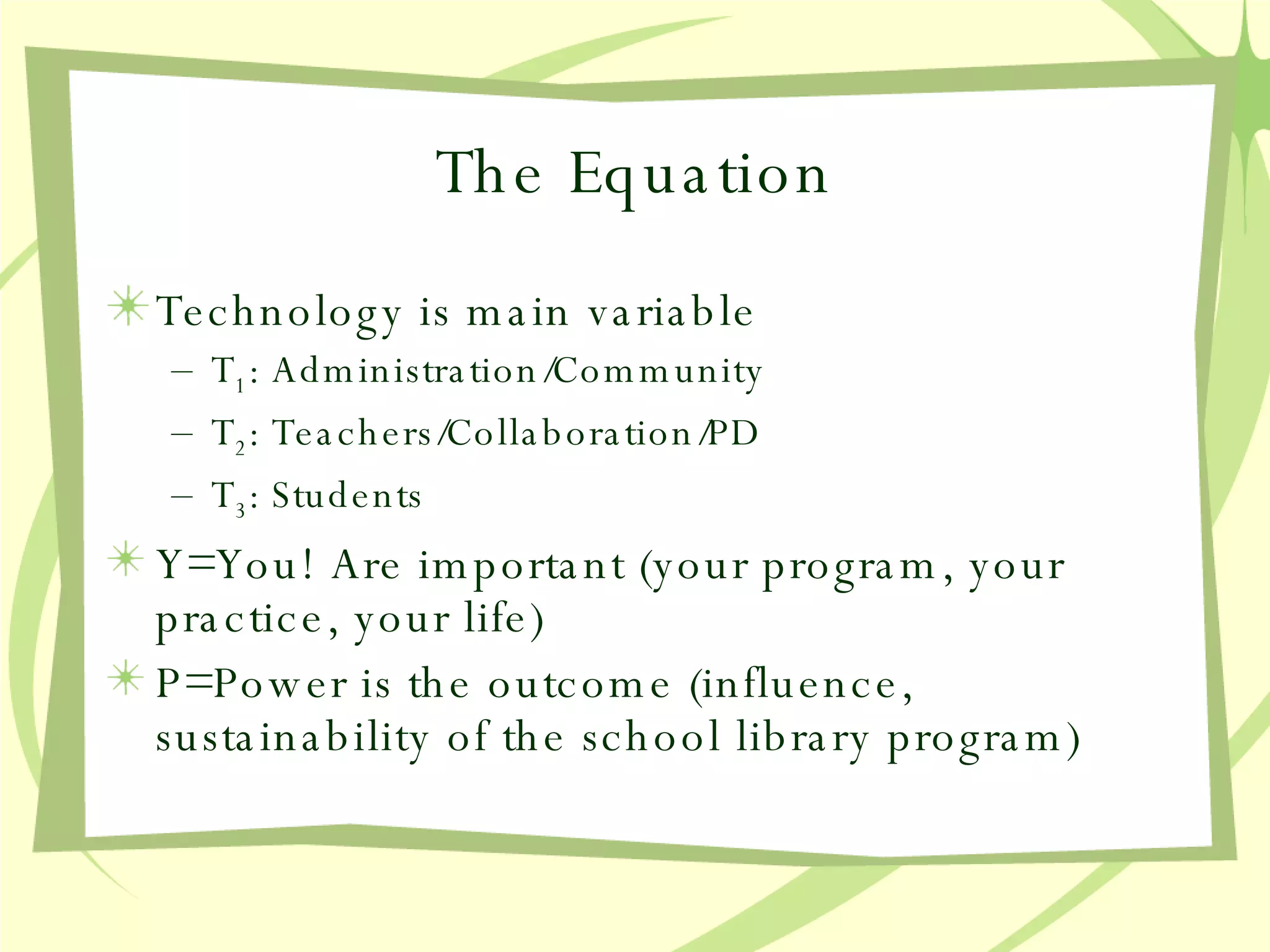
The Equation Technology is main variable T 1 : Administration/Community T 2 : Teachers/Collaboration/PD T 3 : Students Y=You! Are important (your program, your practice, your life) P=Power is the outcome (influence, sustainability of the school library program)
Start from your core
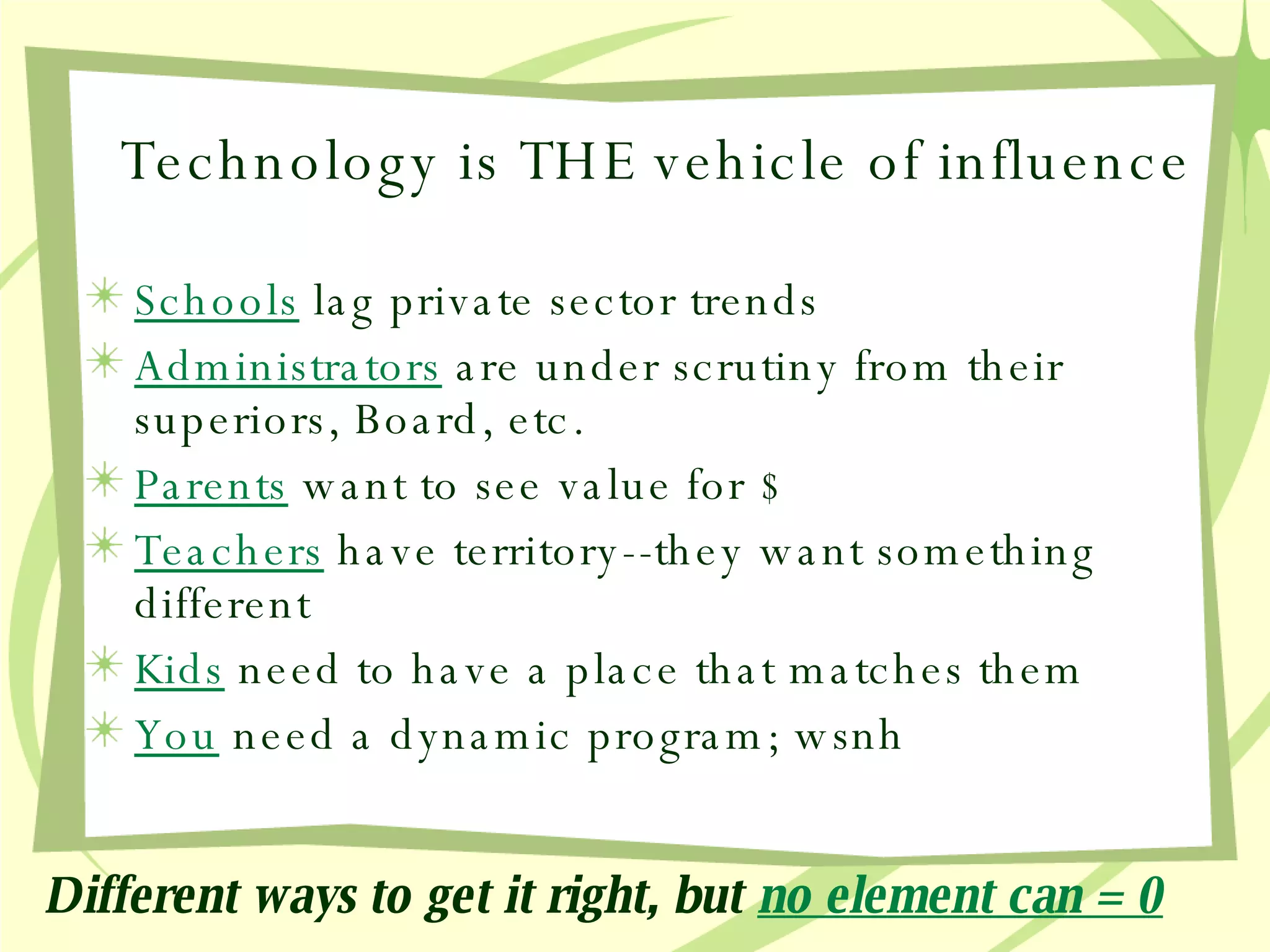
Technology is THE vehicle of influence Schools  lag private sector trends Administrators  are under scrutiny from their superiors, Board, etc. Parents   want to see value for $ Teachers   have territory--they want something different Kids   need to have a place that matches them You   need a dynamic program; wsnh Different ways to get it right, but   no element can = 0
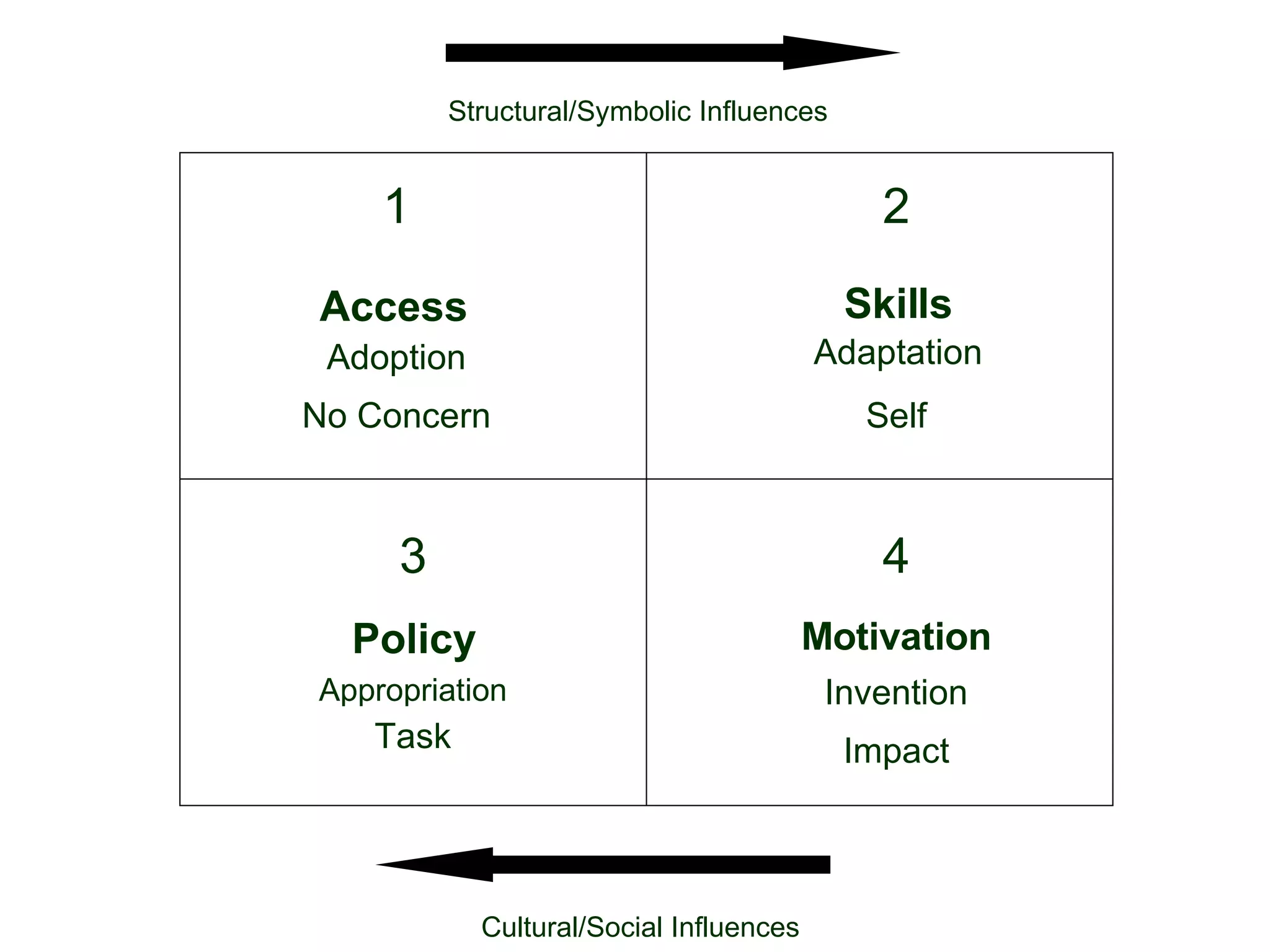
1 Adoption No Concern Access 2 Adaptation Self Skills 3 Appropriation Task Policy 4 Invention Impact Motivation Cultural/Social Influences Structural/Symbolic Influences
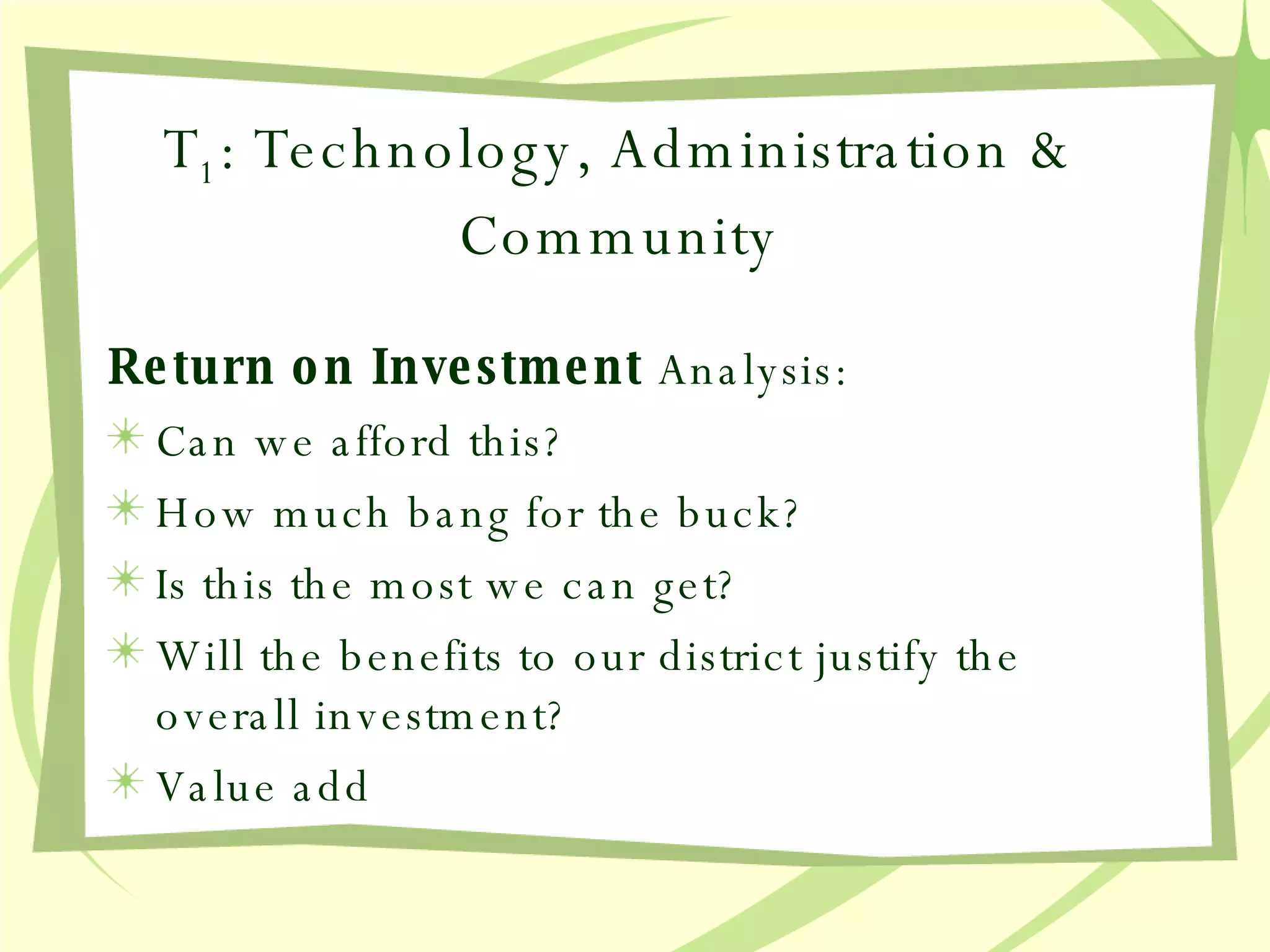
T 1 : Technology, Administration & Community Return on Investment  Analysis: Can we afford this? How much bang for the buck? Is this the most we can get? Will the benefits to our district justify the overall investment? Value add
Just look at ‘em go…they leave behind…
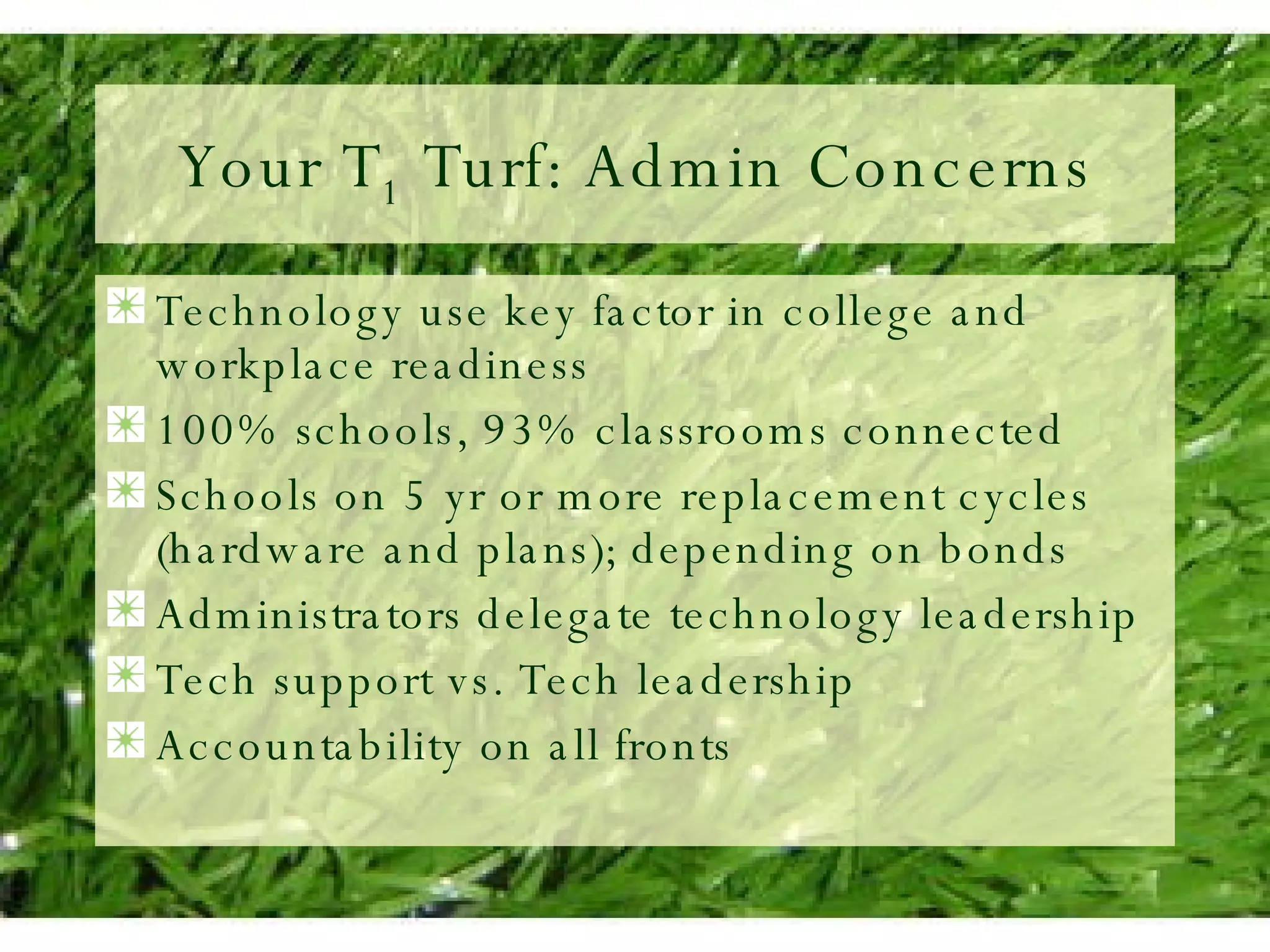
Your T 1  Turf: Admin Concerns Technology use key factor in college and workplace readiness 100% schools, 93% classrooms connected Schools on 5 yr or more replacement cycles (hardware and plans); depending on bonds Administrators delegate technology leadership Tech support vs. Tech leadership Accountability on all fronts
Your T 1  Turf: What Parents Want More connected to student performance Better preparedness for school, college Better preparedness for career choice Equity of access to learning
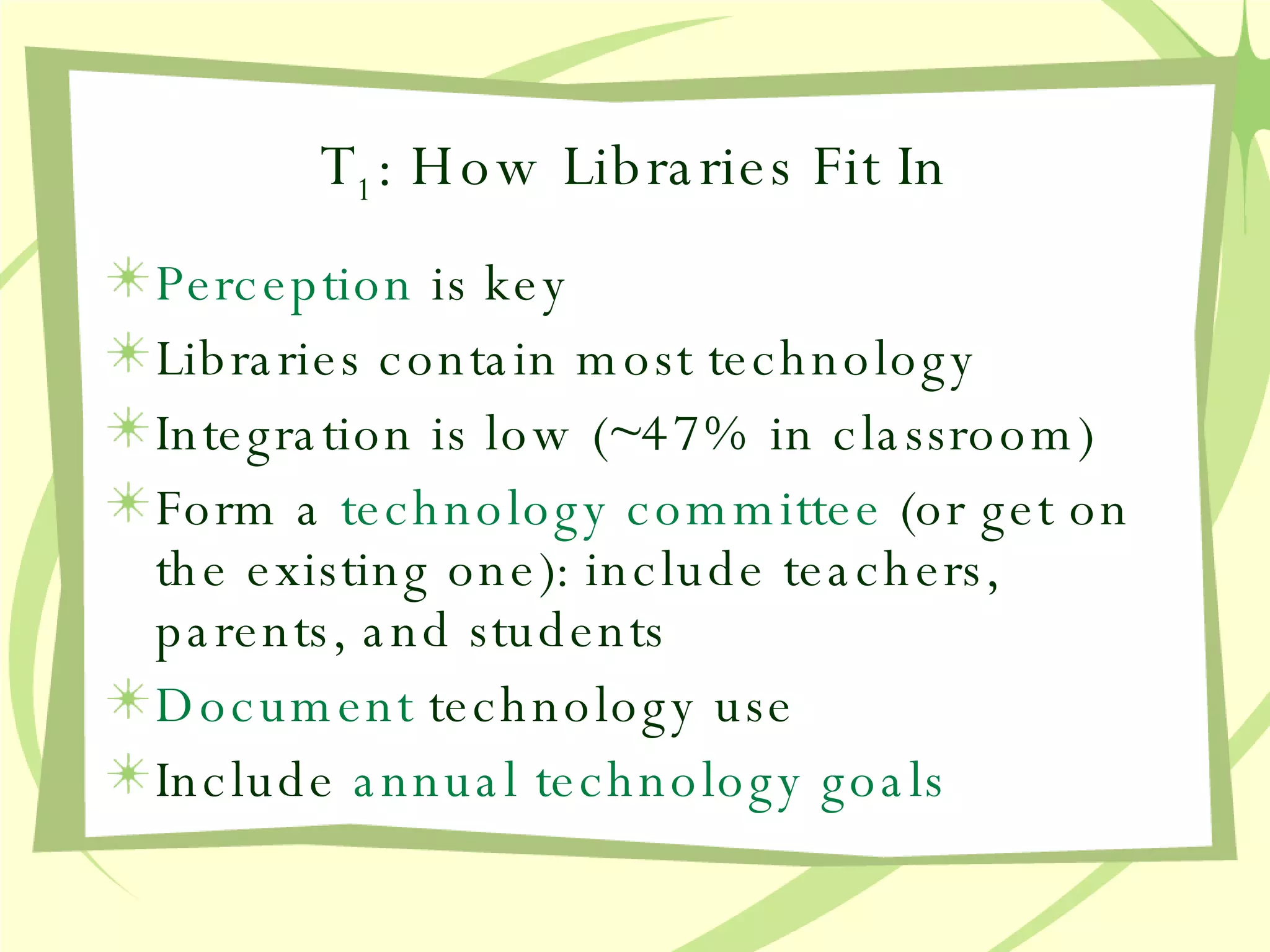
T 1 : How Libraries Fit In Perception  is key Libraries contain most technology Integration is low (~47% in classroom) Form a  technology committee  (or get on the existing one): include teachers, parents, and students Document  technology use  Include  annual technology goals
T 1 : Web 2.0 Technologies Help You must have a  dynamic  library Web site Use  TeacherTube  to share school events, post library tour (link it to your Web page) Use  blog & podcast  to advertise new library resources and services, school announcements Allow people to  email  you from your Web page and  respond  (even consider weekend or evening hours) Why email and not IM?
T 2 : The Teacher of It All Collaboration is the grail Teacher territory is real Teachers want help with: things that take  time ,  things they  don’t know/never learned things they  do not see as their jobs SLMS who lead with technology and resources collaborate Know how your standards/their standards link (use the NETS•T to your advantage)
T 2 : How Web 2.0 can help Use the “push approach” to getting your SLMC used Don’t wait to be asked to pull resources together.  Get the assignments from kids (have them help populate RSS) Use del.icio.us to organize resources and link them to your Web page
T 3 : The Student Body Know what you’re supposed to be preparing them to do: How your standards map to their standards Know what they may not be getting in the classroom Belonging, Creativity, Technology Hospitality vs. Service Is this my kind of place? Can I be successful here? Can I connect this to the rest of my life?
Dan Pink’s  A Whole New Mind Six Senses Design:  Voicethread  Meaning:  Flickr, blog (have the students blog for you and for other students) Symphony:  iGoogle  Empathy:  Gliffy, GoogleDocs Play:  Jumpcut Meaning:  Ning
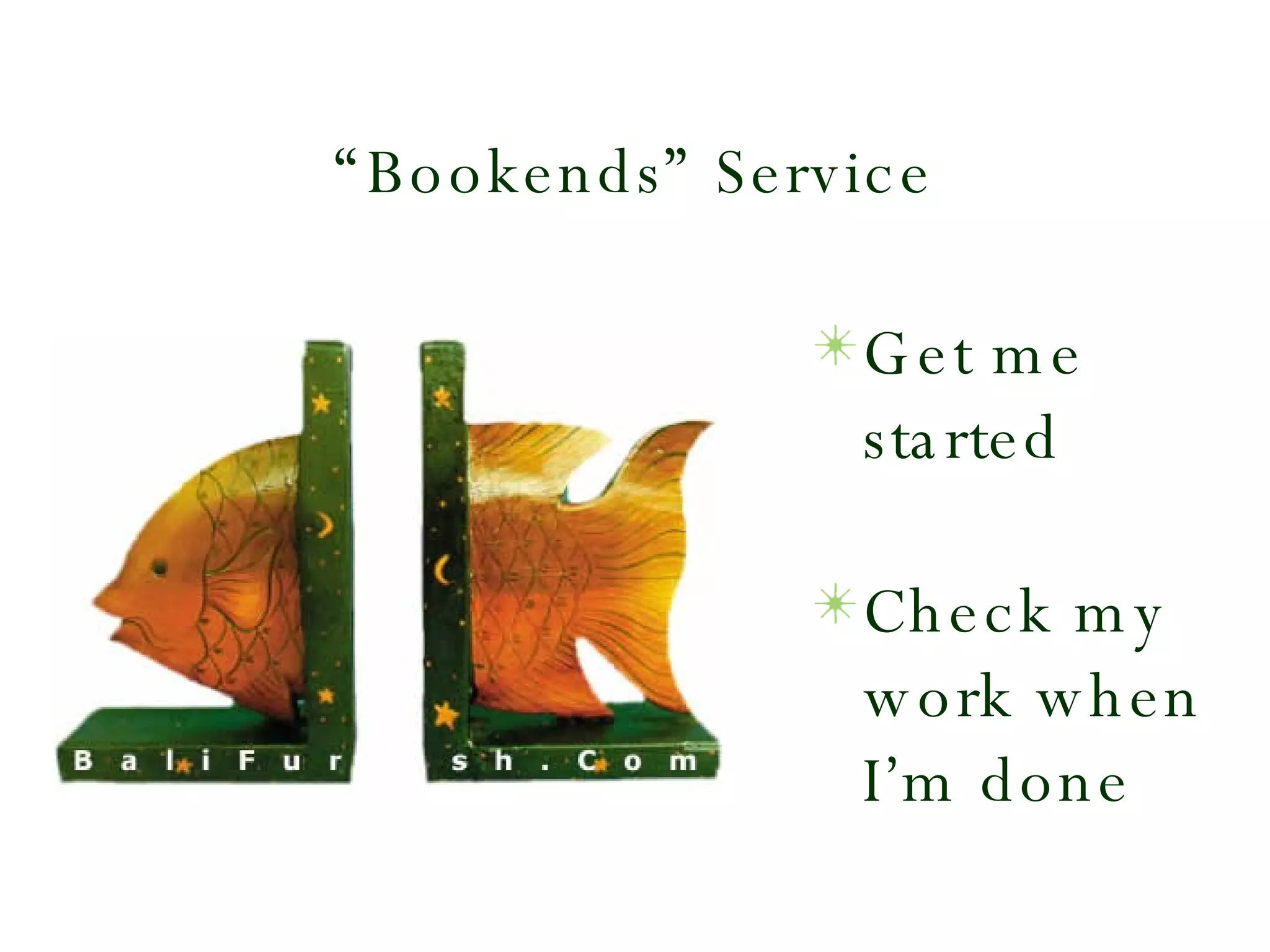
“Bookends” Service Get me started Check my work when I’m done
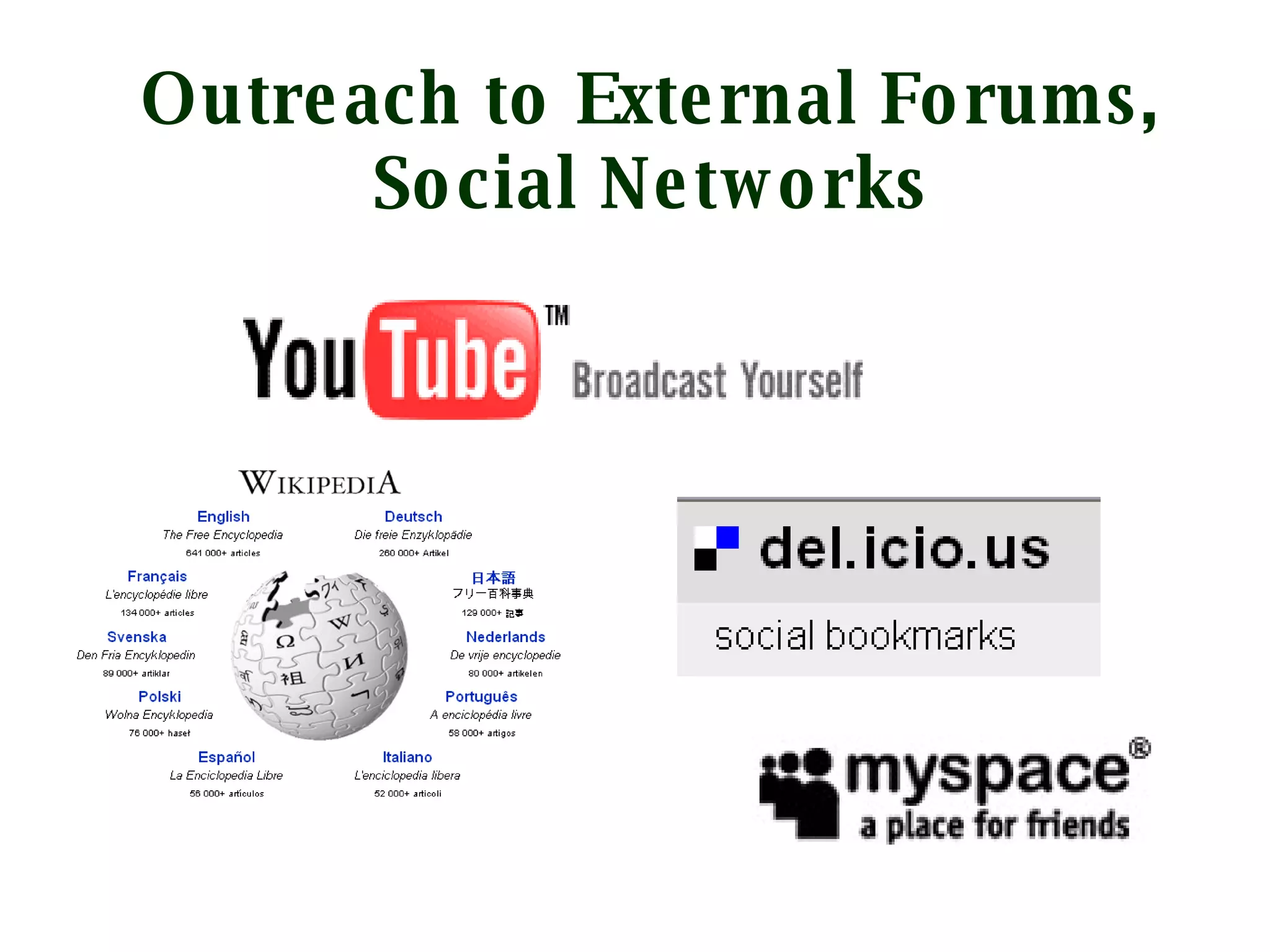
Outreach to External Forums, Social Networks

Mardis/Fontichiaro Lecture 2/5/2008

  • 1.
    t 1 • t 2 • t 3 • y = P Technology, You, and Power Marcia Mardis (mmardis@umich.edu) Kristin Fontichiaro (font@umich.edu) February 5, 2008 School of Information
  • 2.
    Links for Todayhttp://del.icio.us/marciam/web http://www.ia.usu.edu/
  • 3.
    Today’s Agenda Overviewof technology, power, and the relevance of Web 2.0 Hands On: Instructional Architect The Info Cloud Hands on: iGoogle: Managing Your Info Cloud
  • 4.
    Saving Searching OrganizingSharing Viewing/Playing Transacting Connecting Publishing
  • 5.
    The Equation Technologyis main variable T 1 : Administration/Community T 2 : Teachers/Collaboration/PD T 3 : Students Y=You! Are important (your program, your practice, your life) P=Power is the outcome (influence, sustainability of the school library program)
  • 6.
  • 7.
    Technology is THEvehicle of influence Schools lag private sector trends Administrators are under scrutiny from their superiors, Board, etc. Parents want to see value for $ Teachers have territory--they want something different Kids need to have a place that matches them You need a dynamic program; wsnh Different ways to get it right, but no element can = 0
  • 8.
    1 Adoption NoConcern Access 2 Adaptation Self Skills 3 Appropriation Task Policy 4 Invention Impact Motivation Cultural/Social Influences Structural/Symbolic Influences
  • 9.
    T 1 :Technology, Administration & Community Return on Investment Analysis: Can we afford this? How much bang for the buck? Is this the most we can get? Will the benefits to our district justify the overall investment? Value add
  • 10.
    Just look at‘em go…they leave behind…
  • 11.
    Your T 1 Turf: Admin Concerns Technology use key factor in college and workplace readiness 100% schools, 93% classrooms connected Schools on 5 yr or more replacement cycles (hardware and plans); depending on bonds Administrators delegate technology leadership Tech support vs. Tech leadership Accountability on all fronts
  • 12.
    Your T 1 Turf: What Parents Want More connected to student performance Better preparedness for school, college Better preparedness for career choice Equity of access to learning
  • 13.
    T 1 :How Libraries Fit In Perception is key Libraries contain most technology Integration is low (~47% in classroom) Form a technology committee (or get on the existing one): include teachers, parents, and students Document technology use Include annual technology goals
  • 14.
    T 1 :Web 2.0 Technologies Help You must have a dynamic library Web site Use TeacherTube to share school events, post library tour (link it to your Web page) Use blog & podcast to advertise new library resources and services, school announcements Allow people to email you from your Web page and respond (even consider weekend or evening hours) Why email and not IM?
  • 15.
    T 2 :The Teacher of It All Collaboration is the grail Teacher territory is real Teachers want help with: things that take time , things they don’t know/never learned things they do not see as their jobs SLMS who lead with technology and resources collaborate Know how your standards/their standards link (use the NETS•T to your advantage)
  • 16.
    T 2 :How Web 2.0 can help Use the “push approach” to getting your SLMC used Don’t wait to be asked to pull resources together. Get the assignments from kids (have them help populate RSS) Use del.icio.us to organize resources and link them to your Web page
  • 17.
    T 3 :The Student Body Know what you’re supposed to be preparing them to do: How your standards map to their standards Know what they may not be getting in the classroom Belonging, Creativity, Technology Hospitality vs. Service Is this my kind of place? Can I be successful here? Can I connect this to the rest of my life?
  • 18.
    Dan Pink’s A Whole New Mind Six Senses Design: Voicethread Meaning: Flickr, blog (have the students blog for you and for other students) Symphony: iGoogle Empathy: Gliffy, GoogleDocs Play: Jumpcut Meaning: Ning
  • 19.
    “Bookends” Service Getme started Check my work when I’m done
  • 20.
    Outreach to ExternalForums, Social Networks