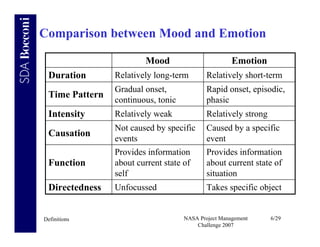
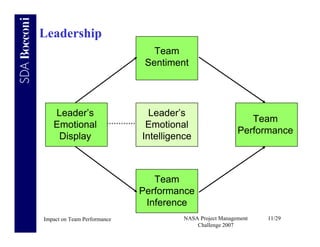
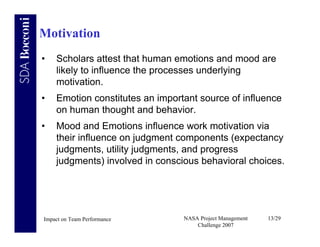
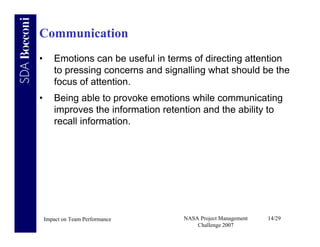
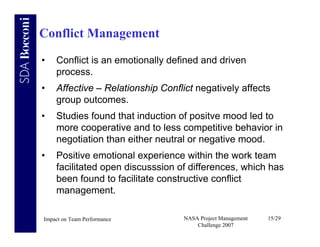
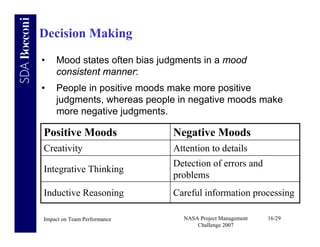
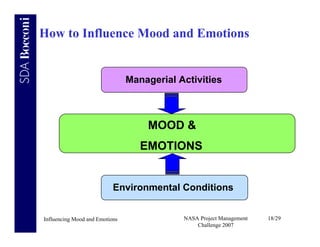
This document discusses the impact of mood and emotions on team performance. It defines mood as a relatively lasting emotional state compared to emotions, which are short-lived reactions to stimuli. Mood and emotions influence soft skills like leadership, team climate, motivation, and communication as well as hard skills like decision making. Managers can influence mood and emotions through their own displays, feedback, celebrations, monitoring team climate, and using humor. Environmental factors like lighting, air quality, temperature, and ergonomics also impact mood. The document concludes that mood and emotions significantly impact work and managers have tools to shape them.