TALENT MANAGEMENT
   Jennyfer Milena Galvez
Team LEADER
• A team leader or team lead is someone (or in
  certain cases there may be multiple team leaders) who
  provides guidance, instruction, direction, leadership to
  a group of other individuals (the team) for the purpose
  of achieving a key result or group of aligned results.
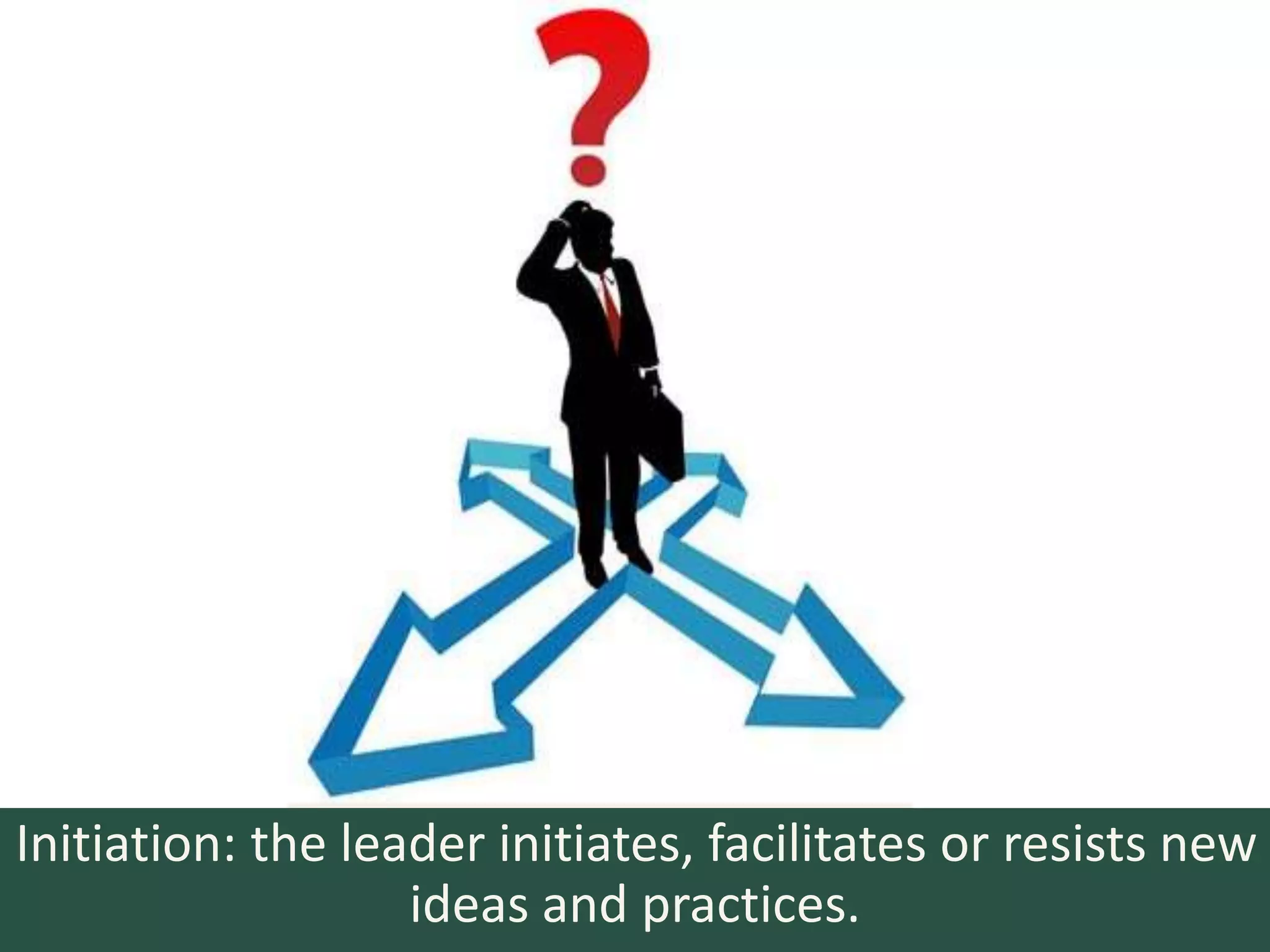
Initiation: the leader initiates, facilitates or resists new
                   ideas and practices.
As a partner: the leader is mixed with the group,
interact and exchange personal services to members.
Representation: the leader defends the group
against the attack, says the group's interests and act on
                        its behalf.
Integration:
    The leader makes
 the individual behavior,
  stimulates a pleasant
  atmosphere, reduces
  conflict and promotes
      the individual
adjustment to the group.
Organization: the leader structure their own
       work, that of the other members and the
relationships between them in performance of tasks.
Domain: the leader limits the behavior of
members or the group in action, make decisions
            and express opinions.
Communication:          The      leader     provides
and obtains information from members and
shows knowledge of any matter related to the group.
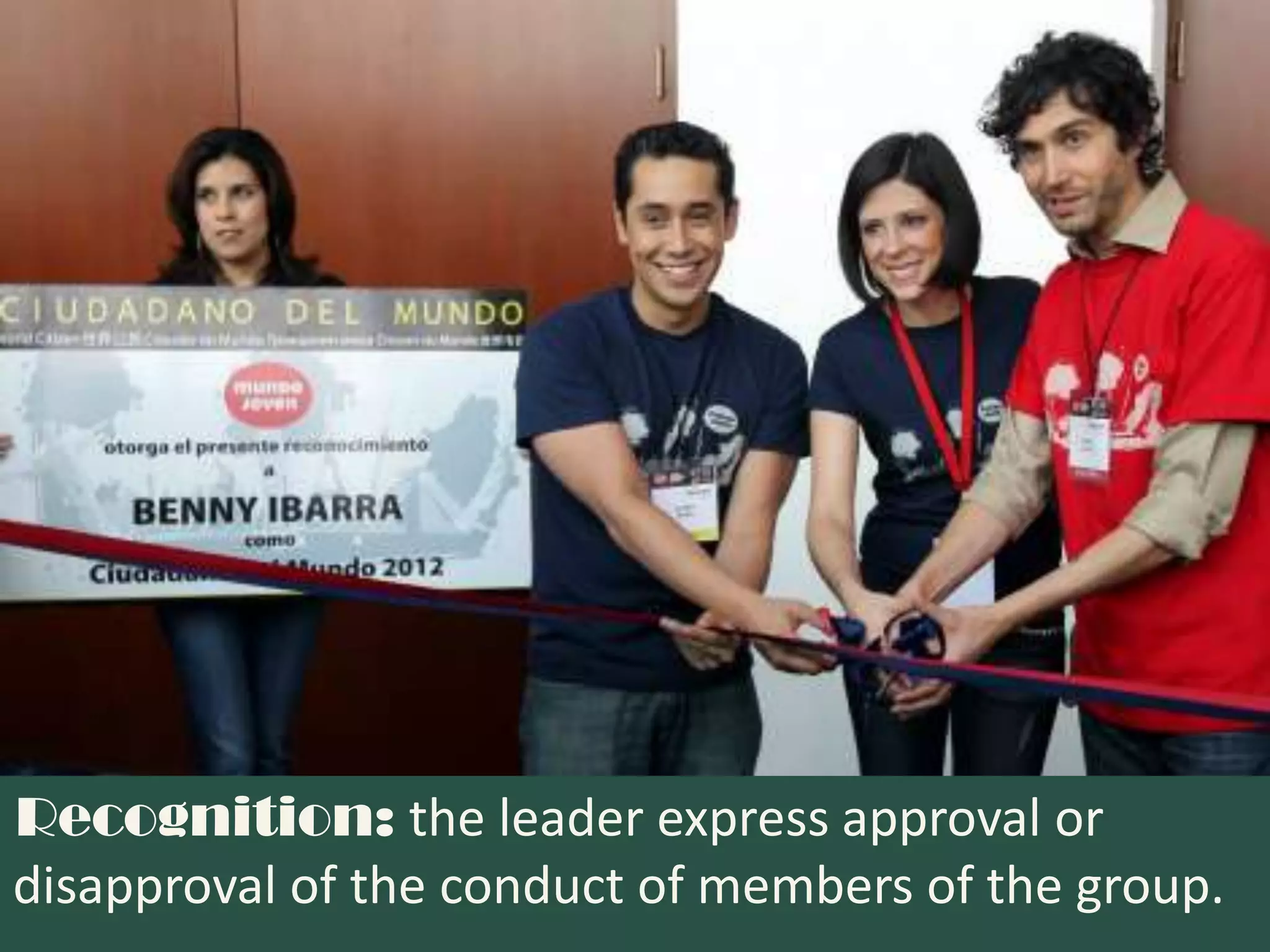
Recognition: the leader express approval or
disapproval of the conduct of members of the group.
Production: The leader sets or performance levels of
    effort and encourages members regarding
                their performance
The TEAM
A high
Performing Team
Team Manager
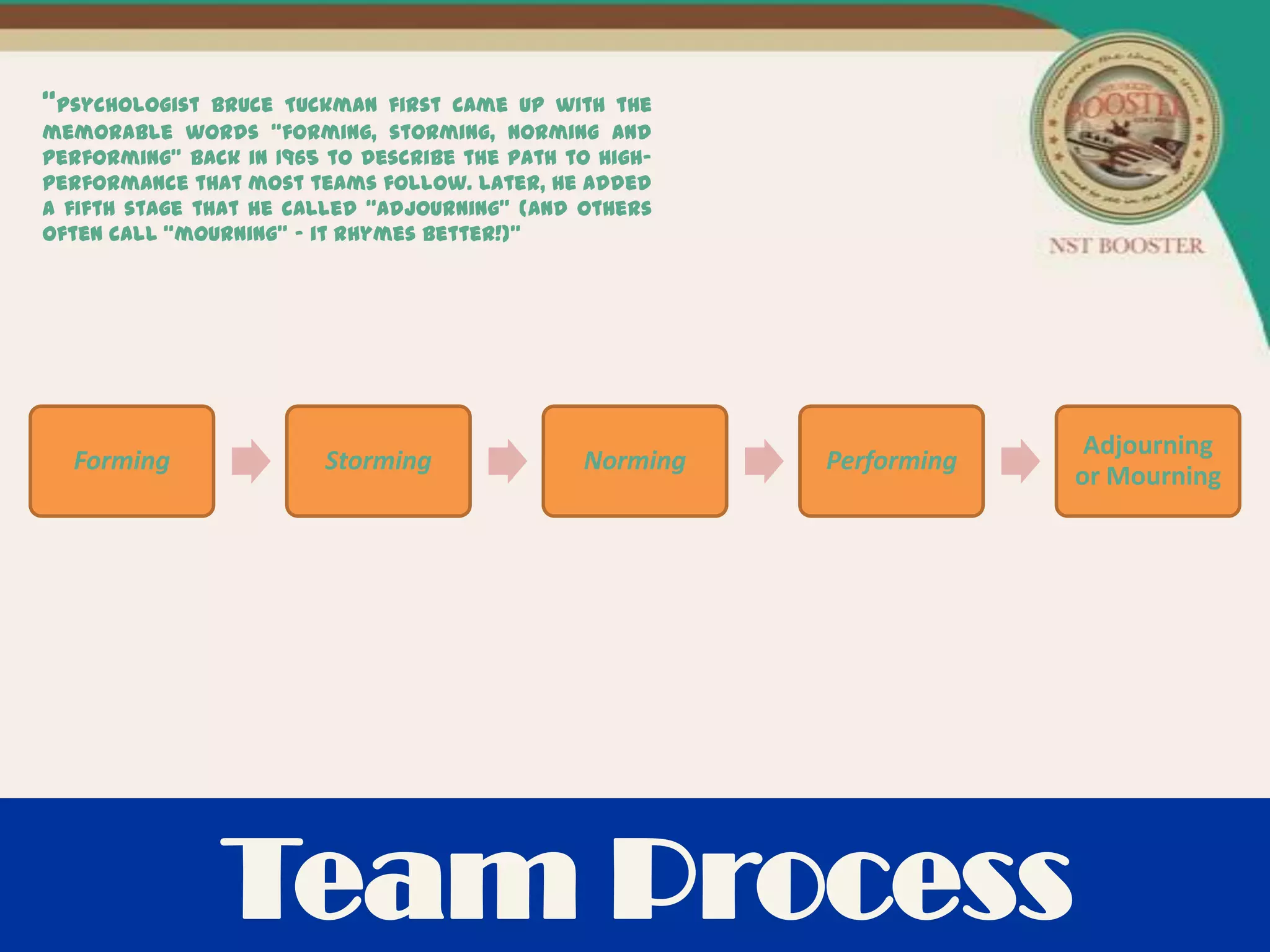
“Psychologist   Bruce Tuckman first came up with the
memorable words “forming, storming, norming and
performing” back in 1965 to describe the path to high-
performance that most teams follow. Later, he added
a fifth stage that he called “adjourning” (and others
often call “mourning” – it rhymes better!)”


                                                                       Adjourning
  Forming                Storming              Norming   Performing
                                                                      or Mourning


                Team Process
Forming                              Storming
                                      Soon, reality sets in and your team
Teams initially go through a          moves into a "Storming" phase.
"Forming" stage in which members      Your authority may be challenged as
                                      others jockey for position as their
are positive and polite. Some         roles are clarified. The ways of
members are anxious, as they          working start to be defined, and as
haven’t yet worked out exactly what   leader you must be aware that some
work the team will involve. Others    members may feel overwhelmed by
                                      how much there is to do, or
are simply excited about the task     uncomfortable with the approach
ahead.                                being used.
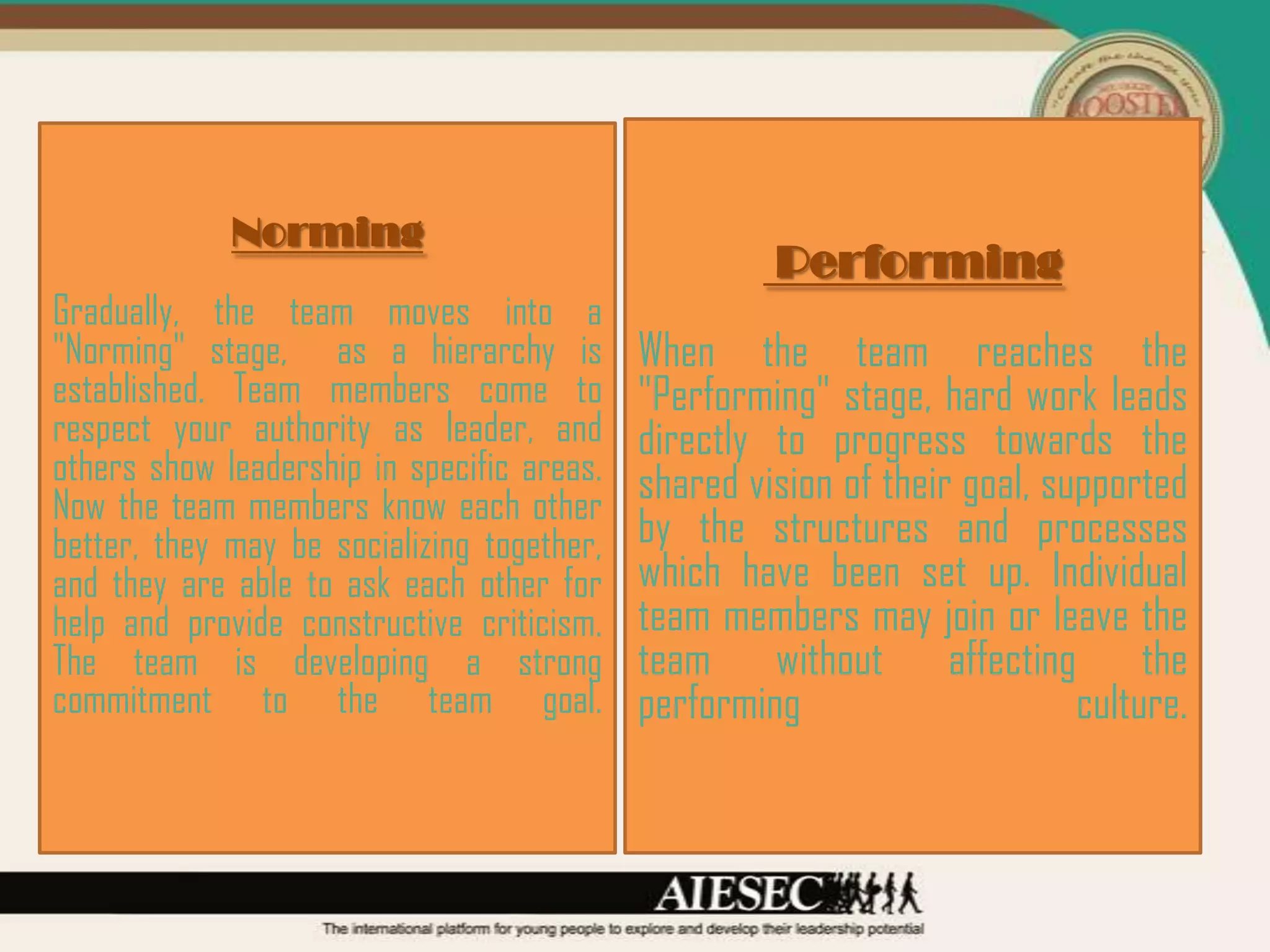
Norming
                                                     Performing
Gradually, the team moves into a
"Norming" stage, as a hierarchy is          When the team reaches the
established. Team members come to           "Performing" stage, hard work leads
respect your authority as leader, and       directly to progress towards the
others show leadership in specific areas.   shared vision of their goal, supported
Now the team members know each other
better, they may be socializing together,   by the structures and processes
and they are able to ask each other for     which have been set up. Individual
help and provide constructive criticism.    team members may join or leave the
The team is developing a strong             team without affecting the
commitment to the team goal.                performing                     culture.
Mourning or Adjourning

Breaking up a team can be stressful for all concerned and
  the "Adjourning" or "Mourning" stage is important in
   reaching both team goal and personal conclusions.
Team Experience
                         On going the XP

                        -Tracking (Job
                        description, Periodical   Close the XP
                        Meetings)                 - Results Analyzing.
                        -Conflict Management      -Recover Learning
                        - Feedback                points
                        - Re-planing              -Prepare Transition
                                                  - Take new
                                                  Challenges
Planning
- Define Goals
-Design the focus and
Strategies
-Team Rules
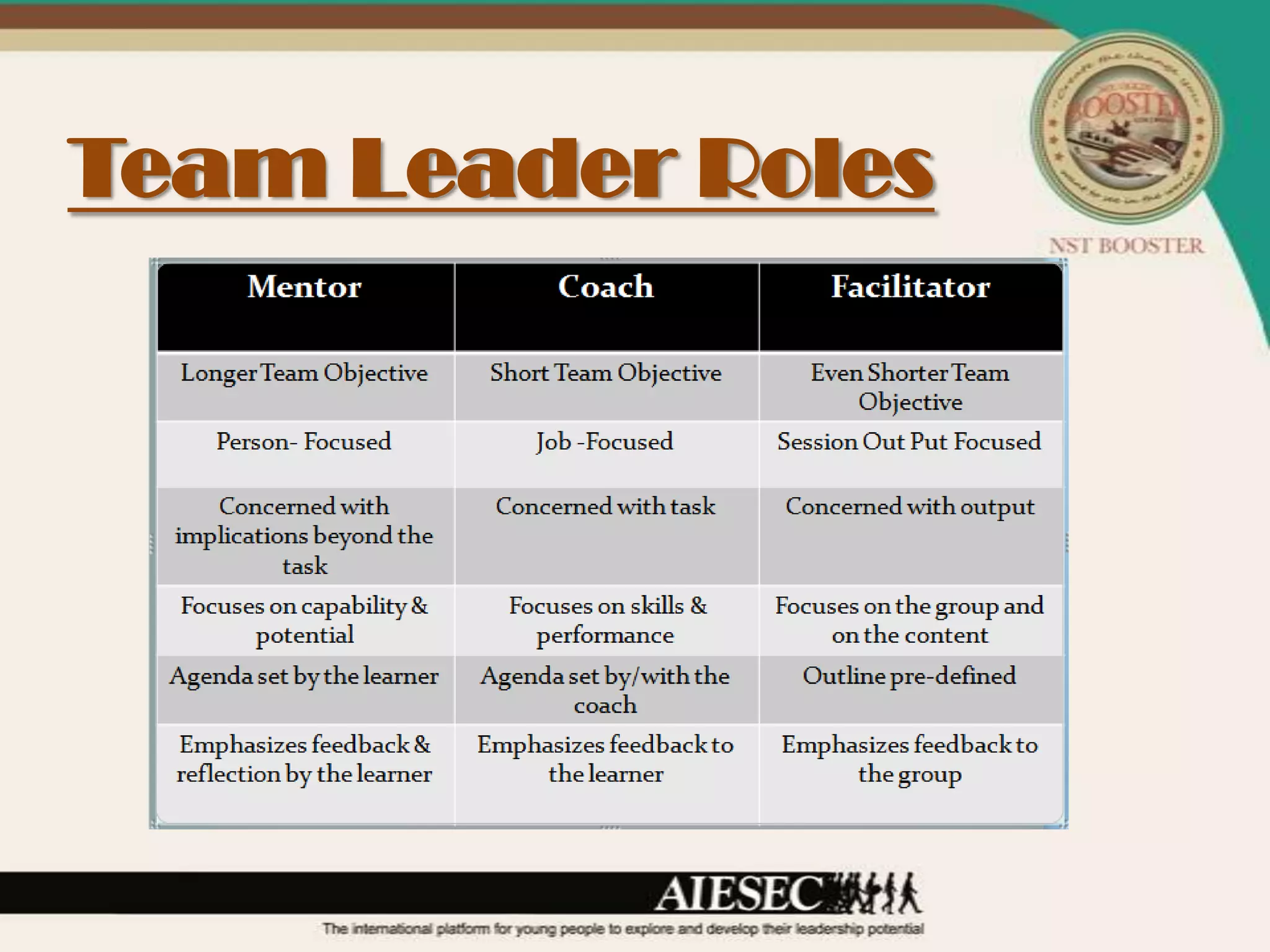
Team Leader Roles
Responsibilities of a
Team Leader
-Facilitate conversations
-Conflict Resolution
-Task Delegation
-Track Progress
-Make stronger Relationships
-Share Resources
Facilitation              Track Performance
                             Using TM Tracking
  Proper                     Tools
                             Make your own
  environment                trackers (and share
  Meeting styles             with the network!)
                             Break down goals
  Setting                    into tasks and action
                             steps
  agendas                    Praise publicly,
  Follow-up                  criticize privately

               Conflict Management
                  Always find
                  compromise.
                  Listen to all
                  sides of the
                  story.
                  Analyze the facts.
                  Take Decisions
                  (Maybe you
                  should talk with
                  person out side
                  team).
Task Delegation & Setting Deadlines

       •SMART Goals
           Specific
           Measurable
           Attainable
           Realistic
           Timely
       •Make sure to
       follow up
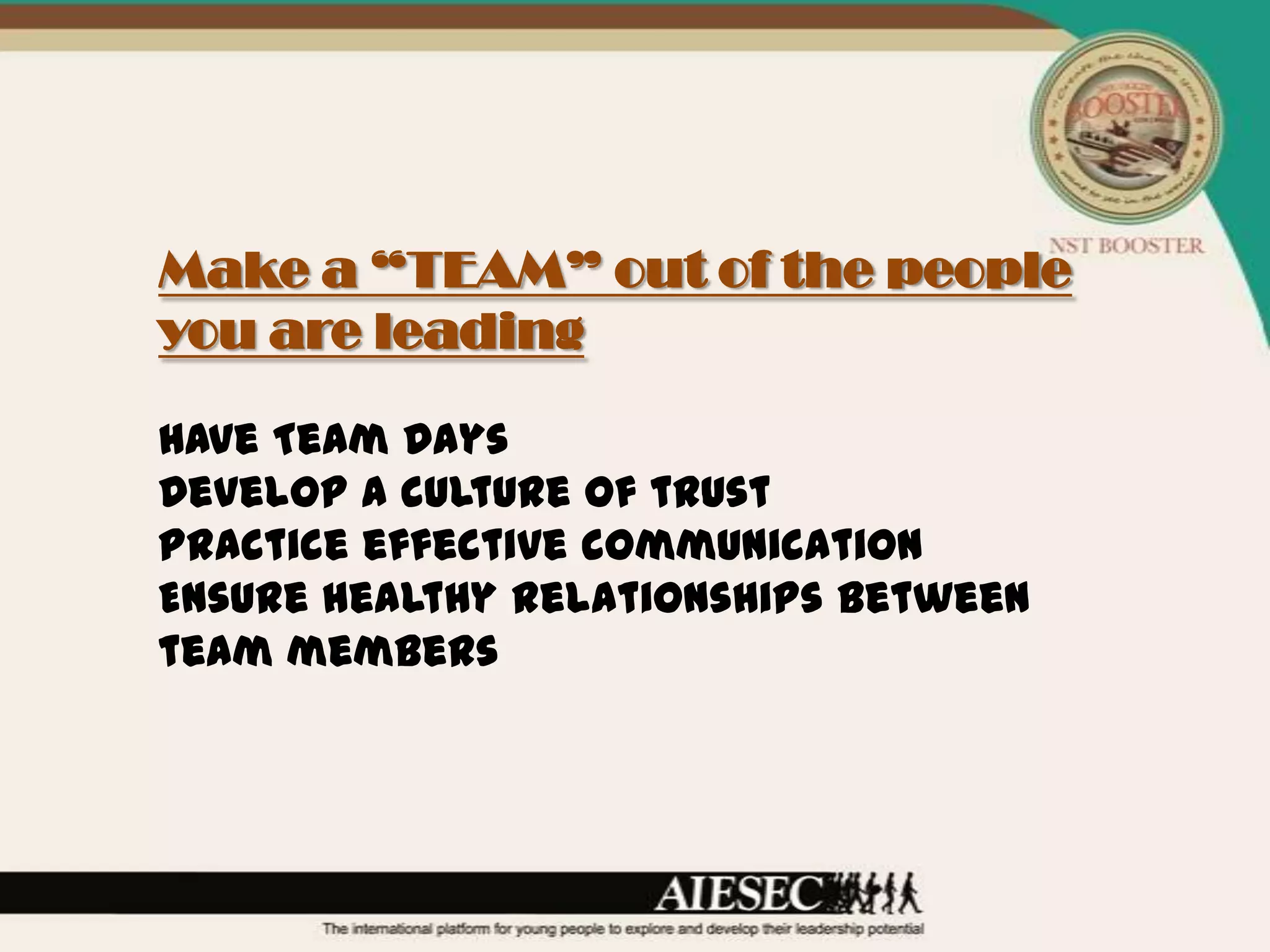
Make a “TEAM” out of the people
you are leading

Have Team Days
Develop a culture of trust
Practice effective communication
Ensure healthy relationships between
team members
Questions?

Team management

  • 1.
    TALENT MANAGEMENT Jennyfer Milena Galvez
  • 2.
  • 3.
    • A teamleader or team lead is someone (or in certain cases there may be multiple team leaders) who provides guidance, instruction, direction, leadership to a group of other individuals (the team) for the purpose of achieving a key result or group of aligned results.
  • 4.
    Initiation: the leaderinitiates, facilitates or resists new ideas and practices.
  • 5.
    As a partner:the leader is mixed with the group, interact and exchange personal services to members.
  • 6.
    Representation: the leaderdefends the group against the attack, says the group's interests and act on its behalf.
  • 7.
    Integration: The leader makes the individual behavior, stimulates a pleasant atmosphere, reduces conflict and promotes the individual adjustment to the group.
  • 8.
    Organization: the leaderstructure their own work, that of the other members and the relationships between them in performance of tasks.
  • 9.
    Domain: the leaderlimits the behavior of members or the group in action, make decisions and express opinions.
  • 10.
    Communication: The leader provides and obtains information from members and shows knowledge of any matter related to the group.
  • 11.
    Recognition: the leaderexpress approval or disapproval of the conduct of members of the group.
  • 12.
    Production: The leadersets or performance levels of effort and encourages members regarding their performance
  • 13.
  • 17.
  • 25.
  • 26.
    “Psychologist Bruce Tuckman first came up with the memorable words “forming, storming, norming and performing” back in 1965 to describe the path to high- performance that most teams follow. Later, he added a fifth stage that he called “adjourning” (and others often call “mourning” – it rhymes better!)” Adjourning Forming Storming Norming Performing or Mourning Team Process
  • 27.
    Forming Storming Soon, reality sets in and your team Teams initially go through a moves into a "Storming" phase. "Forming" stage in which members Your authority may be challenged as others jockey for position as their are positive and polite. Some roles are clarified. The ways of members are anxious, as they working start to be defined, and as haven’t yet worked out exactly what leader you must be aware that some work the team will involve. Others members may feel overwhelmed by how much there is to do, or are simply excited about the task uncomfortable with the approach ahead. being used.
  • 28.
    Norming Performing Gradually, the team moves into a "Norming" stage, as a hierarchy is When the team reaches the established. Team members come to "Performing" stage, hard work leads respect your authority as leader, and directly to progress towards the others show leadership in specific areas. shared vision of their goal, supported Now the team members know each other better, they may be socializing together, by the structures and processes and they are able to ask each other for which have been set up. Individual help and provide constructive criticism. team members may join or leave the The team is developing a strong team without affecting the commitment to the team goal. performing culture.
  • 29.
    Mourning or Adjourning Breakingup a team can be stressful for all concerned and the "Adjourning" or "Mourning" stage is important in reaching both team goal and personal conclusions.
  • 30.
    Team Experience On going the XP -Tracking (Job description, Periodical Close the XP Meetings) - Results Analyzing. -Conflict Management -Recover Learning - Feedback points - Re-planing -Prepare Transition - Take new Challenges Planning - Define Goals -Design the focus and Strategies -Team Rules
  • 31.
  • 32.
    Responsibilities of a TeamLeader -Facilitate conversations -Conflict Resolution -Task Delegation -Track Progress -Make stronger Relationships -Share Resources
  • 33.
    Facilitation Track Performance Using TM Tracking Proper Tools Make your own environment trackers (and share Meeting styles with the network!) Break down goals Setting into tasks and action steps agendas Praise publicly, Follow-up criticize privately Conflict Management Always find compromise. Listen to all sides of the story. Analyze the facts. Take Decisions (Maybe you should talk with person out side team).
  • 34.
    Task Delegation &Setting Deadlines •SMART Goals Specific Measurable Attainable Realistic Timely •Make sure to follow up
  • 35.
    Make a “TEAM”out of the people you are leading Have Team Days Develop a culture of trust Practice effective communication Ensure healthy relationships between team members
  • 36.