HISTORY
OF ENGLISH LANGUAGE
Proto Indo
European
Reconstruct
ed
vocabulary
Agricultural
Tecnology
Climate and
geography
Barley
Wheat
Flax
Apples
Cherrie
s
Grapes
Vines
Mead
Beer
Winter
Snow
Birch
Beech
Pine
Wolf
Salmon
Bear
Otter
Cognate
s
Words of
common origin in
different
languages
Sistematic
sound
changes
Grimm’s
law
Substratum
effect
p → f (ped/foot)
t → ө (tu/thou).
k→ h (cord/heart)
d → t (duo/two)
g → k
(genu/knee).
One language is
systematically
influenced by the
languages of a
subjugated
group.
Elbe river
3000
years ago
about
Began in
Weknow
aboutitfrom
Refered to Learned from
East
Germani
c
North
Germani
cWest
Germani
c
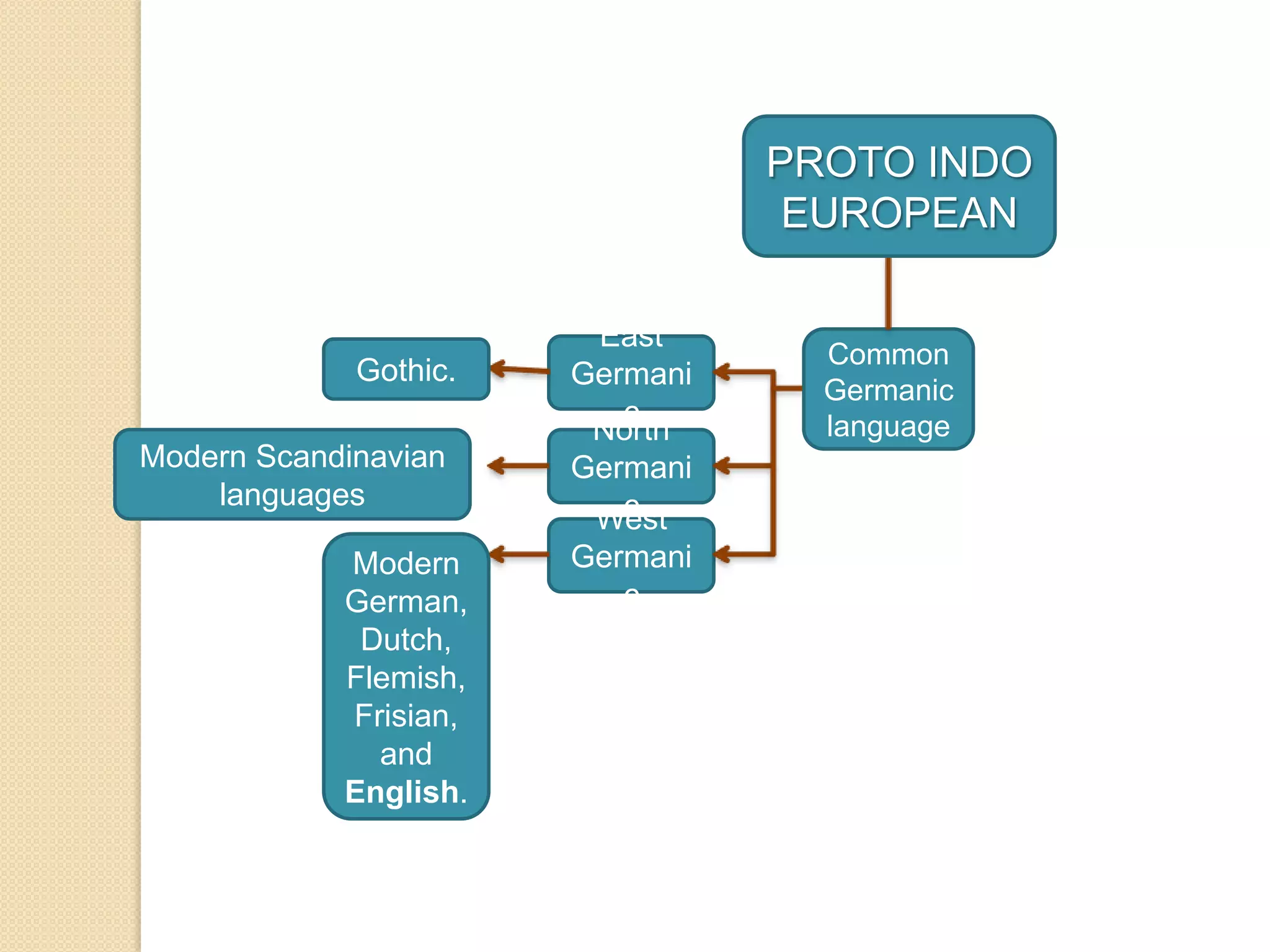
Common
Germanic
language
Gothic.
Modern
German,
Dutch,
Flemish,
Frisian,
and
English.
Modern Scandinavian
languages
PROTO INDO
EUROPEAN
Invaded by Celts (500
BC)
Invaded by Romans
(except Scots and Picts)
Weak Celts seek for
help
Germanic Tribes
JUTES ANGLOS SAXONS
Invaded
Britain
Advance in written
language
(runic inscriptions)
Consonant changes
/k/= /tʃ/ cild - child
/g/= /j/ gieldan –
yield
/sk/= /ʃ/ skall – shall
/f/= /v/ half - halves
A kind of
assimilation
Change in front
vowels towards
the end of a word
affects the vowel
of a preceding
syllable.
POE word Mann
(man) and the plural
Manniz > menniz >
menn (men).
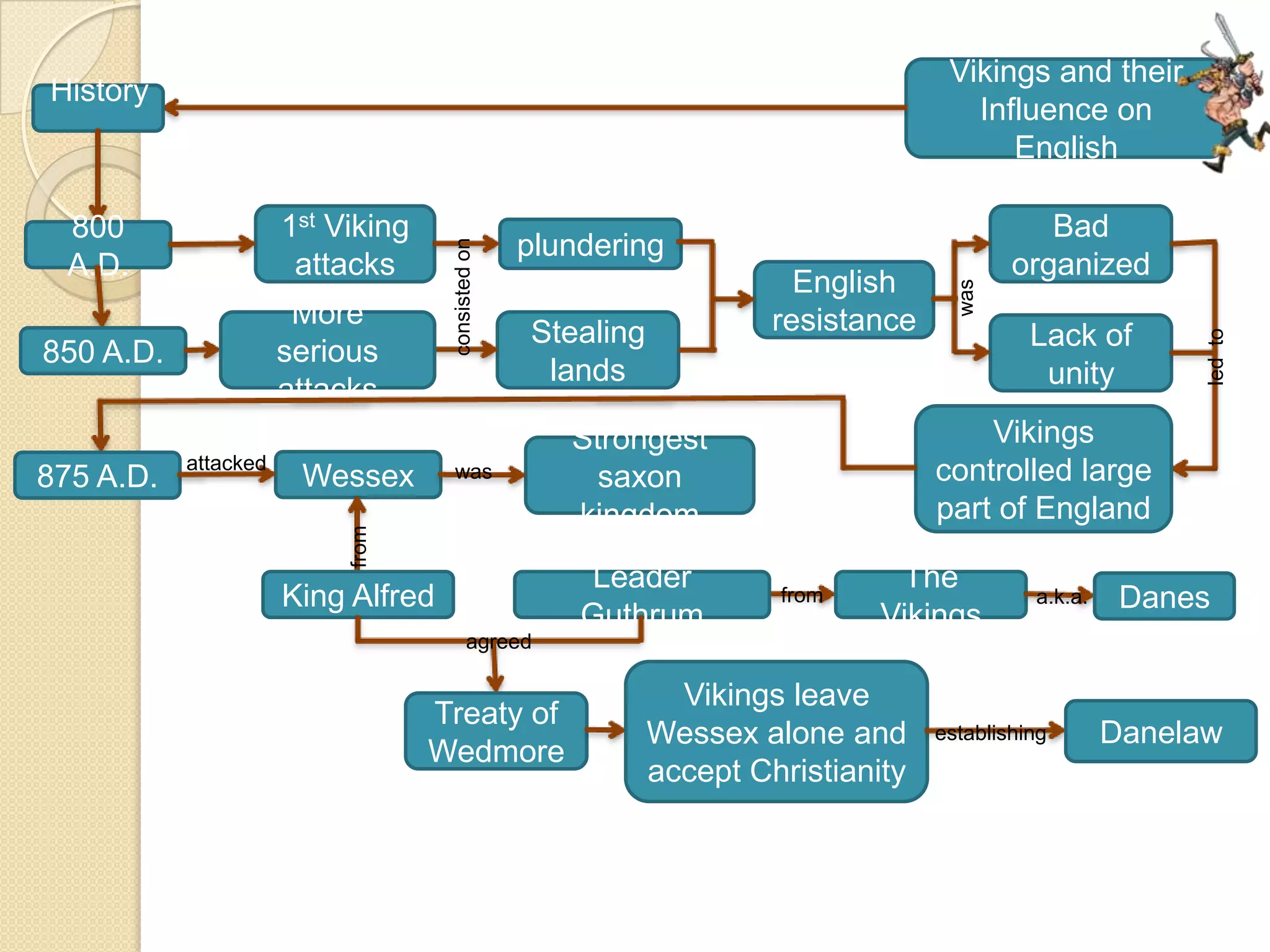
Vikings and their
Influence on
English
History
.
1st Viking
attacks
800
A.D.
plundering
English
resistance
850 A.D.
Stealing
lands
More
serious
attacks
Bad
organized
Lack of
unity
Vikings
controlled large
part of England
875 A.D.
Strongest
saxon
kingdom
Wessex
King Alfred
The
Vikings
Leader
Guthrum
Treaty of
Wedmore
Vikings leave
Wessex alone and
accept Christianity
attacked consistedon
was
ledto
was
from
agreed
Danelawestablishing
Danesfrom a.k.a.
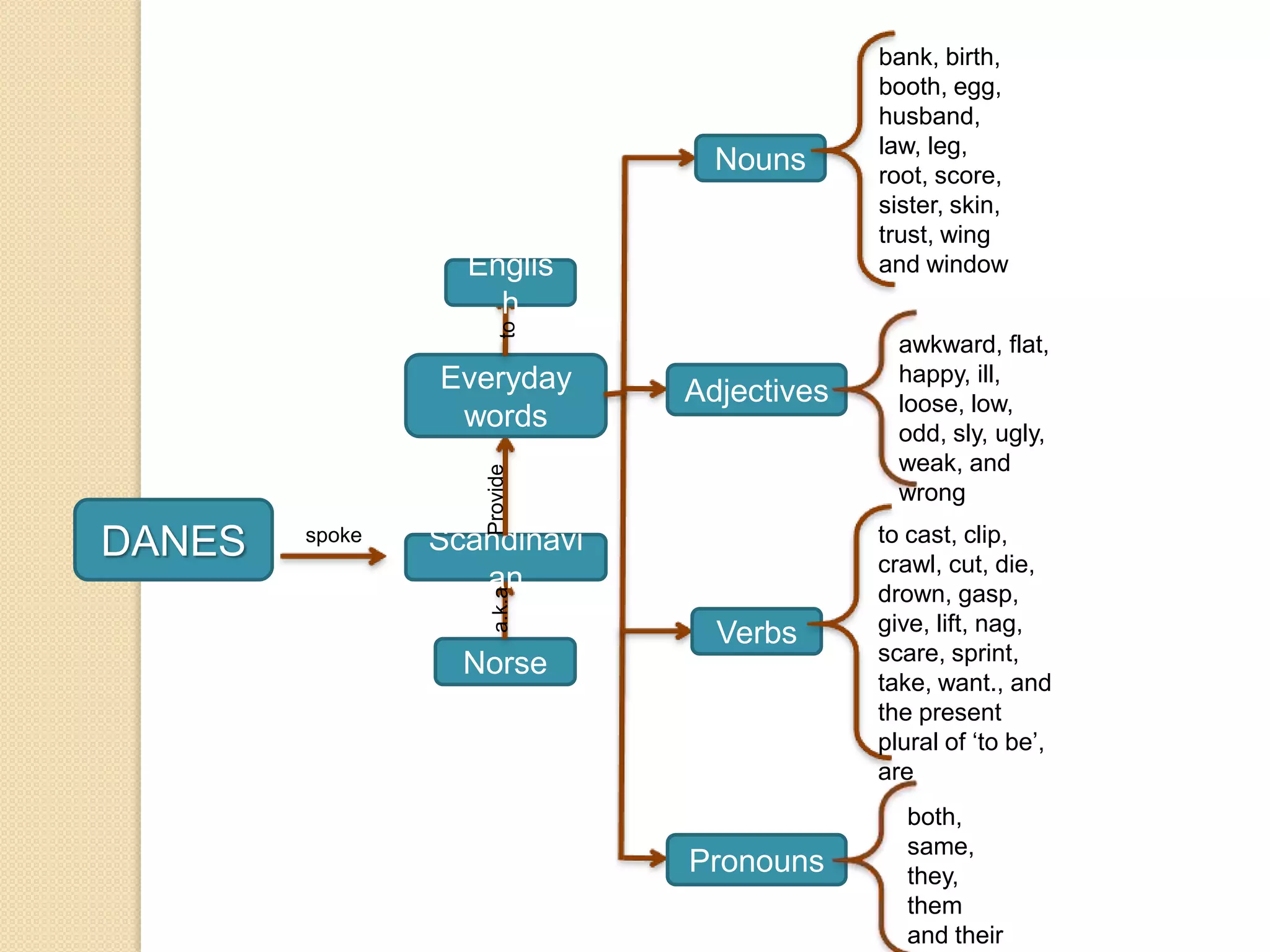
Norse
Scandinavi
an
a.k.a
Everyday
words
Provide
to
Englis
h
Nouns
bank, birth,
booth, egg,
husband,
law, leg,
root, score,
sister, skin,
trust, wing
and window
Adjectives
awkward, flat,
happy, ill,
loose, low,
odd, sly, ugly,
weak, and
wrong
Verbs
to cast, clip,
crawl, cut, die,
drown, gasp,
give, lift, nag,
scare, sprint,
take, want., and
the present
plural of ‘to be’,
are
Pronouns
both,
same,
they,
them
and their
DANES spoke
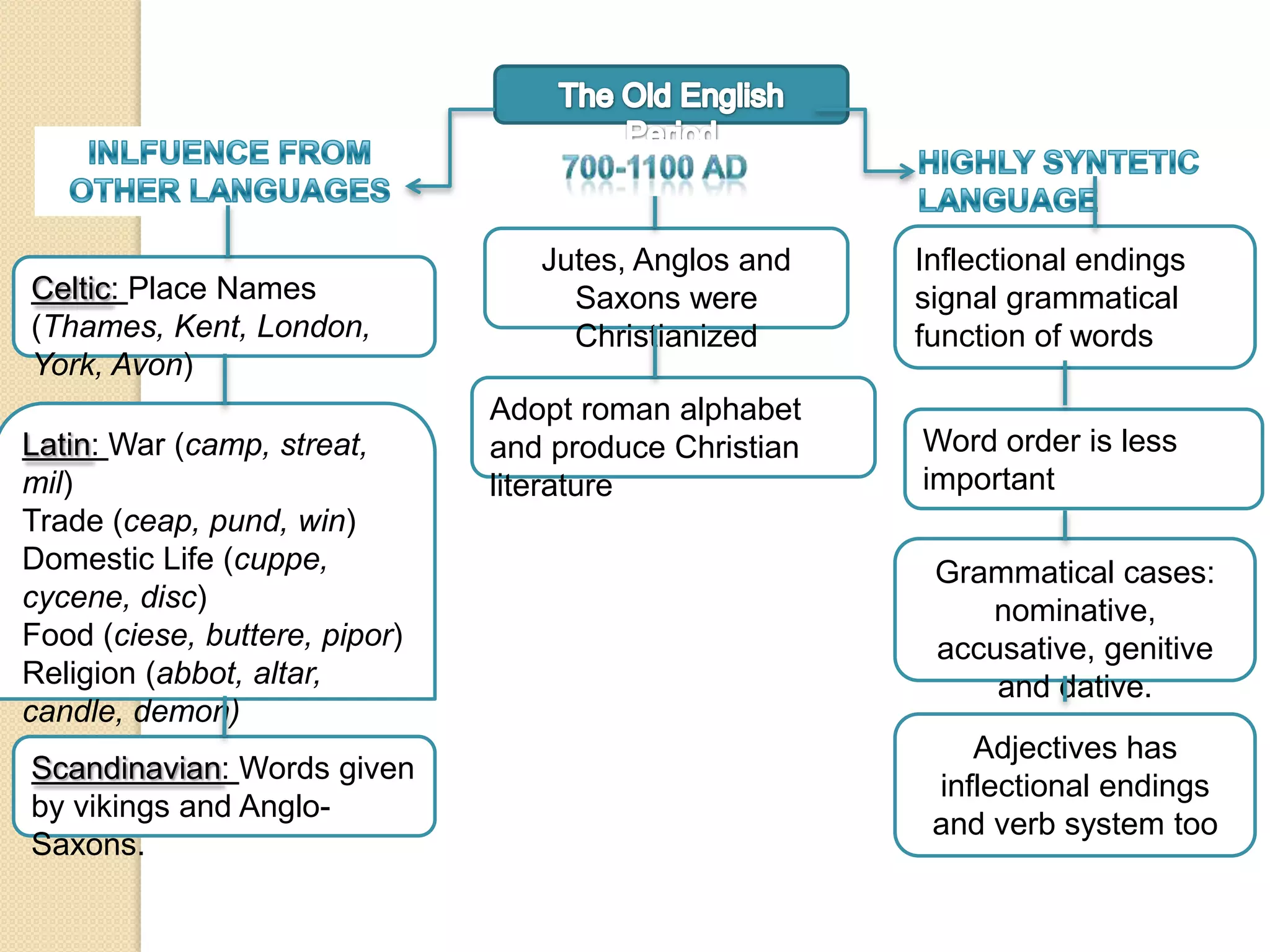
Jutes, Anglos and
Saxons were
Christianized
Adopt roman alphabet
and produce Christian
literature
Inflectional endings
signal grammatical
function of words
Word order is less
important
Grammatical cases:
nominative,
accusative, genitive
and dative.
Adjectives has
inflectional endings
and verb system too
Celtic: Place Names
(Thames, Kent, London,
York, Avon)
Latin: War (camp, streat,
mil)
Trade (ceap, pund, win)
Domestic Life (cuppe,
cycene, disc)
Food (ciese, buttere, pipor)
Religion (abbot, altar,
candle, demon)
Scandinavian: Words given
by vikings and Anglo-
Saxons.
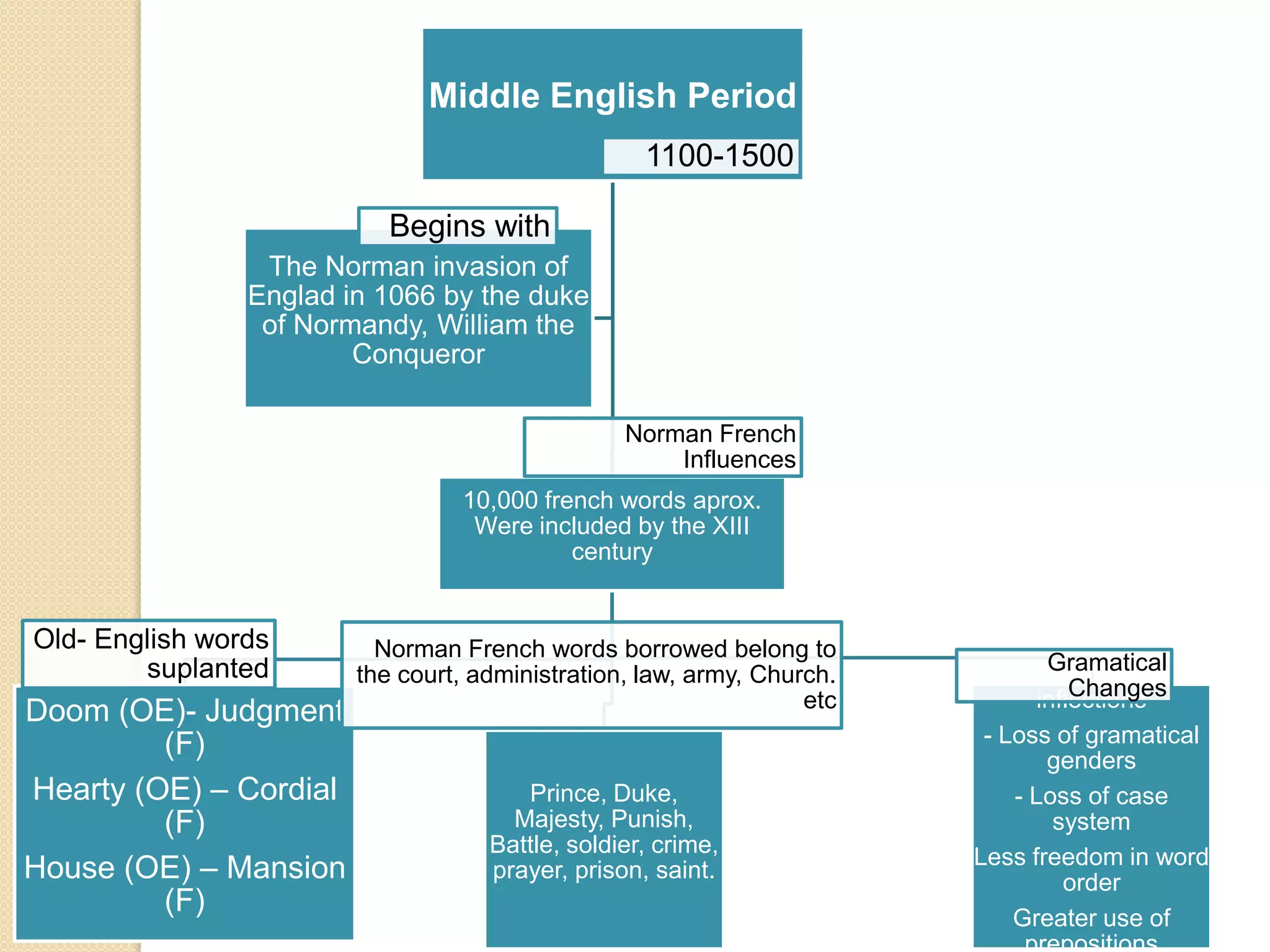
Middle English Period
1100-1500
10,000 french words aprox.
Were included by the XIII
century
Norman French
Influences
Doom (OE)- Judgment
(F)
Hearty (OE) – Cordial
(F)
House (OE) – Mansion
(F)
Old- English words
suplanted
Prince, Duke,
Majesty, Punish,
Battle, soldier, crime,
prayer, prison, saint.
Norman French words borrowed belong to
the court, administration, law, army, Church.
etc
- The loss of
inflections
- Loss of gramatical
genders
- Loss of case
system
Less freedom in word
order
Greater use of
prepositions
Gramatical
Changes
The Norman invasion of
Englad in 1066 by the duke
of Normandy, William the
Conqueror
Begins with

English Language

  • 1.
  • 2.
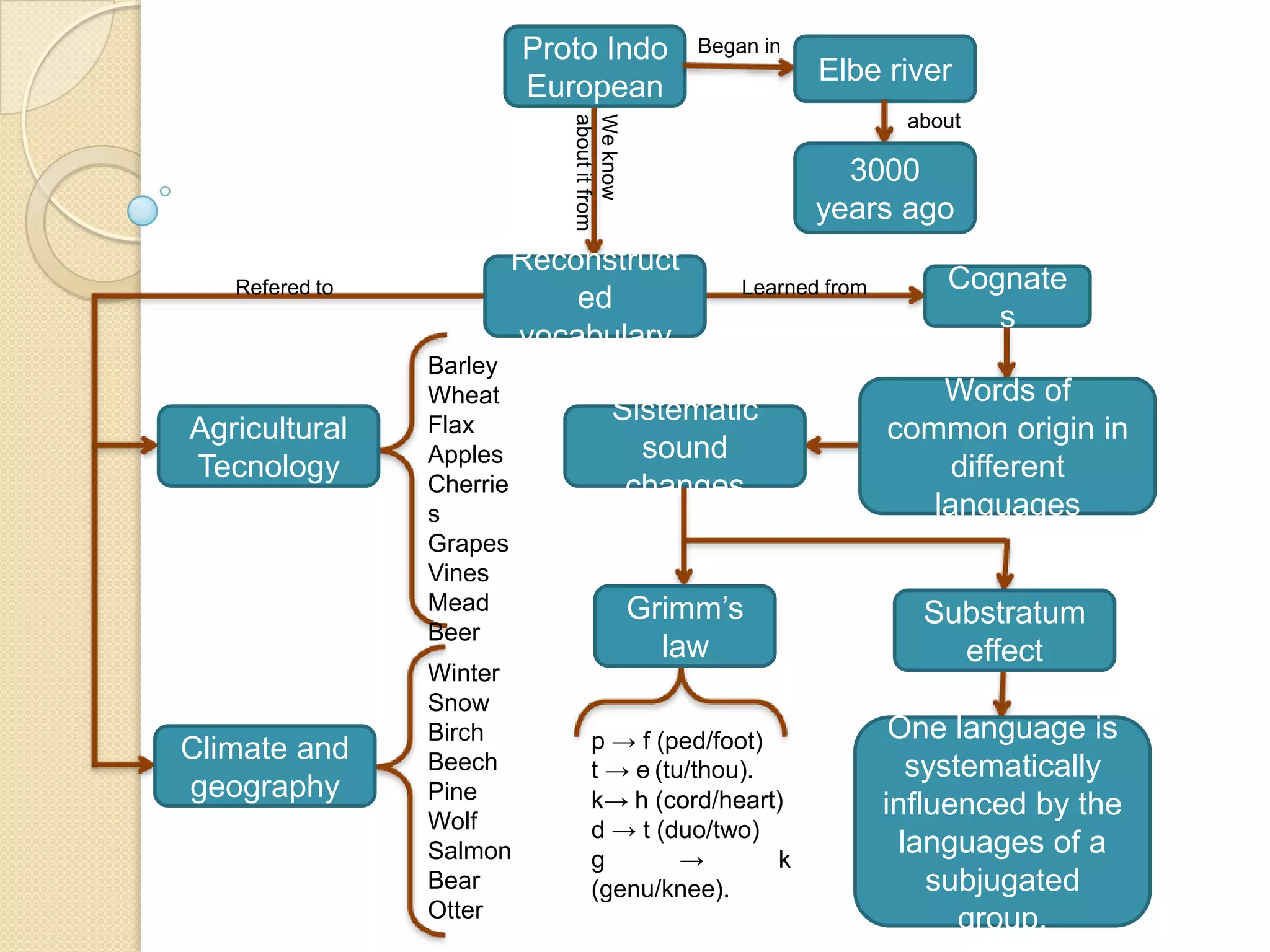
    Proto Indo European Reconstruct ed vocabulary Agricultural Tecnology Climate and geography Barley Wheat Flax Apples Cherrie s Grapes Vines Mead Beer Winter Snow Birch Beech Pine Wolf Salmon Bear Otter Cognate s Wordsof common origin in different languages Sistematic sound changes Grimm’s law Substratum effect p → f (ped/foot) t → ө (tu/thou). k→ h (cord/heart) d → t (duo/two) g → k (genu/knee). One language is systematically influenced by the languages of a subjugated group. Elbe river 3000 years ago about Began in Weknow aboutitfrom Refered to Learned from
  • 3.
  • 4.
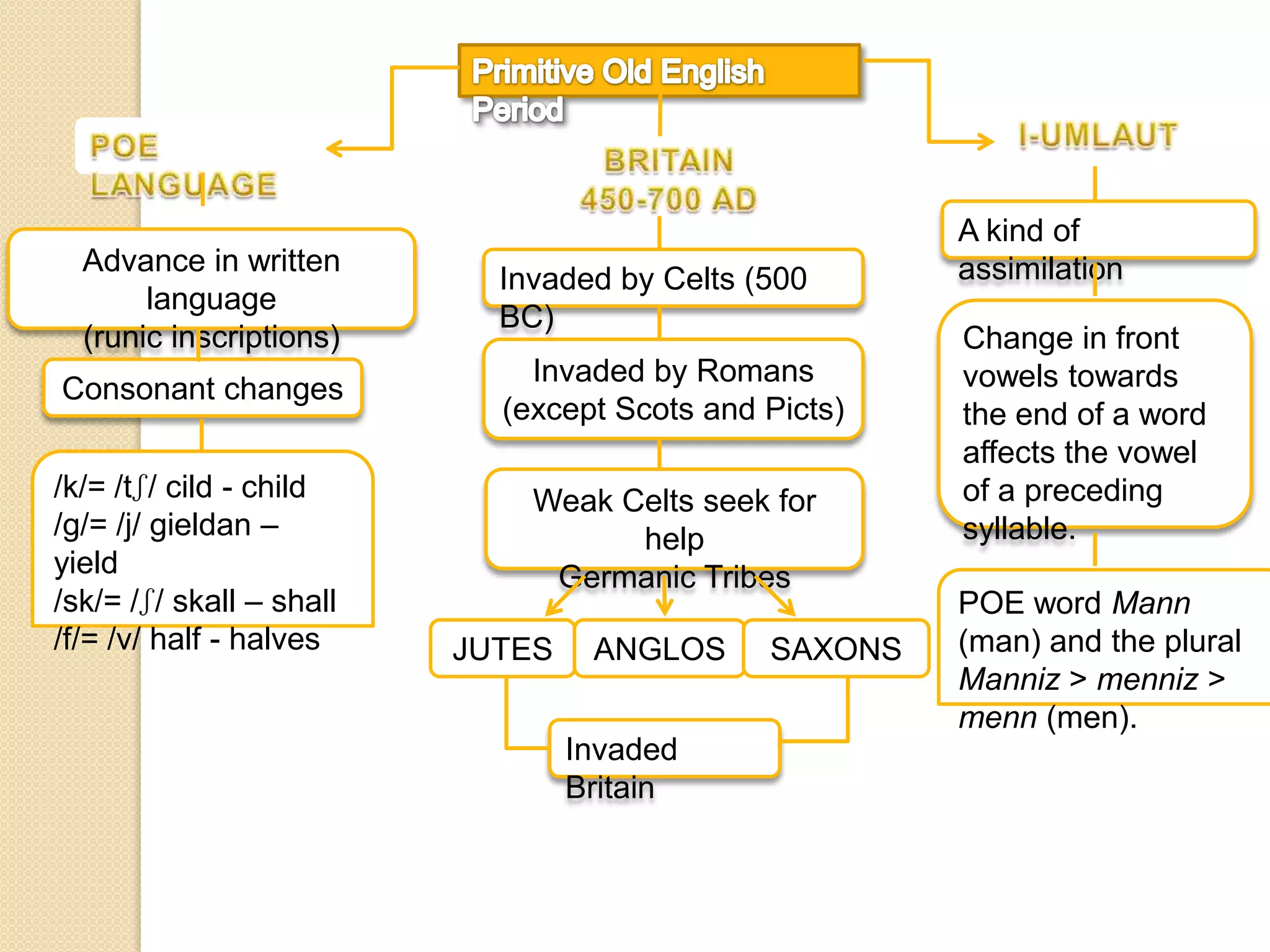
    Invaded by Celts(500 BC) Invaded by Romans (except Scots and Picts) Weak Celts seek for help Germanic Tribes JUTES ANGLOS SAXONS Invaded Britain Advance in written language (runic inscriptions) Consonant changes /k/= /tʃ/ cild - child /g/= /j/ gieldan – yield /sk/= /ʃ/ skall – shall /f/= /v/ half - halves A kind of assimilation Change in front vowels towards the end of a word affects the vowel of a preceding syllable. POE word Mann (man) and the plural Manniz > menniz > menn (men).
  • 5.
    Vikings and their Influenceon English History . 1st Viking attacks 800 A.D. plundering English resistance 850 A.D. Stealing lands More serious attacks Bad organized Lack of unity Vikings controlled large part of England 875 A.D. Strongest saxon kingdom Wessex King Alfred The Vikings Leader Guthrum Treaty of Wedmore Vikings leave Wessex alone and accept Christianity attacked consistedon was ledto was from agreed Danelawestablishing Danesfrom a.k.a.
  • 6.
    Norse Scandinavi an a.k.a Everyday words Provide to Englis h Nouns bank, birth, booth, egg, husband, law,leg, root, score, sister, skin, trust, wing and window Adjectives awkward, flat, happy, ill, loose, low, odd, sly, ugly, weak, and wrong Verbs to cast, clip, crawl, cut, die, drown, gasp, give, lift, nag, scare, sprint, take, want., and the present plural of ‘to be’, are Pronouns both, same, they, them and their DANES spoke
  • 7.
    Jutes, Anglos and Saxonswere Christianized Adopt roman alphabet and produce Christian literature Inflectional endings signal grammatical function of words Word order is less important Grammatical cases: nominative, accusative, genitive and dative. Adjectives has inflectional endings and verb system too Celtic: Place Names (Thames, Kent, London, York, Avon) Latin: War (camp, streat, mil) Trade (ceap, pund, win) Domestic Life (cuppe, cycene, disc) Food (ciese, buttere, pipor) Religion (abbot, altar, candle, demon) Scandinavian: Words given by vikings and Anglo- Saxons.
  • 8.
    Middle English Period 1100-1500 10,000french words aprox. Were included by the XIII century Norman French Influences Doom (OE)- Judgment (F) Hearty (OE) – Cordial (F) House (OE) – Mansion (F) Old- English words suplanted Prince, Duke, Majesty, Punish, Battle, soldier, crime, prayer, prison, saint. Norman French words borrowed belong to the court, administration, law, army, Church. etc - The loss of inflections - Loss of gramatical genders - Loss of case system Less freedom in word order Greater use of prepositions Gramatical Changes The Norman invasion of Englad in 1066 by the duke of Normandy, William the Conqueror Begins with