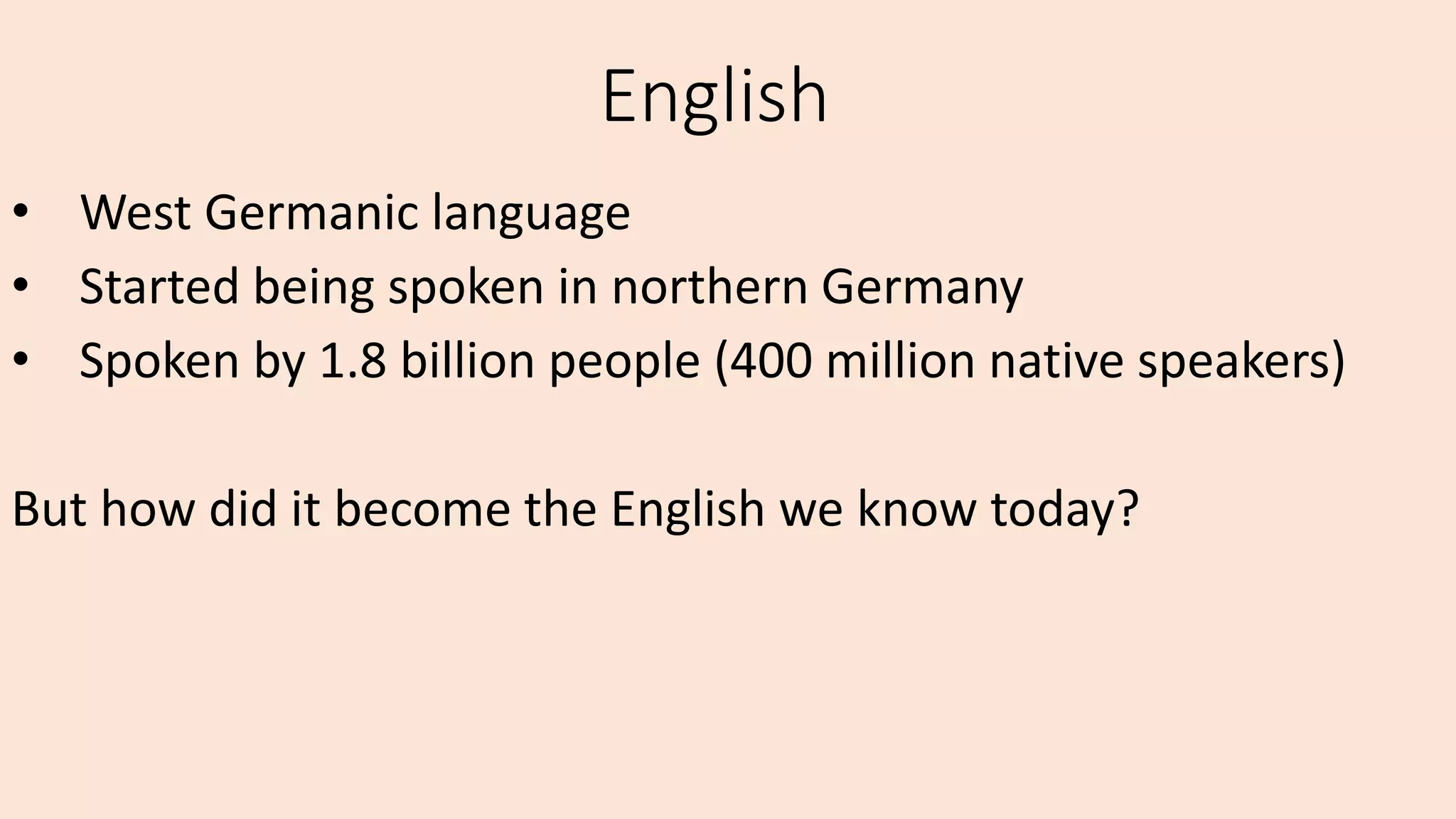
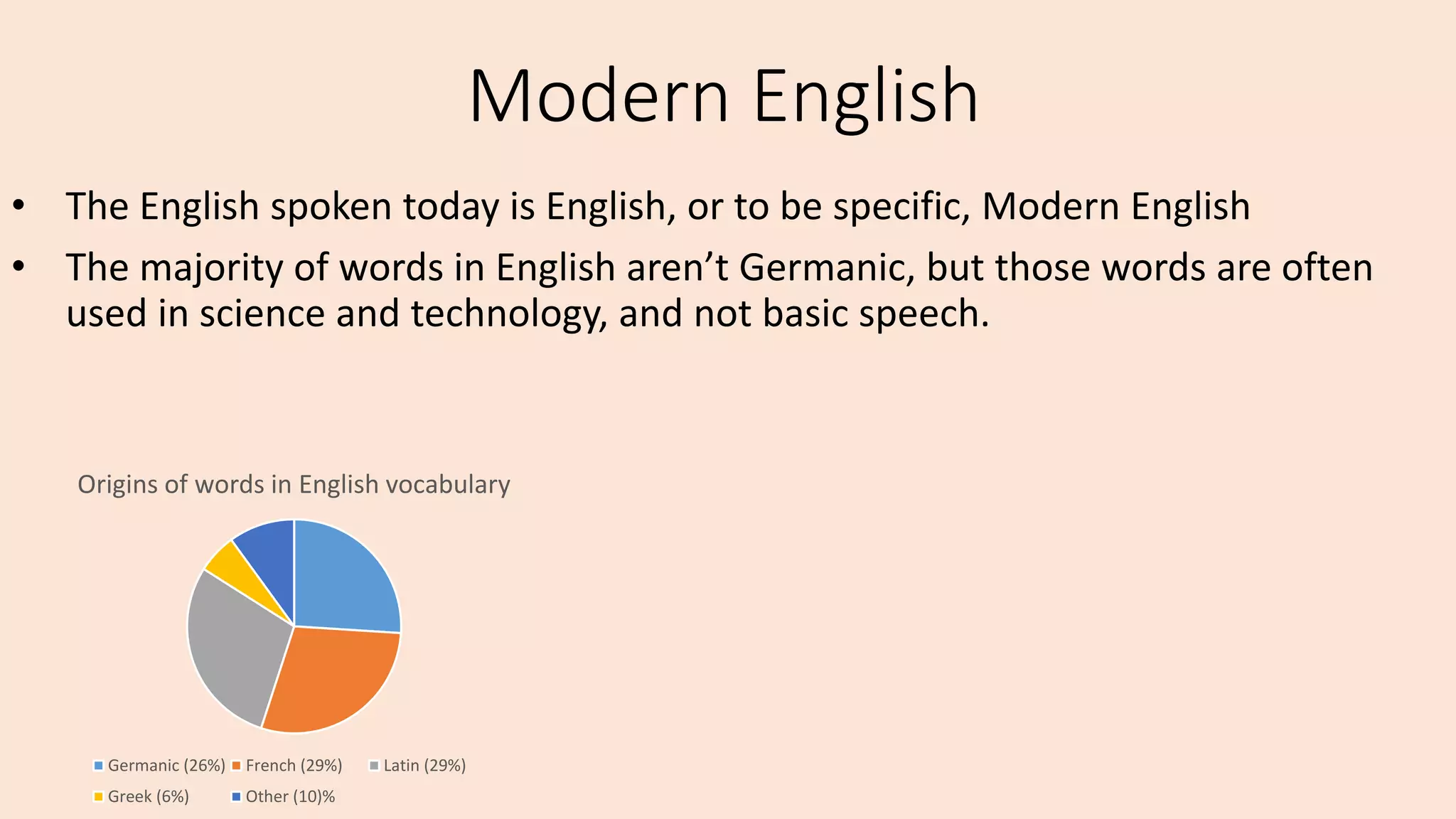
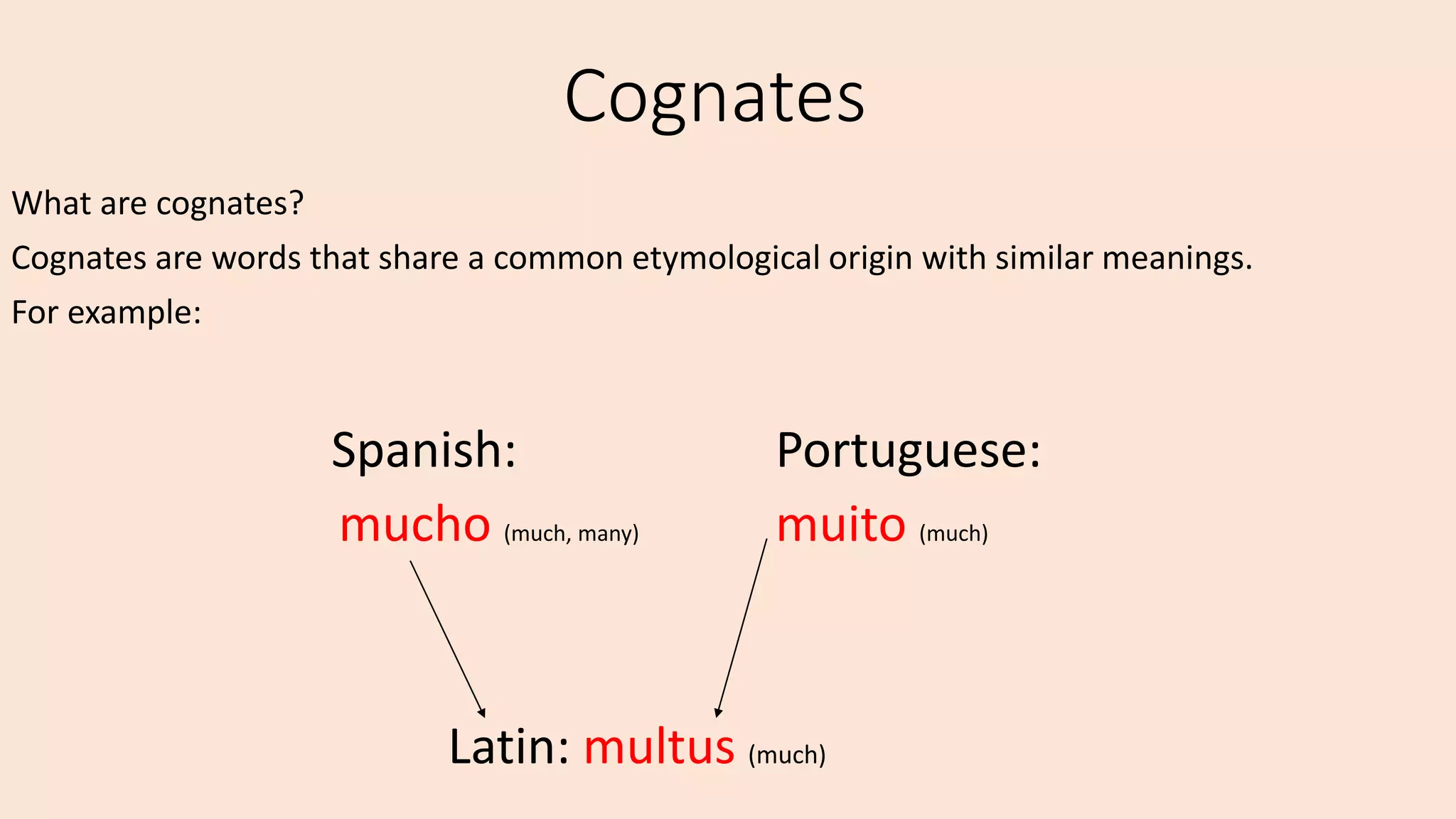
The document outlines the history and evolution of the English language, tracing its roots from proto-Afroasiatic and Indo-European language families to its development through influences from the Anglo-Saxons, Vikings, and Normans. It highlights the impact of cognates, loanwords, and grammatical changes that shaped Old English into Middle English and finally Modern English. The document also categorizes the origins of English vocabulary and distinguishes between basic and more complex words.




![Grammatical case: examples
Книга [kniga] (book)
Я знаю эту книгу [knigu] (“I know this book” - Accusative case)
[Question answered: Whom or what?]
Карандаш [karandash] (pencil)
Я пишу карандашом [karandashom] (“I write with a pencil” -
Instrumental case)
[Question answered: How? With what or using what? By what
means? With whom?]](https://image.slidesharecdn.com/historyandoriginoftheenglishlanguage-210803160854/75/History-and-origin-of-the-english-language-10-2048.jpg)