
Manifold Absolute Pressure
Sensor
 In modern vehicles, the engine’s fuel
consumption is controlled by the computer or
the engine control module (ECM).
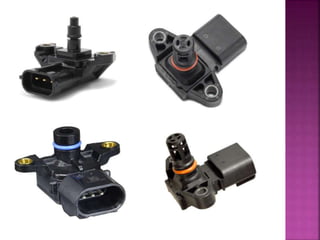
 This is done using variety of sensors mounted on
different parts of the car such as the MAP sensor.
 The MAP sensor is the key to a better
performance of the engine.
 It assists the engine in figuring out what it
needs to have the best combustion.
 Which means it will also protect the
environment from toxic emissions possibly
coming out of the car.
 The sensor is connected to the vehicle’s intake
manifold.
 It monitors the intake vacuum (monitors the
amount of air flowing into the engine).
 It alters the frequency or voltage in case the
pressure in manifold changes.
 This information is transmitted to the engine’s
computer system regularly so ignition timing can
be changed as needed.
 MAF is the mass air flow sensor.
 It is used in some vehicles.
 MAP and MAF are interchangeable.
 MAF measures the air flow while MAP
measures the air density.
 MAP can easily be integrated with the motor
which means it can be changed easily; and
that’s why it’s commonly used.
 Analog output:
Widely used, the voltage is proportional to
the engine load.
 Digital output:
Sends signals in rectangular shape with
certain frequency.
When the load rises the frequency also
increases.
 The onboard controller responds much
quickly to a digital signal, because it is not
necessary to convert it to analog.
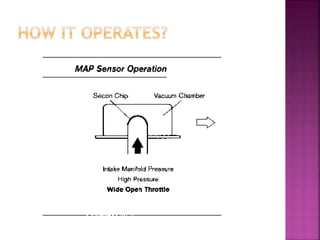
 MAP is connected to the intake manifold
through a vacuum hose.
 The vacuum in the intake manifold actuate
the MAP sensor’s diaphragm.
 Converter transforms the measured pressure
into an electrical signal which is fed into the
onboard controller.
 The onboard controller calculates the fuel
mixture composition depending on the signal
of MAP ,temperature sensor and engine
speed.
 The process is like following:
 First: You press the gas pedal to increase the
car speed; this leads more air to enter the
intake manifold.
 Second: More air means less vacuum and the
pressure increases.
 Third: The increased pressure pushes towards
the diaphragm of the sensor which is a
flexible silicon chip.
 Fourth: The dimension of the chip changes
and its electrical resistance changes.
 Fifth: The measured voltage through the chip
changes and these information is sent to the
controller.
 The controller:
 If the pressure inside the intake manifold is
high; this means more fuel to be injected to
the engine to increase the car speed.
 If the pressure inside the intake manifold is
low; this means less fuel to be injected to
the engine to decrease the car speed.
 If the sensor is in error, reading too high, it
can cause the fuel management system to
use more fuel than is needed and decrease
fuel economy.
 If the MAP sensor reads too low, this will
cause the controller to starve the engine,
causing it to run erratically and decrease
power.
 Reasons for a MAP sensor failure can be
caused by a few factors:
1. The sensor relies on both electronic and
mechanical components to function which
may be damaged by time.
2. Over time a leak can be developed in the
vacuum chamber, making the sensor unable
to read correctly.
3. Due to the location of the sensor, years of
extreme temperature fluctuations and
vibration can also cause damage to the
sensor.
Map sensor

Map sensor

  • 1.
  • 2.
     In modernvehicles, the engine’s fuel consumption is controlled by the computer or the engine control module (ECM).  This is done using variety of sensors mounted on different parts of the car such as the MAP sensor.
  • 4.
     The MAPsensor is the key to a better performance of the engine.  It assists the engine in figuring out what it needs to have the best combustion.  Which means it will also protect the environment from toxic emissions possibly coming out of the car.
  • 5.
     The sensoris connected to the vehicle’s intake manifold.  It monitors the intake vacuum (monitors the amount of air flowing into the engine).  It alters the frequency or voltage in case the pressure in manifold changes.  This information is transmitted to the engine’s computer system regularly so ignition timing can be changed as needed.
  • 6.
     MAF isthe mass air flow sensor.  It is used in some vehicles.  MAP and MAF are interchangeable.  MAF measures the air flow while MAP measures the air density.  MAP can easily be integrated with the motor which means it can be changed easily; and that’s why it’s commonly used.
  • 7.
     Analog output: Widelyused, the voltage is proportional to the engine load.  Digital output: Sends signals in rectangular shape with certain frequency. When the load rises the frequency also increases.  The onboard controller responds much quickly to a digital signal, because it is not necessary to convert it to analog.
  • 9.
     MAP isconnected to the intake manifold through a vacuum hose.  The vacuum in the intake manifold actuate the MAP sensor’s diaphragm.  Converter transforms the measured pressure into an electrical signal which is fed into the onboard controller.  The onboard controller calculates the fuel mixture composition depending on the signal of MAP ,temperature sensor and engine speed.
  • 10.
     The processis like following:  First: You press the gas pedal to increase the car speed; this leads more air to enter the intake manifold.  Second: More air means less vacuum and the pressure increases.  Third: The increased pressure pushes towards the diaphragm of the sensor which is a flexible silicon chip.
  • 11.
     Fourth: Thedimension of the chip changes and its electrical resistance changes.  Fifth: The measured voltage through the chip changes and these information is sent to the controller.
  • 12.
     The controller: If the pressure inside the intake manifold is high; this means more fuel to be injected to the engine to increase the car speed.  If the pressure inside the intake manifold is low; this means less fuel to be injected to the engine to decrease the car speed.
  • 13.
     If thesensor is in error, reading too high, it can cause the fuel management system to use more fuel than is needed and decrease fuel economy.  If the MAP sensor reads too low, this will cause the controller to starve the engine, causing it to run erratically and decrease power.
  • 14.
     Reasons fora MAP sensor failure can be caused by a few factors: 1. The sensor relies on both electronic and mechanical components to function which may be damaged by time. 2. Over time a leak can be developed in the vacuum chamber, making the sensor unable to read correctly. 3. Due to the location of the sensor, years of extreme temperature fluctuations and vibration can also cause damage to the sensor.