Manufacturing Systems The Steps to Success
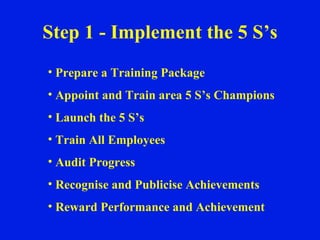
Step 1 - Implement the 5 S’s Prepare a Training Package  Appoint and Train area 5 S’s Champions Launch the 5 S’s Train All Employees Audit Progress Recognise and Publicise Achievements Reward Performance and Achievement
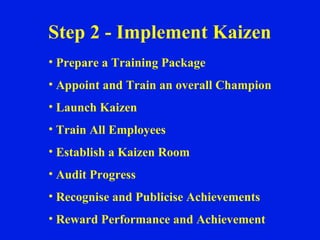
Step 2 - Implement Kaizen Prepare a Training Package Appoint and Train an overall Champion Launch Kaizen Train All Employees Establish a Kaizen Room Audit Progress Recognise and Publicise Achievements Reward Performance and Achievement
Step 3 - Map the Business Processes  Map All Business Processes  using Process Charts
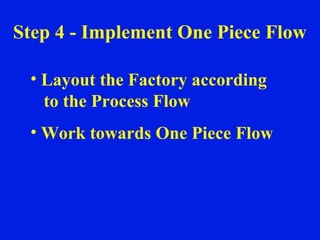
Step 4 - Implement One Piece Flow Layout the Factory according to the Process Flow Work towards One Piece Flow
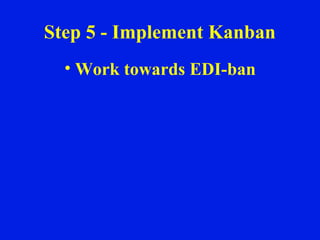
Step 5 - Implement Kanban Work towards EDI-ban
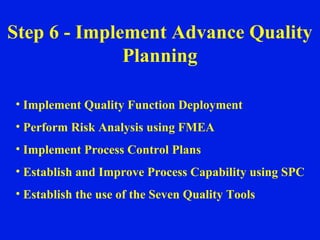
Step 6 - Implement Advance Quality Planning Implement Quality Function Deployment Perform Risk Analysis using FMEA Implement Process Control Plans Establish and Improve Process Capability using SPC Establish the use of the Seven Quality Tools
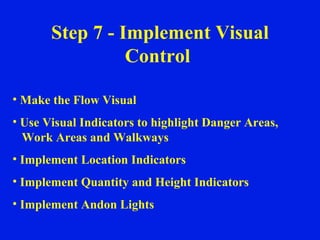
Step 7 - Implement Visual Control  Make the Flow Visual Use Visual Indicators to highlight Danger Areas,  Work Areas and Walkways Implement Location Indicators Implement Quantity and Height Indicators Implement Andon Lights
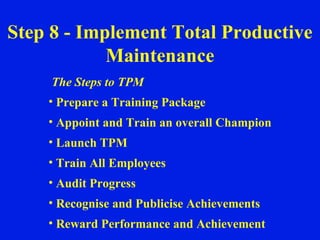
The Steps to TPM Prepare a Training Package Appoint and Train an overall Champion Launch TPM Train All Employees Audit Progress Recognise and Publicise Achievements Reward Performance and Achievement Step 8 - Implement Total Productive Maintenance
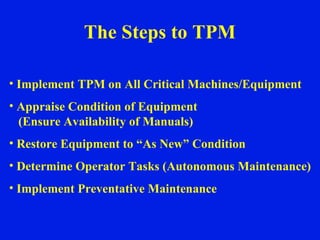
The Steps to TPM Implement TPM on All Critical Machines/Equipment Appraise Condition of Equipment (Ensure Availability of Manuals) Restore Equipment to “As New” Condition Determine Operator Tasks (Autonomous Maintenance) Implement Preventative Maintenance
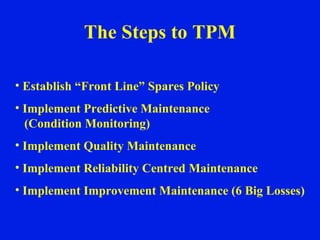
The Steps to TPM Establish “Front Line” Spares Policy Implement Predictive Maintenance (Condition Monitoring) Implement Quality Maintenance Implement Reliability Centred Maintenance Implement Improvement Maintenance (6 Big Losses)
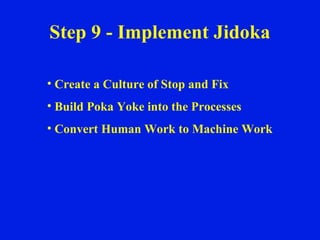
Step 9 - Implement Jidoka Create a Culture of Stop and Fix Build Poka Yoke into the Processes Convert Human Work to Machine Work
Step 10 - Implement Standard Work Create Standard Operating Procedures  for all Business Processes
Step 11 - Implement Leveling Focus on Large Variations between Process Cycle Times Focus on High Transport Time and/or Distances Focus on Equipment and Machine Breakdowns
Step 12 - Establish a Multi-Skilled Workforce Determine the Processes Rate each Persons Competency Against each Process Establish Critical Mass Requirements Create a Skills Matrix Create Training Modules Train to Meet Critical Mass Requirements
Step 13 - Implement Manpower Reduction Remove Excess Manpower from All Processes Remove Excess Manpower resulting from Kaizen  activity or “Break-through” Management
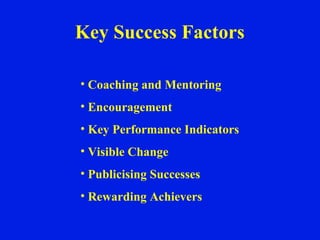
Key Success Factors Coaching and Mentoring Encouragement Key Performance Indicators Visible Change Publicising Successes Rewarding Achievers

Manufacturing systems WithAdrian™

  • 1.
    Manufacturing Systems TheSteps to Success
  • 2.
    Step 1 -Implement the 5 S’s Prepare a Training Package Appoint and Train area 5 S’s Champions Launch the 5 S’s Train All Employees Audit Progress Recognise and Publicise Achievements Reward Performance and Achievement
  • 3.
    Step 2 -Implement Kaizen Prepare a Training Package Appoint and Train an overall Champion Launch Kaizen Train All Employees Establish a Kaizen Room Audit Progress Recognise and Publicise Achievements Reward Performance and Achievement
  • 4.
    Step 3 -Map the Business Processes Map All Business Processes using Process Charts
  • 5.
    Step 4 -Implement One Piece Flow Layout the Factory according to the Process Flow Work towards One Piece Flow
  • 6.
    Step 5 -Implement Kanban Work towards EDI-ban
  • 7.
    Step 6 -Implement Advance Quality Planning Implement Quality Function Deployment Perform Risk Analysis using FMEA Implement Process Control Plans Establish and Improve Process Capability using SPC Establish the use of the Seven Quality Tools
  • 8.
    Step 7 -Implement Visual Control Make the Flow Visual Use Visual Indicators to highlight Danger Areas, Work Areas and Walkways Implement Location Indicators Implement Quantity and Height Indicators Implement Andon Lights
  • 9.
    The Steps toTPM Prepare a Training Package Appoint and Train an overall Champion Launch TPM Train All Employees Audit Progress Recognise and Publicise Achievements Reward Performance and Achievement Step 8 - Implement Total Productive Maintenance
  • 10.
    The Steps toTPM Implement TPM on All Critical Machines/Equipment Appraise Condition of Equipment (Ensure Availability of Manuals) Restore Equipment to “As New” Condition Determine Operator Tasks (Autonomous Maintenance) Implement Preventative Maintenance
  • 11.
    The Steps toTPM Establish “Front Line” Spares Policy Implement Predictive Maintenance (Condition Monitoring) Implement Quality Maintenance Implement Reliability Centred Maintenance Implement Improvement Maintenance (6 Big Losses)
  • 12.
    Step 9 -Implement Jidoka Create a Culture of Stop and Fix Build Poka Yoke into the Processes Convert Human Work to Machine Work
  • 13.
    Step 10 -Implement Standard Work Create Standard Operating Procedures for all Business Processes
  • 14.
    Step 11 -Implement Leveling Focus on Large Variations between Process Cycle Times Focus on High Transport Time and/or Distances Focus on Equipment and Machine Breakdowns
  • 15.
    Step 12 -Establish a Multi-Skilled Workforce Determine the Processes Rate each Persons Competency Against each Process Establish Critical Mass Requirements Create a Skills Matrix Create Training Modules Train to Meet Critical Mass Requirements
  • 16.
    Step 13 -Implement Manpower Reduction Remove Excess Manpower from All Processes Remove Excess Manpower resulting from Kaizen activity or “Break-through” Management
  • 17.
    Key Success FactorsCoaching and Mentoring Encouragement Key Performance Indicators Visible Change Publicising Successes Rewarding Achievers

Editor's Notes