SUSTAINING PERFORMANCE  Based on leading Manufacturing Excellence at multiple locations
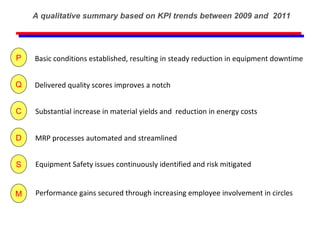
A qualitative summary based on KPI trends between 2009 and  2011 P Q C D S M Basic conditions established, resulting in steady reduction in equipment downtime Delivered quality scores improves a notch Substantial increase in material yields and  reduction in energy costs MRP processes automated and streamlined Equipment Safety issues continuously identified and risk mitigated Performance gains secured through increasing employee involvement in circles
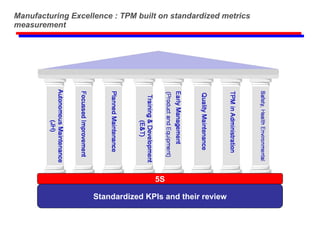
Manufacturing Excellence : TPM built on standardized metrics measurement 5S Standardized KPIs and their review
Why TPM? Proven approach of continuous improvement Successful factories all over the World Positive experience across a large number of companies Factory - Orientation Starts with the relationship between operator and machine Result Focused Target setting with regards to removal of sources of failures, which will result in a better performance Step-wise programme Well documented Support
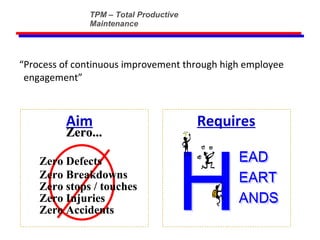
TPM – Total Productive Maintenance “ Process of continuous improvement through high employee engagement” Aim Requires
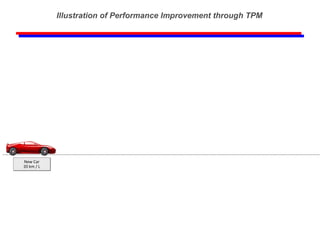
New Car 20 km / L Illustration of Performance Improvement through TPM
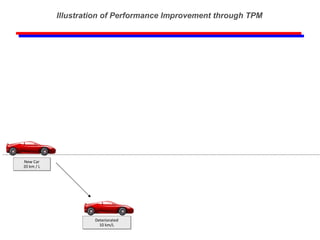
New Car 20 km / L Deteriorated 10 km/L Illustration of Performance Improvement through TPM
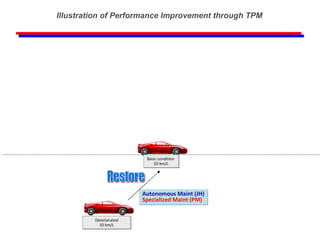
Deteriorated 10 km/L Basic condition  20 km/L Autonomous Maint (JH) Specialized Maint (PM) Restore Illustration of Performance Improvement through TPM
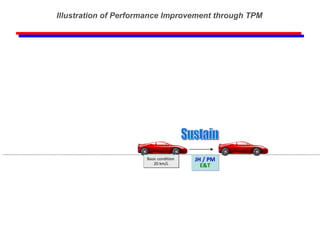
Basic condition  20 km/L JH / PM E&T Sustain Illustration of Performance Improvement through TPM
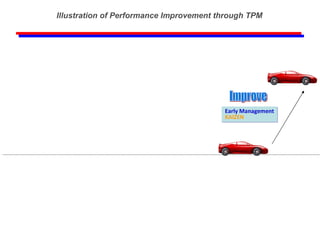
Early Management KAIZEN Improve Illustration of Performance Improvement through TPM
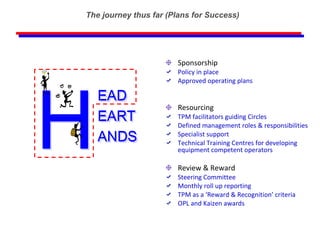
Sponsorship Policy in place Approved operating plans Resourcing TPM facilitators guiding Circles Defined management roles & responsibilities Specialist support Technical Training Centres for developing equipment competent operators Review & Reward Steering Committee Monthly roll up reporting TPM as a ‘Reward & Recognition’ criteria OPL and Kaizen awards The journey thus far (Plans for Success)
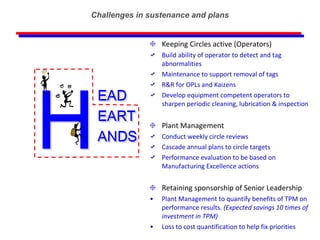
Keeping Circles active (Operators) Build ability of operator to detect and tag abnormalities Maintenance to support removal of tags R&R for OPLs and Kaizens Develop equipment competent operators to sharpen periodic cleaning, lubrication & inspection  Plant Management Conduct weekly circle reviews Cascade annual plans to circle targets Performance evaluation to be based on Manufacturing Excellence actions Retaining sponsorship of Senior Leadership Plant Management to quantify benefits of TPM on performance results.  (Expected savings 10 times of investment in TPM) Loss to cost quantification to help fix priorities Challenges in sustenance and plans

Manufacuring Excellence 2009-2011

  • 1.
    SUSTAINING PERFORMANCE Based on leading Manufacturing Excellence at multiple locations
  • 2.
    A qualitative summarybased on KPI trends between 2009 and 2011 P Q C D S M Basic conditions established, resulting in steady reduction in equipment downtime Delivered quality scores improves a notch Substantial increase in material yields and reduction in energy costs MRP processes automated and streamlined Equipment Safety issues continuously identified and risk mitigated Performance gains secured through increasing employee involvement in circles
  • 3.
    Manufacturing Excellence :TPM built on standardized metrics measurement 5S Standardized KPIs and their review
  • 4.
    Why TPM? Provenapproach of continuous improvement Successful factories all over the World Positive experience across a large number of companies Factory - Orientation Starts with the relationship between operator and machine Result Focused Target setting with regards to removal of sources of failures, which will result in a better performance Step-wise programme Well documented Support
  • 5.
    TPM – TotalProductive Maintenance “ Process of continuous improvement through high employee engagement” Aim Requires
  • 6.
    New Car 20km / L Illustration of Performance Improvement through TPM
  • 7.
    New Car 20km / L Deteriorated 10 km/L Illustration of Performance Improvement through TPM
  • 8.
    Deteriorated 10 km/LBasic condition 20 km/L Autonomous Maint (JH) Specialized Maint (PM) Restore Illustration of Performance Improvement through TPM
  • 9.
    Basic condition 20 km/L JH / PM E&T Sustain Illustration of Performance Improvement through TPM
  • 10.
    Early Management KAIZENImprove Illustration of Performance Improvement through TPM
  • 11.
    Sponsorship Policy inplace Approved operating plans Resourcing TPM facilitators guiding Circles Defined management roles & responsibilities Specialist support Technical Training Centres for developing equipment competent operators Review & Reward Steering Committee Monthly roll up reporting TPM as a ‘Reward & Recognition’ criteria OPL and Kaizen awards The journey thus far (Plans for Success)
  • 12.
    Keeping Circles active(Operators) Build ability of operator to detect and tag abnormalities Maintenance to support removal of tags R&R for OPLs and Kaizens Develop equipment competent operators to sharpen periodic cleaning, lubrication & inspection Plant Management Conduct weekly circle reviews Cascade annual plans to circle targets Performance evaluation to be based on Manufacturing Excellence actions Retaining sponsorship of Senior Leadership Plant Management to quantify benefits of TPM on performance results. (Expected savings 10 times of investment in TPM) Loss to cost quantification to help fix priorities Challenges in sustenance and plans