MANNERISM ART
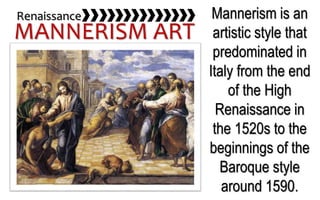
Renaissance Mannerism is an
artistic style that
predominated in
Italy from the end
of the High
Renaissance in
the 1520s to the
beginnings of the
Baroque style
around 1590.
Mannerism was the term that referred to painting
“in the manor of”. It is named after maniera, an
Italian term for “style” or “manner,” and refers to a
stylized, exaggerated approach to painting and
sculpture. Mannerism art emerged due to the
political upheaval and the lose of great artists and
patrons. Mannerist artists wanted a chance to
express themselves fully without the constraints of
High Renaissance art and its perfection.
Characteristics of Mannerism Art
Exaggerated Figures
Elaborate Decoration
Artificial Color
employed artificial—and often garish—tones
-incorporate patterns into their work
-abundance of decorative elements
stretched and twisted forms were likely employed
to suggest movement and heighten drama
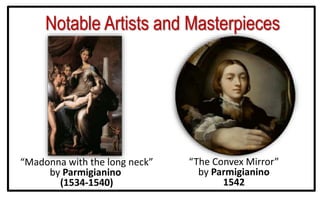
Notable Artists and Masterpieces
“Madonna with the long neck”
by Parmigianino
(1534-1540)
“The Convex Mirror”
by Parmigianino
1542
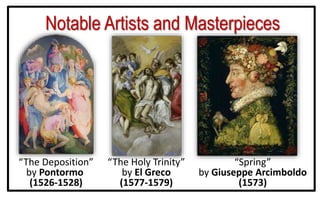
Notable Artists and Masterpieces
“The Deposition”
by Pontormo
(1526-1528)
“The Holy Trinity”
by El Greco
(1577-1579)
“Spring”
by Giuseppe Arcimboldo
(1573)

Mannerism.pptx

  • 1.
    MANNERISM ART Renaissance Mannerismis an artistic style that predominated in Italy from the end of the High Renaissance in the 1520s to the beginnings of the Baroque style around 1590.
  • 2.
    Mannerism was theterm that referred to painting “in the manor of”. It is named after maniera, an Italian term for “style” or “manner,” and refers to a stylized, exaggerated approach to painting and sculpture. Mannerism art emerged due to the political upheaval and the lose of great artists and patrons. Mannerist artists wanted a chance to express themselves fully without the constraints of High Renaissance art and its perfection.
  • 3.
    Characteristics of MannerismArt Exaggerated Figures Elaborate Decoration Artificial Color employed artificial—and often garish—tones -incorporate patterns into their work -abundance of decorative elements stretched and twisted forms were likely employed to suggest movement and heighten drama
  • 4.
    Notable Artists andMasterpieces “Madonna with the long neck” by Parmigianino (1534-1540) “The Convex Mirror” by Parmigianino 1542
  • 5.
    Notable Artists andMasterpieces “The Deposition” by Pontormo (1526-1528) “The Holy Trinity” by El Greco (1577-1579) “Spring” by Giuseppe Arcimboldo (1573)