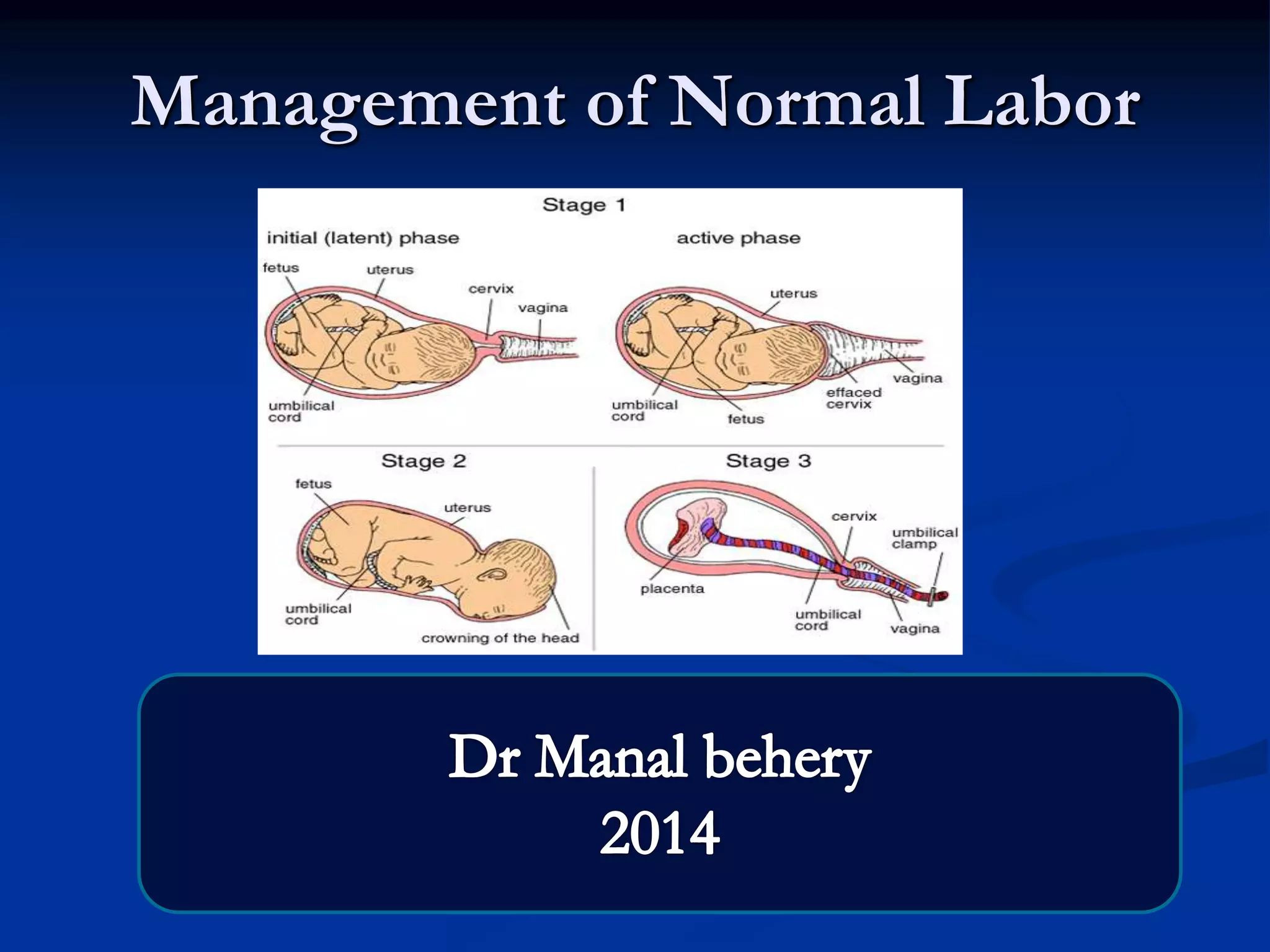
Management of Normal Labor
Management on Admission
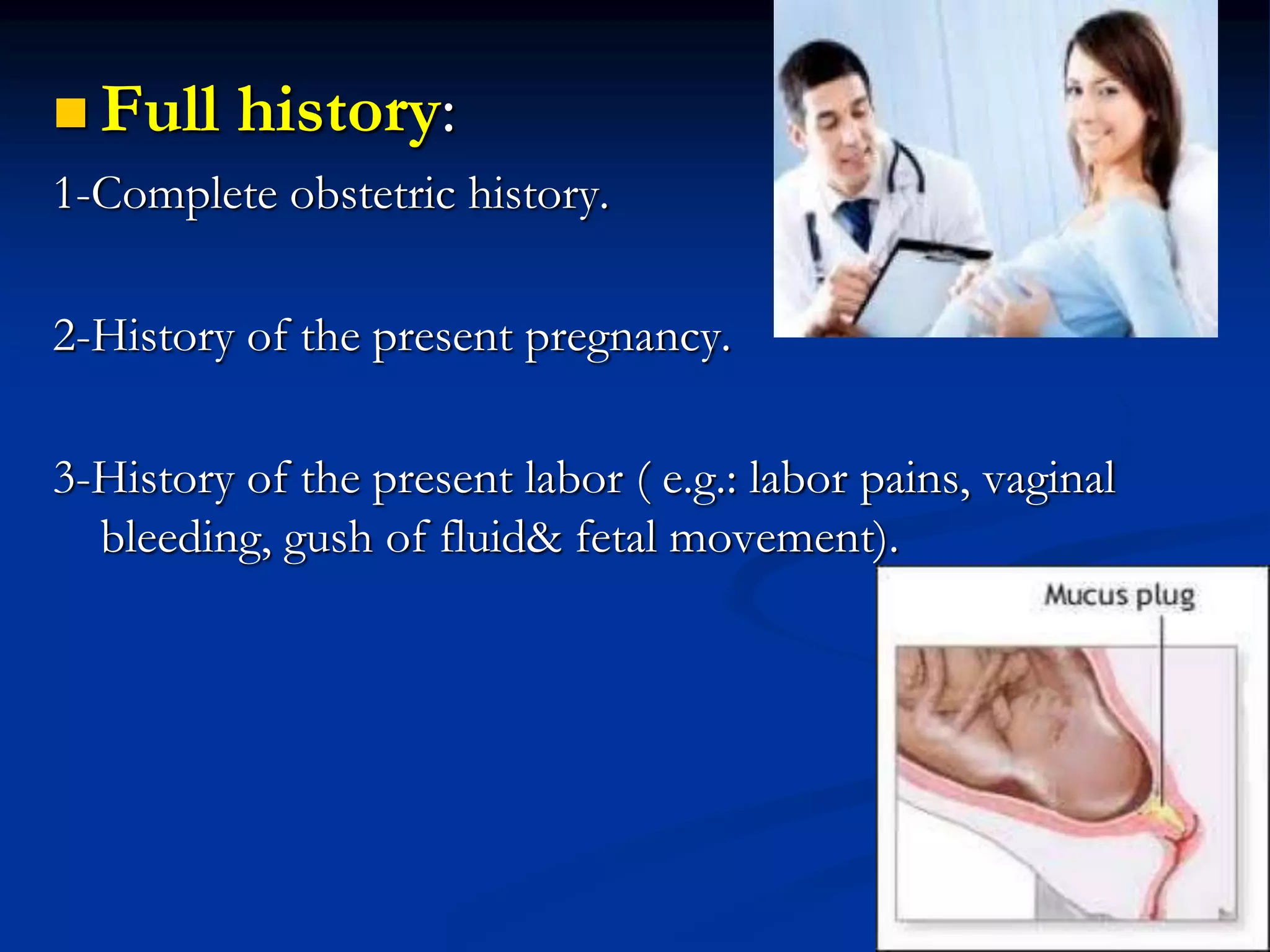
 Full history:
1-Complete obstetric history.
2-History of the present pregnancy.
3-History of the present labor ( e.g.: labor pains, vaginal
bleeding, gush of fluid& fetal movement).
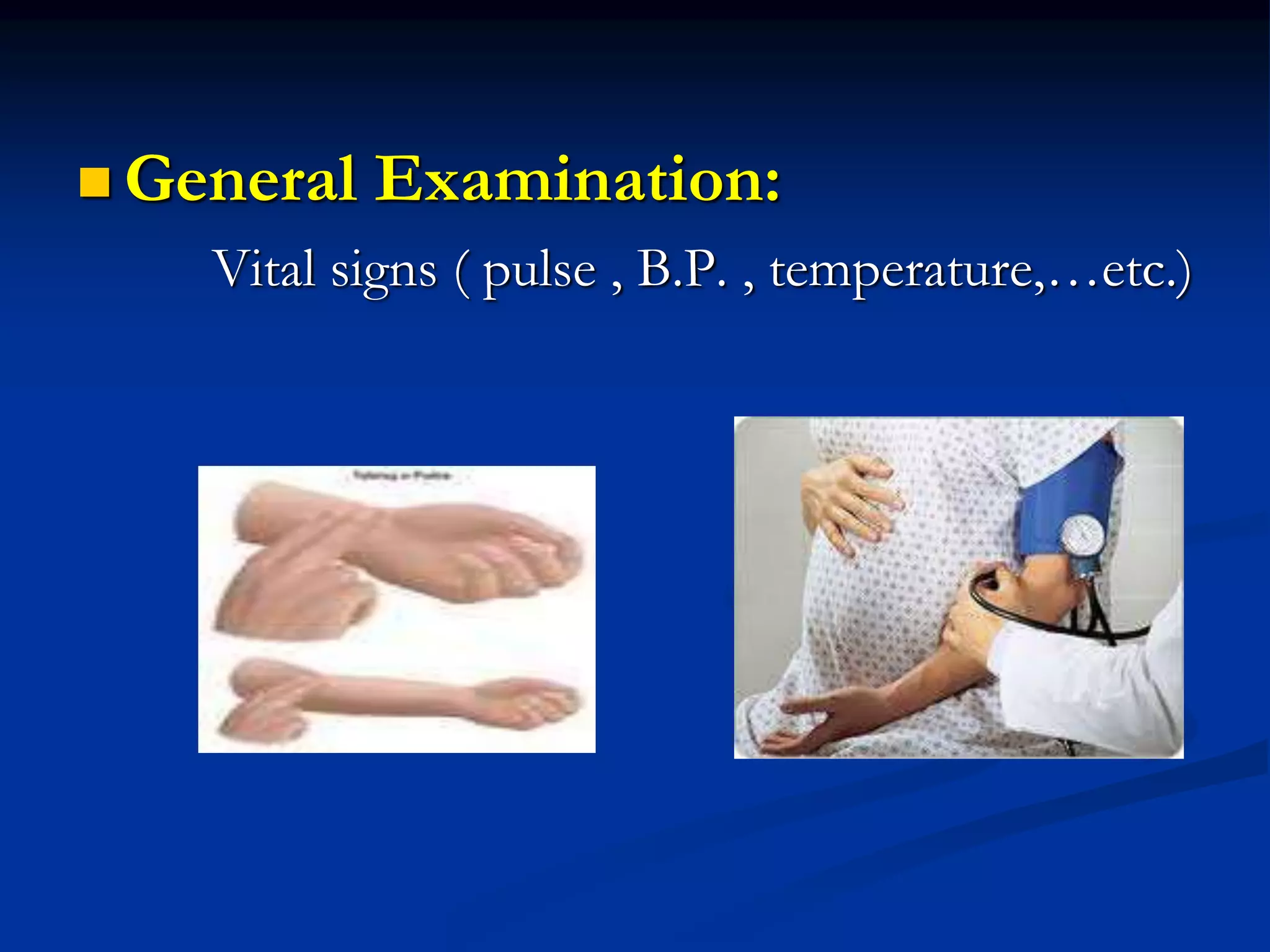
 General Examination:
Vital signs ( pulse , B.P. , temperature,…etc.)
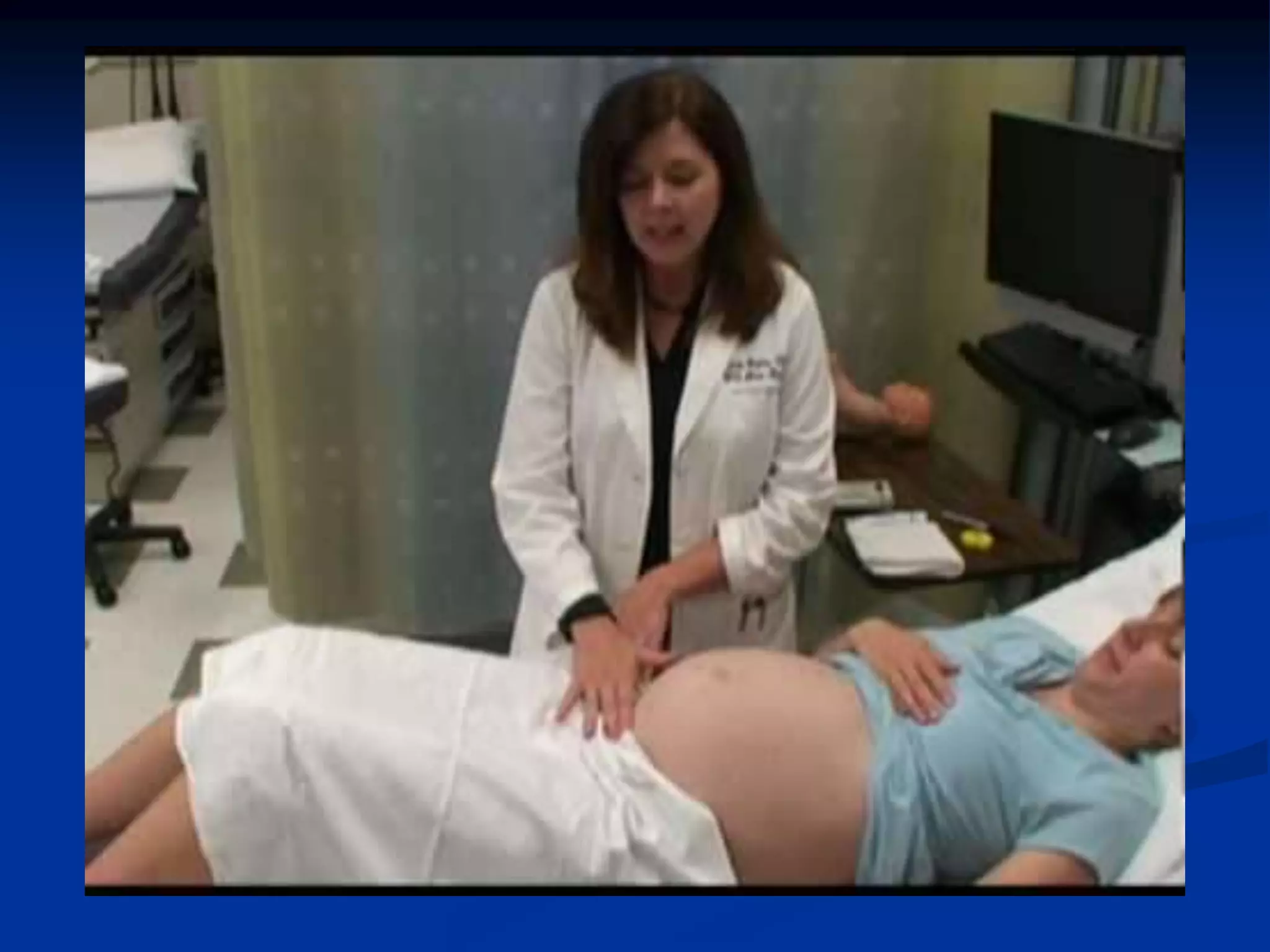
2-Abdominal examination

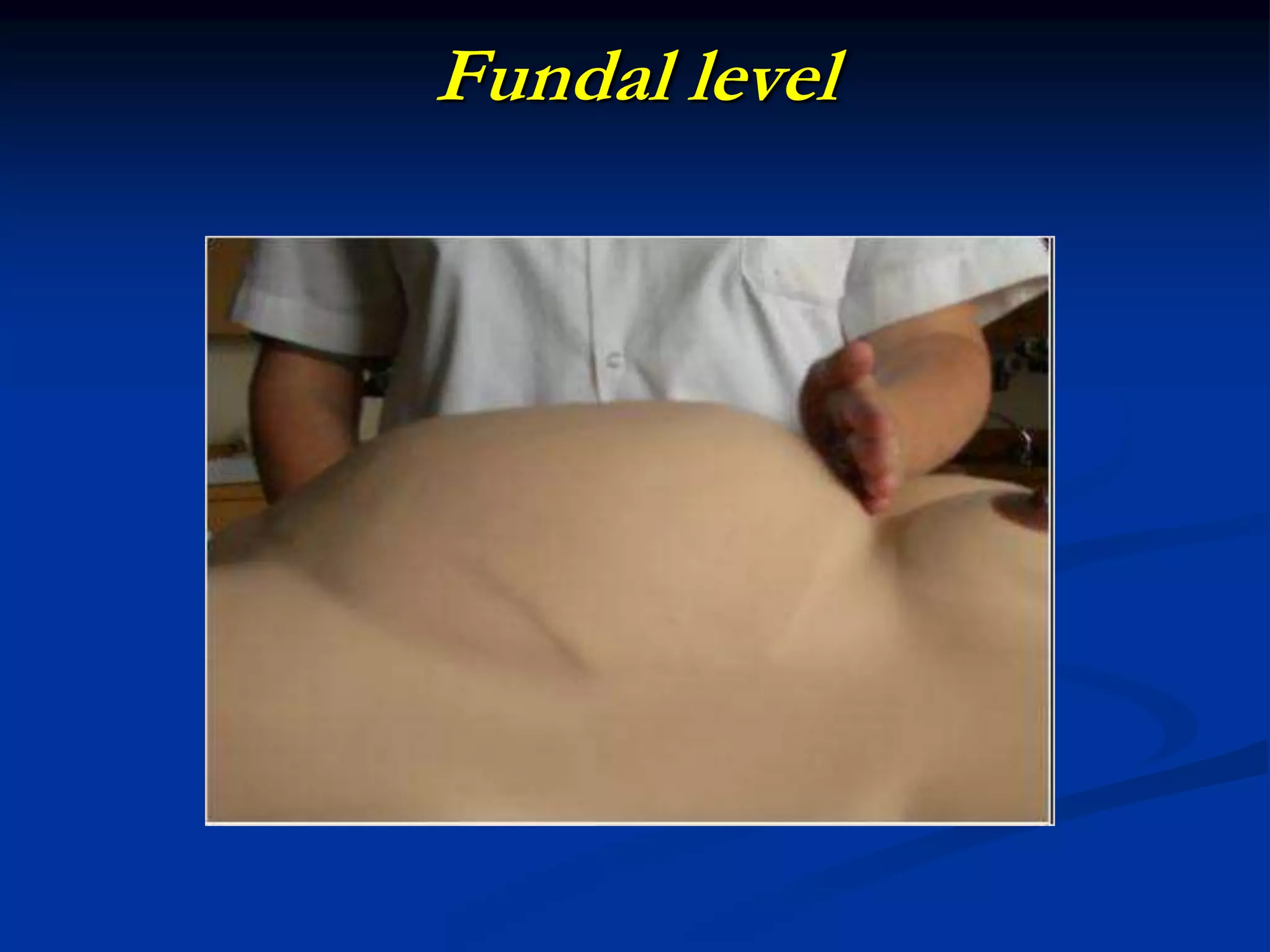
Fundal level
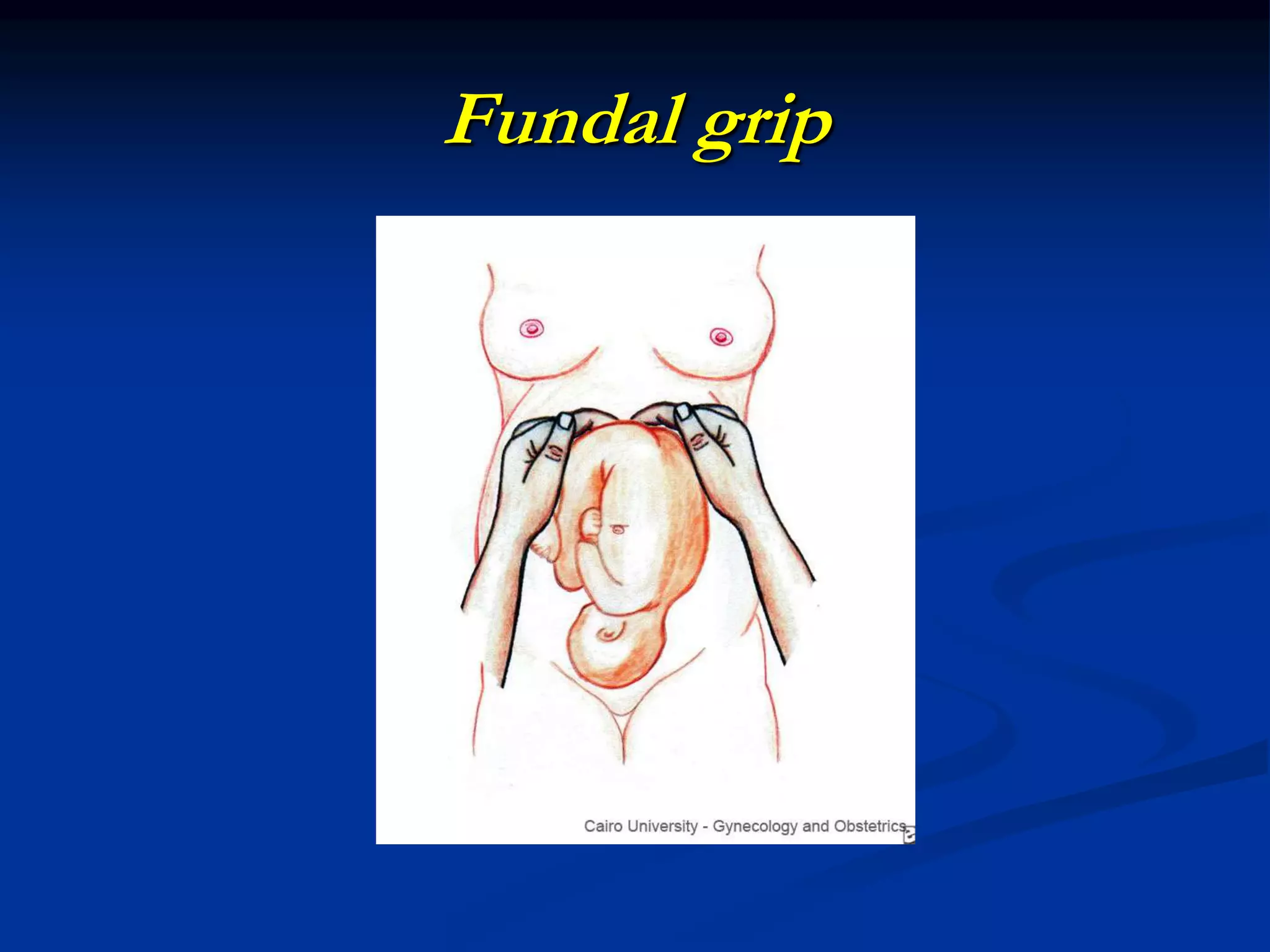
Fundal grip
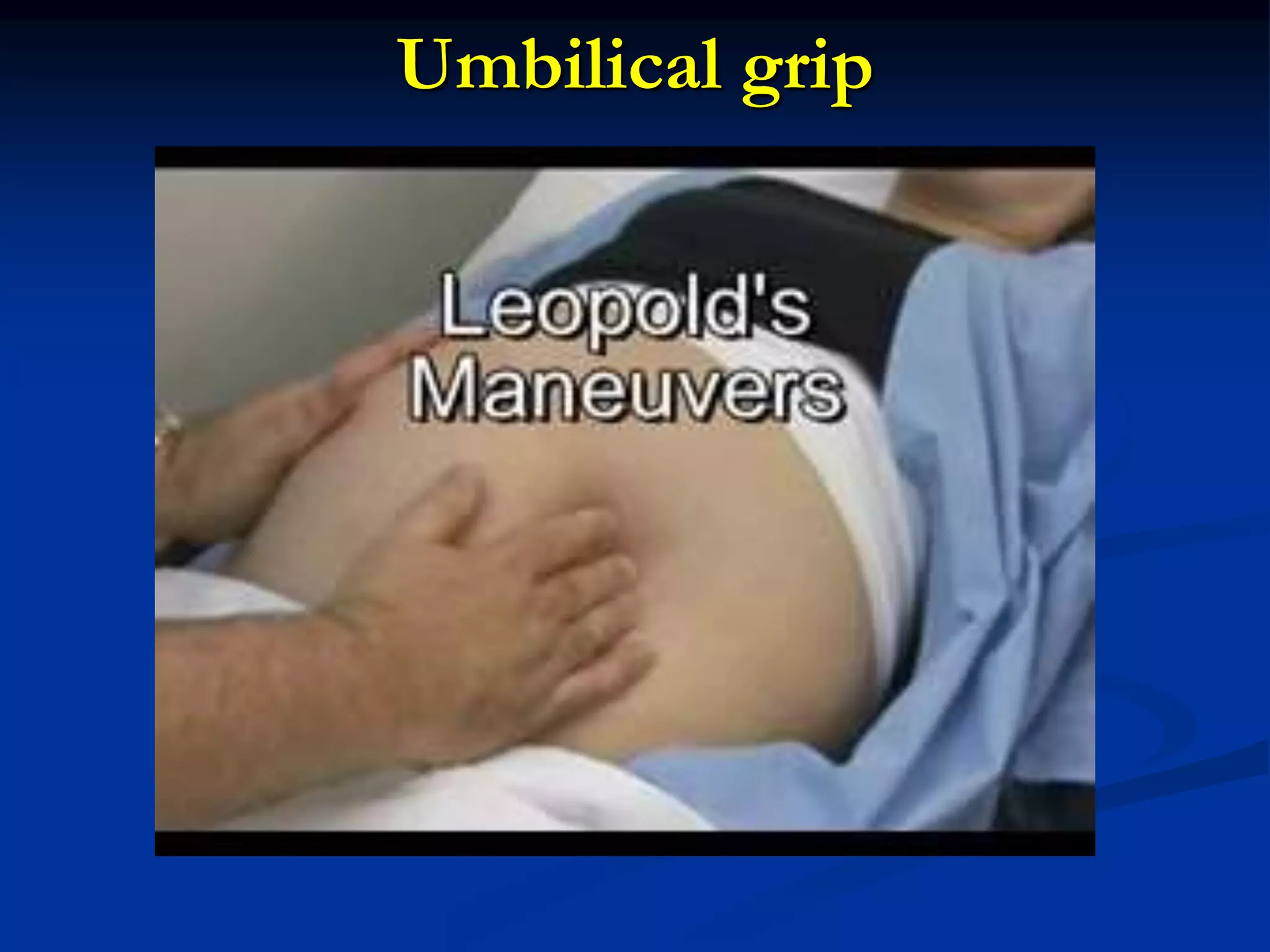
Umbilical grip
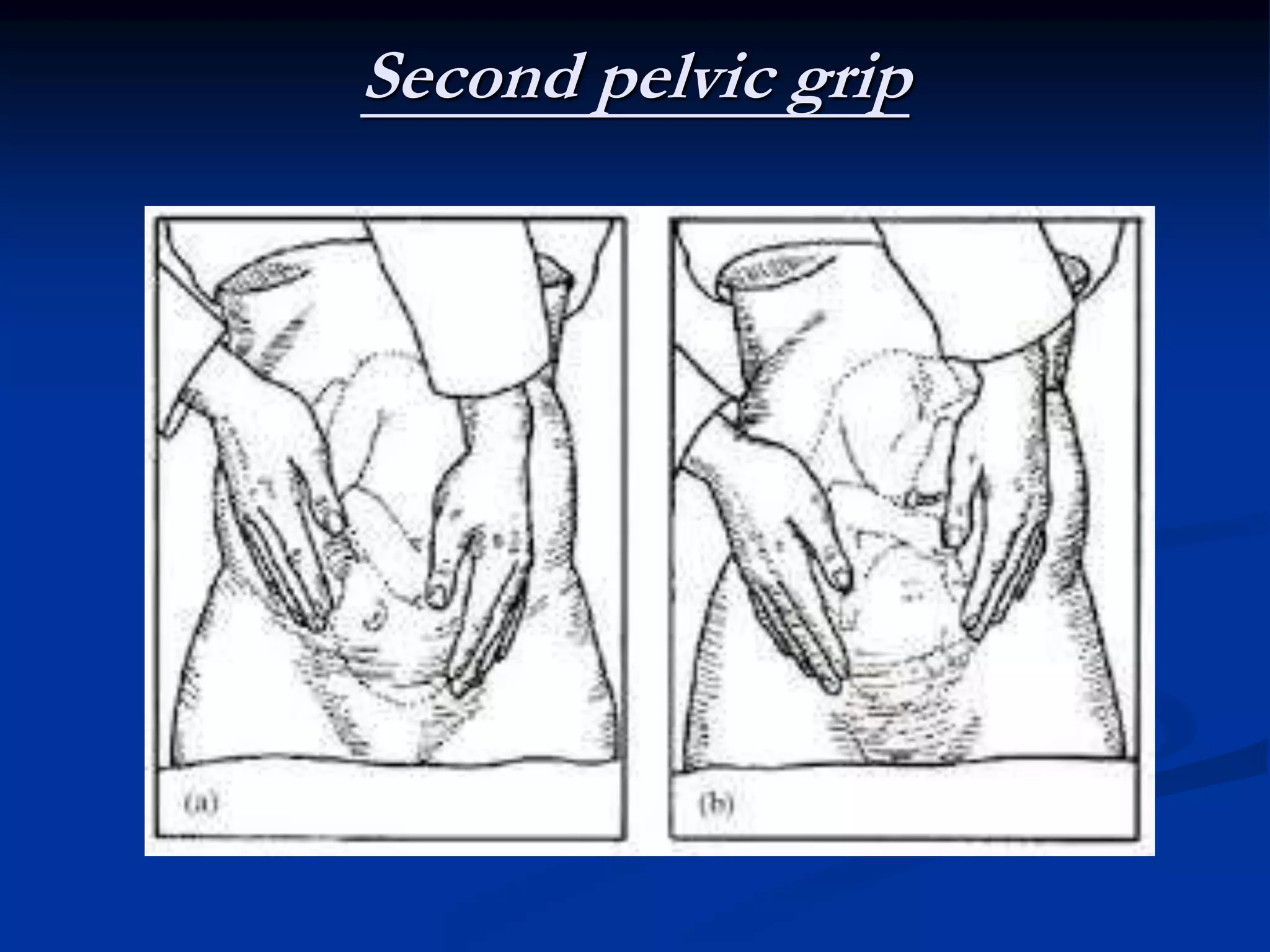
Second pelvic grip
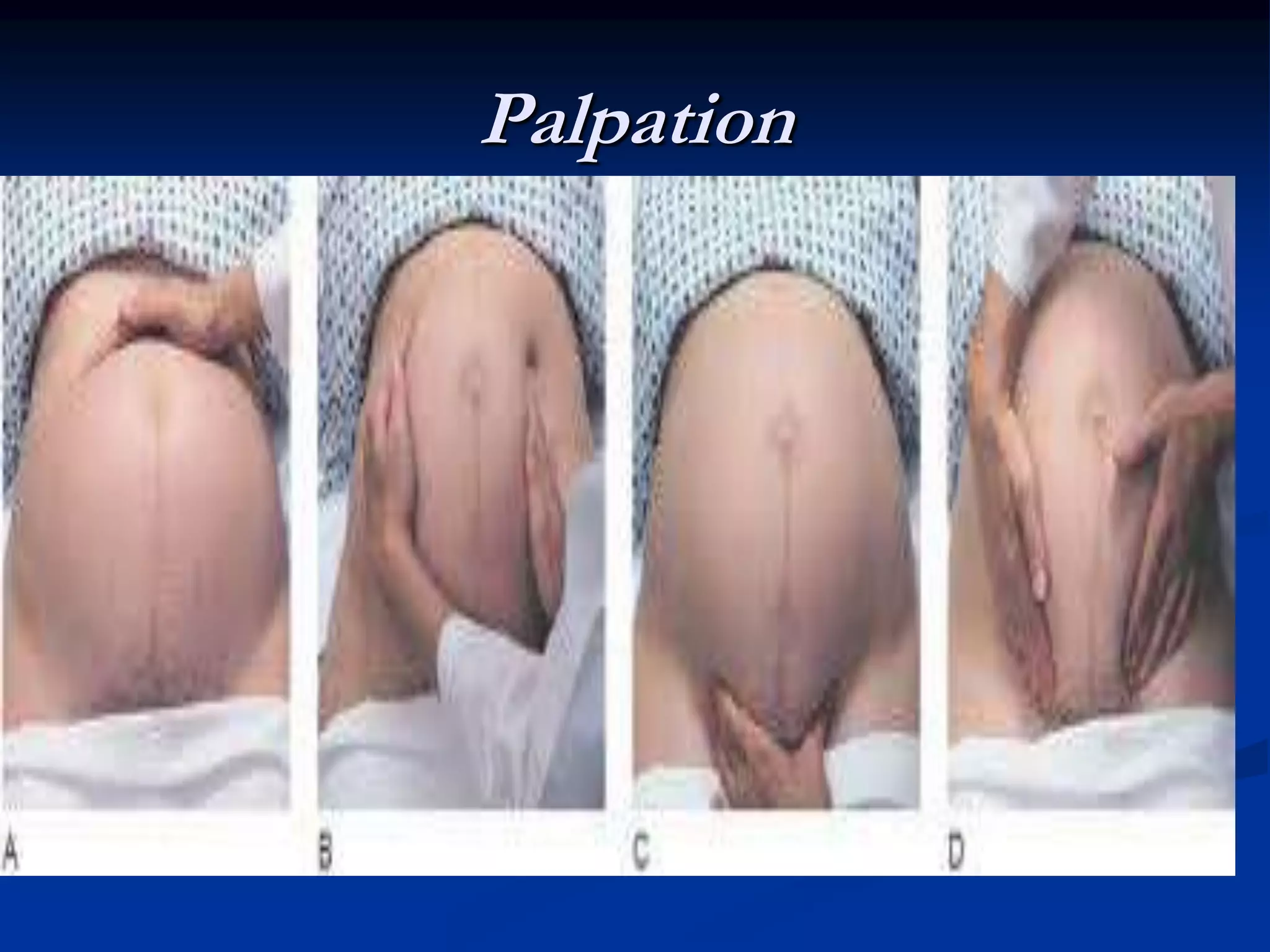
Palpation
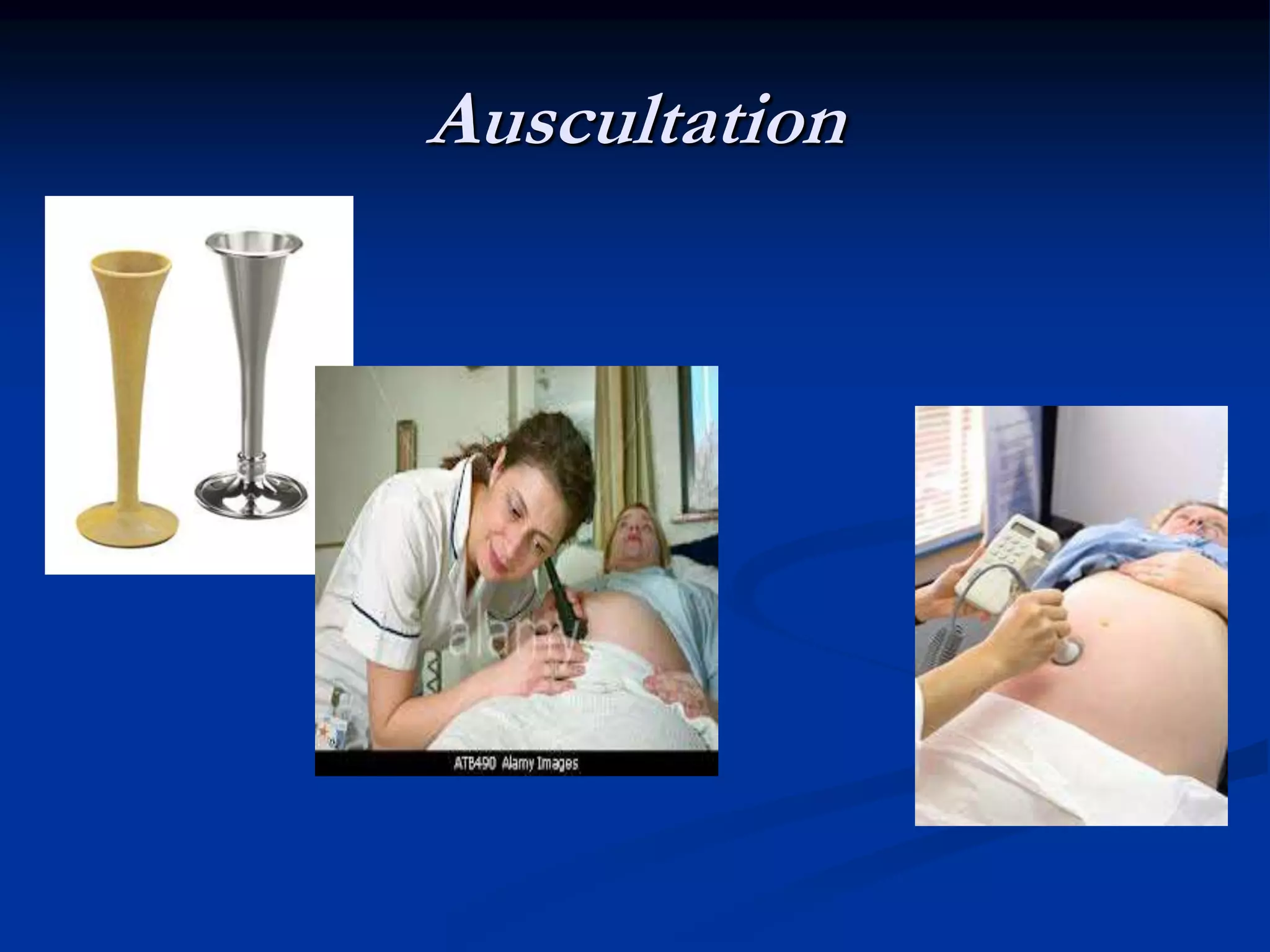
Auscultation
3-Pelvic examination:
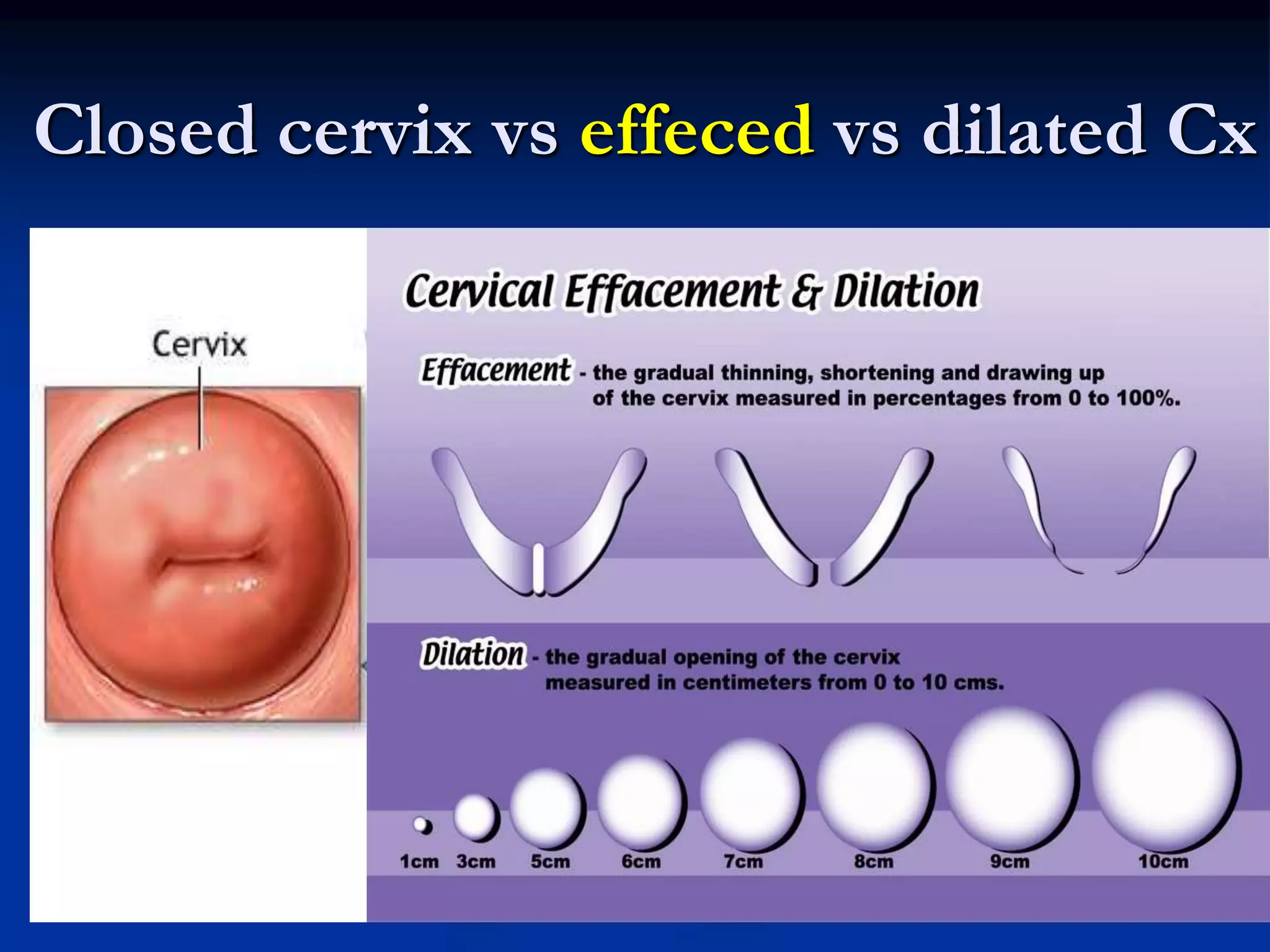
 Cervix : dilatation (c.m.), effeacemet (%) ,
position & consistency.
 membrane: intact or ruptured ( if ruptured
exclude cord prolapse).
 -Amniotic fluid ( after R.O.M.): either clear
, meconium stained or blood stained.
 -Presenting part , position ,station &
moulding.
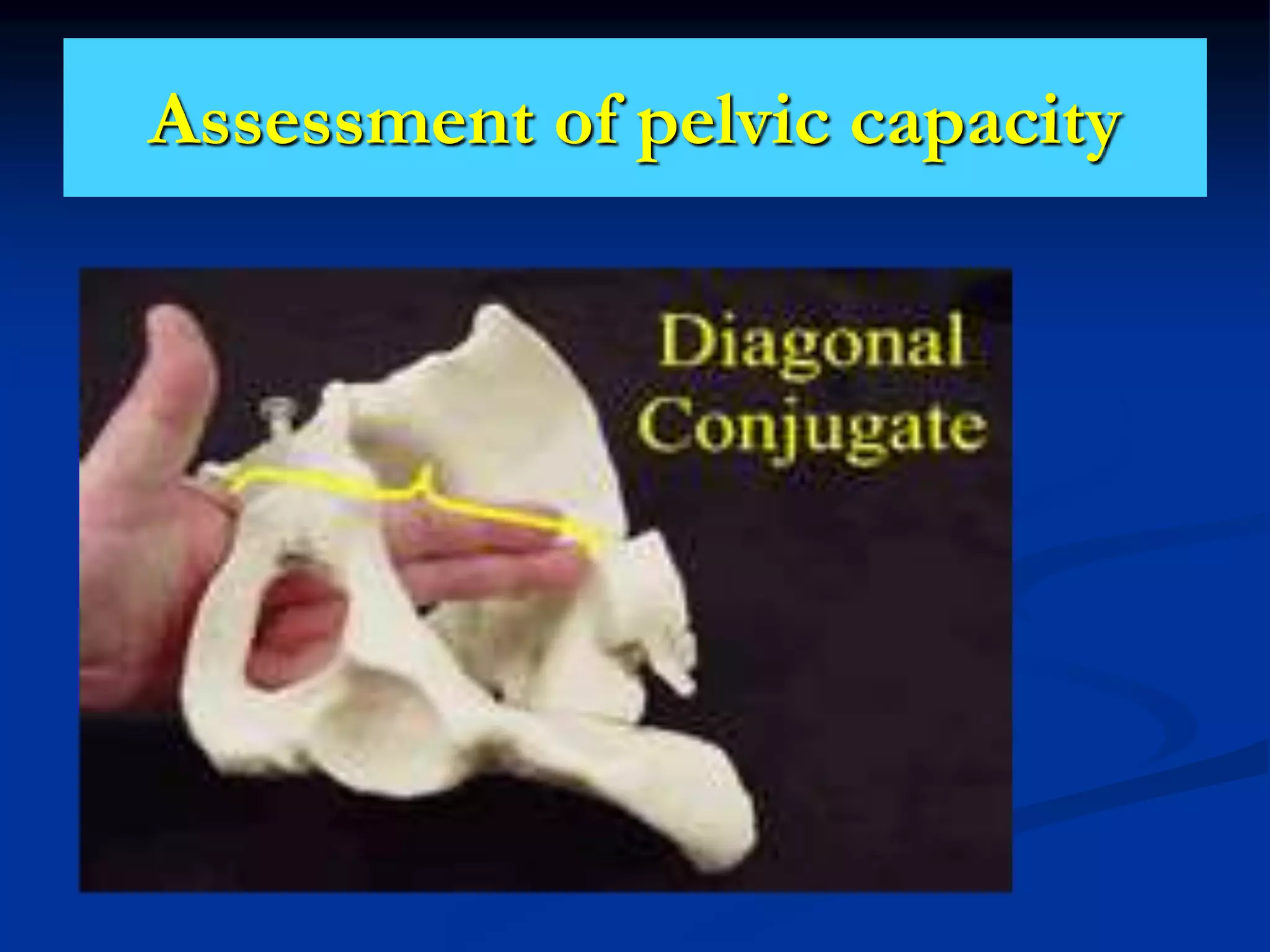
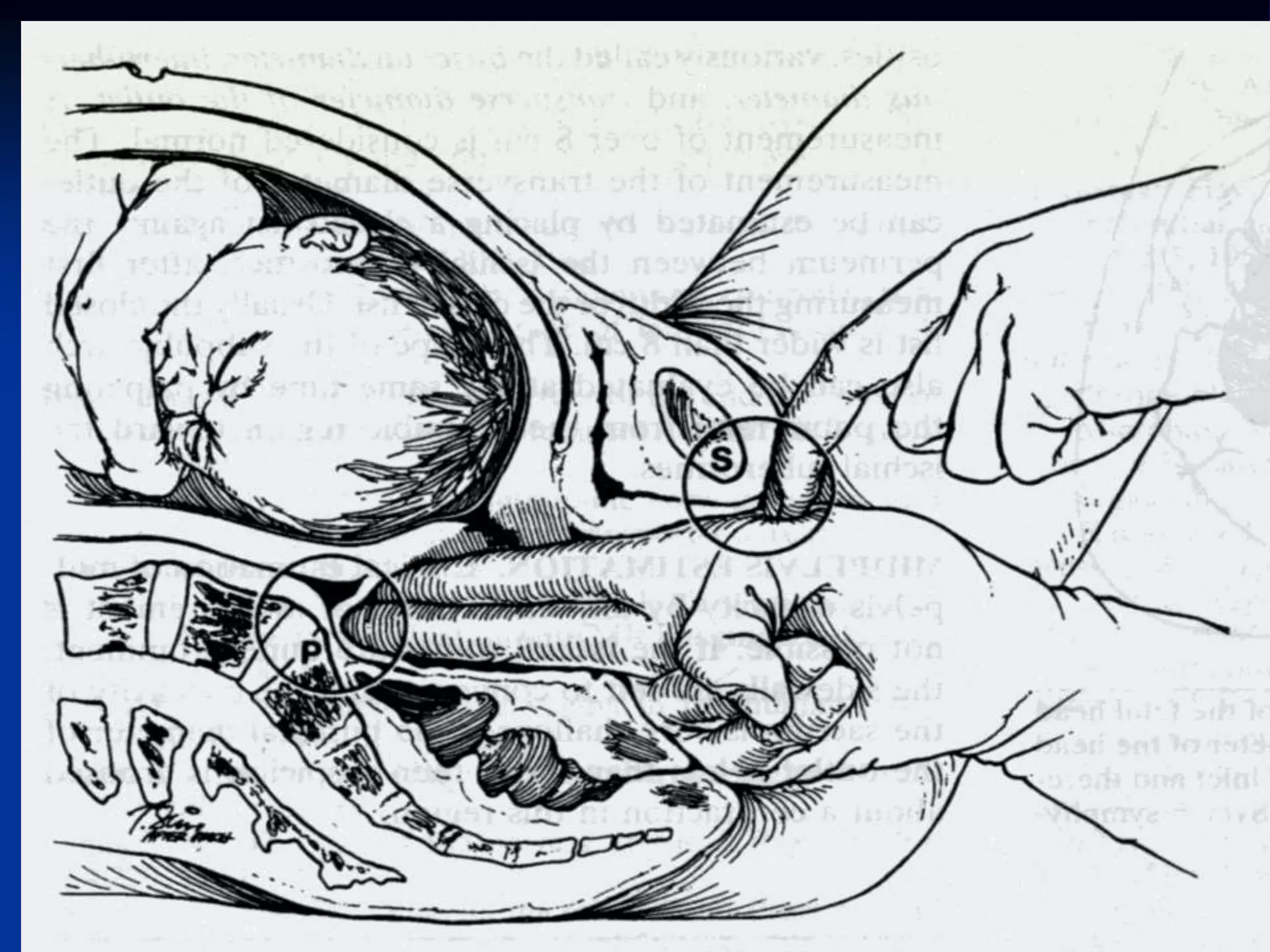
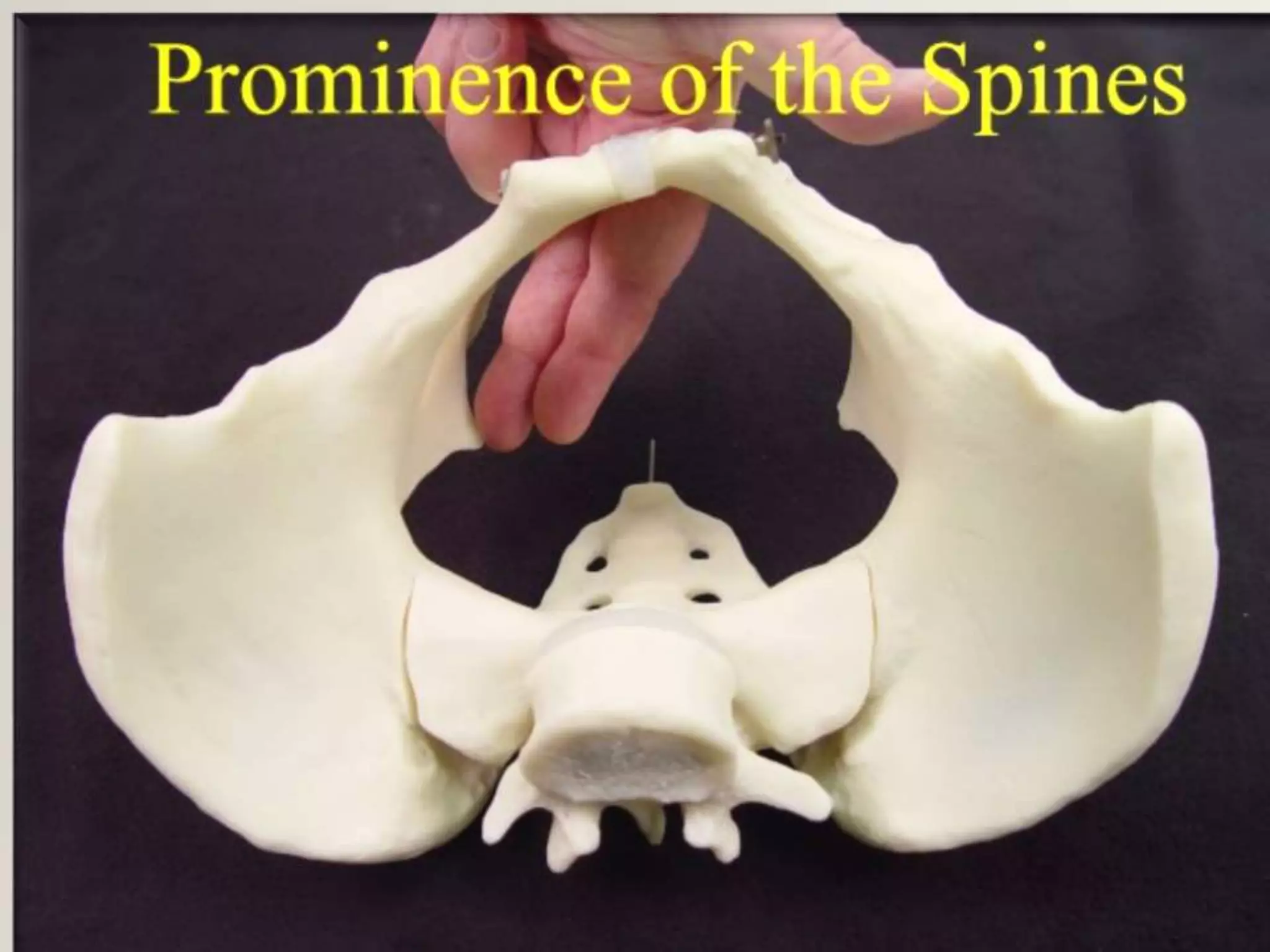
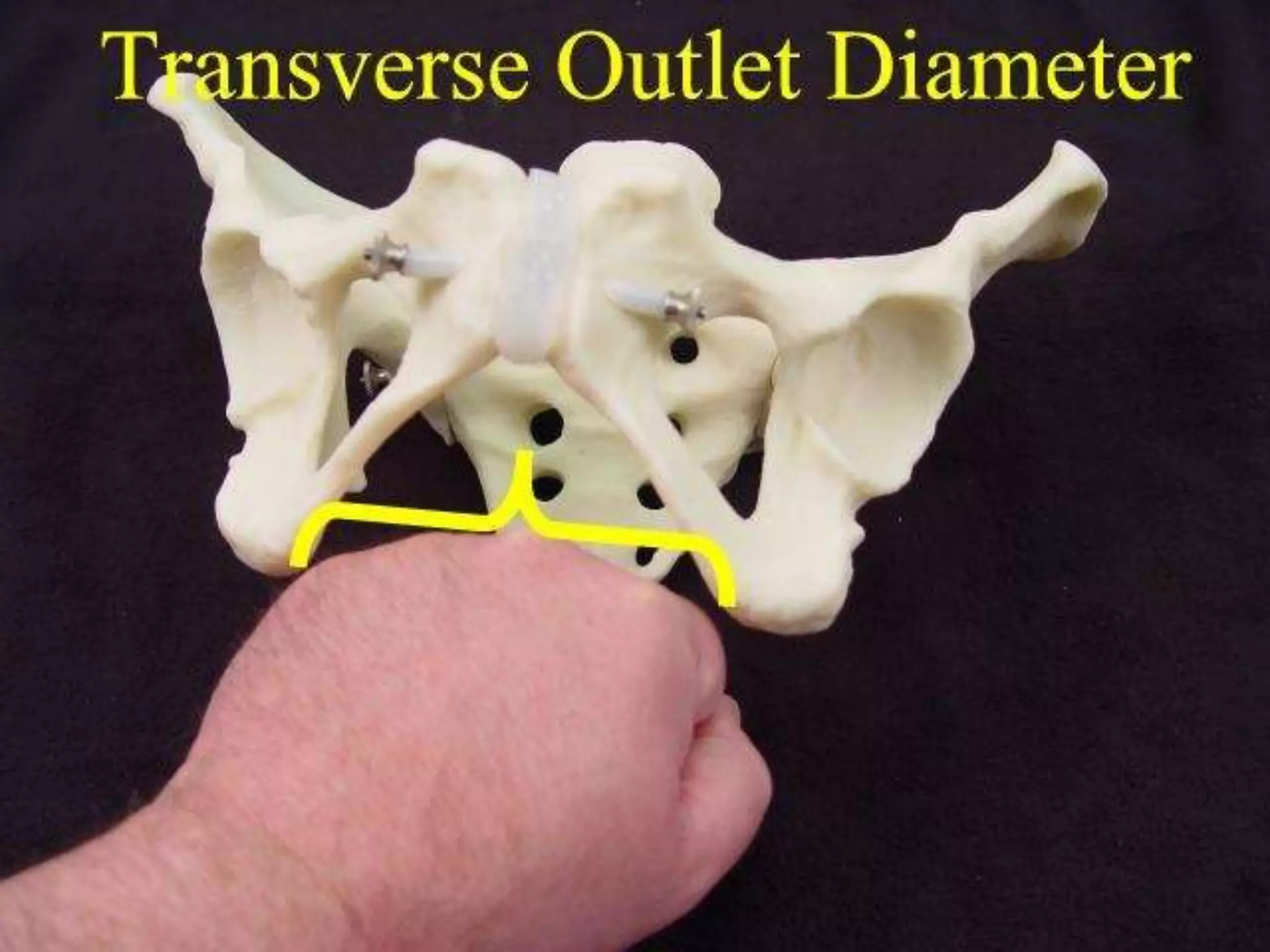
 -Assessment of pelvic capacity
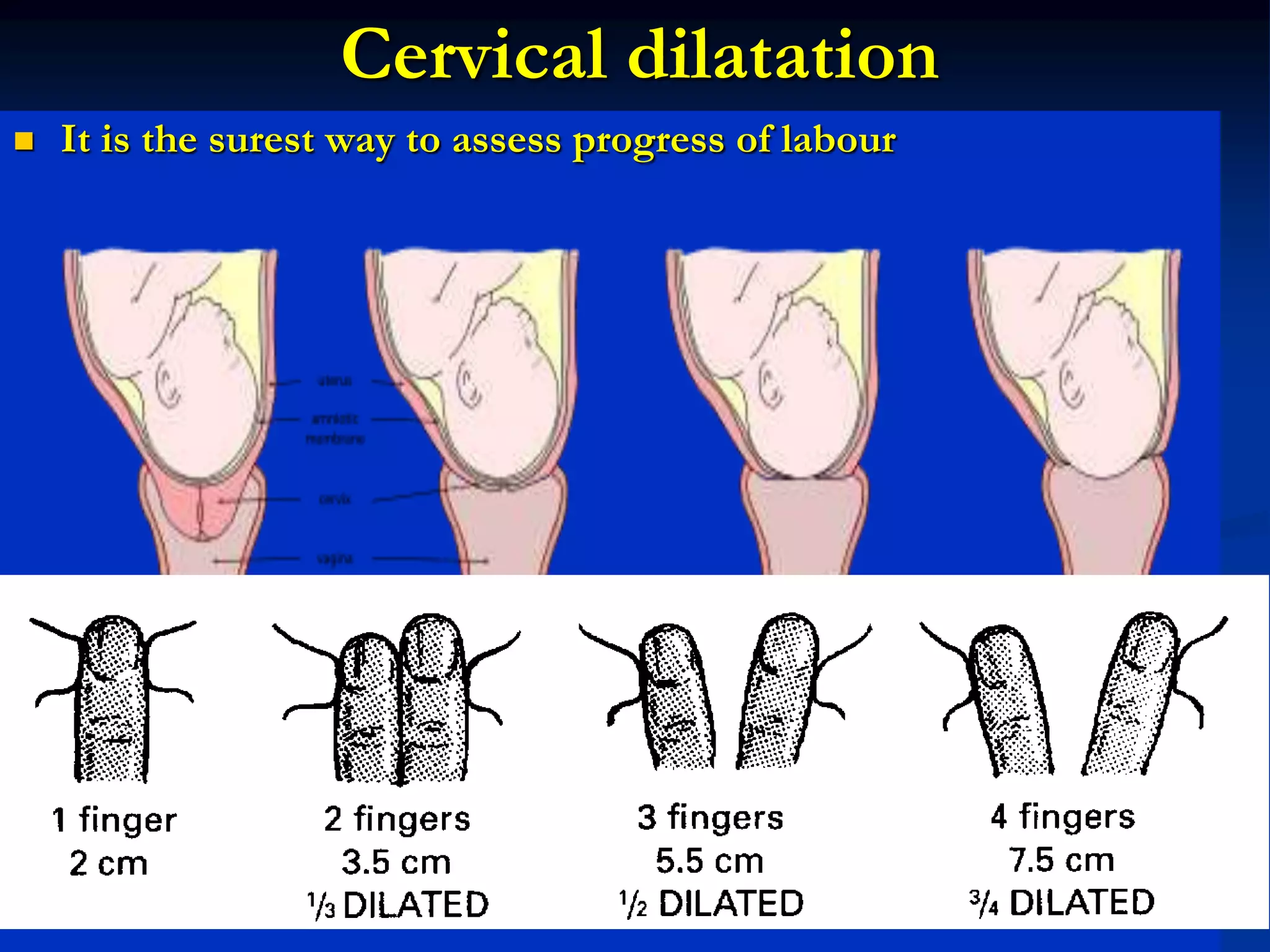
Cervical dilatation
 It is the surest way to assess progress of labour
Assessment of pelvic capacity
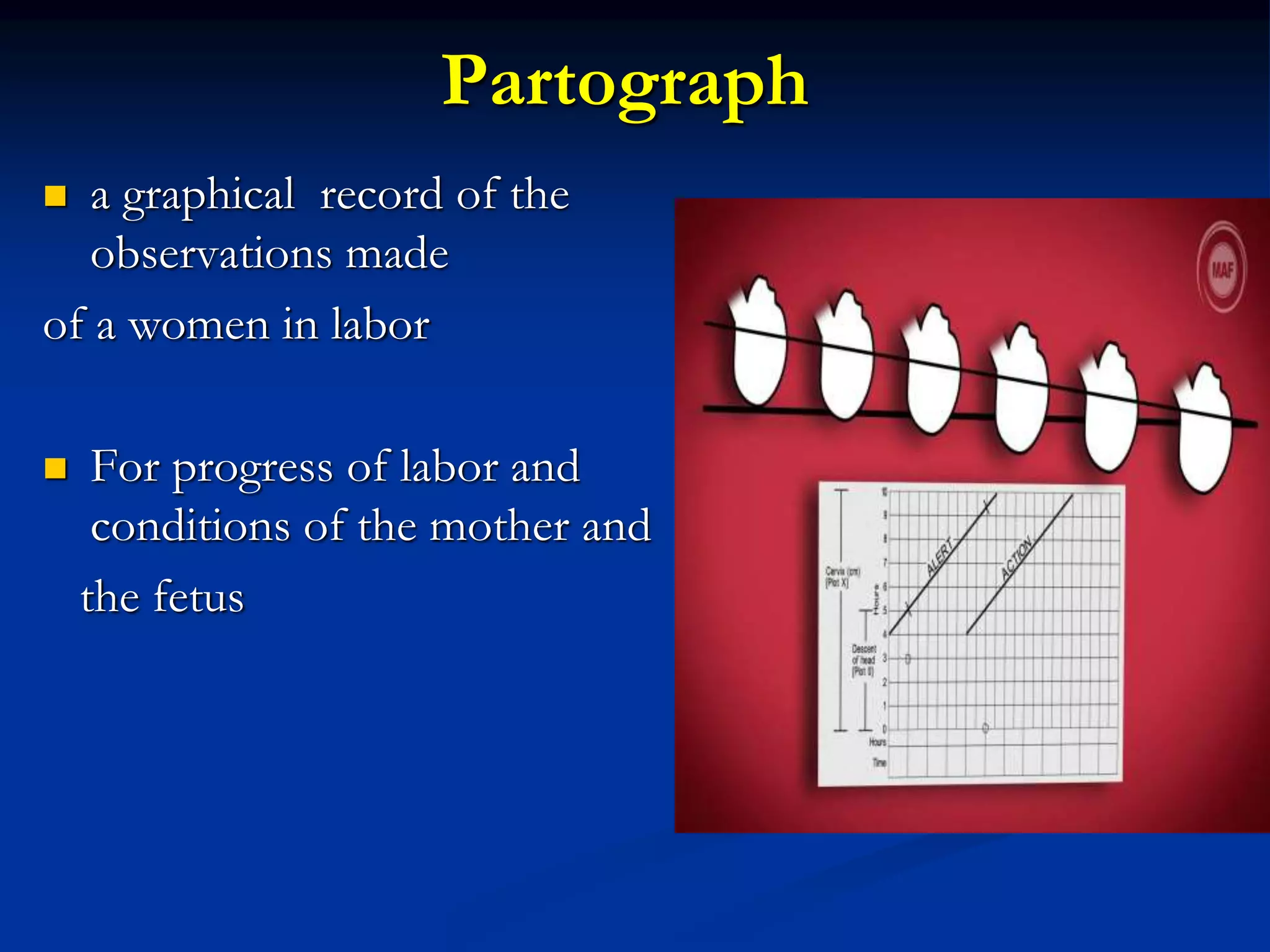
Partograph
 a graphical record of the
observations made
of a women in labor
 For progress of labor and
conditions of the mother and
the fetus
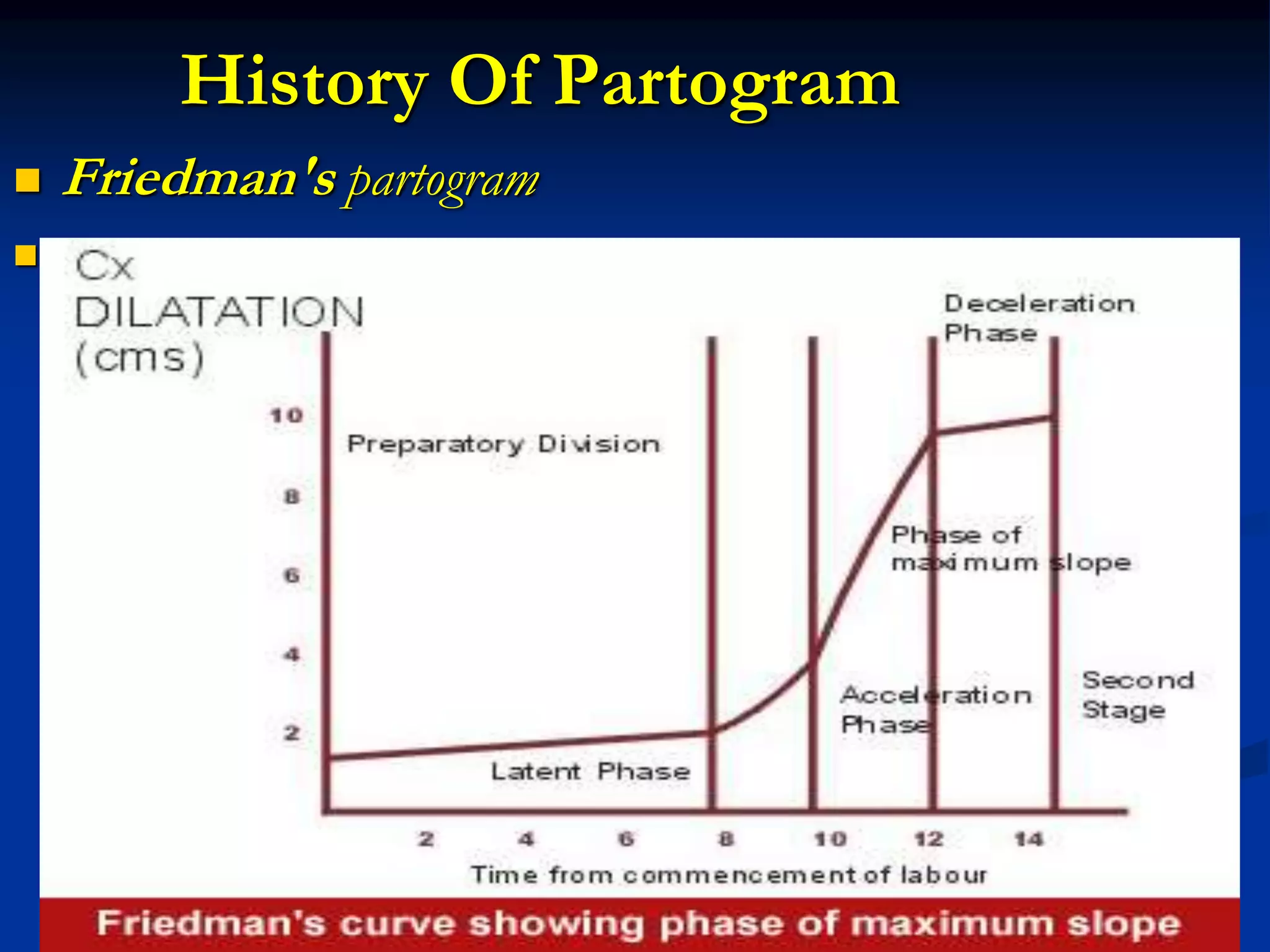
History Of Partogram
 Friedman's partogram

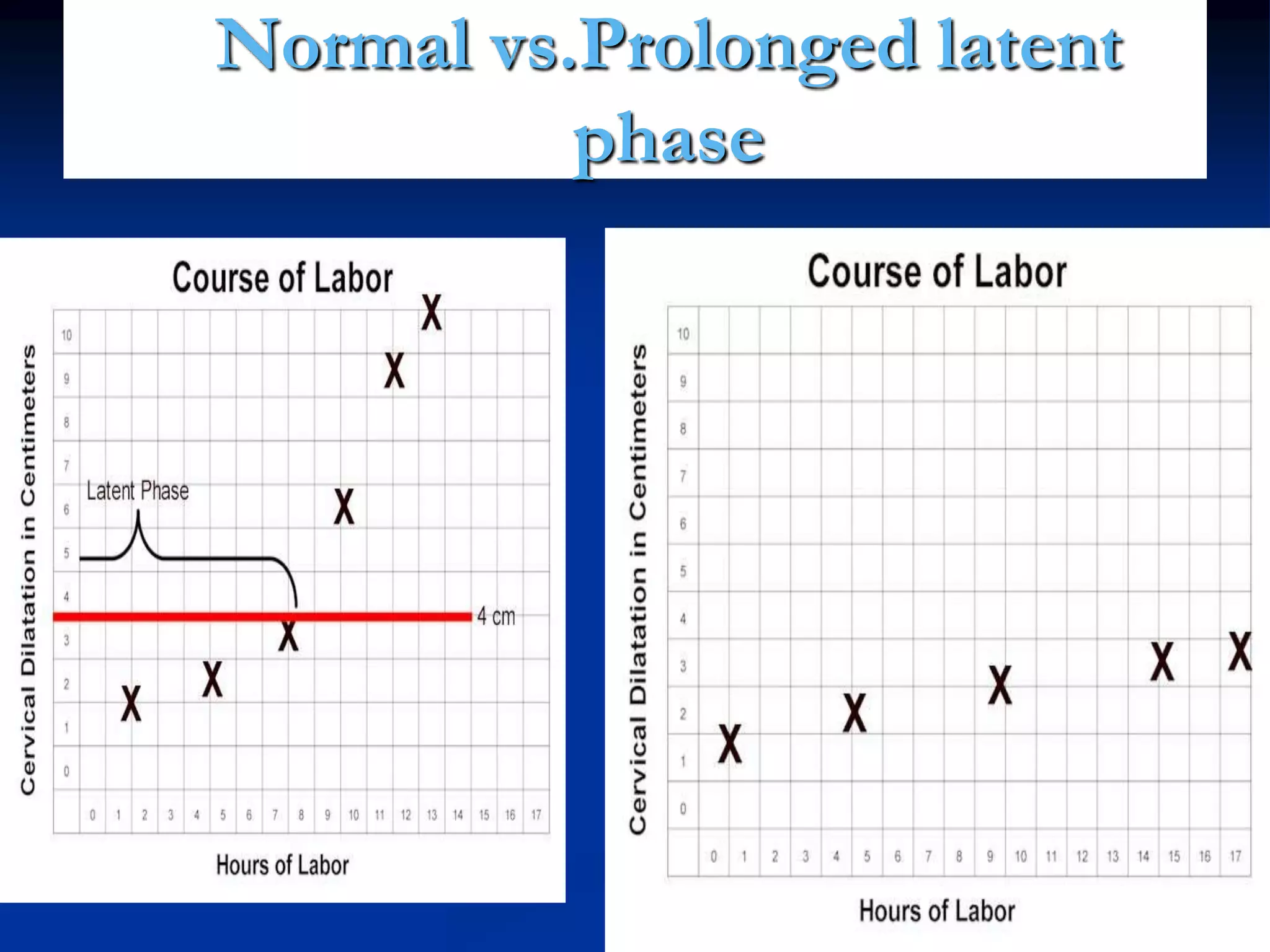
latent phase
 Starts from onset of labour until the cervix reaches 3
cm dilatation
 lasts 8 hours or less
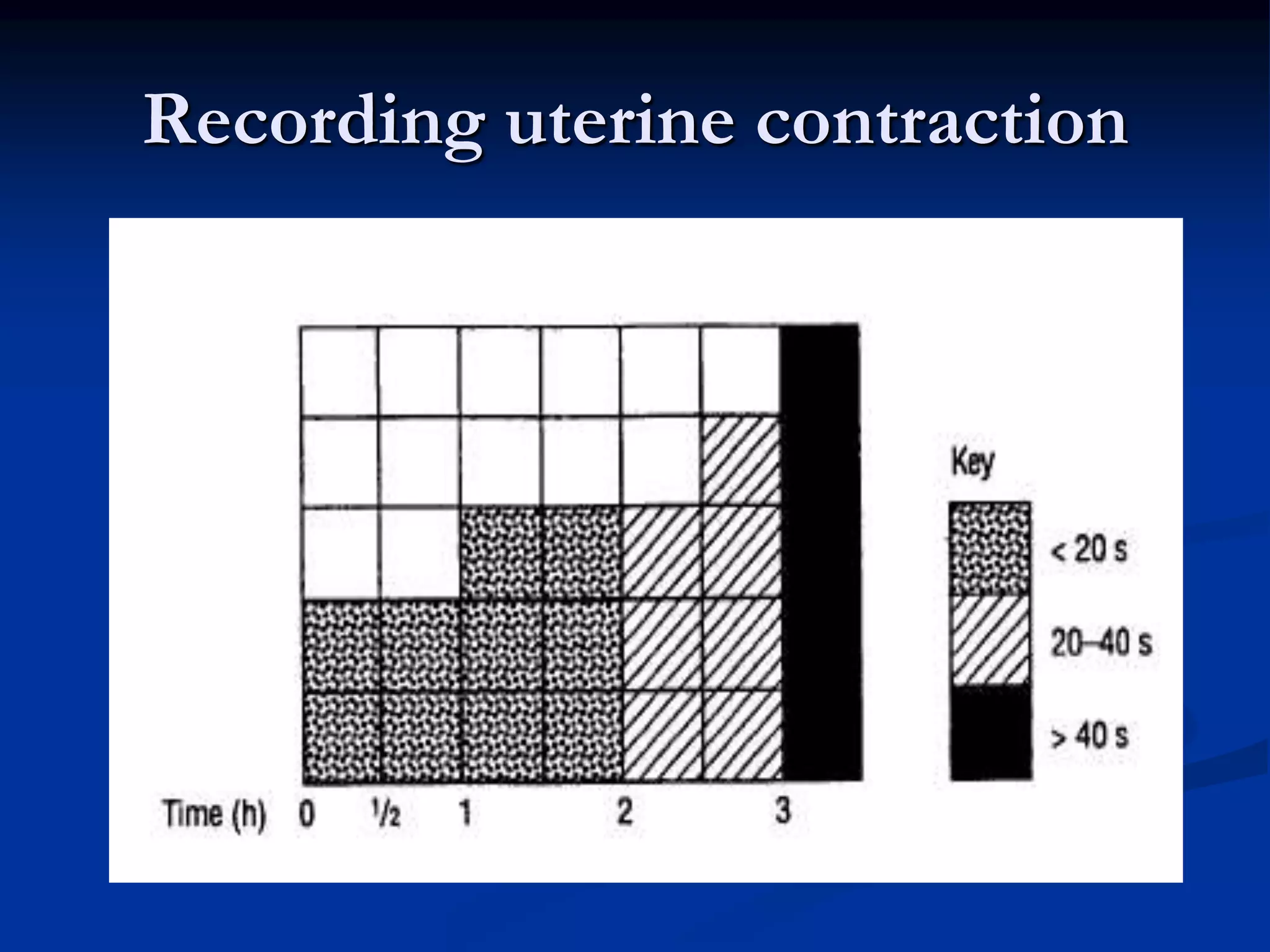
 Contractions at least 2/10 min contractions
 each lasting < 20 seconds
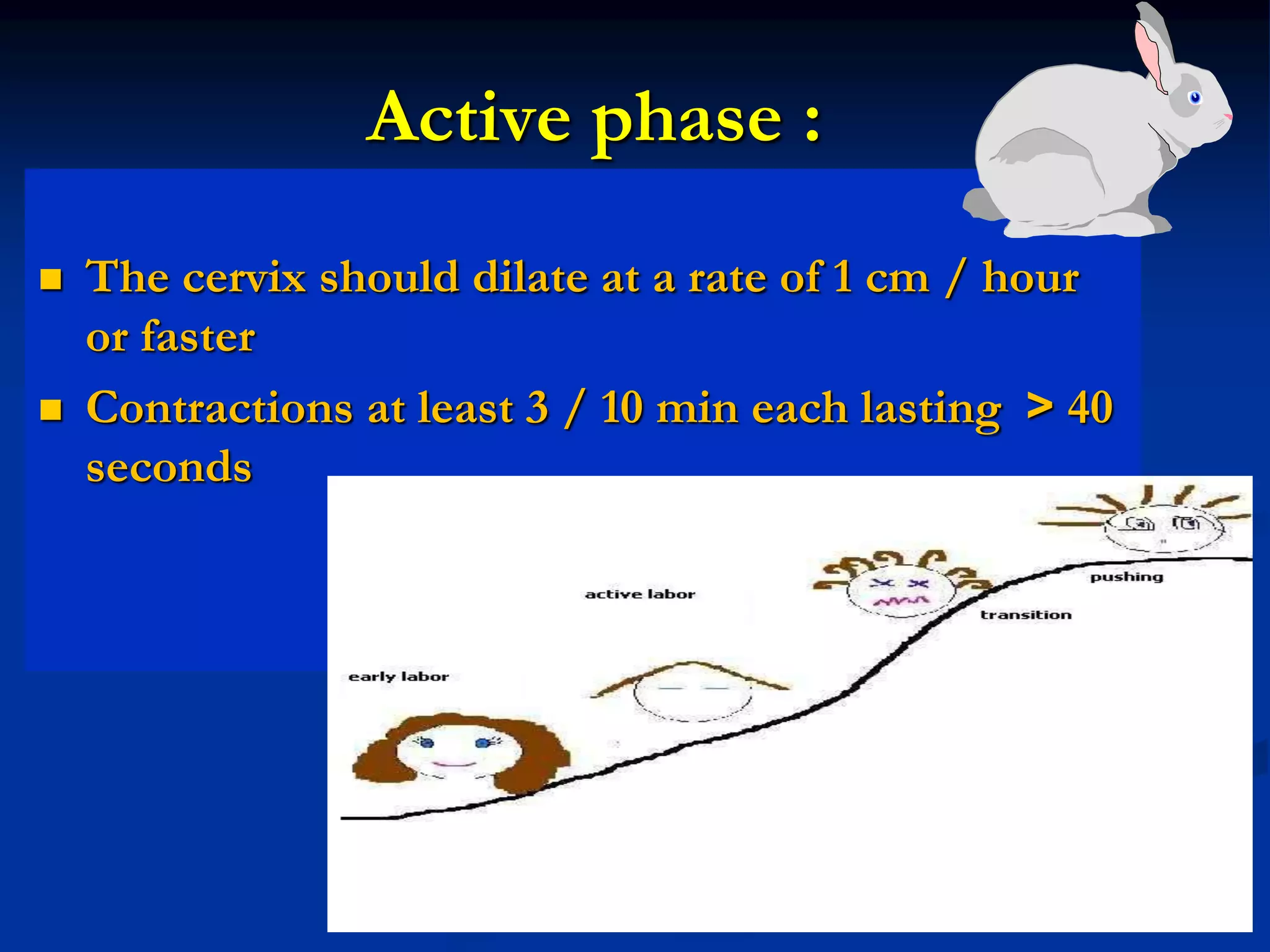
Active phase :
 The cervix should dilate at a rate of 1 cm / hour
or faster
 Contractions at least 3 / 10 min each lasting < 40
seconds
Closed cervix vs effeced vs dilated Cx
Components of the partograph
 Part 1 : fetal condition ( at top )
 Part 2 : progress of labour ( at middle )
 Part 3 : maternal condition ( at bottom )
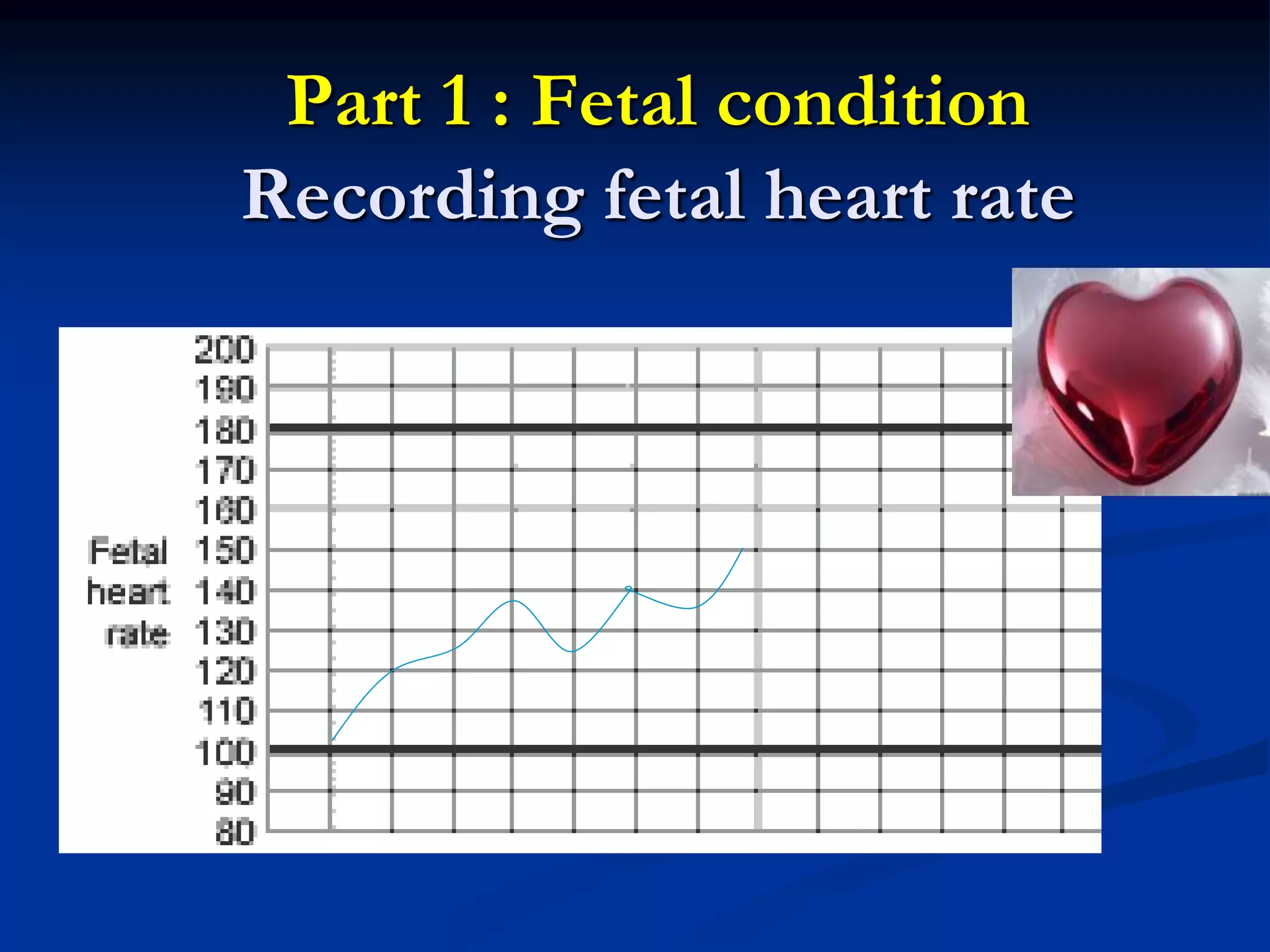
Part 1 : Fetal condition
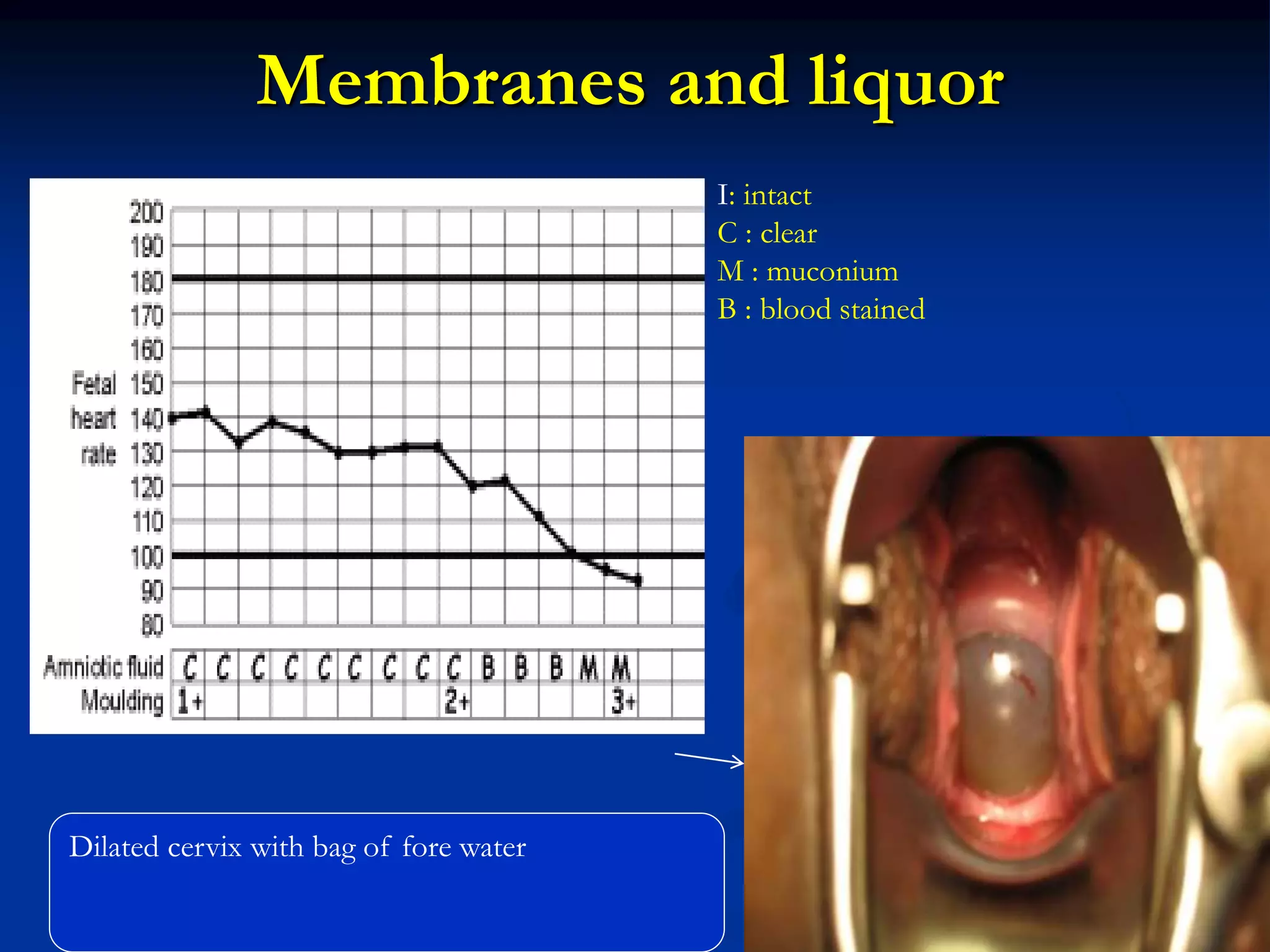
Recording fetal heart rate
Membranes and liquor
Dilated cervix with bag of fore water
I: intact
C : clear
M : muconium
B : blood stained
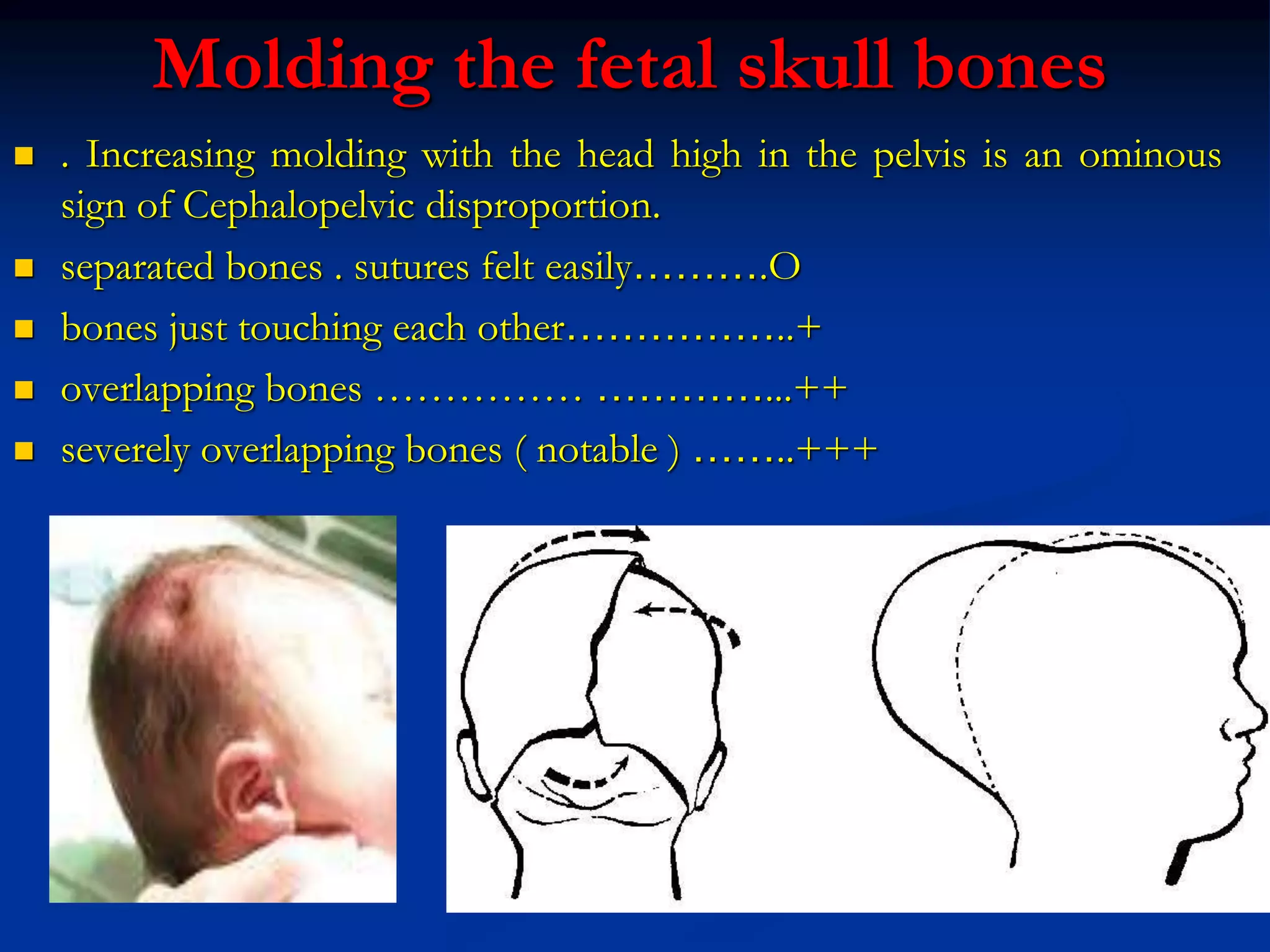
Molding the fetal skull bones
 . Increasing molding with the head high in the pelvis is an ominous
sign of Cephalopelvic disproportion.
 separated bones . sutures felt easily……….O
 bones just touching each other……………..+
 overlapping bones …………… …………...++
 severely overlapping bones ( notable ) ……..+++
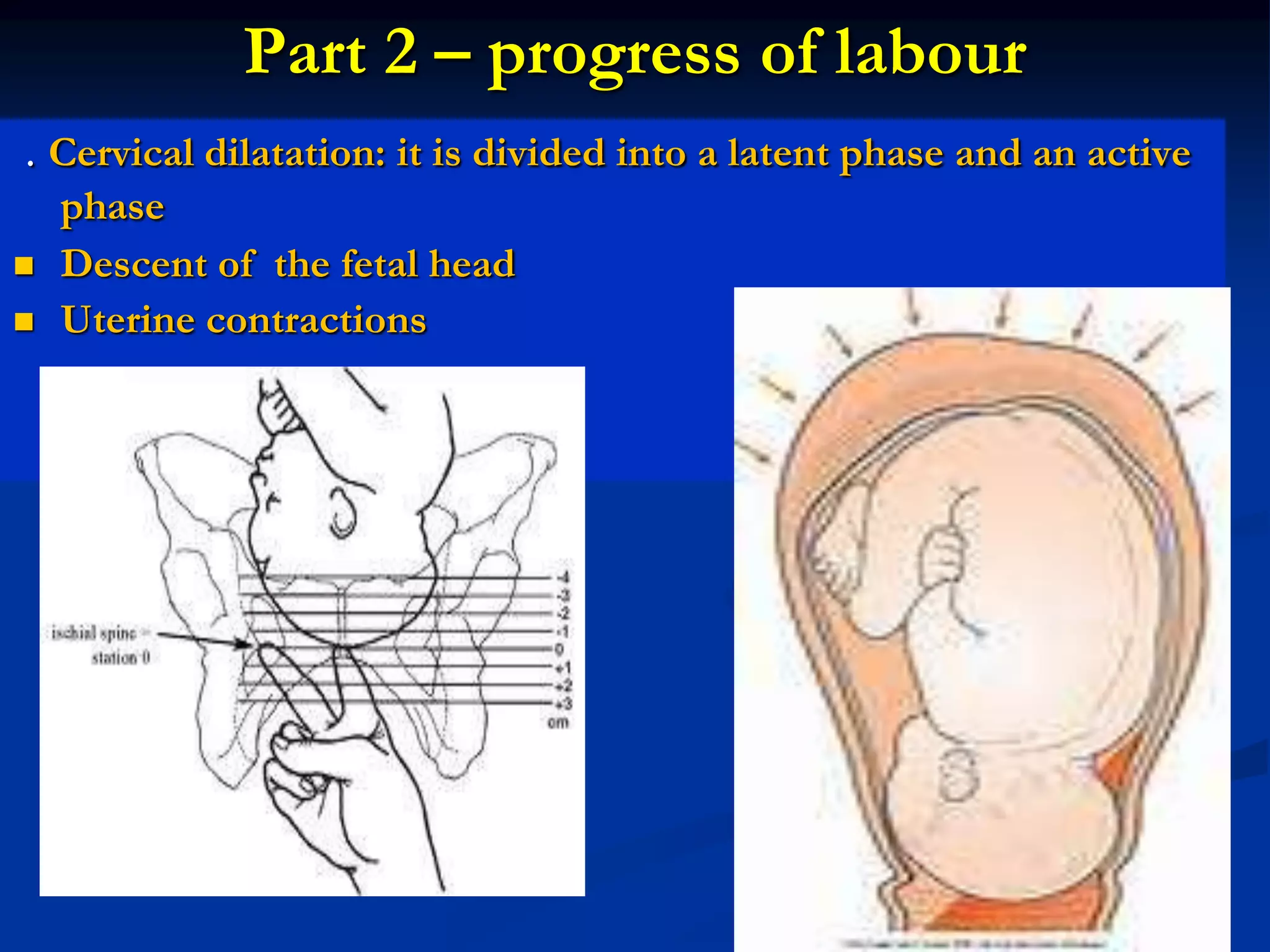
Part 2 – progress of labour
. Cervical dilatation: it is divided into a latent phase and an active
phase
 Descent of the fetal head
 Uterine contractions
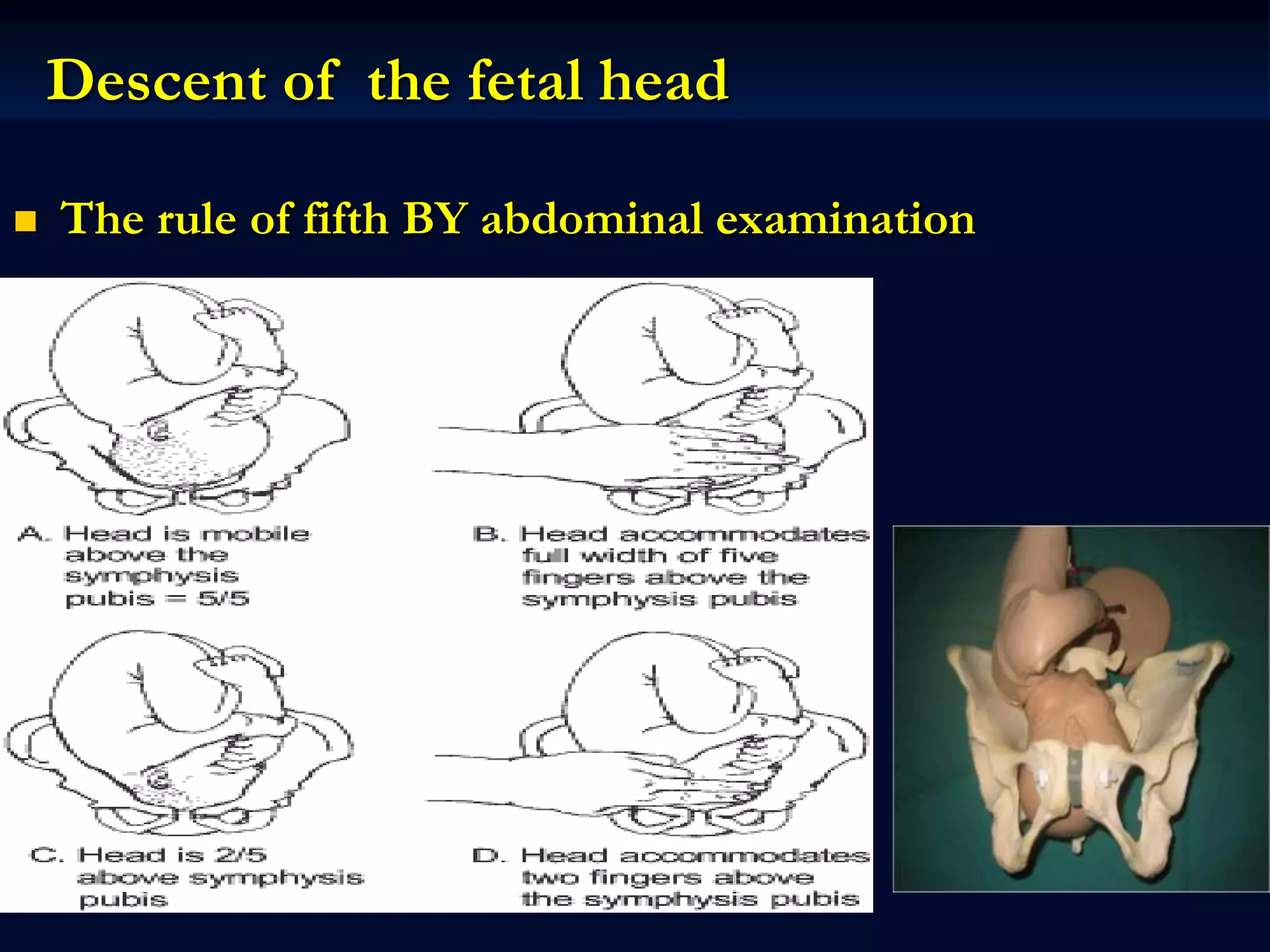
Descent of the fetal head
 The rule of fifth BY abdominal examination
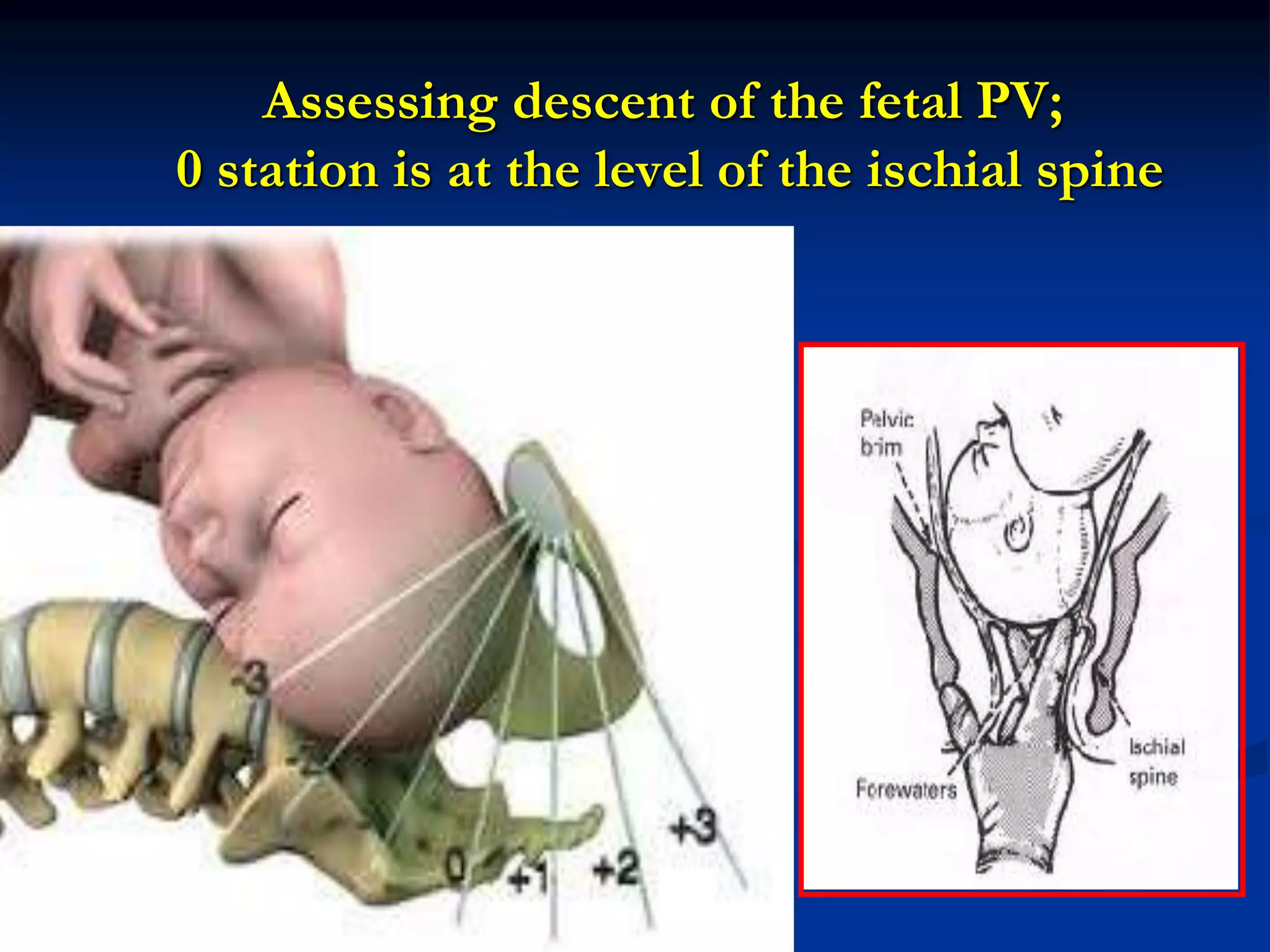
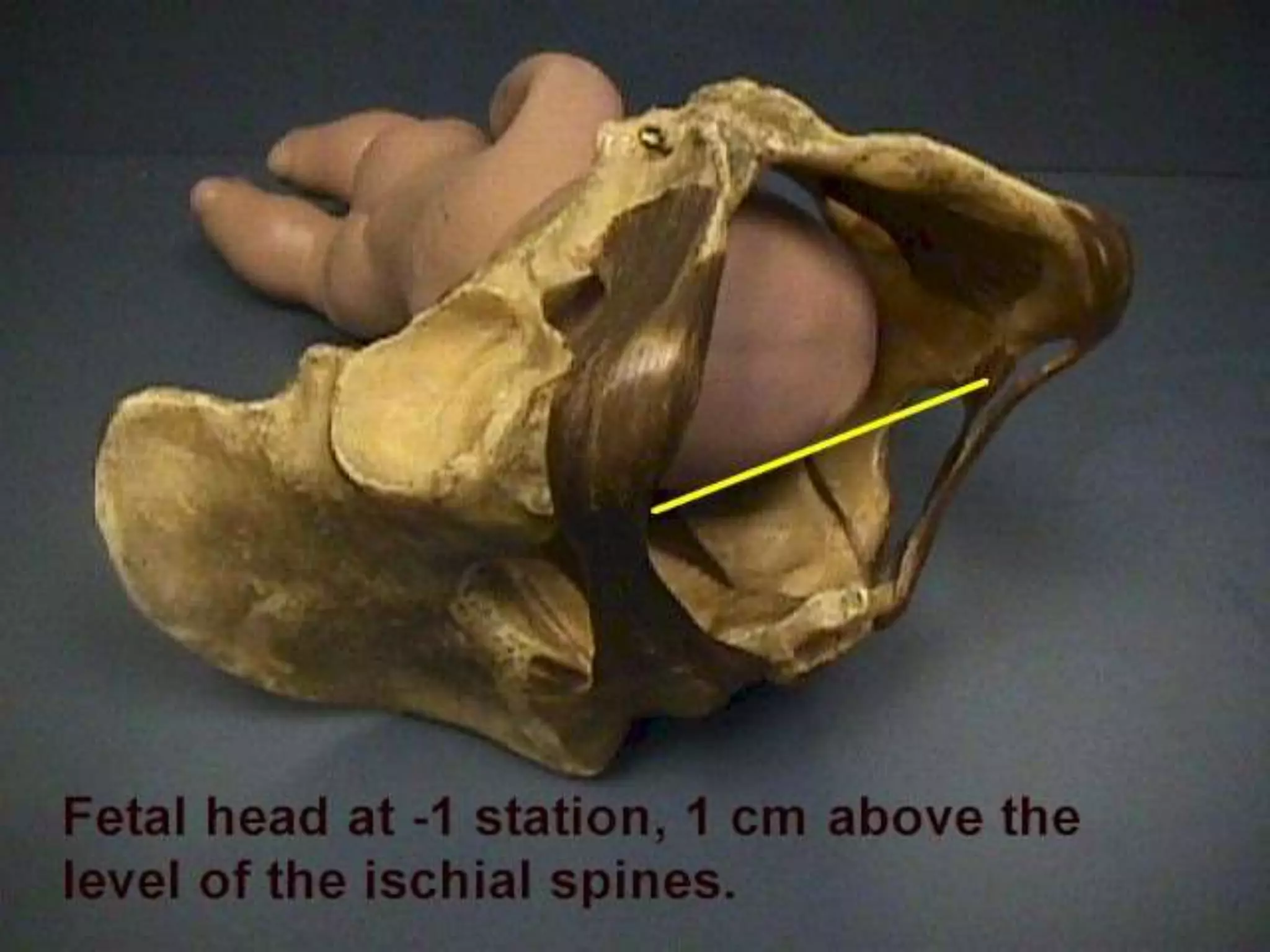
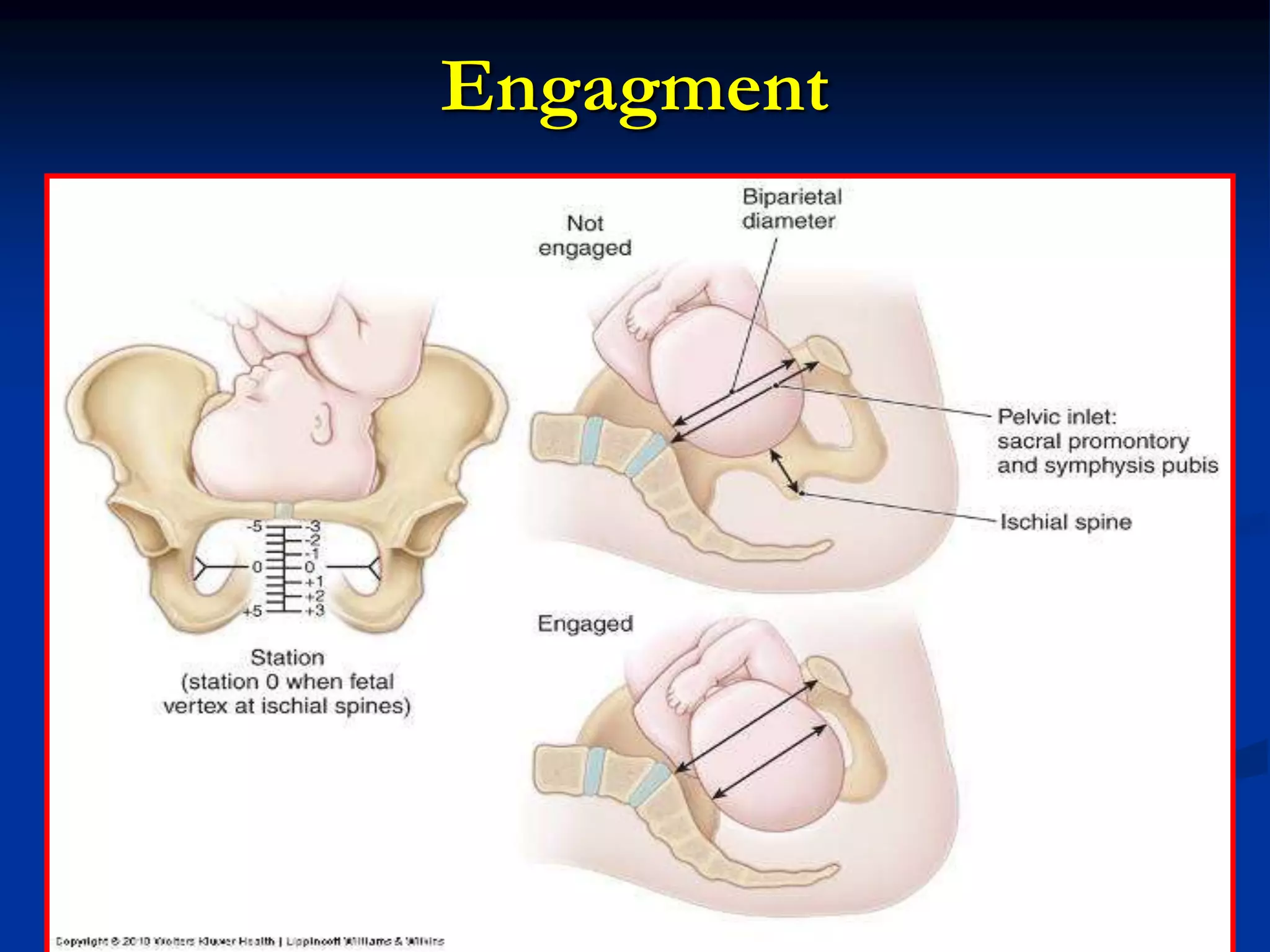
Assessing descent of the fetal PV;
0 station is at the level of the ischial spine
Engagment
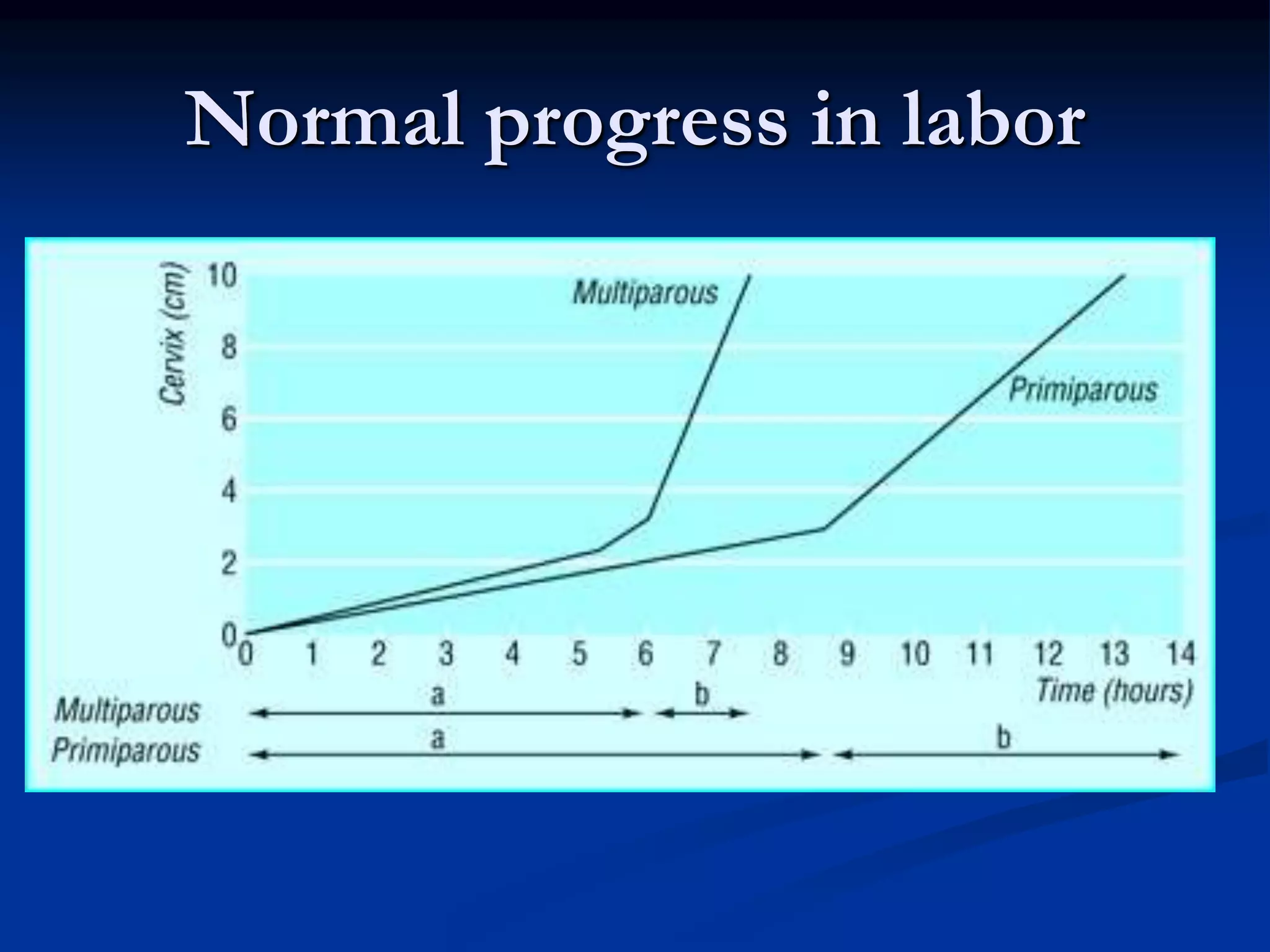
Normal progress in labor
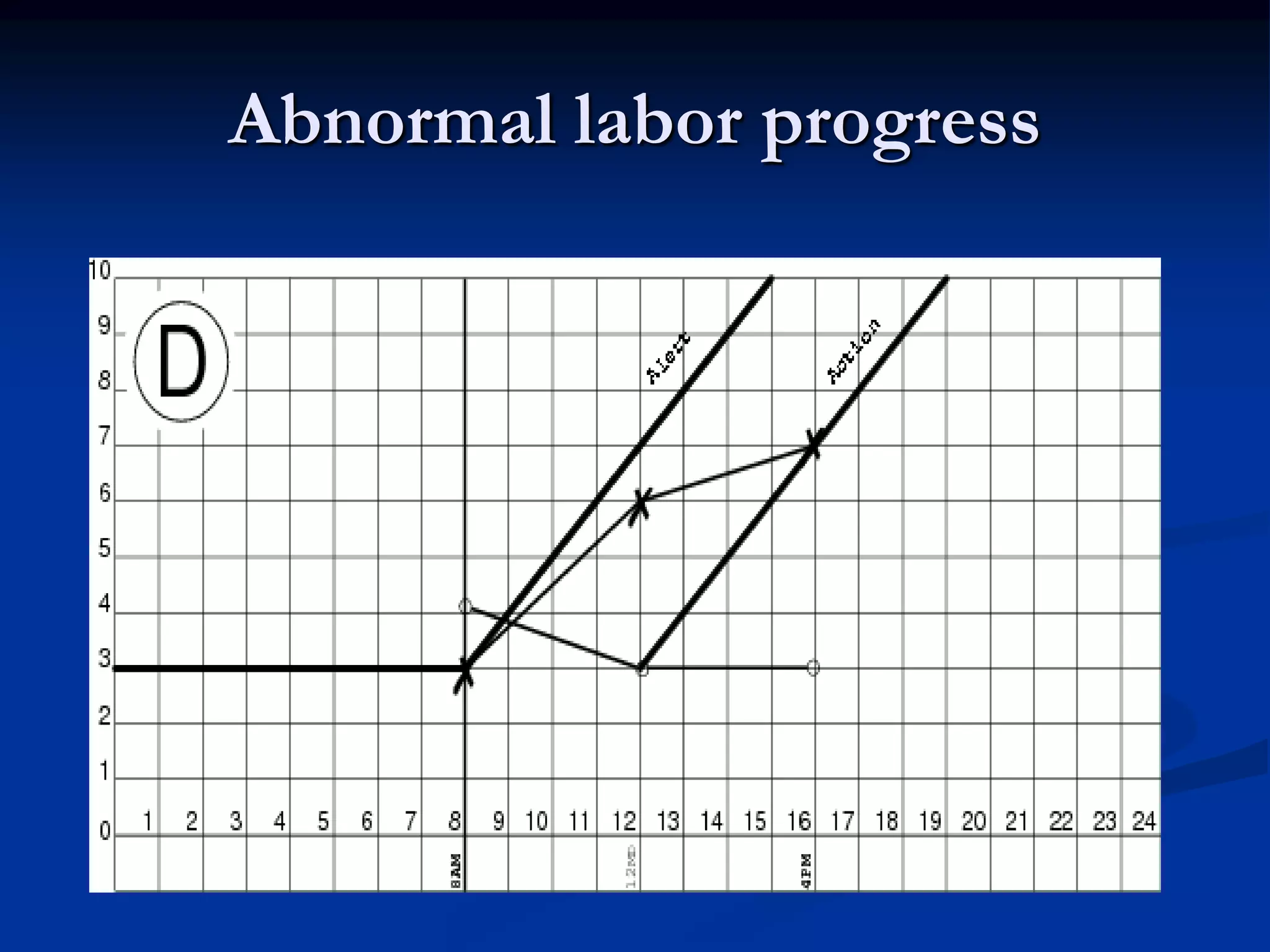
Alert line ( health facility line )
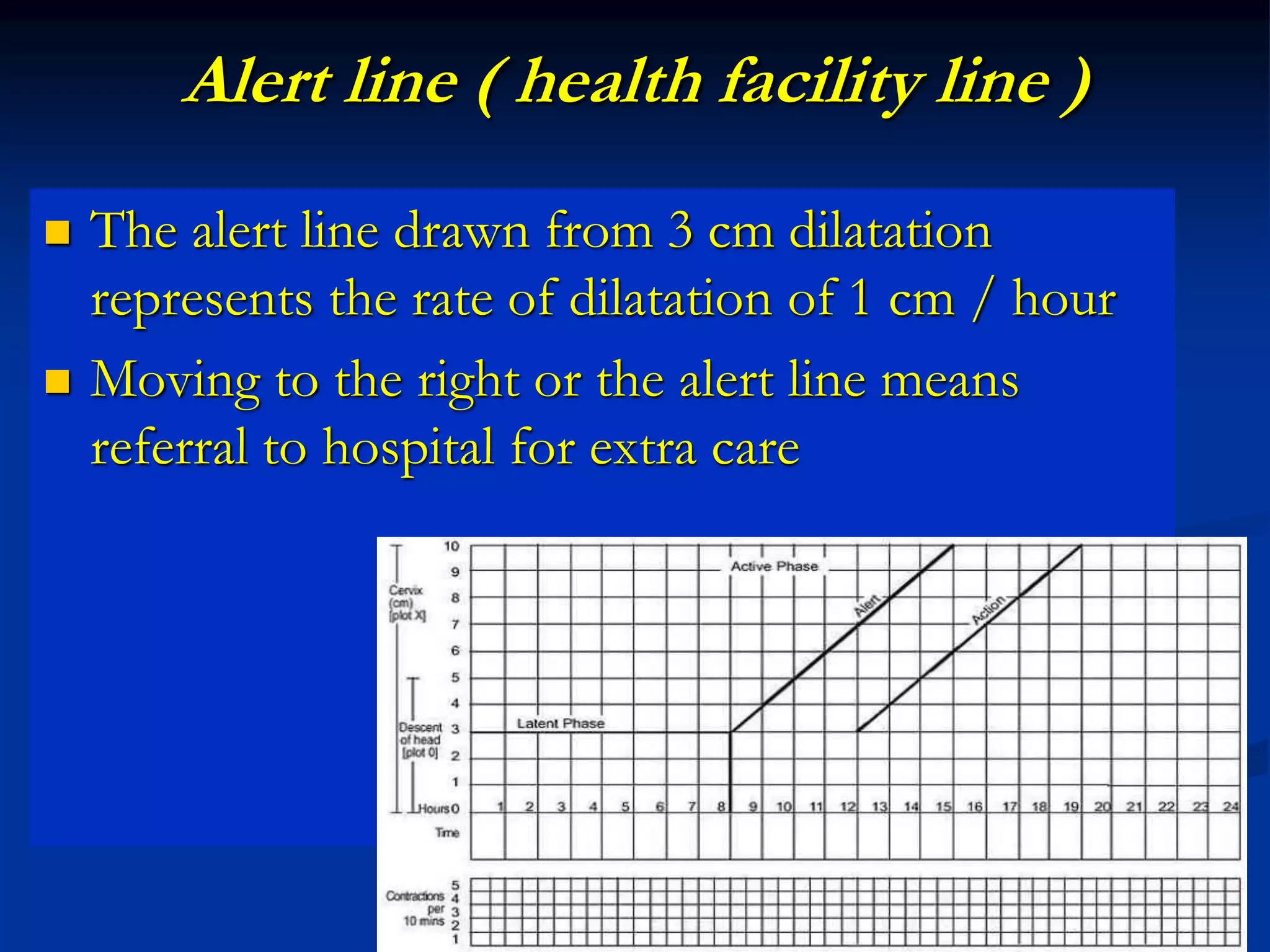
 The alert line drawn from 3 cm dilatation
represents the rate of dilatation of 1 cm / hour
 Moving to the right or the alert line means
referral to hospital for extra care
Action line ( hospital line )
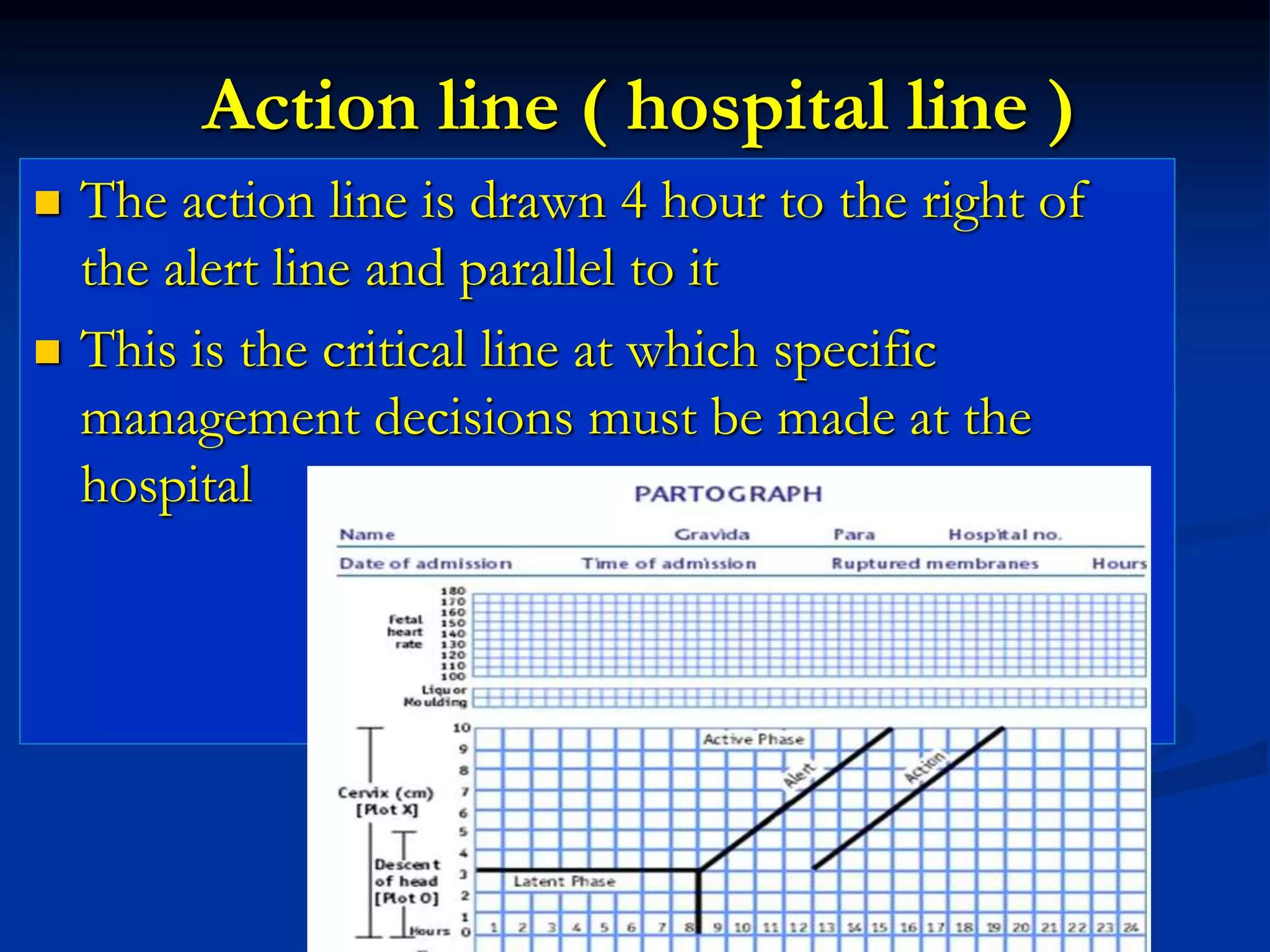
 The action line is drawn 4 hour to the right of
the alert line and parallel to it
 This is the critical line at which specific
management decisions must be made at the
hospital
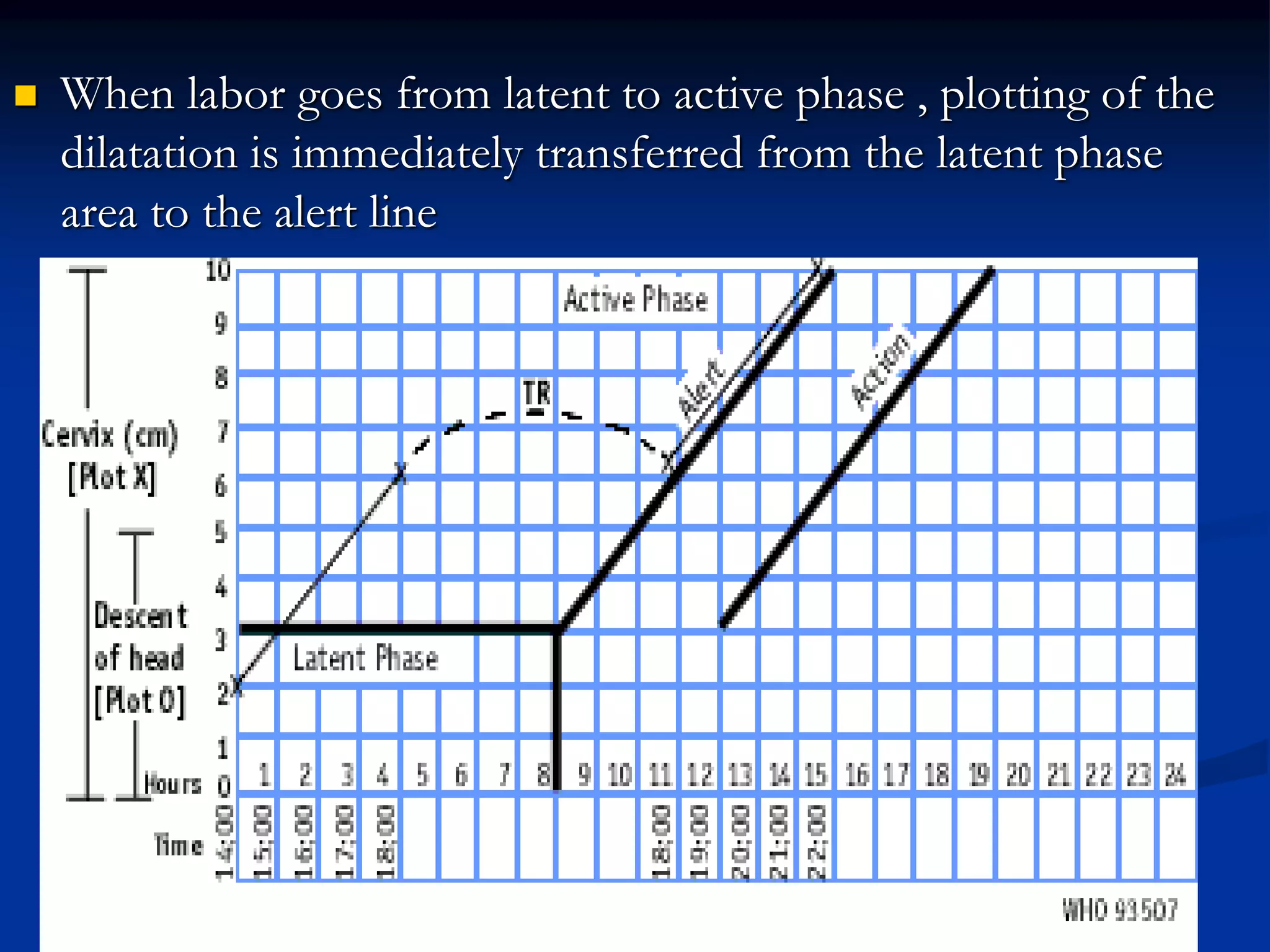
 When labor goes from latent to active phase , plotting of the
dilatation is immediately transferred from the latent phase
area to the alert line
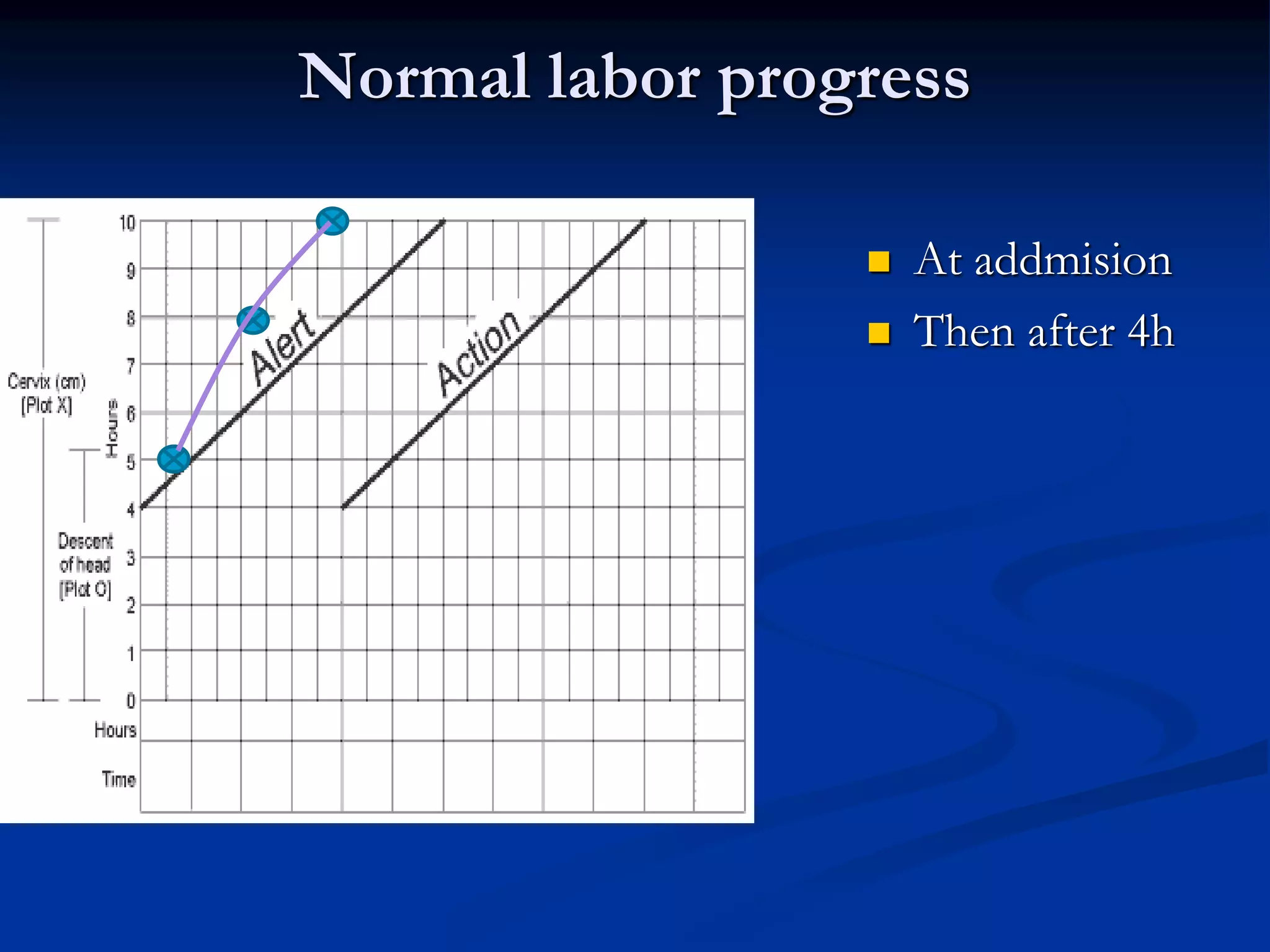
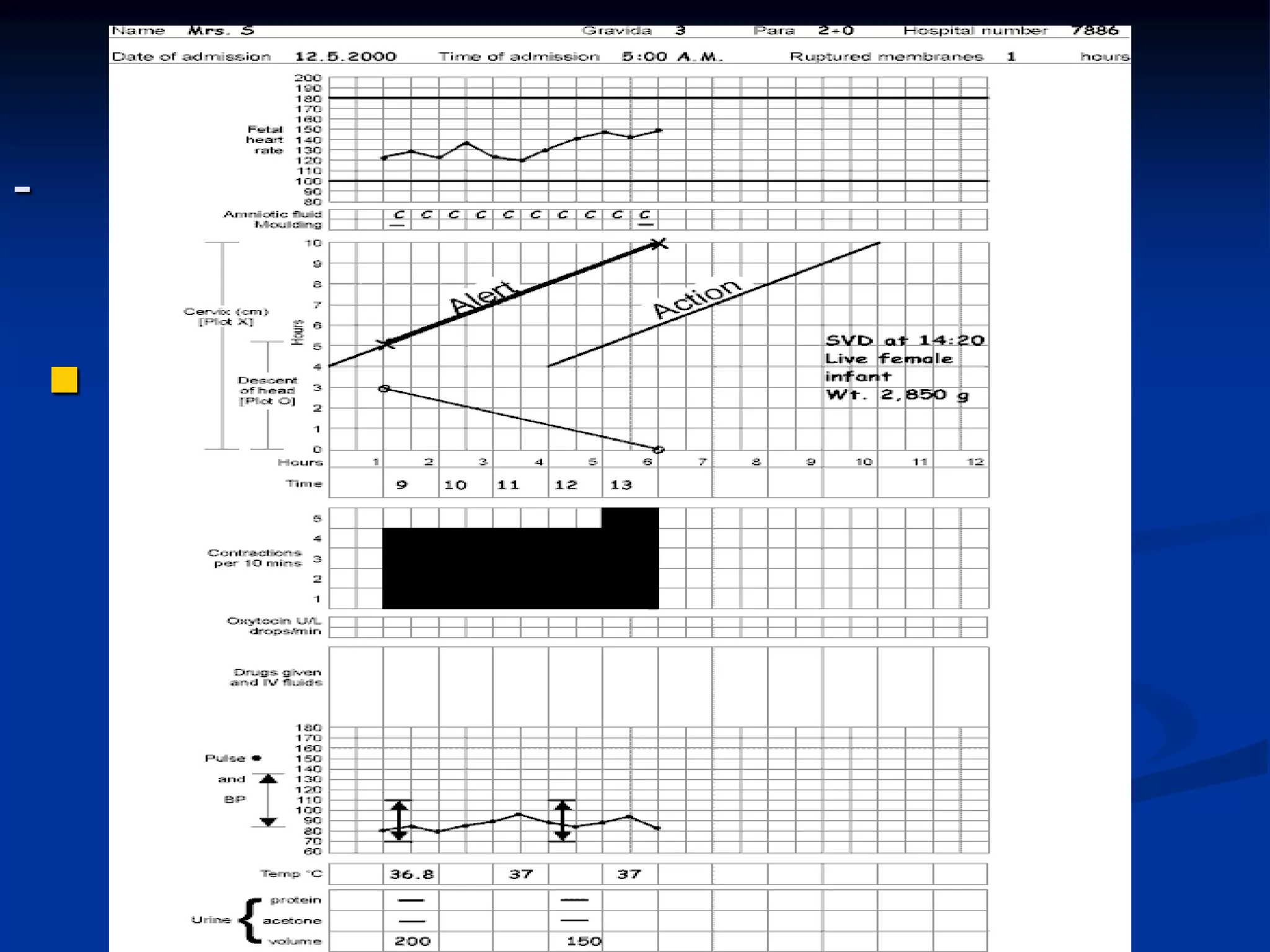
Normal labor progress
 At addmision
 Then after 4h
Abnormal labor progress
Recording uterine contraction
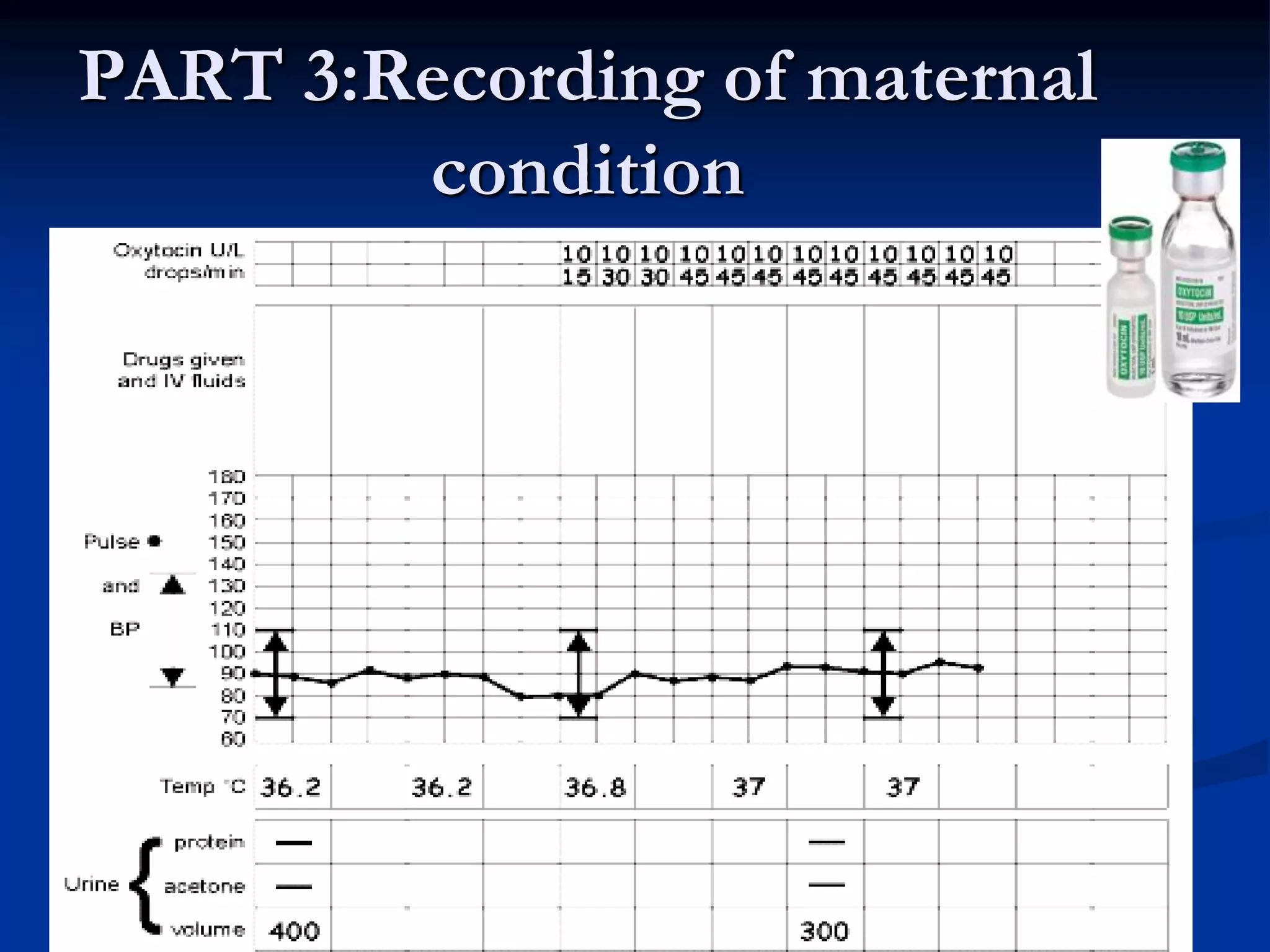
PART 3:Recording of maternal
condition
-

Management of the first
stage
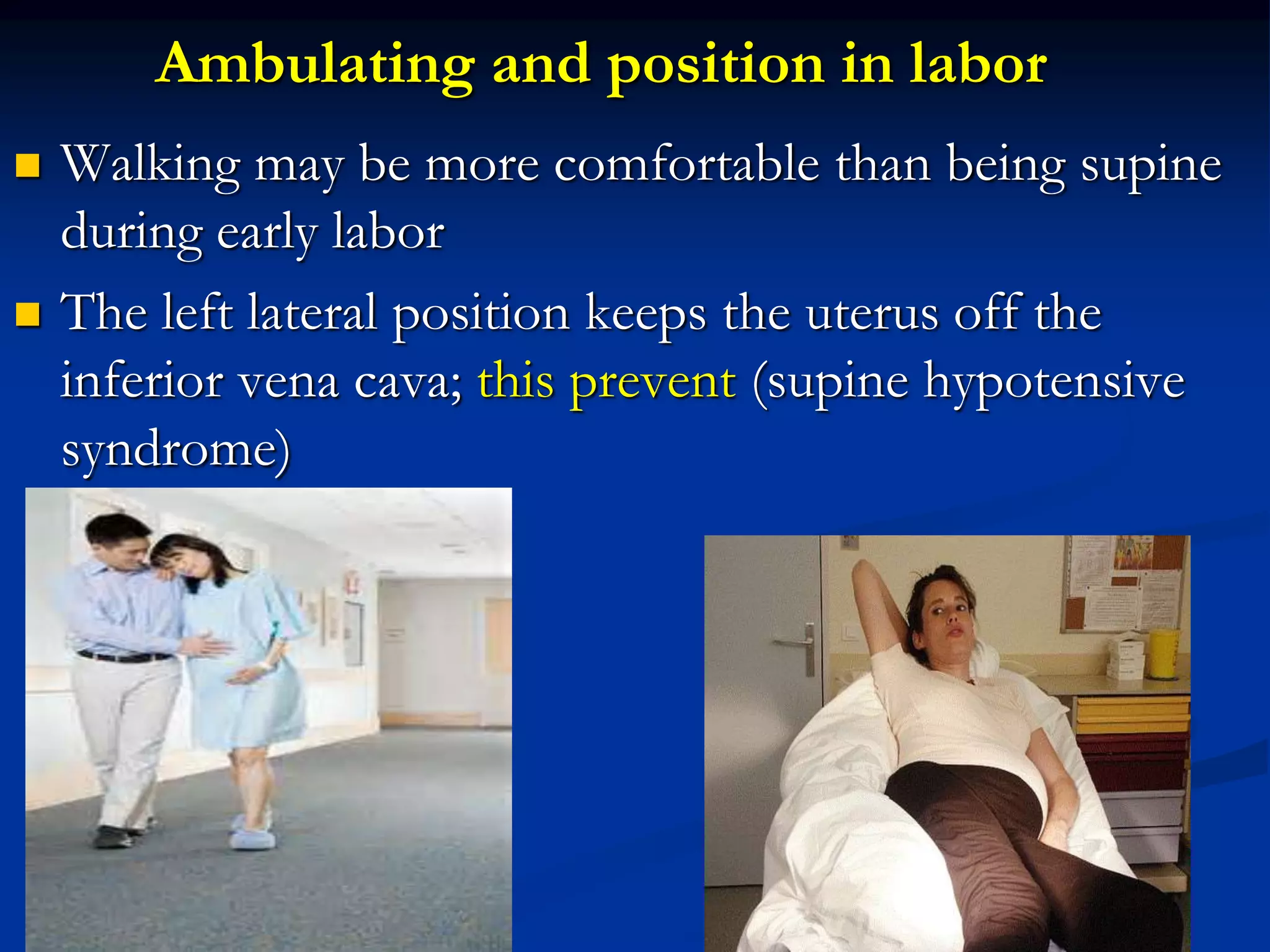
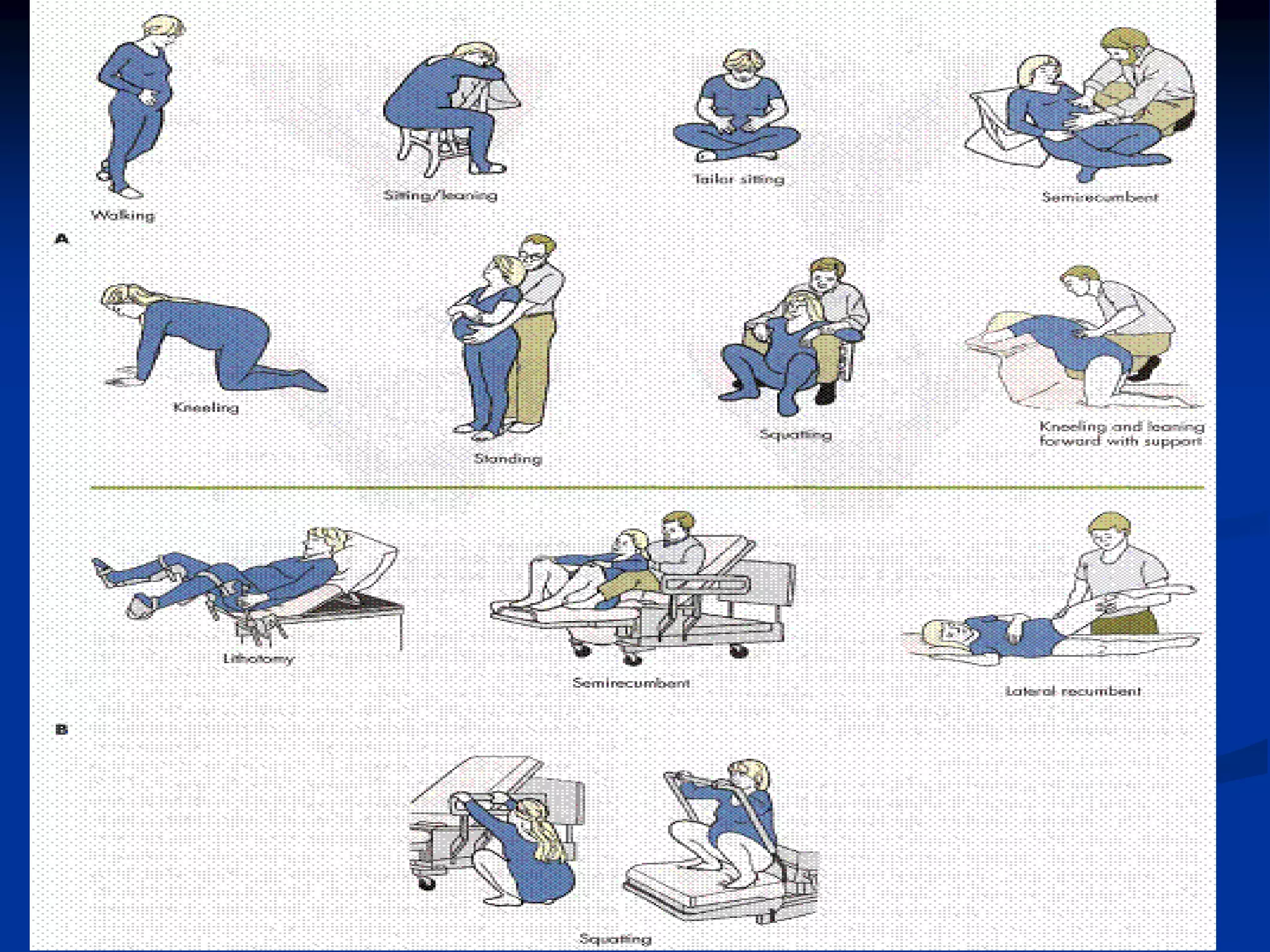
Ambulating and position in labor
 Walking may be more comfortable than being supine
during early labor
 The left lateral position keeps the uterus off the
inferior vena cava; this prevent (supine hypotensive
syndrome)
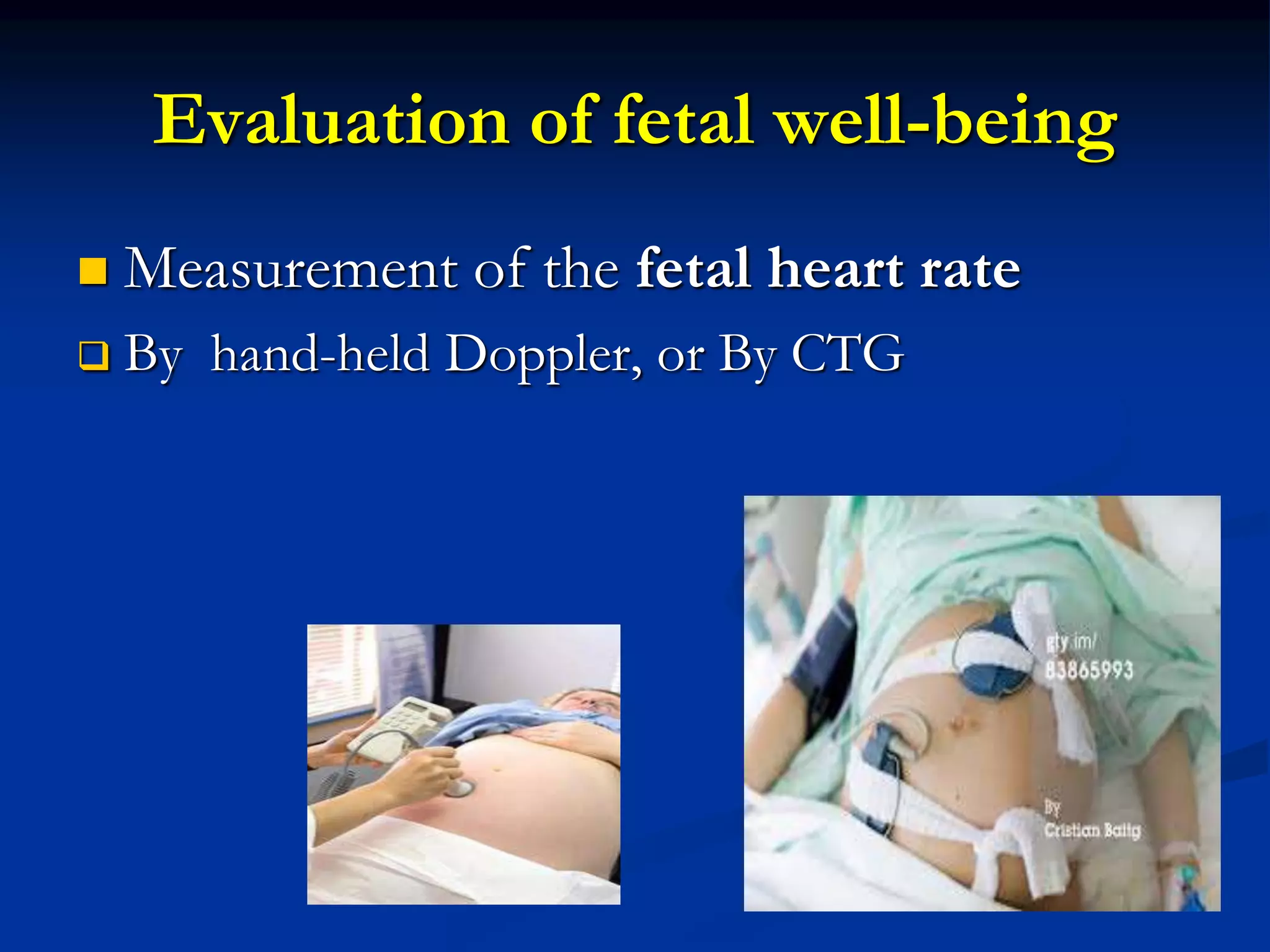
Evaluation of fetal well-being
 Measurement of the fetal heart rate
 By hand-held Doppler, or By CTG
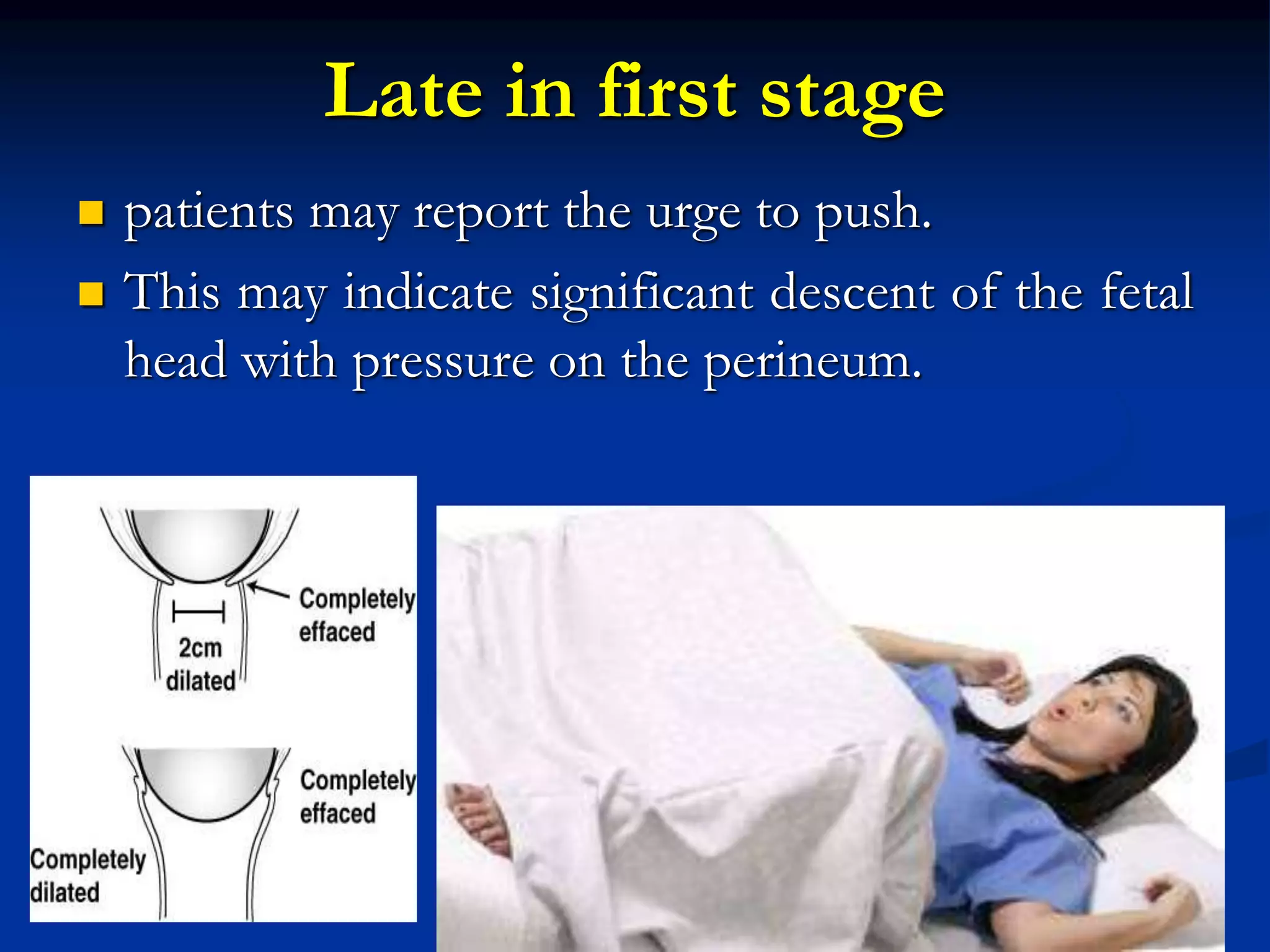
Late in first stage
 patients may report the urge to push.
 This may indicate significant descent of the fetal
head with pressure on the perineum.
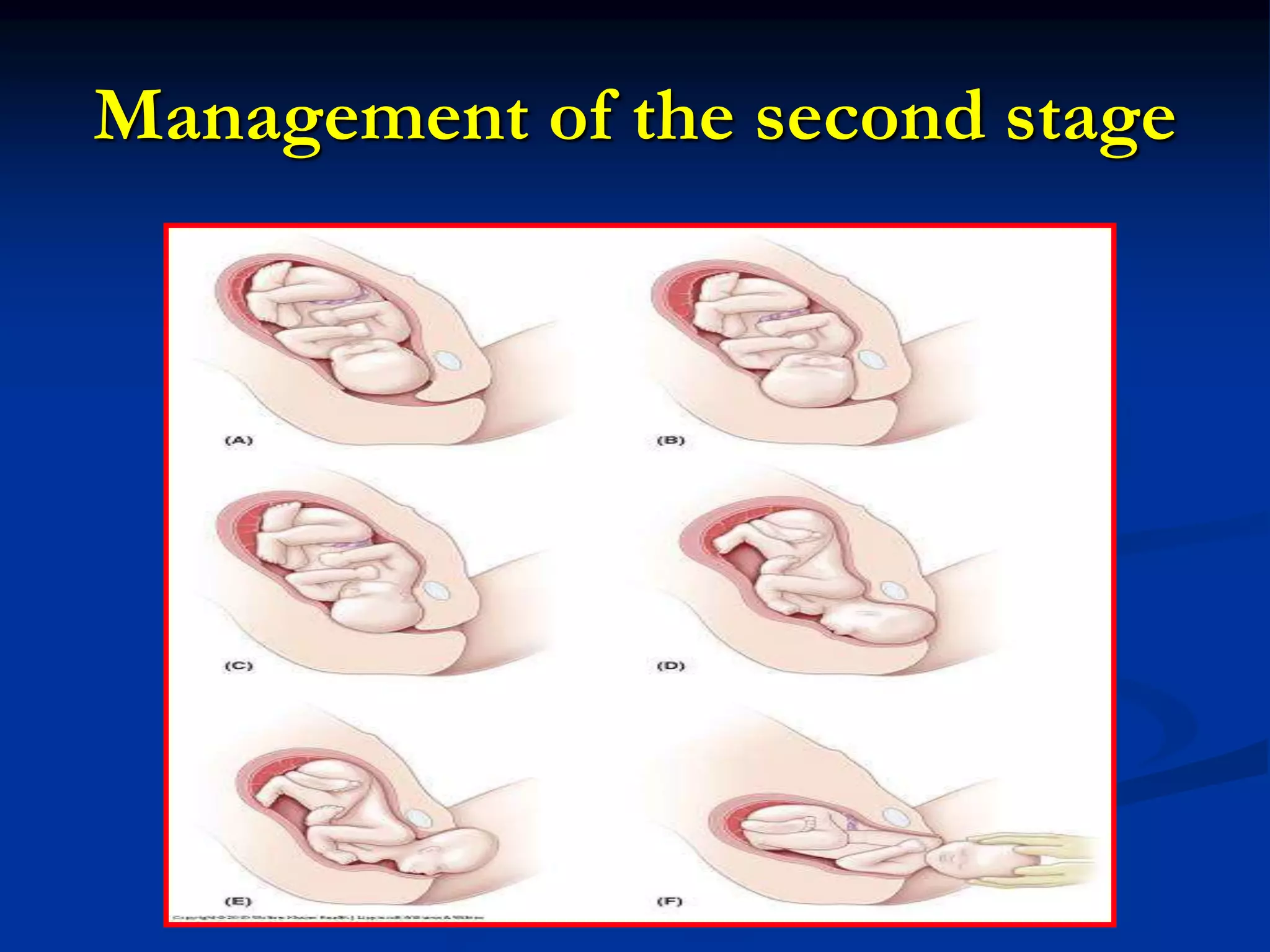
Management of the second stage
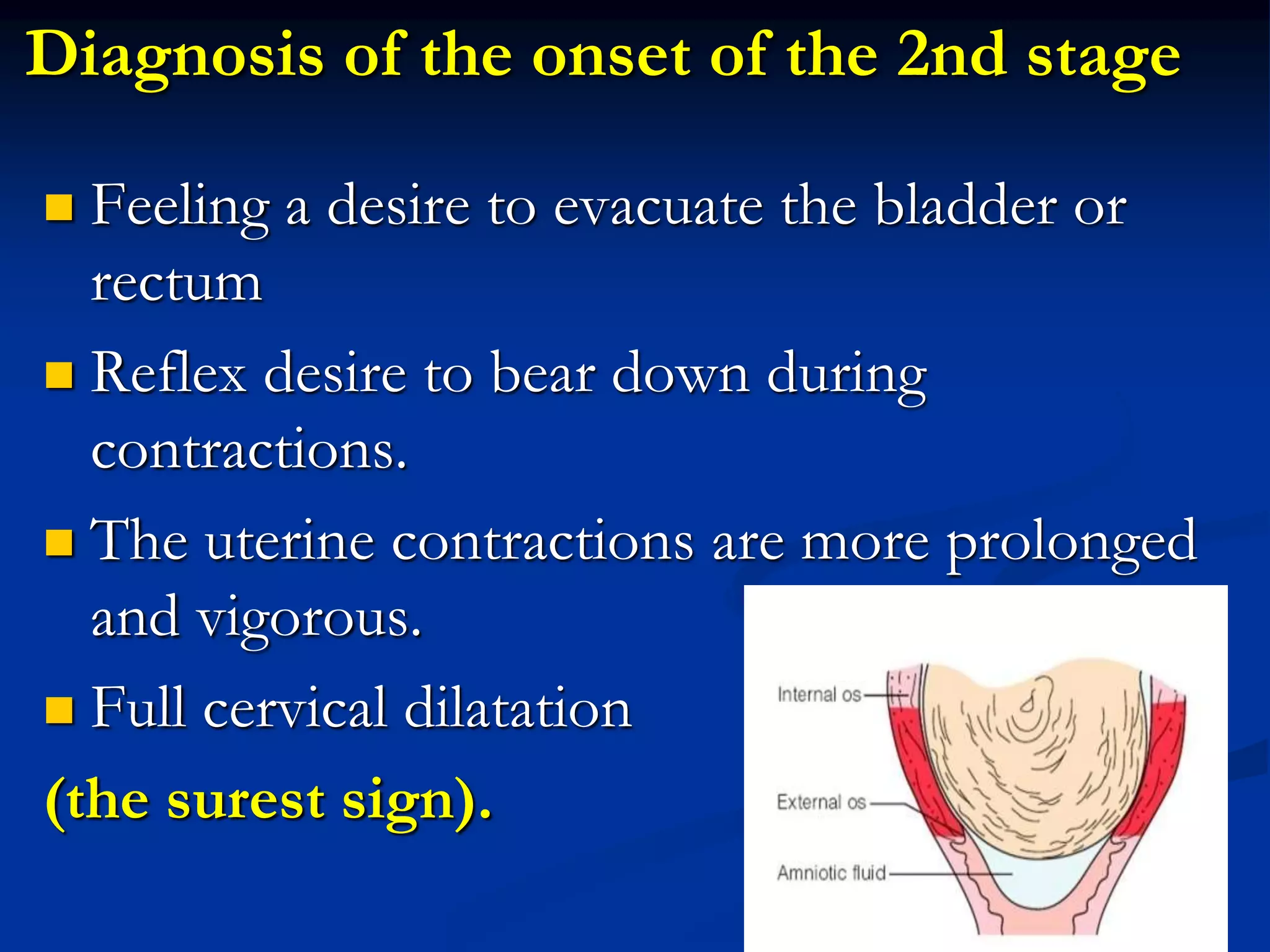
Diagnosis of the onset of the 2nd stage
 Feeling a desire to evacuate the bladder or
rectum
 Reflex desire to bear down during
contractions.
 The uterine contractions are more prolonged
and vigorous.
 Full cervical dilatation
(the surest sign).
Transport the lady to the delivery
room.
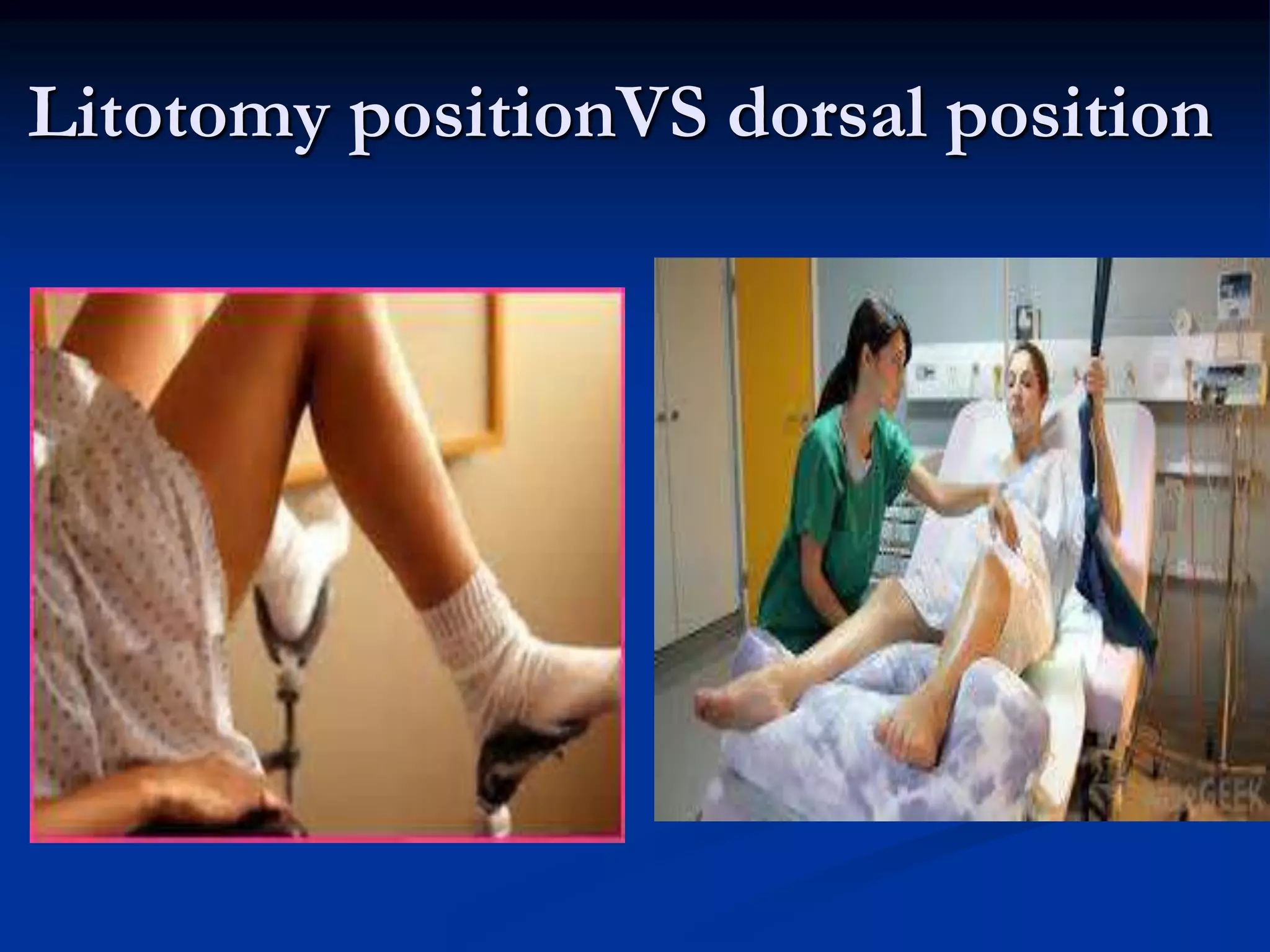
 . (A)Position: - Lithotomy position or
Dorsal position.
 (B)Paint vulva & perineum with
antiseptic solution.
 (C)Apply sterile leggings and towels
 (D)Evacuate the bladder by catheter (if
not evacuated before)
Litotomy positionVS dorsal position
 F)Ask the lady to bear down during
uterine contractions and relax in between.
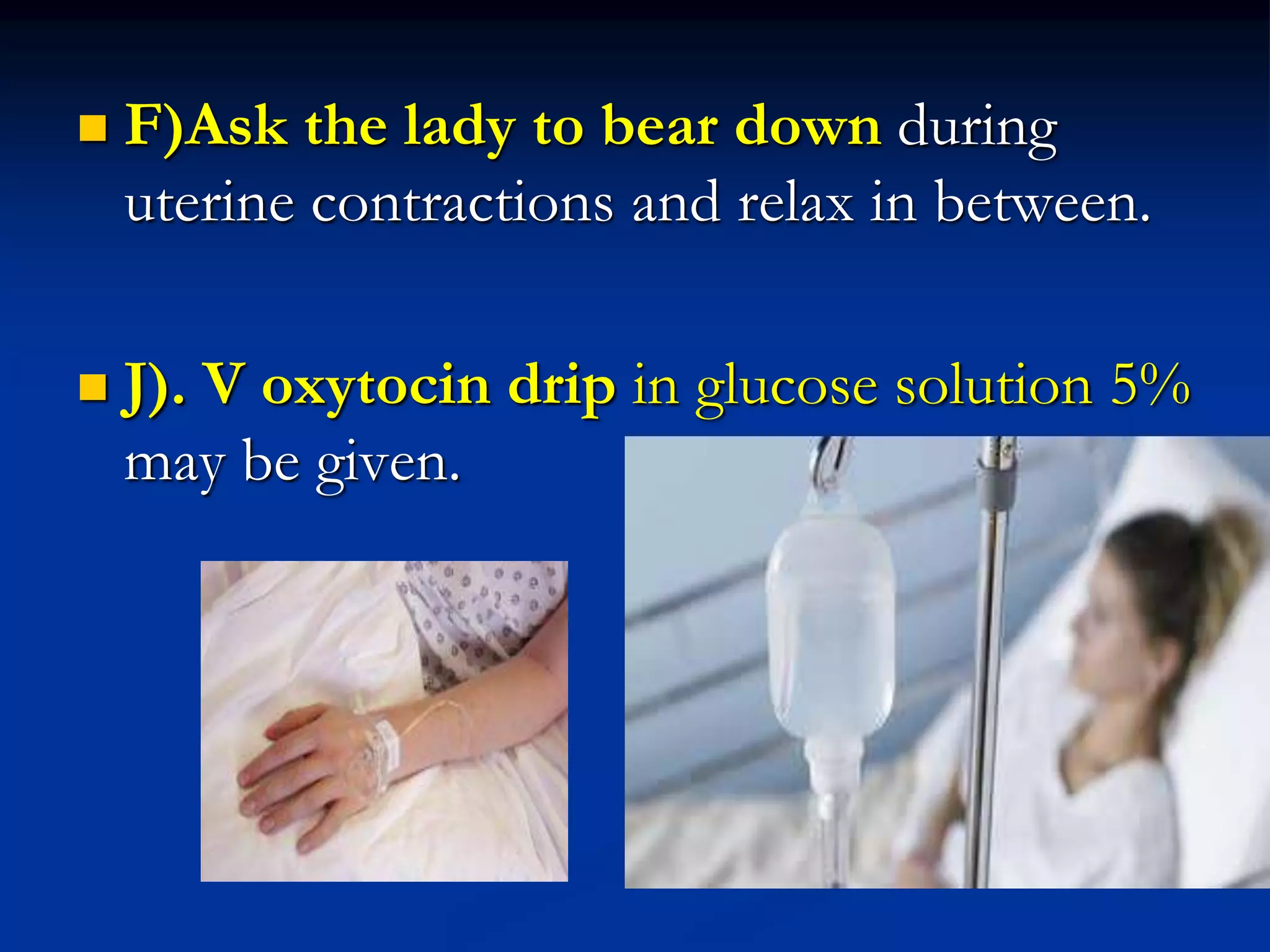
 J). V oxytocin drip in glucose solution 5%
may be given.
4)The main task of the
obstetrician is to prevent
perineal lacerations, how?
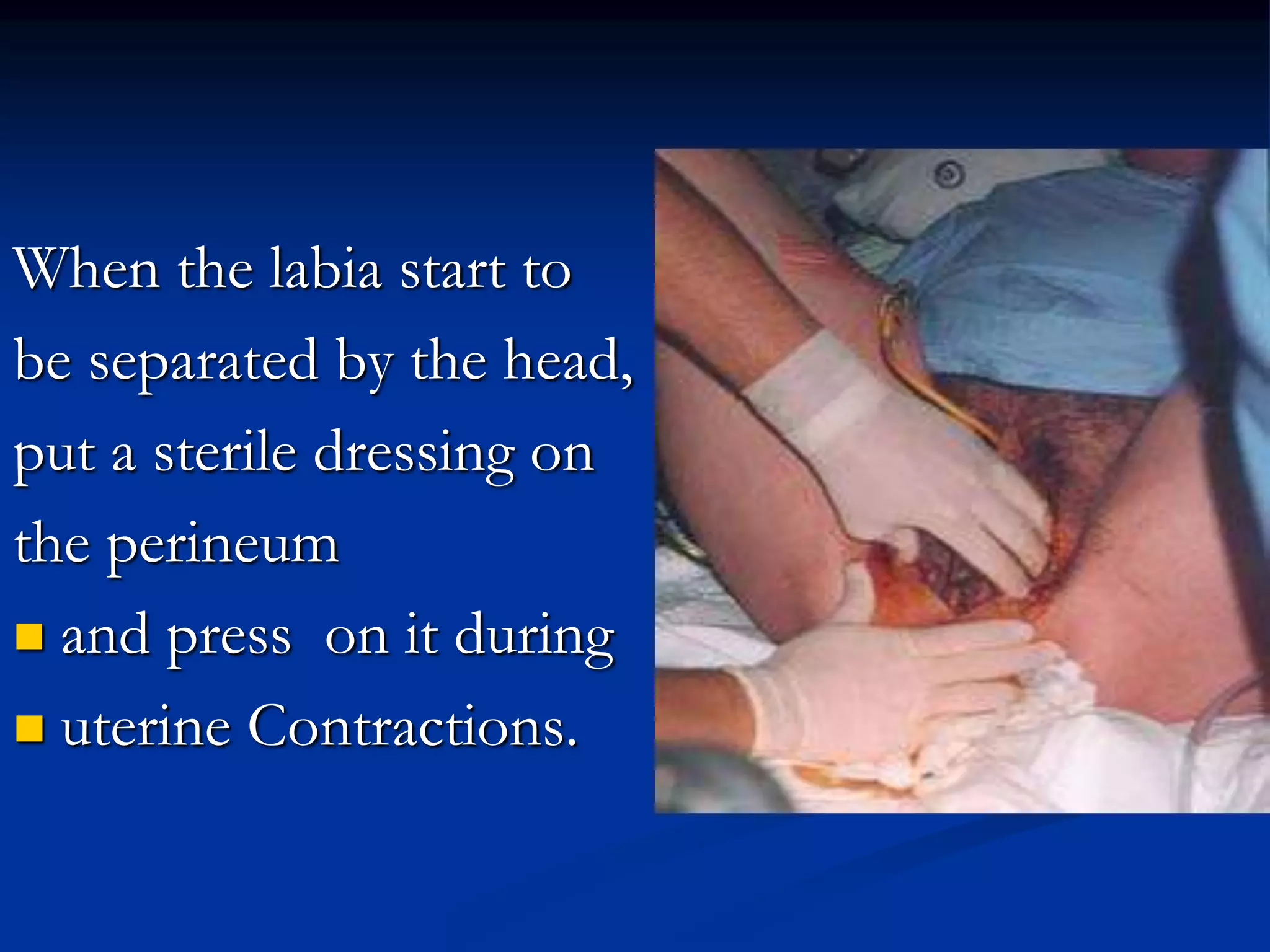
When the labia start to
be separated by the head,
put a sterile dressing on
the perineum
 and press on it during
 uterine Contractions.
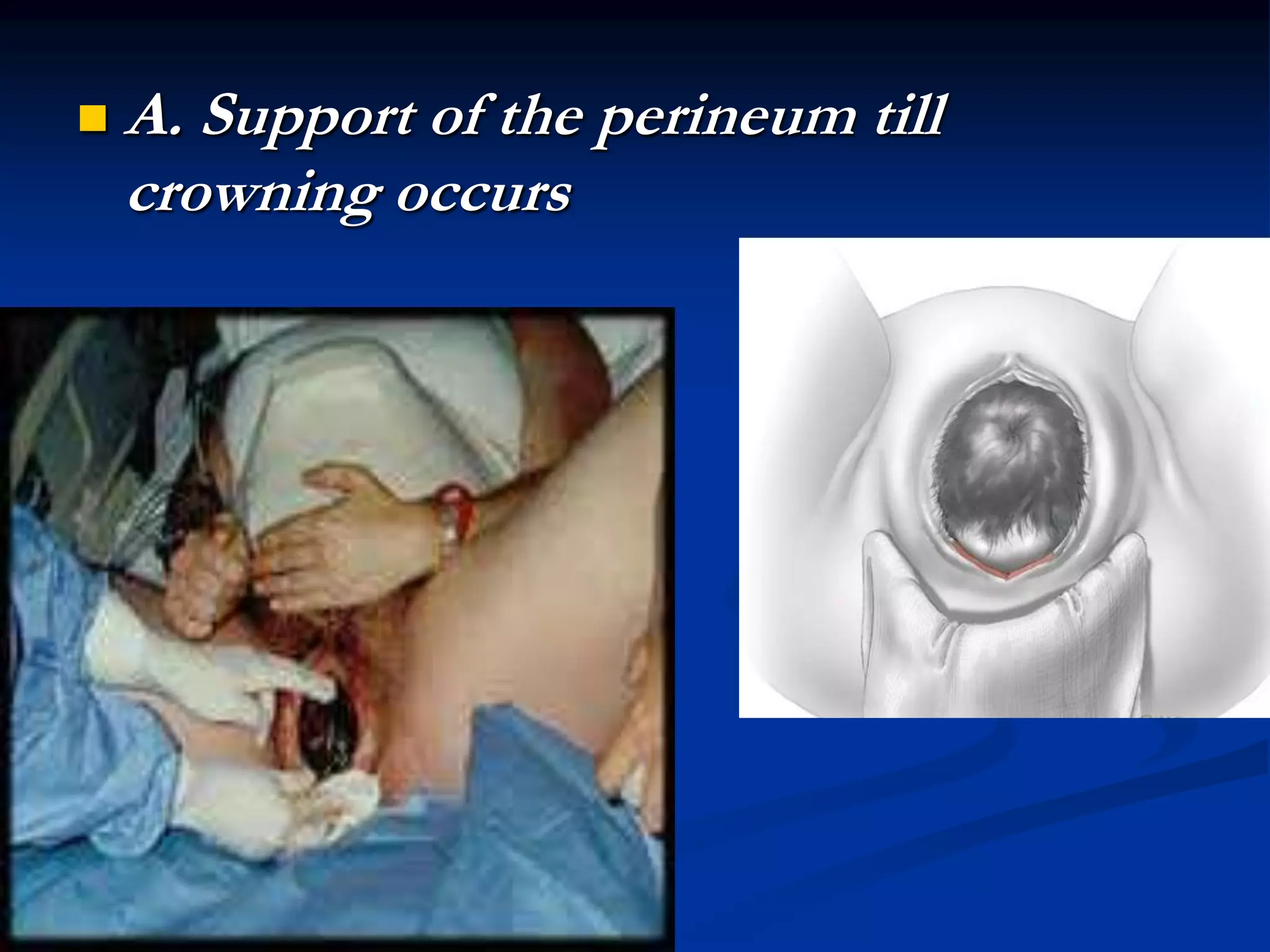
 A. Support of the perineum till
crowning occurs
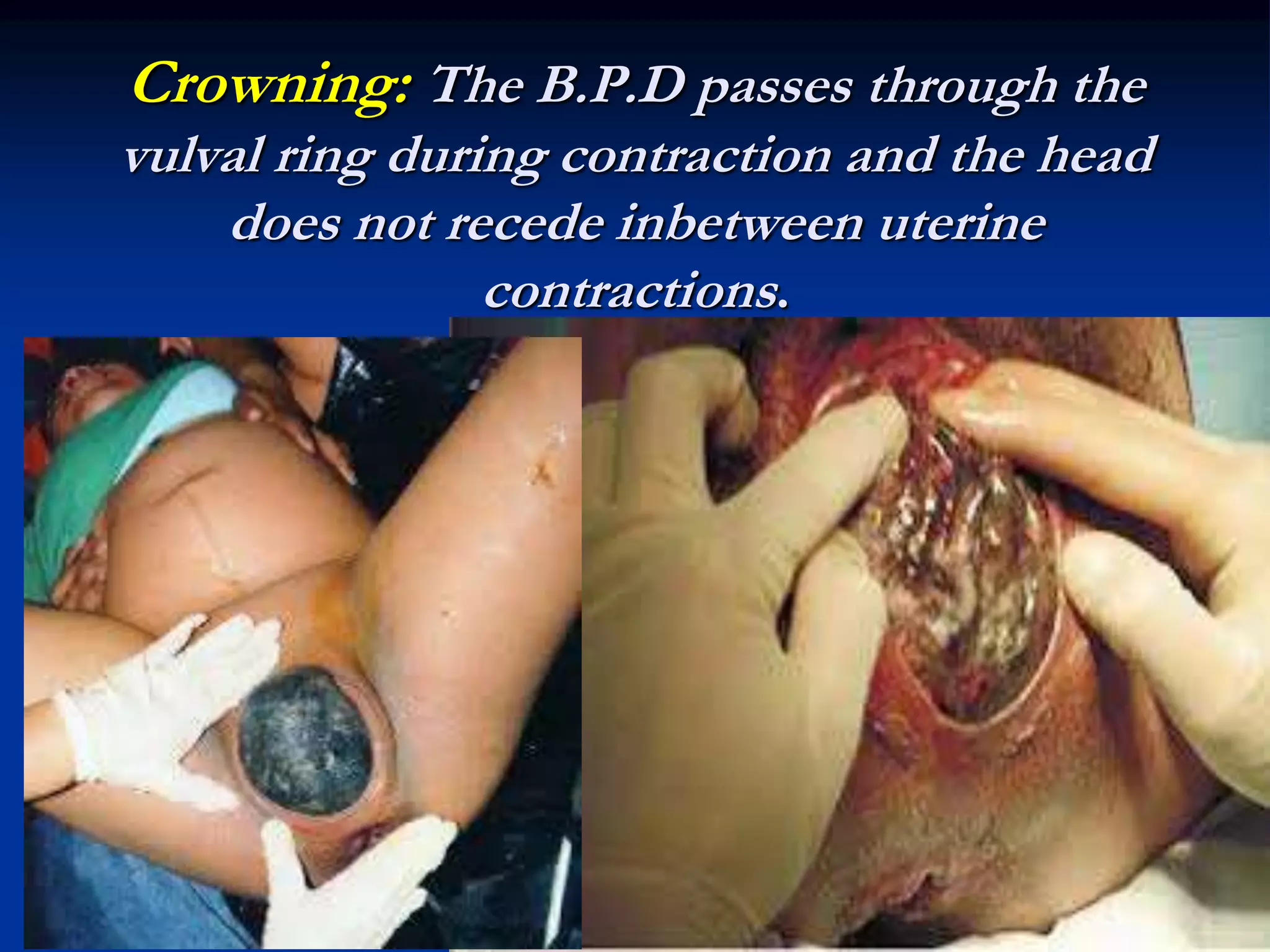
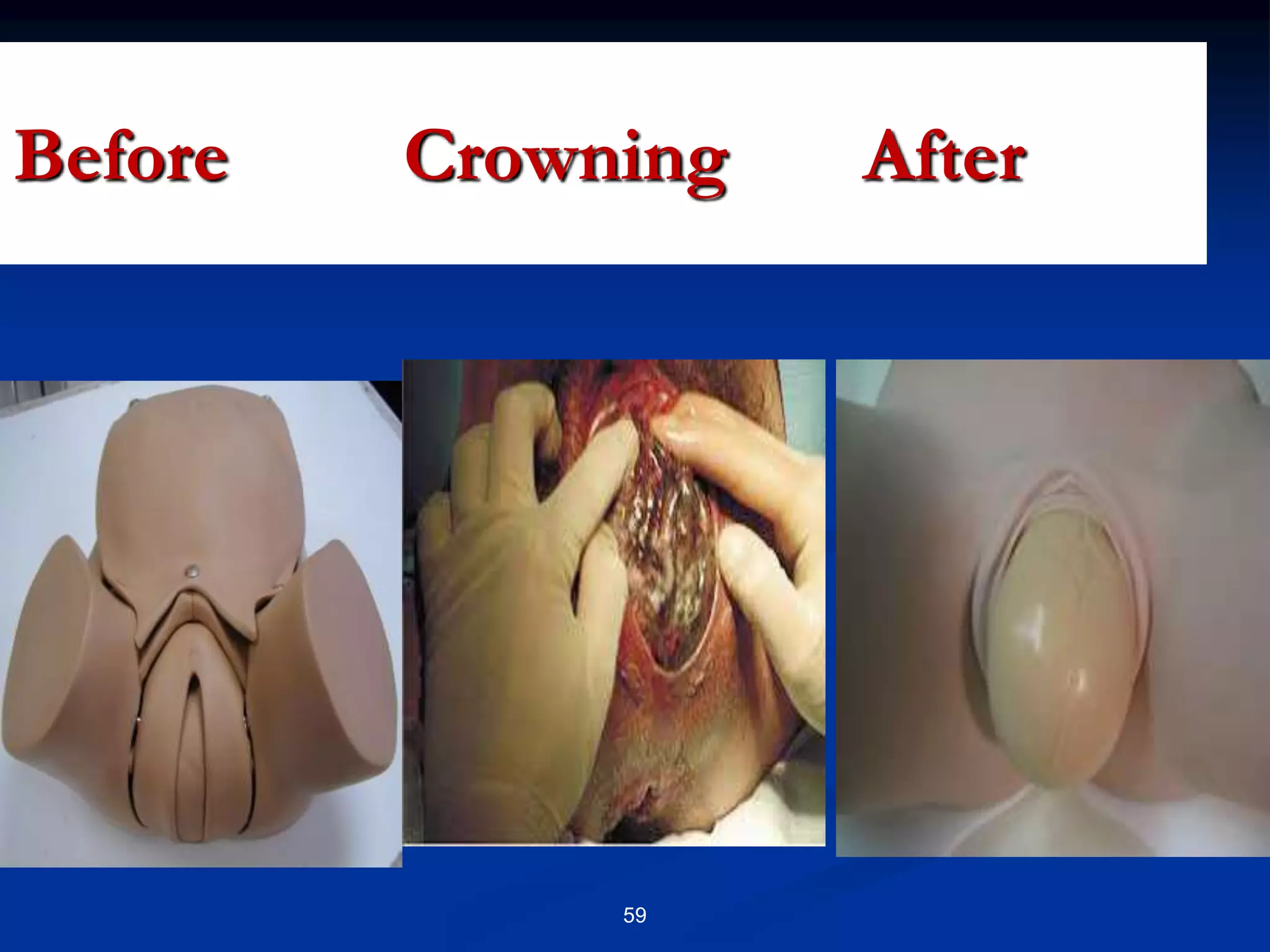
Crowning: The B.P.D passes through the
vulval ring during contraction and the head
does not recede inbetween uterine
contractions.
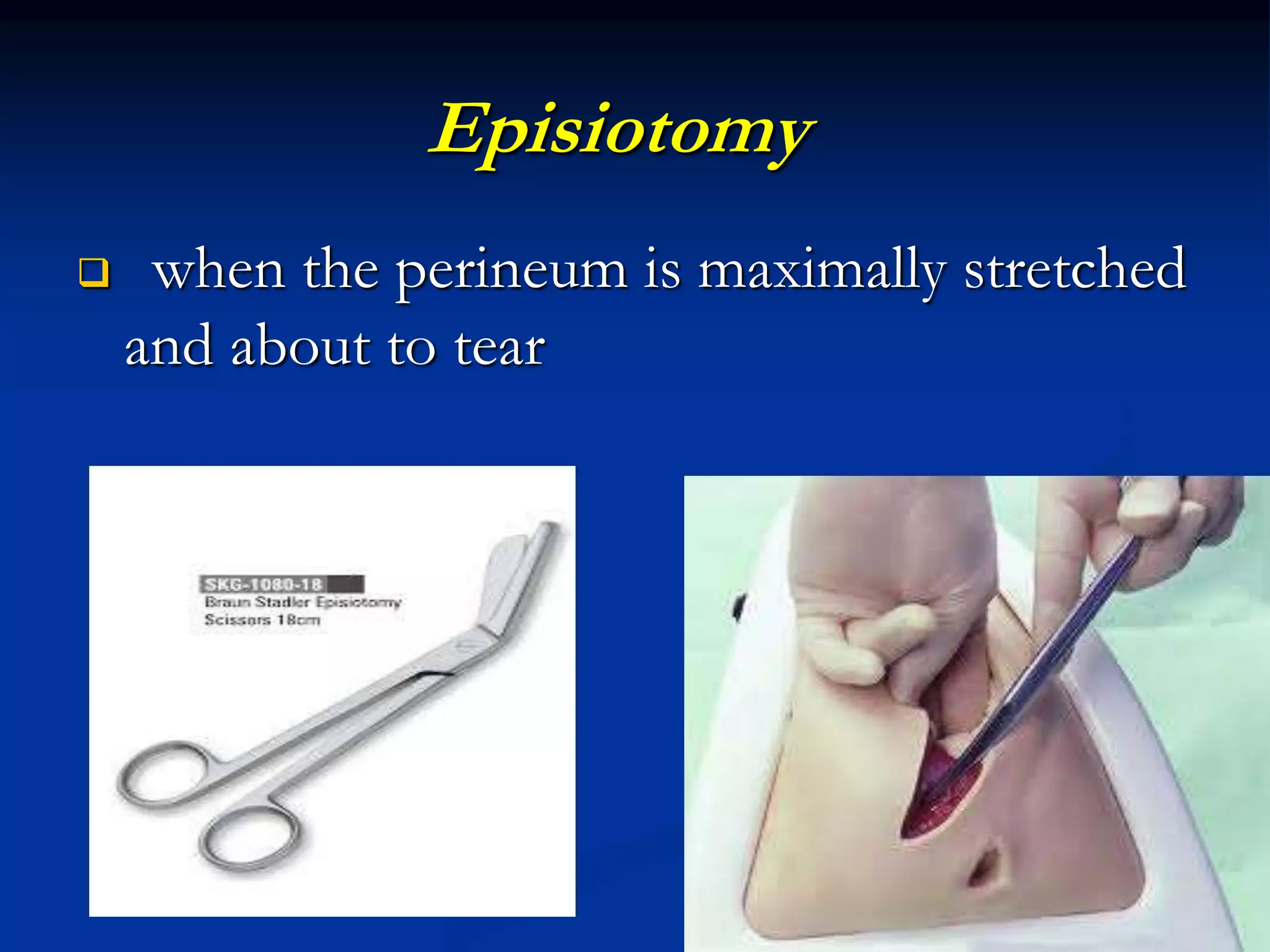
Episiotomy
 when the perineum is maximally stretched
and about to tear
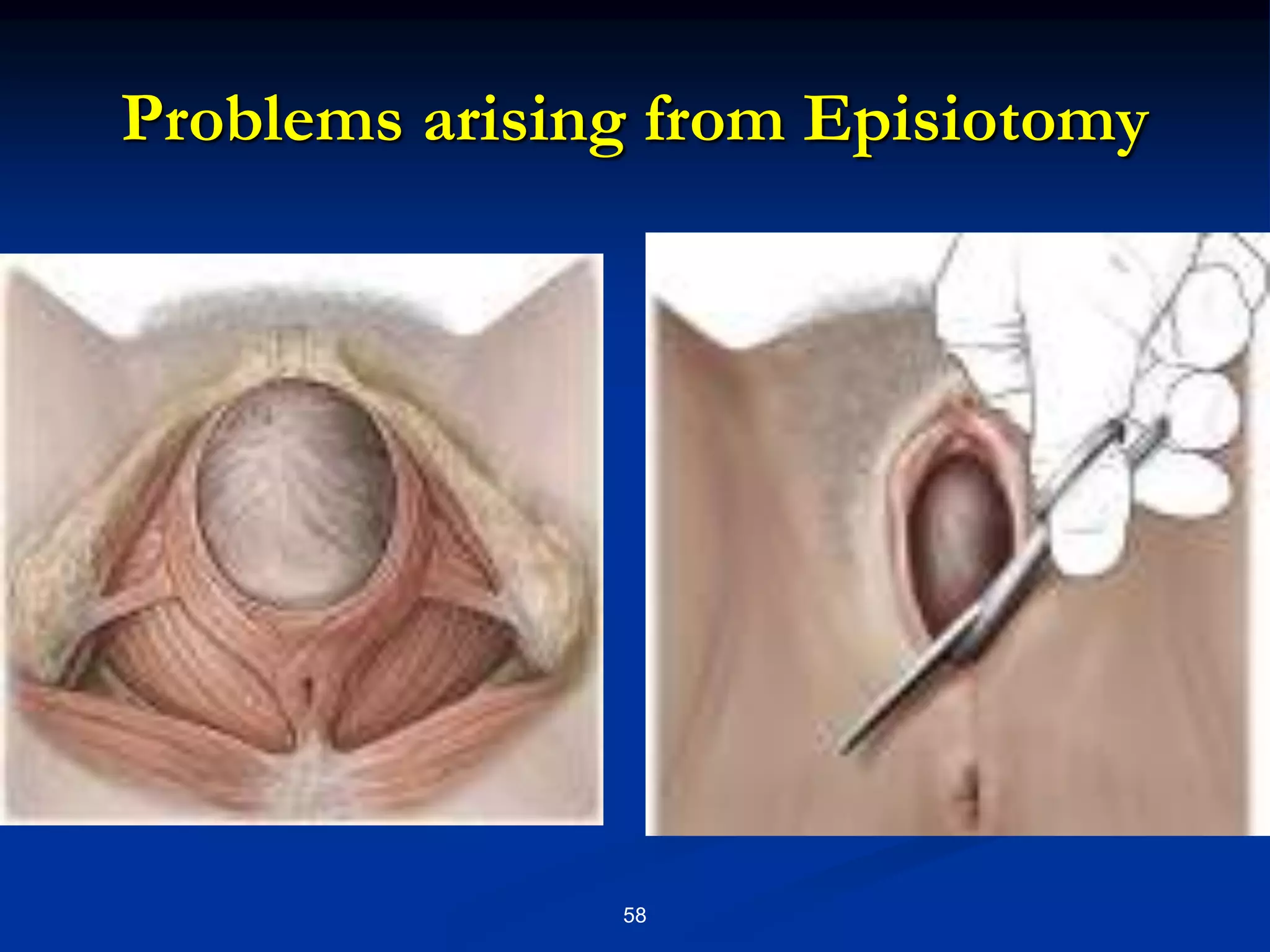
Problems arising from Episiotomy
58
 Pain
 Edema
 Bleeding
 Infection
 Defects in wound
Before Crowning After
59
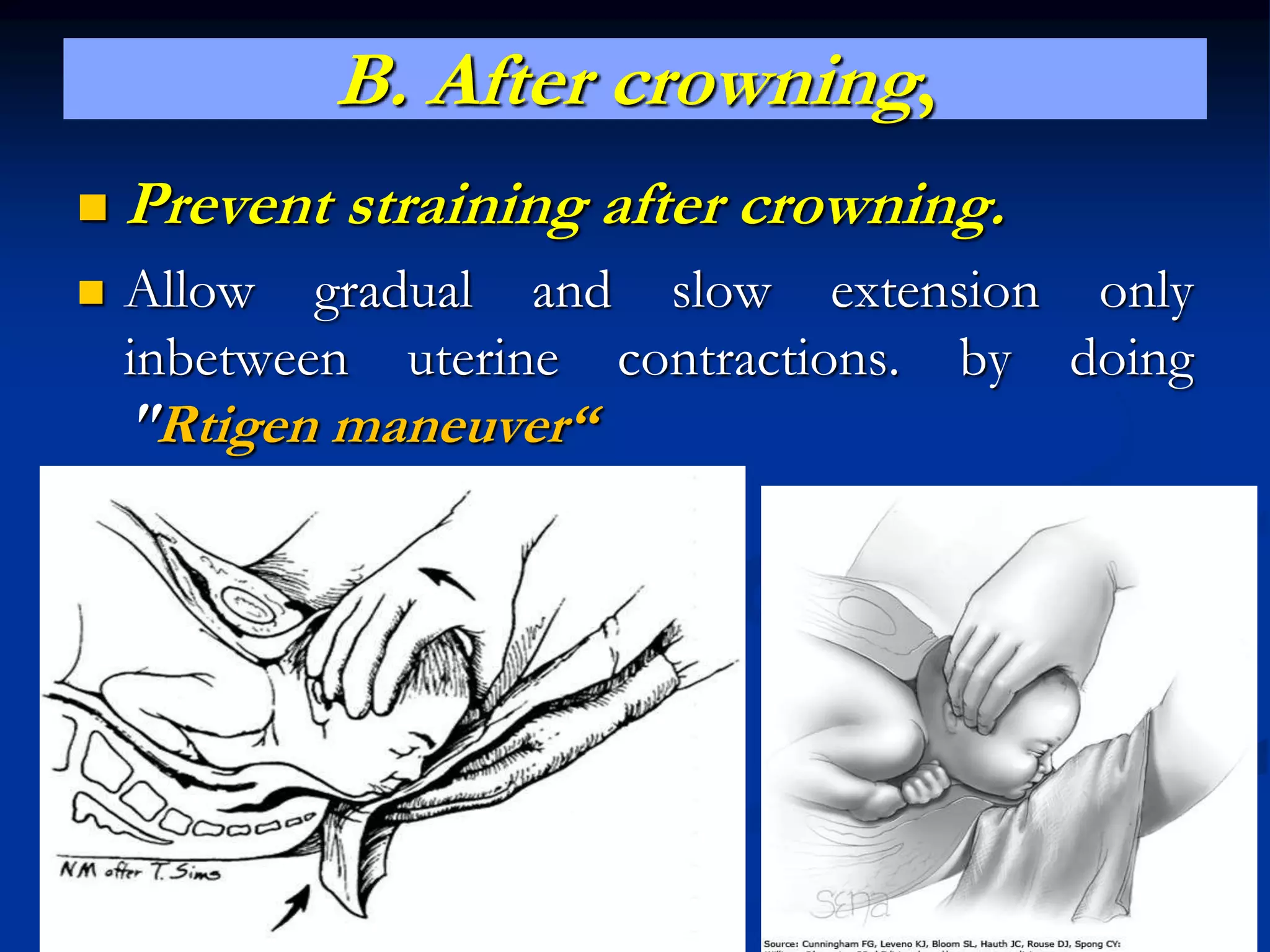
B. After crowning,
 Prevent straining after crowning.
 Allow gradual and slow extension only
inbetween uterine contractions. by doing
"Rtigen maneuver“
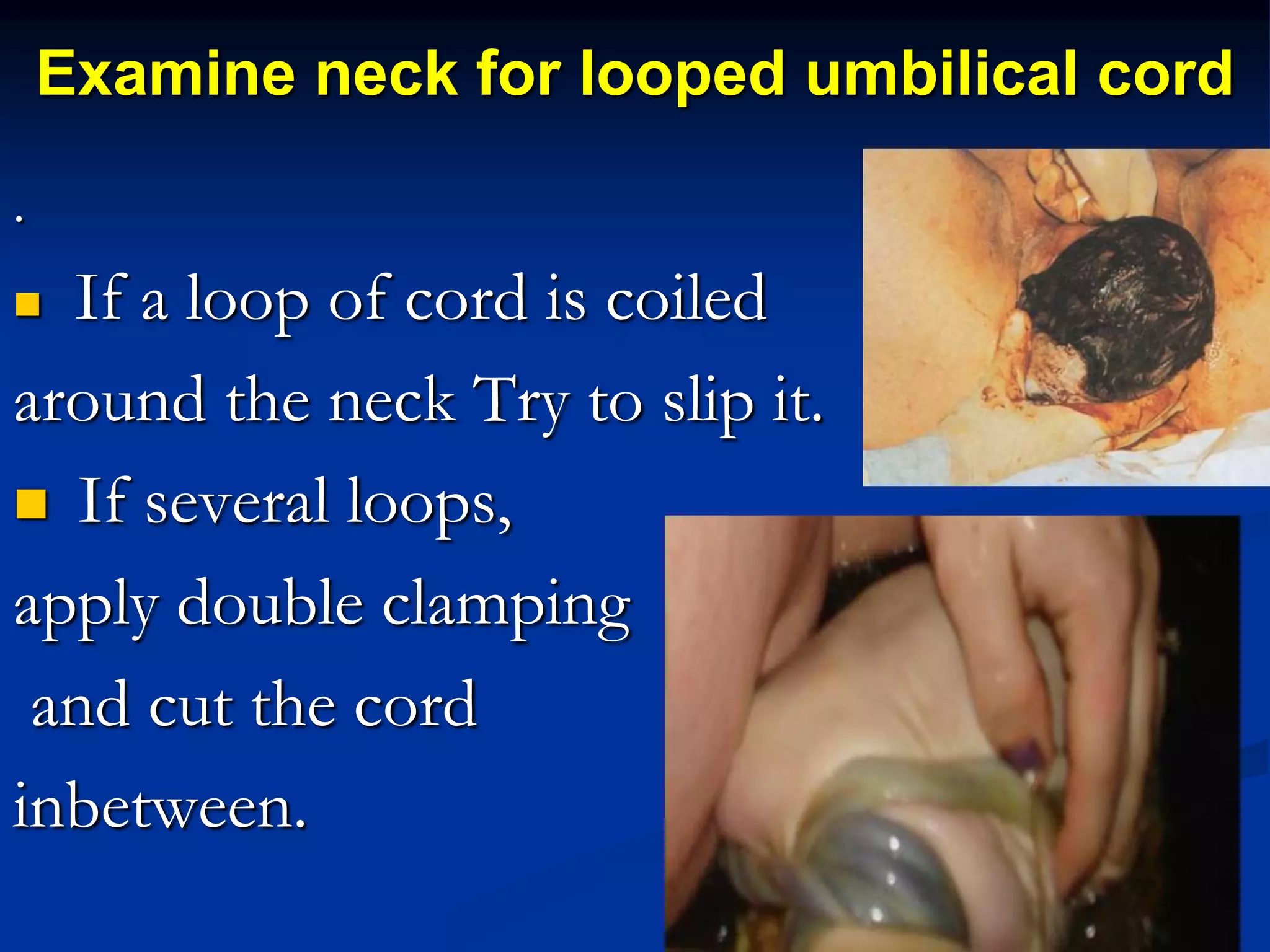
Examine neck for looped umbilical cord
.
 If a loop of cord is coiled
around the neck Try to slip it.
 If several loops,
apply double clamping
and cut the cord
inbetween.
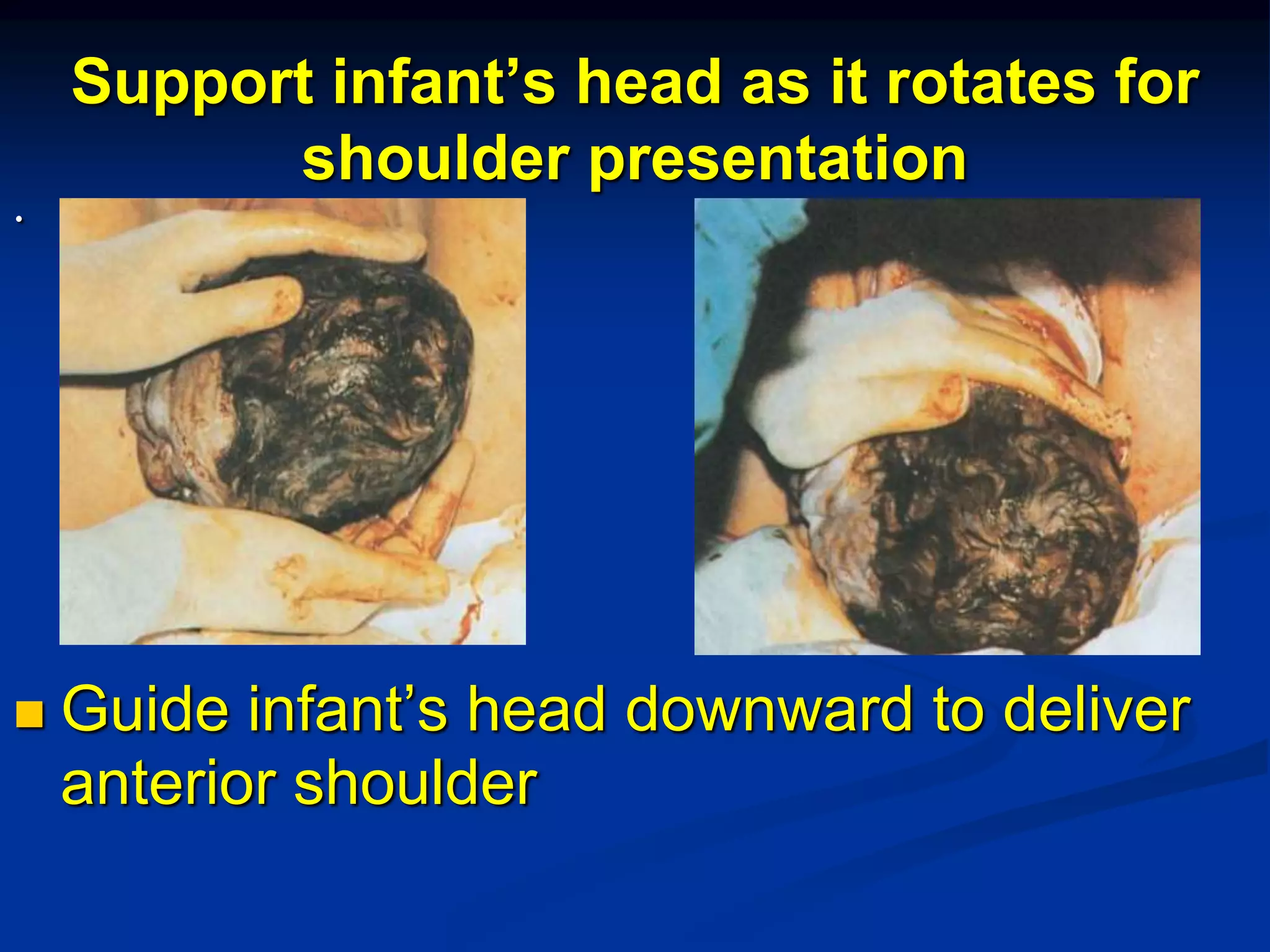
Support infant’s head as it rotates for
shoulder presentation
.
 Guide infant’s head downward to deliver
anterior shoulder
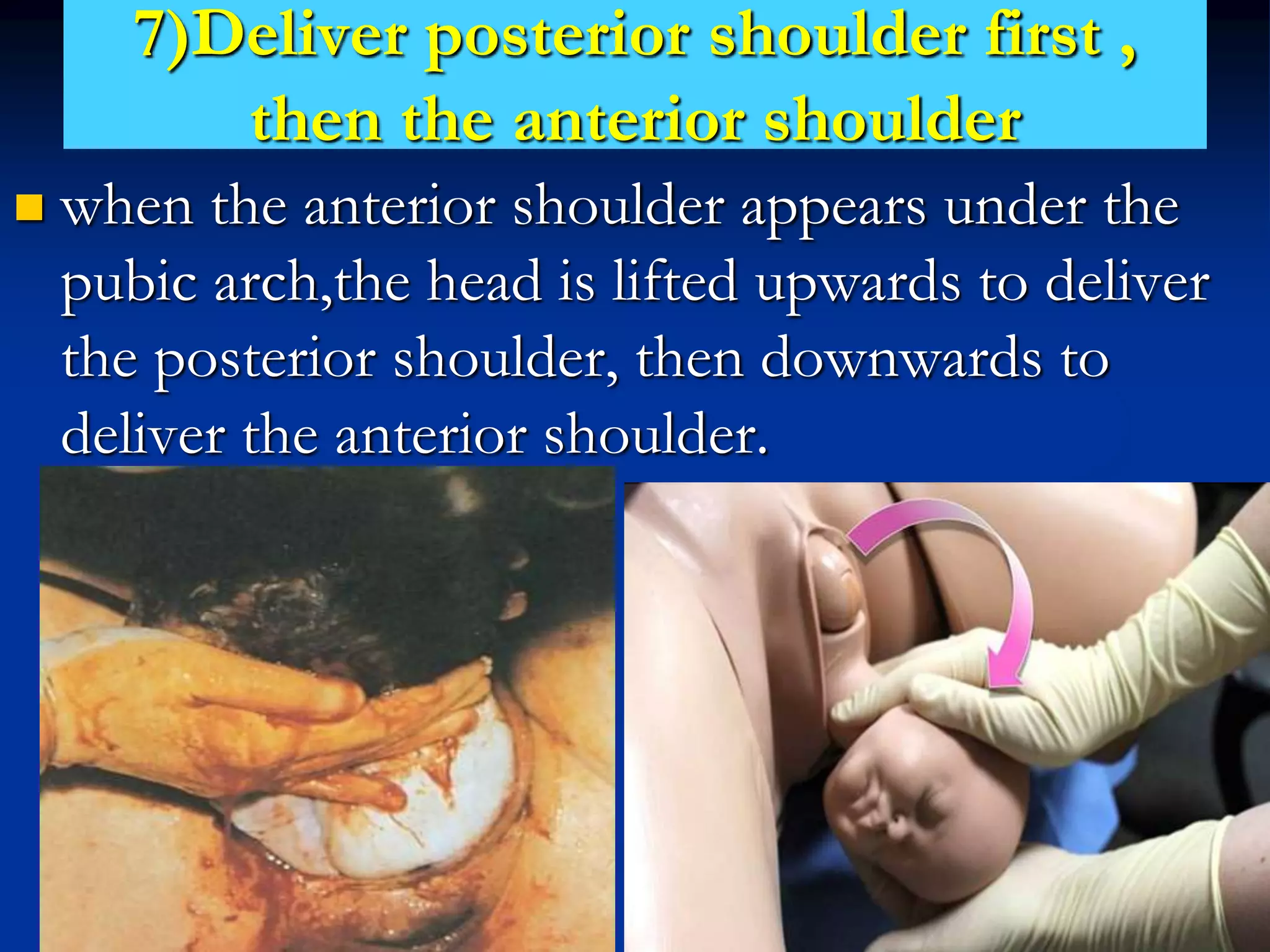
7)Deliver posterior shoulder first ,
then the anterior shoulder
 when the anterior shoulder appears under the
pubic arch,the head is lifted upwards to deliver
the posterior shoulder, then downwards to
deliver the anterior shoulder.
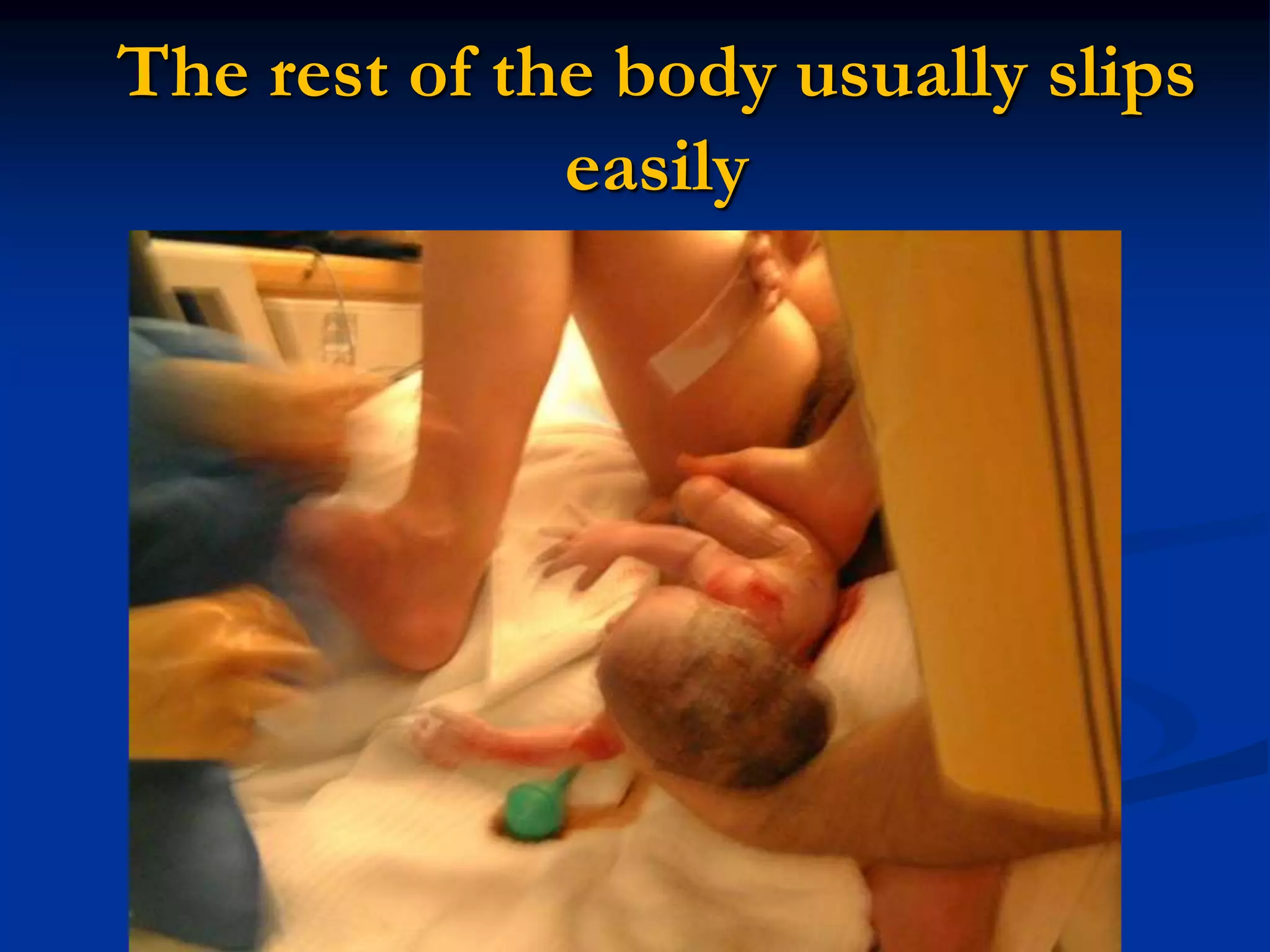
The rest of the body usually slips
easily
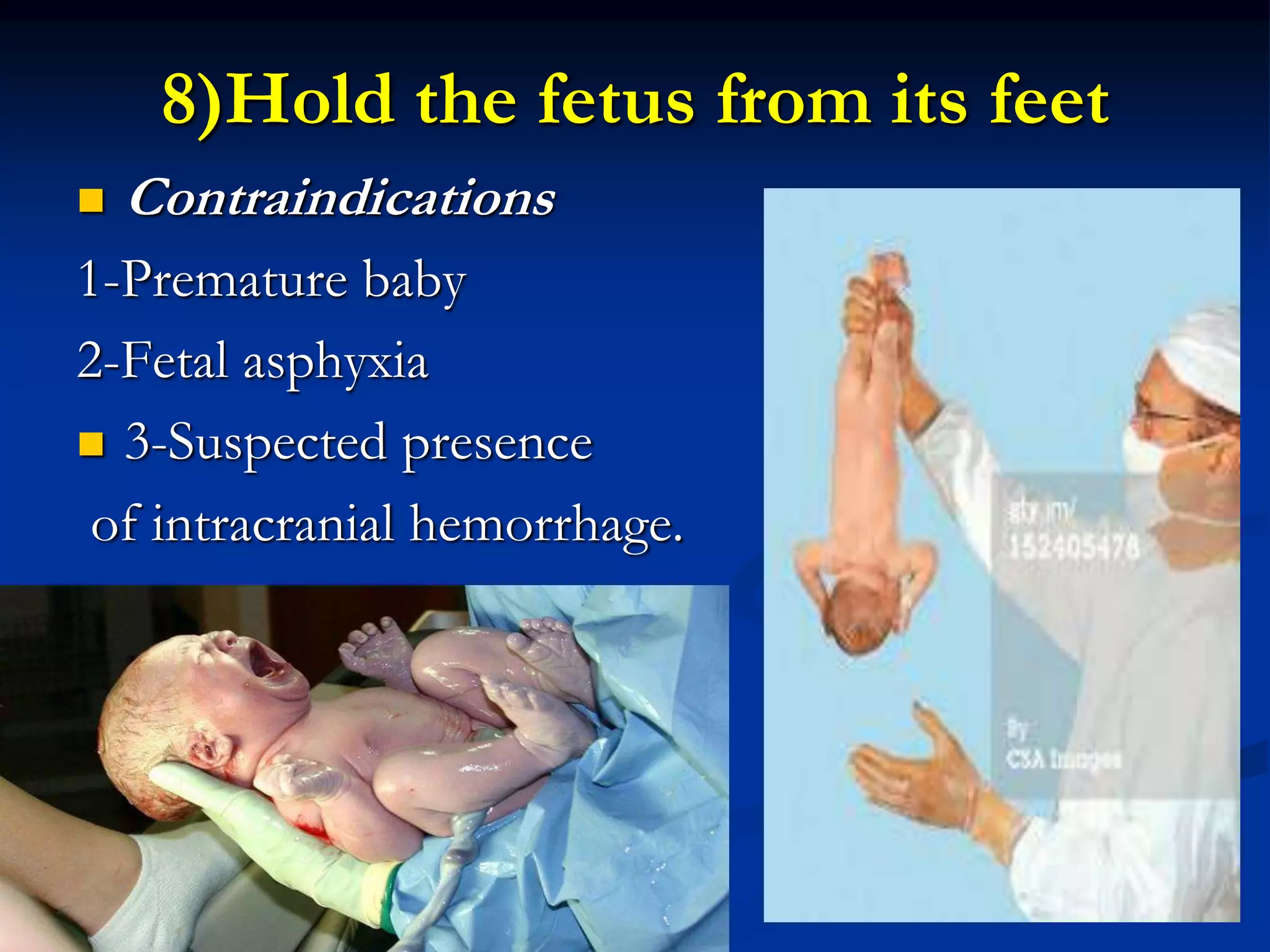
8)Hold the fetus from its feet
 Contraindications
1-Premature baby
2-Fetal asphyxia
 3-Suspected presence
of intracranial hemorrhage.
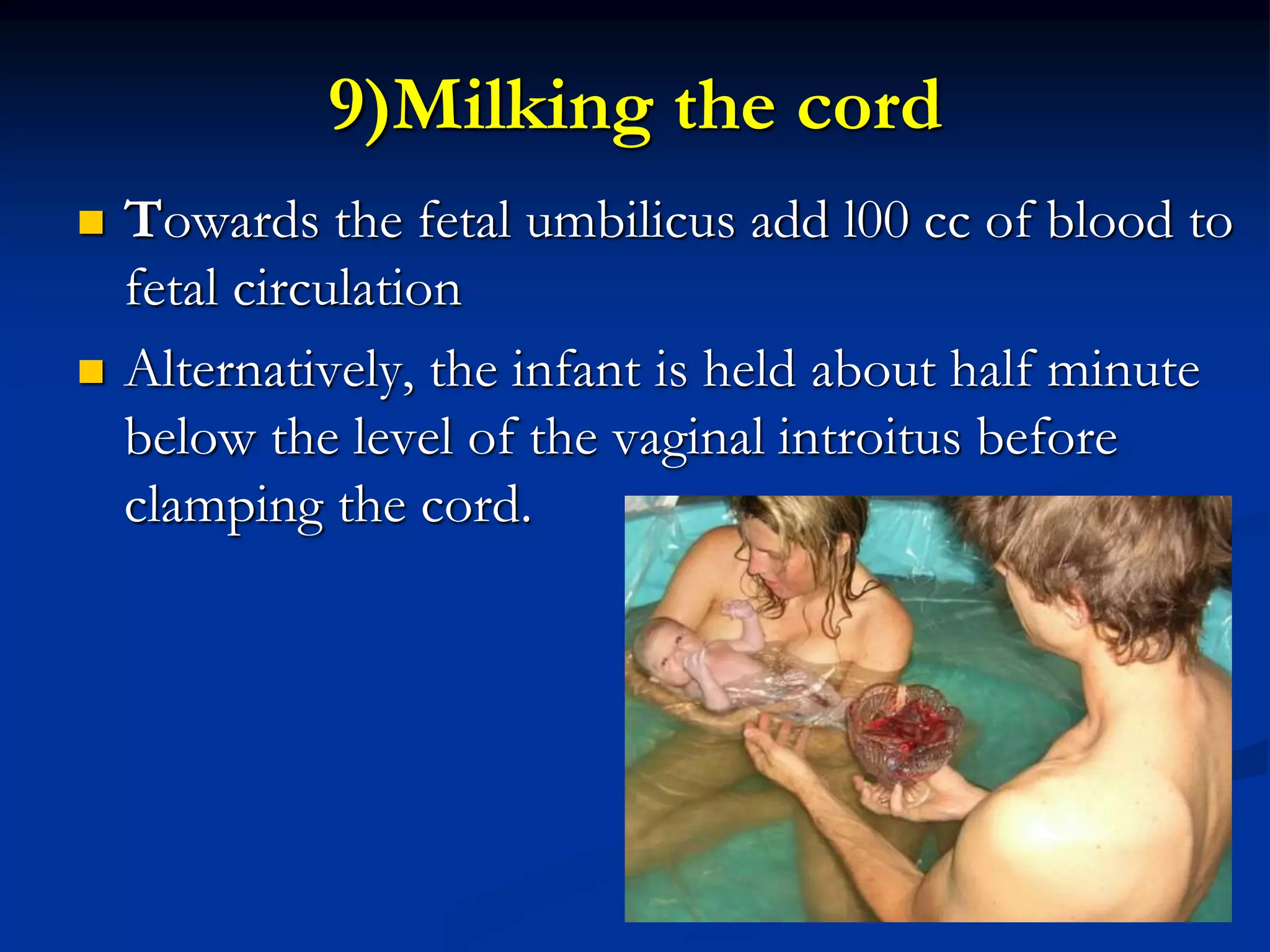
9)Milking the cord
 Towards the fetal umbilicus add l00 cc of blood to
fetal circulation
 Alternatively, the infant is held about half minute
below the level of the vaginal introitus before
clamping the cord.
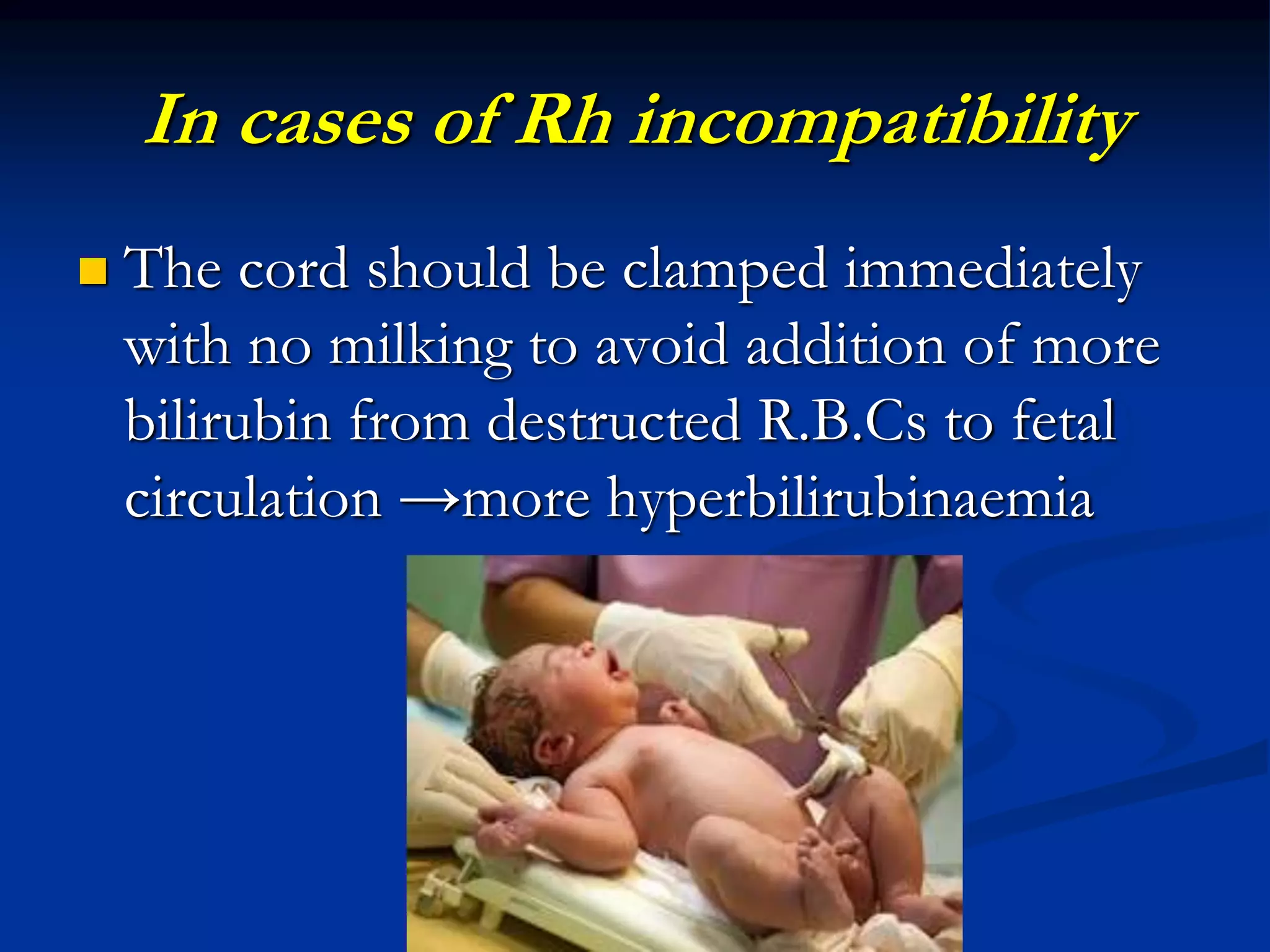
In cases of Rh incompatibility
 The cord should be clamped immediately
with no milking to avoid addition of more
bilirubin from destructed R.B.Cs to fetal
circulation →more hyperbilirubinaemia
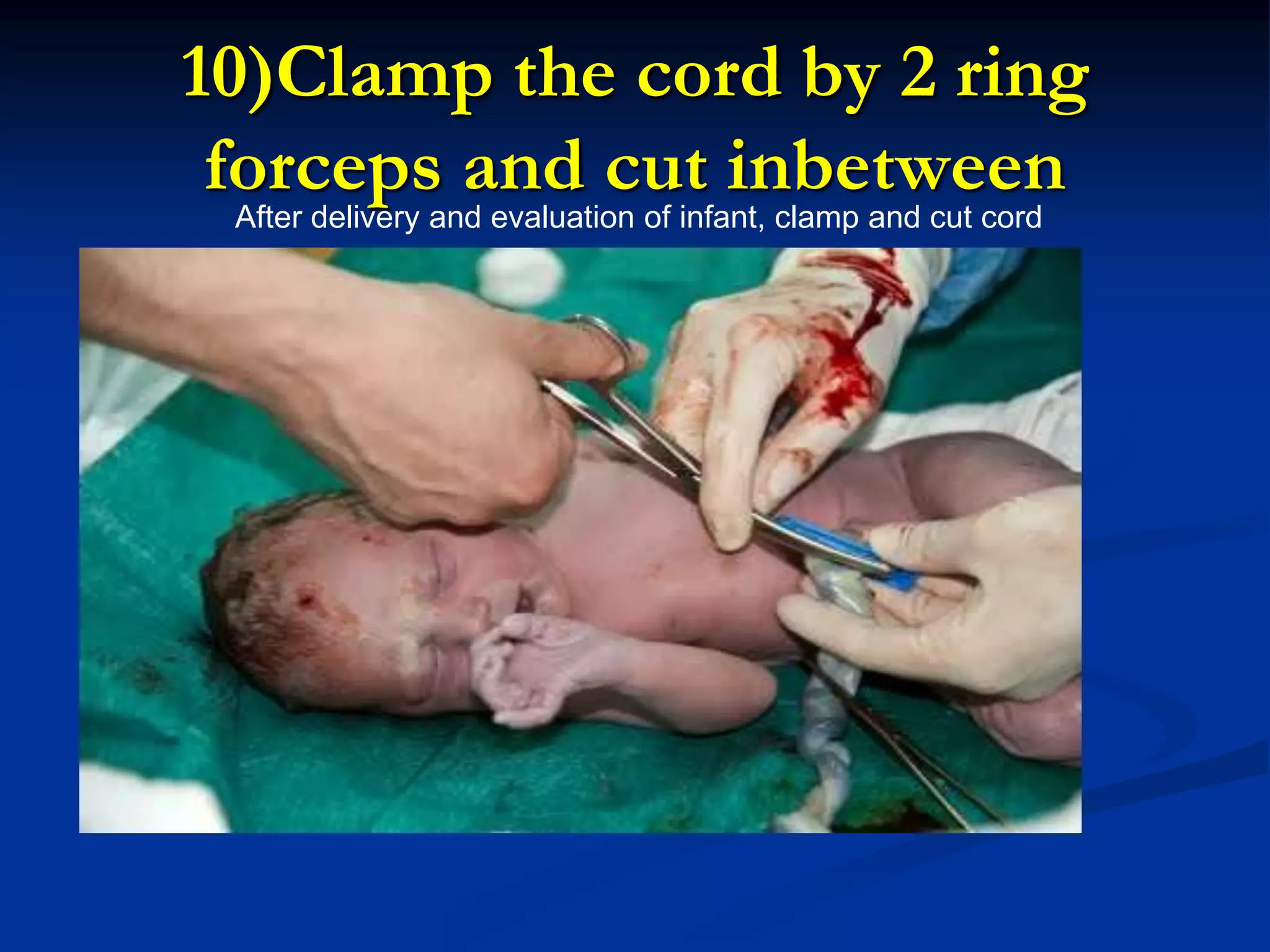
10)Clamp the cord by 2 ring
forceps and cut inbetween
After delivery and evaluation of infant, clamp and cut cord
D- Management of the 3rd
Stage:
Normally the placenta is expelled within 10
minutes, if expelled between 10- 30 minutes
(delayed delivery of placenta).
If not expelled within 30 minutes (Retained
placenta).
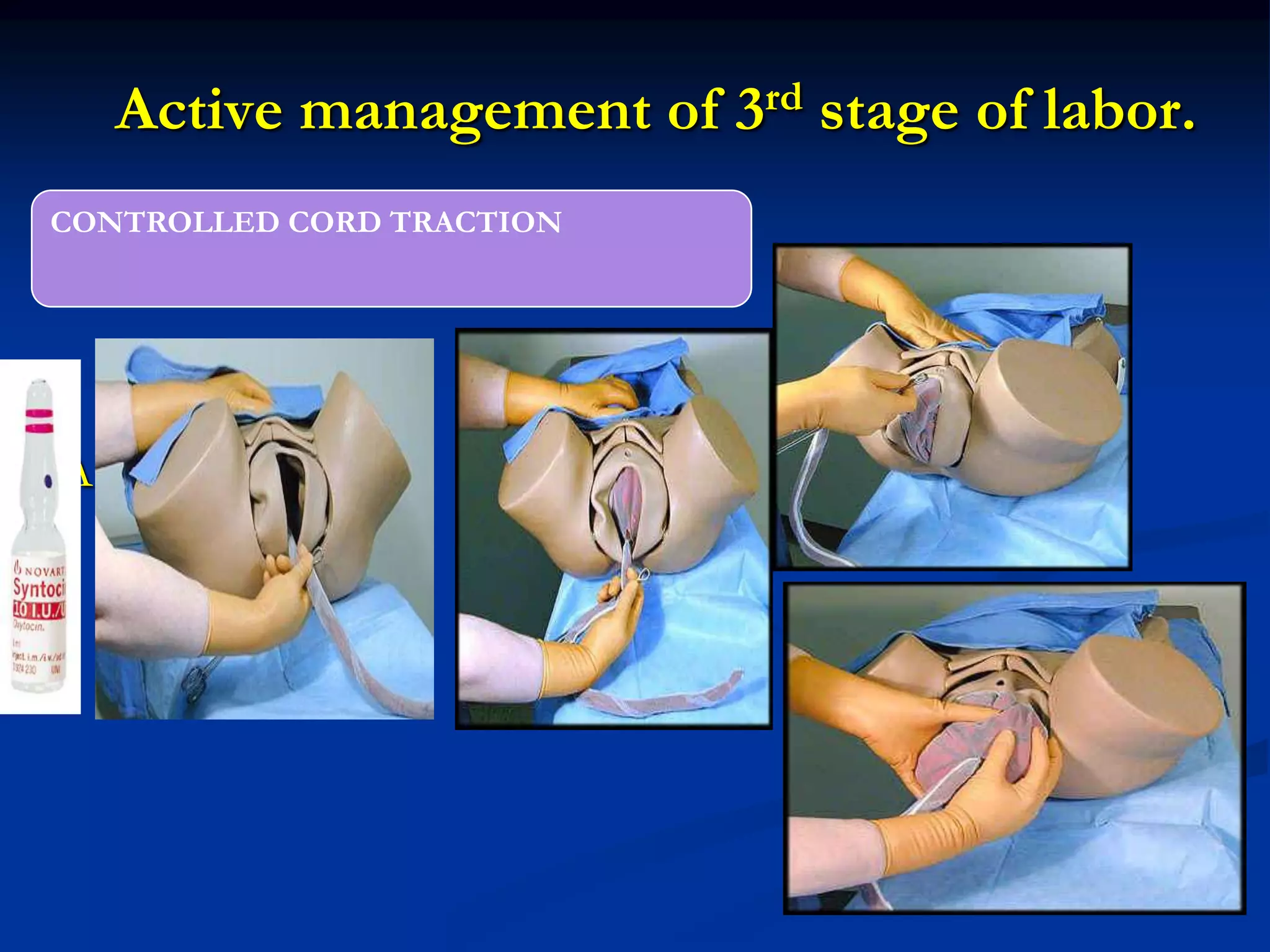
Active management of 3rd stage of labor.
A
CONTROLLED CORD TRACTION
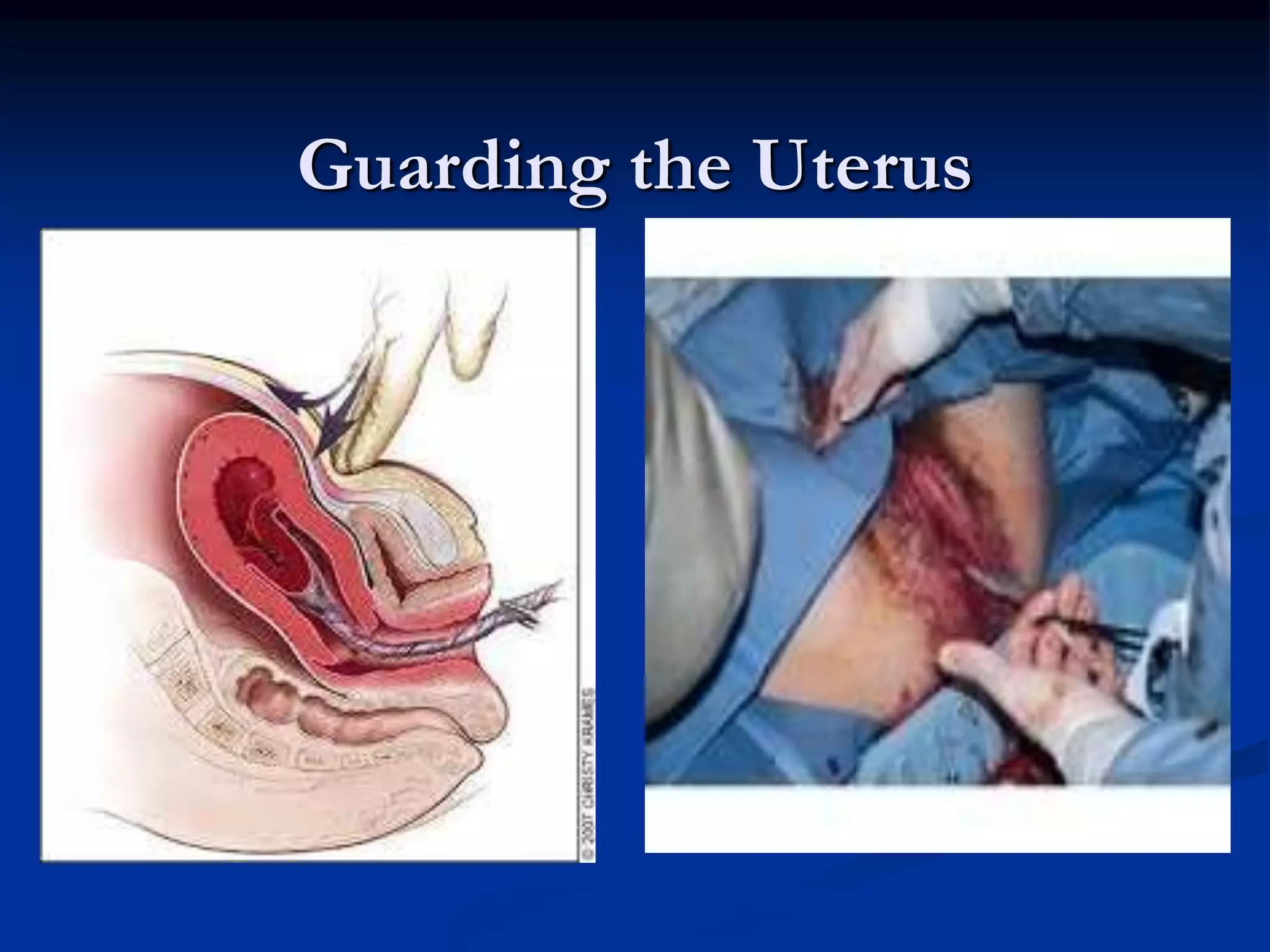
Guarding the Uterus
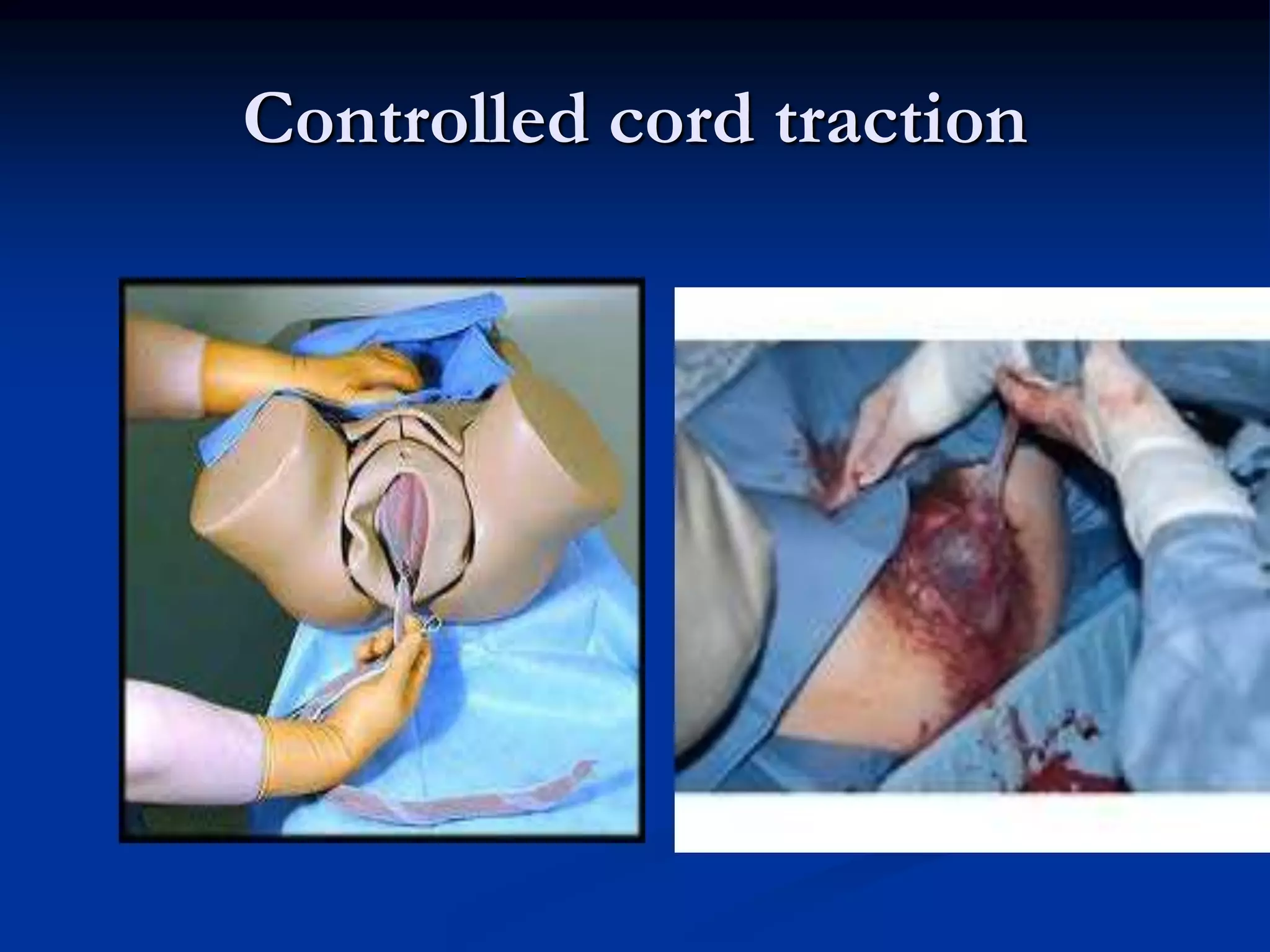
Controlled cord traction
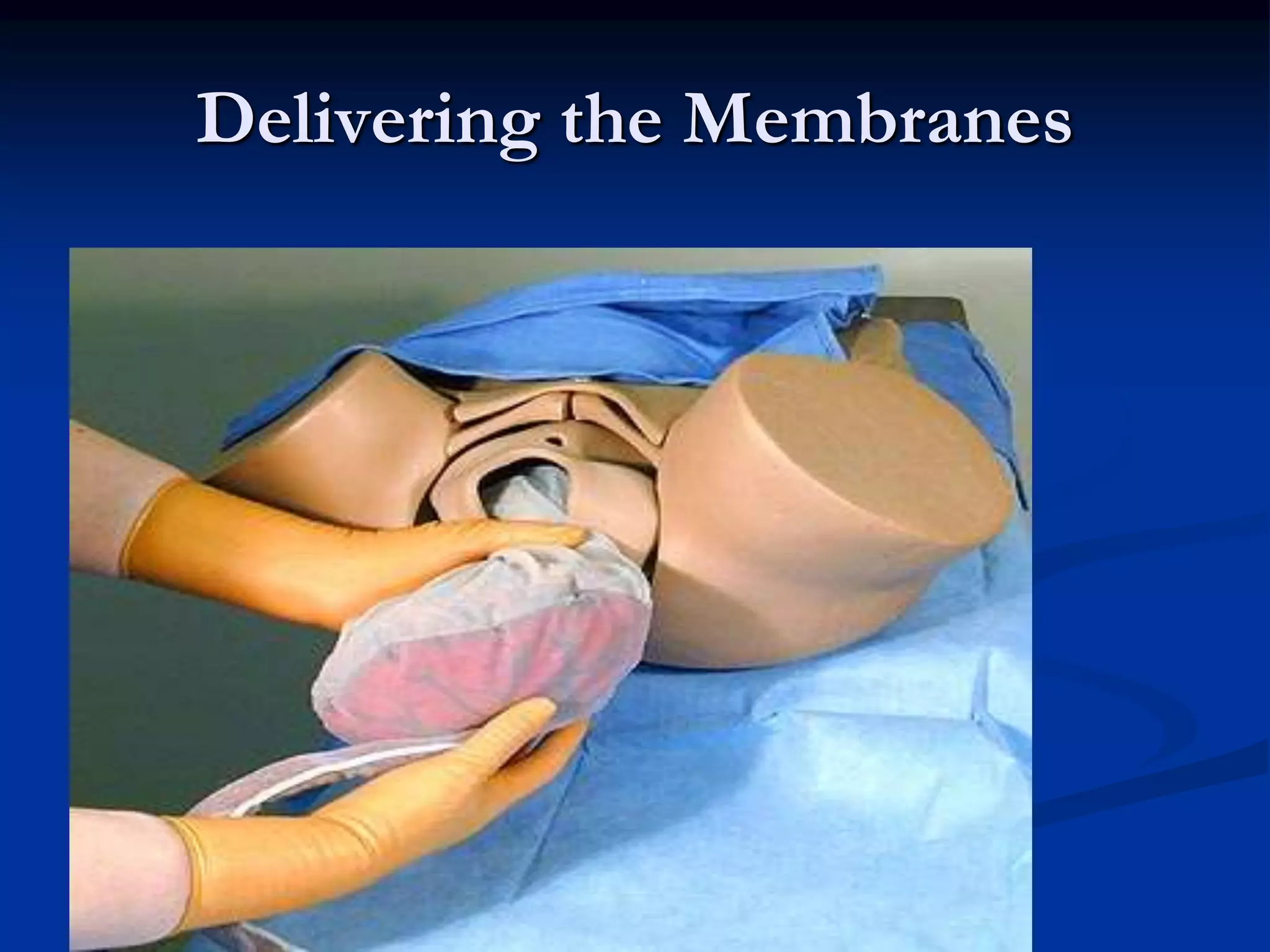
Delivering the Membranes
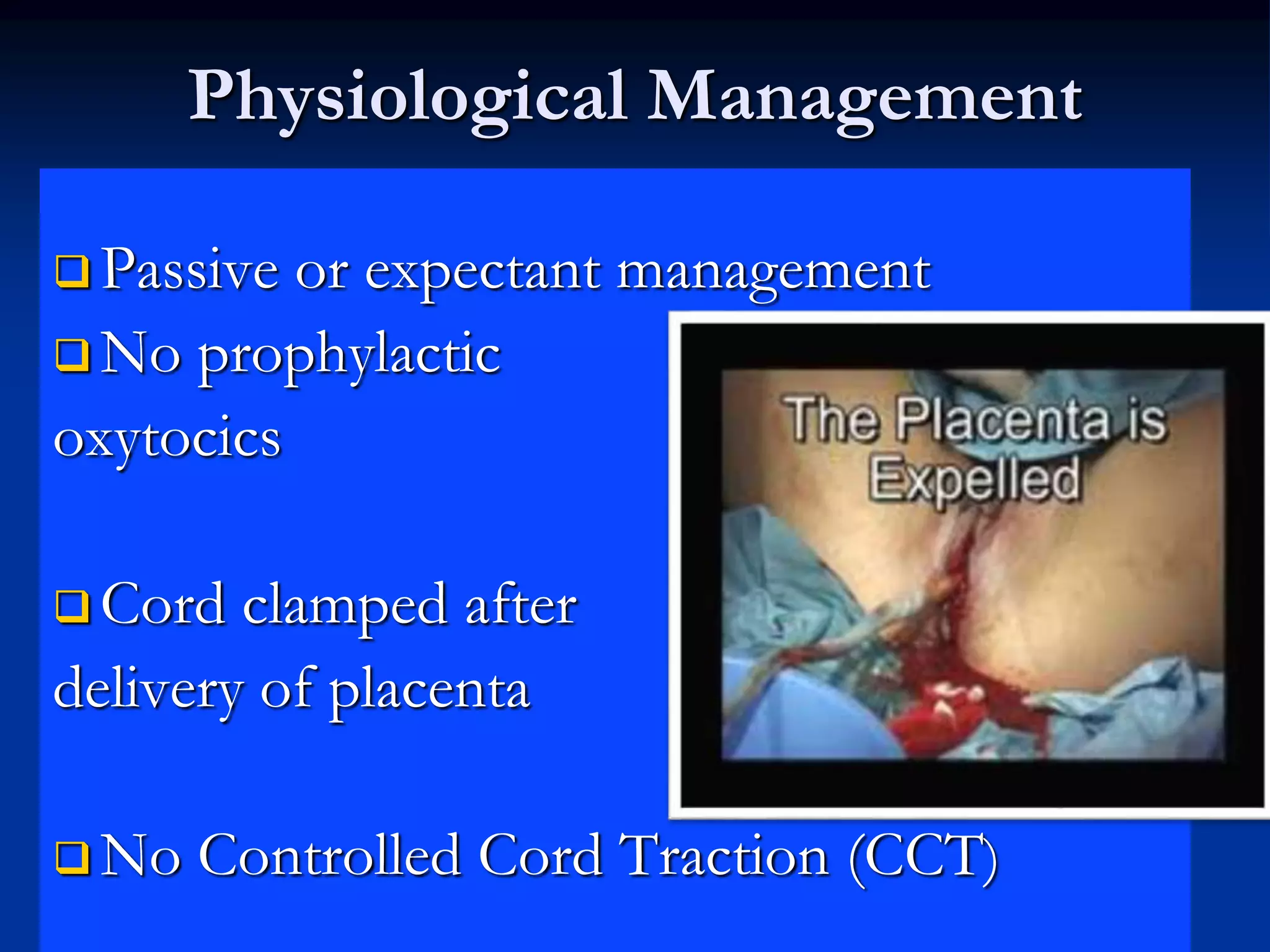
Physiological Management
 Passive or expectant management
 No prophylactic
oxytocics
 Cord clamped after
delivery of placenta
 No Controlled Cord Traction (CCT)
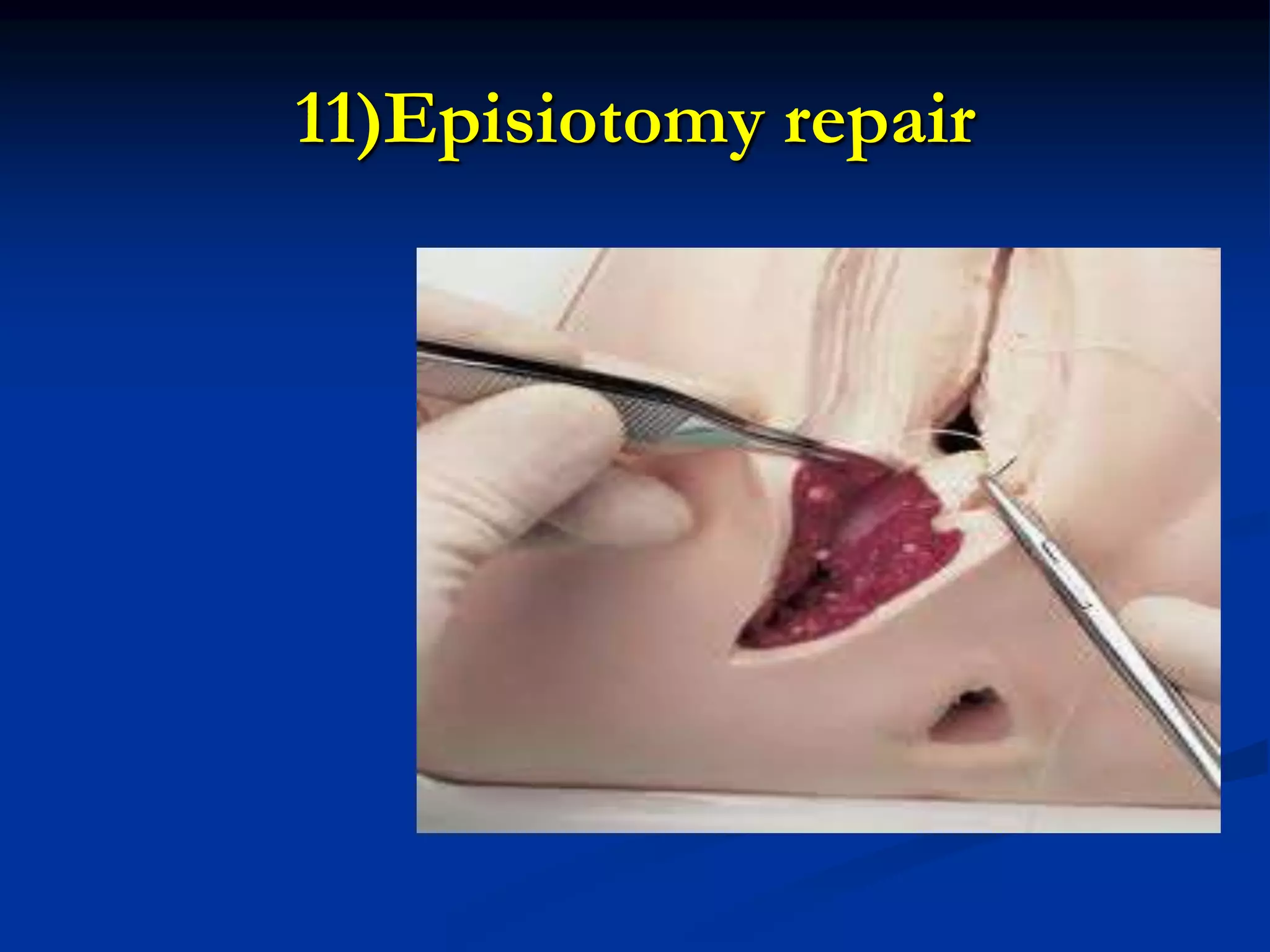
11)Episiotomy repair
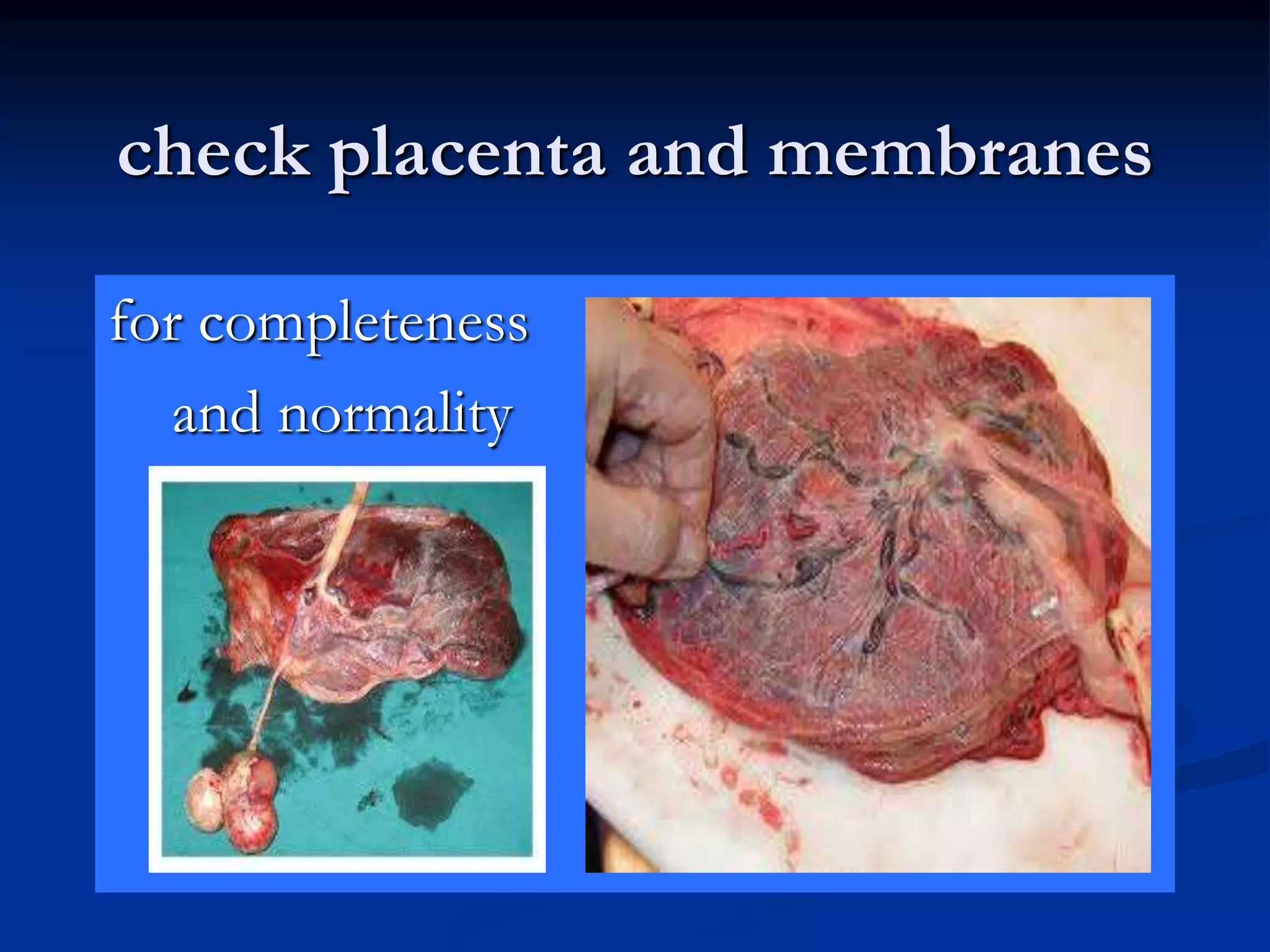
check placenta and membranes
for completeness
and normality
THANK YOU
Active Management Of
Labour
The aim of active management of
labour is to
 ensure that the primigravida will deliver a
healthy baby in less than 12 hours
Benefits of Active Management of
Labour
 It avoids prolonged labour which can lead
to:
 Maternal distress and emotional upset.
 Fetal hypoxia and distress.
 Exhaustion of the medical and nursing staff.
The Principles of Active
Management of Labour
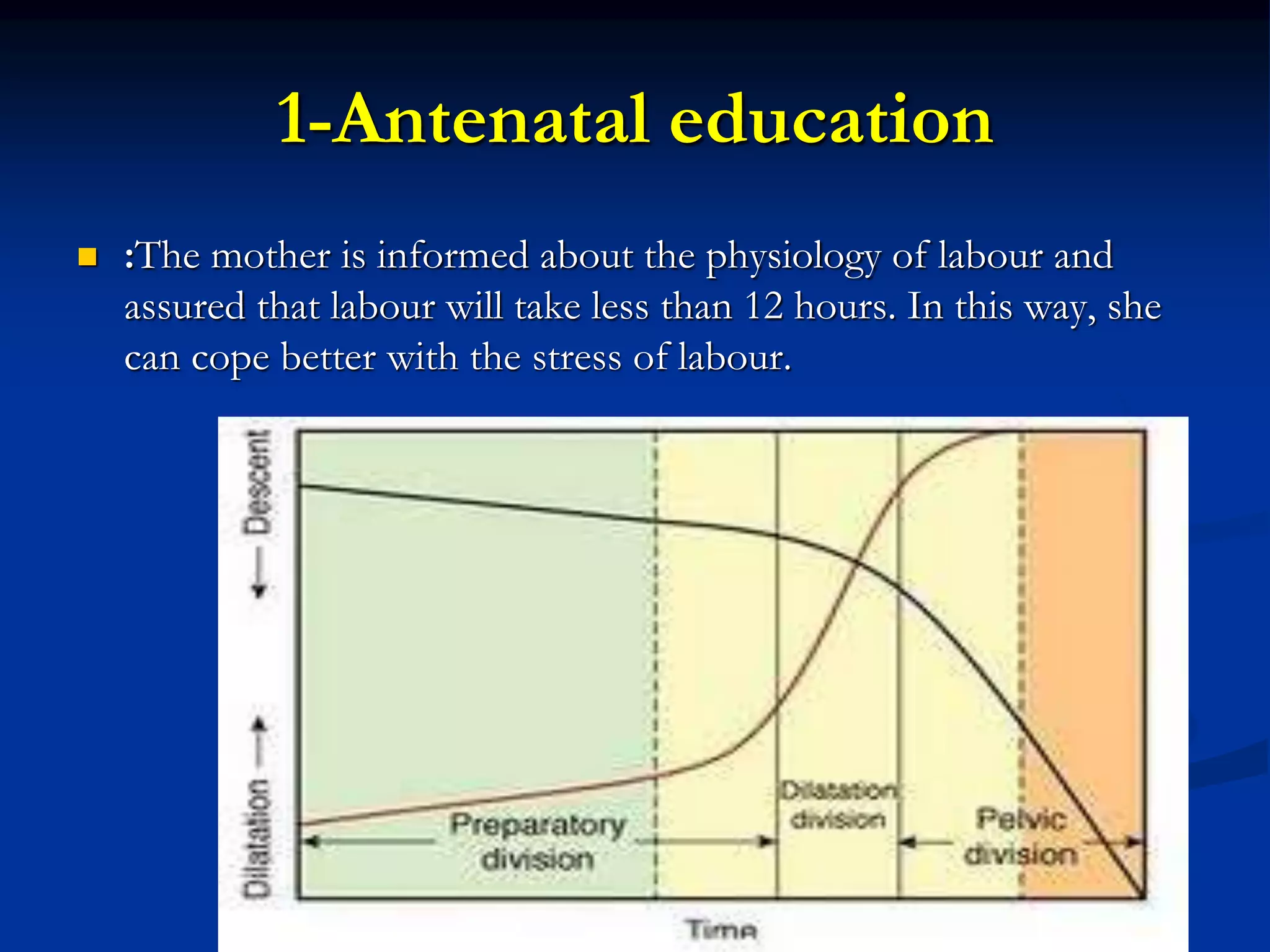
1-Antenatal education
 :The mother is informed about the physiology of labour and
assured that labour will take less than 12 hours. In this way, she
can cope better with the stress of labour.
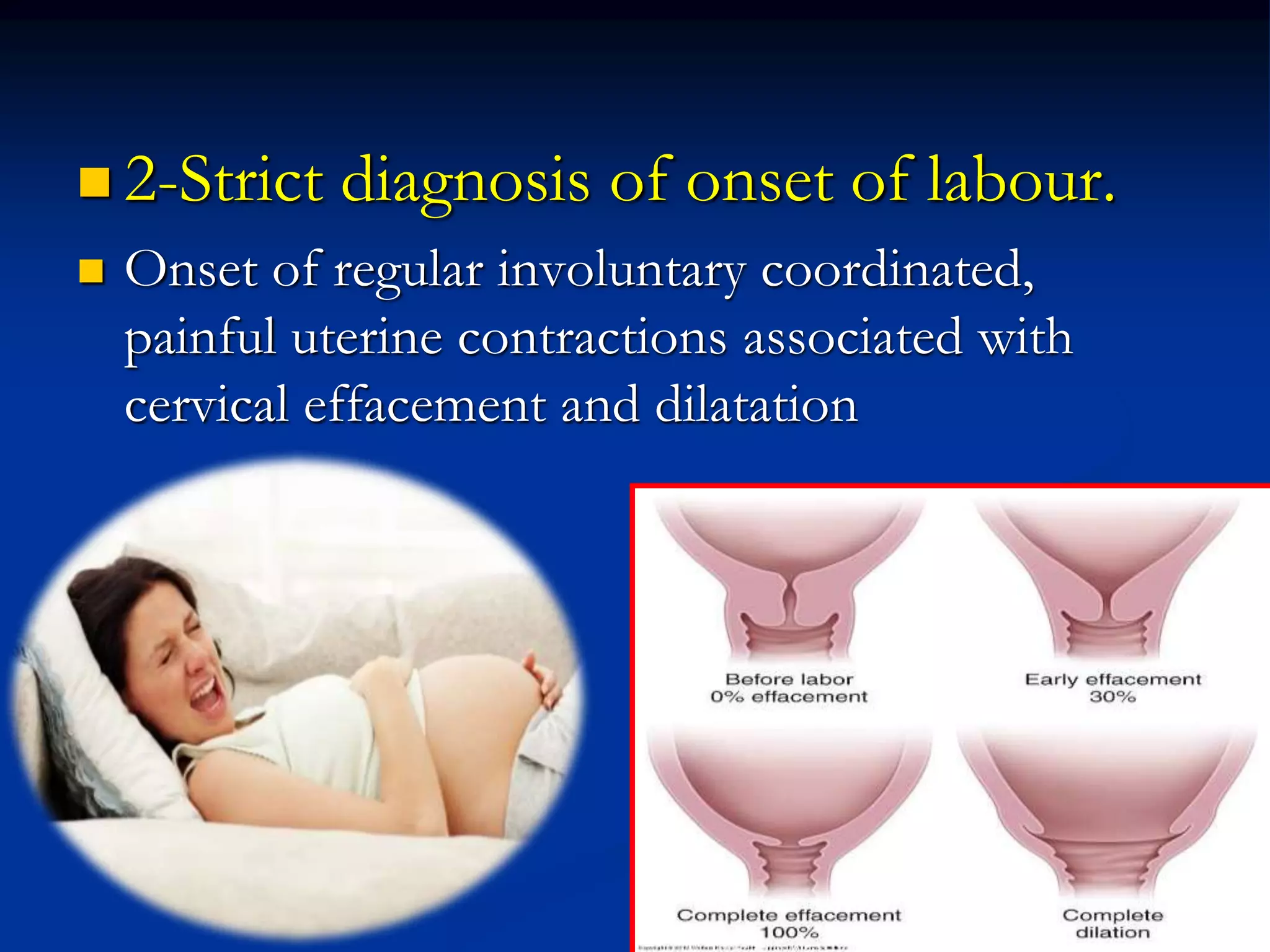
 2-Strict diagnosis of onset of labour.
 Onset of regular involuntary coordinated,
painful uterine contractions associated with
cervical effacement and dilatation
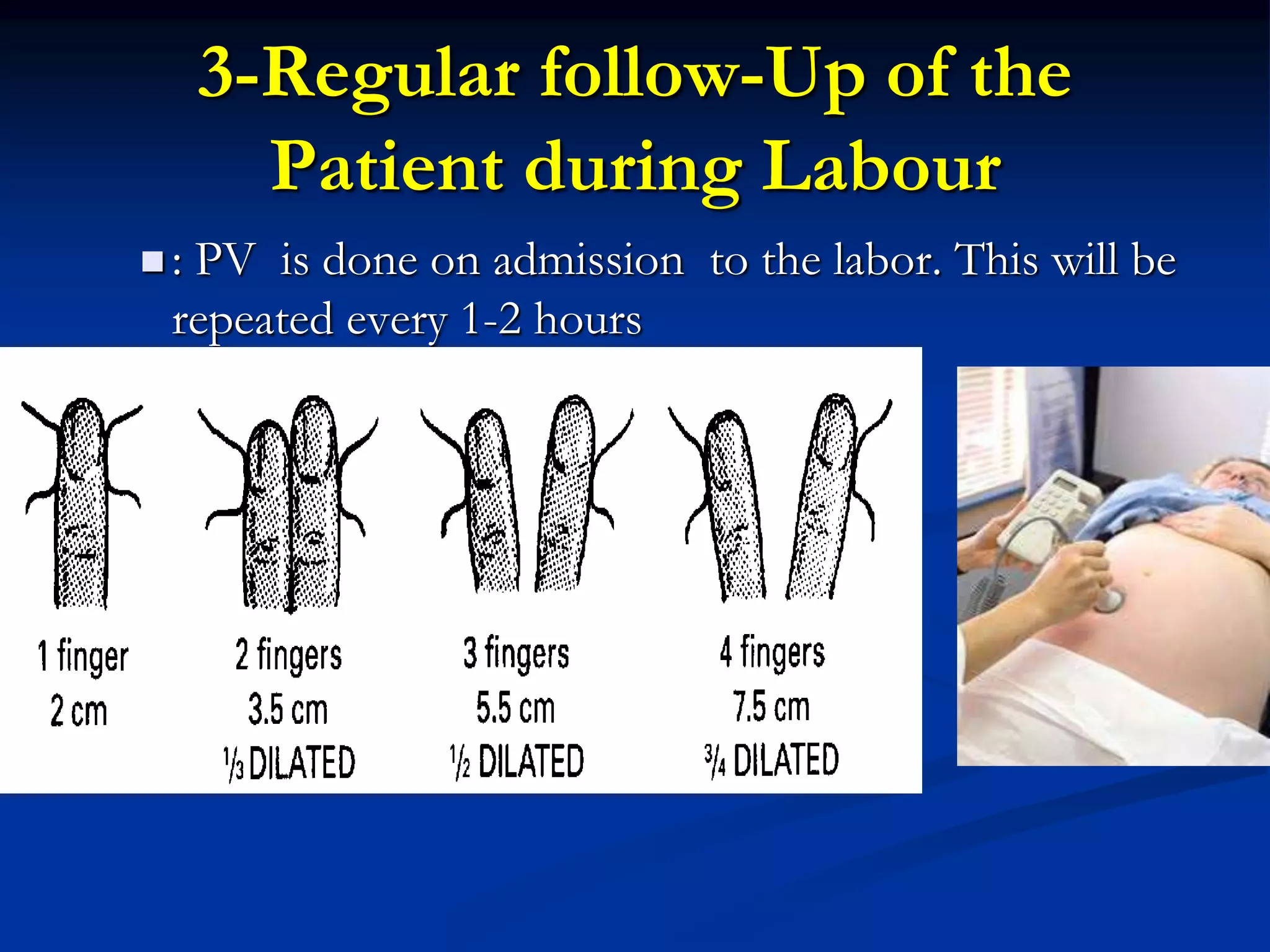
3-Regular follow-Up of the
Patient during Labour
 : PV is done on admission to the labor. This will be
repeated every 1-2 hours
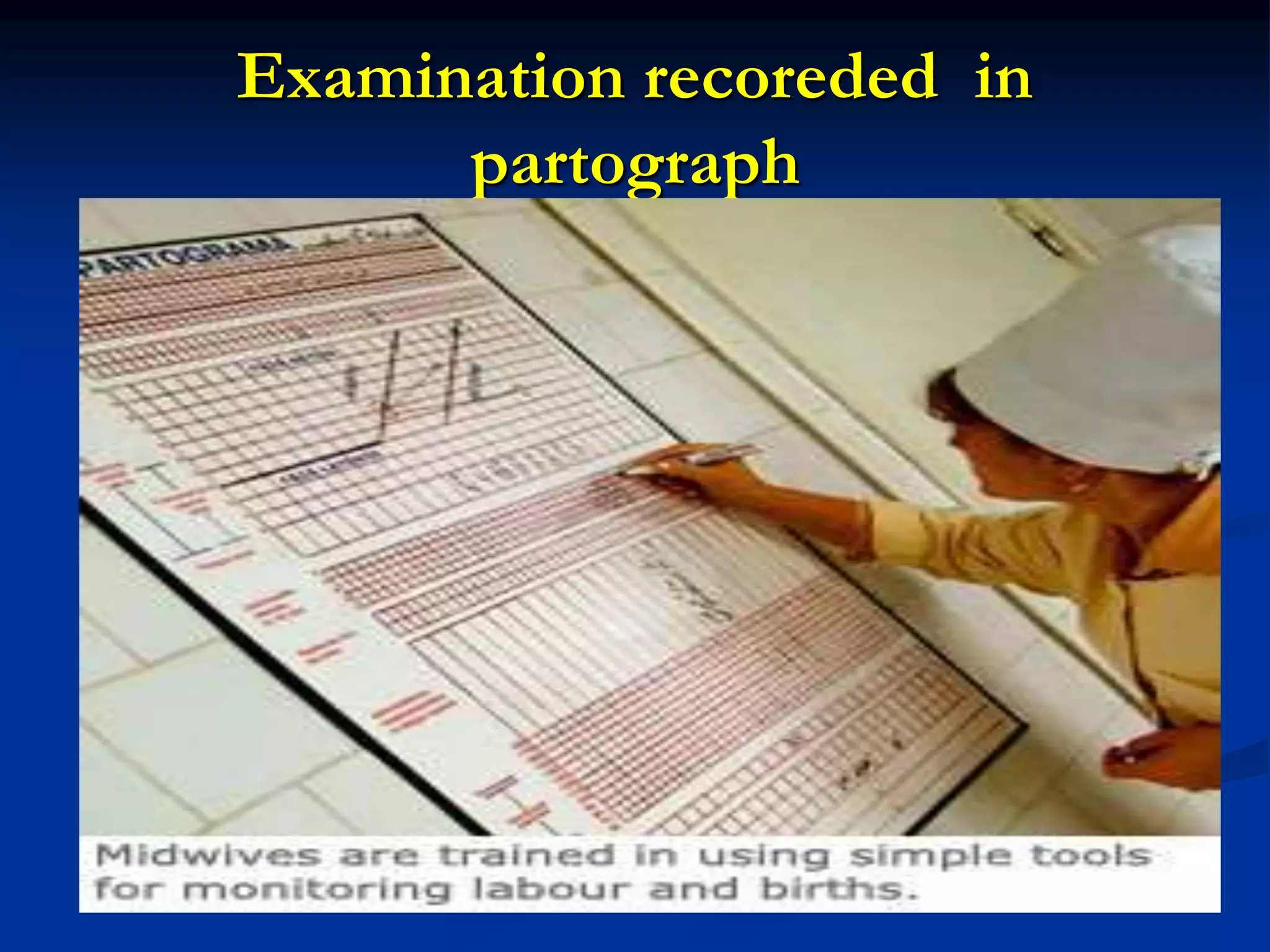
Examination recoreded in
partograph
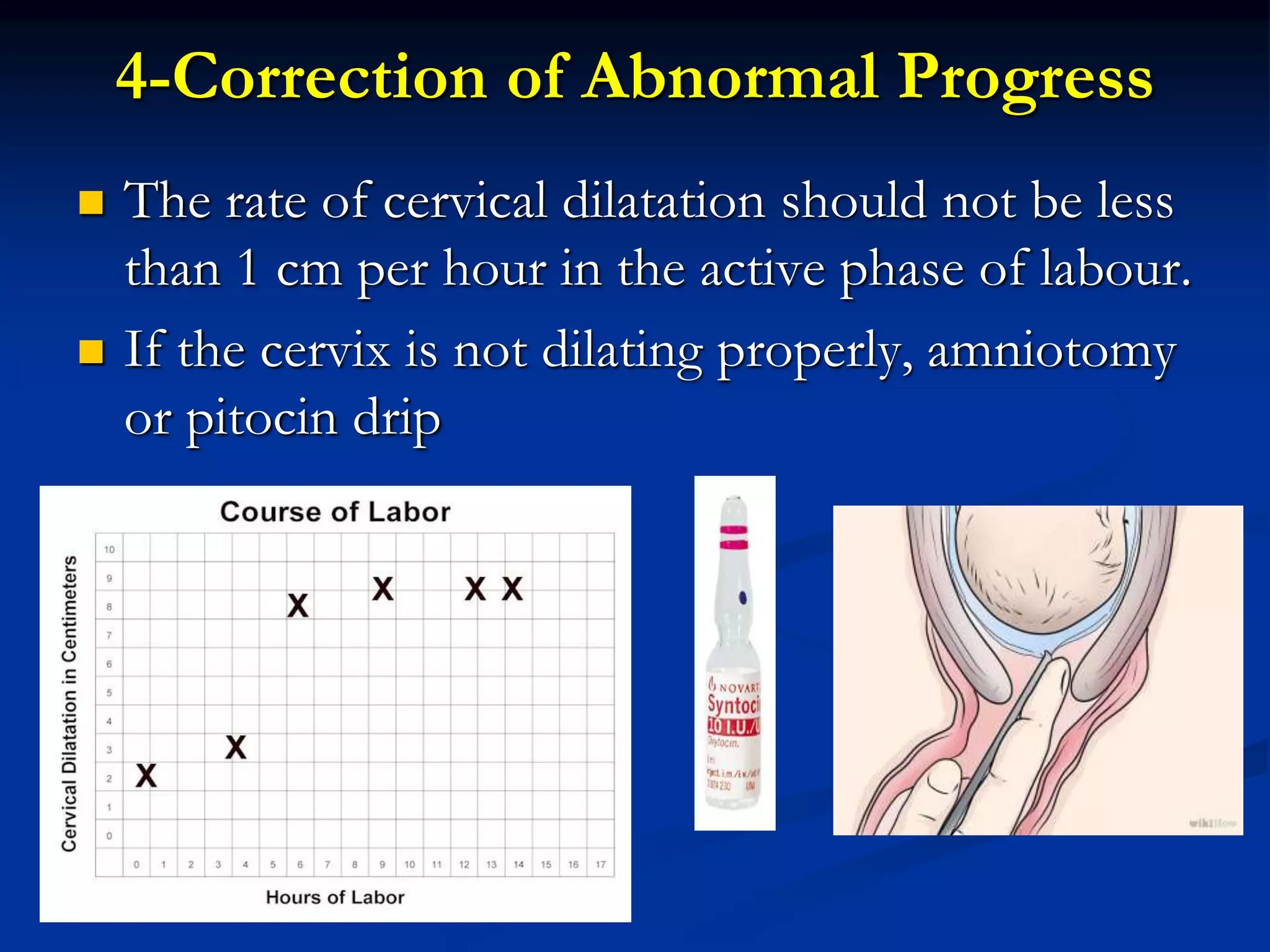
4-Correction of Abnormal Progress
 The rate of cervical dilatation should not be less
than 1 cm per hour in the active phase of labour.
 If the cervix is not dilating properly, amniotomy
or pitocin drip
Normal vs.Prolonged latent
phase
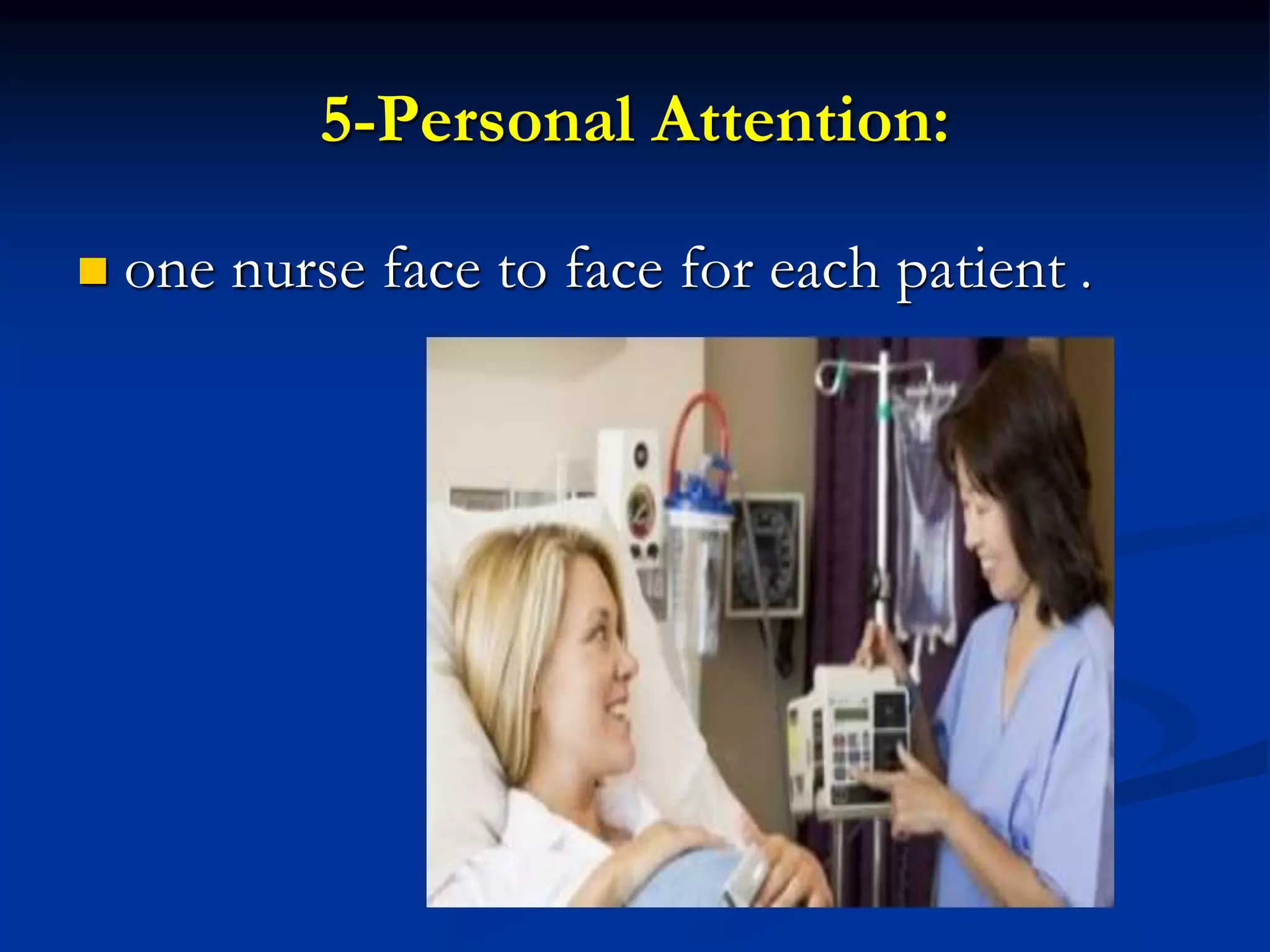
5-Personal Attention:
 one nurse face to face for each patient .
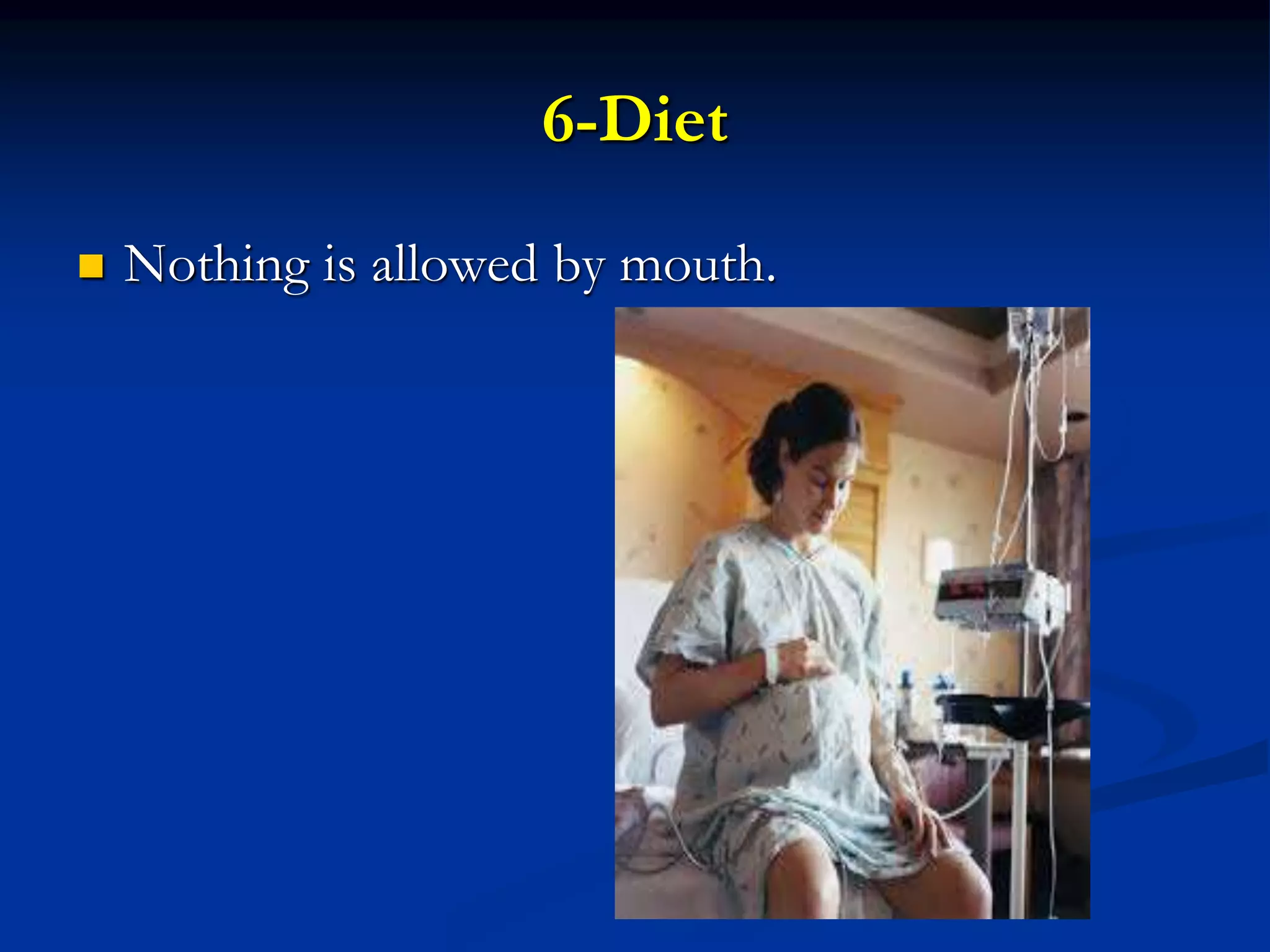
6-Diet
 Nothing is allowed by mouth.
7-Provision of suitable analgesia.

Managment of labor for undergraduate

  • 1.
  • 2.
  • 3.
     Full history: 1-Completeobstetric history. 2-History of the present pregnancy. 3-History of the present labor ( e.g.: labor pains, vaginal bleeding, gush of fluid& fetal movement).
  • 4.
     General Examination: Vitalsigns ( pulse , B.P. , temperature,…etc.)
  • 5.
  • 6.
  • 7.
  • 8.
  • 10.
  • 11.
  • 12.
  • 13.
    3-Pelvic examination:  Cervix: dilatation (c.m.), effeacemet (%) , position & consistency.  membrane: intact or ruptured ( if ruptured exclude cord prolapse).  -Amniotic fluid ( after R.O.M.): either clear , meconium stained or blood stained.  -Presenting part , position ,station & moulding.  -Assessment of pelvic capacity
  • 14.
    Cervical dilatation  Itis the surest way to assess progress of labour
  • 15.
  • 19.
    Partograph  a graphicalrecord of the observations made of a women in labor  For progress of labor and conditions of the mother and the fetus
  • 20.
    History Of Partogram Friedman's partogram 
  • 21.
    latent phase  Startsfrom onset of labour until the cervix reaches 3 cm dilatation  lasts 8 hours or less  Contractions at least 2/10 min contractions  each lasting < 20 seconds
  • 22.
    Active phase : The cervix should dilate at a rate of 1 cm / hour or faster  Contractions at least 3 / 10 min each lasting < 40 seconds
  • 23.
    Closed cervix vseffeced vs dilated Cx
  • 24.
    Components of thepartograph  Part 1 : fetal condition ( at top )  Part 2 : progress of labour ( at middle )  Part 3 : maternal condition ( at bottom )
  • 25.
    Part 1 :Fetal condition Recording fetal heart rate
  • 26.
    Membranes and liquor Dilatedcervix with bag of fore water I: intact C : clear M : muconium B : blood stained
  • 27.
    Molding the fetalskull bones  . Increasing molding with the head high in the pelvis is an ominous sign of Cephalopelvic disproportion.  separated bones . sutures felt easily……….O  bones just touching each other……………..+  overlapping bones …………… …………...++  severely overlapping bones ( notable ) ……..+++
  • 28.
    Part 2 –progress of labour . Cervical dilatation: it is divided into a latent phase and an active phase  Descent of the fetal head  Uterine contractions
  • 29.
    Descent of thefetal head  The rule of fifth BY abdominal examination
  • 30.
    Assessing descent ofthe fetal PV; 0 station is at the level of the ischial spine
  • 32.
  • 33.
  • 34.
    Alert line (health facility line )  The alert line drawn from 3 cm dilatation represents the rate of dilatation of 1 cm / hour  Moving to the right or the alert line means referral to hospital for extra care
  • 35.
    Action line (hospital line )  The action line is drawn 4 hour to the right of the alert line and parallel to it  This is the critical line at which specific management decisions must be made at the hospital
  • 36.
     When laborgoes from latent to active phase , plotting of the dilatation is immediately transferred from the latent phase area to the alert line
  • 37.
    Normal labor progress At addmision  Then after 4h
  • 38.
  • 39.
  • 40.
    PART 3:Recording ofmaternal condition
  • 41.
  • 42.
    Management of thefirst stage
  • 43.
    Ambulating and positionin labor  Walking may be more comfortable than being supine during early labor  The left lateral position keeps the uterus off the inferior vena cava; this prevent (supine hypotensive syndrome)
  • 46.
    Evaluation of fetalwell-being  Measurement of the fetal heart rate  By hand-held Doppler, or By CTG
  • 47.
    Late in firststage  patients may report the urge to push.  This may indicate significant descent of the fetal head with pressure on the perineum.
  • 48.
    Management of thesecond stage
  • 49.
    Diagnosis of theonset of the 2nd stage  Feeling a desire to evacuate the bladder or rectum  Reflex desire to bear down during contractions.  The uterine contractions are more prolonged and vigorous.  Full cervical dilatation (the surest sign).
  • 50.
    Transport the ladyto the delivery room.  . (A)Position: - Lithotomy position or Dorsal position.  (B)Paint vulva & perineum with antiseptic solution.  (C)Apply sterile leggings and towels  (D)Evacuate the bladder by catheter (if not evacuated before)
  • 51.
  • 52.
     F)Ask thelady to bear down during uterine contractions and relax in between.  J). V oxytocin drip in glucose solution 5% may be given.
  • 53.
    4)The main taskof the obstetrician is to prevent perineal lacerations, how?
  • 54.
    When the labiastart to be separated by the head, put a sterile dressing on the perineum  and press on it during  uterine Contractions.
  • 55.
     A. Supportof the perineum till crowning occurs
  • 56.
    Crowning: The B.P.Dpasses through the vulval ring during contraction and the head does not recede inbetween uterine contractions.
  • 57.
    Episiotomy  when theperineum is maximally stretched and about to tear
  • 58.
    Problems arising fromEpisiotomy 58  Pain  Edema  Bleeding  Infection  Defects in wound
  • 59.
  • 60.
    B. After crowning, Prevent straining after crowning.  Allow gradual and slow extension only inbetween uterine contractions. by doing "Rtigen maneuver“
  • 61.
    Examine neck forlooped umbilical cord .  If a loop of cord is coiled around the neck Try to slip it.  If several loops, apply double clamping and cut the cord inbetween.
  • 62.
    Support infant’s headas it rotates for shoulder presentation .  Guide infant’s head downward to deliver anterior shoulder
  • 63.
    7)Deliver posterior shoulderfirst , then the anterior shoulder  when the anterior shoulder appears under the pubic arch,the head is lifted upwards to deliver the posterior shoulder, then downwards to deliver the anterior shoulder.
  • 64.
    The rest ofthe body usually slips easily
  • 65.
    8)Hold the fetusfrom its feet  Contraindications 1-Premature baby 2-Fetal asphyxia  3-Suspected presence of intracranial hemorrhage.
  • 66.
    9)Milking the cord Towards the fetal umbilicus add l00 cc of blood to fetal circulation  Alternatively, the infant is held about half minute below the level of the vaginal introitus before clamping the cord.
  • 67.
    In cases ofRh incompatibility  The cord should be clamped immediately with no milking to avoid addition of more bilirubin from destructed R.B.Cs to fetal circulation →more hyperbilirubinaemia
  • 68.
    10)Clamp the cordby 2 ring forceps and cut inbetween After delivery and evaluation of infant, clamp and cut cord
  • 69.
    D- Management ofthe 3rd Stage: Normally the placenta is expelled within 10 minutes, if expelled between 10- 30 minutes (delayed delivery of placenta). If not expelled within 30 minutes (Retained placenta).
  • 70.
    Active management of3rd stage of labor. A CONTROLLED CORD TRACTION
  • 71.
  • 72.
  • 73.
  • 74.
    Physiological Management  Passiveor expectant management  No prophylactic oxytocics  Cord clamped after delivery of placenta  No Controlled Cord Traction (CCT)
  • 75.
  • 76.
    check placenta andmembranes for completeness and normality
  • 77.
  • 78.
  • 79.
    The aim ofactive management of labour is to  ensure that the primigravida will deliver a healthy baby in less than 12 hours
  • 80.
    Benefits of ActiveManagement of Labour  It avoids prolonged labour which can lead to:  Maternal distress and emotional upset.  Fetal hypoxia and distress.  Exhaustion of the medical and nursing staff.
  • 81.
    The Principles ofActive Management of Labour
  • 82.
    1-Antenatal education  :Themother is informed about the physiology of labour and assured that labour will take less than 12 hours. In this way, she can cope better with the stress of labour.
  • 83.
     2-Strict diagnosisof onset of labour.  Onset of regular involuntary coordinated, painful uterine contractions associated with cervical effacement and dilatation
  • 84.
    3-Regular follow-Up ofthe Patient during Labour  : PV is done on admission to the labor. This will be repeated every 1-2 hours
  • 85.
  • 86.
    4-Correction of AbnormalProgress  The rate of cervical dilatation should not be less than 1 cm per hour in the active phase of labour.  If the cervix is not dilating properly, amniotomy or pitocin drip
  • 87.
  • 88.
    5-Personal Attention:  onenurse face to face for each patient .
  • 89.
    6-Diet  Nothing isallowed by mouth.
  • 90.