CHAPTER 11
COMPETITIVE DYNAMICS
• How can market leaders expand the total
market and defend market share?
• How should market challengers attack market
leaders?
• How can market followers or nichers compete
effectively?
• What marketing strategies are appropriate at
each stage of the product life cycle?
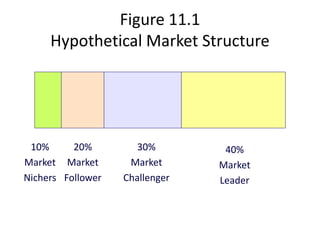
Figure 11.1
Hypothetical Market Structure
10%
Market
Nichers
20%
Market
Follower
30%
Market
Challenger
40%
Market
Leader
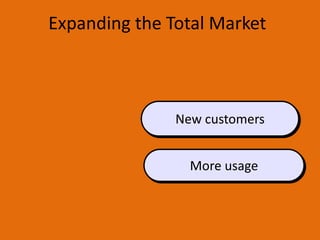
Expanding the Total Market
New customers
More usage
Protecting Market Share
Proactive Marketing
Defensive Marketing
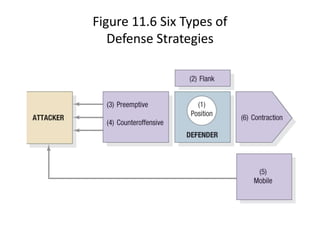
Figure 11.6 Six Types of
Defense Strategies
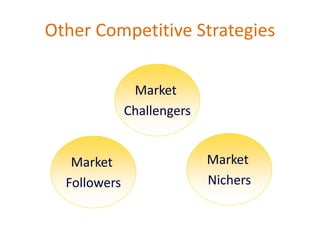
Other Competitive Strategies
Market
Challengers
Market
Nichers
Market
Followers
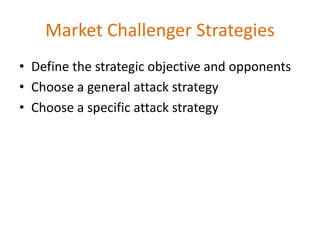
Market Challenger Strategies
• Define the strategic objective and opponents
• Choose a general attack strategy
• Choose a specific attack strategy
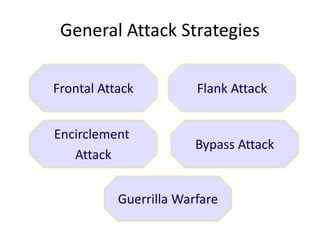
General Attack Strategies
Frontal Attack
Encirclement
Attack
Bypass Attack
Flank Attack
Guerrilla Warfare
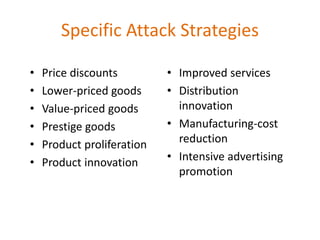
Specific Attack Strategies
• Price discounts
• Lower-priced goods
• Value-priced goods
• Prestige goods
• Product proliferation
• Product innovation
• Improved services
• Distribution
innovation
• Manufacturing-cost
reduction
• Intensive advertising
promotion
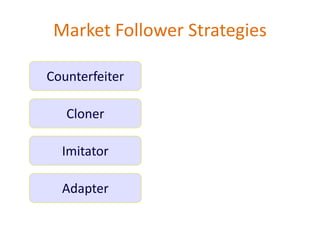
Market Follower Strategies
Counterfeiter
Cloner
Imitator
Adapter
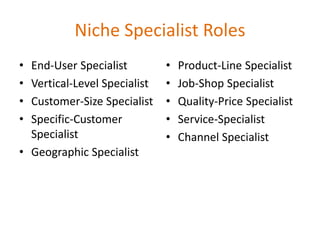
Niche Specialist Roles
• End-User Specialist
• Vertical-Level Specialist
• Customer-Size Specialist
• Specific-Customer
Specialist
• Geographic Specialist
• Product-Line Specialist
• Job-Shop Specialist
• Quality-Price Specialist
• Service-Specialist
• Channel Specialist
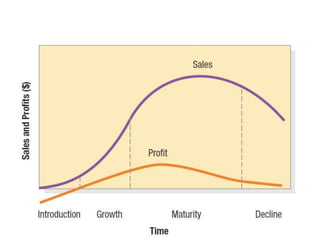
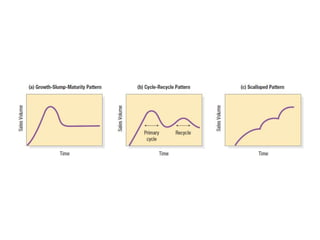
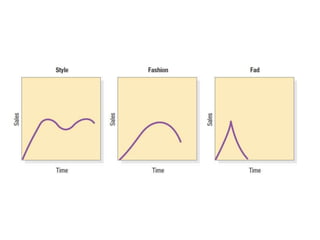
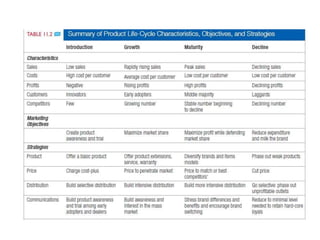
Product Life Cycle Marketing Strategies
Product Life Cycle
• Introduction
• Growth
• Maturity
• Decline
Competitive Dynamics (Chapter 11 Kotler-Keller) 14th

Competitive Dynamics (Chapter 11 Kotler-Keller) 14th